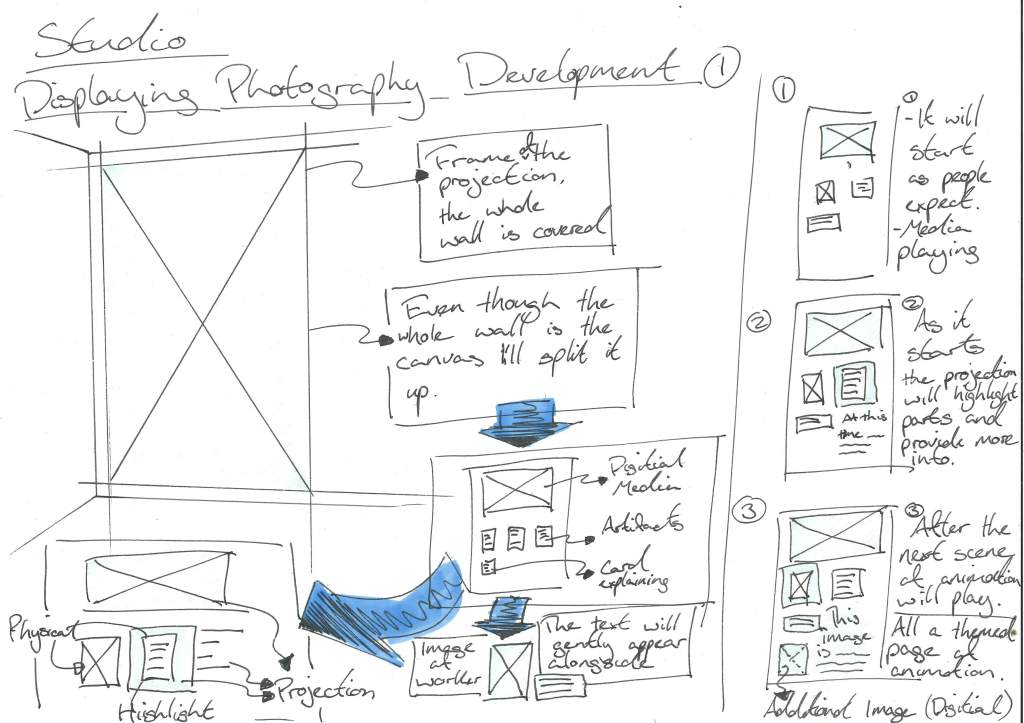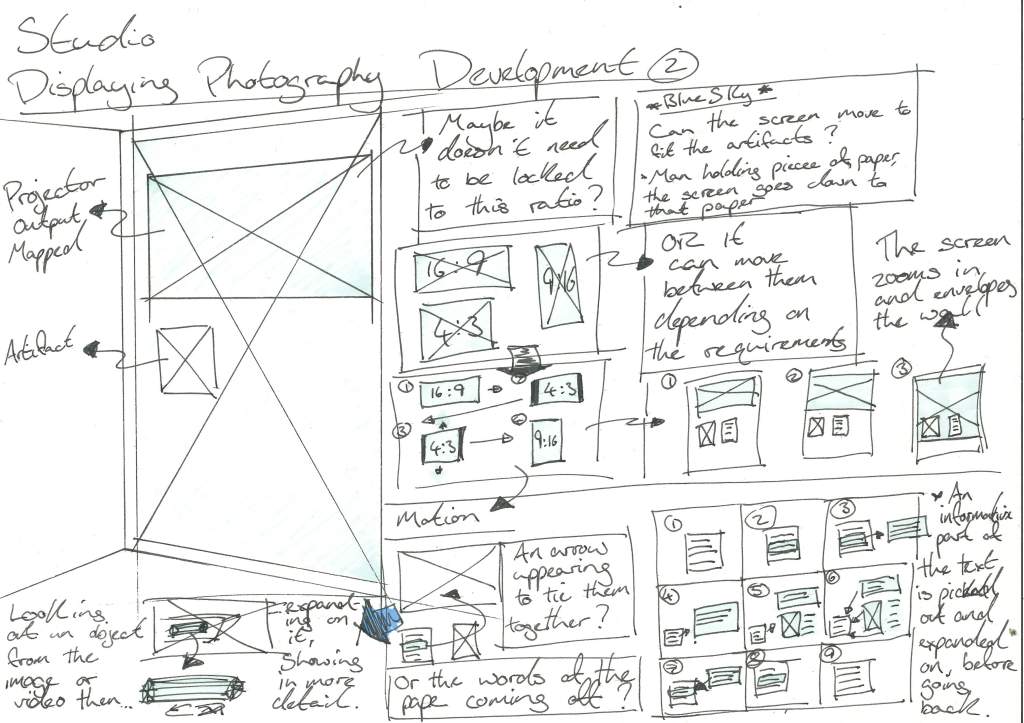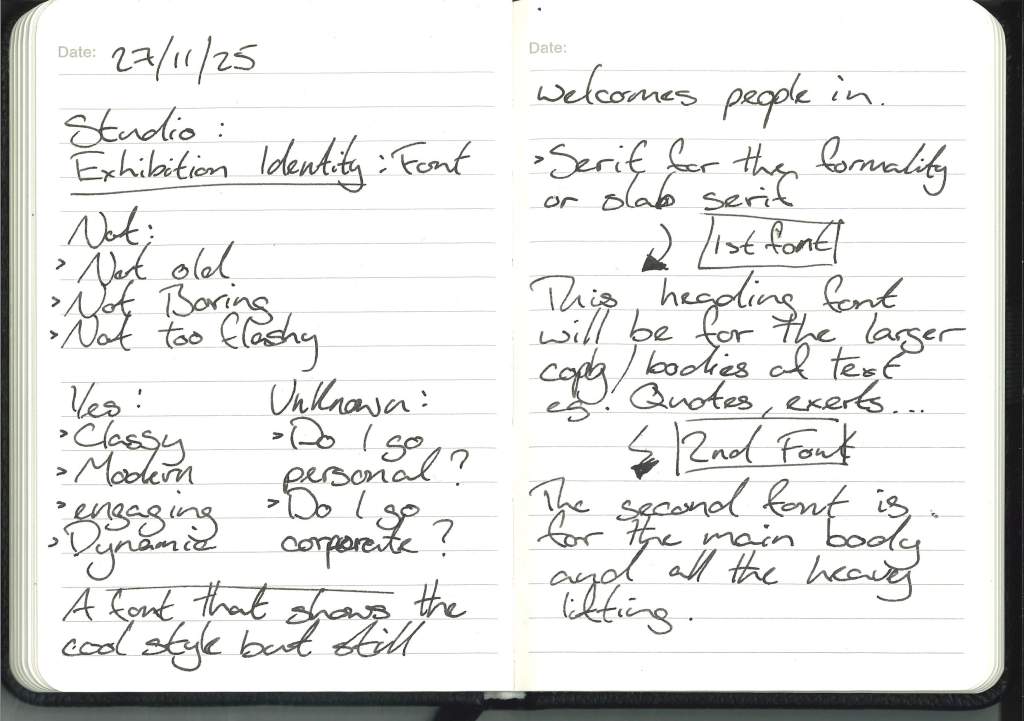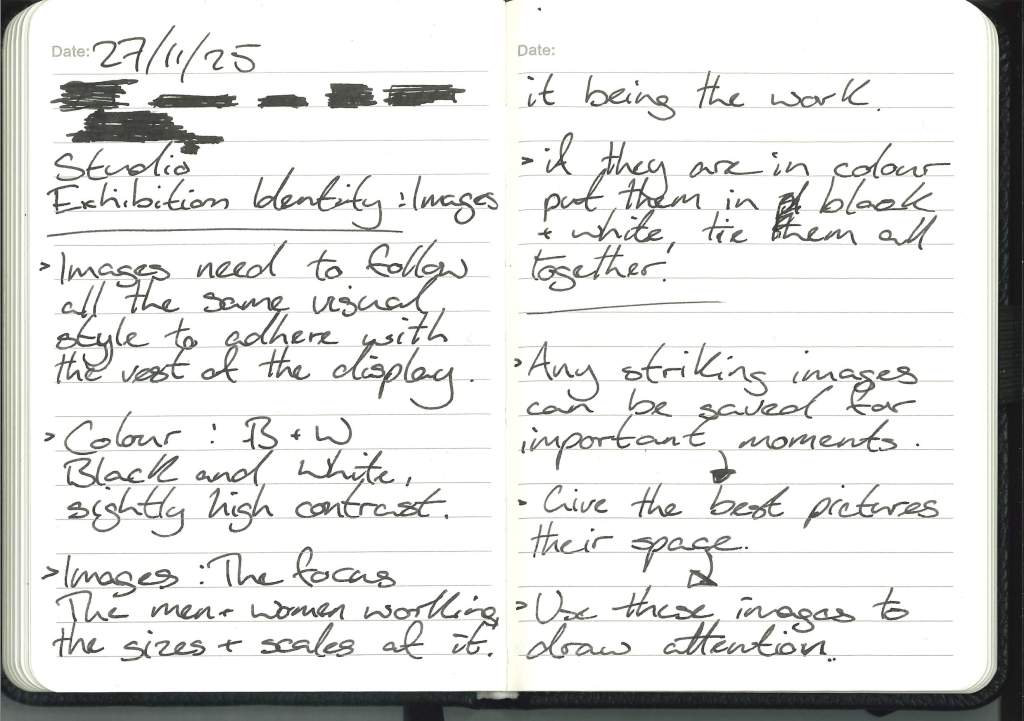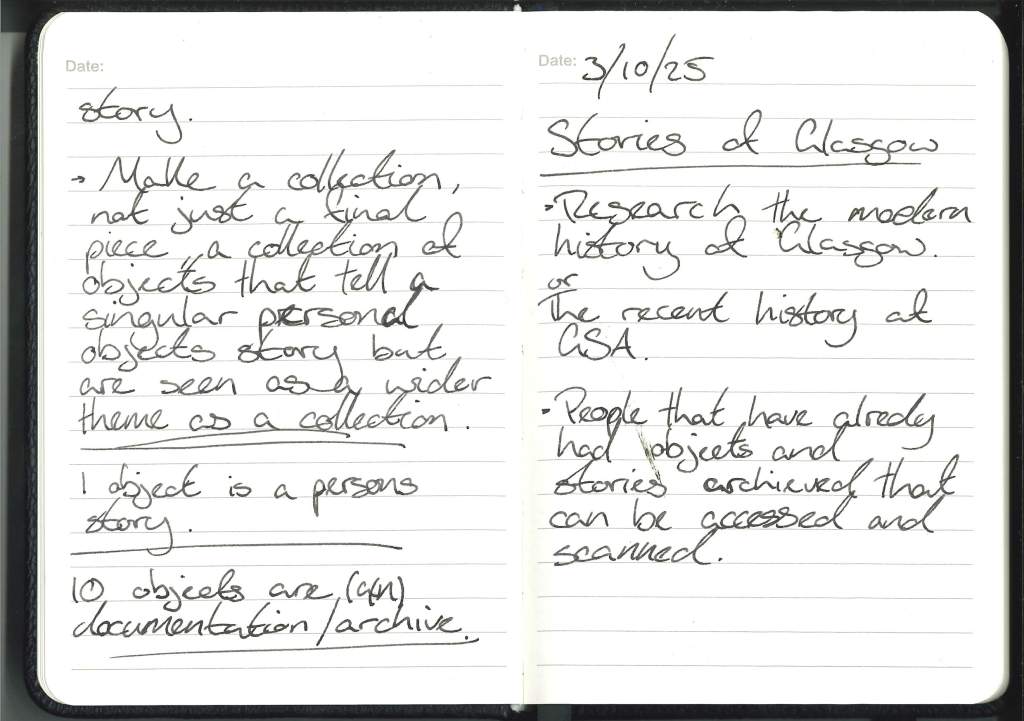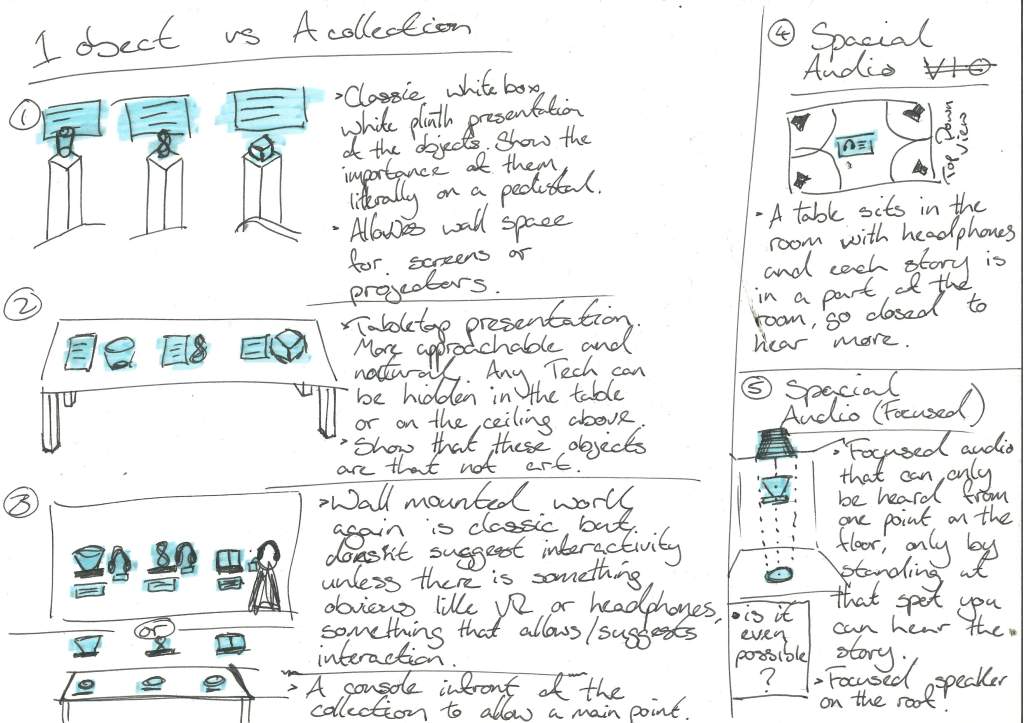
• Extending Design:
    1. Initial thoughts:
      1. QR Code:
        1. Idea 01:
        2. Idea 02:
      2. Chandelier:
        1. Idea 01:
        2. Possible Locations:
          1. GoMA:
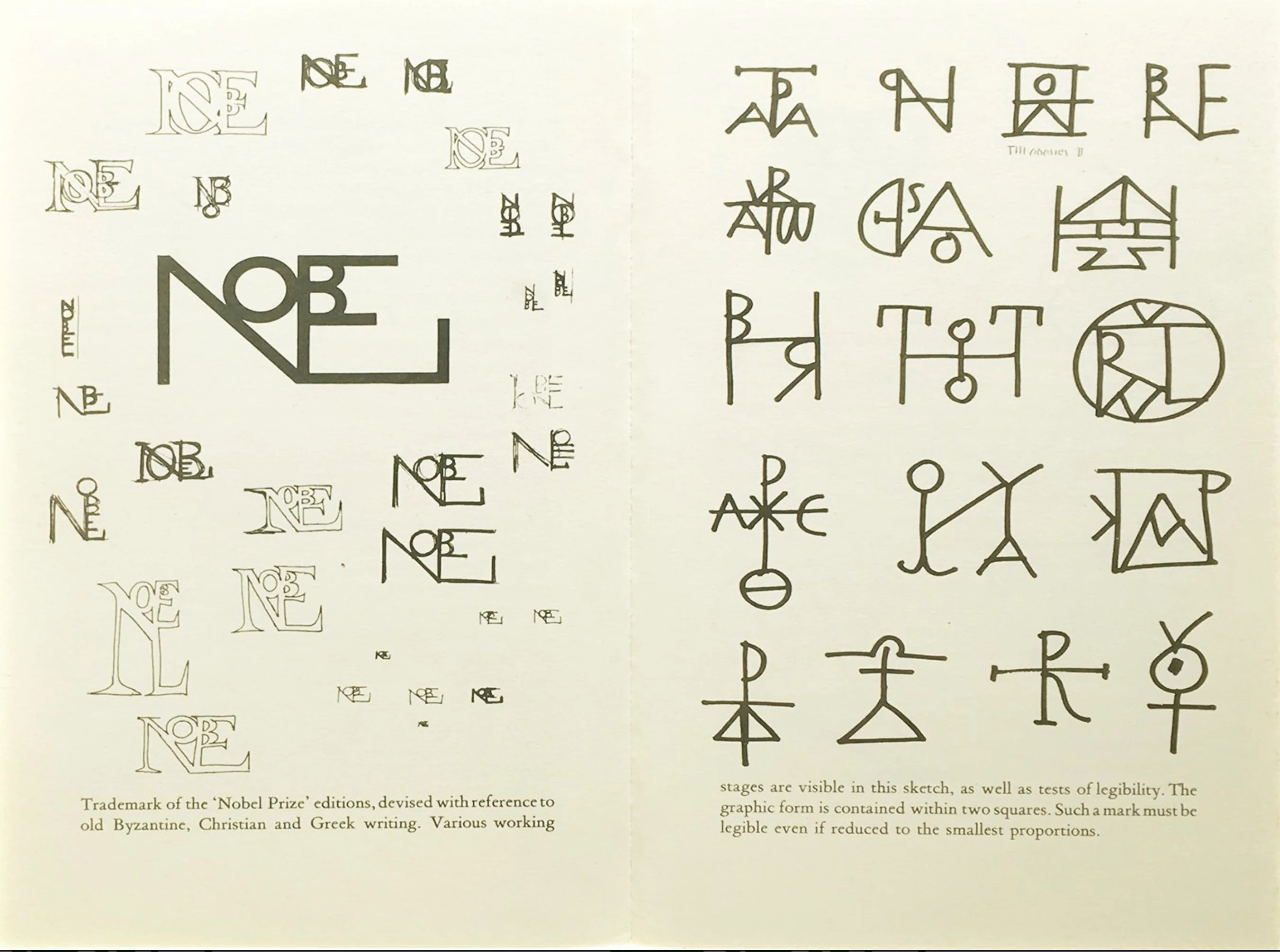
          2. Nobel Peace Centre:
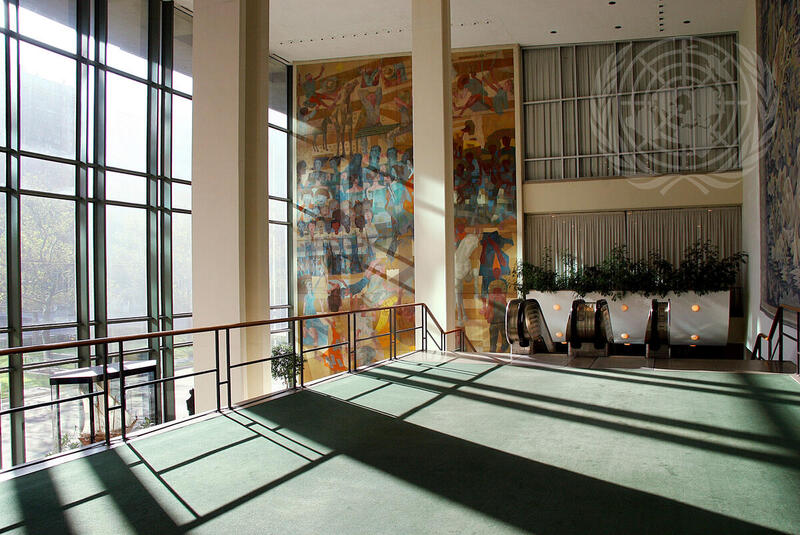
          3. United Nations Headquarters:
    2. Start Point:
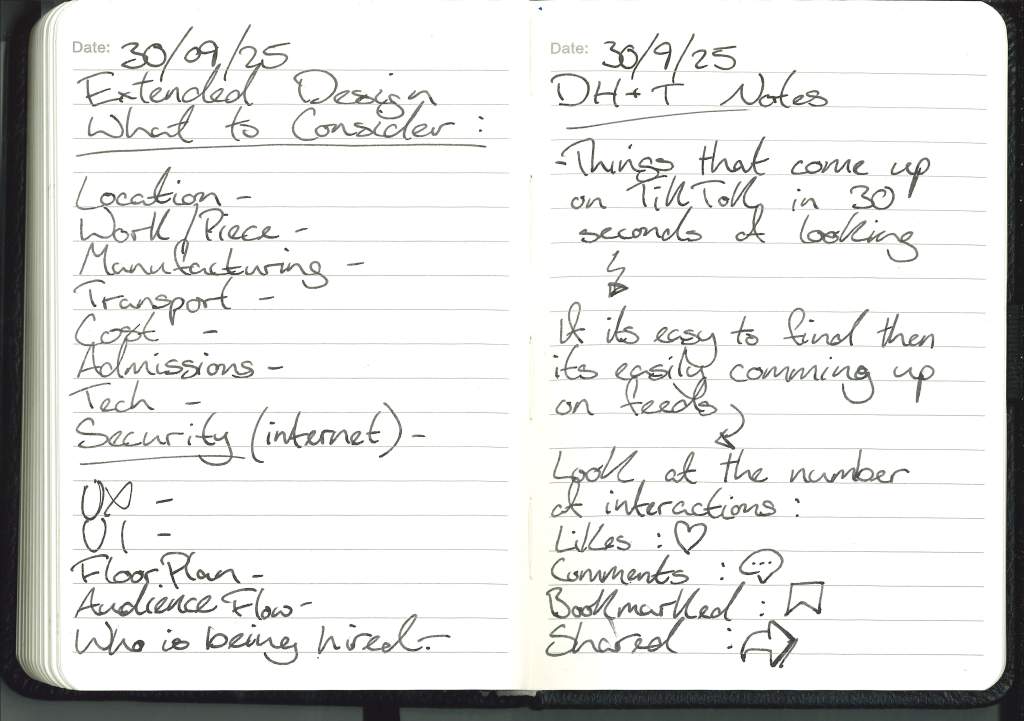
      1. Considerations:
      2. Previous Prototype Sketches:
      3. Previous Prototype Documentation:
    3. Extending Design Group Tutorial Notes:
      1. Simplification:
    4. Tutorial with Cat:
      1. Glasgow’s Sister Cities:
        1. Where in those cities?
          1. Glasgow, Scotland:
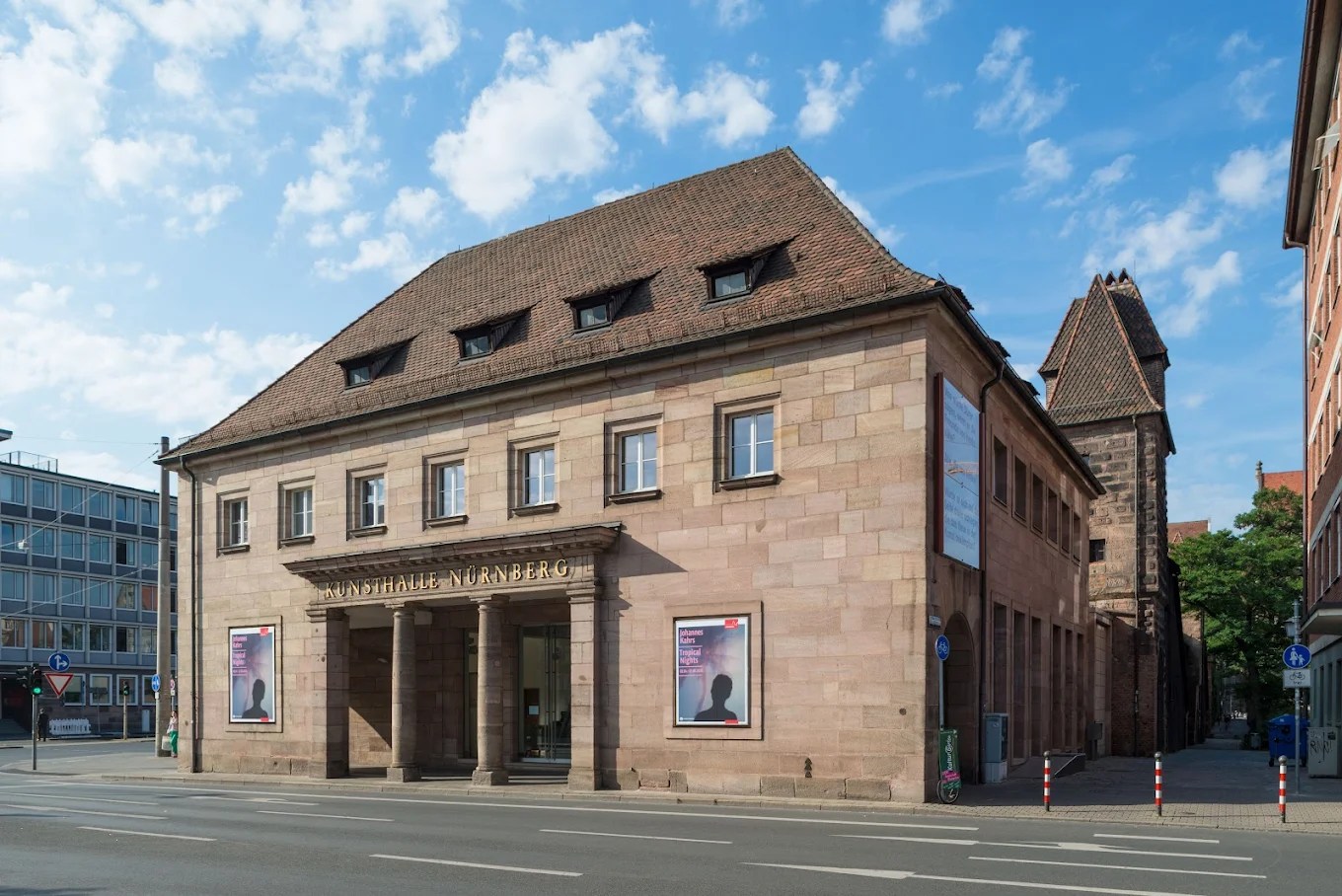
        2. Nuremberg, Germany:
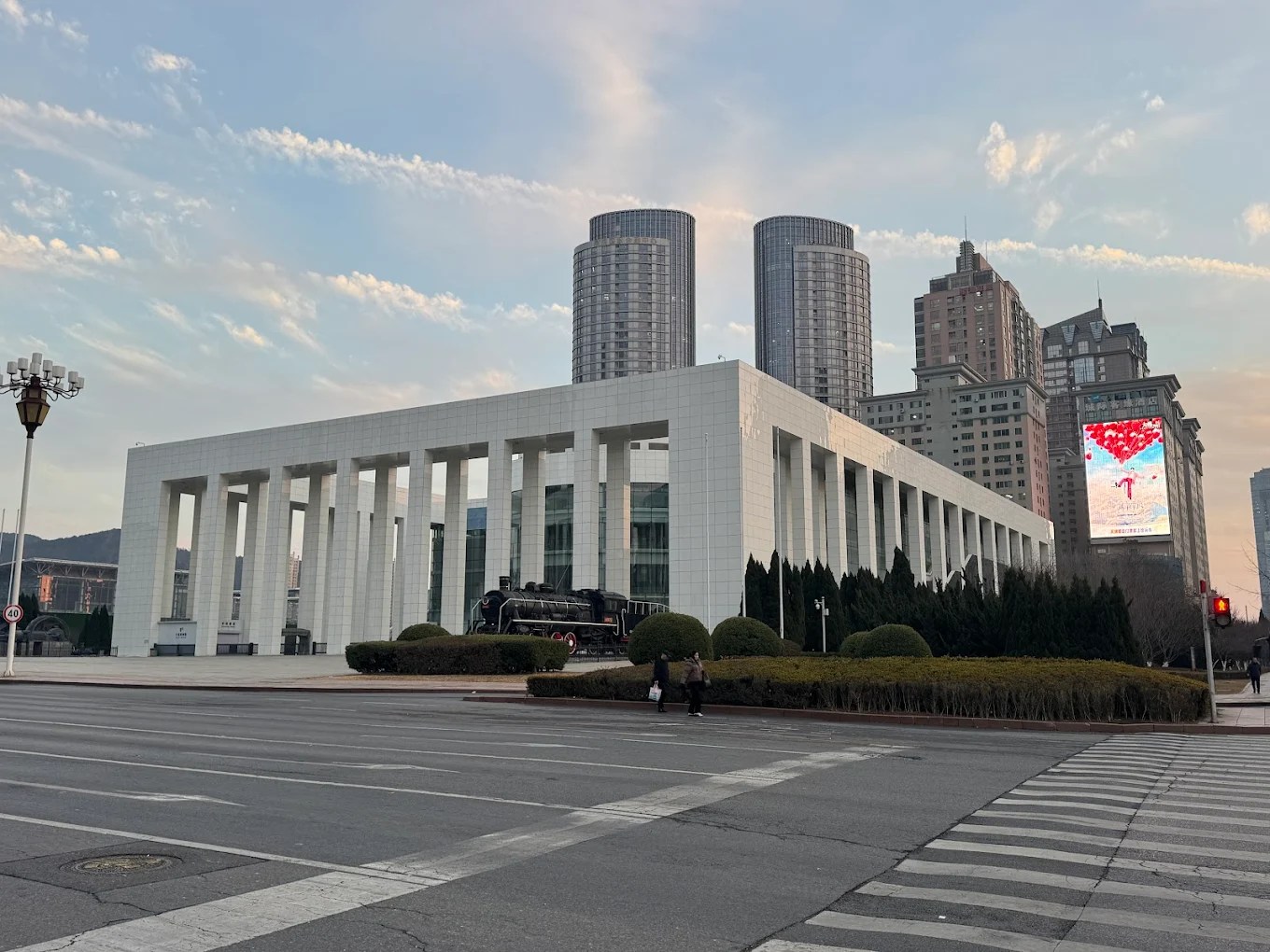
        3. Dalian, China:
        4. Havana, Cuba:
        5. Turin, Italy:
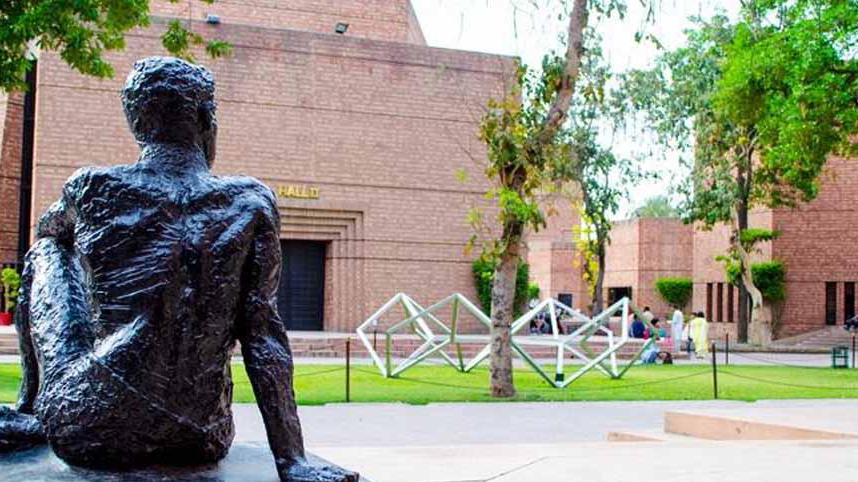
        6. Lahore, Pakistan:
        7. Marseille, France:
        8. Bethlehem, Palestine:
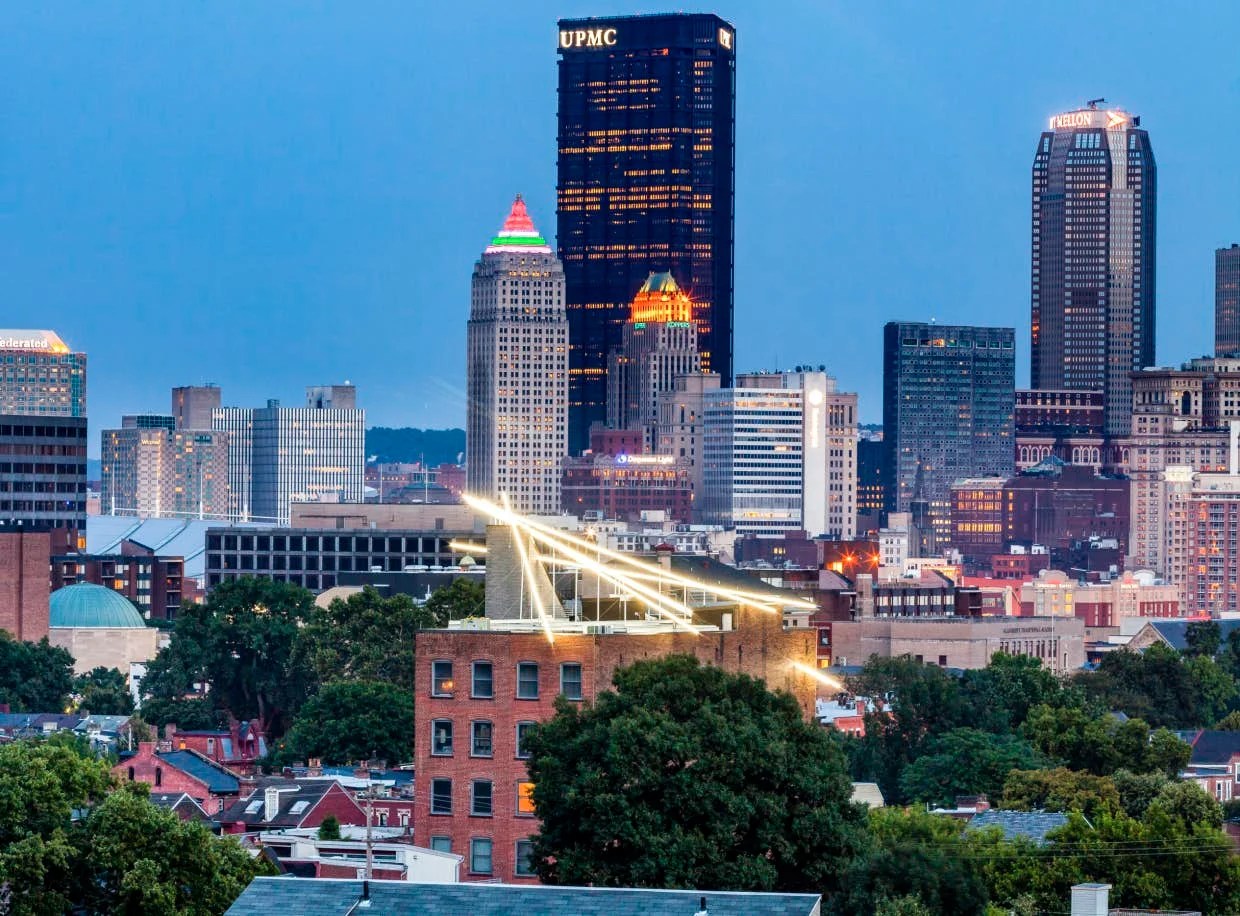
        9. Pittsburgh, United States of America:
        10. Mykolaiv, Ukraine:
      2. Colour Schemes:

    Initial thoughts:

    QR Code:

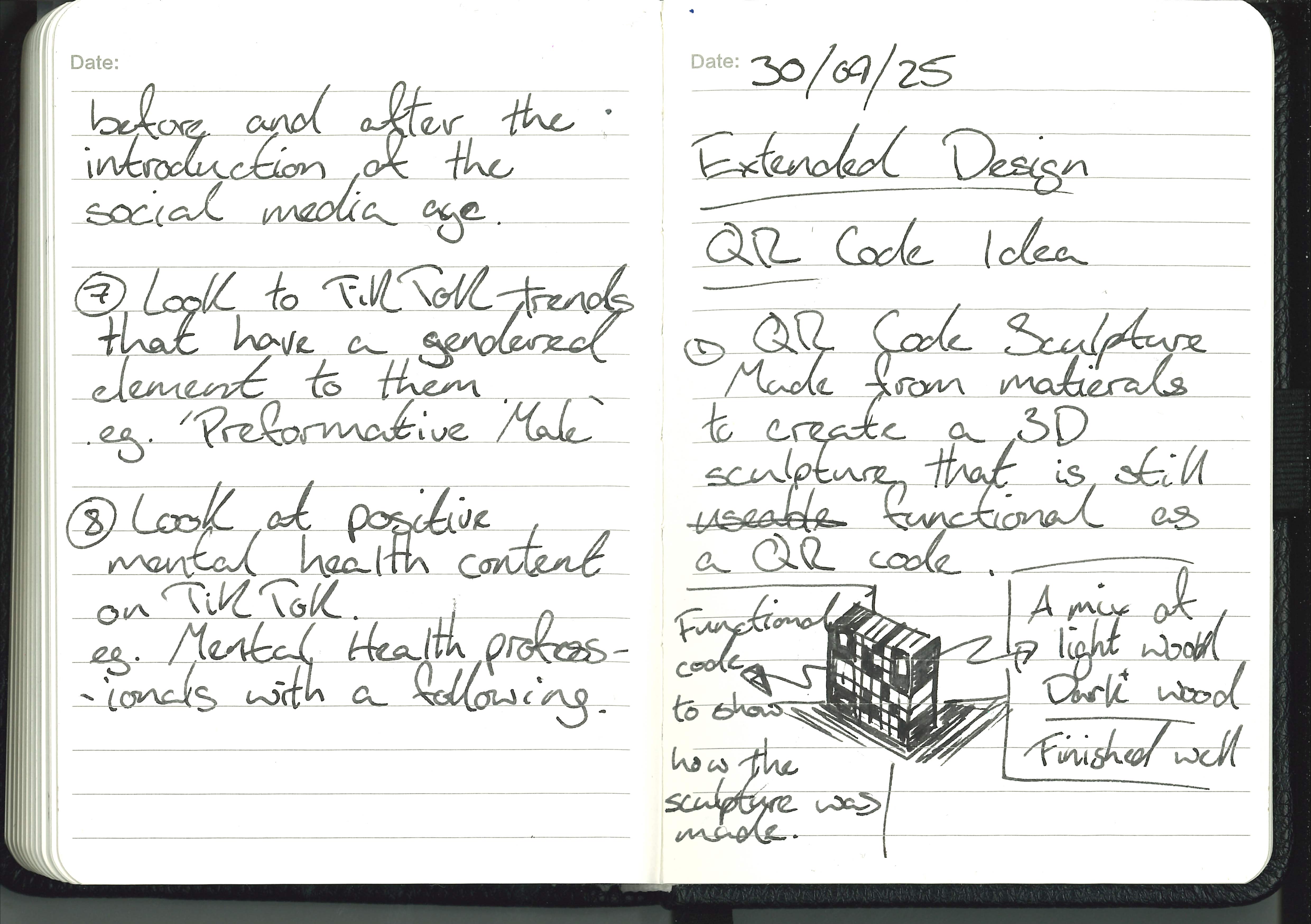
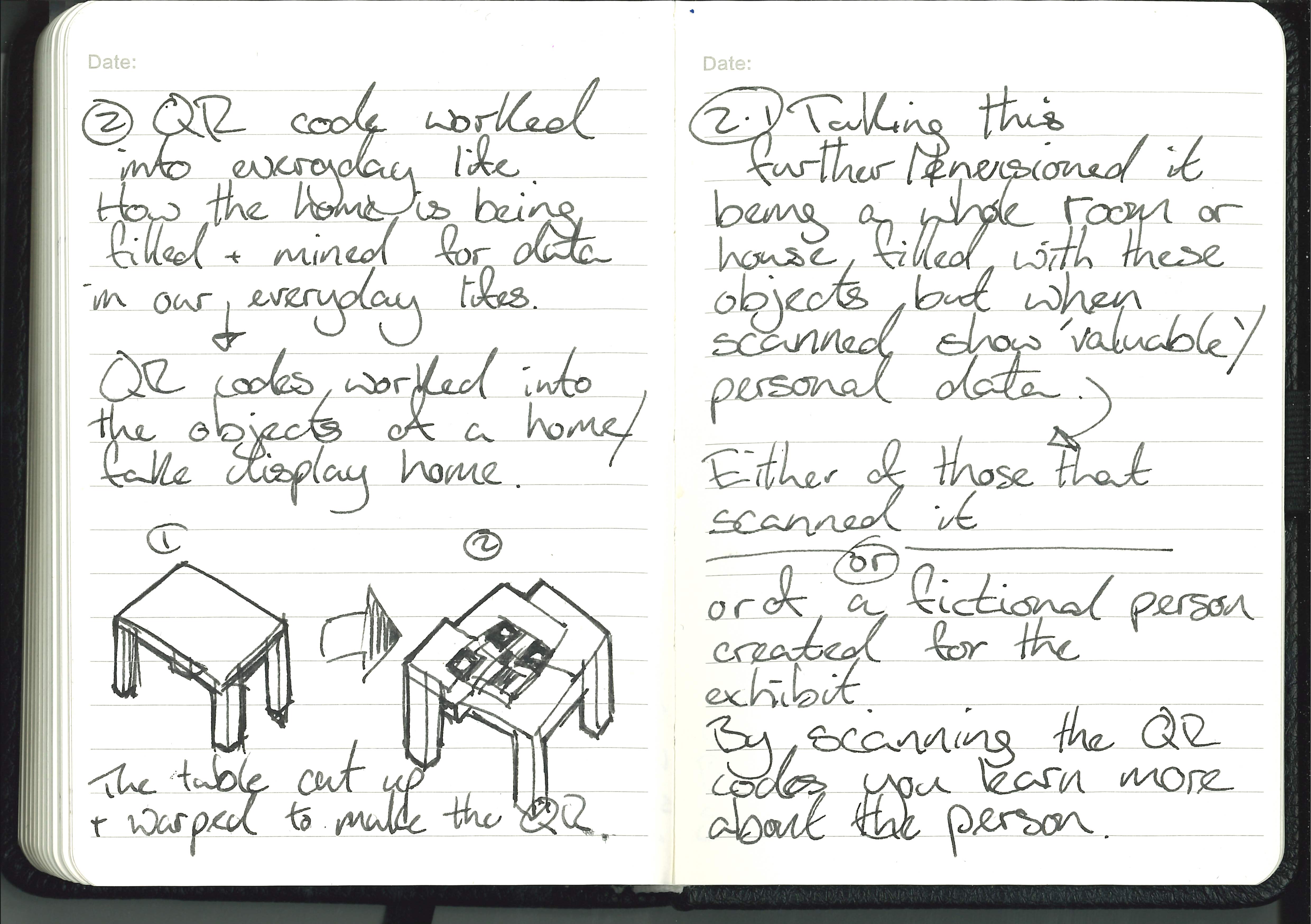
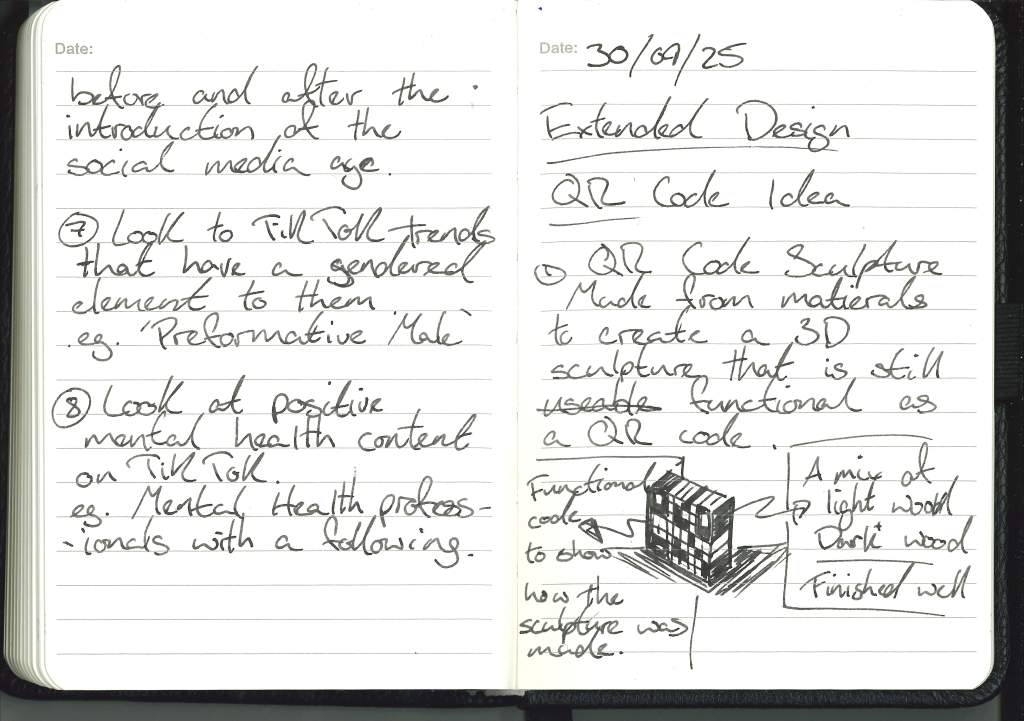
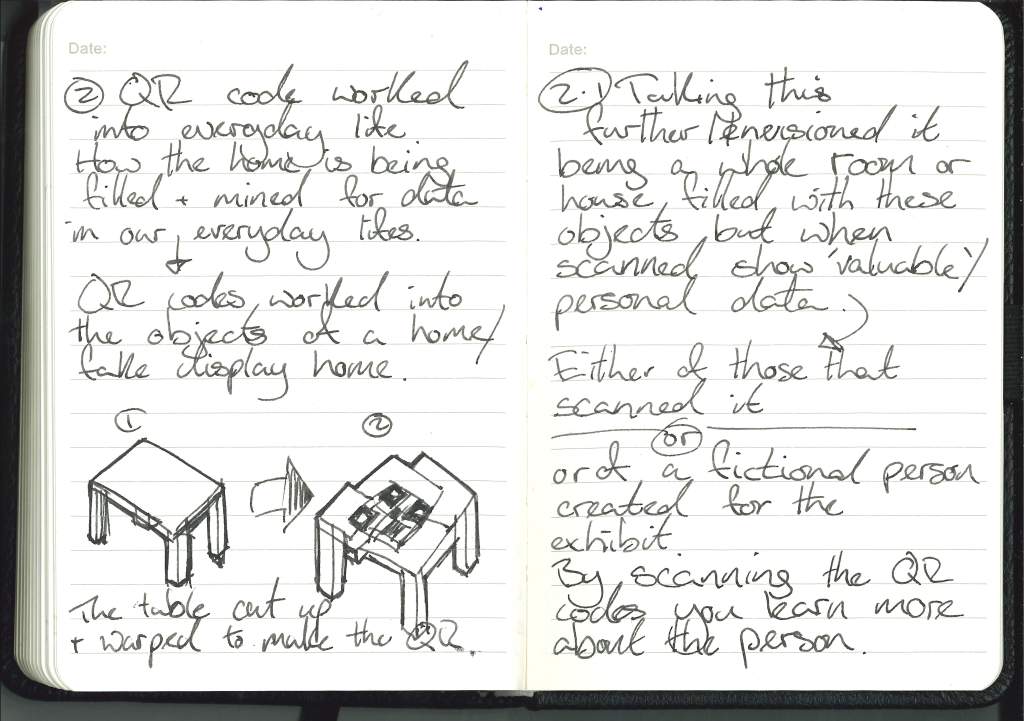
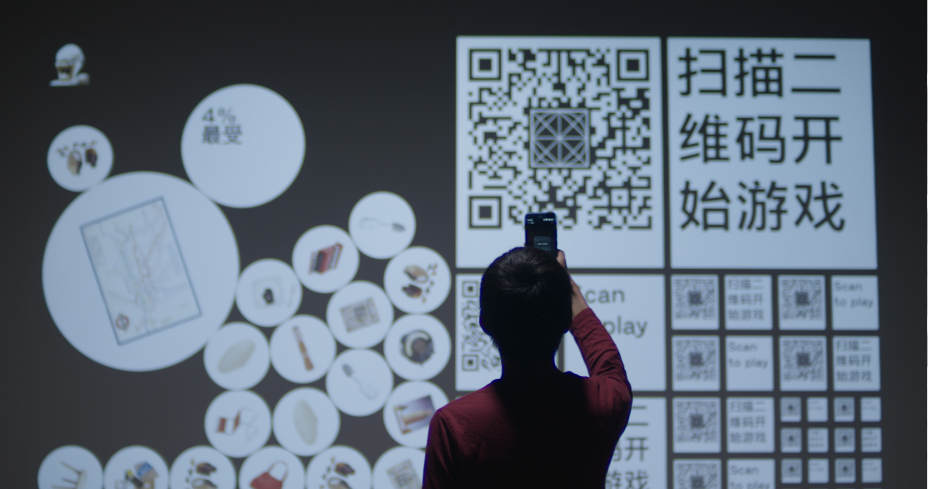
    Today, the QR Code is slapped on the bottom of forms, screens, and posters with very little thought, a second thought. With this work, I want to put the QR code at the front, make it the main focus and explore the idea that it is a portal of information.

    Idea 01:

    With this concept, I want the footage to be just as polished as the sculpture and have the relationship between them to be clear and cohesive.

    Idea 02:

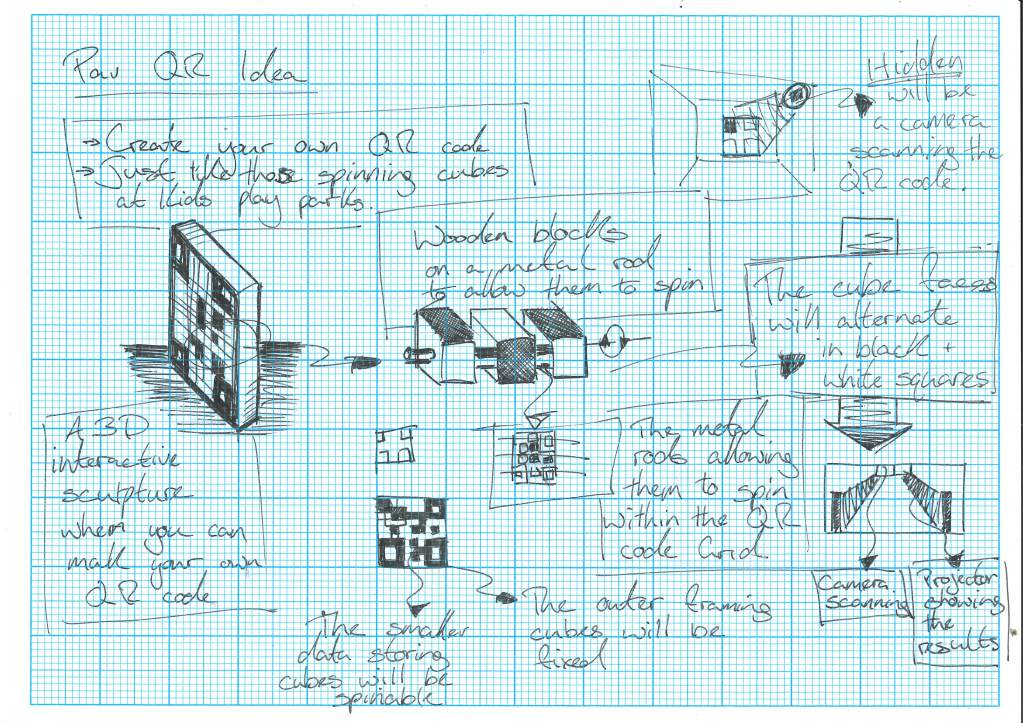
    Another idea is to create an interactive sculpture with spinable pieces so users can create their own QR code and see where it leads.

    Obviously, the QR codes will need to be tested to avoid accidentally scanning anything rude.

    Chandelier:

    Idea 01:

    At this moment, I think another possible idea would be to carry my Expressive Data project from last year forward as the extended design project.

    This button will take you to this project for a more in-depth look.

    During the development of that project the idea was floated that this chandelier or collection of chandeliers is more akin to a light sculpture and data visualisation, and that it would be very fitting in places such as the United Nations headquarters in New York or the Nobel Peace Centre in Oslo, so remembering this I have asked a friend of mine, Elias, who might be working with the Nobel Peace Centre in Oslo for his masters.

    Possible Locations:

    GoMA:

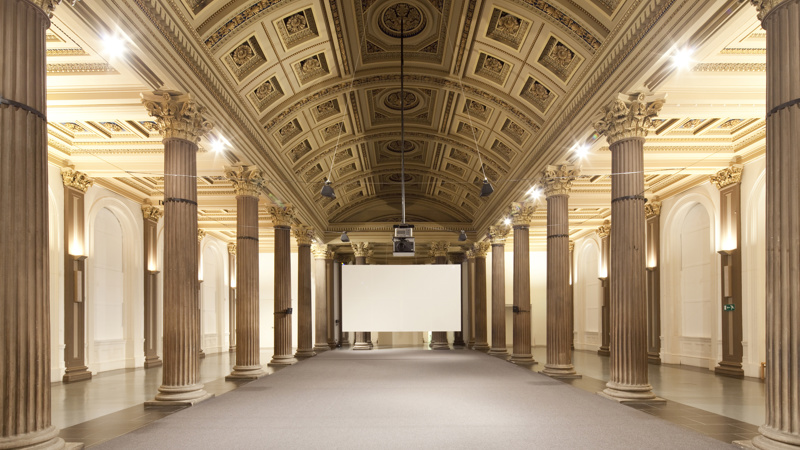
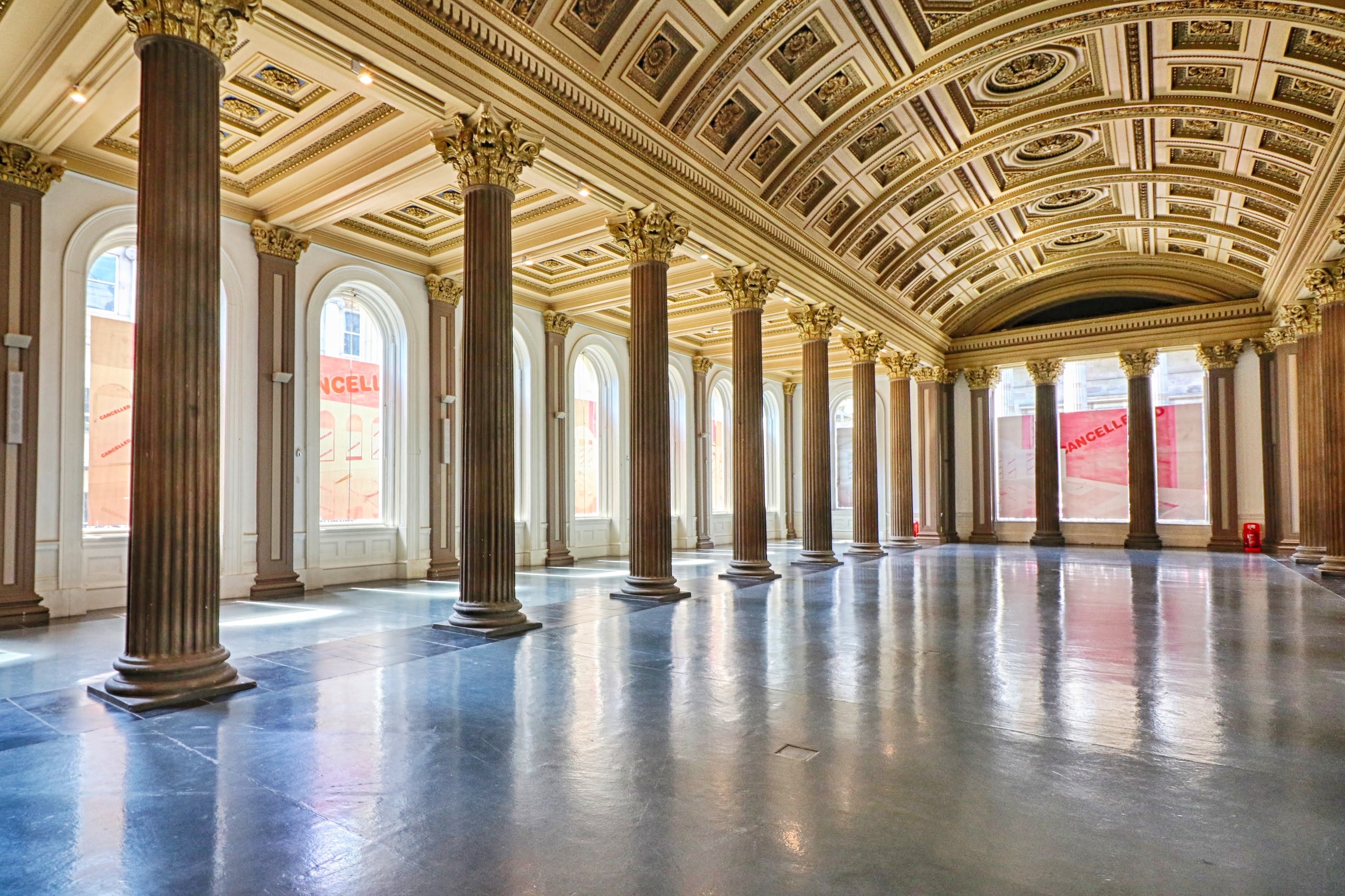
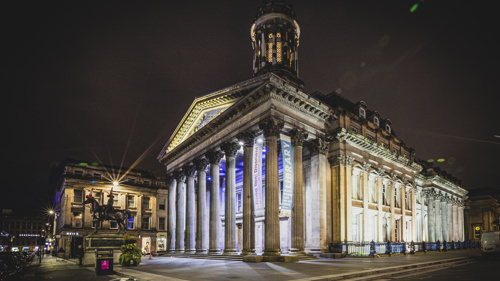
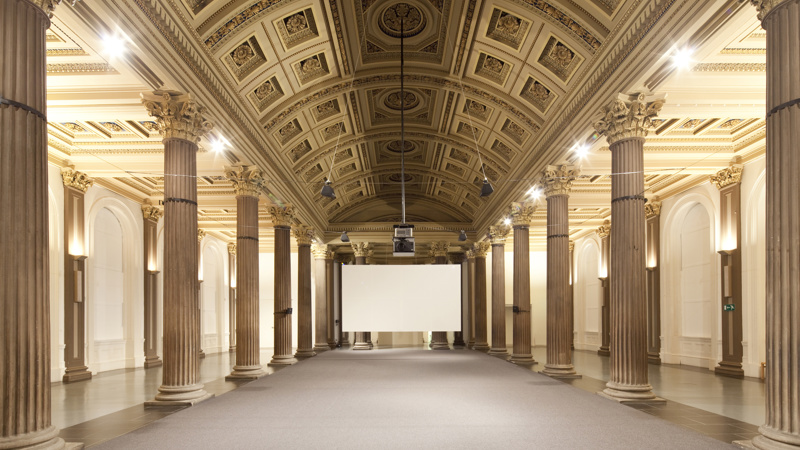
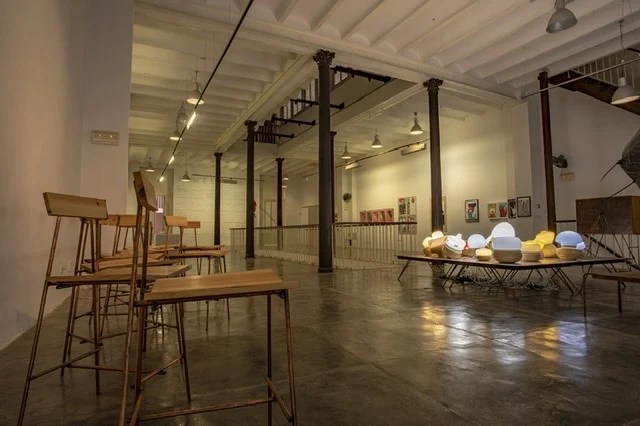
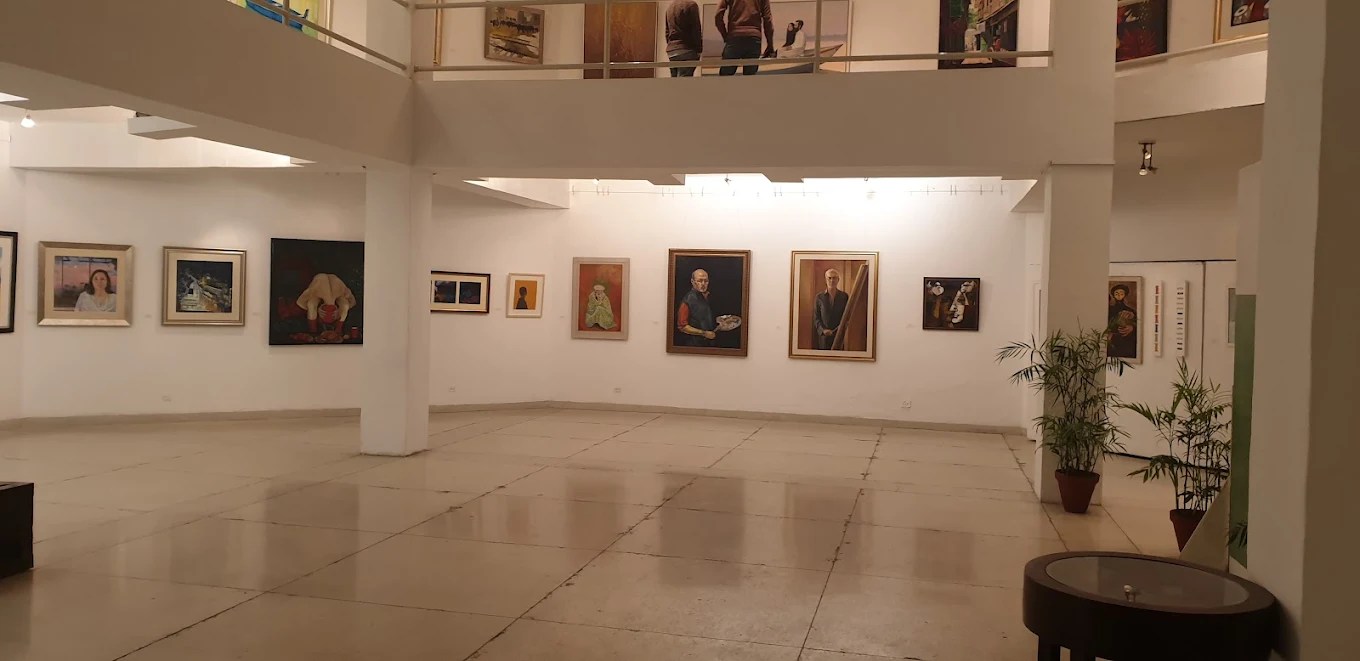
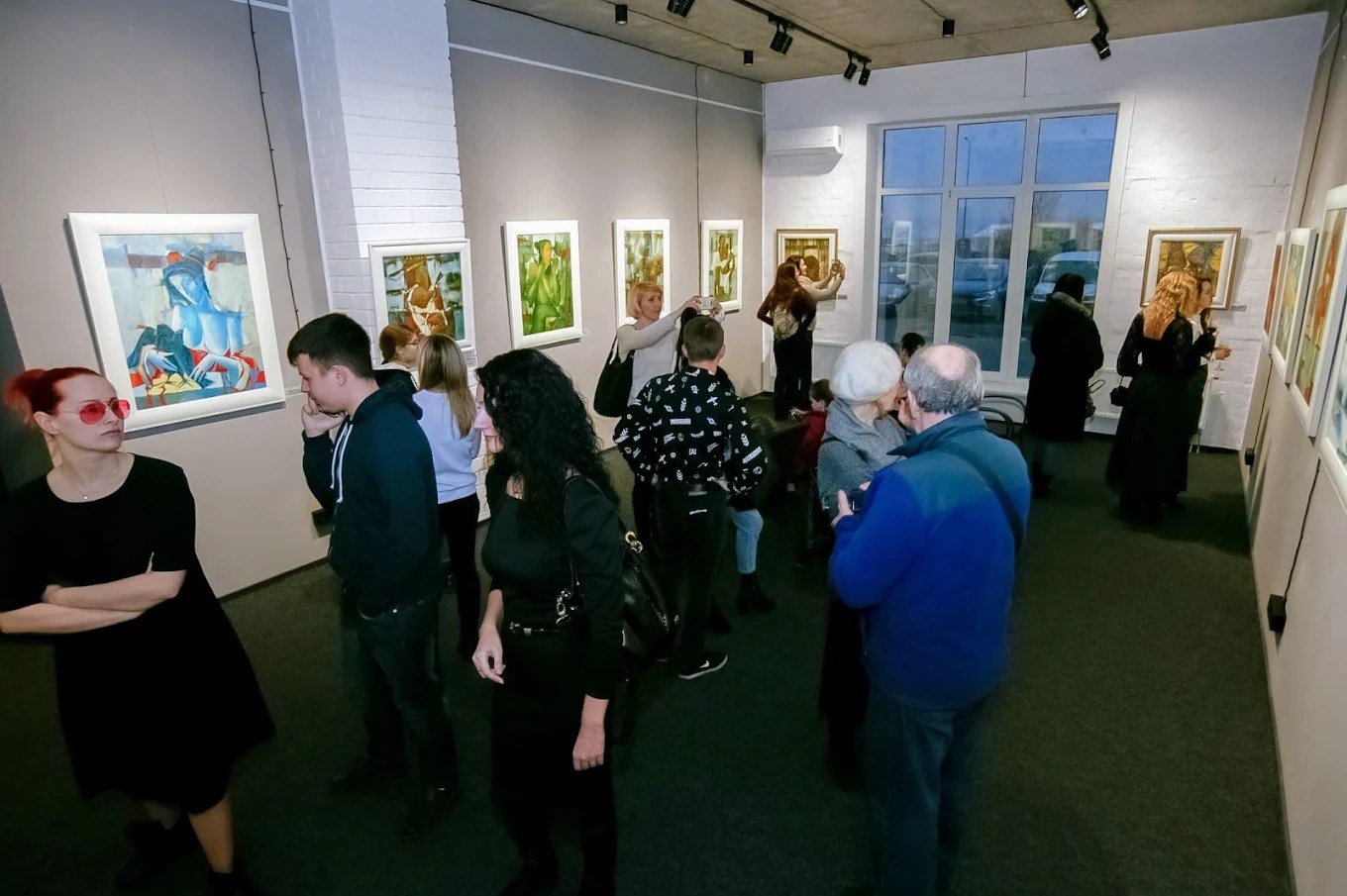
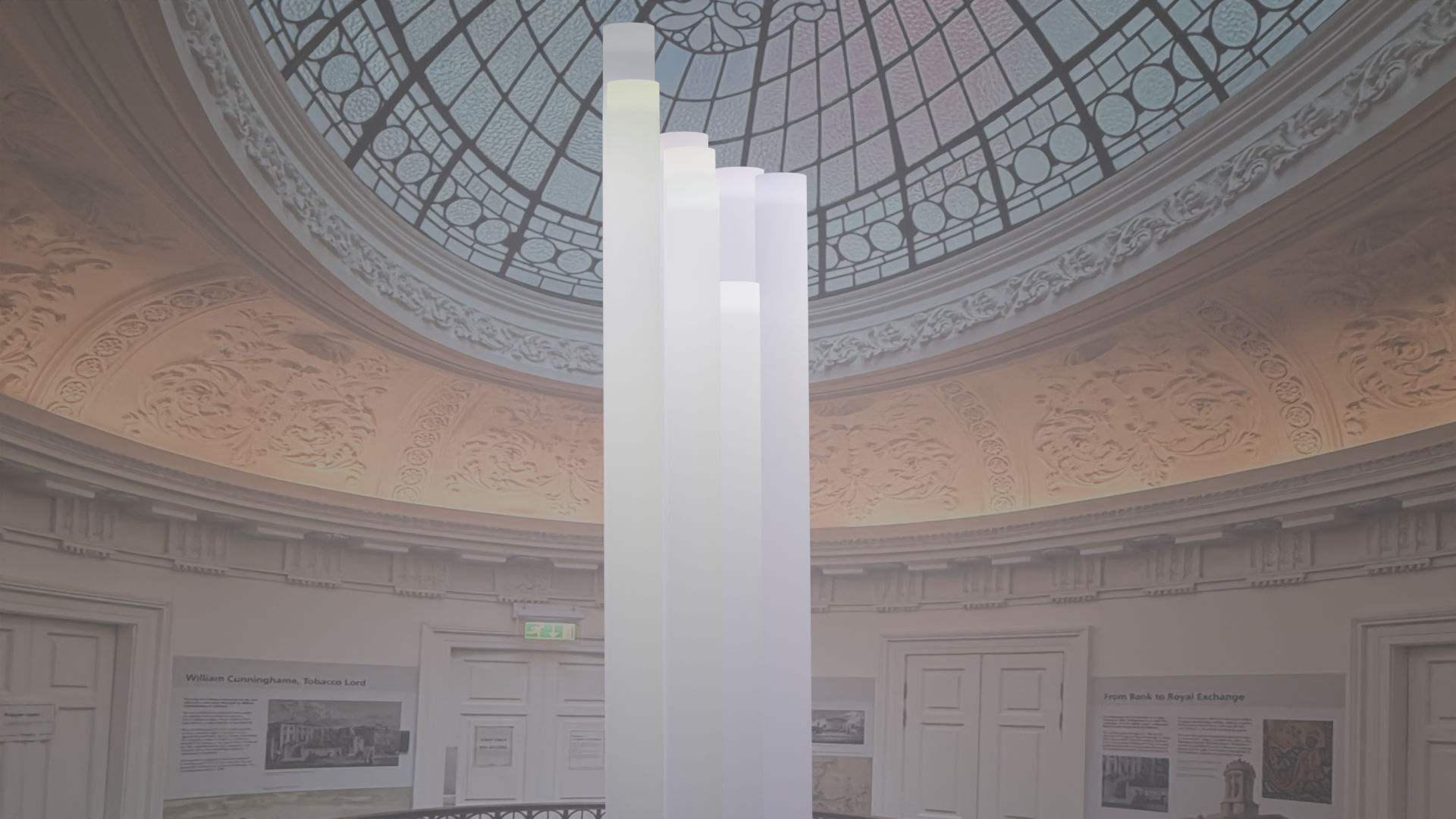
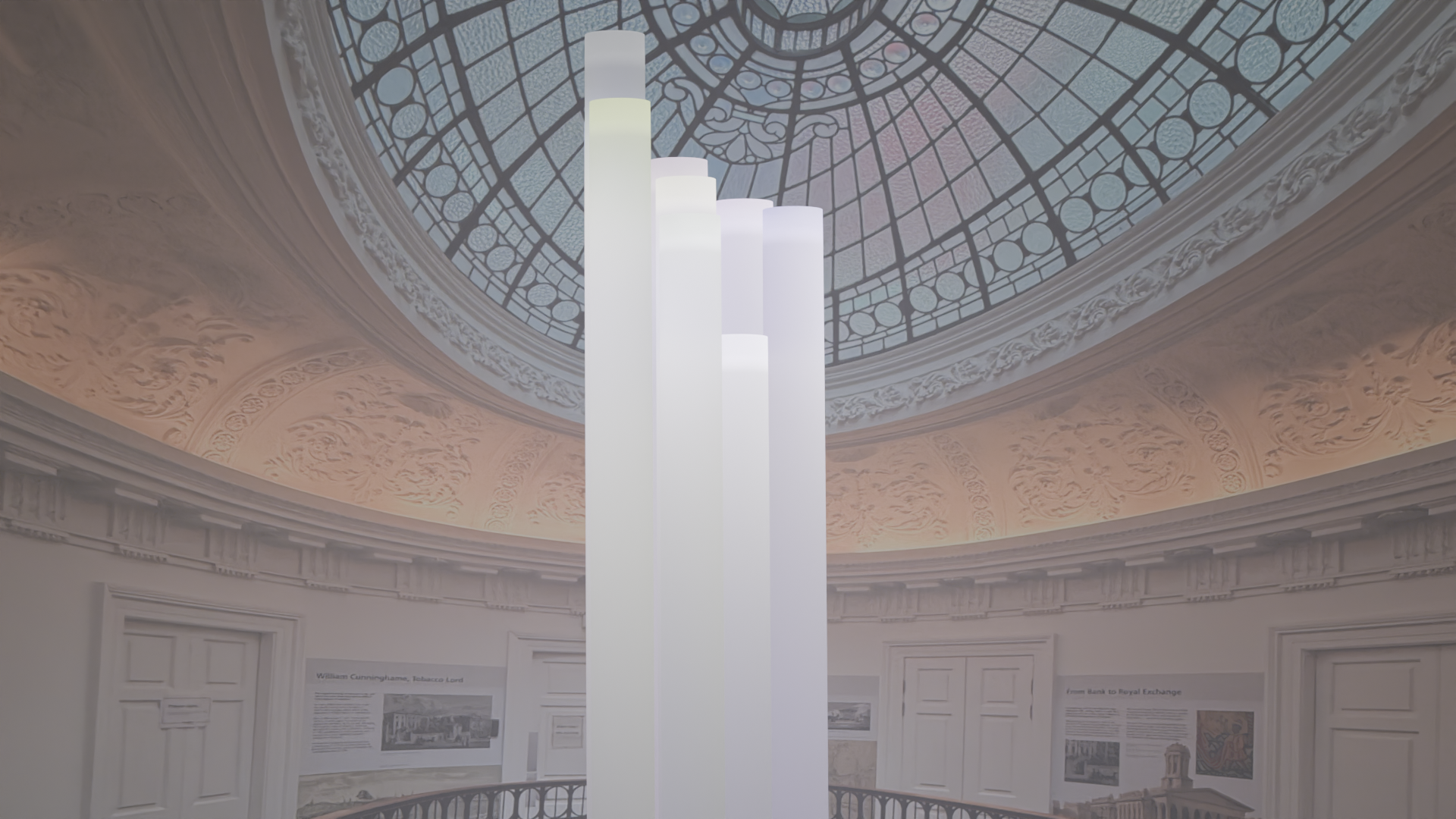
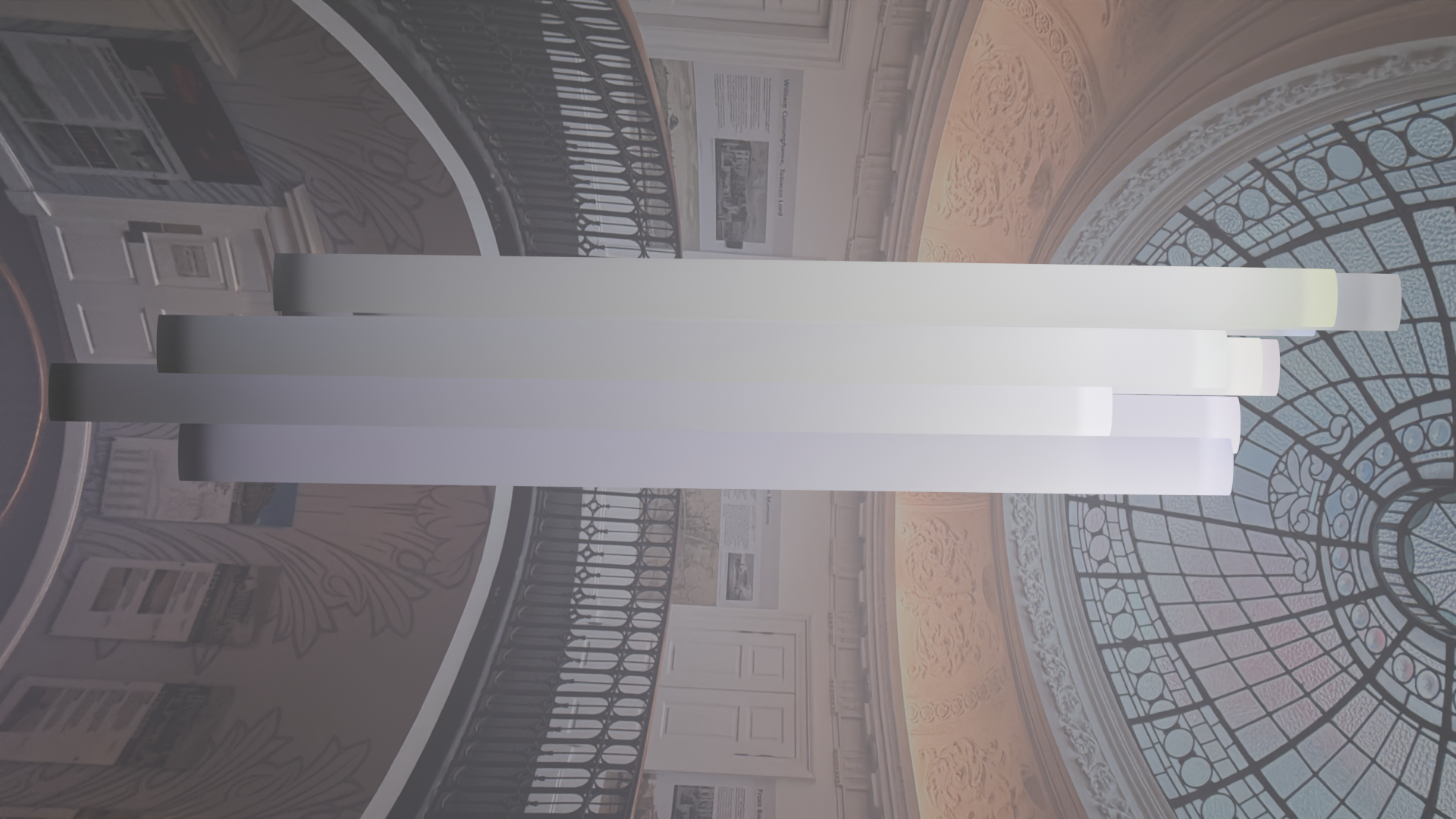
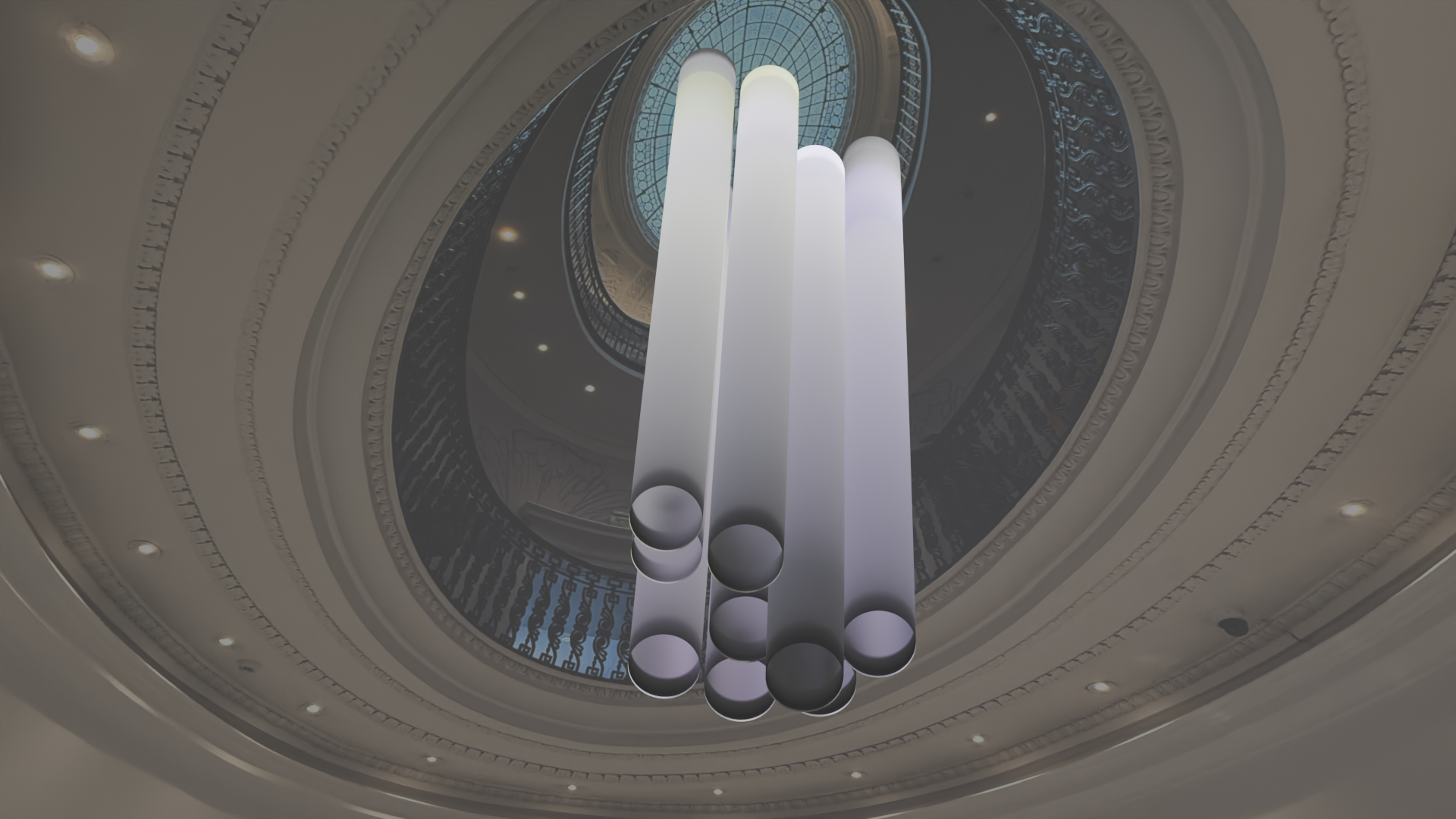
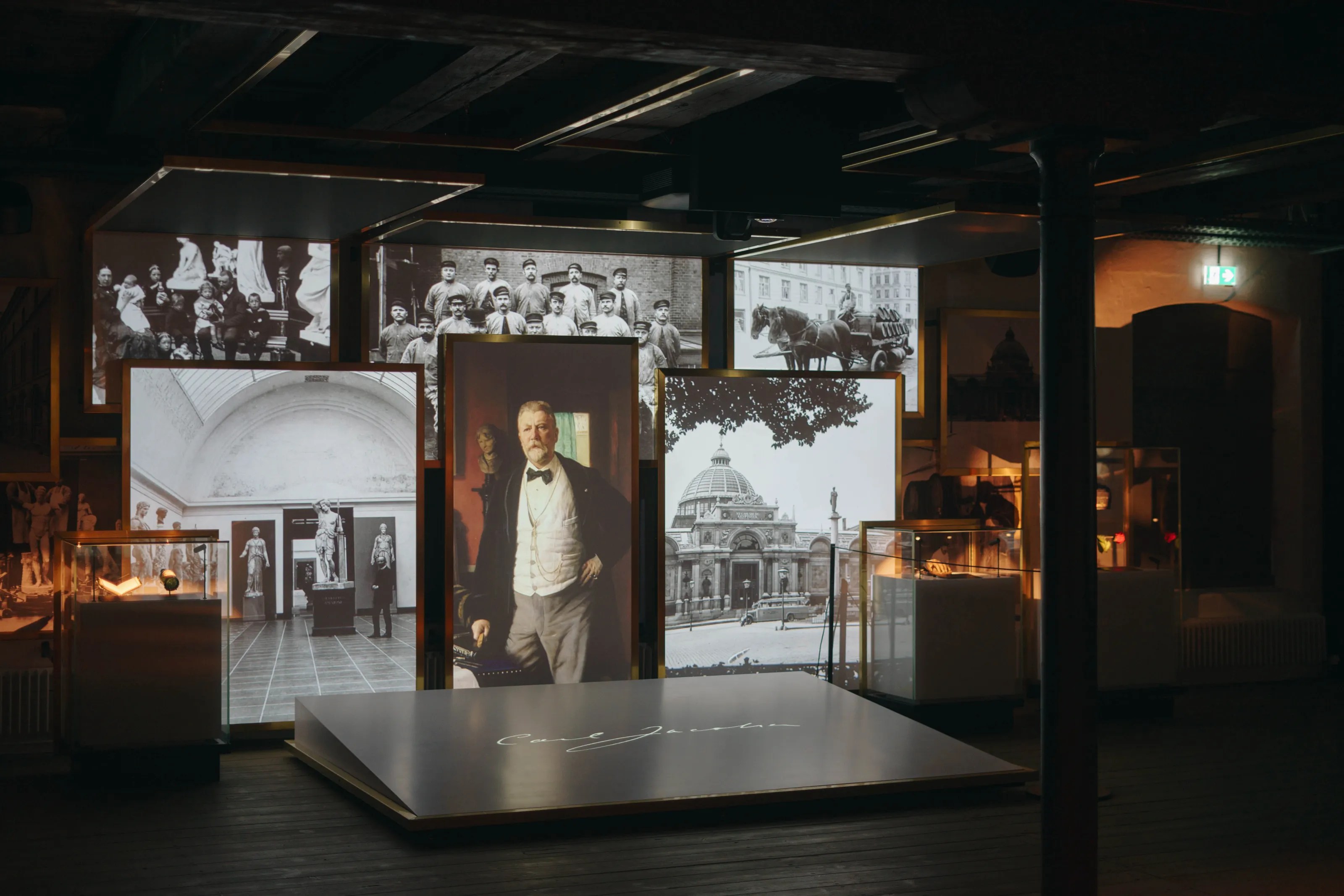
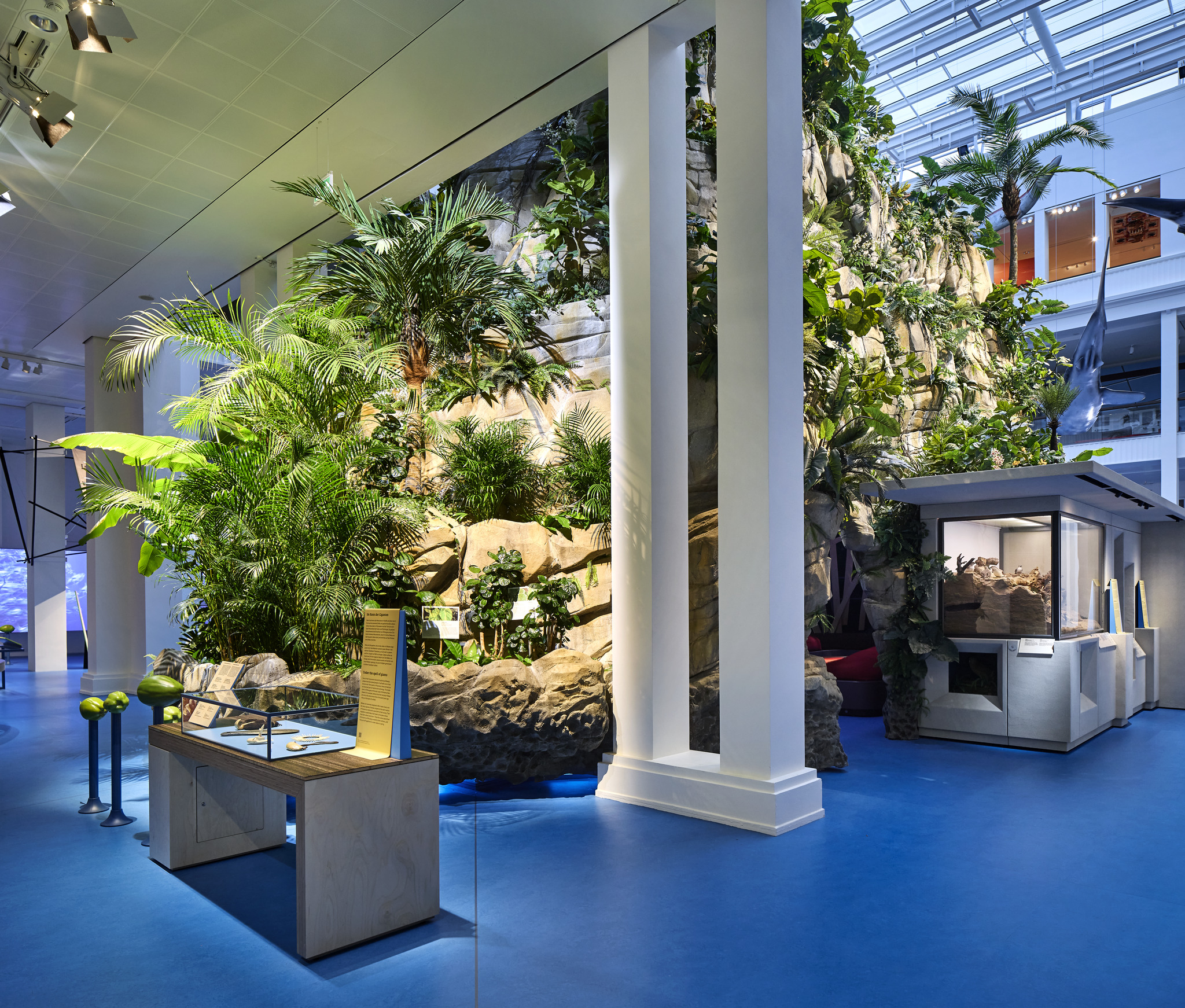
    As the GoMA is well known to me, it was one of the first places I considered when thinking about Extending Design. It’s easily accessible, and the space is open and dynamic. Here, I have shown the main hall as I think it would be a space for showcasing all of the chandeliers. Still, as I write this, I remember the balcony area and how one of the chandeliers would hang down through all 3 levels, allowing an up-close look at one of them.

    The GoMA would also be ideal for the QR code sculptures within the space, displayed as shown above, completely open and well-lit, with natural light flooding the space.

    Nobel Peace Centre:

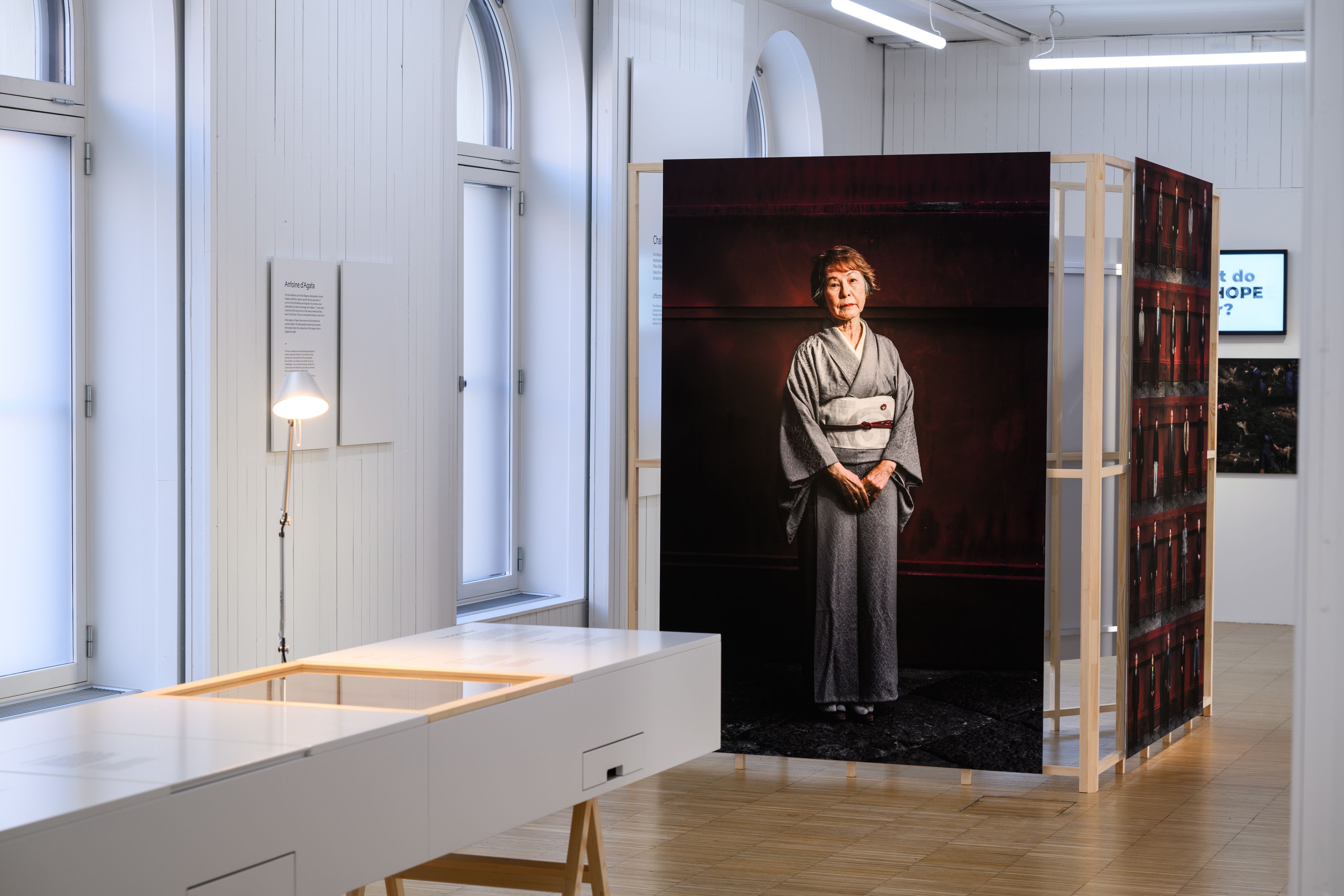
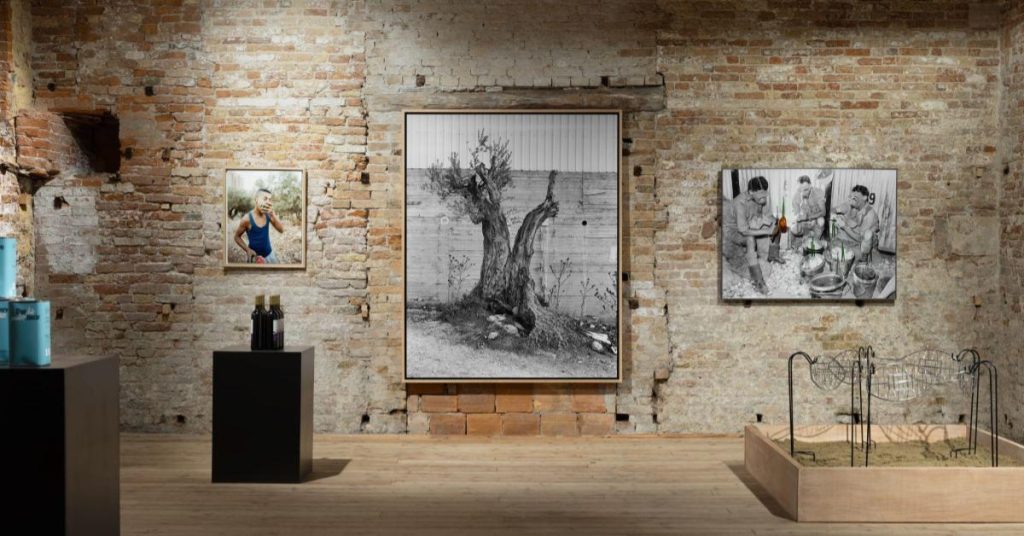
    The Nobel Peace Centre in Oslo was initially mentioned when the project extending the Design was first undertaken, as it focuses on rewarding those who seek to bring peace and improve the well-being of mankind. I feel that a piece focusing on the beauty of the human routine would be warmly welcomed there. The Nobel Peace Centre is also no stranger to hosting art exhibitions that align with its own mission.

    United Nations Headquarters:

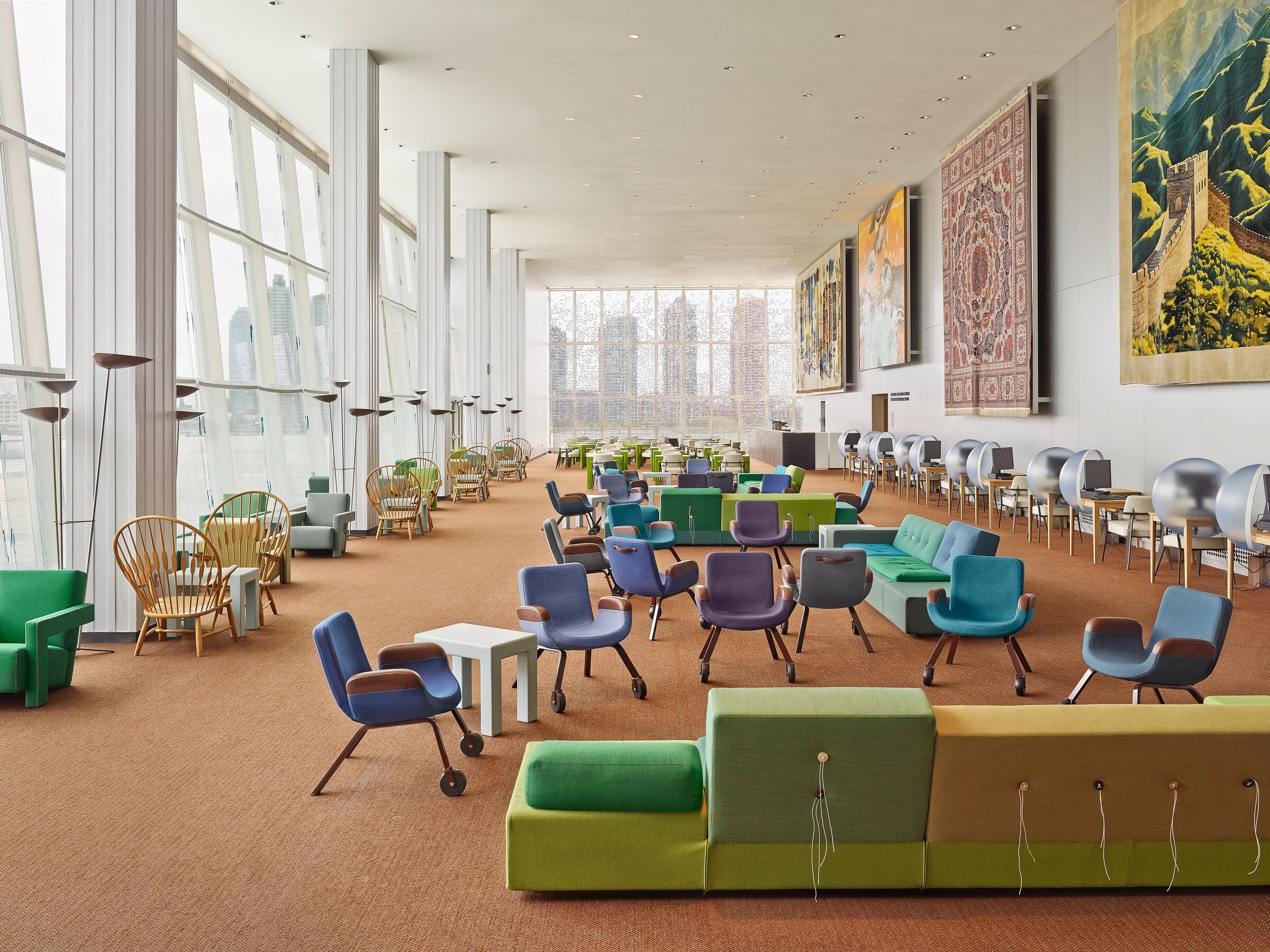
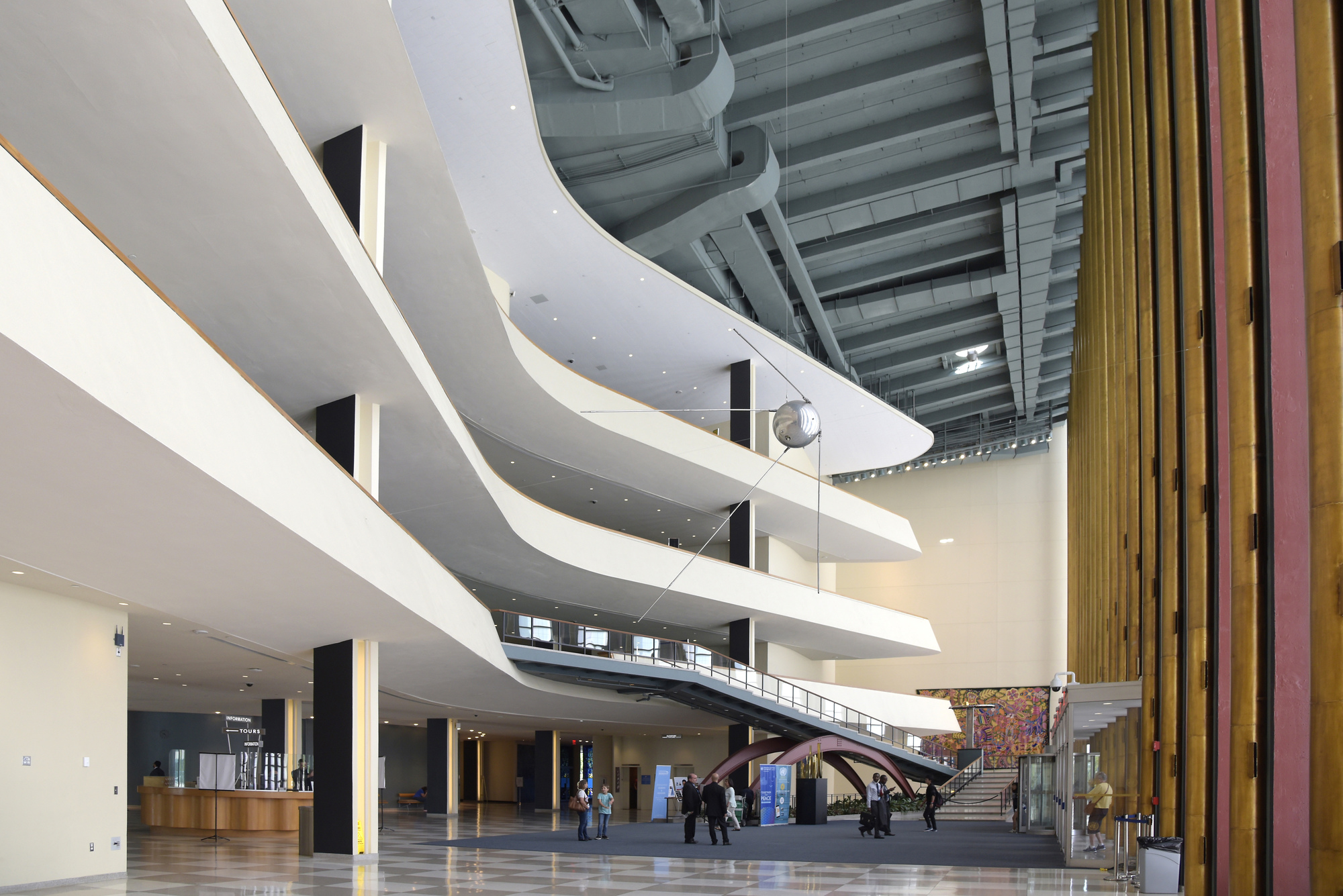
    As mentioned previously, the Nobel Peace Centre is an organisation that aims to achieve and maintain peace worldwide. As a place of work, I think the chandelier hanging in the space can be a gentle reminder of why they do what they do, to actively see a small representation of the lives they help.

    Start Point:

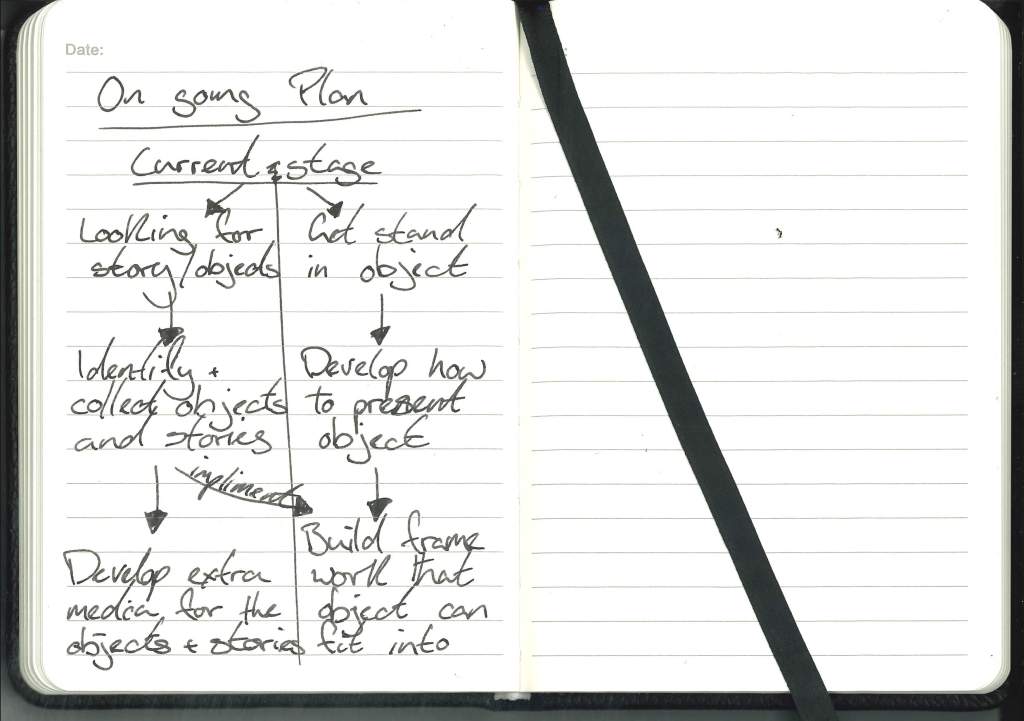
    Now that Extending DesiDesign officially started and I have had time away, I have settled on my plan and idea for it going forward. I will use my chandelier data visualisation, which will be displayed as a long-term light sculpture at one of the previously discussed locations above.

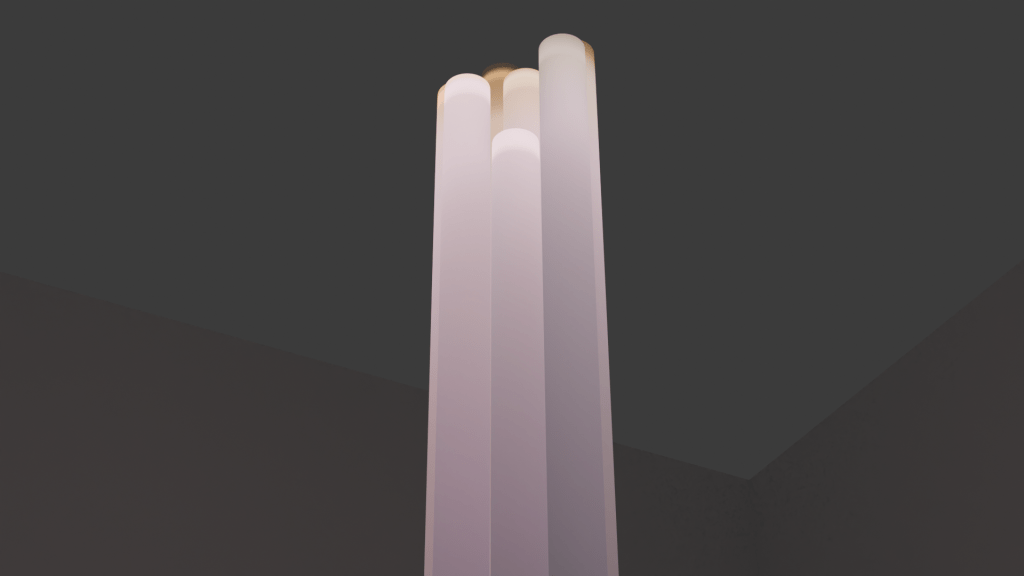
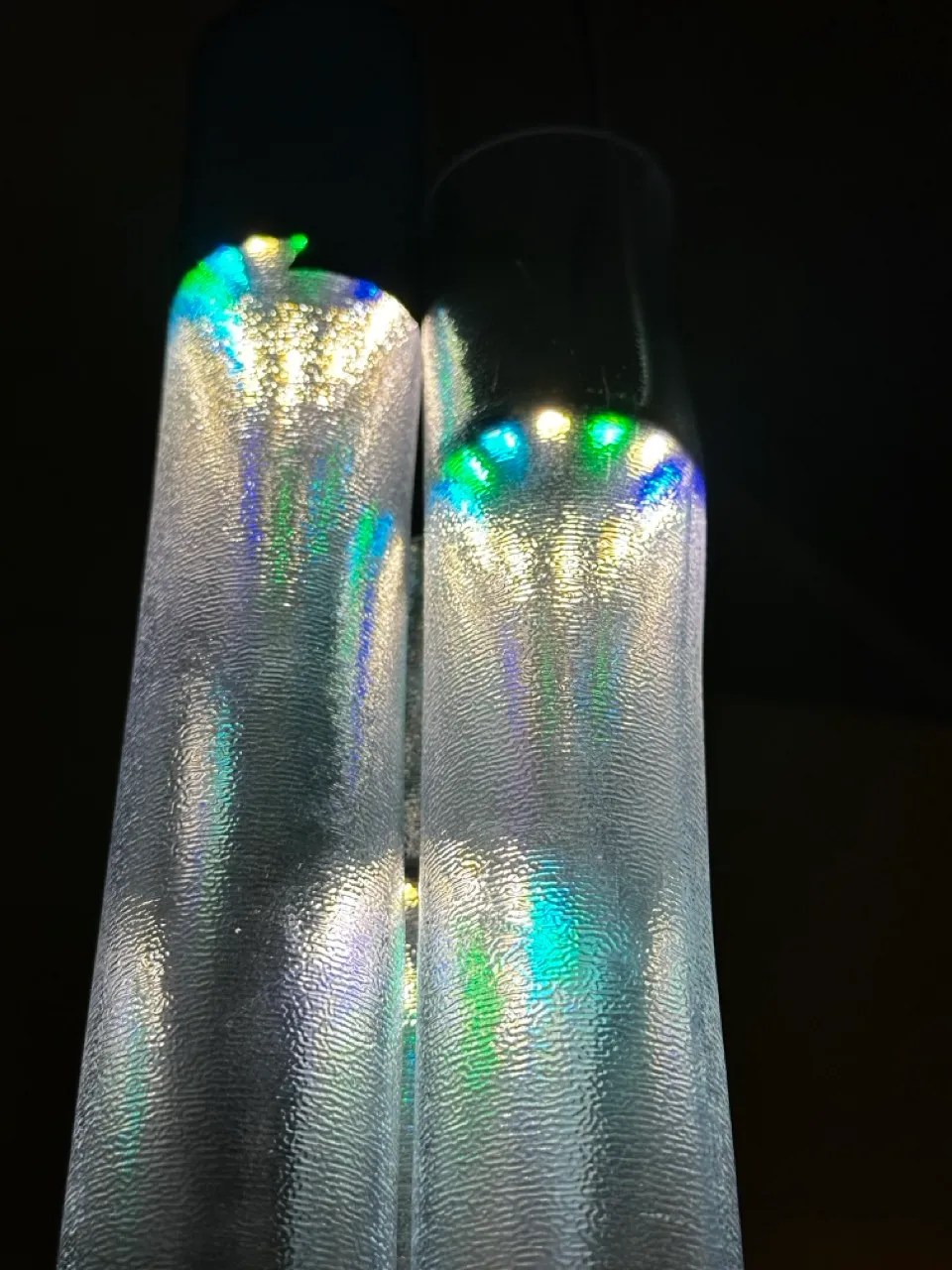
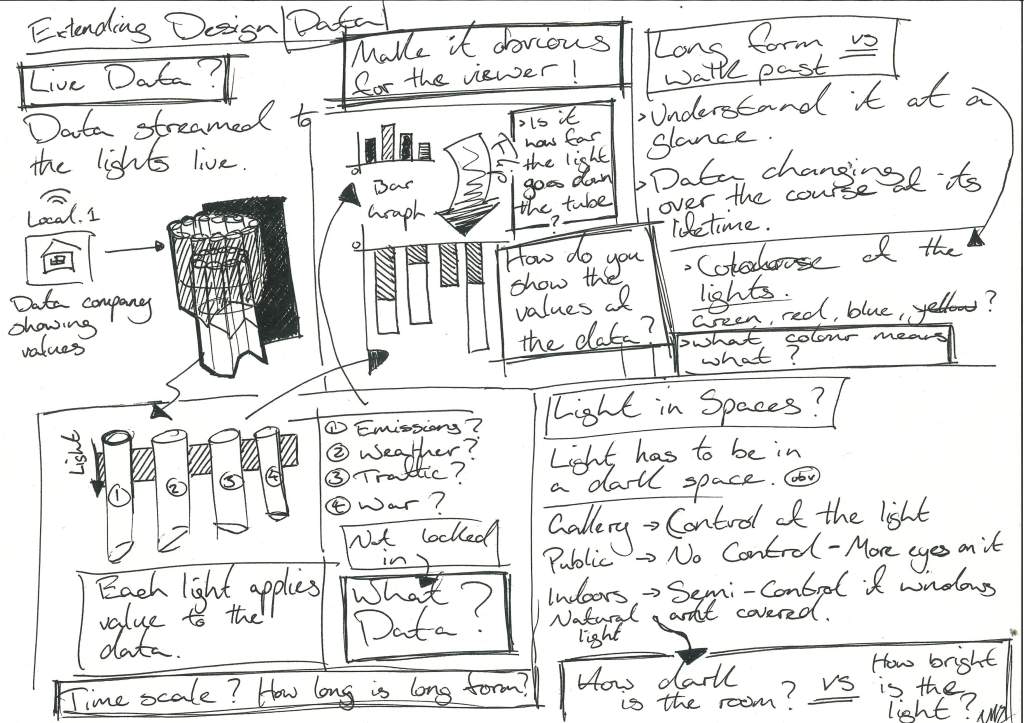
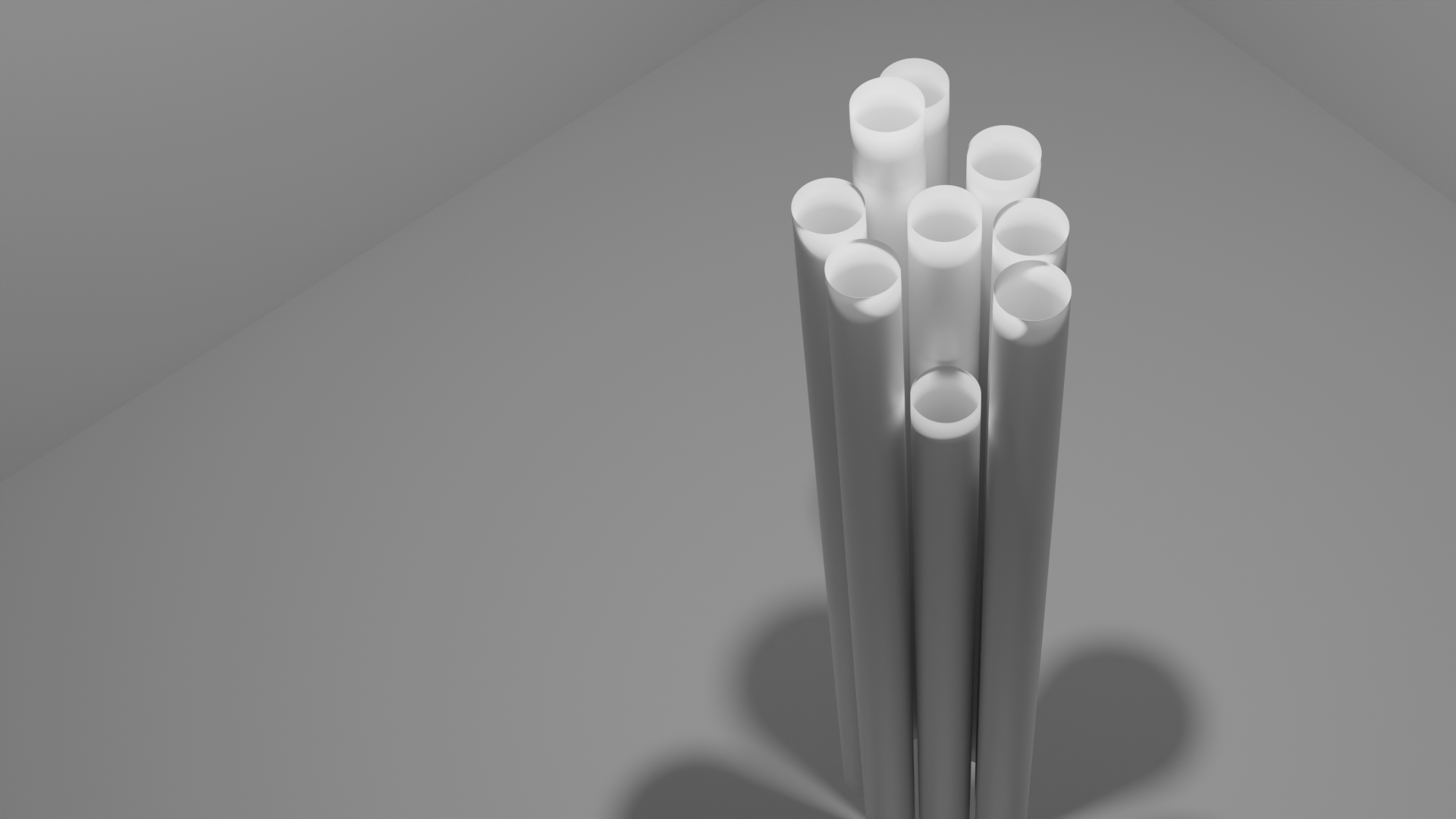
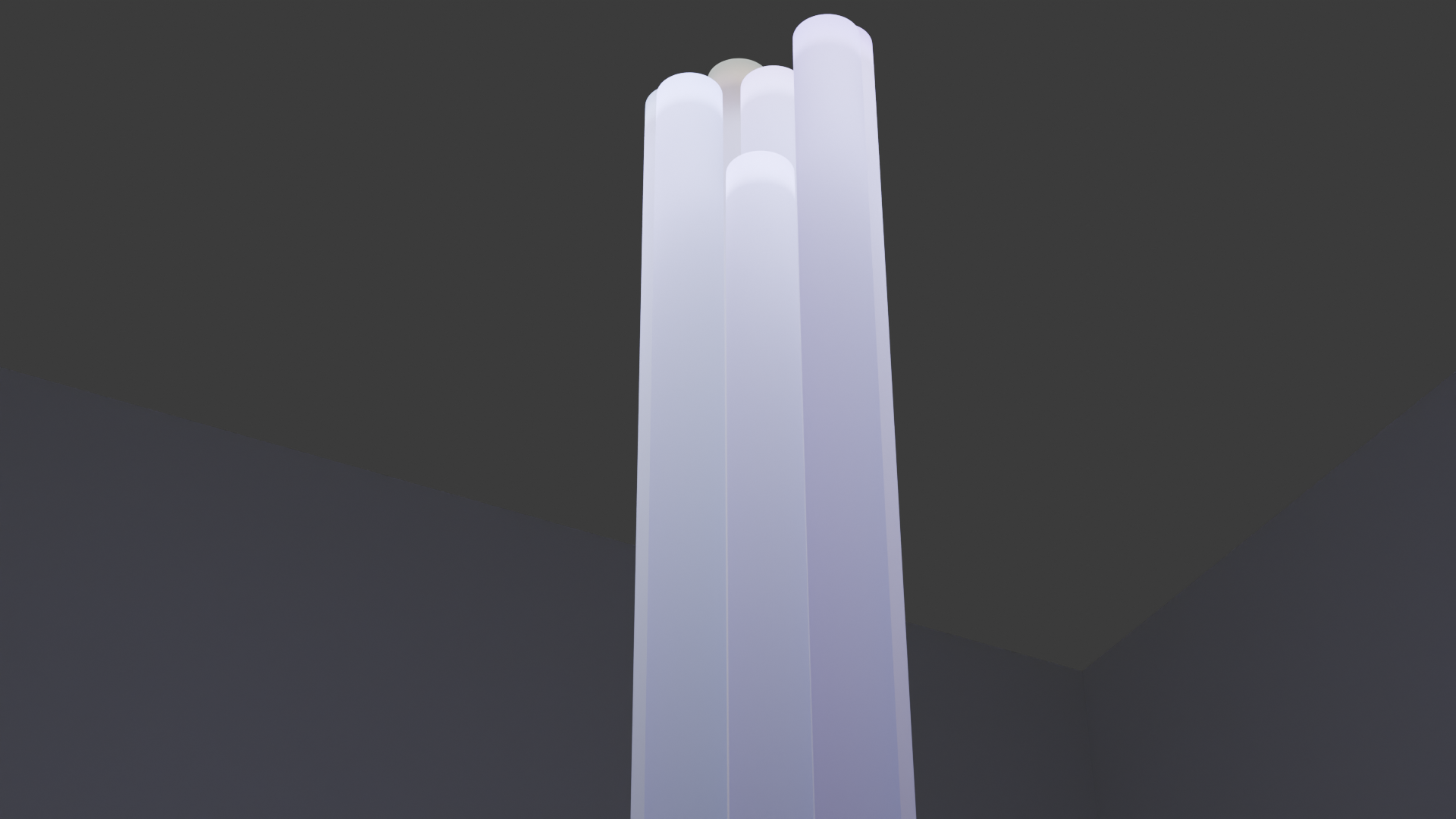
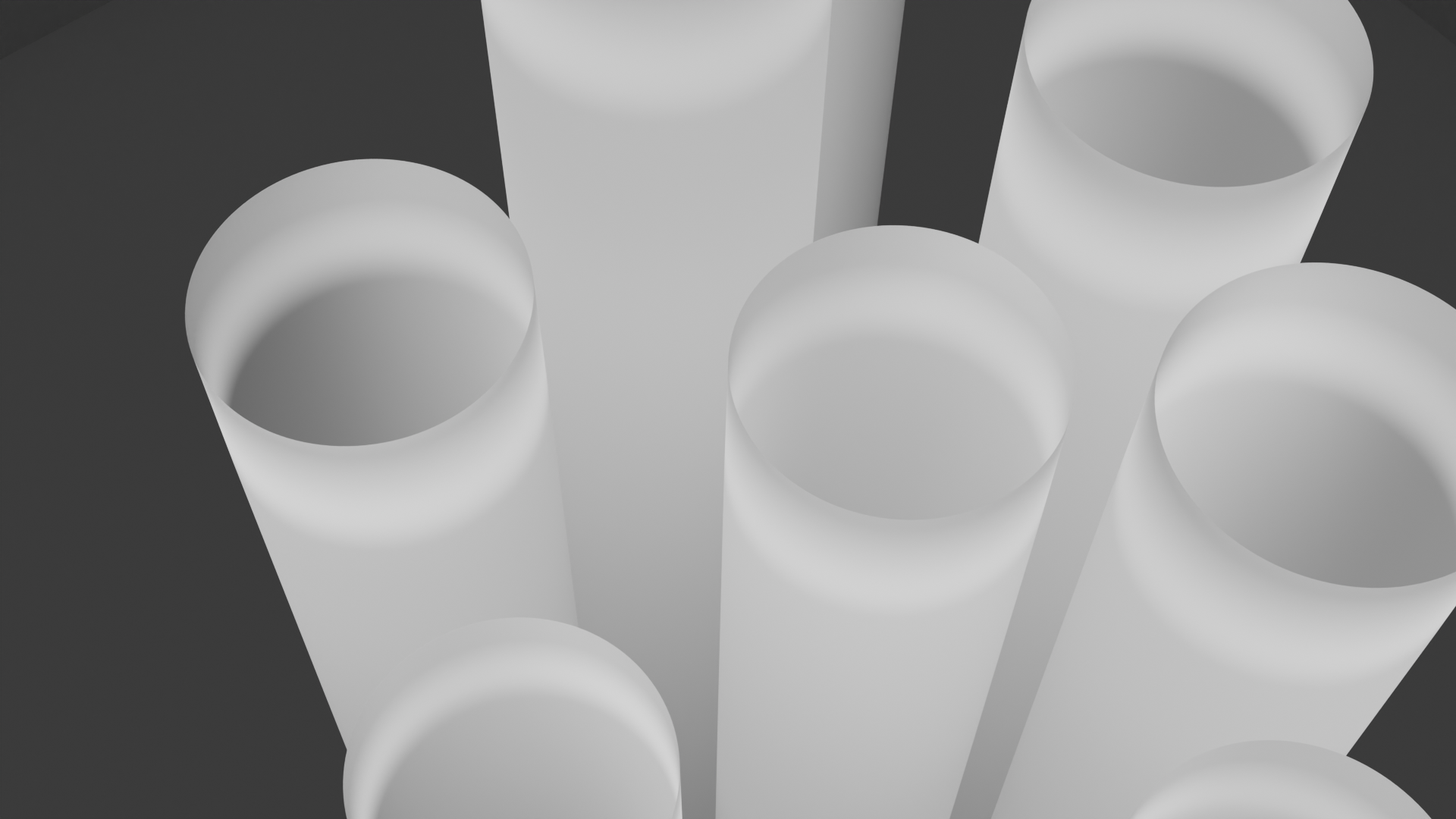
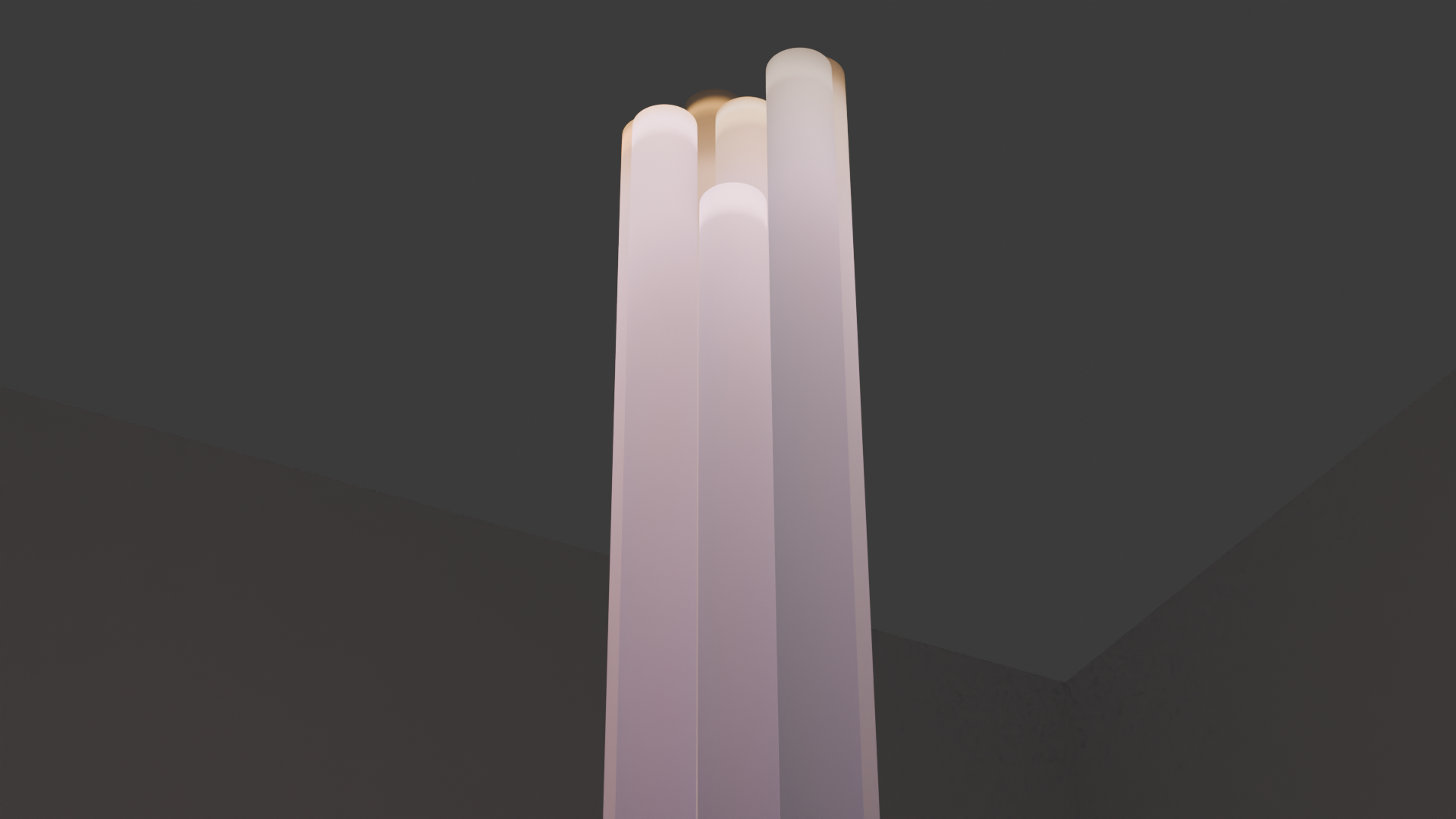
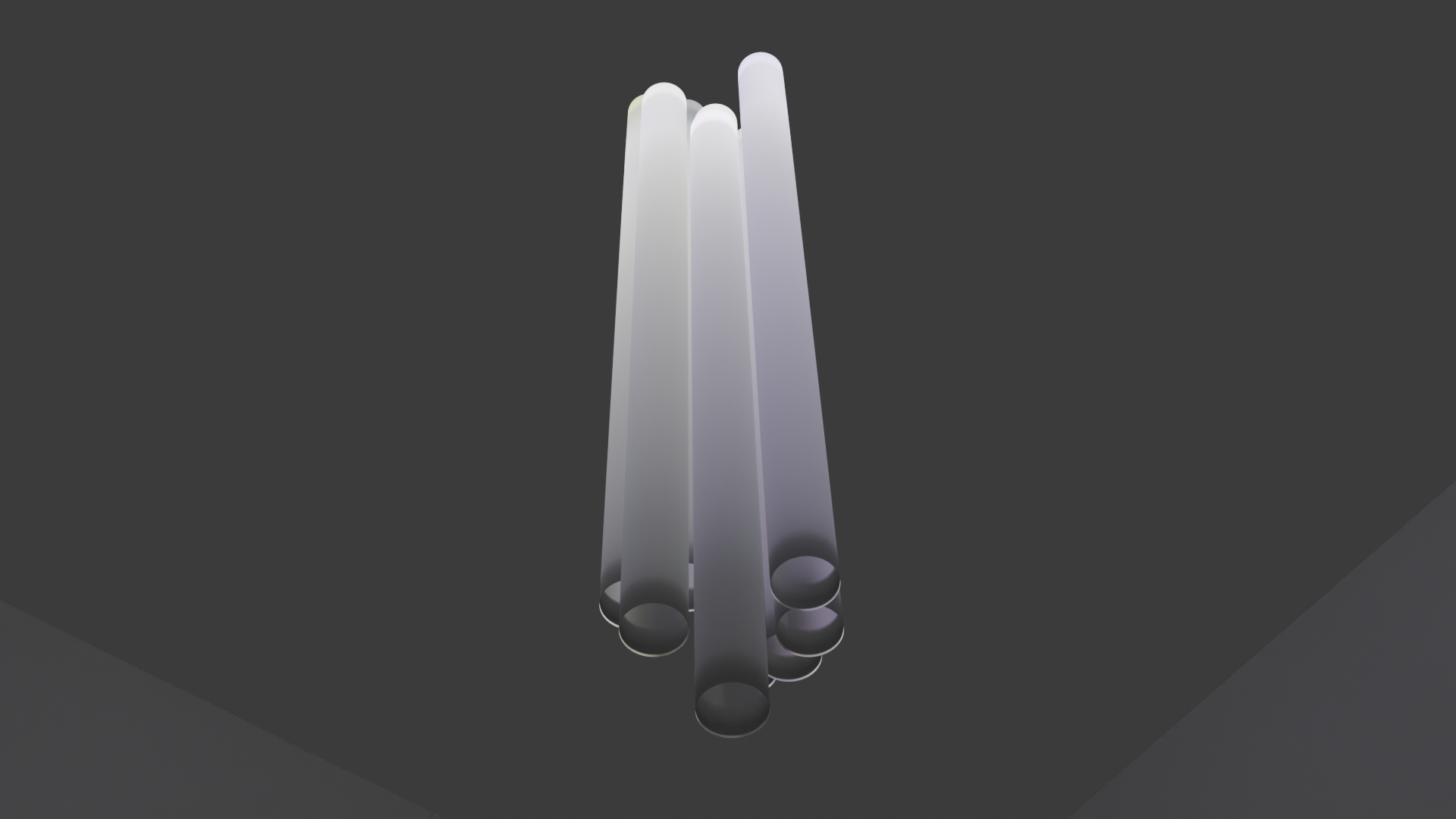
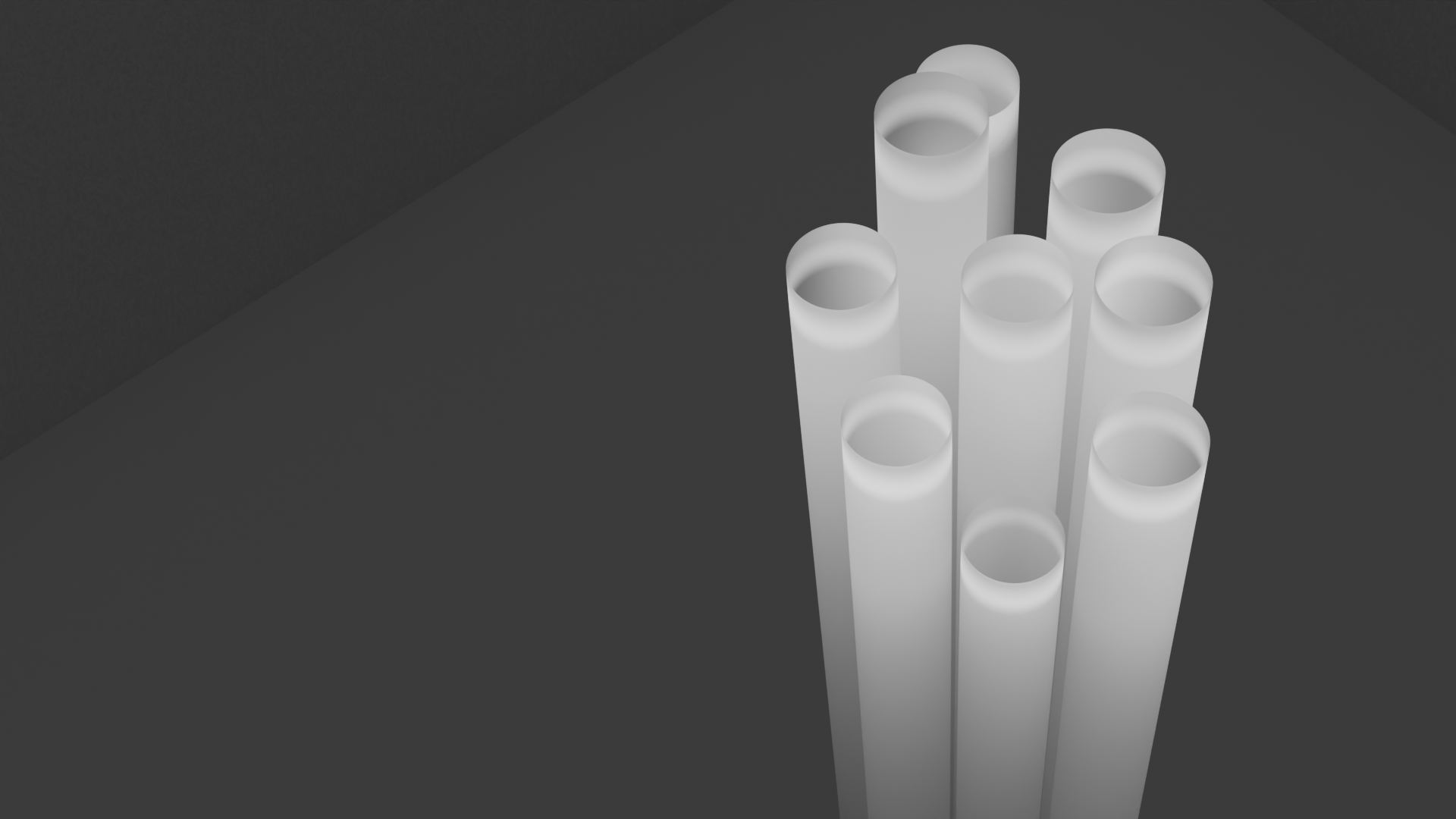
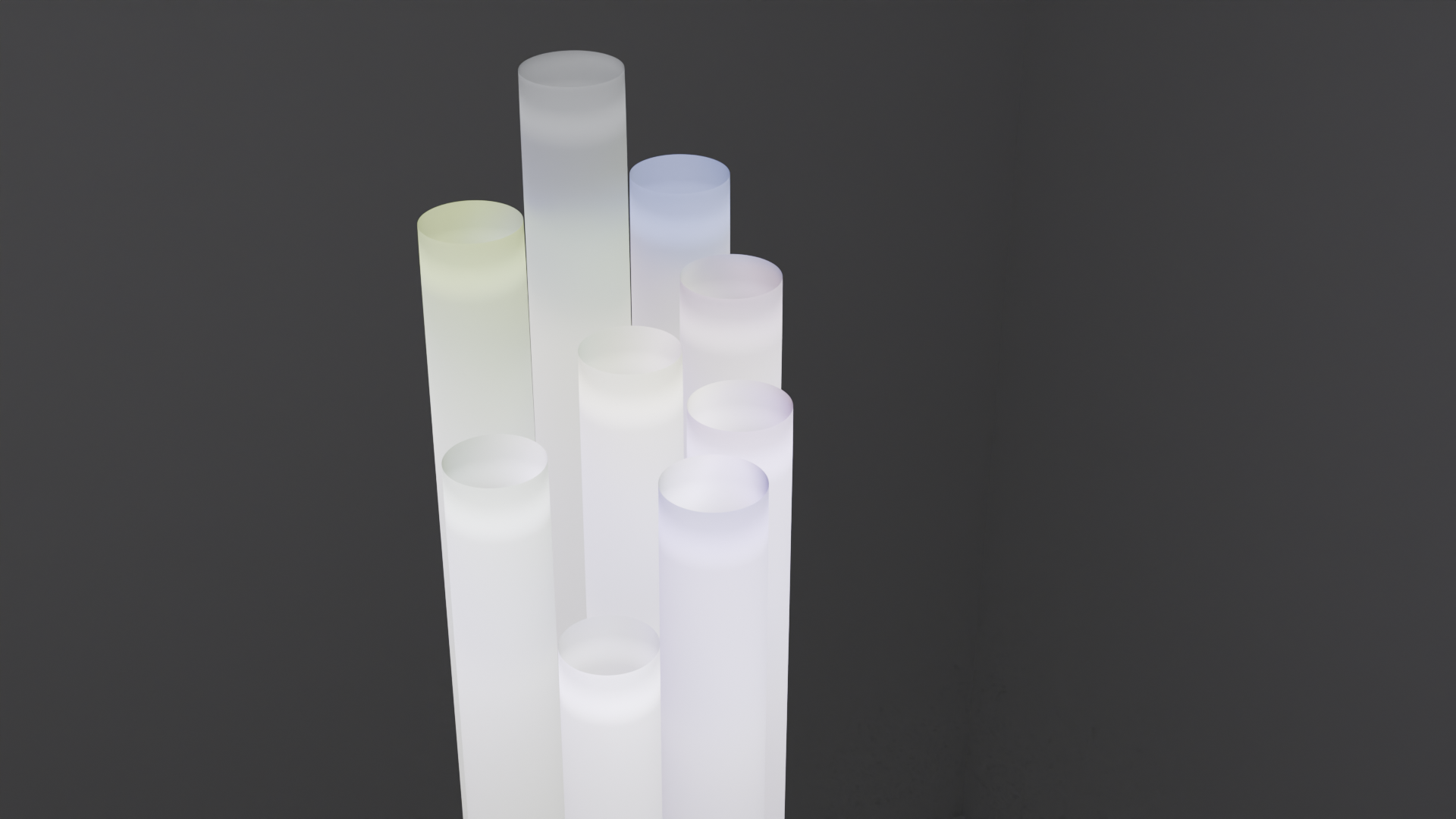
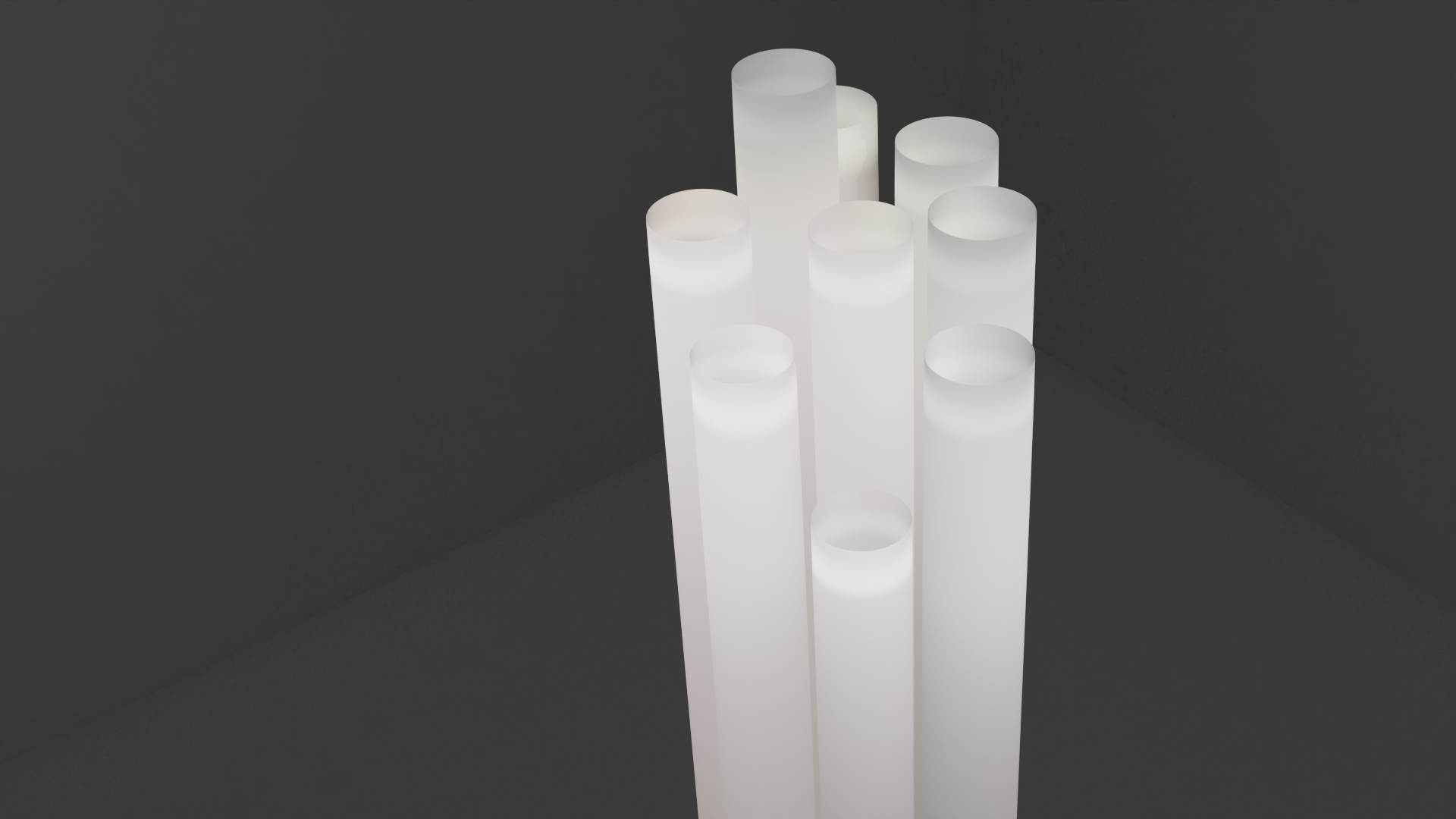
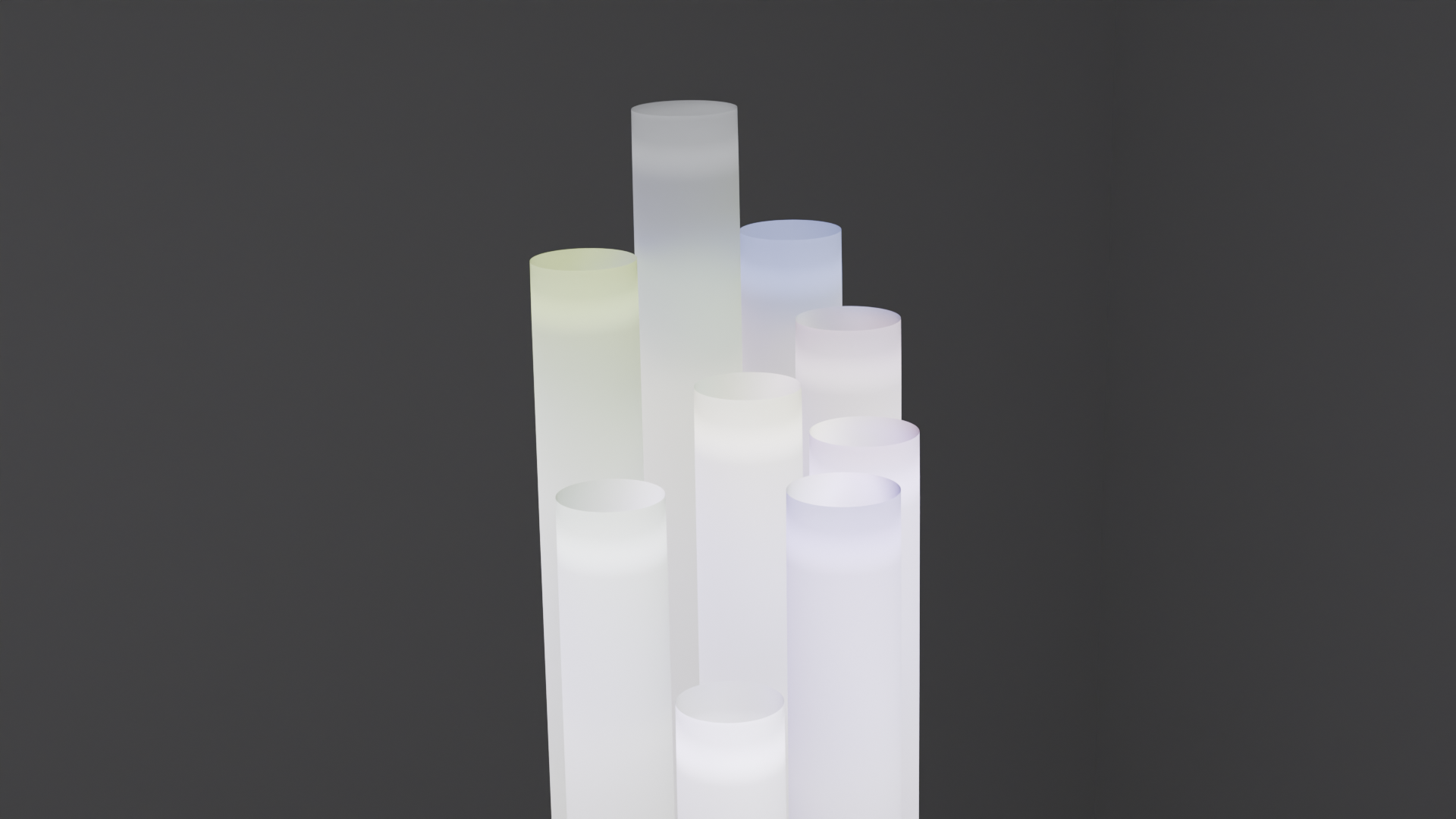
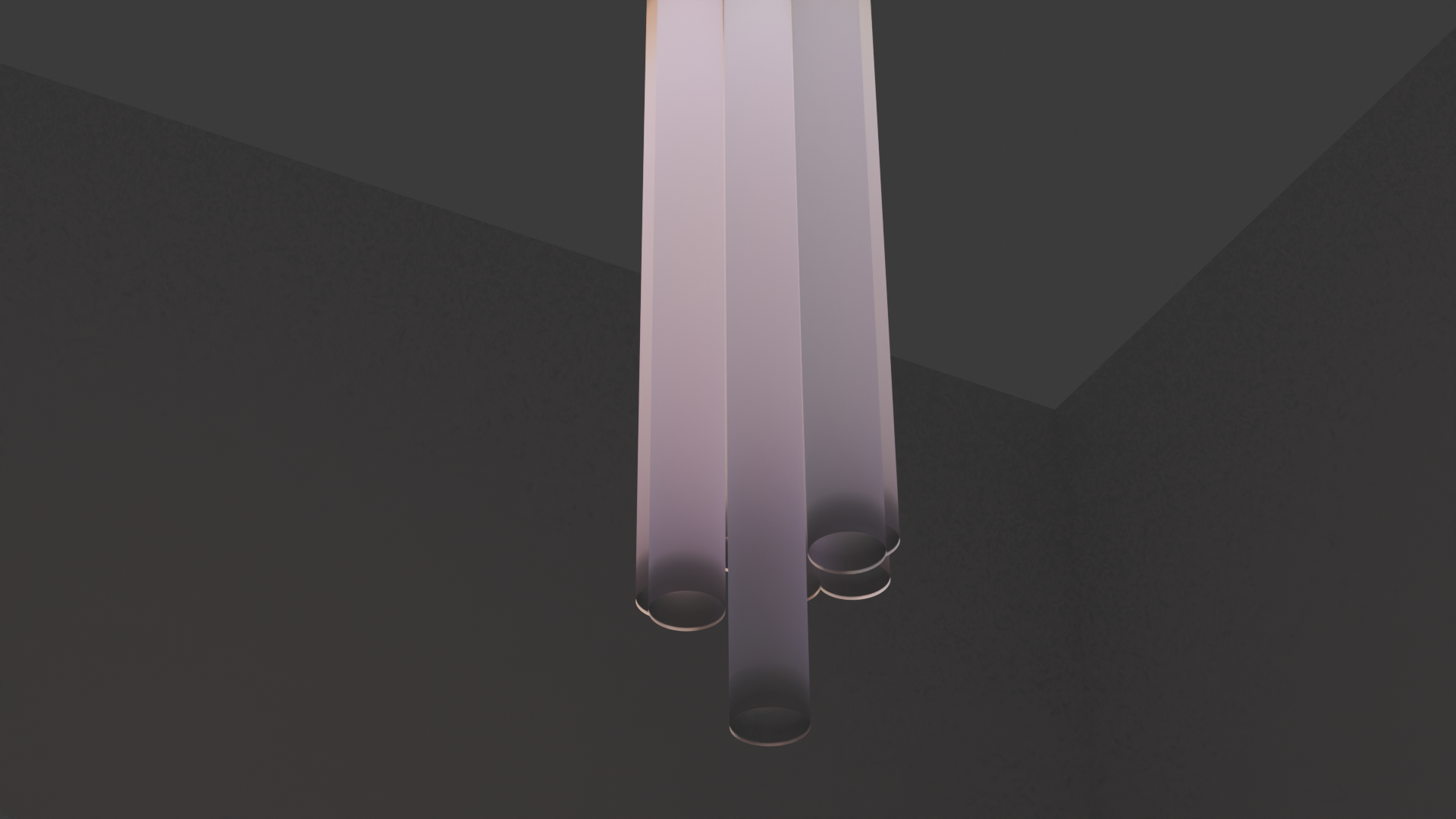
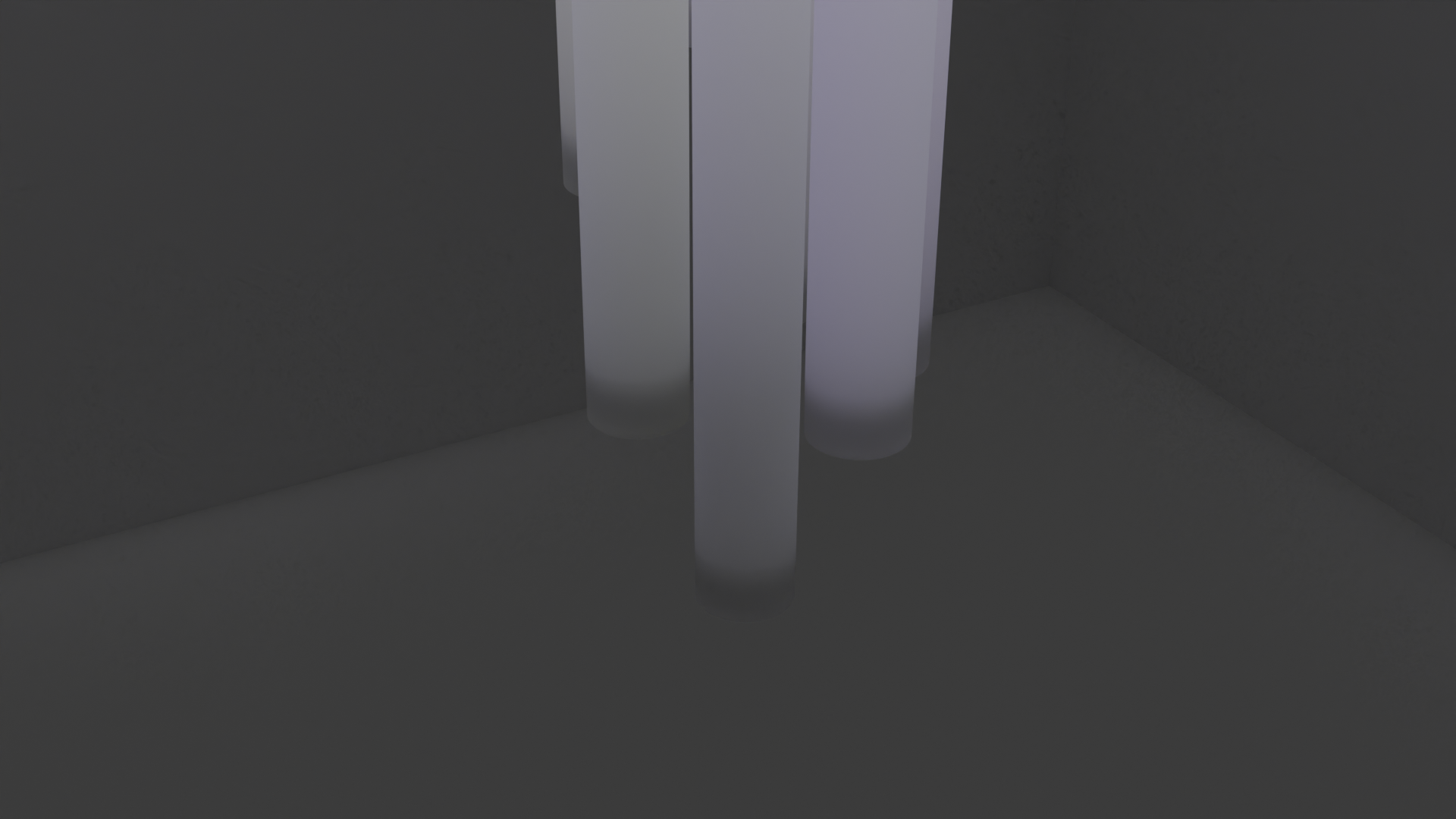
    The piece will be a series of data-visualisation chandeliers that use programmed NeoPixels to display the activities of people’s day-to-day lives from around the world. A colour corresponding to the person’s recorded activities will then be displayed on their tube.

    Considerations:

    Off the top of my head, there are a few things I want to note so I don’t forget them:

    • Light – How light is the space, with the chandeliers’ light visible during the day? How bright will the light it produces be? What colours will be used to indicate what actions? What connotations do those colours have to different cultures? Are the colours unified across each chandelier, or are they personalised for each country/region/continent represented?
    • Who – Who will the chandeliers be representing? And where are they from?
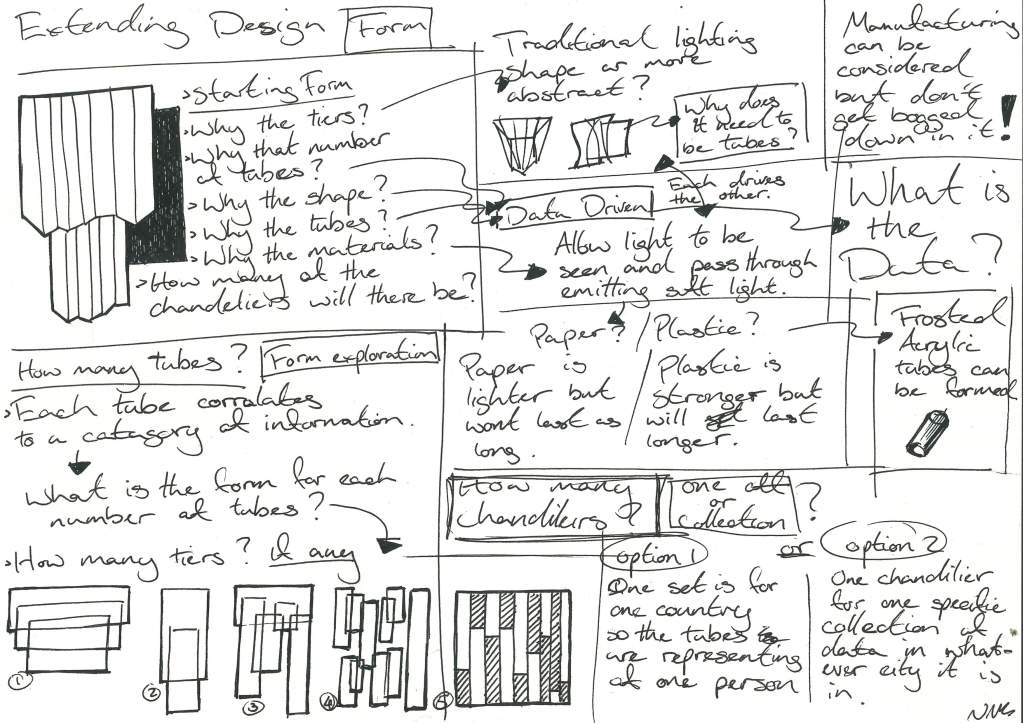
    • Material – What material will be used? How long will the material last? The materials need to be strong enough yet light enough to hang, and the tubes themselves must allow light to pass through.
    • Construction – If this is long form and it has to hang from the ceiling for several years, it must be built to withstand the usual wear and tear of ageing.
    • Run time: As the chandelier changes throughout the day, when will it start, and when will it finish? Will it be 1:1, 100% accurate, or as the organisation’s workers start their shift?

    Previous Prototype Sketches:

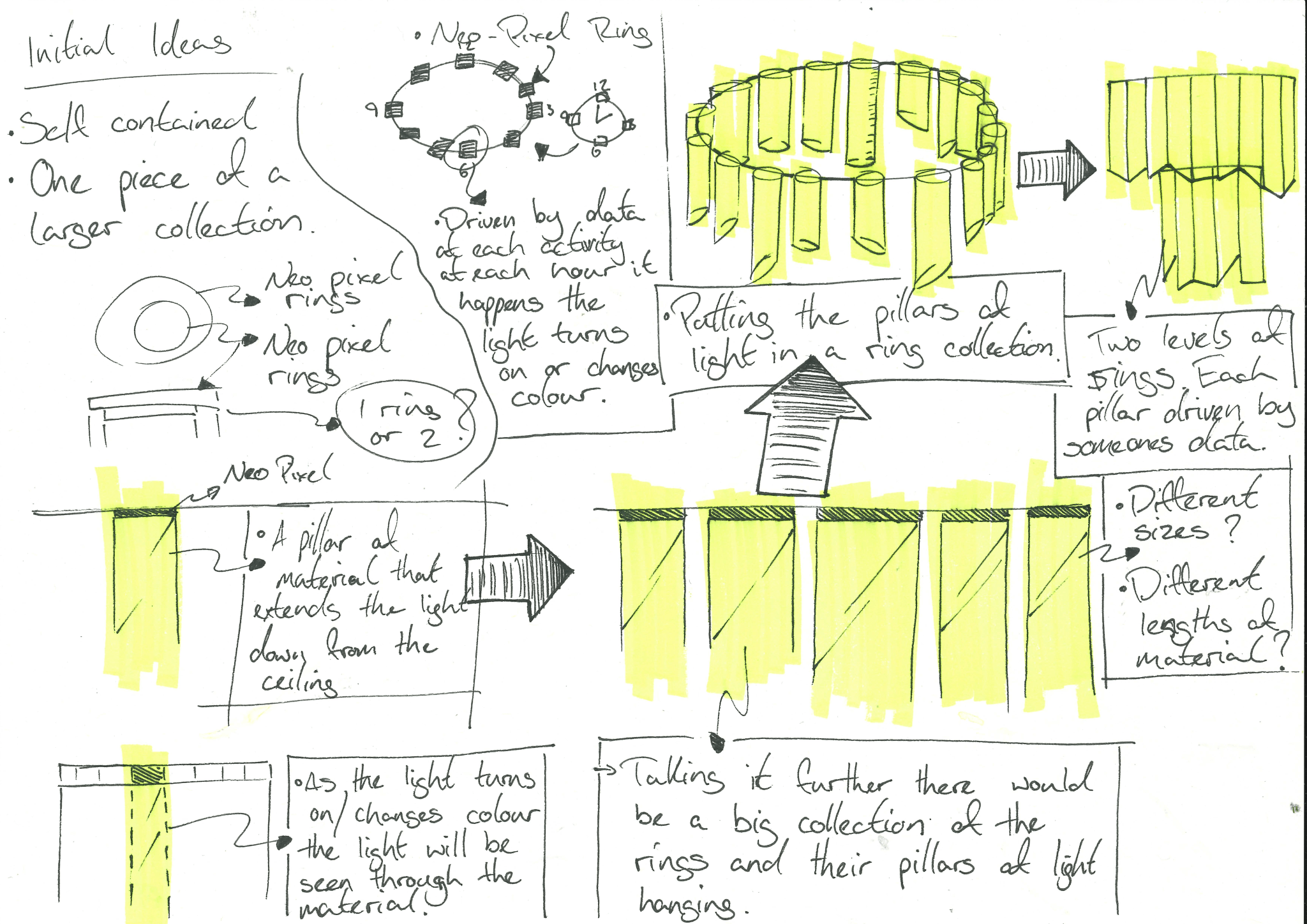
    Above are the initial sketches of the chandelier design, with a possible final version in the top right of the page. I was envisaging the final chandelier design to have two levels, or maybe three, with one smaller than the other, and tubes of different sizes to correspond to the different humans, of course, of different shapes.

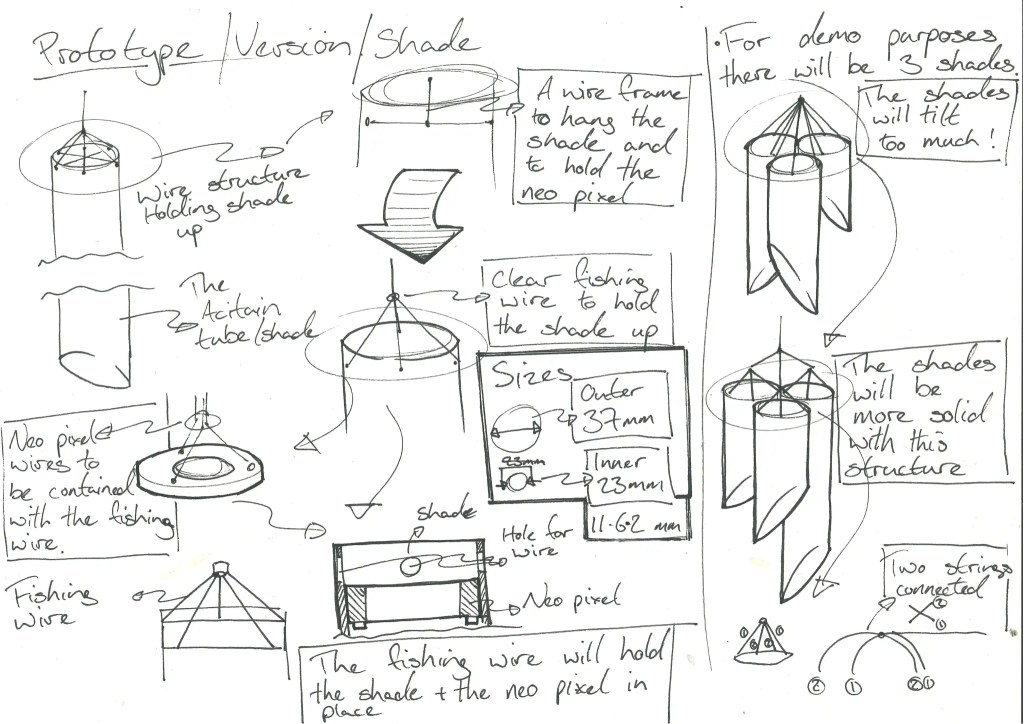
    Above are the development sketches of the smaller-scale prototype, with more consideration of how the tubes might be suspended when displayed.

    When considering larger versions of the chandelier, the materials and suspension techniques will be closely tied together; the heavier the material or the more tubes, the greater the support required.

    Previous Prototype Documentation:

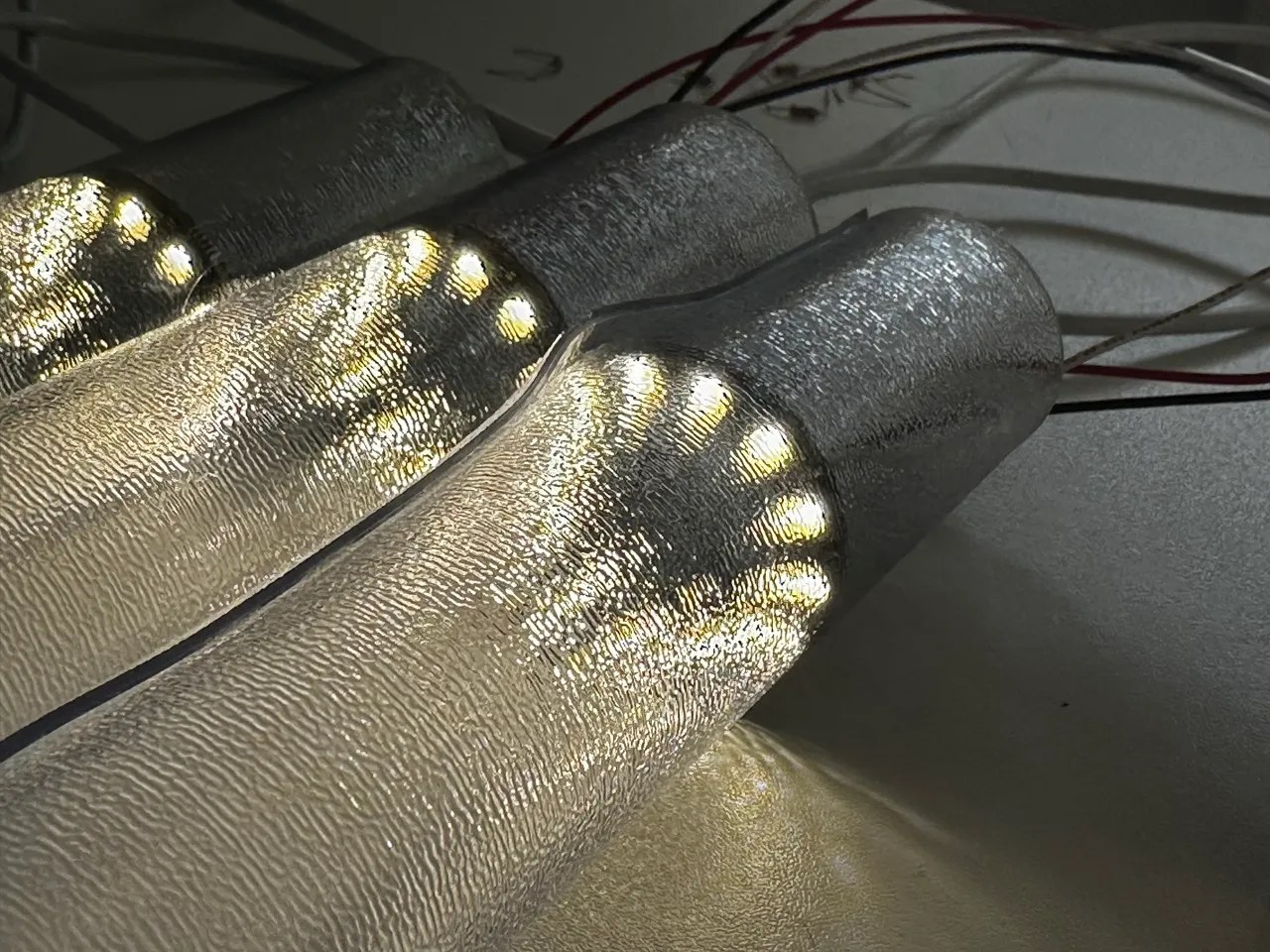
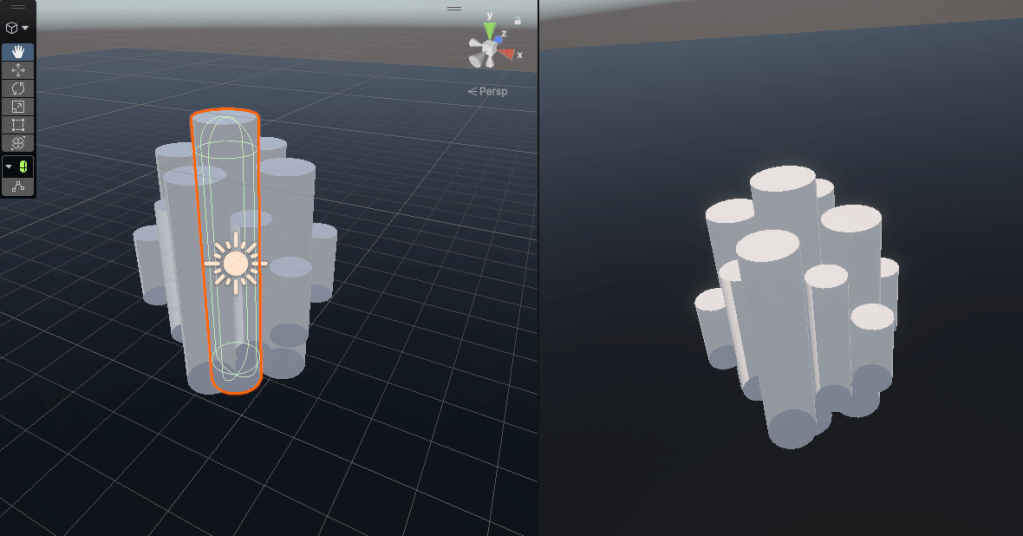
    Here is some initial project documentation showing how the light system will start at white and then change to colours as activities are logged throughout the day.

    Extending Design Group Tutorial Notes:

    Simplification:

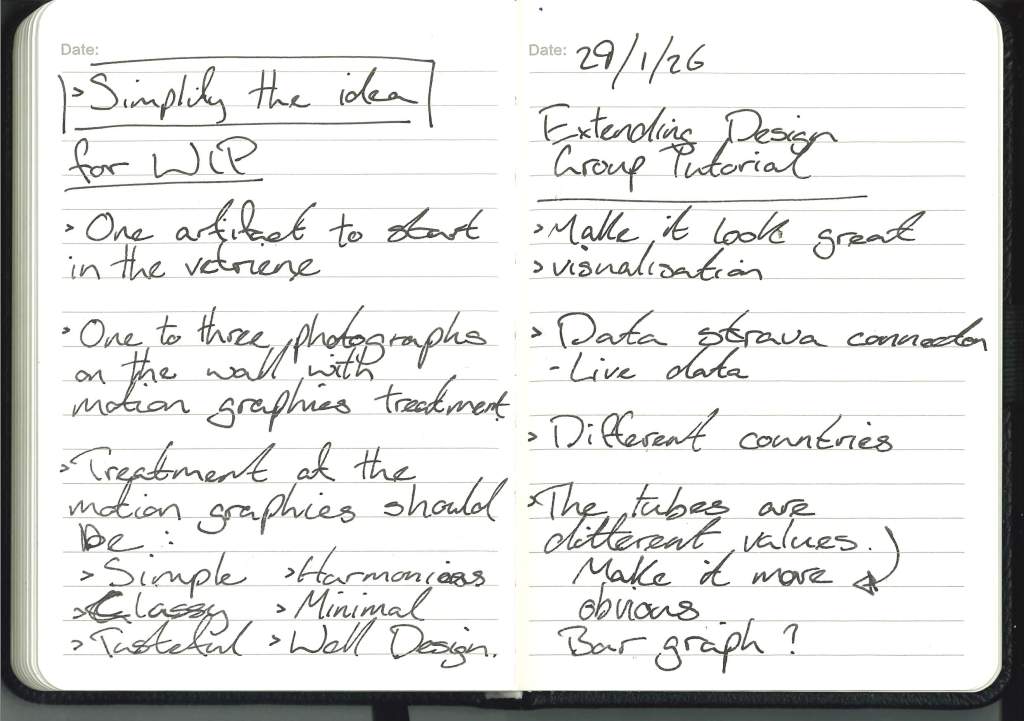
    After my conversation with Gillian, it became clear that several questions needed to be answered, and those answers would shape the project’s future direction.

    • What is the data?
    • Where is the piece going?
    • Who is the piece for?

    I think these 3 questions are all interlinked, feeding into one another.

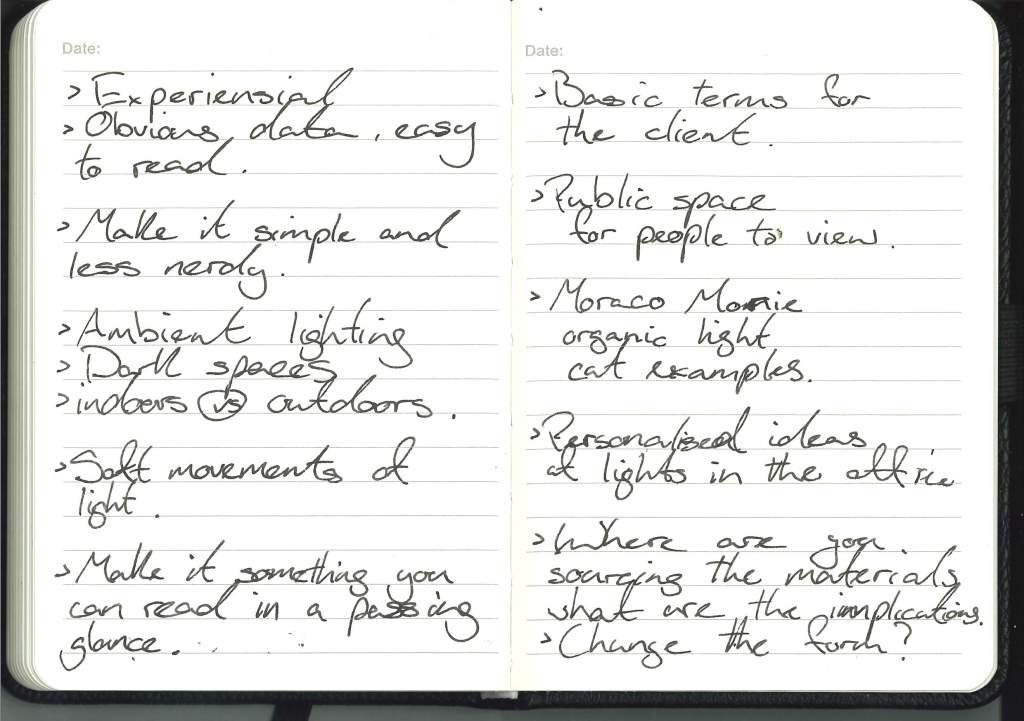
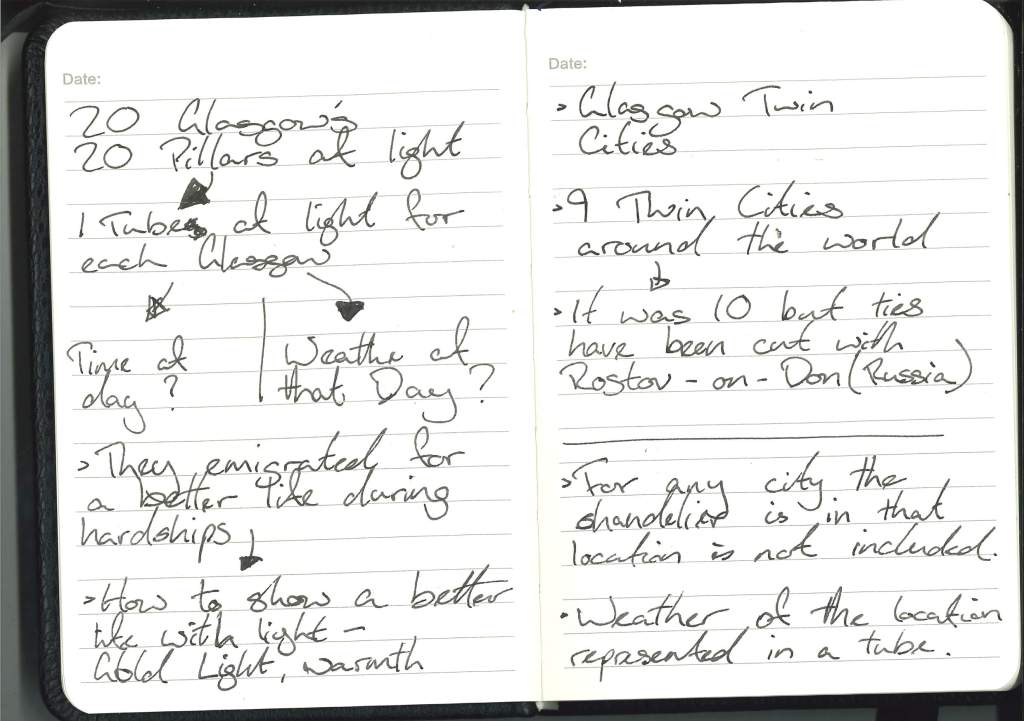
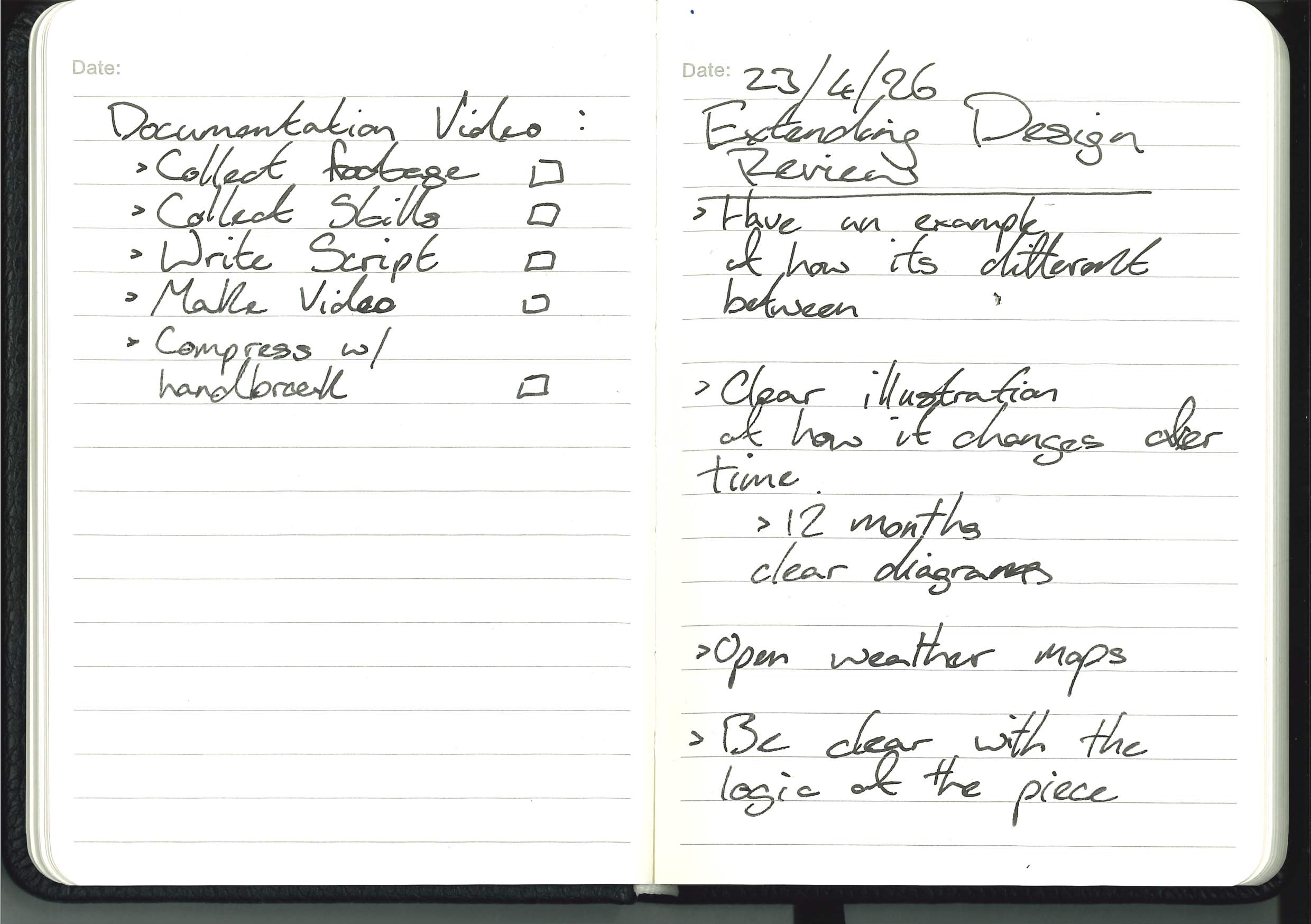
    With the new direction, the question of the data was answered with simplification. The data I had was hard to communicate because I was tied to the idea of it being in a public or semi-public place rather than a closed-off gallery, so I had to simplify it so people could understand it at a glance, and if it’s going to be in Glasgow or anywhere else in the world, then what is the simple constant, weather.

    When considering location, both in terms of the type of location and its position on the globe, it can be affected by the idea that the data is weather data. What is a meaningful location? If Glasgow, then where in Glasgow or anywhere else in Scotland? East and West? Glasgow and Edinburgh? And what building, somewhere public but open enough for people to appreciate the work. Or, combining those ideas, is a light piece in Edinburgh that shows the weather in Glasgow and vice versa.

    And who is it for? This builds on the previous incarnation of the project, which is for the public/semi-public; the piece makes more sense to be seen by others rather than hidden away in a gallery. In this iteration, I’d like to either open the public’s eyes to data visualisation or the weather of Scotland.

    Expanding this further, it could encompass more of Scotland and its weather, a collection of chandeliers scattered across Scotland, each showing the opposite ends of the weather, North to South, East to West.

    Tutorial with Cat:

    After focusing on the WIP for the most part, it’s time to get back into the swing of things and focus on Extending Design and the studio as well.
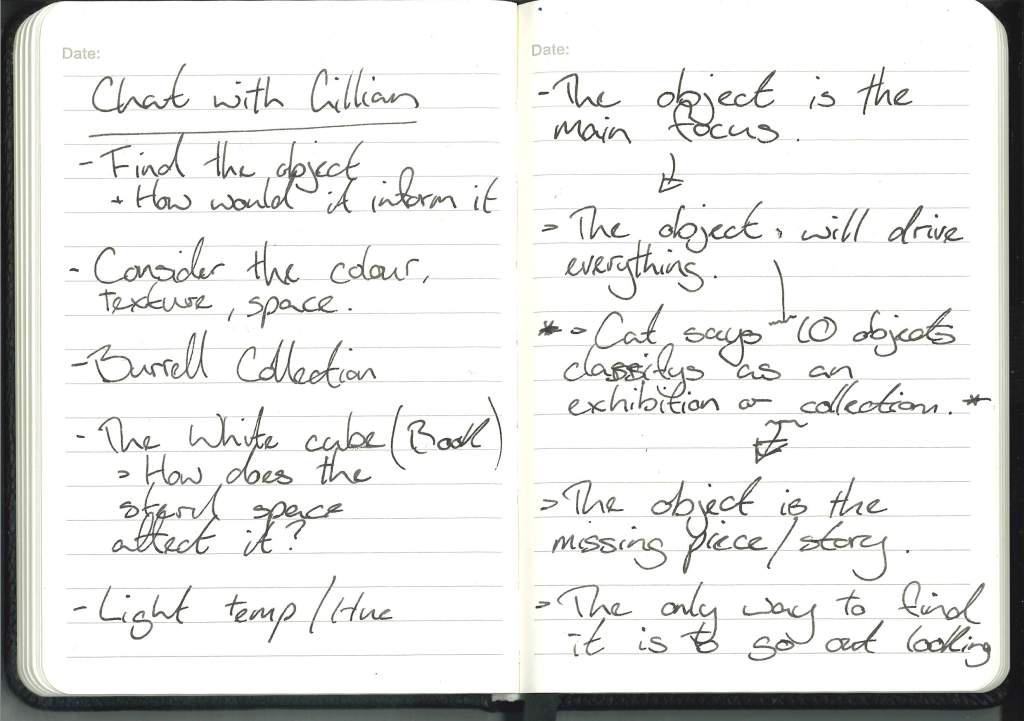
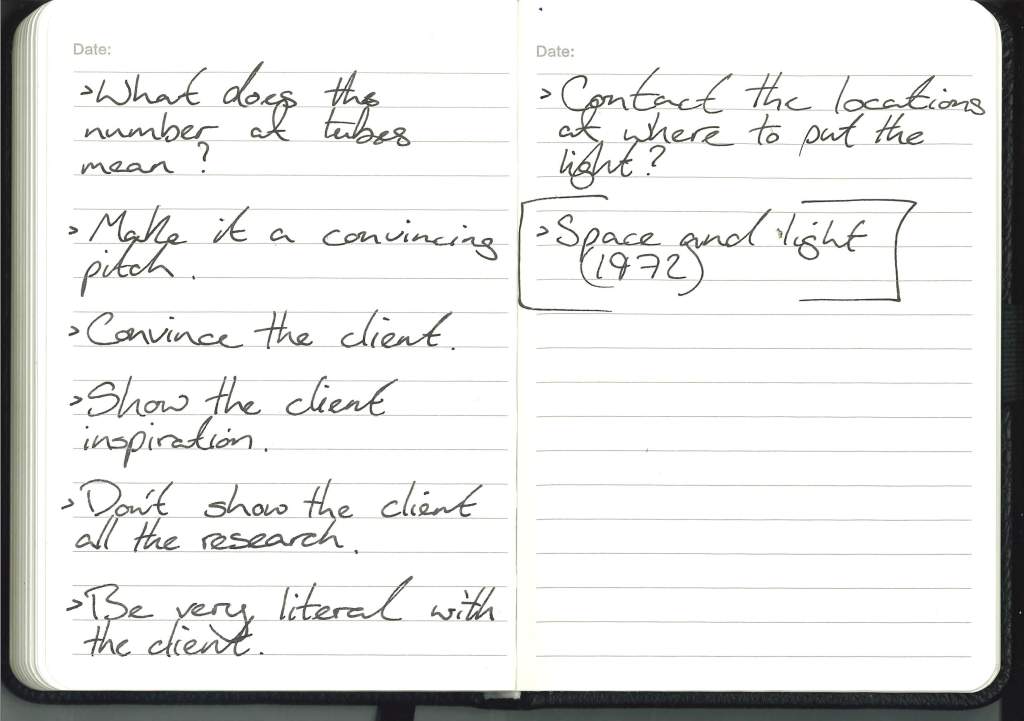
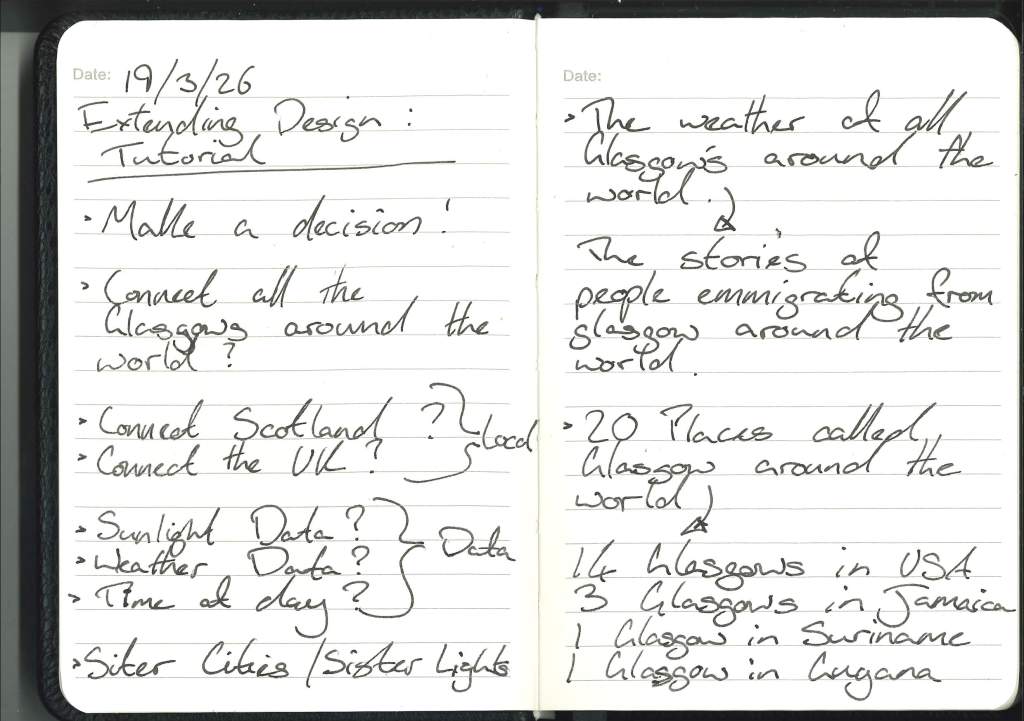
    After the tutorial with Cat, I had a clear idea of how to take my project further, and the most important feedback was to trust myself and make a decision rather than double-guess or overthink each step.

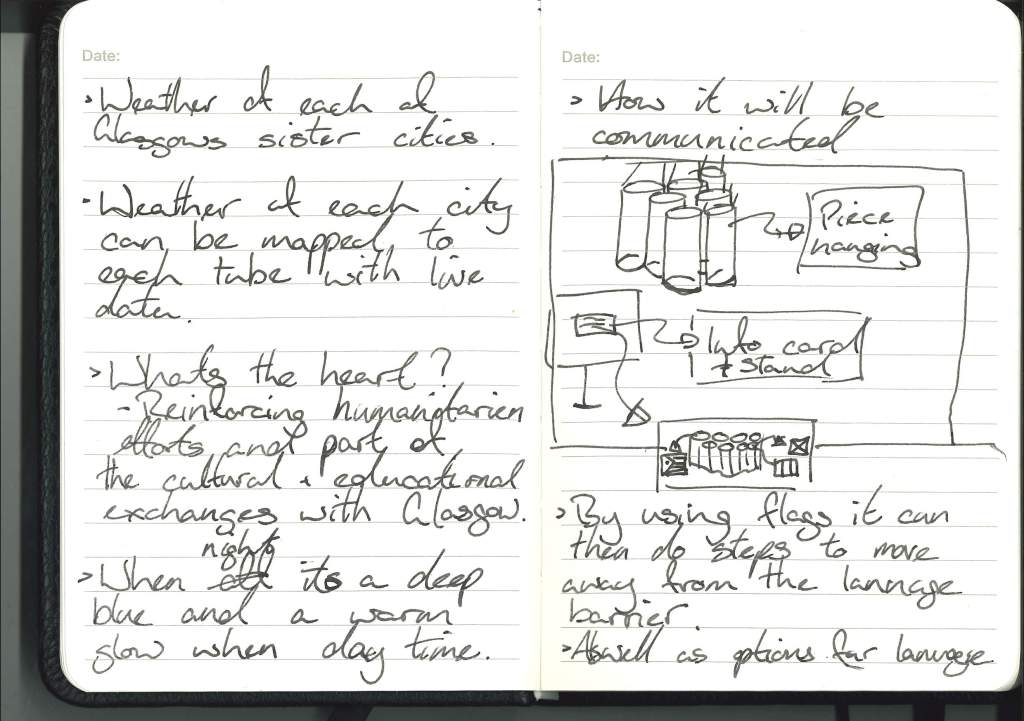
    The four paths that developed in my notes were firstly between whether to showcase weather in the tubes of light using light and colour, such as a warm yellow for a sunny day, or to stick to a simple understood colour convention when it comes to weather, or to show time of day with either a warm glow or a deep blue.

    And the second was whether the locations represented are places named Glasgow around the world, showing places where Glaswegians emigrated, or Glasgow’s official sister cities, to promote that connection and the partnership of culture and education across the globe.

    After my chat with Cat, I think the power of this piece lies in its simplicity: the fewer the data options I have, the more it reveals. For example,s whether it’s day or night. For the locations, I think the more official route of Glasgow’s sister cities will give the piece more focus in terms of creative direction and add a worldwide scope.

    Glasgow’s Sister Cities:

    • Nuremberg, Germany -1985:One of the oldest partnerships, focusing on culture and civic cooperation, says the Glasgow City Council.
    • Dalian, China -1997: Focuses on trade, port operations, and cultural exchanges.
    • Havana, Cuba -2002: A partnership focusing on cultural and educational initiatives.
    • Turin, Italy -since 2003: Focuses on tourism, cultural exchange, and industrial heritage.
    • Lahore, Pakistan -2006: Focuses on educational and economic partnerships.
    • Marseille, France -2006: Focuses on hospitality partnerships and maritime/industrial history.
    • Bethlehem, Palestine -2007: Focuses on peacebuilding and cultural exchange.
    • Pittsburgh, USA -2021: Focused on industrial heritage, environmental initiatives, and economic development.
    • Mykolaiv, Ukraine -2024: A partnership focusing on solidarity and shared shipbuilding history.
    • Nuremberg, Germany – 1 hour ahead of Glasgow.
    • Dalian, China – 8 Hours ahead of Glasgow.
    • Havana, Cuba – 4 hours behind Glasgow.
    • Turin, Italy – 1 Hour ahead of Glasgow.
    • Lahore, Pakistan – 5 Hours ahead of Glasgow.
    • Marseille, France – 1 Hour ahead of Glasgow.
    • Bethlehem, Palestine – 2 Hours ahead of Glasgow.
    • Pittsburgh, USA – 4 Hours behind Glasgow.
    • Mykolaiv, Ukraine – 2 Hours ahead of Glasgow.

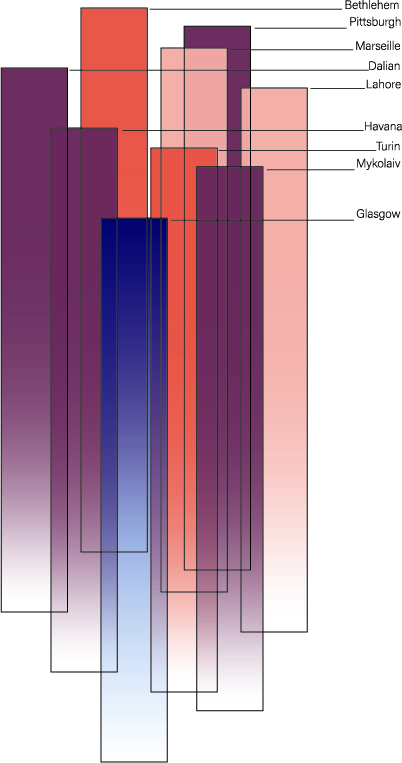
    9 cities mean 9 columns of light, each changing colour depending on the time of day in each city.

    Even though this is prompted by a government scheme, I think it should be held in galleries or Public places in each country. Either central galleries in each town or publicly accessible buildings, government or otherwise.

    Where in those cities?

    Each of the galleries or museums listed below was either considered for the space they have or their geographical location and that the main goal of this work is to connect these cities and its people.

    Glasgow, Scotland:

    The Gallery of Modern Art

    The GoMA in Glasgow was chosen both for its size and its location in the centre of Glasgow, the starting point of this piece.

    Nuremberg, Germany:

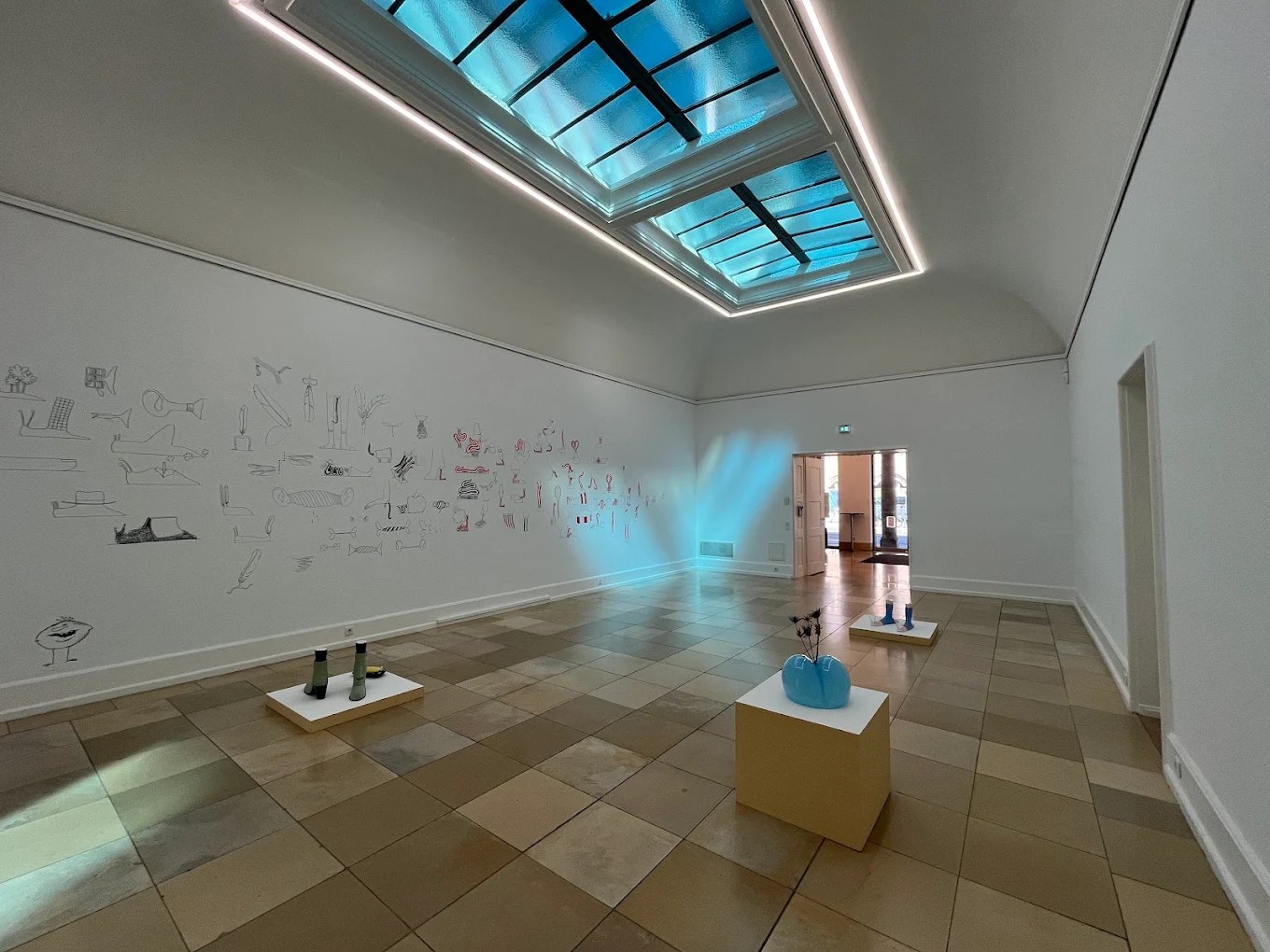
    The Kunsthalle Nürnberg ( Art Gallery)

    The Kunsthalle Nürnberg was chosen, similar to its Glasgow counterpart, for its size and location.

    Dalian, China:

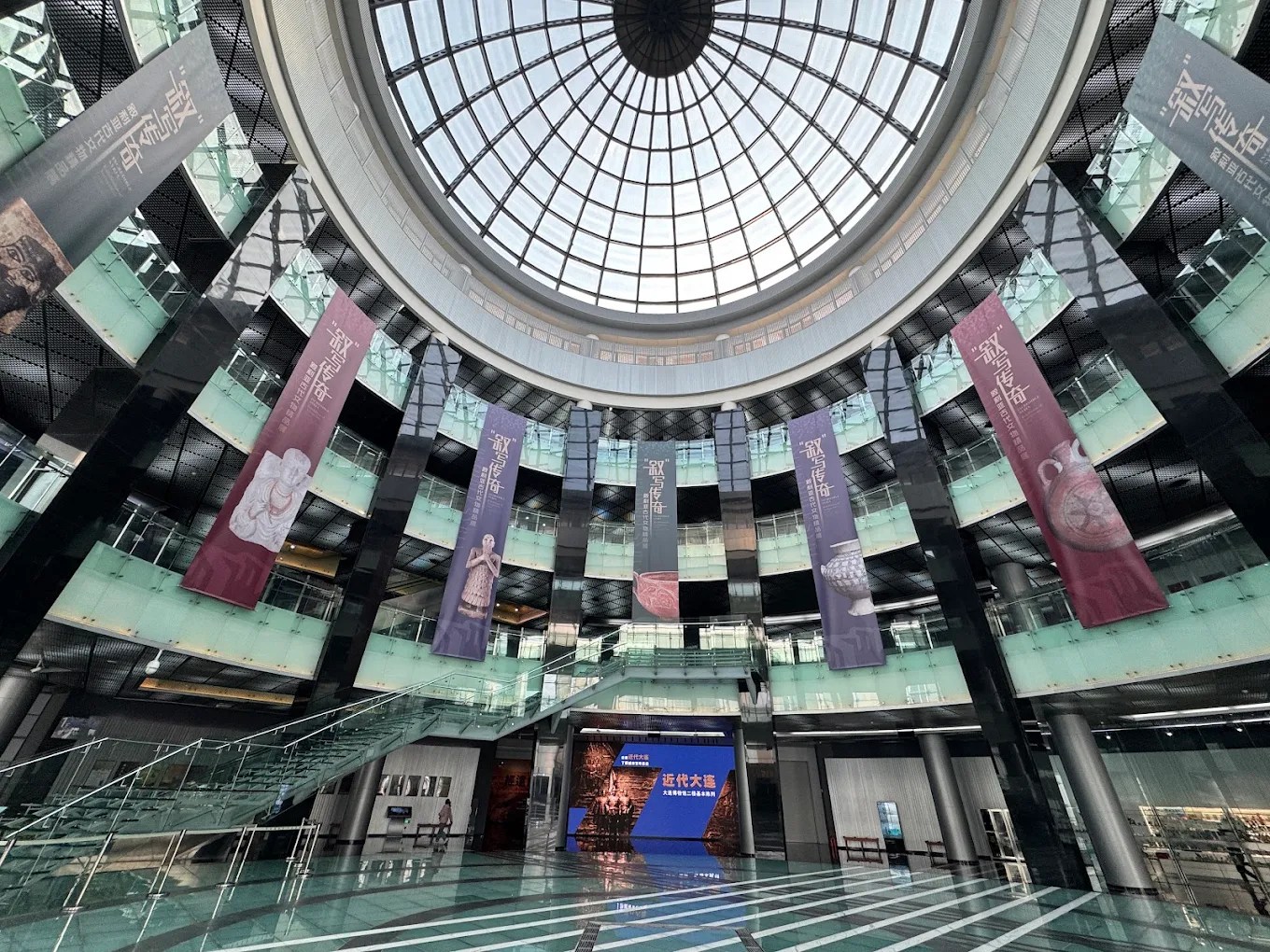
    Dalian Modern Museum

    Havana, Cuba:

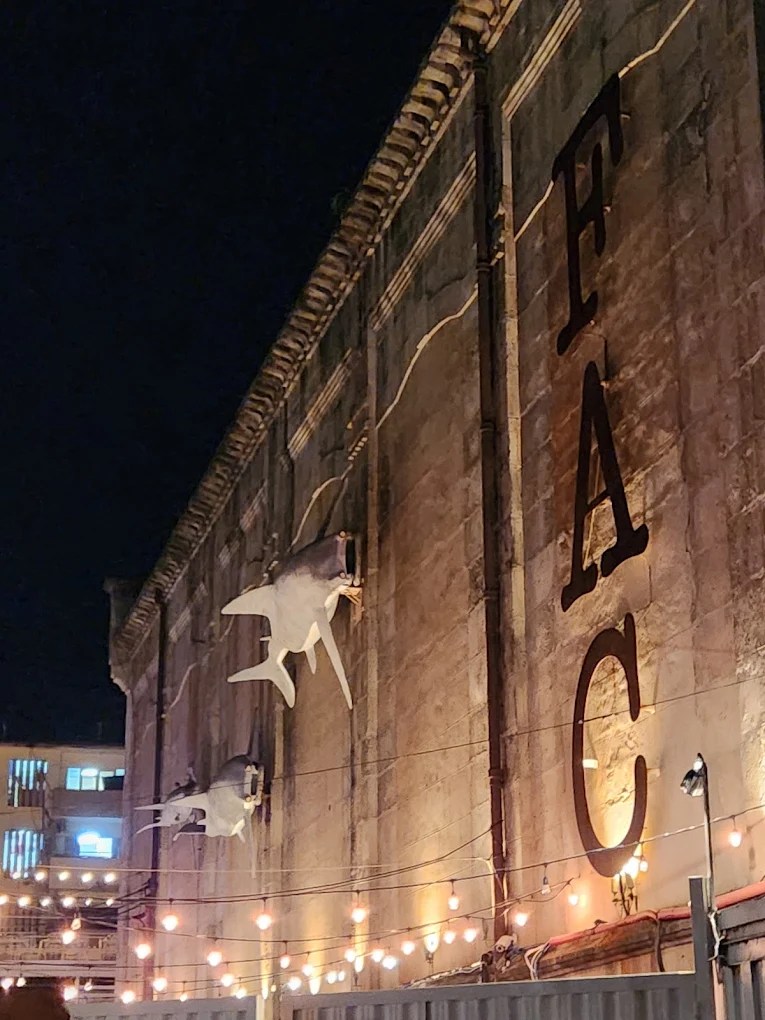
    Factoria Habana Art Gallery

    Turin, Italy:

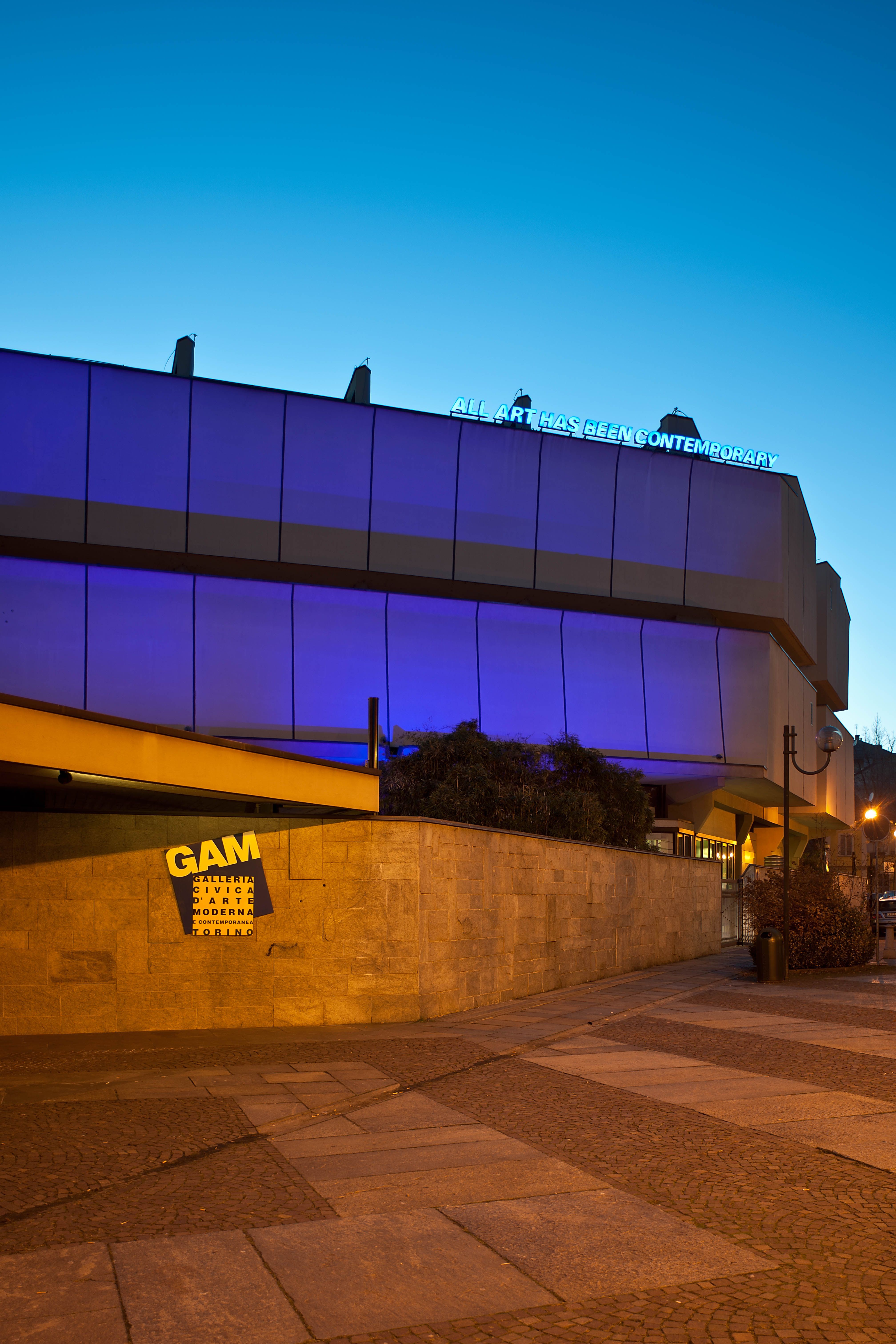
    The Turin Civic Gallery of Modern and Contemporary Art

    Lahore, Pakistan:

    Alhamra Art Center

    Marseille, France:

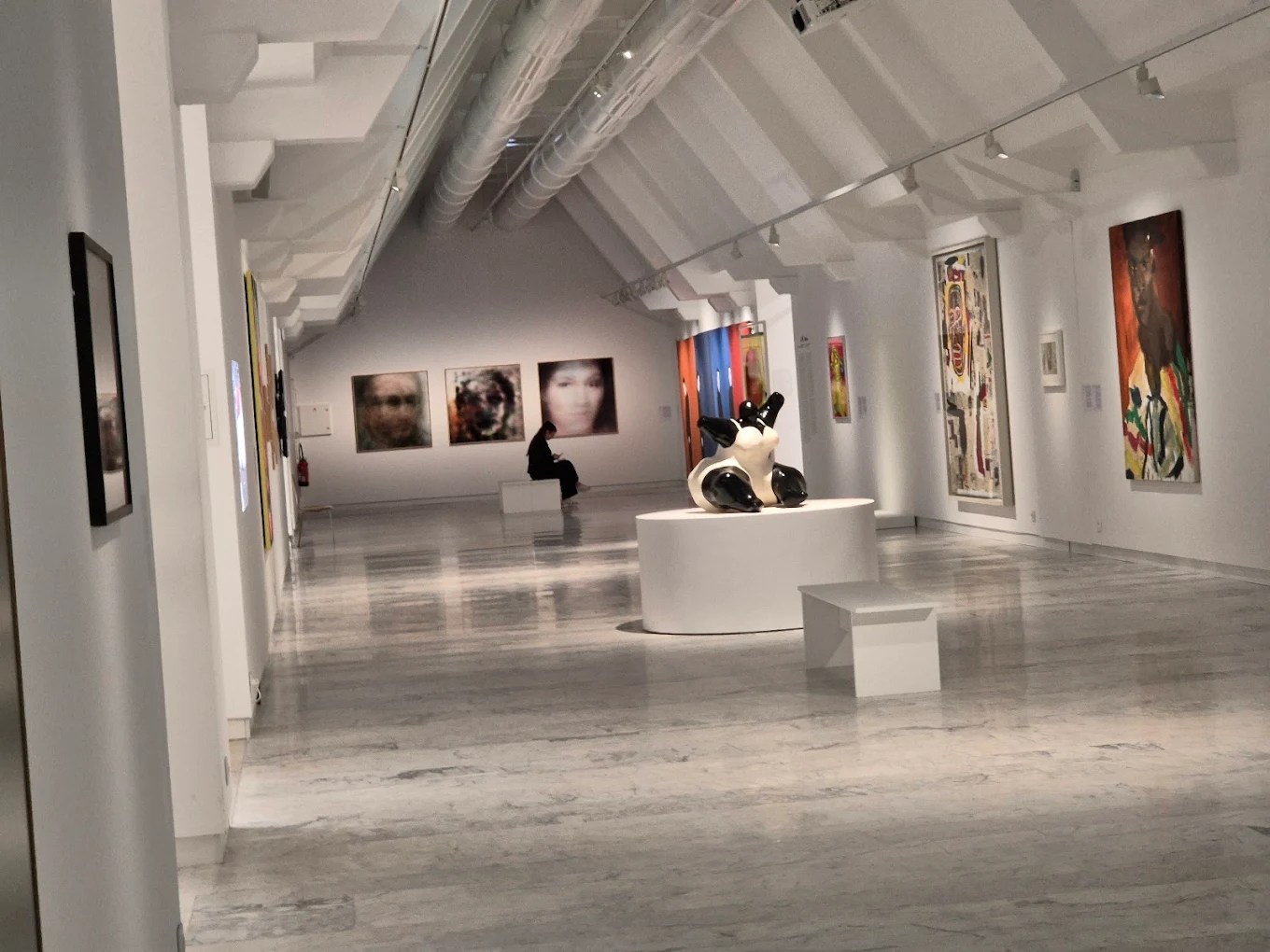
    [mac] Musee d’art contemporain de la Ville de Marseille

    Bethlehem, Palestine:

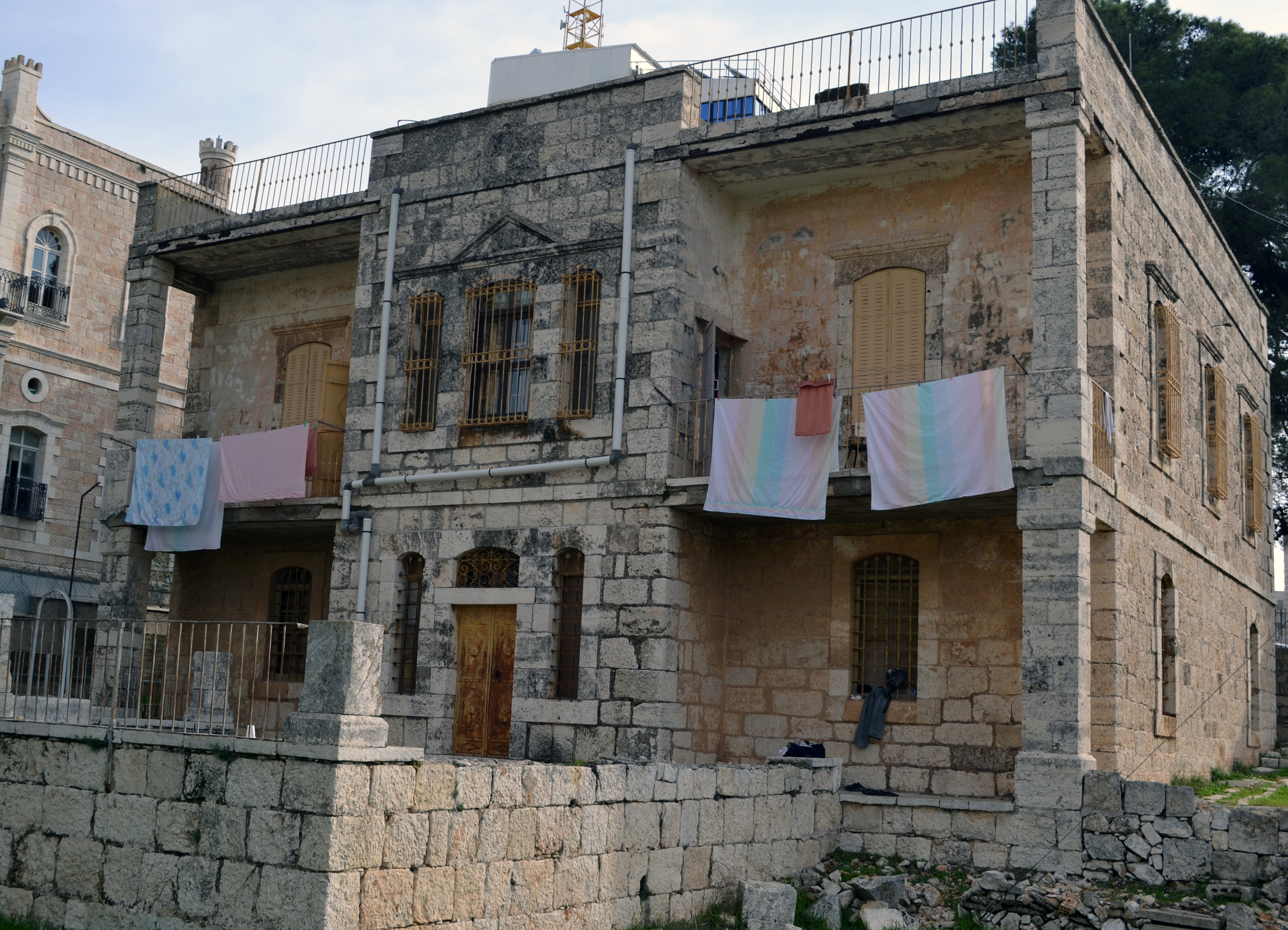
    Dar Yusuf Nasri Jacir for Art and Research

    Pittsburgh, United States of America:

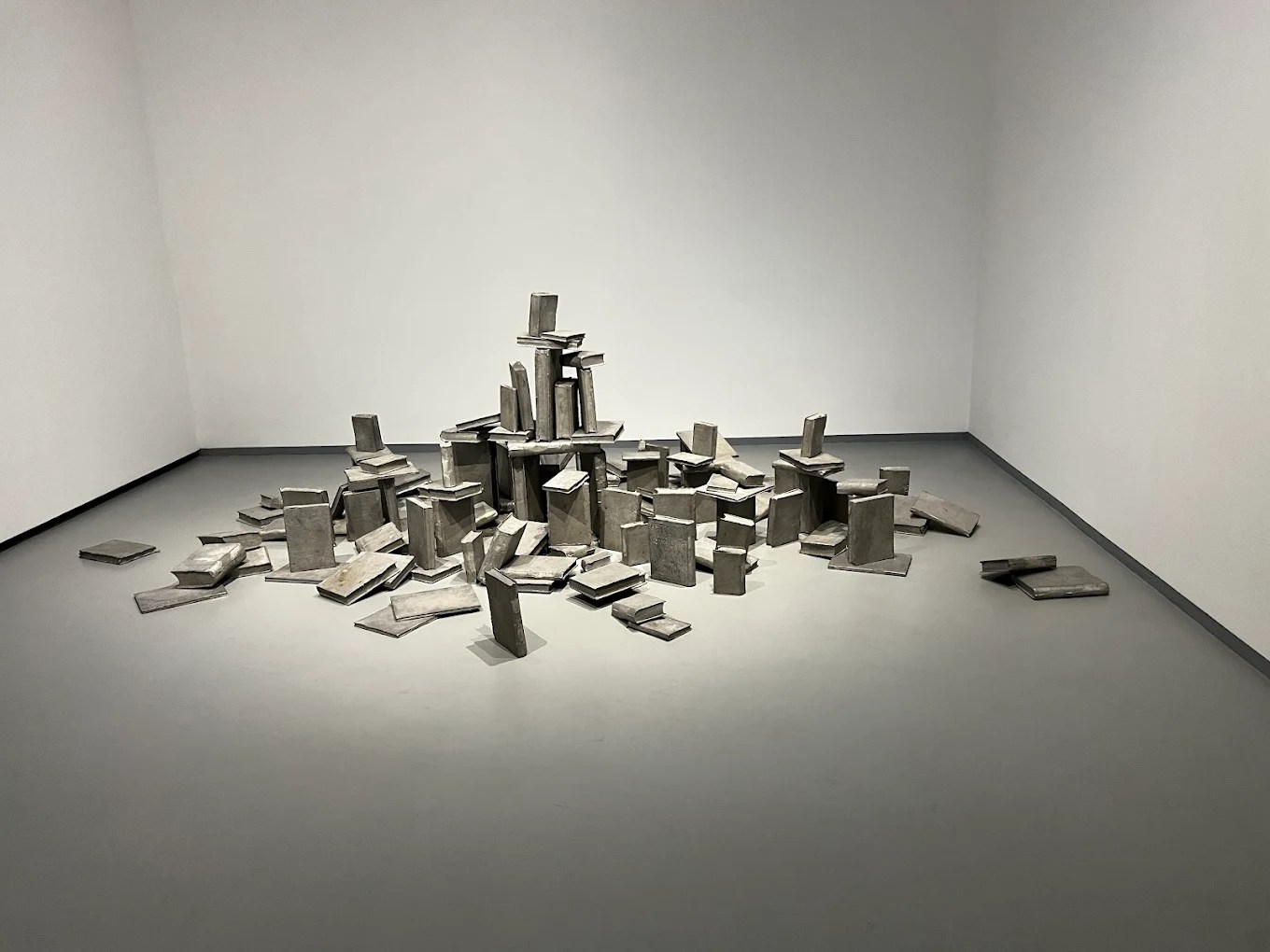
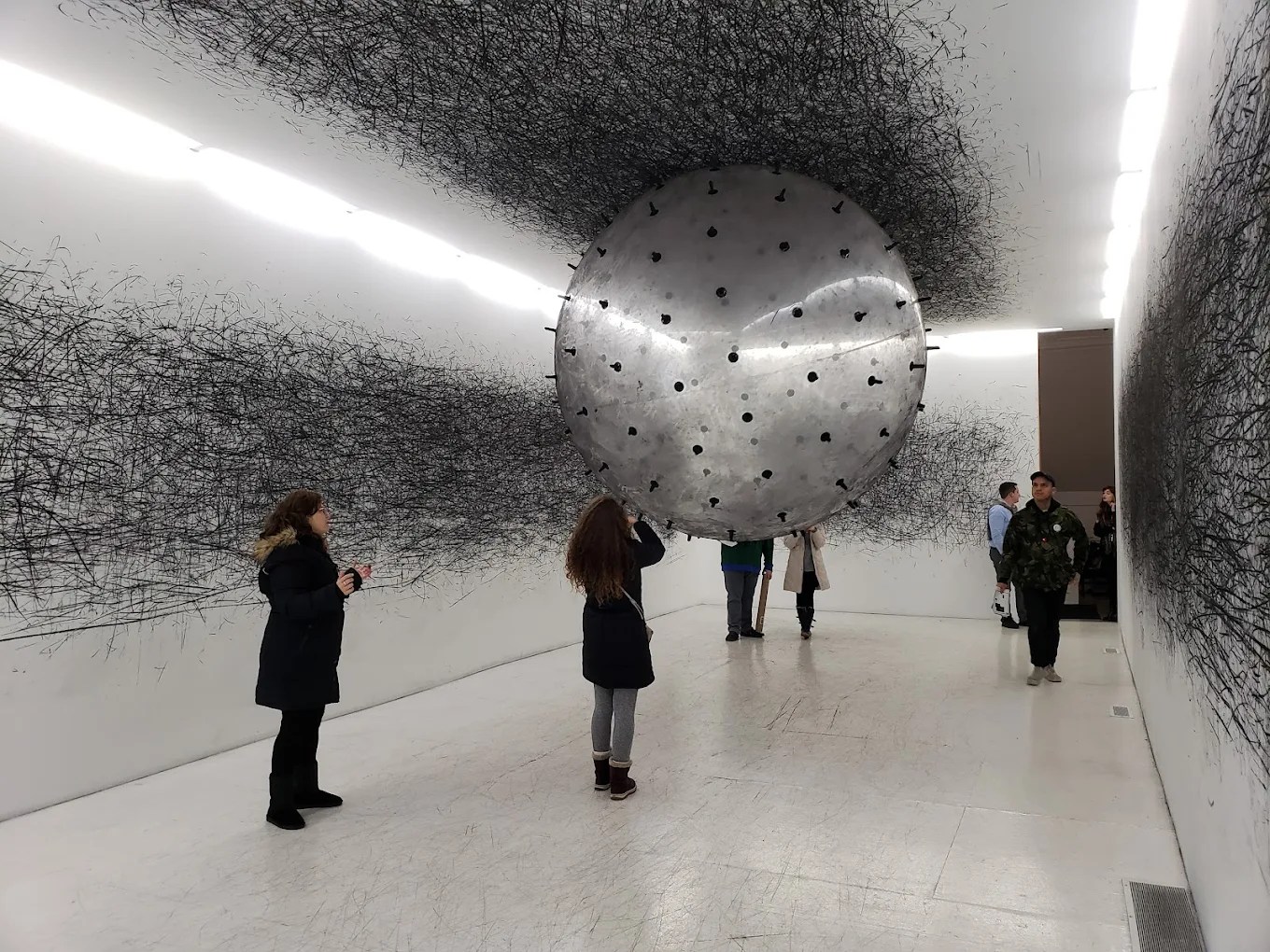
    Mattress Factory Contemporary Art Museum

    Mykolaiv, Ukraine:

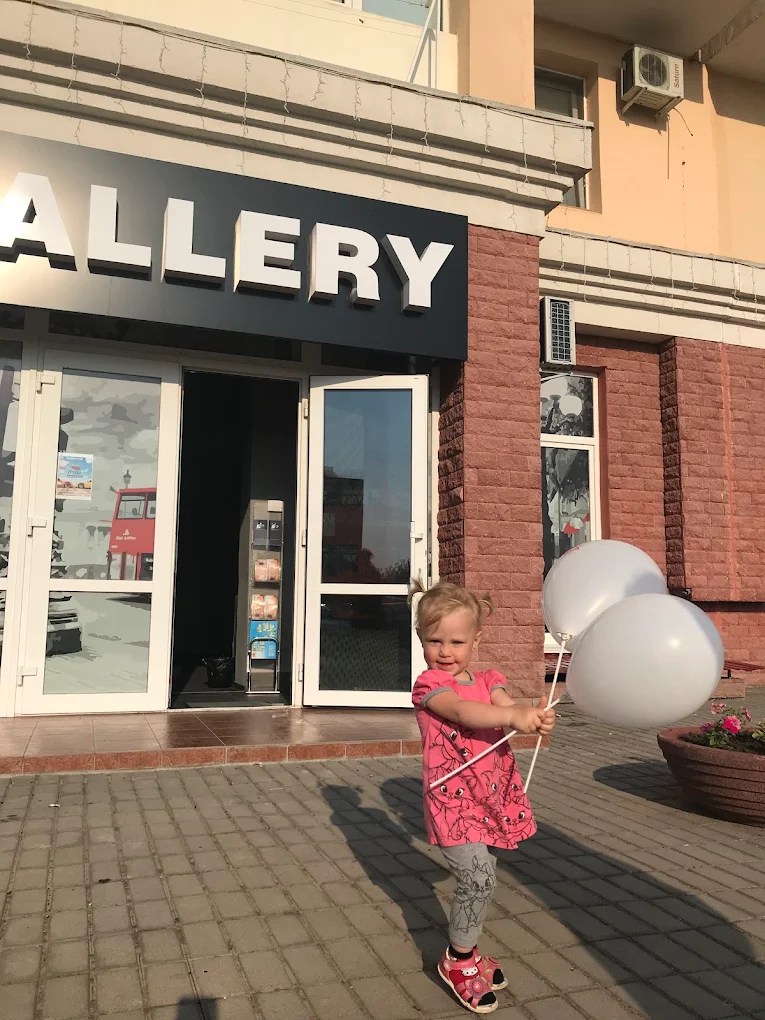
    Gallery

    Unlike the other selections, the single room in the ‘Gallery’ would be overpowered by the large light sculpture. At this point, I’m considering two options, where each gallery has its own version of the light sculpture, or I lean into the difference and fill this room with the piece. There are other galleries with larger spaces, but they would not be in Mykolaiv, a sister city.

    Colour Schemes:

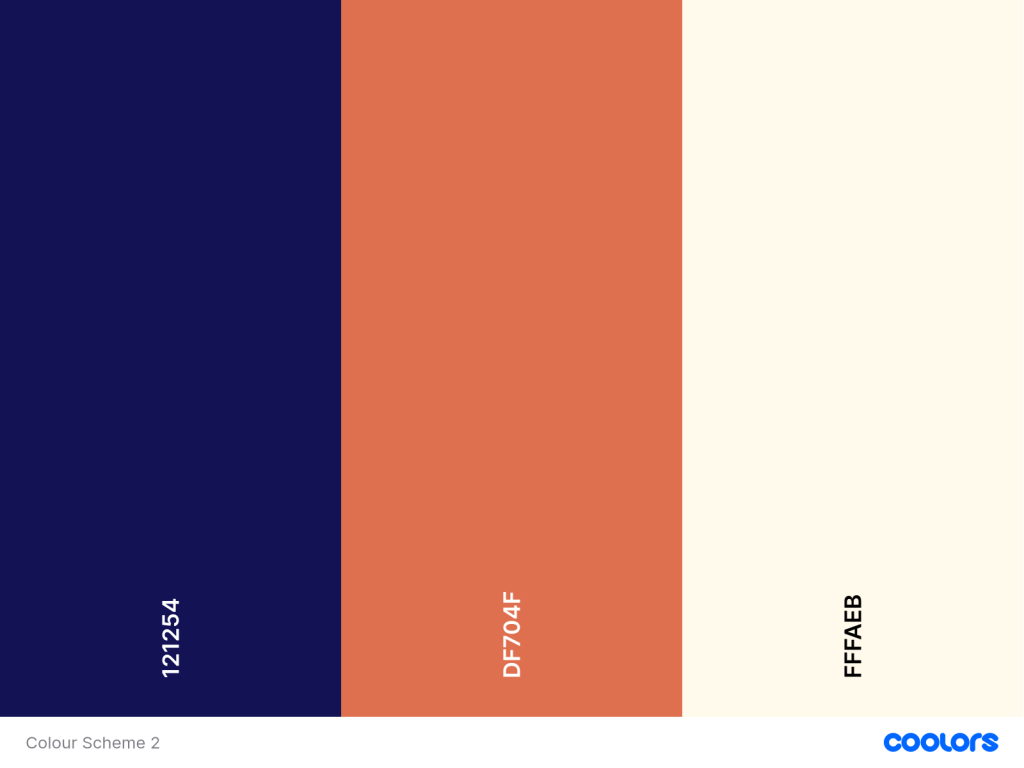
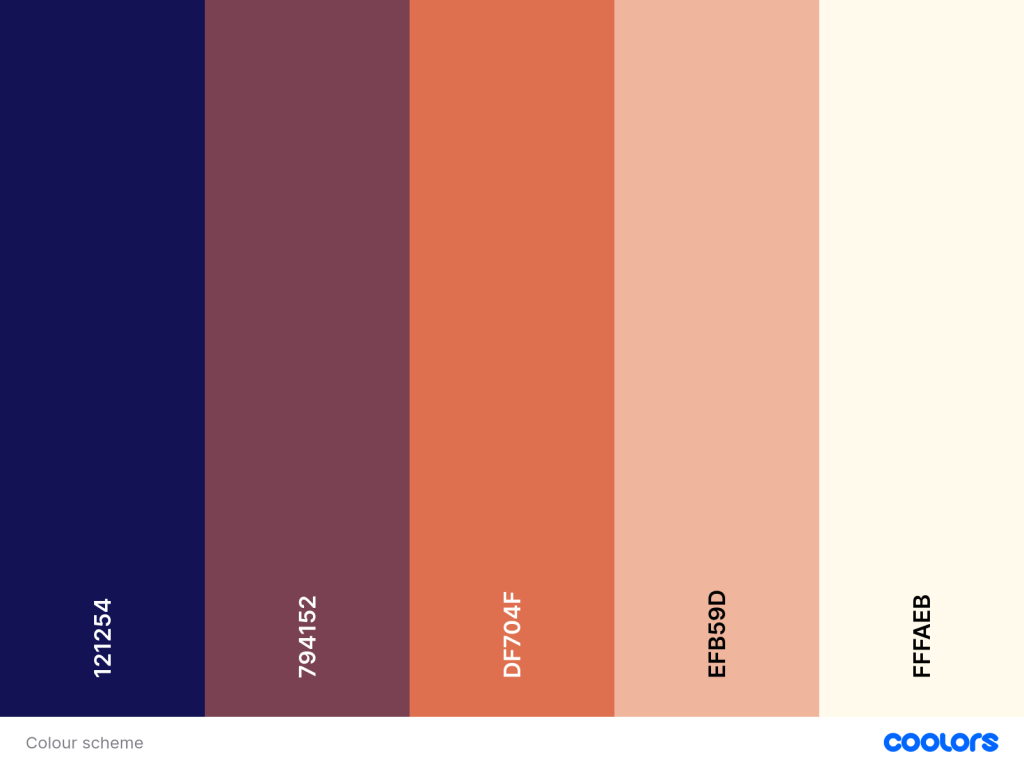
    If the data is the time of day, then it can’t be either on or off because that would confuse the audience, not knowing if it’s broken or not, so still considering that I will use some sort of programmable light, then there will have to be a colour value to each stage, night, dusk/dawn and day.

    The first image is a simple 3-stage colour scheme for night, sunrise/ sunset and day.

    The second has transitional colours between each stage during the day.

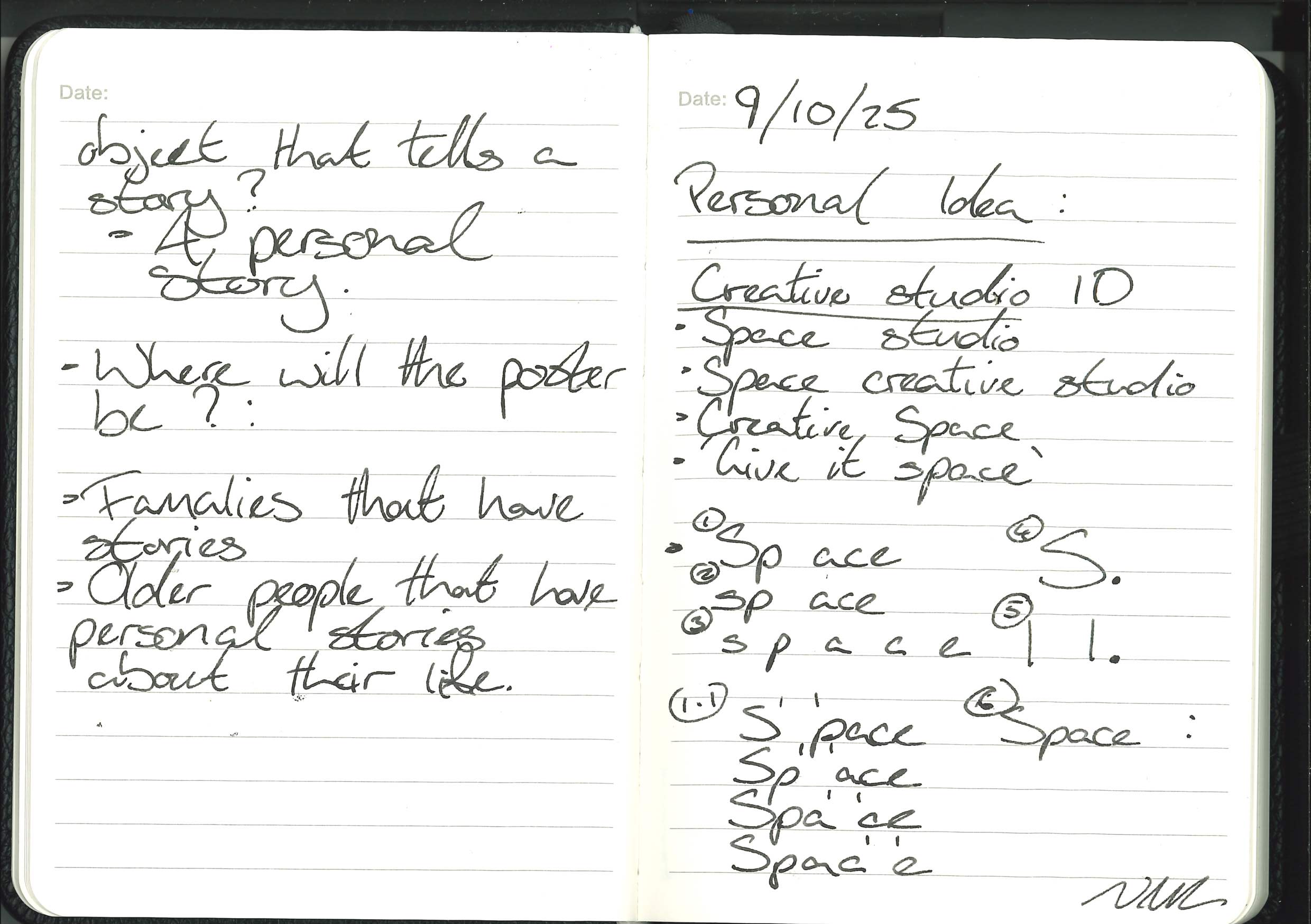
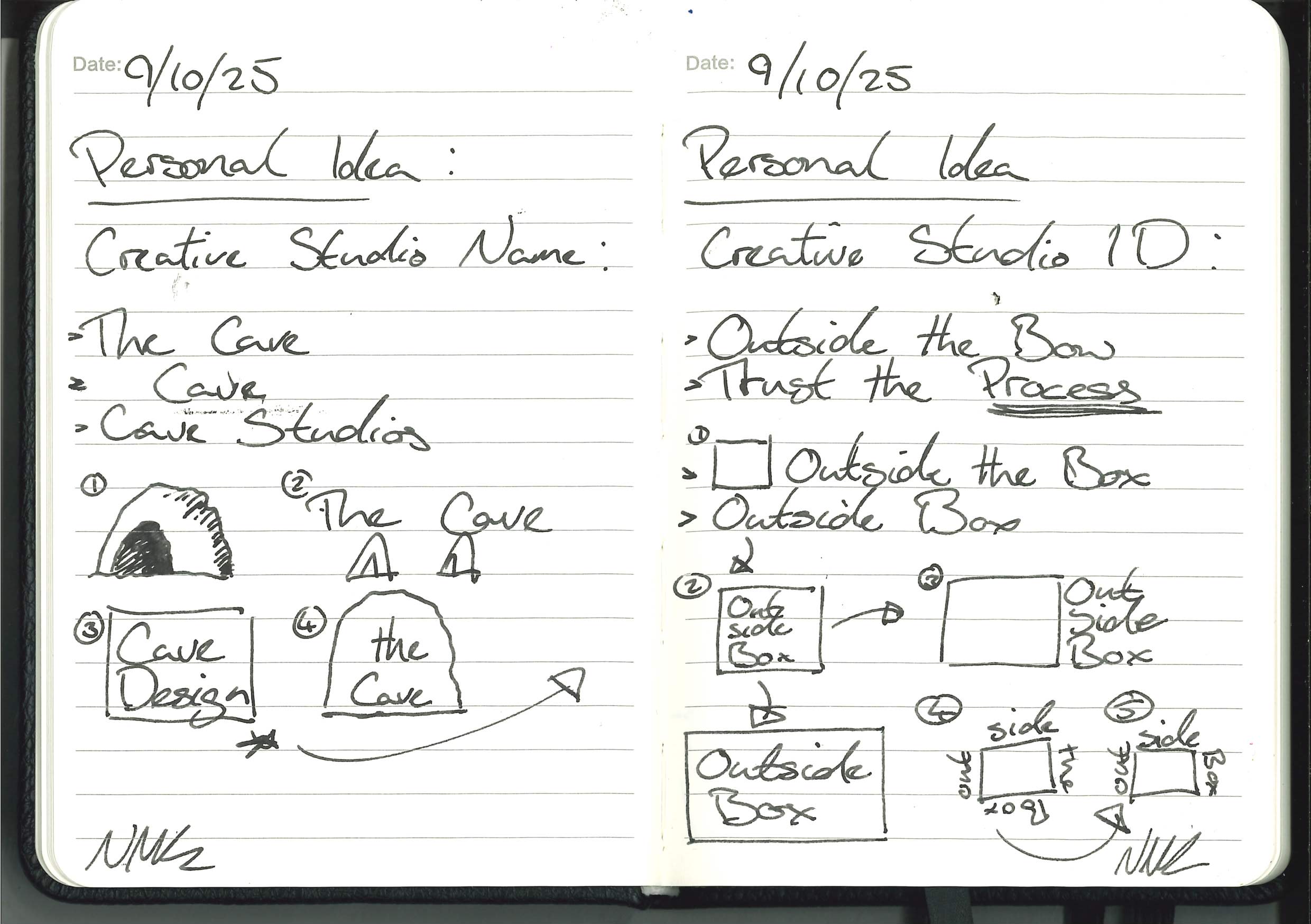
  • Design Studio ID :

    The name | The style:

    With the basic font of this wordpress website, it had the bold punchy font and with it being

    The Tone:

    For the overall tone of the design I was struggling to find the words to describe it but I feel that this song by LCD Soundsystem encapsulates the tone, enegry and theme I want for the design and studio.

    Possible Name Change:

    After a conversation with Lexie and getting a secondary opinion on the possible name of the design studio that does not exist. But continuing with the same style of the ‘process’ idea when considering the font and weight of that font along with the full stop and the digital identity but changing the name to ‘cobalt’.

    Cobalt is usually found in rechargeable ion batteries that is found in computers and as a design studio that uses a lot of technology

    cobalt.

    But playing on the colour that shares the name it could be a fun idea that the one colour we can not use within the studio is cobalt or similar colours.

    Working within restrictions boosts creativity.

    brickwork.

    Another possible name was brickwork, something solid and dependable but with the air of not taking yourself too seriously.

  • Semester One – Week 5 & 6:
    1. Asking the experts:
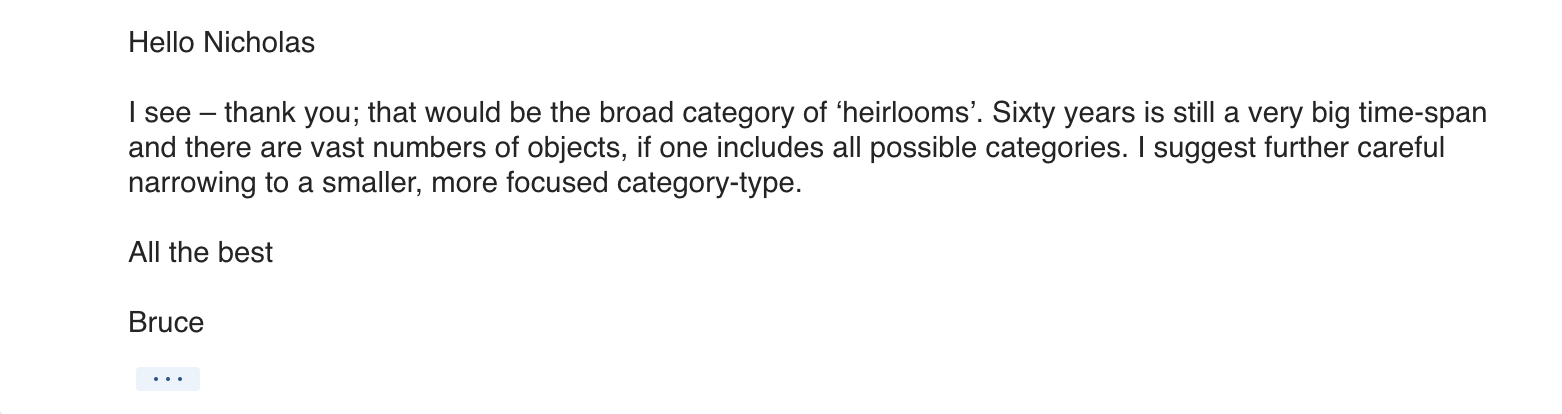
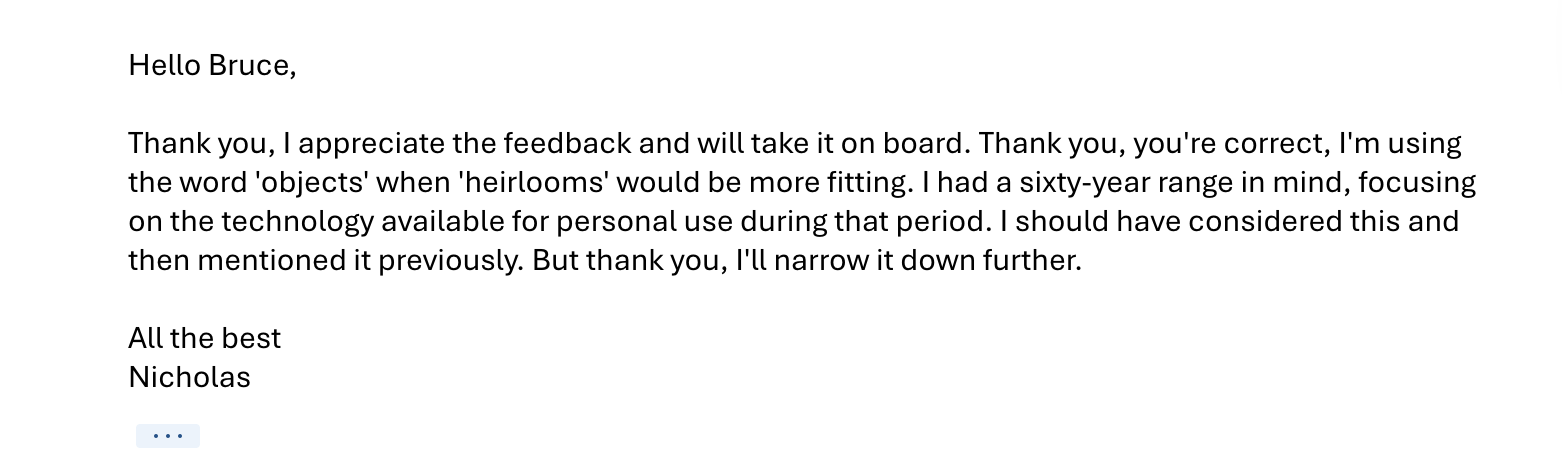
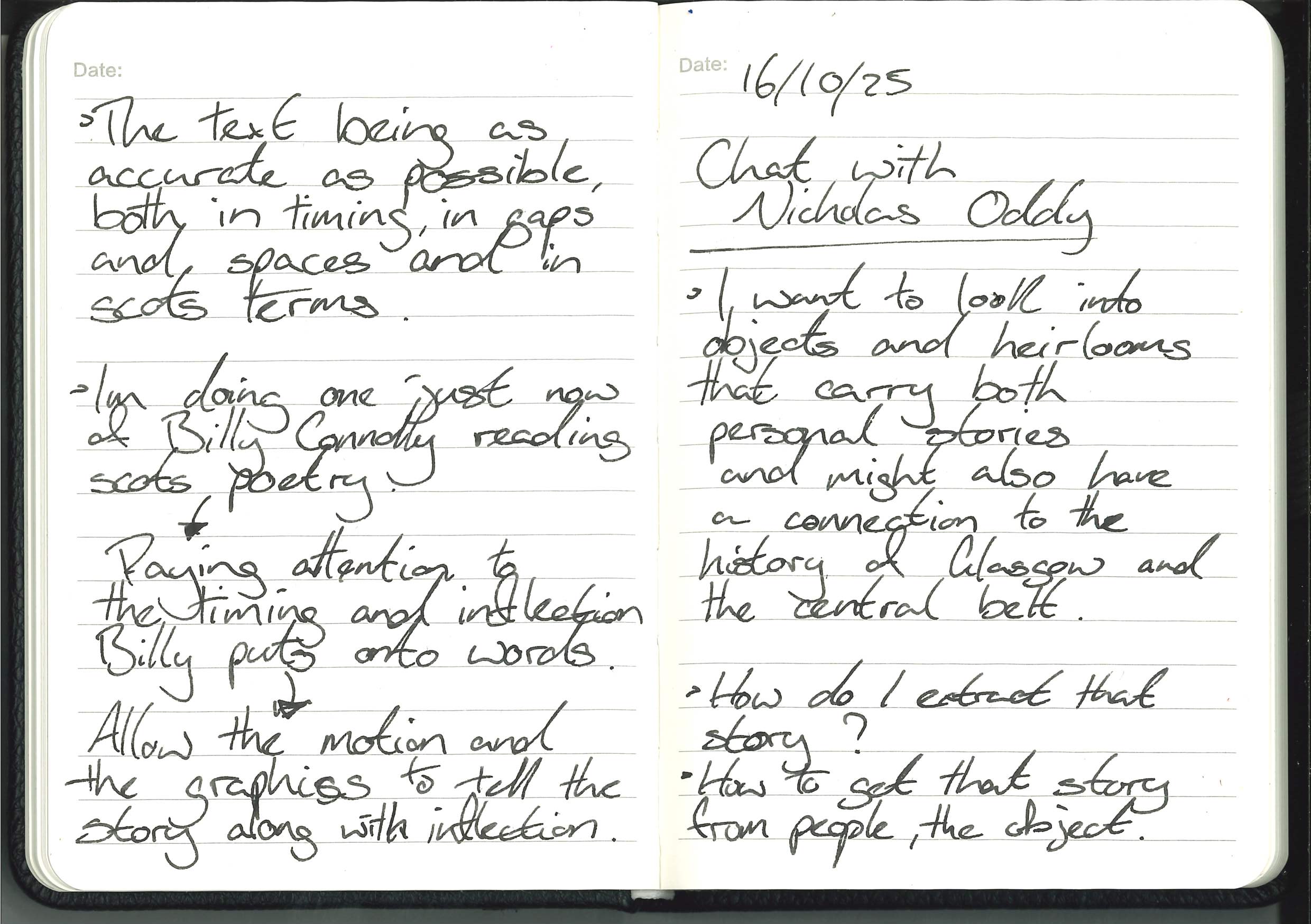
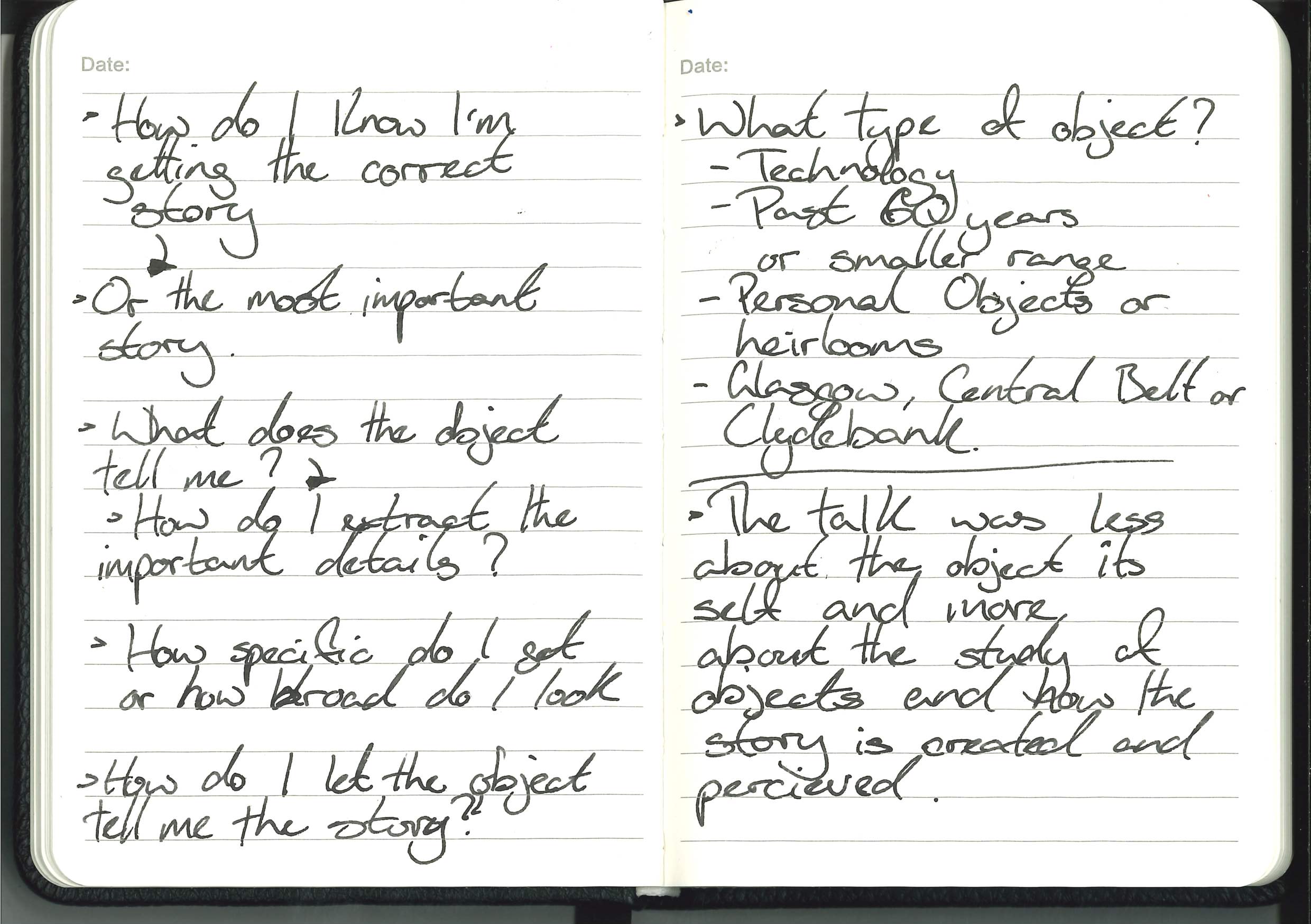
      1. Bruce Peter
      2. Nicholas Oddy:
    2. Show and Tell:
      1. Thoughts after show and tell:
      2. Looking for artistic inspiration:
    3. Chat with Gillian:
    4. Scottish Poetry:
      1. Glasgow:
    5. More Soul Searching:
    6. Show and Tell Feedback:
    7. Tagging along to the Archives :
    8. Jeremy Sutton-Hibbert:

    Asking the experts:

    Bruce Peter

    Nicholas Oddy:

    Show and Tell:

    Thoughts after show and tell:

    After ‘Show and Tell’ I didn’t feel that I had done my project justice either in my work or my presentation. I wasn’t very sure or very confident in my work in front of others because I feel like their work was better or at least more artistic, I think I need to be less focused on design and more artistic in my practice.

    You can’t help but be a designer, so be an artist. You’ll be a designer anyway.

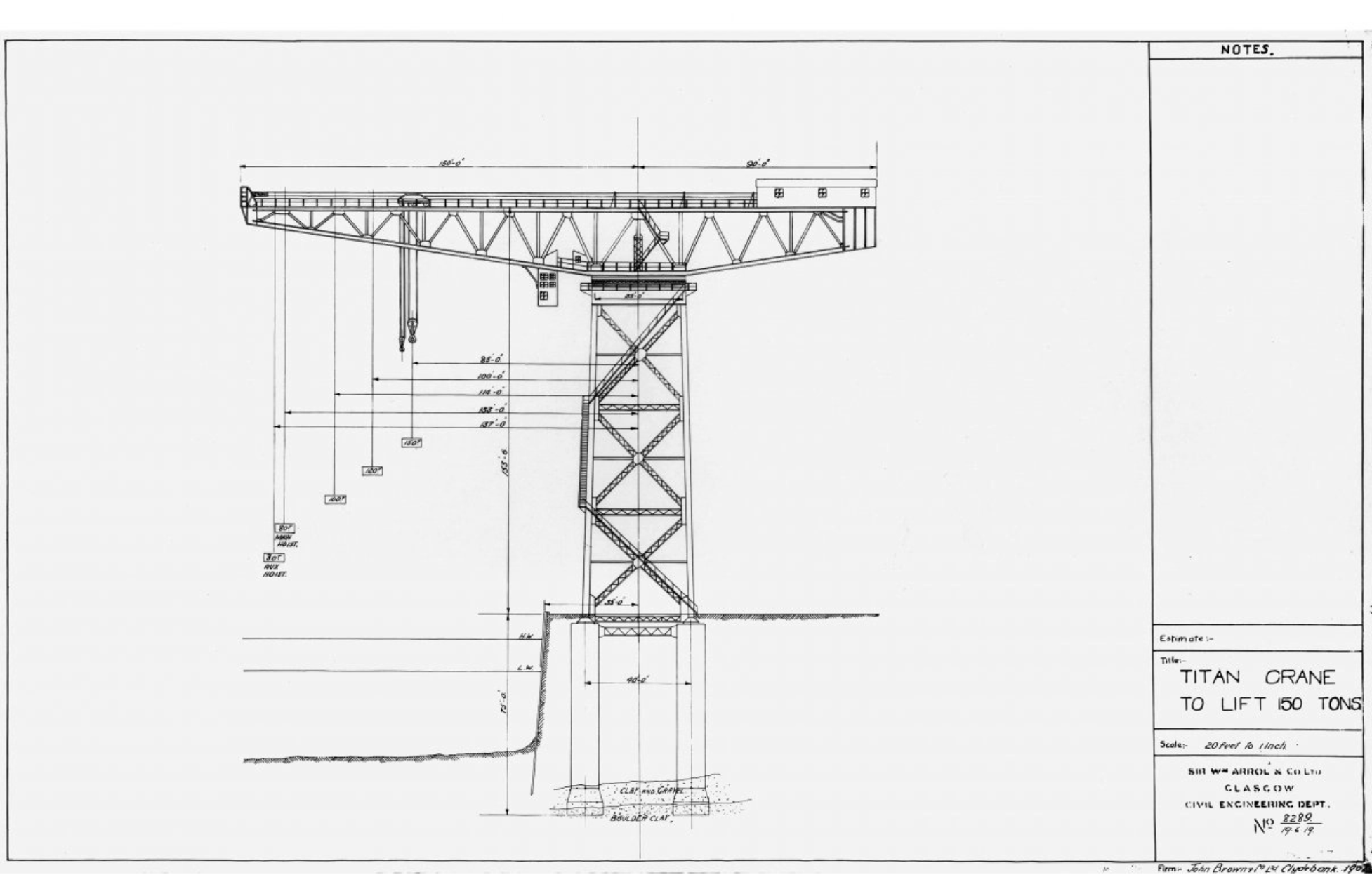
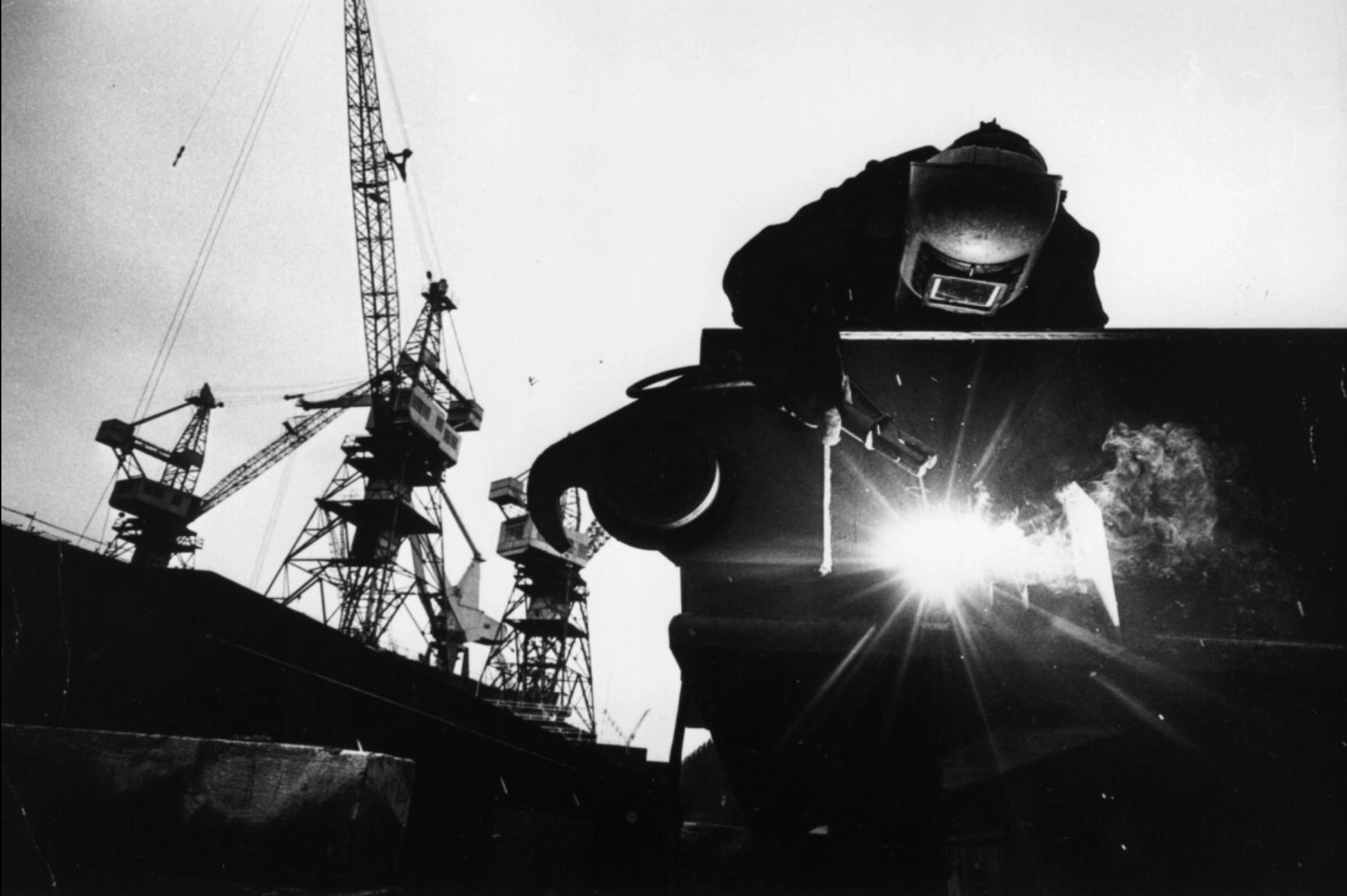
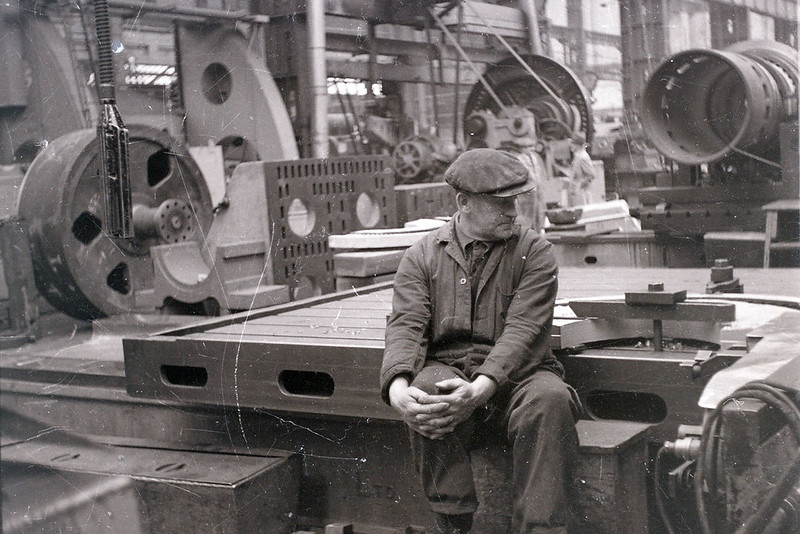
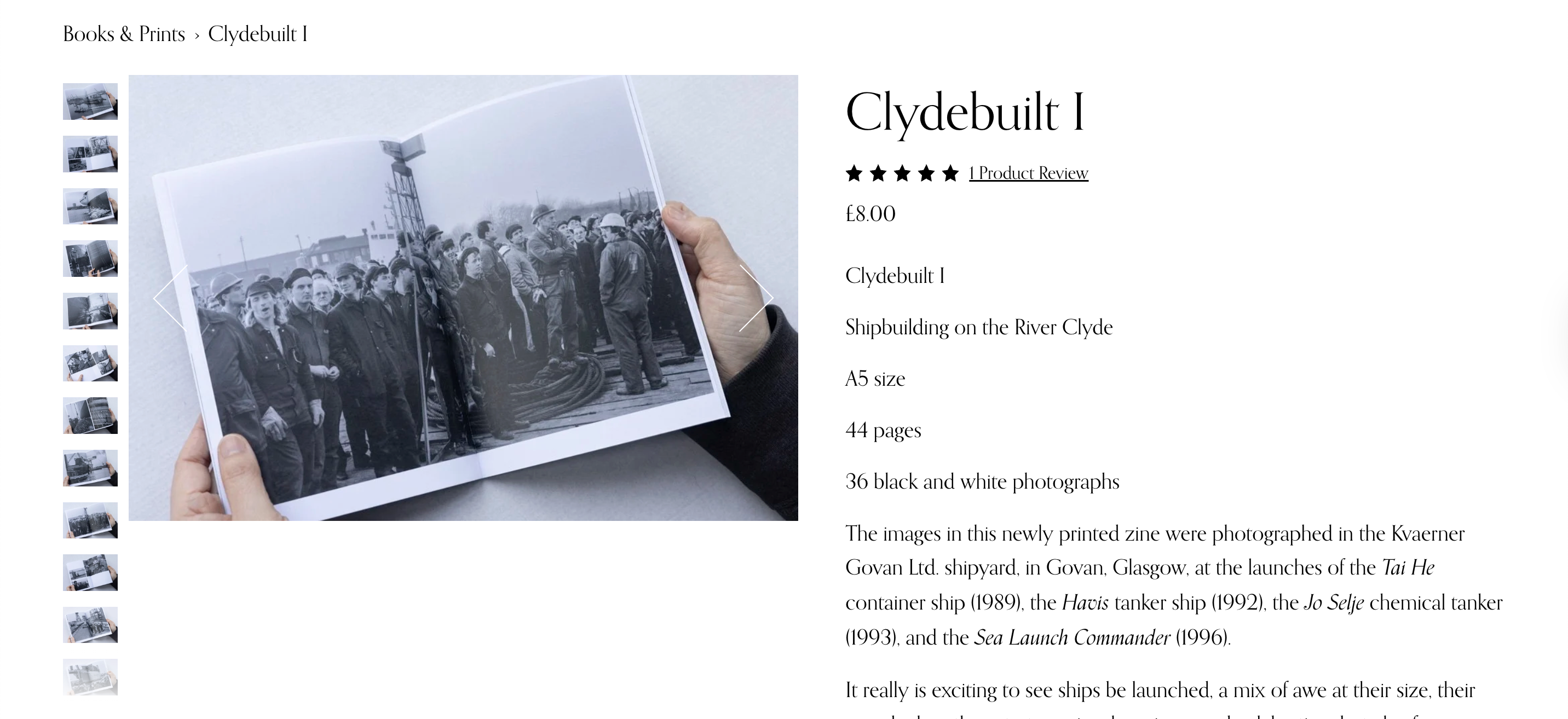
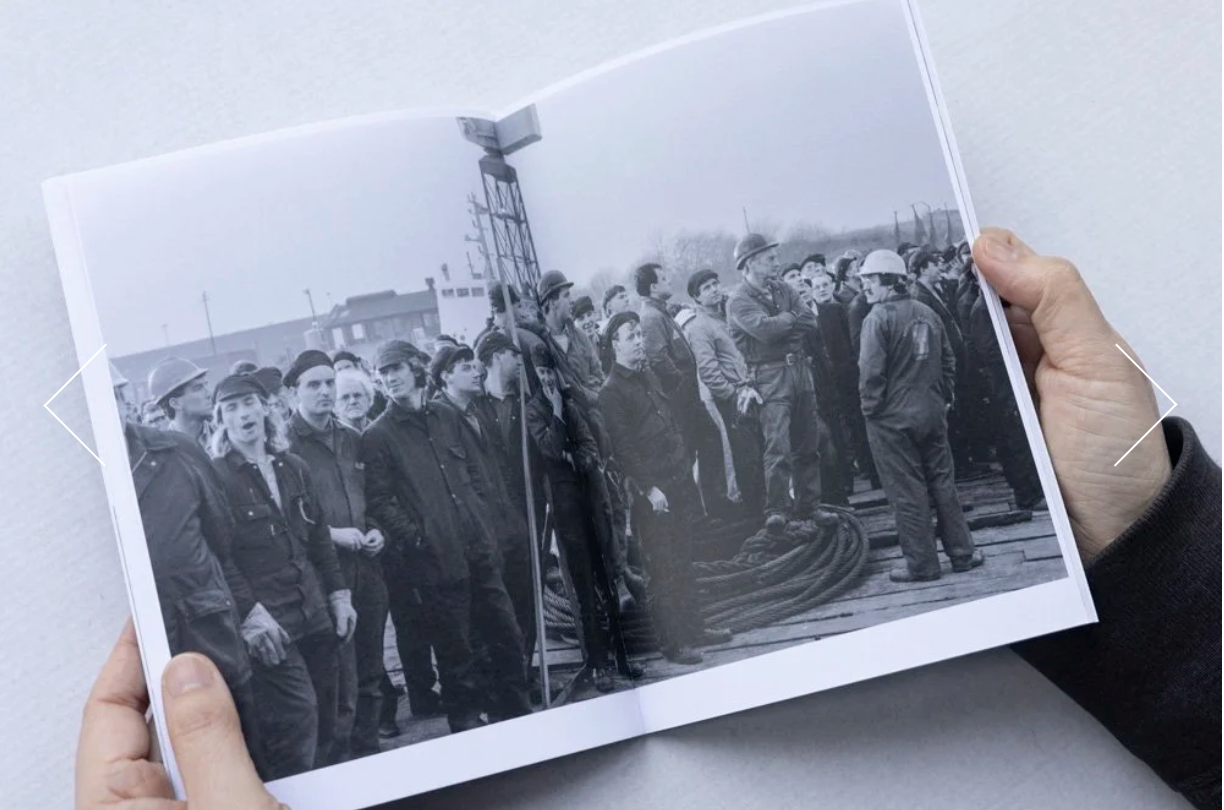
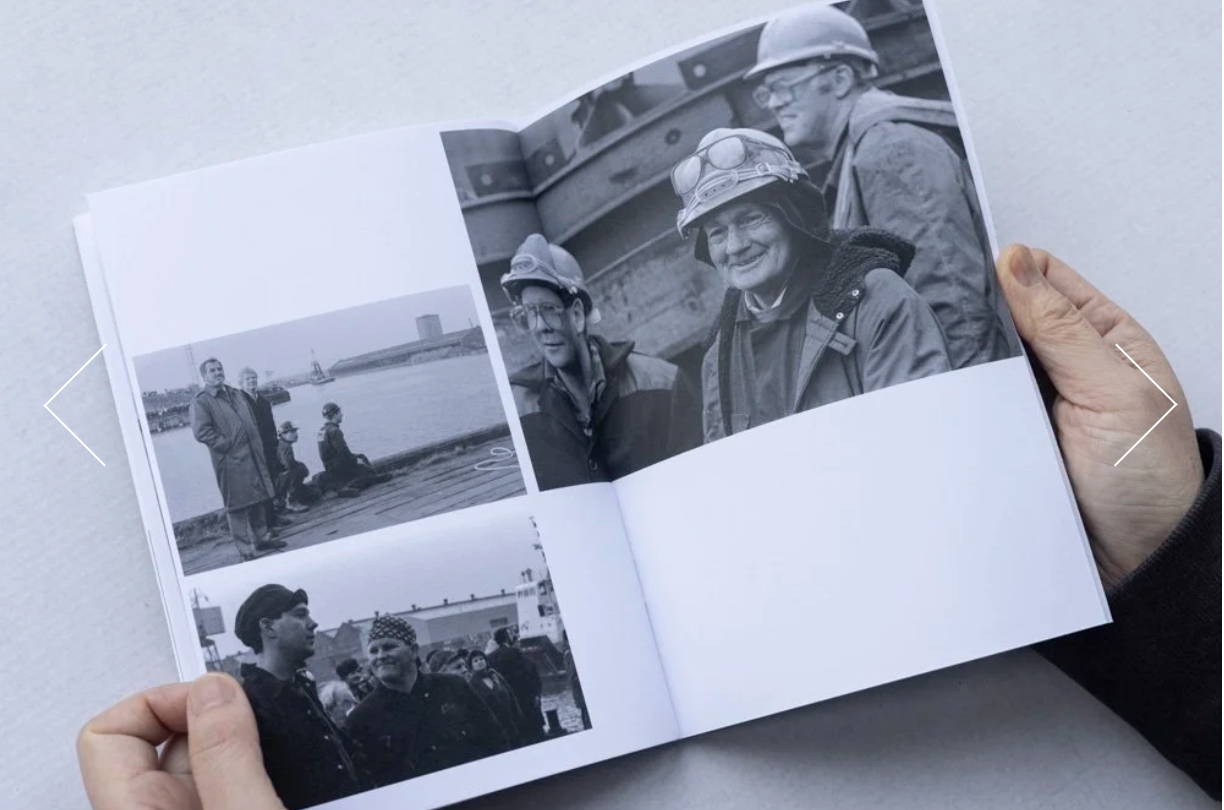
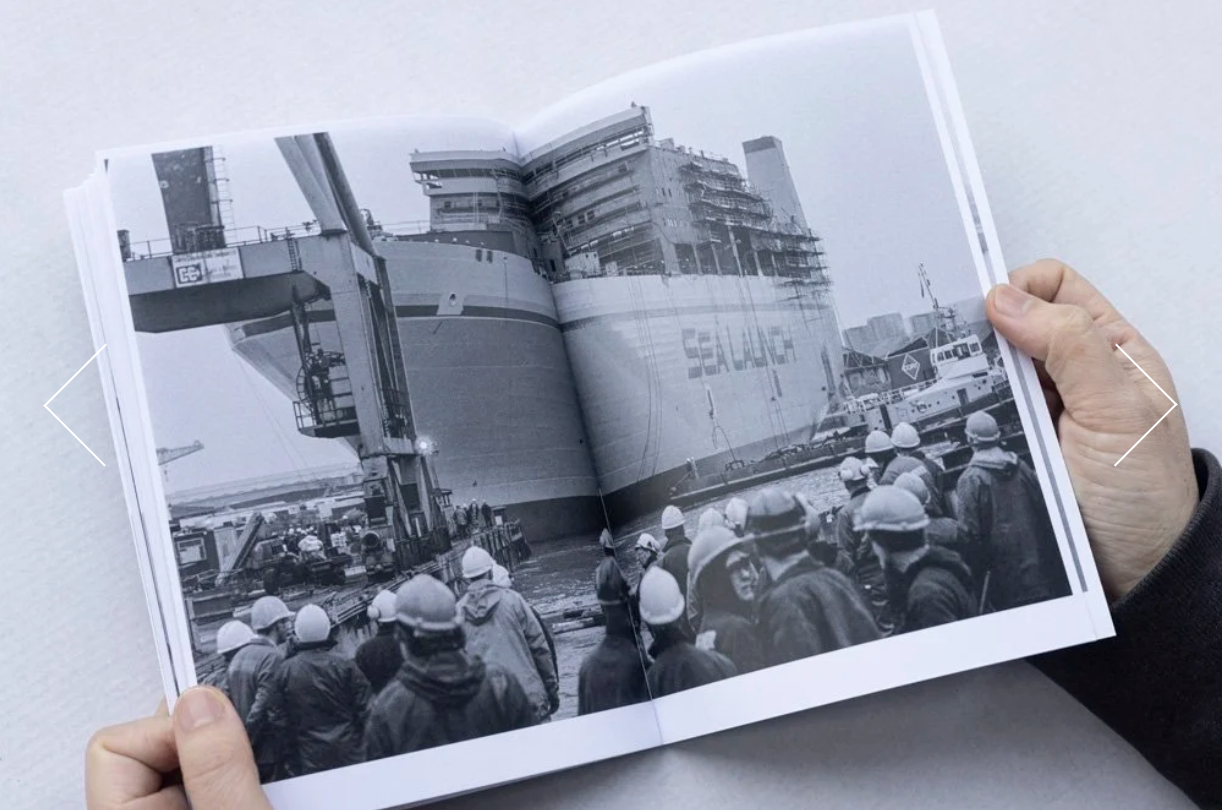
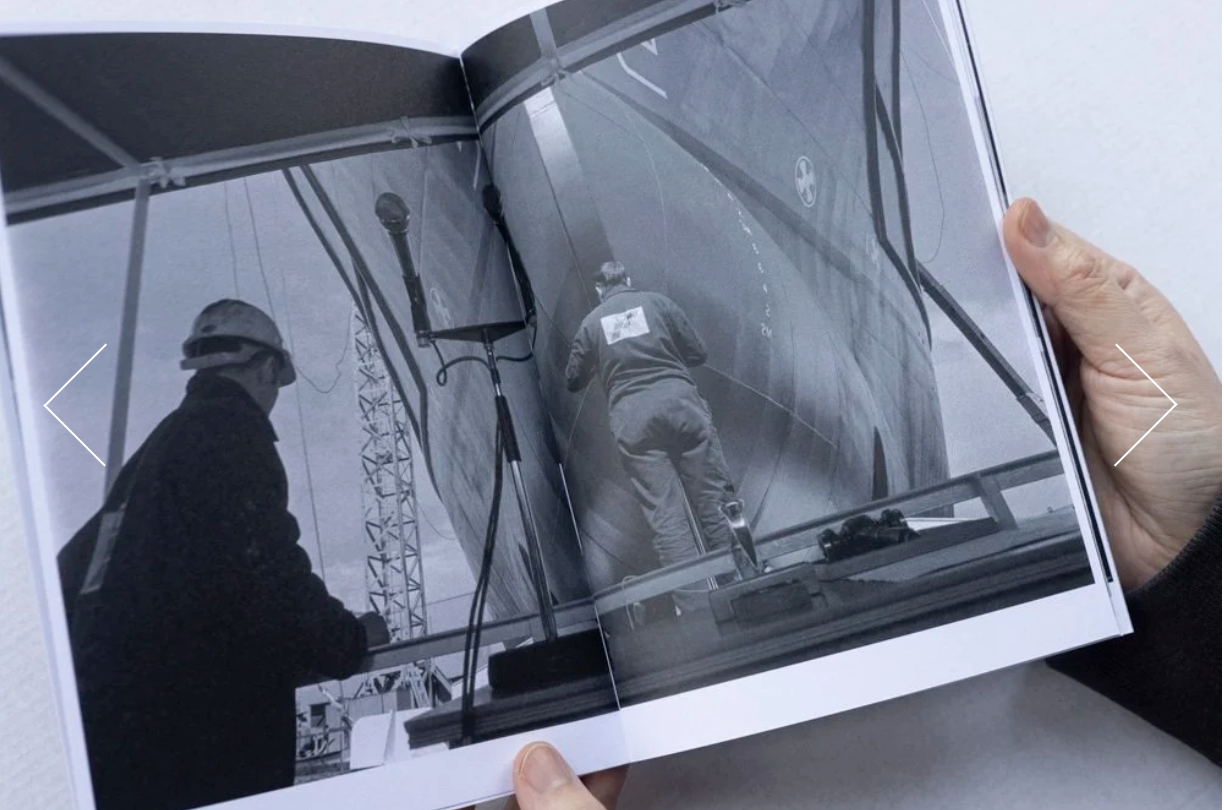
    Mikhail did give me a good photographer to look into who has a trio of zines of ship building on the clyde and the working, his work shows the tones and scale of the shipyards.

    https://www.jeremysuttonhibbert.com/photography-books-zines-prints-scotland

    Looking for artistic inspiration:

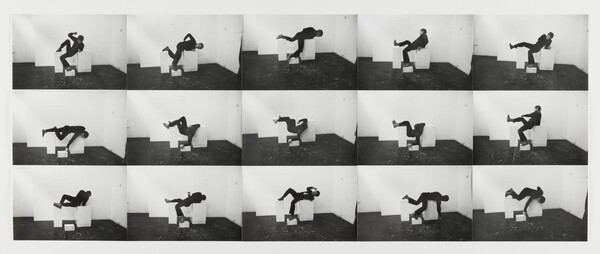
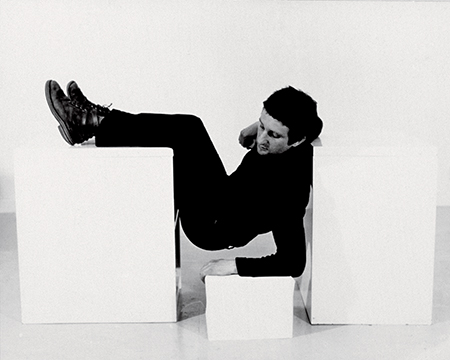
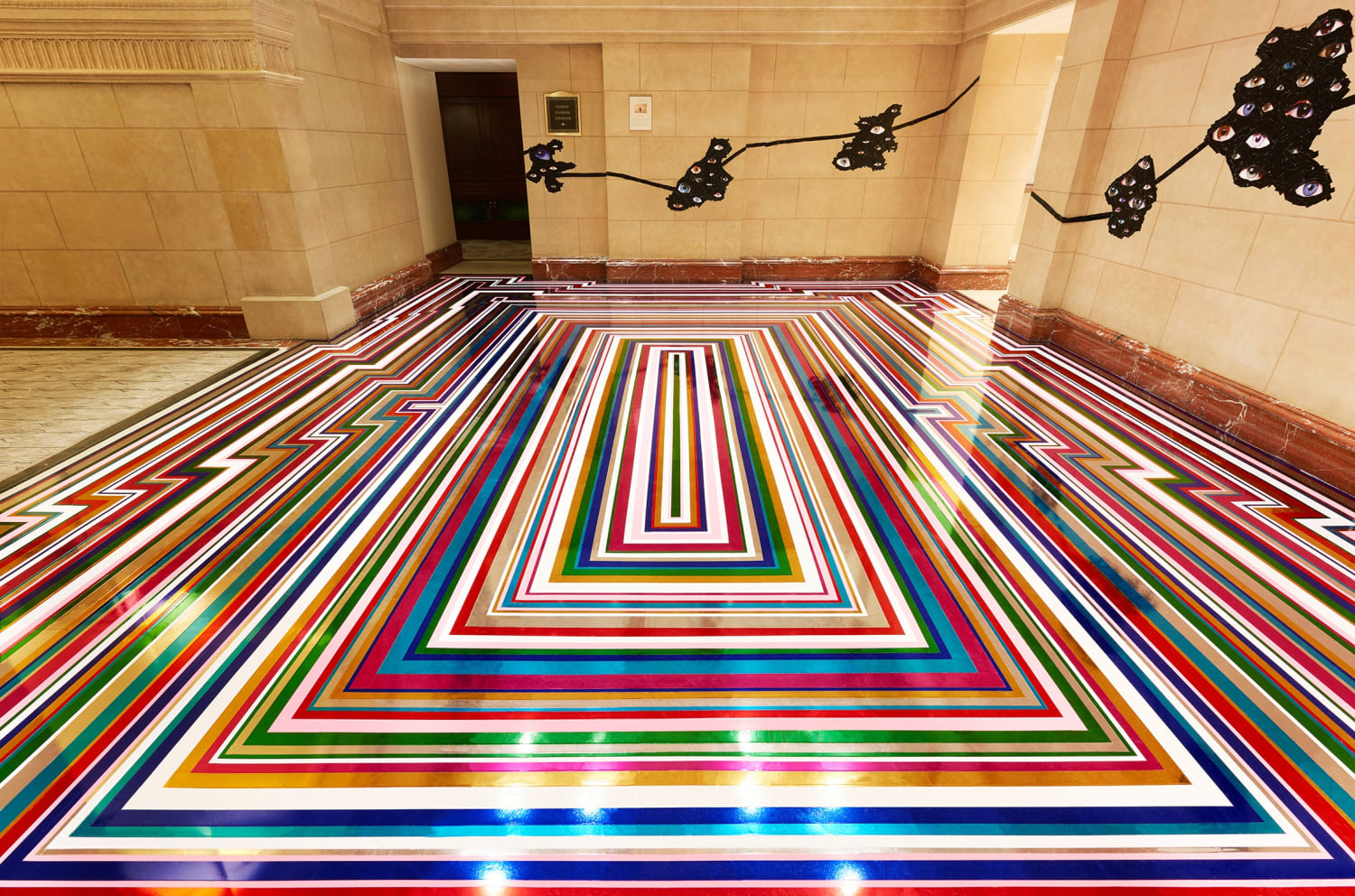
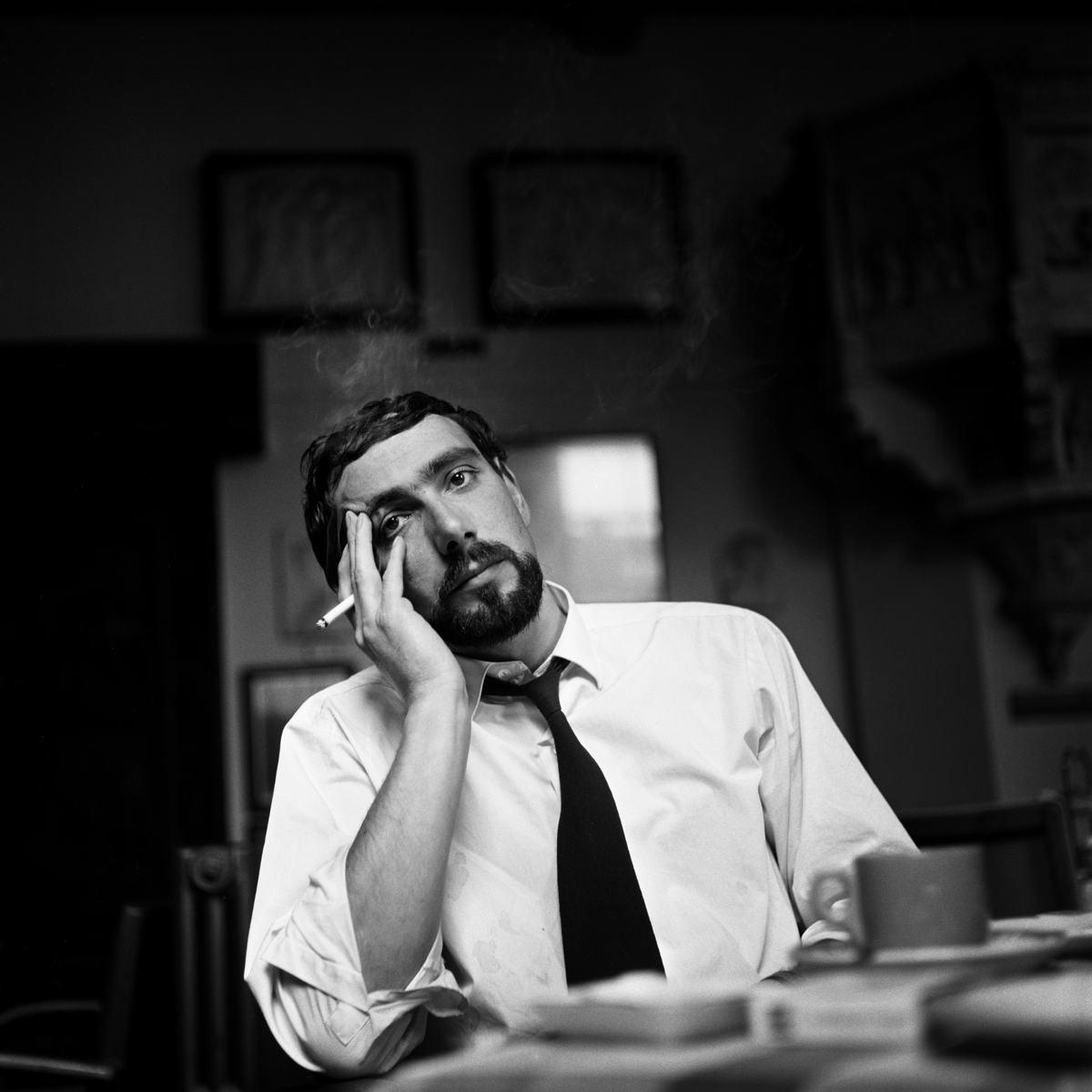
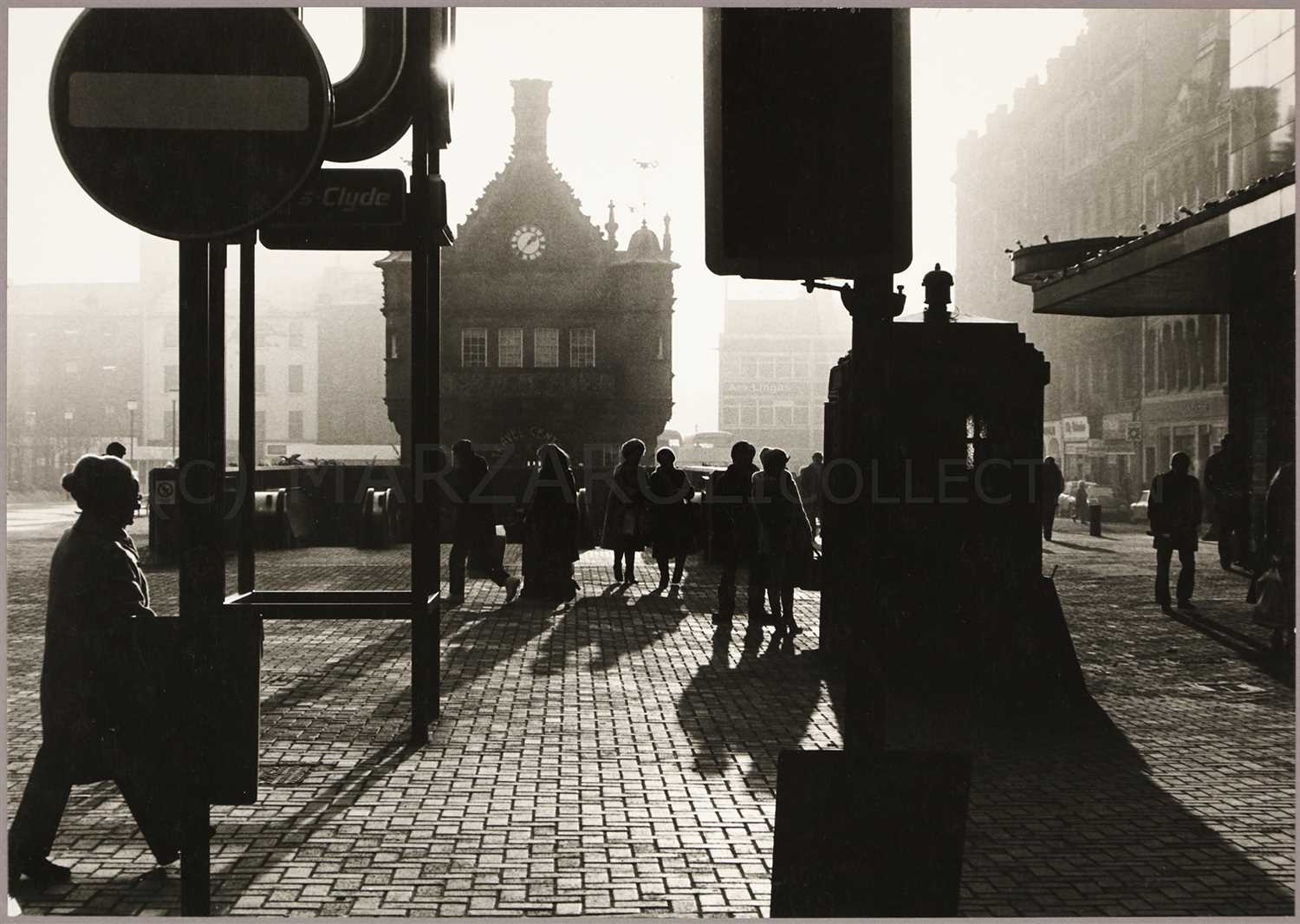
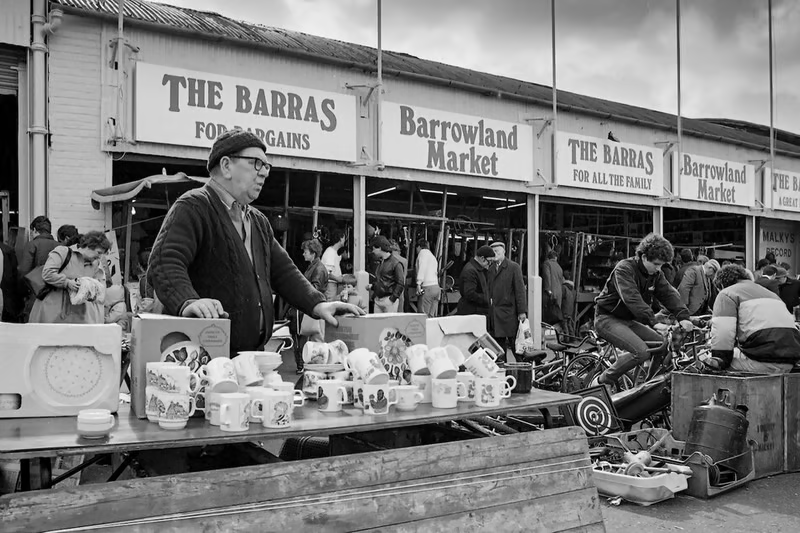
    Bruce Mclean – Pose Work for Plinths:

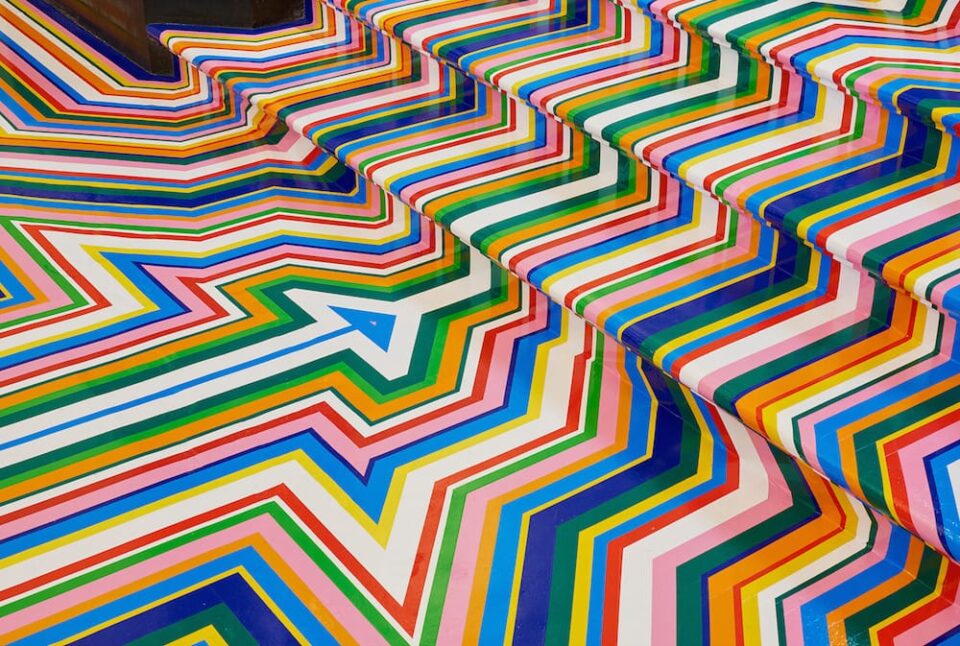
    Jim Lambie

    Oscar Marzaroli

    Peter Degnan :

    Chat with Gillian:

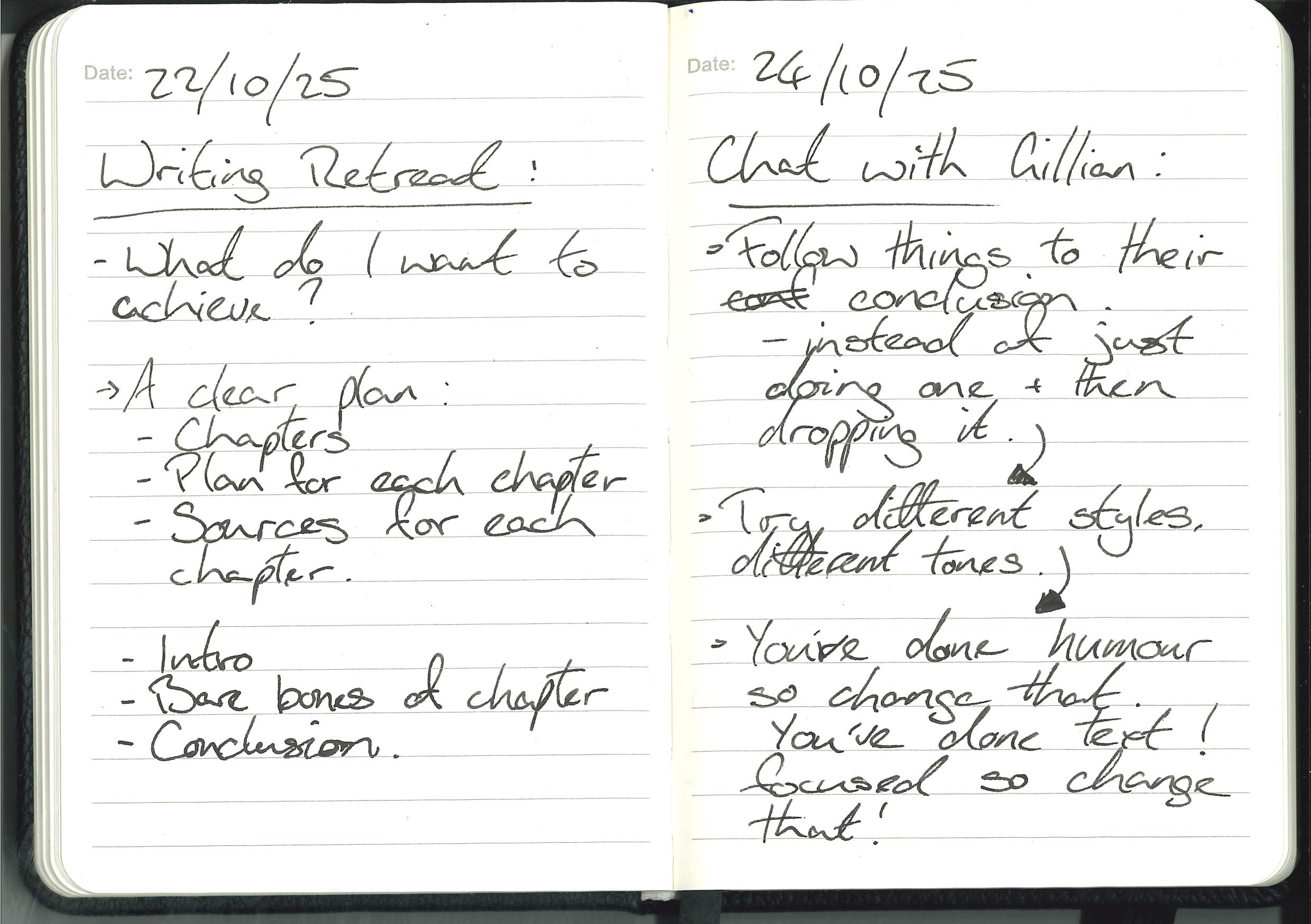
    See things to their conclusion, don’t stop too early and move on to the next thing without exploring it fully.

    With the typographic experimentation I had explored one tone, come reading from one poet and one style that fit those parameters, to analyse it thoroughly, I need to look into how different tones and different images add to the experience and the storytelling, how the harmonious relationship between audio, in whatever form, and the visuals tell the story.

    Scottish Poetry:

    Glasgow:

    Sing, Poet, ’tis a merry world;
    That cottage smoke is rolled and curled
    In sport, that every moss
    Is happy, every inch of soil;—
    Before me runs a road of toil
    With my grave cut across.
    Sing, trailing showers and breezy downs —
    I know the tragic hearts of towns.

    City! I am true son of thine;
    Ne’er dwelt I where great mornings shine
    Around the bleating pens;
    Ne’er by the rivulets I strayed,
    And ne’er upon my childhood weighed
    The silence of the glens.
    Instead of shores where ocean beats,
    I hear the ebb and flow of streets. …

    Afar, one summer, I was borne;
    Through golden vapours of the morn,
    I heard the hills of sheep:
    I trod with a wild ecstasy
    The bright fringe of the living sea:
    And on a ruined keep
    I sat, and watched an endless plain
    Blacken beneath the gloom of rain.

    O fair the lightly sprinkled waste,
    O’er which a laughing shower has raced!
    O fair the April shoots!
    O fair the woods on summer days,
    While a blue hyacinthine haze
    Is dreaming round the roots!
    In thee, O city! I discern
    Another beauty, sad and stern.

    Draw thy fierce streams of blinding ore,
    Smite on a thousand anvils, roar
    Down to the harbour-bars;
    Smoulder in smoky sunsets, flare
    On rainy nights, while street and square
    Lie empty to the stars.
    From terrace proud to alley base,
    I know thee as my mother’s face.

    When sunset bathes thee in his gold,
    In wreaths of bronze thy sides are rolled,
    Thy smoke is dusty fire;
    And from the glory round thee poured,
    A sunbeam like an angel’s sword
    Shivers upon a spire.
    Thus have I watched thee, Terror! Dream!
    While the blue Night crept up the stream…

    But all these sights and sounds are strange;
    Then wherefore from thee should I range?
    Thou hast my kith and kin;
    My childhood, youth, and manhood brave;
    Thou hast that unforgotten grave
    Within thy central din.
    A sacredness of love and death
    Dwells in thy noise and smoky breath.

    It was so fine we lingered there for hours.
    The long broad streets shone strongly after rain.
    Sunset blinded the tremble of the crane
    we watched from, dazed the heliport-towers.
    The mile-high buildings flashed, flushed, greyed, went dark,
    greyed, flushed, flashed, chameleons under flak
    of cloud and sun. The last far thunder-sack
    ripped and spilled its grumble. Ziggurat-stark,
    a power-house reflected in the lead
    of the old twilight river leapt alive
    lit up at every window, and a boat
    of students rowed past, slid from black to red
    into the blaze. But where will they arrive
    with all, boat, city, earth, like them, afloat?

    As fast as Glasgow burned its theatres to the ground
    it built them back again – we couldn’t do
    without our plays and tunes, we need a dance
    and song to keep us going. This gaff’s given us
    the lot: couthie comics, rude rhymes, romance,
    camp and catchphrase, flicks (with music), Ali Baba’s
    thieves, diverse monsters (Mary Shelley’s, Columba’s),
    wafting Rhine Maidens, our very own Marie Loftus,
    a masked ball, a harlequinade, a circus,
    Dan Leno’s Orlando Dando, Henry Irving,
    and Sarah Bernhardt for one matinée only –
    not to mention the sensational telly
    (One O’Clock Gang still daft in the memory).

    Whatever walls come down, go up, go round,
    this magic box holds all, swirling, birling
    in the waiting darkness the works shine through.

    Out of this ugliness may come
    some day, so beautiful a flower
    that men will wonder at that hour,
    remembering smoke and flowerless slum,
    and ask ,
    glimpsing the agony
    of the slaves who wrestle to be free
    ‘But why were all the poets dumb?’

    More Soul Searching:

    What is at the heart of this? What is the soul of it?

    During the weekend, I again had another breakthrough and a meaningful conversation. With Lexie, I discussed what I loved, but I didn’t really have an answer beyond design. I have always loved it, and I practice design thinking, streamlining interactions and processes even when I was working a retail job in Dunelm in Clydebank:

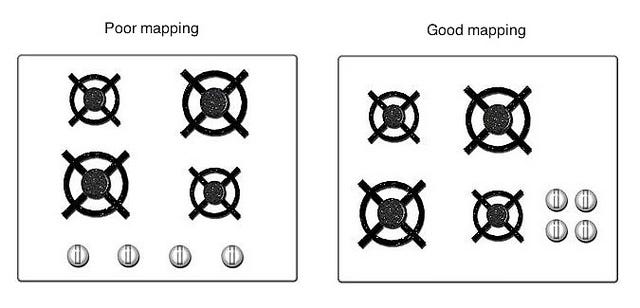
    In the bulb section for years, it was a mess, no one could find out where the correct bulb was and staff couldn’t accurately count or stock these bulbs because of that mess, there was no system in place and anything that anyone tried over the years make technical sense because of the barcode on them or the stock levels and how often the had to be restocked but they didn’t consider how people actually thought, so inspired by all those design books I read, Don Norman obviously, I designed a system that within groups of fittings, from left to right, as we read in the west, went from smallest wattage to largest and then again from left to right prioritised the most common light temperature to the least (warm to cool). The customer could come up and by process of elimination identify what type of fitting, what wattage they needed and what colour of light they wanted.

    Why am I waxing on about how proud I am of the design of this bulb selection in a retail store that I don’t even work at anymore? Because I loved doing it, and I loved how much easier and simpler it made a small section of people’s lives — and yes, the store’s employees were very thankful —but no customer considered what system was in place or who had done it.

    Design is the heart of it.

    And with the soul, when I was younger, I didn’t really have much nostalgia for anything, as all young children of that age do. Still, when I was a teenager, I think at 16, just before my exams, I had a house fire and a lot of the things from my childhood, memories, heirlooms from people that had passed went up in flames due to a poorly designed old extractor fan in the toilet, it had went through the walls and up into the the loft and anything the fire didn’t get the water damage from the firefighters seen to it. I didn’t think it had effected me but till this day that smell puts me on edge. But not until recently did I realise that after that, I long for the things I took for granted, I collect things, I don’t throw things out that I should, I put so much importance on the objects in our lives and the objects that people give us or leave to us. And the add fuel to the fire , horrible pun, my memory is horrible until I have something that triggers those memories, a sight, a smell, the texture of an object in my hand. To remember the things I’ve done and the people in my life I have objects that transport me back to those moments in perfect detail.

    The soul of it is the objects and heirlooms that remind me of my life and the people, places, and experiences in it.

    I was distancing myself beforehand, but I should embrace it.

    Show and Tell Feedback:

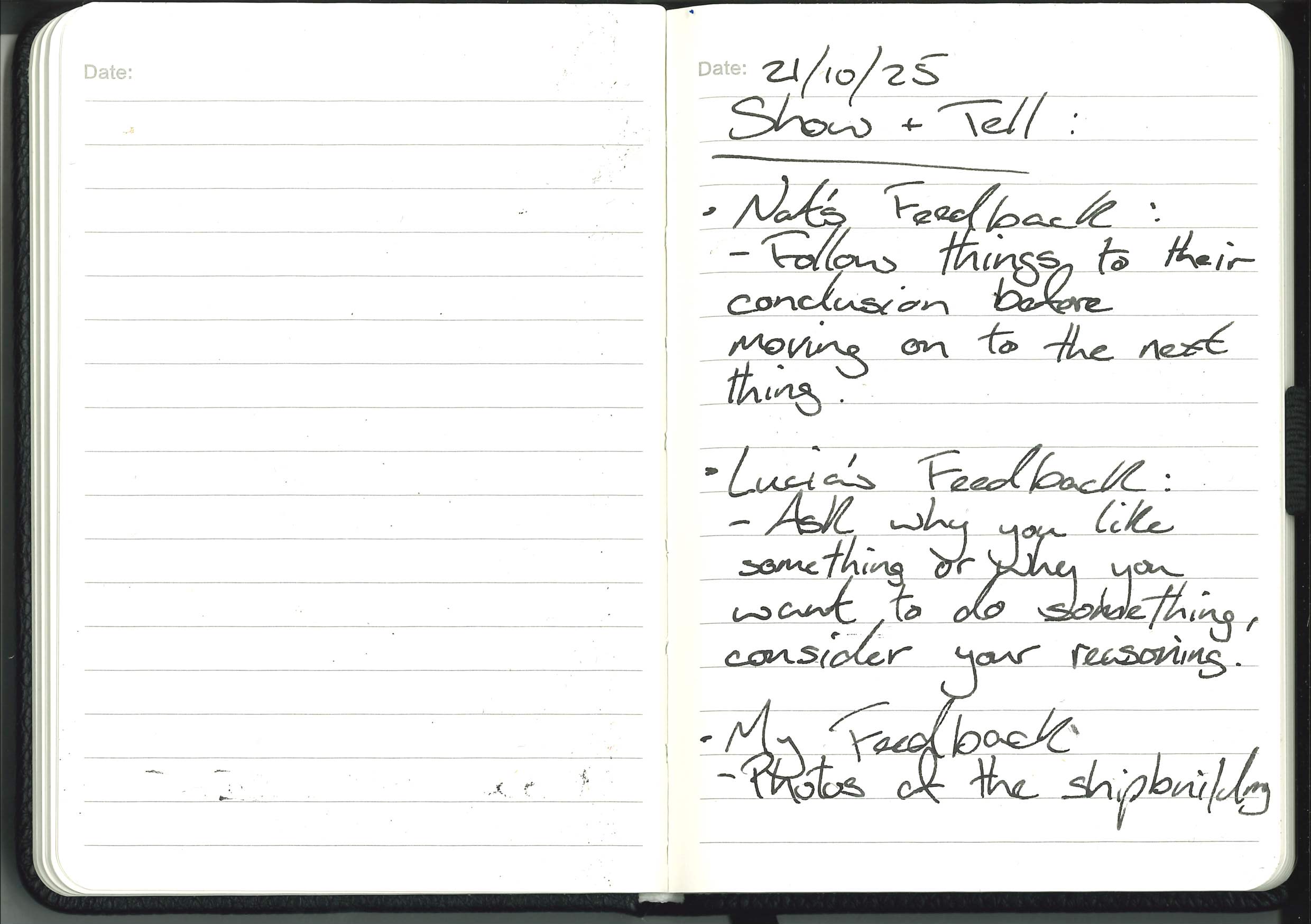
    Show & Tell 21.10.25

    This is a good start. You reflected on previous work to find a direction for YR4. Although a bit unfocused to start with you have found your topic; museum exhibition, storytelling engagement and communication. ‘Museology’ is a cross-disciplinary field of study within cultural heritage and museums that has become more visitor-focused to communicate cultural and scientific heritage. Visitors now expect interactive media, immersive installations and themed galleries to bring heritage/history to life.

    You have already carried out some research in this field but perhaps you could be more forensic about what each company you’ve researched does well. This may help you identify how you can bring this to your own work, i.e. film, motion sensing, interaction, 2D animation, etc.  
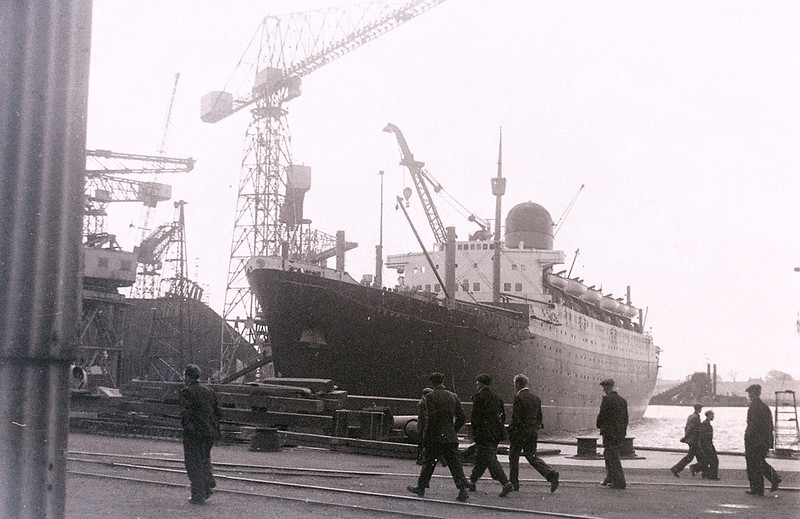
    You have decided to use the town of Clydebank (stories, history, people) to build your project. The town has rich historical resources, objects and a wider thematic context.

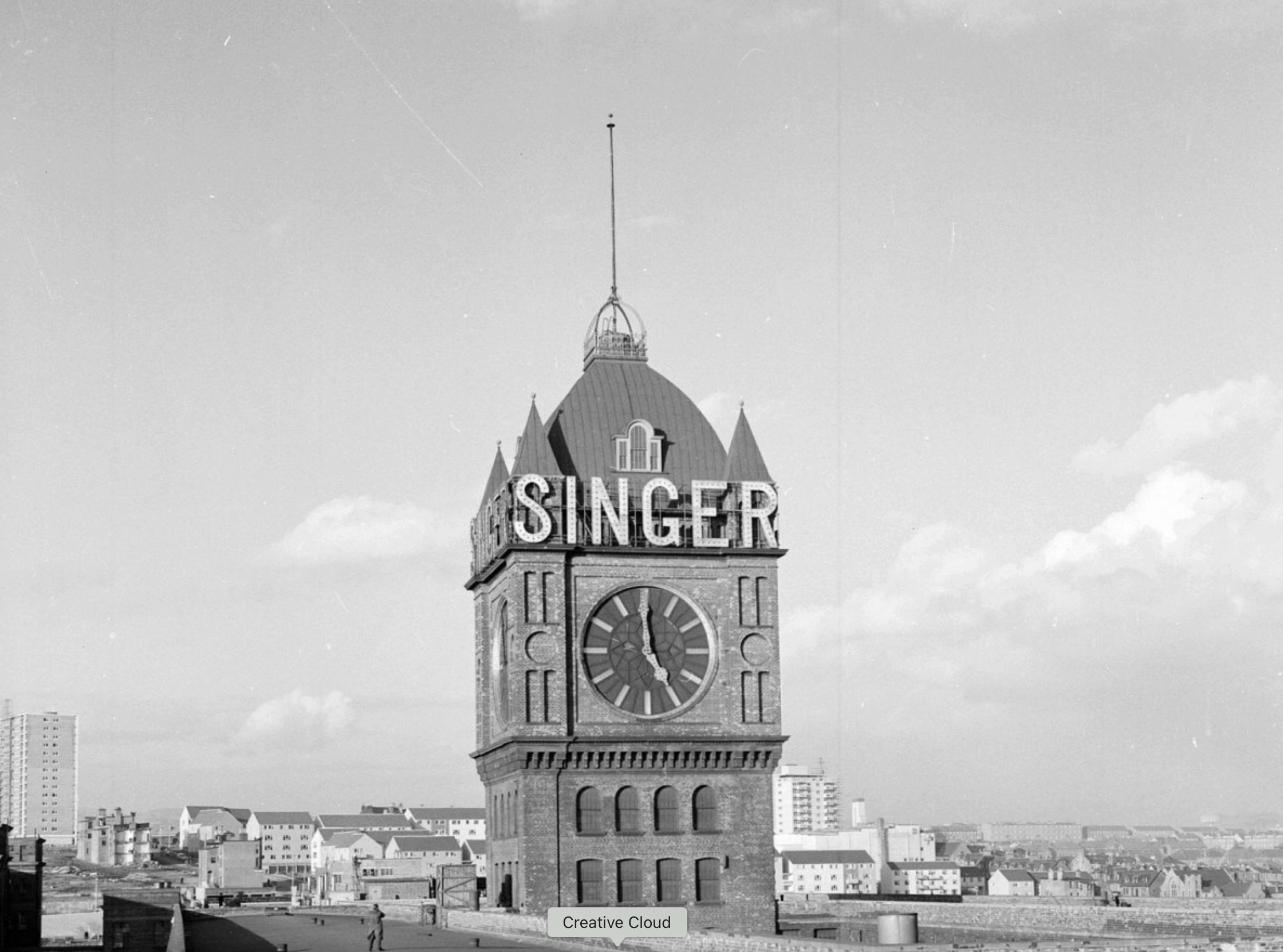
    Write yourself a ‘Digital Exhibit Brief’ for this project — specify a venue (e.g. a gallery in the V&A Dundee or Burrell) and/or format. You should include details of the work’s proposed materials, its scale, and its technical requirements. This would provide you a framework for your creative response. You intend to make a collection of objects that tell the story of your chosen theme (Clydebank, Shipbuilding in Clydebank, Singer etc). You then decide what shape this takes.

    Links:

    Inese Verebe — https://ineseverebeixd.wordpress.com/year-4/

    Matthew Trainer — https://readymag.website/u2746679248/mattrose/

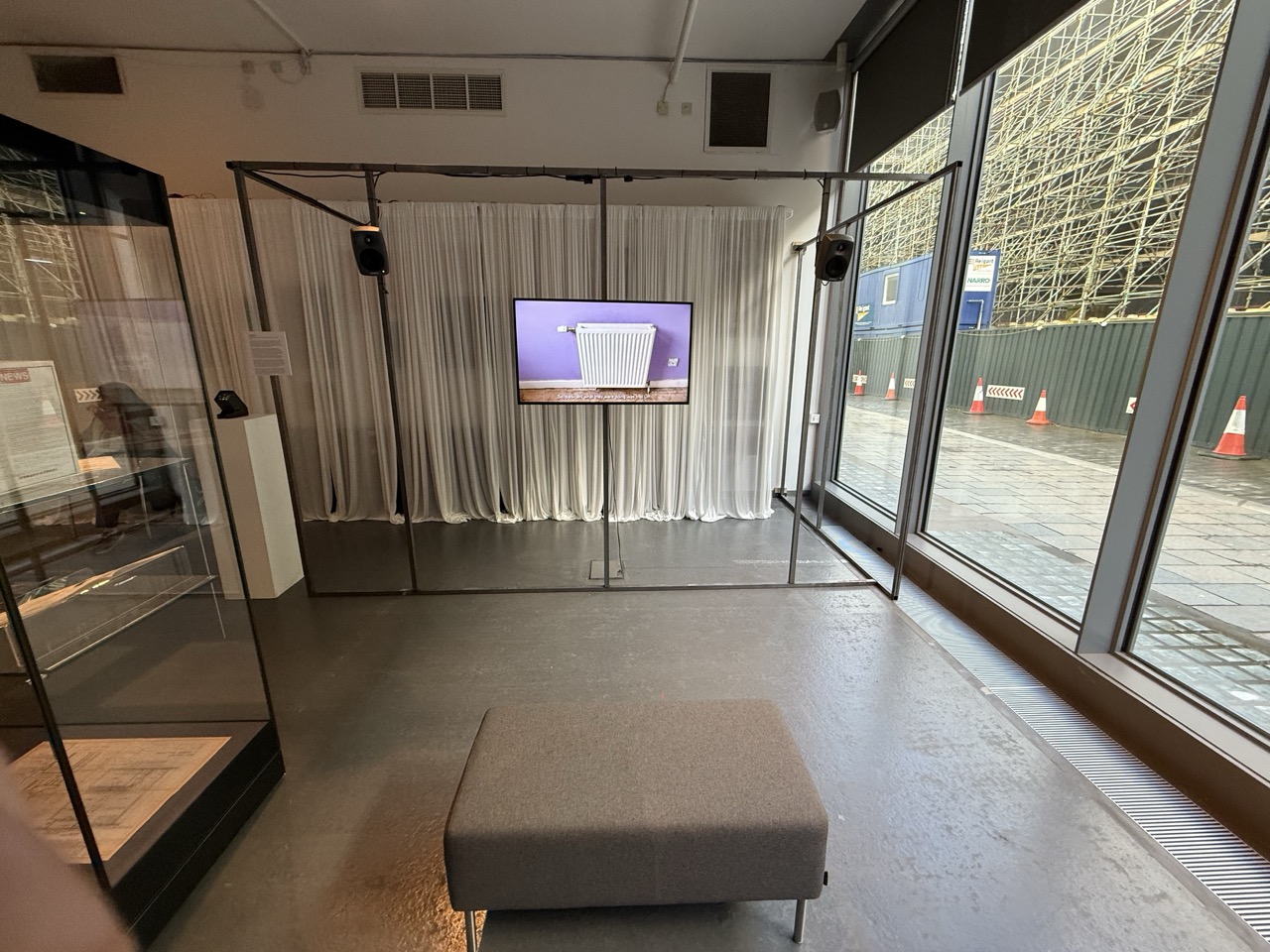
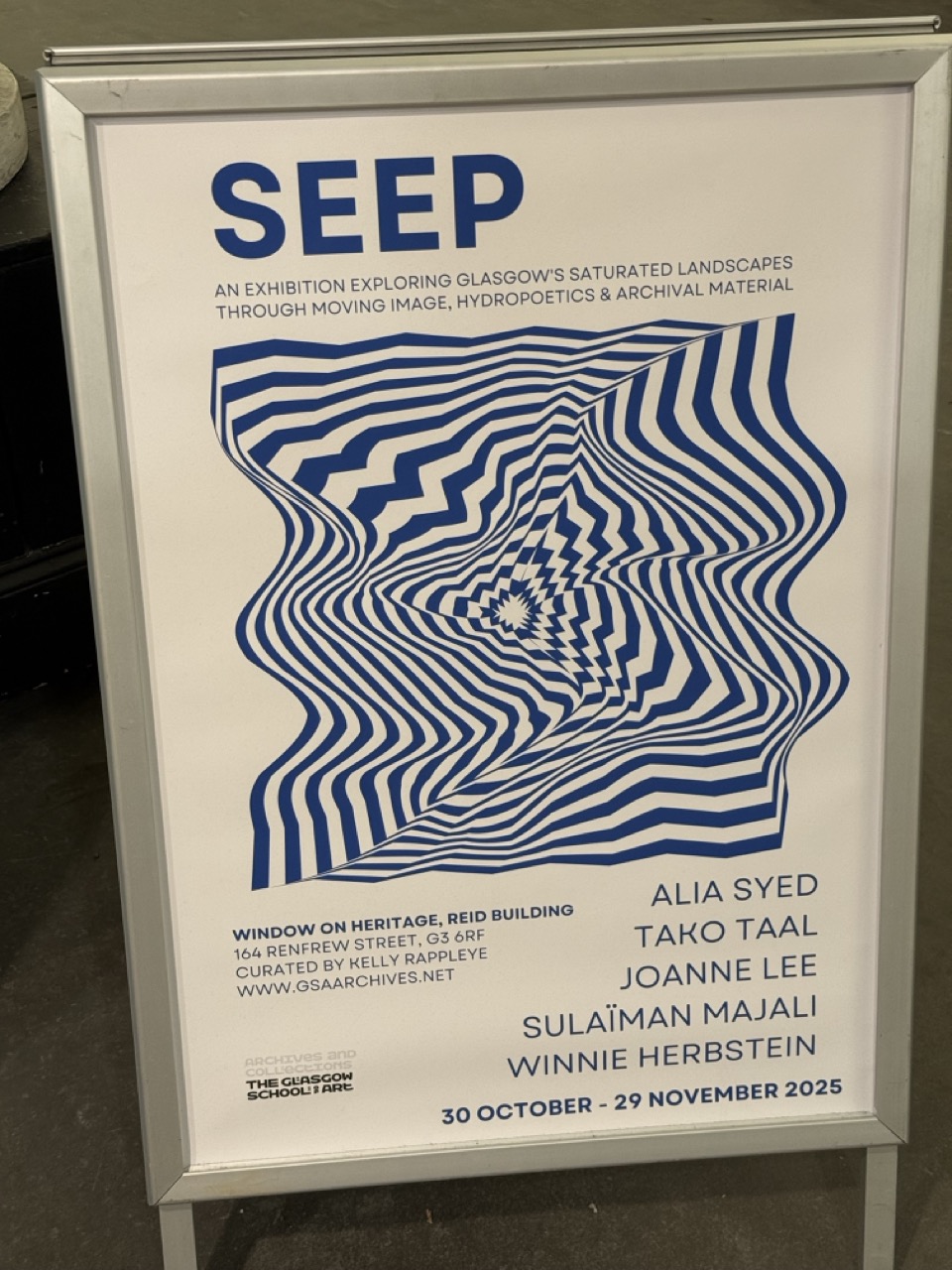
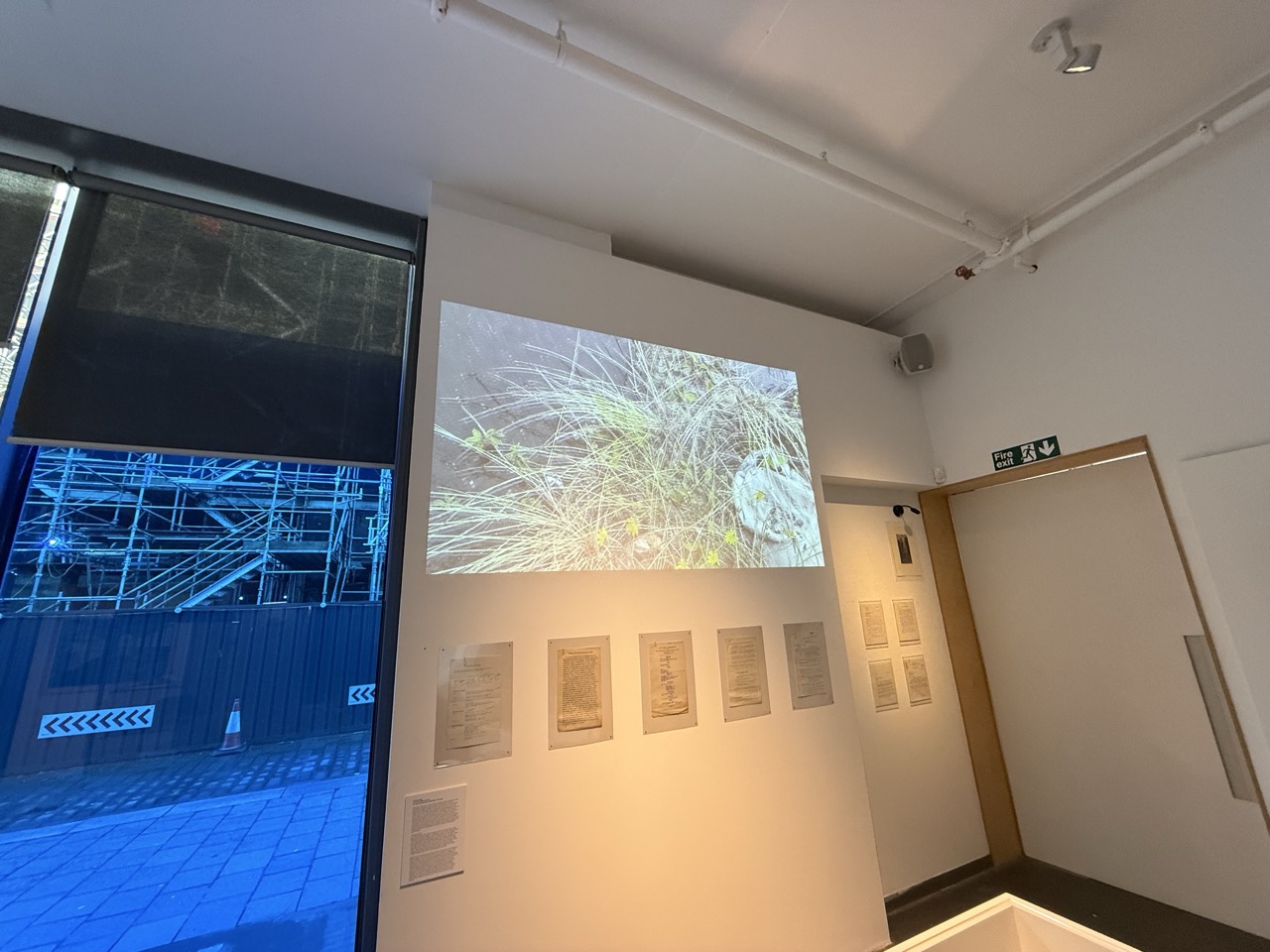
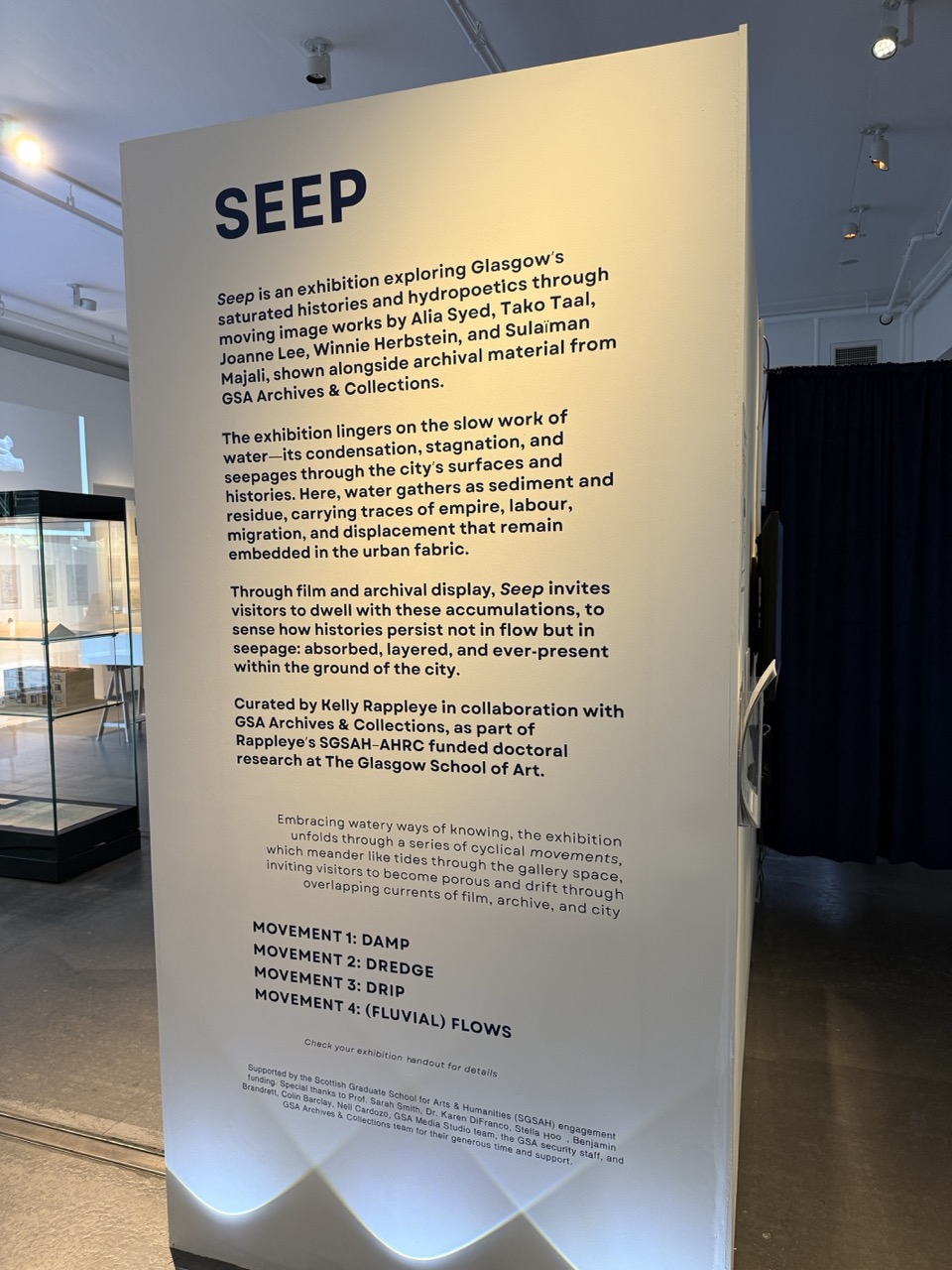
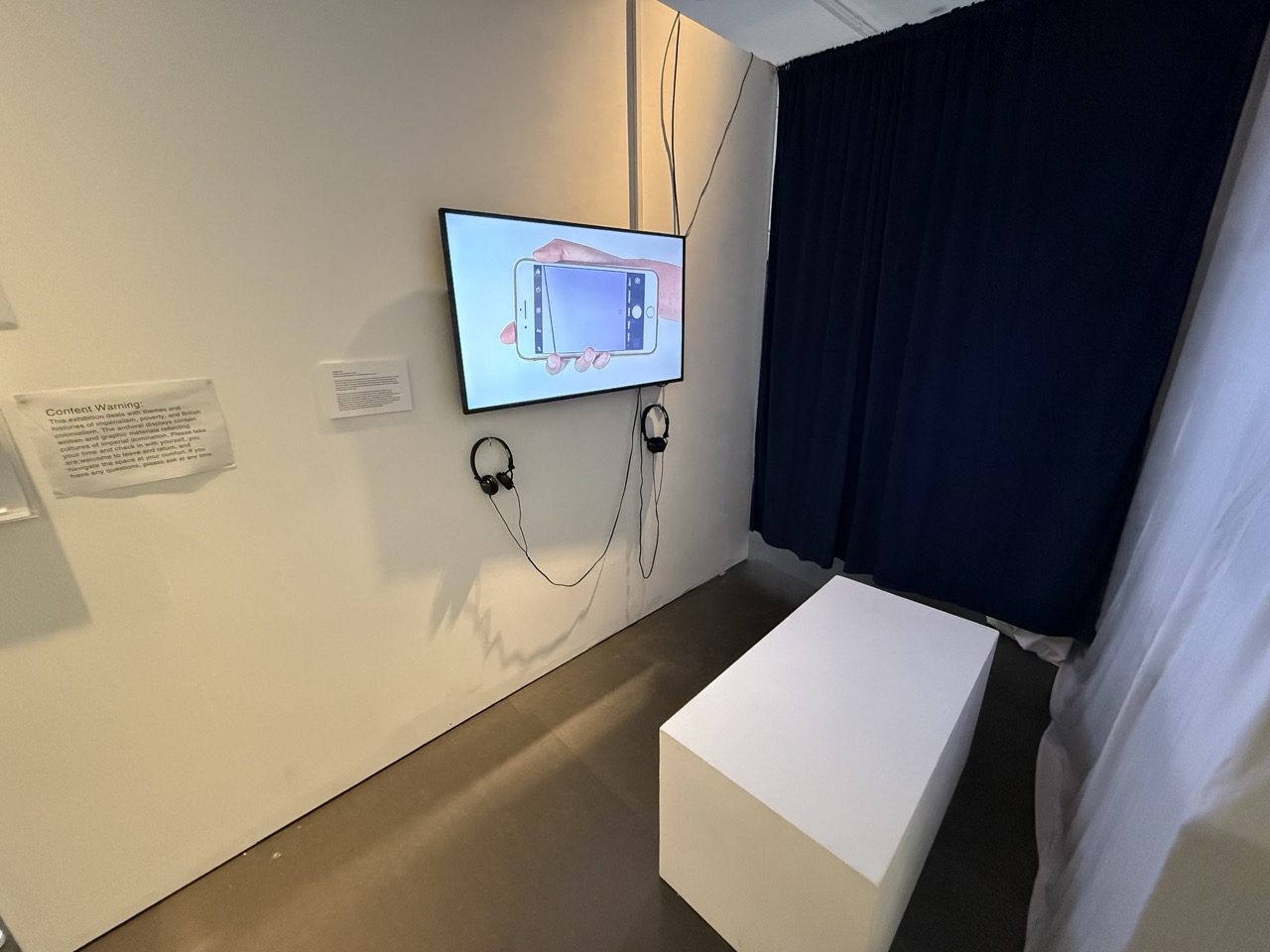
    Seep Exhibition, Reid Gallery — https://www.instagram.com/p/DP3gbJaiIBM/

    Action for next Show & Tell:

    • Continue to add to your Learning Journal. Consider categorization, perhaps use Weeks – Week1-2, Week 3-4 etc. or months. Perhaps add subheadings to identify changes in direction/additional topics, artist influences, technical developments etc.
    • Write yourself a brief.
    • Create 2 or 3 studies using your preferred medium, 2D animation, photography, AR, interaction. Push each of the studies as far as you can and see where that takes you before moving on to the next

    Tagging along to the Archives :

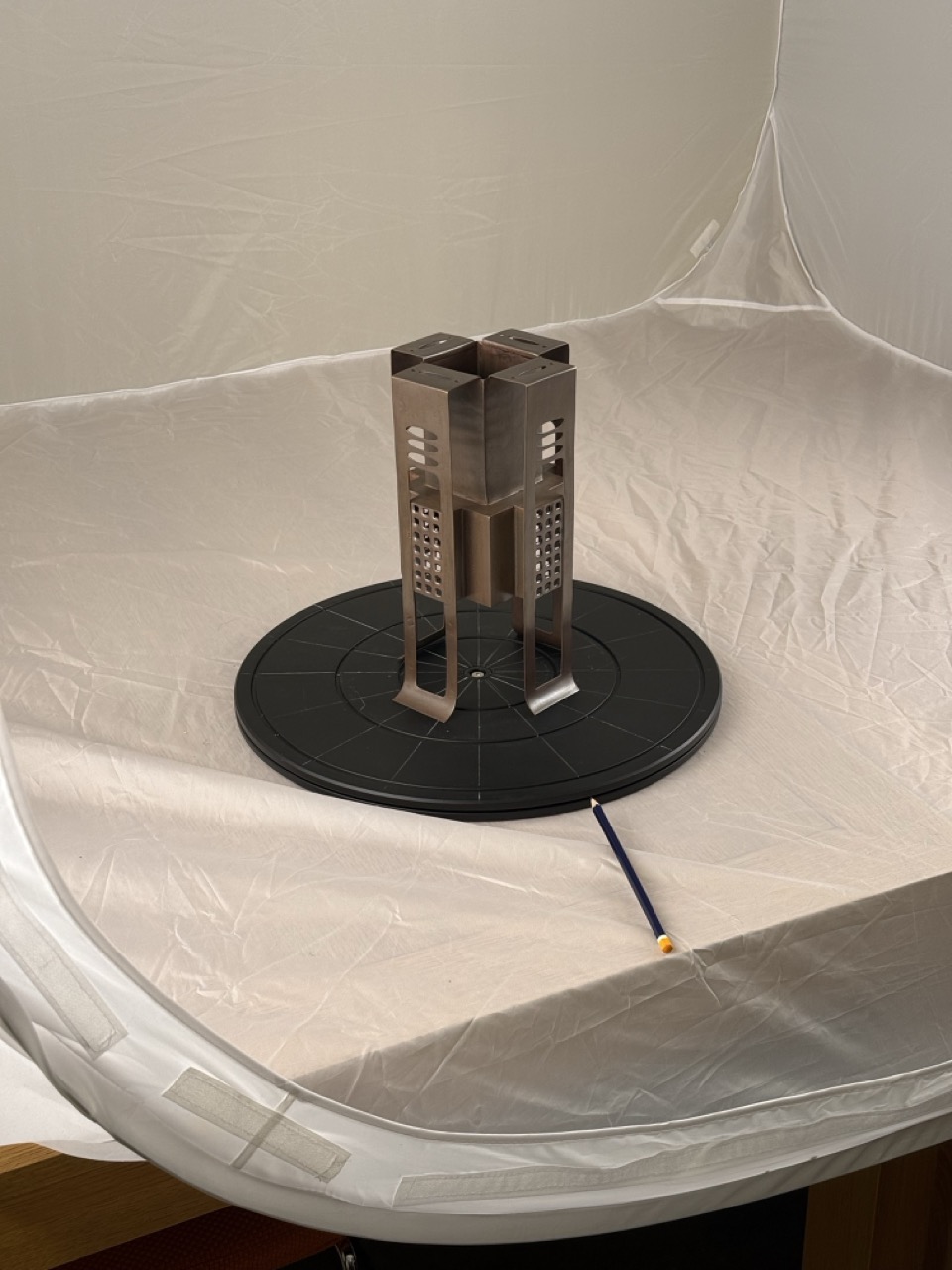
    I emailed the archives and heard nothing back, so when I heard that Sean and Lexie were going to meet Neil to do some scanning of their object for their project, I tagged along on the off chance that I would gain some knowledge and as well as learning more about how to scan in objects and stitching together the photographed images, I also got into contact with Katie In the archives that was so helpful and that if I needed anything or had any question to contact her.

    So not a waste of time at all.

    Jeremy Sutton-Hibbert:

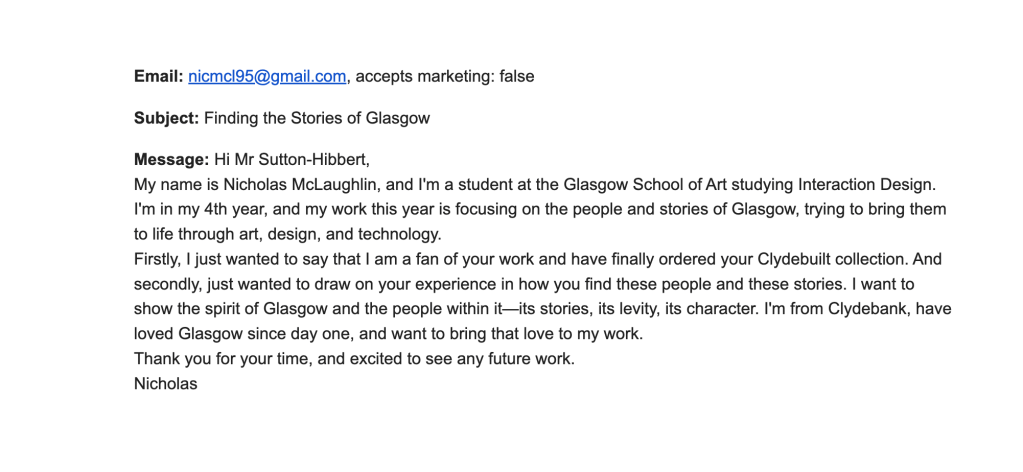
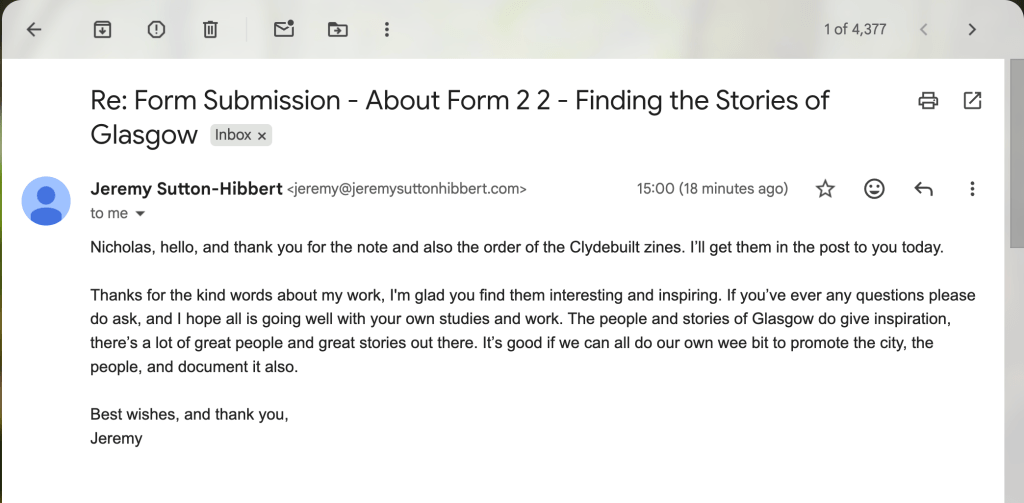
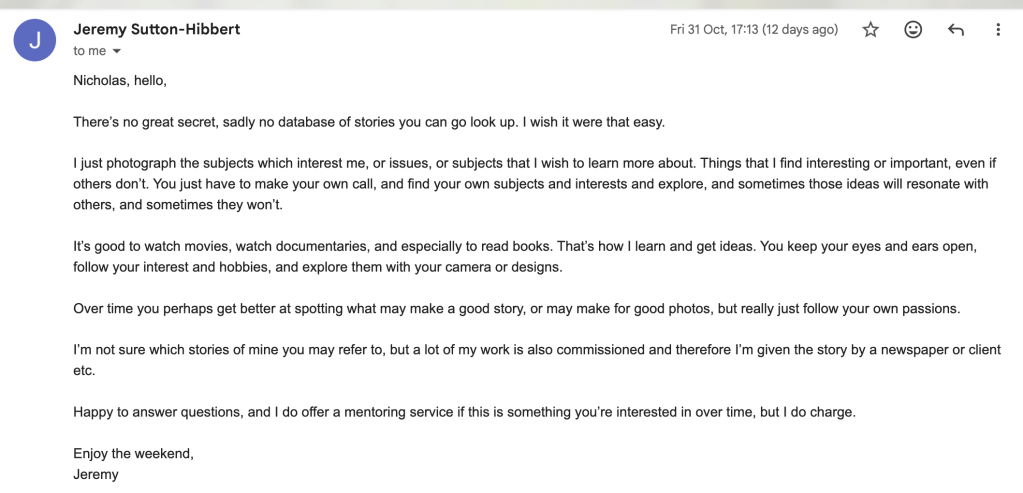
    Initially one of my photographic inspirations, Sutton Hibbert’s was so appealing that I ordered a 3 set of his photography zines but also contacted him on the off chance just to seek a pit of direction, and he very promptly responded.

  • Semester One – Week 3 & 4:
    1. My Aim:
    2. Chat with Gillian:
      1. Intl Conference:
      2. Looking at more studios:
    3. Typographical Motion Graphics:
    4. Looking to Clydebank:
      1. Typographic Output:
      2. Billy Connolly reads Norman MacCaig:

    My Aim:

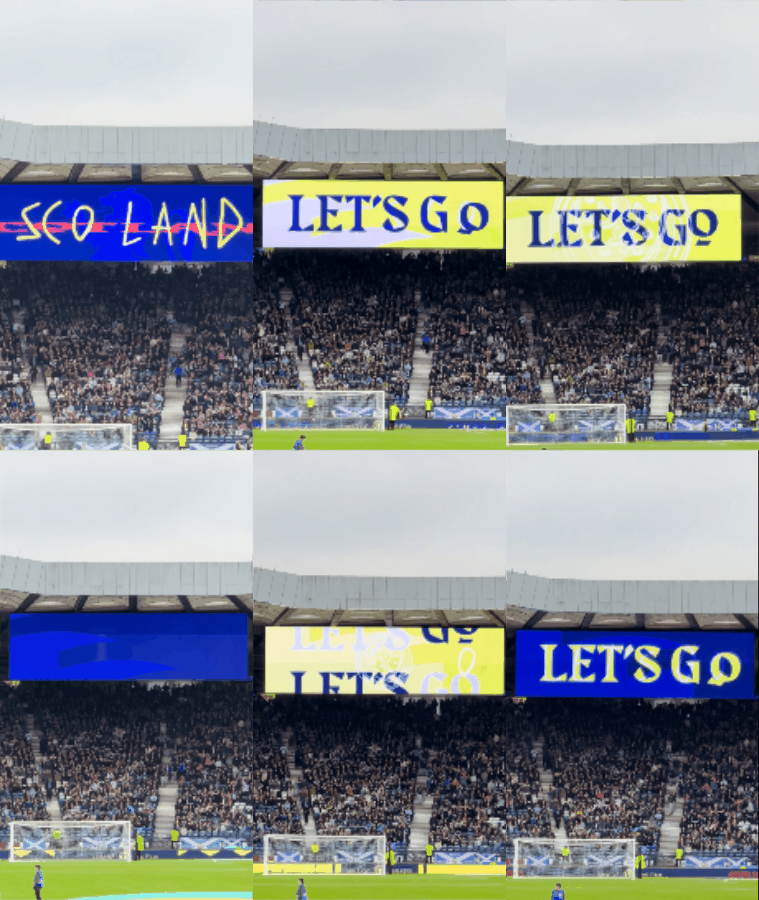
    Last week, I was unsure of what I was doing and found myself getting into a bit of a funk. I wasn’t sure why until I took some much-needed time away to spend with my family and watch Scotland beat Belarus 2-1 at Hampden. But as I was sitting there getting a bit too swept up in a game of football, I don’t usually follow, I realised a few things, firstly, how much I loved the motion graphics of the Scottish Football team and how I couldn’t take my eyes off it and that I wanted to do something like that, I wanted to work for somewhere that did something like that.

    And secondly, when I was enjoying the shared experience with my family and 50,000 other people, it hit me why I initially wanted to do the stories of people, because we are who we are by the lives we have, the stories we experience and tell, and the stories we share with others are essential. Today, we are more technologically advanced than ever before, but the art of communication, of spoken word and of telling stories in informal, spontaneous settings is dying out.

    Chat with Gillian:

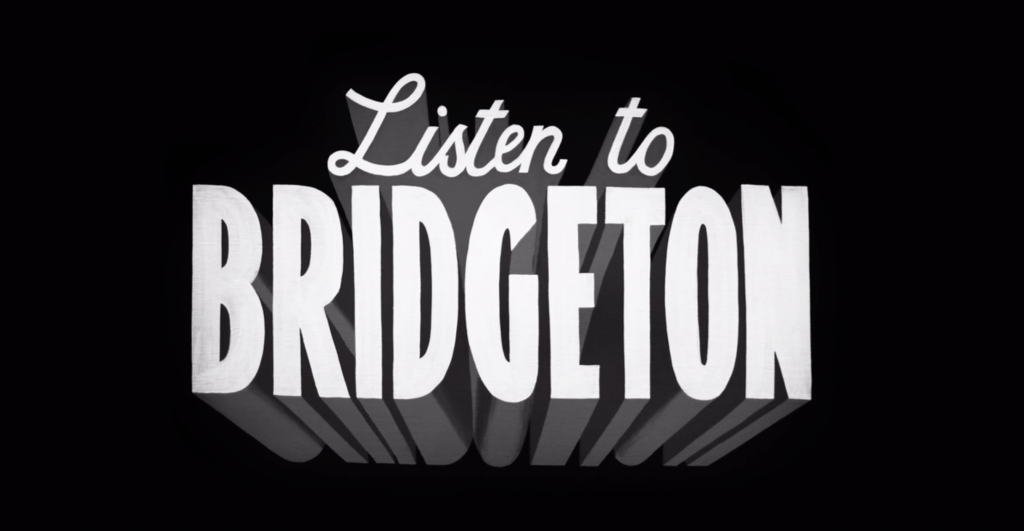
    Listen to Bridgeton:

    https://player.bfi.org.uk/free/film/watch-listen-to-bridgeton-2017-online

    With ‘Listen to Bridgeton’, the story being told is such a personal one, of one man helping another through the language and structure of vintage bus restoration. This documentary has the exact same elements I would love to create: the personal, touching story, the honesty, and even the beauty of the spoken testimonies and the footage of the warehouse.

    Lights Out:

    https://www.chrisleslie.com/portfolio/lights-out/

    It was once again the spoken testimony of people who actually lived in the flats, sharing their stories and describing it as a palace when it was new, with the beautiful footage of the flats themselves before their demolition. We often look at things, perceive them as we initially do, and don’t change our opinion until shown otherwise or given a look at the same place, object or time through someone else’s lens.

    Intl Conference:

    If I do love graphic design, motion graphics, and creative direction, then it would make the most sense to go to a conference for it, to see the front-runners in the field and look to them for a goal and inspiration.

    Looking at more studios:

    Initially, I was looking at Interaction Design studios last week, but as I mentioned earlier, I think motion graphics will likely be a significant part of it. No matter what the outcome is, I want to give consideration to the typography, the identity and the graphics of the piece.

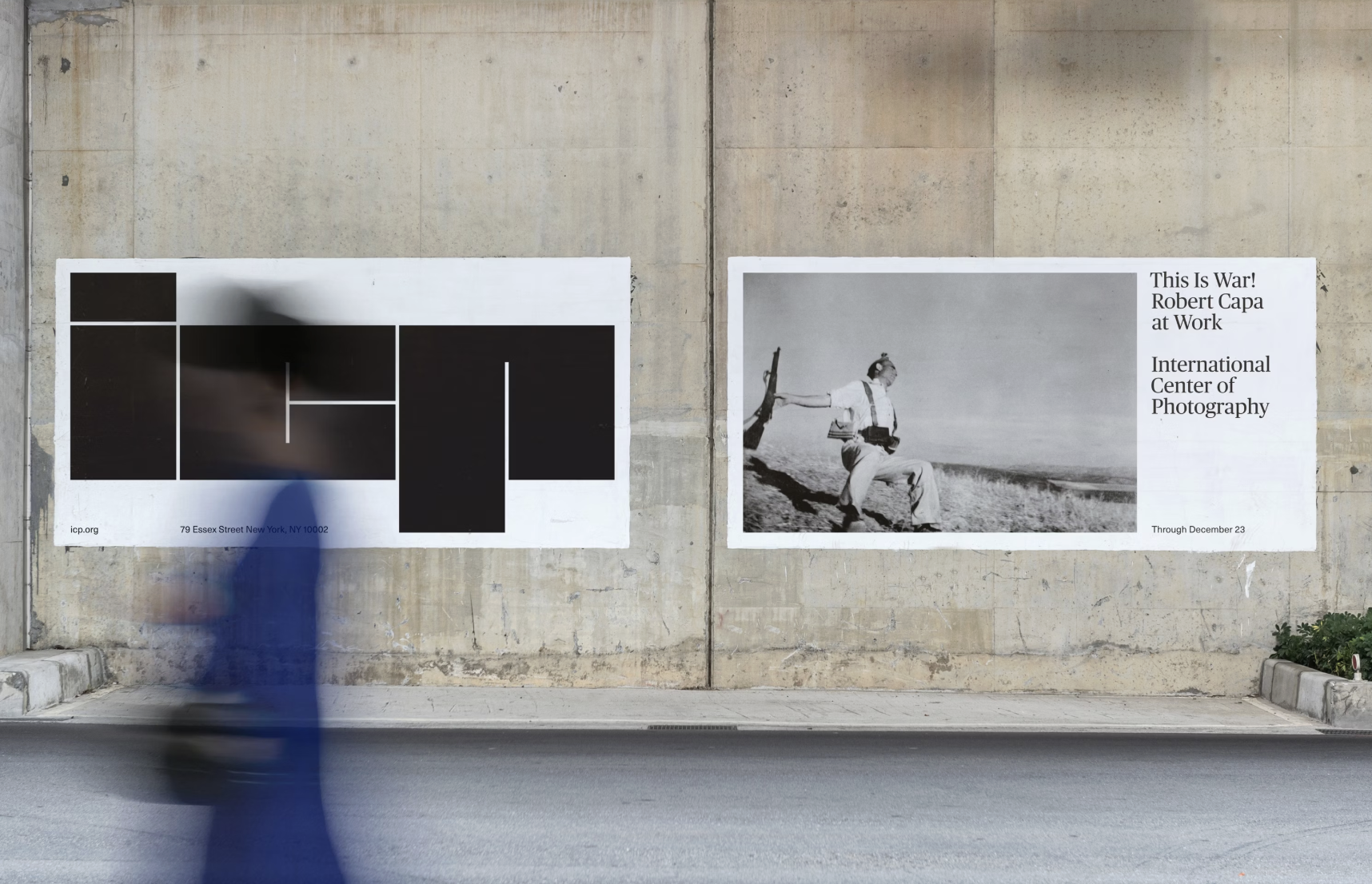
    Pentagram:

    https://www.pentagram.com/

    As with the previous studios, I want to look deeper and think of what works and what doesn’t, in an ploy to improve myself and with Pentagram, that is obviously a legacy brand, their work is obviously great and feels like the front runners in a modern yet feasible motion graphics and graphic design work, but the product design work follows that same methods but I believe that when in a different creative practice like product design, that must have its own style and more of a focus on form instead of flat aethetics.

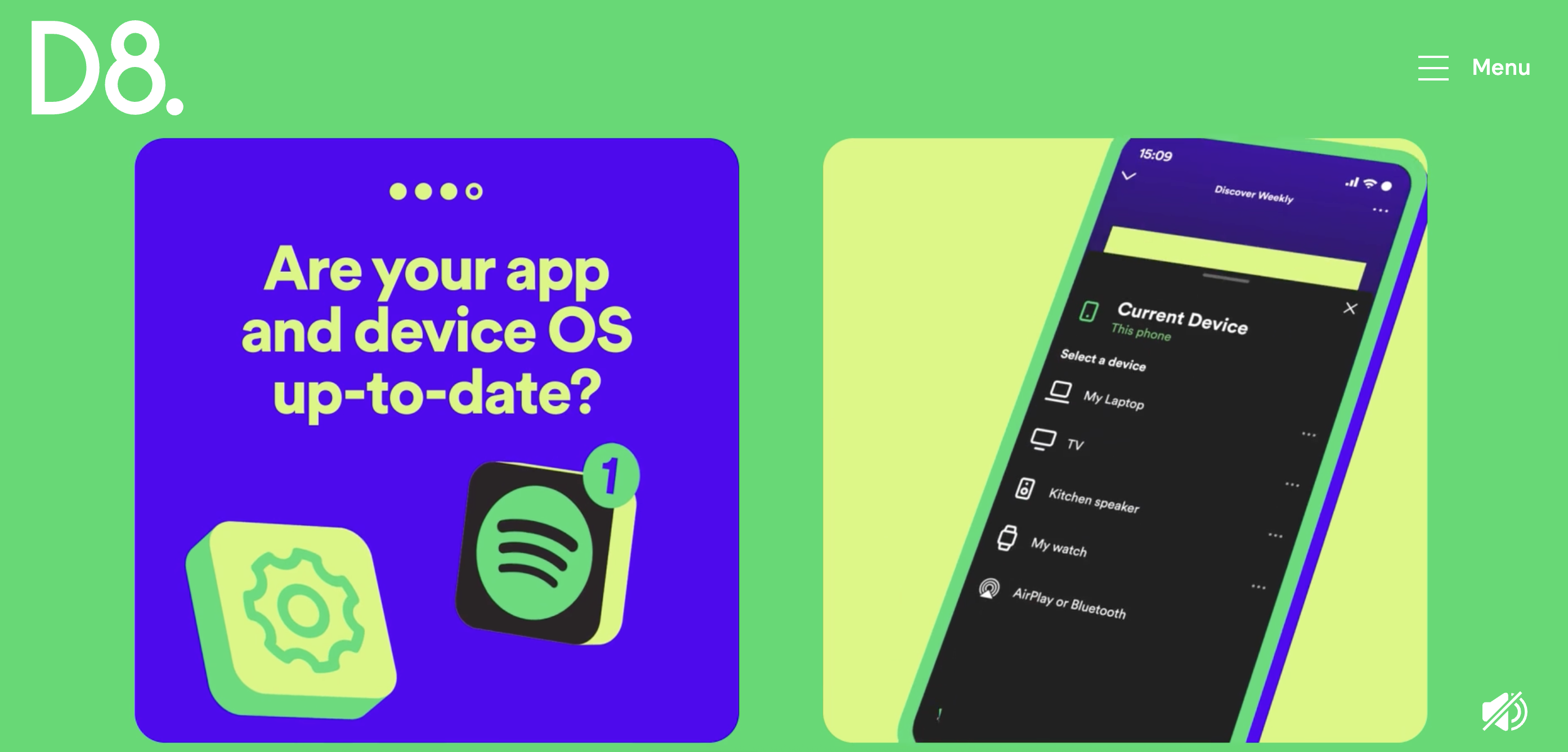
    D8:

    D8 is a studio that I have recently enjoyed without even knowing it. After reviewing their projects, I was surprised to discover numerous design campaigns I was familiar with and enjoyed, all originating from a single studio. They consistently delivered a modern, vibrant style that has recently caught my attention and held it. My only concern is the longevity of this style, and I’m sure they will adapt with the times as they have in the past but their most recent work already feels very “of its time”.

    Applying that to my own work:

    I see the style of these studios as two sides of the same coin: a new, modern style that’s cool and controlled, and another that’s more vibrant and punchy. My initial takeaway is that locking myself into one style is a quick way to go stale. I should be constantly developing and changing, both in my style and in my life, rather than being locked into one thing and turning away from everything else and secondly is that wether its cool and sleek or loud and punchy the presence of soul put into the project can be seen.

    Typographical Motion Graphics:

    After my chat with Gillian and enjoying the typographical motion graphics of the Scotland game, I thought this might be an interesting avenue to explore. Given how moving and engaging the documentaries were, I realised I could create something equally moving with simple imagery and audio.

    Foggie Bummer:

    With the foggie bummer video, it packs so much character and soul into such a short time. The energy and speed of the text on the screen carry through that same energy.

    Looking to Clydebank:

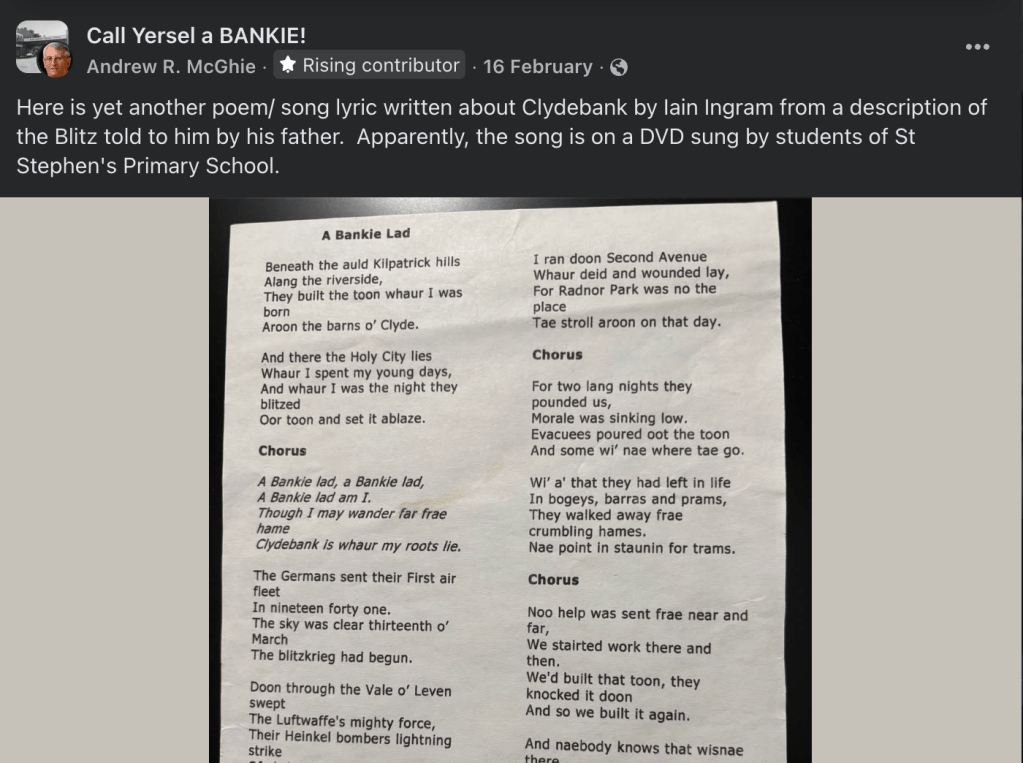
    In Clydebank, a local Facebook page is where locals share updates about the area, its current events, and its history. While it’s mostly filled with traffic updates and lost keys looking for owners, it occasionally offers hints at the town’s rich history.

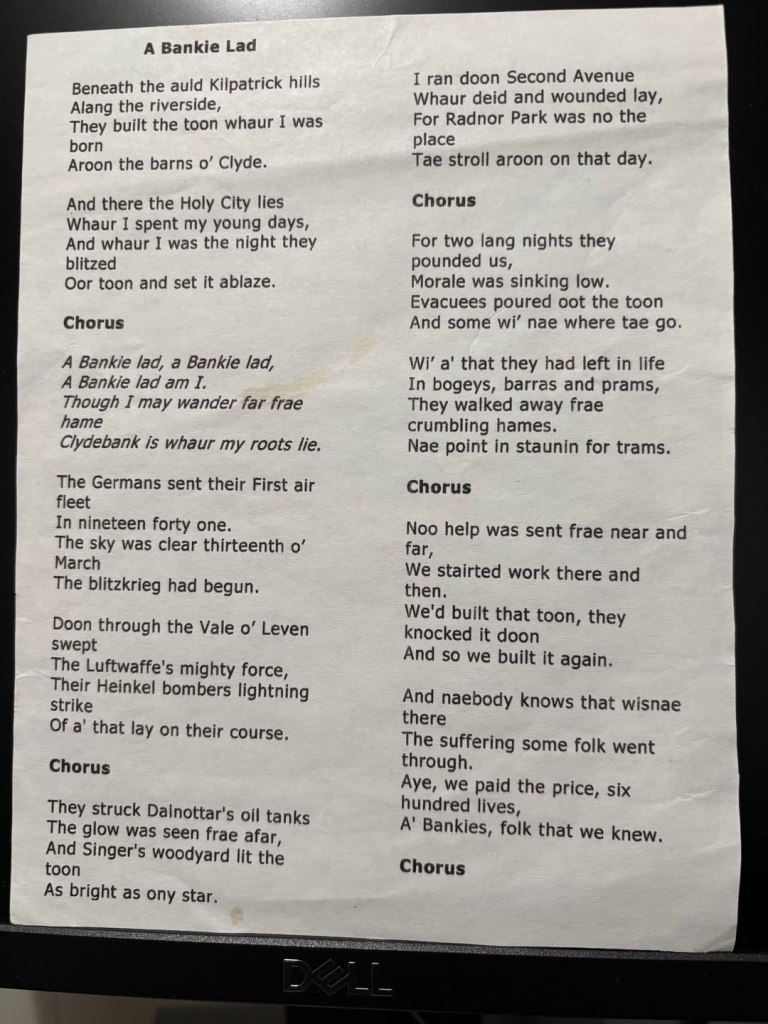
    A Bankie Lad by Iain Ingram:

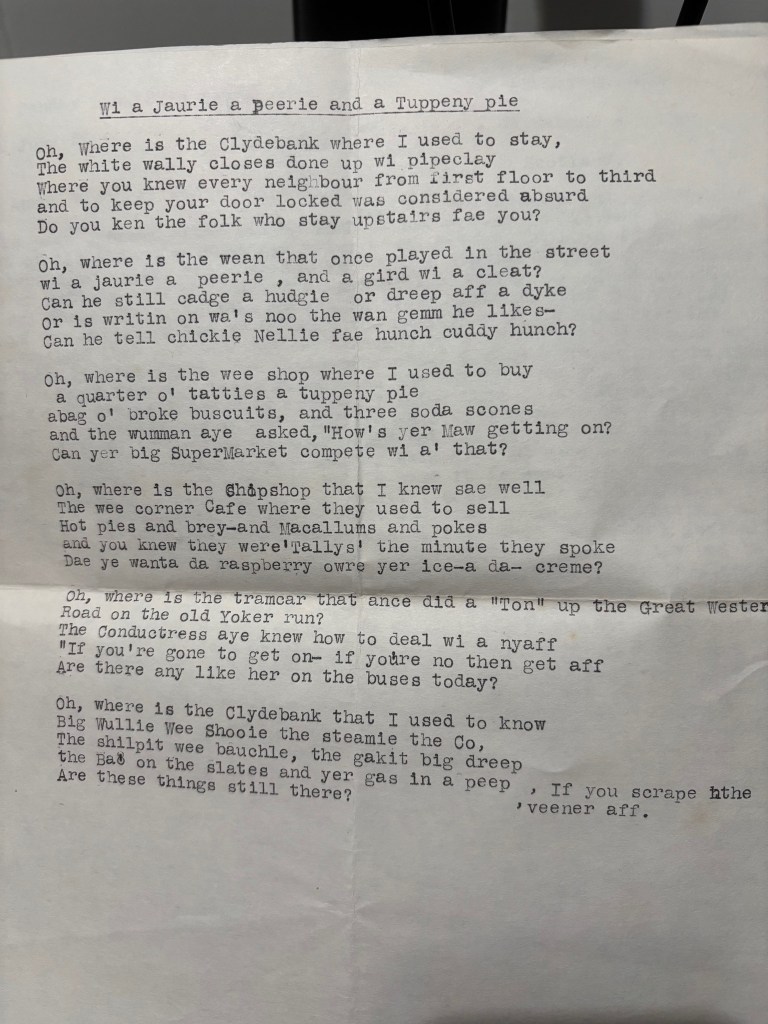
    Wi a Jaurie a Peerie and a Tuppeny pie by Adam McNaughton:

    Billy Connolly reads Norman MacCaig:

    The extracted audio:

    Typographic Output:

    Giving time and consideration to the timing, the inflection, their voices, the relationship between the two men and the imagery that these poems describe and trigger in your mind, while still not taking away from the writing. Less is more.

    Billy Connolly reads Norman MacCaig:

  • Semester One – Week 1 & 2:
    1. Design Proposal :
      1. Design Proposal Notes :
      2. What am I exploring ? :
      3. Who is this for ? :
      4. Who influenced me ? :
      5. What personally interests me (about the topic) ? :
      6. How will I realise it ? :
      7. Design Proposal :
    2. DH&T Notes and Extended Design:
    3. Gallery Visit Notes :
    4. Mark Making :
      1. Notes on my walk:
      2. Tutorial With Cat .01
    5. Display Ideas :
    6. Research:
    7. Primary Research:
    8. Secondary Research:
    9. Personal Note/Reminder:

    Design Proposal :

    In all honesty I’m unsure what the year ahead holds, I’m not sure what I’m going to produce. At this moment I have ideas of what I might look into and what my work might follow.

    I have the edges of the puzzle but I have no idea what the middle of the picture is and I don’t have the picture of the box.

    I have been thinking about the project throughout the summer but as life always does, other things took up my time or got in the way.

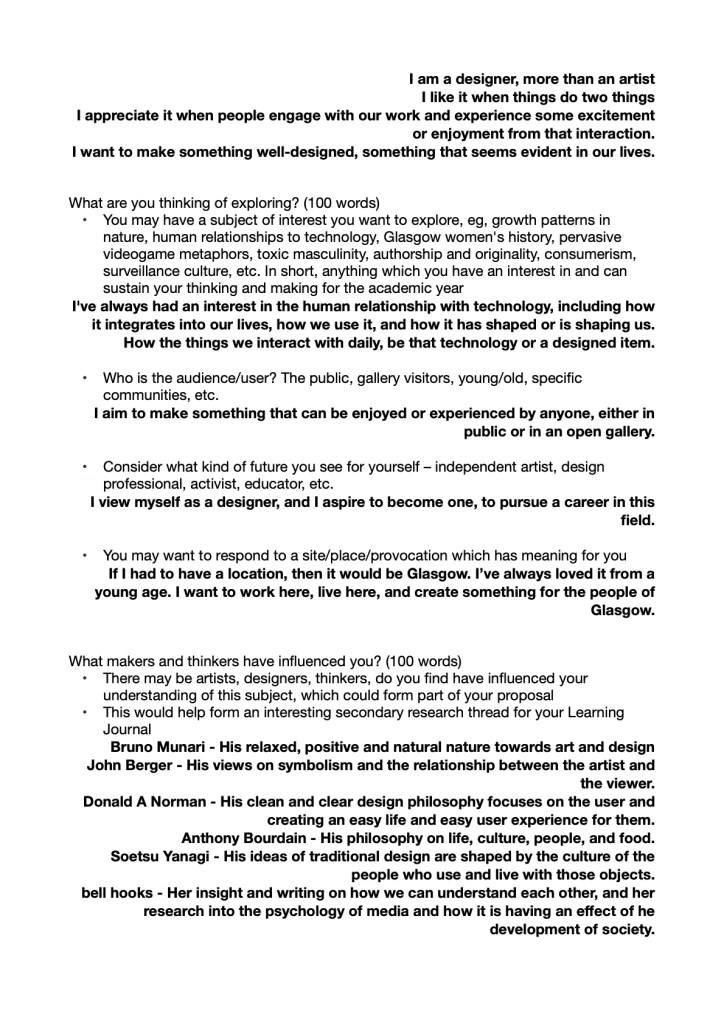
    Firstly I’ll go through the questions posed to us by the Proposal Overview and try to answer them as honestly and instinctively as possible.

    Design Proposal Notes :

    What am I exploring ? :

    I think through one way or another, I’ve been mainly drawn to the relationship between humans and technology from a young age, driven by my own relationship with technology, but more recently and more broadly, it’s the multiple relationships within my career: design/art and its creator; the piece and the audience and even the designer and user or the artist and the viewer.

    I look back to previous work that I think touches on these themes unknowingly:

    Who is this for ? :

    When I consider my work and who it is for I would like to be able to say something deep and thoughtful or that I think of a group to focus on, that would overall benefit my project, but in all honesty I want to be able to reach the widest group of people possible, when I consider who my work is for I want to consider my friends, my family, those I admire, respect and wish to impress.

    Who influenced me ? :

    I was initially trying to think of less cliche or obvious picks for artists and designers that inspire myself and my work but I believe that for this year and my work going forward that honesty is the best policy.

    Shown in my notes above and the images and links below are artists, designer and thinkers who came to my mind when initially considering the question, producers of work; writing and methodology that I find myself revisiting time and time again.

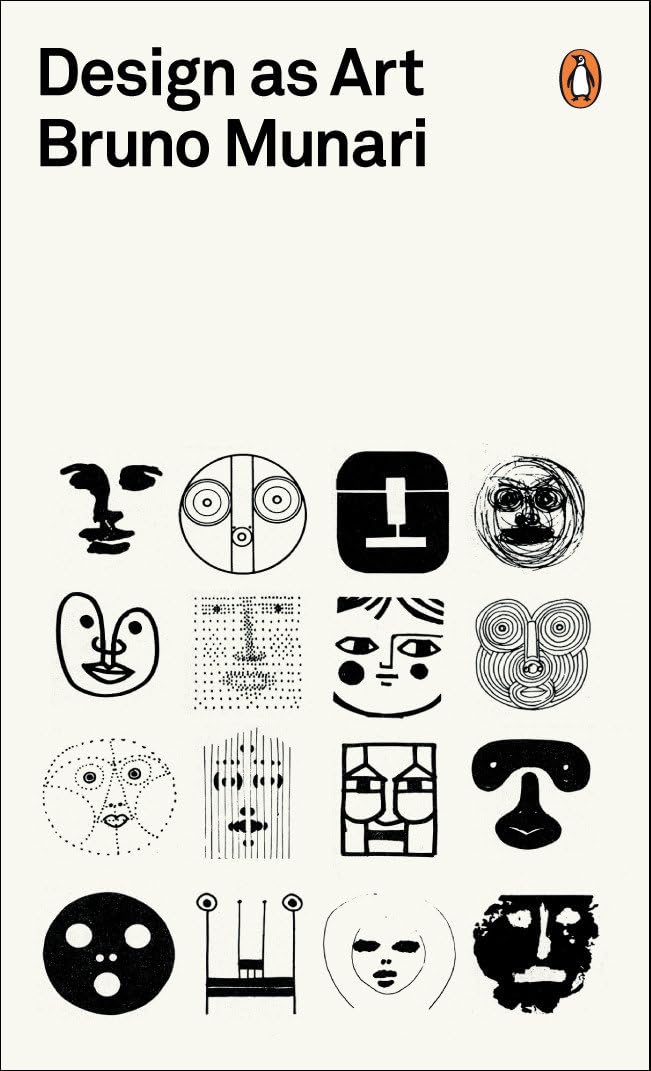
    Bruno Munari:

    https://www.moma.org/artists/4163-bruno-munari#works

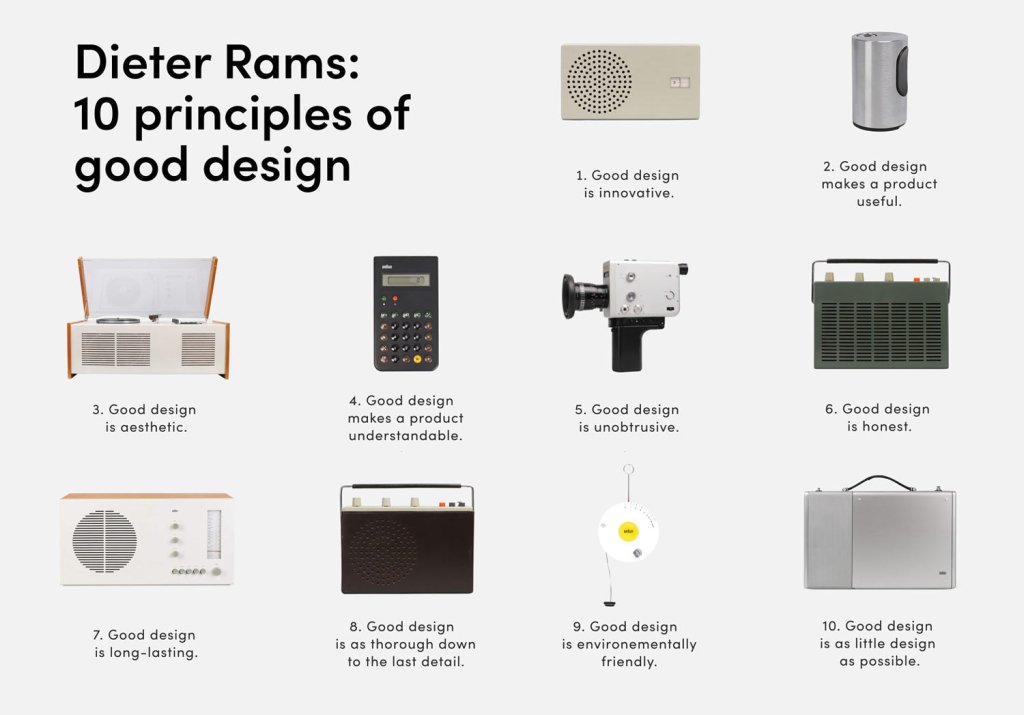
    Dieter Rams:

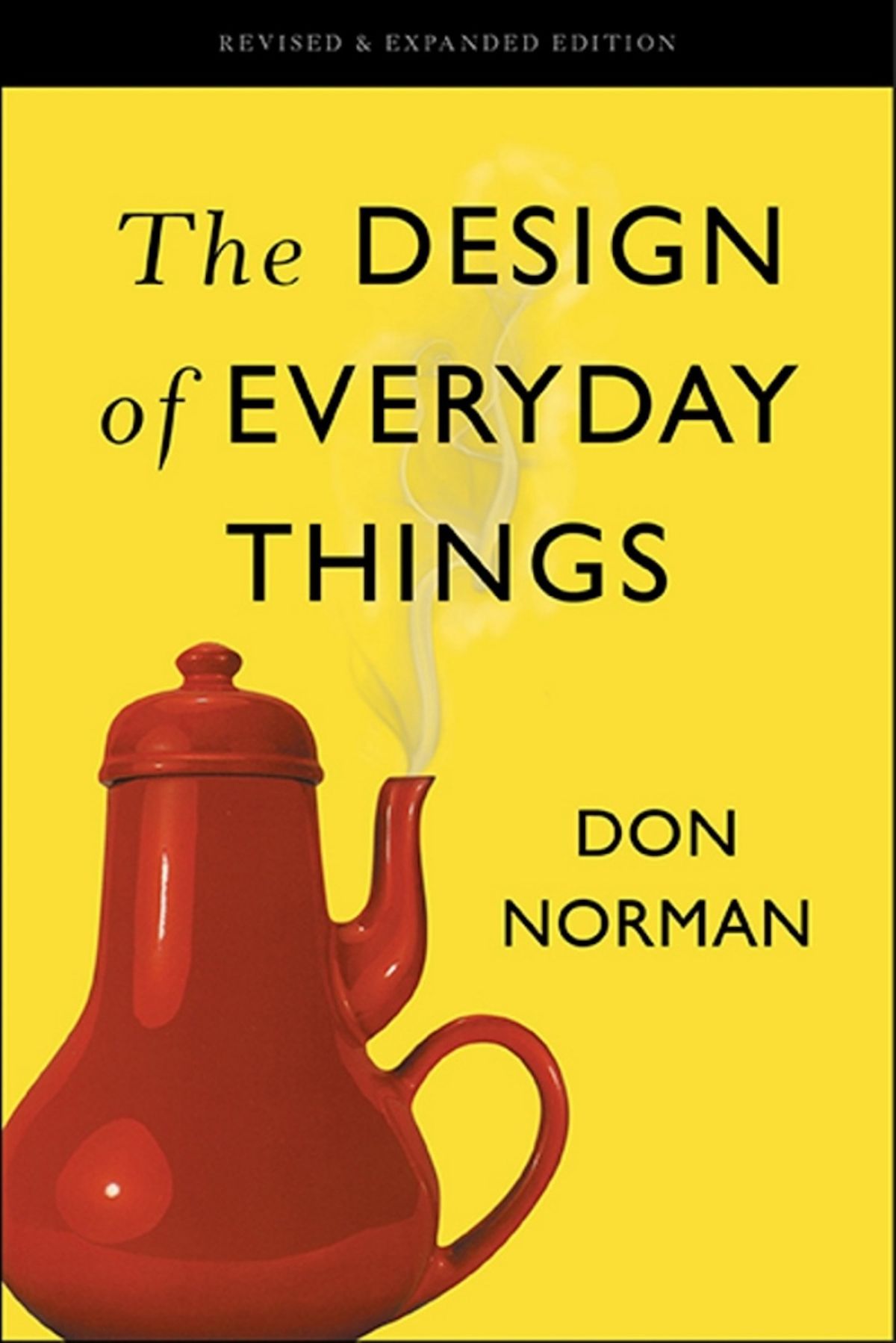
    Don Norman:

    https://www.interaction-design.org/literature/topics/don-norman?srsltid=AfmBOoq1GMr9zS9Xdt1RJ1RarkIBswzJGFxCDd2fEj19VqVIEltihV12

    John Berger:

    What personally interests me (about the topic) ? :

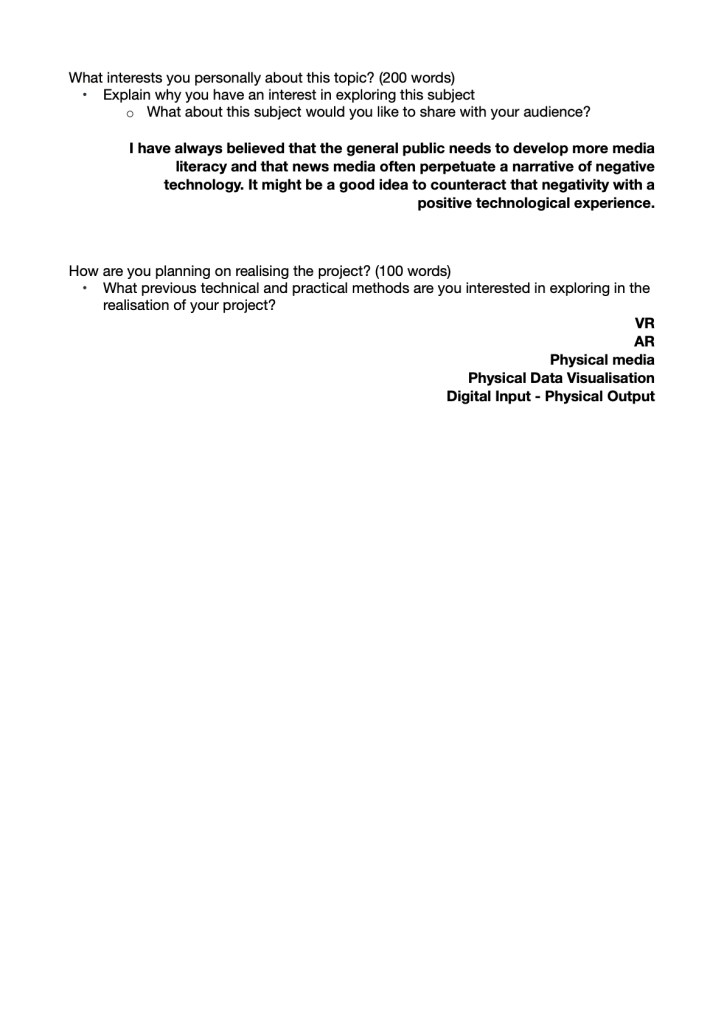
    For as long as I’ve known I have always had an interest in technology, and for as long as I can remember there has always been a fear mongering around each part of technology, I believe that this fear and anxiety is from a lack of knowledge or from a lack of positive experiences with that technology.

    Without sacrificing the quality or professionalism of my work I wish to imbue it with a levity that will welcome others to interact and enjoy my work that will ideally help to relax any worry people may have around technology as well as exploring the relationships previously mentioned.

    How will I realise it ? :

    From my first time in Interaction Design I was drawn to and fascinated by the idea of the physical world and the digital world interconnected, intermingling. The relationship of digital art work and physical viewers/ participants, that something in the intangible digital space could be influenced by the physical world or vice versa.

    To realise this relationship between both spaces as well as the relationships previously discussed above I’ll consider using technology that both works within those spaces, be that projection mapping and a Kinect to allow for human input in the projection or something with VR and AR. I will be looking at whatever technology makes these connections possible.

    As previously stated I am unsure of where this year may take me but as I’ve learned from previous self studies and evaluations, I have a better outcome if I trust the process and do not to the end destination. I will trust the process.

    Design Proposal :

    DH&T Notes and Extended Design:

    Gallery Visit Notes :

    Mark Making :

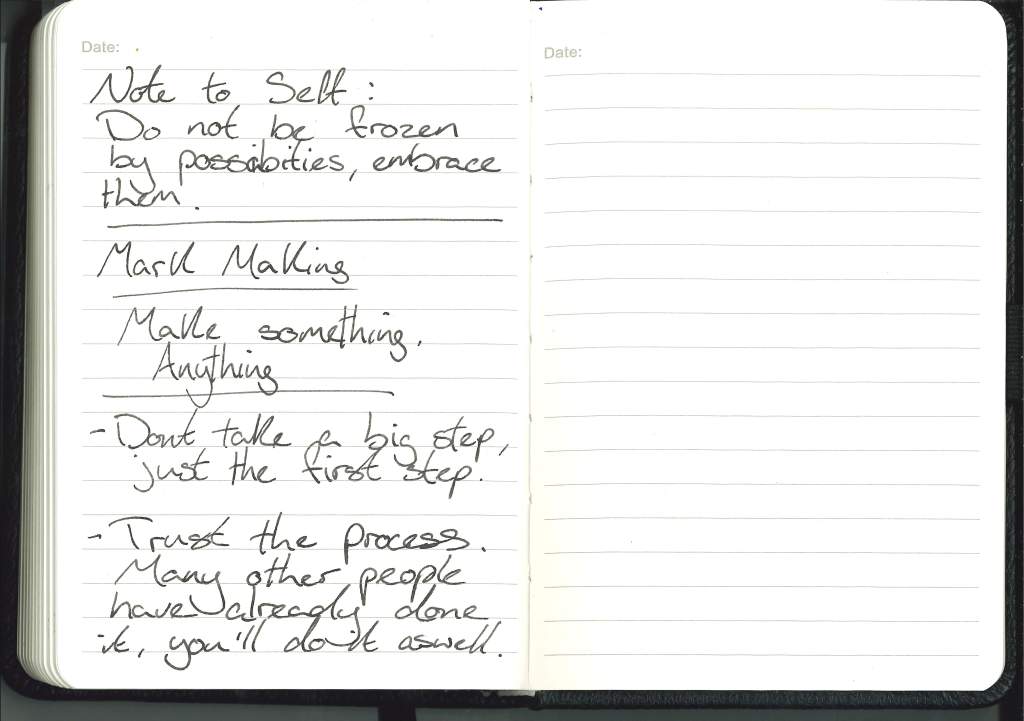
    I was sitting going a bit mad, overthinking things but not actually doing anything so I gave myself a shake and thought that I need to do something, anything.

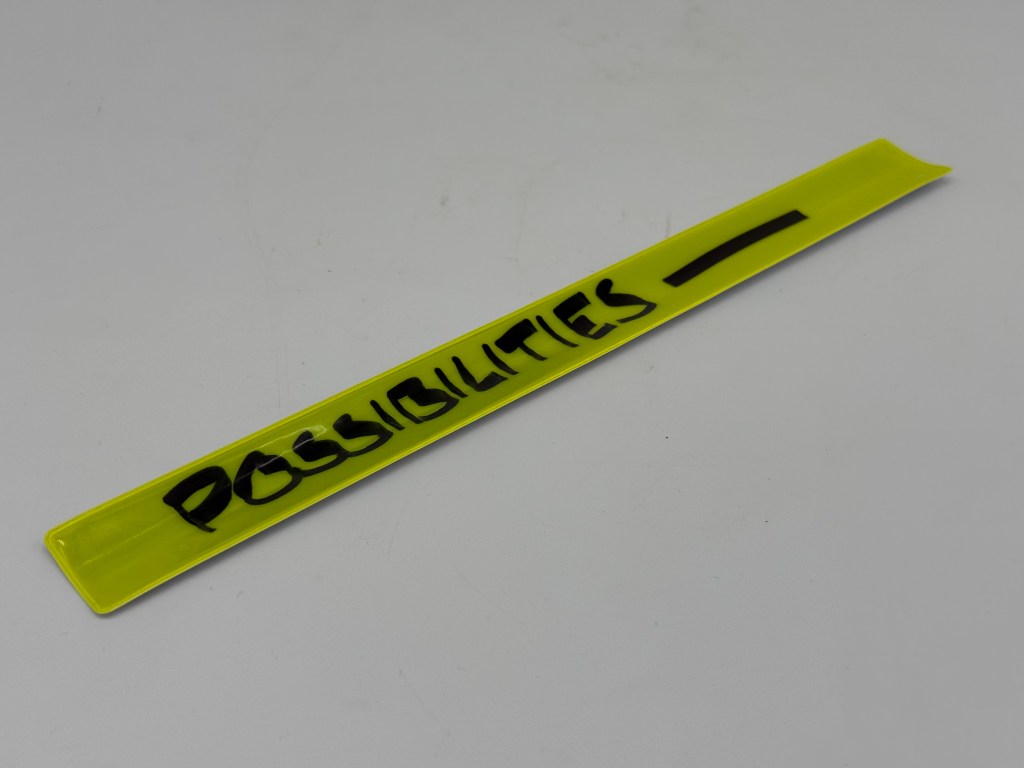
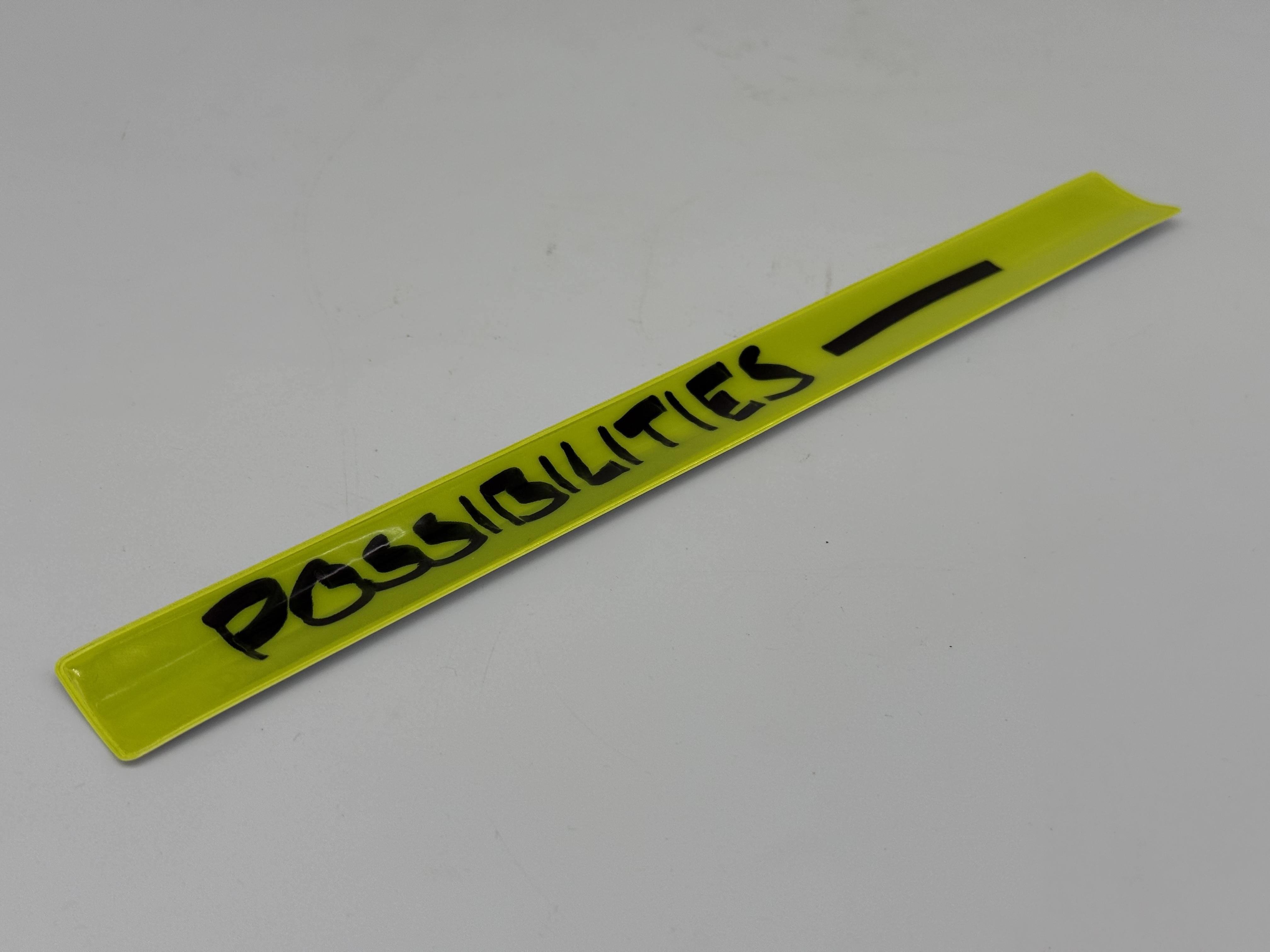
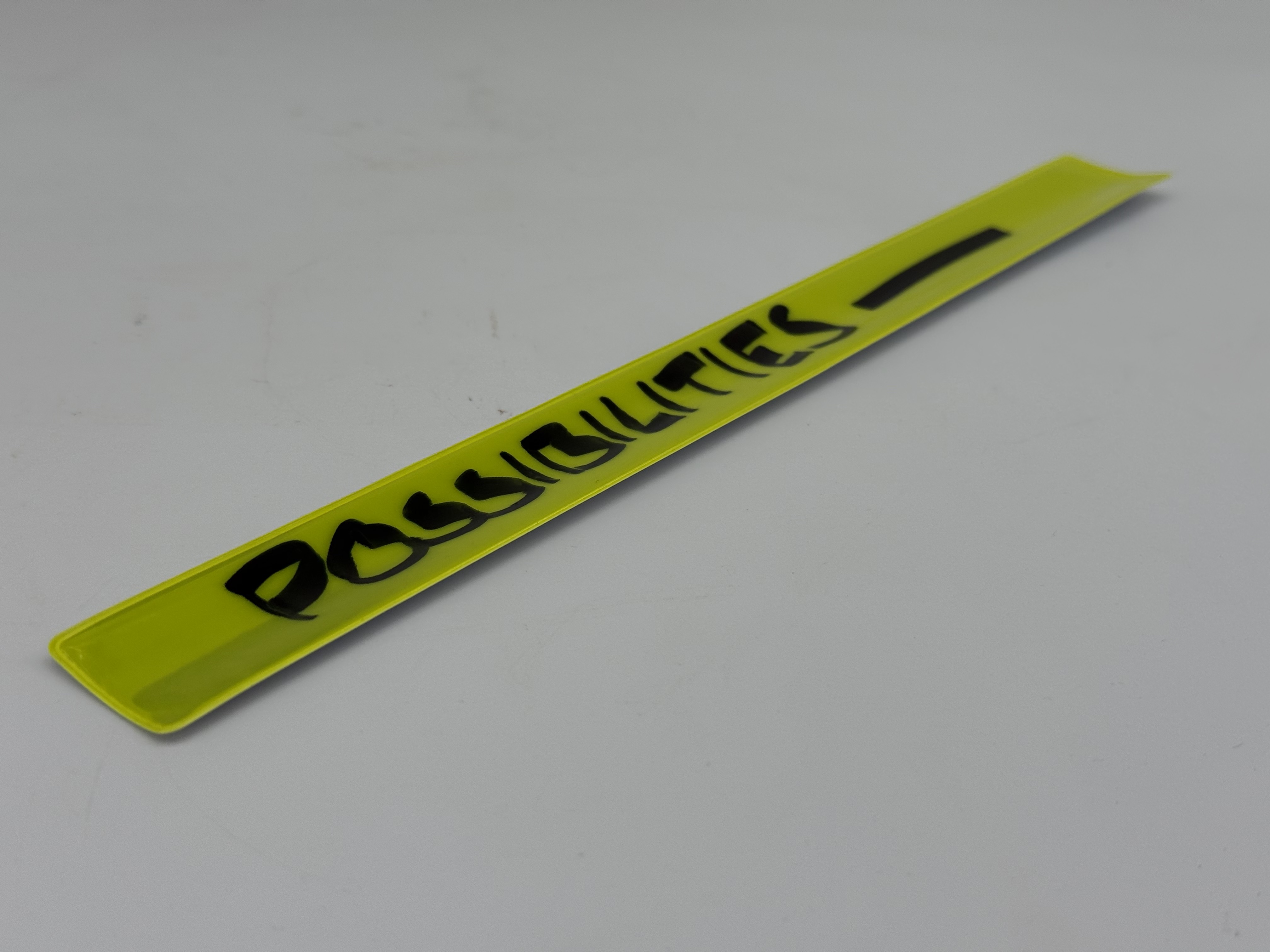
    “They were frozen by possibilities”

    This quote was looping round in my head over and over again until I realised that I was the same and for some reason I had a high-vis slap bracelet in my possession, so with a marker and bad hand writing I made a tool/symbolic gesture to shake me out of it and to remind me that those possibilities are with me not against me.

    Notes on my walk:

    Tutorial With Cat .01

    Chat with Cat :

    Display Ideas :

    It is very early for this sort of thing, but when discussing it with Cat and considering possible ways to realise this project I had a few ideas and thought it would be better to get them down on paper than to have them rattling around my head.

    The research and the findings of that research will be what drives these outcomes, I want to display option to be the most harmonious with the object that is being displayed.

    Research:

    At this point in the process I need to research a few things:

    1. Research the theme that I want to look into, I want to focus on the history and the people of Glasgow and bring those stories to life with my work, so the first thing is to find these people, their stories and the objects that carry these stories, whether that be secondary research or going out myself to find these people or these stories. A possible plan was suggested by Mikhail, that I make a poster asking people for their objects and their stories.
    2. I also want to do primary research in exhibitions, displays and museums, see how the experts do it and then build on from that. How do these places tell stories, how do they explore the work and highlight aspects of each object, artefact and piece, and being their myself will give me a better understanding and a better feel for the space.
    3. Secondary research will be the final method of research, as I am one man and I do actually need to start making at some point and secondary research will obviously allow me a wider reach or to find pieces that have been taken down or find stories from people no longer with us.

    Primary Research:

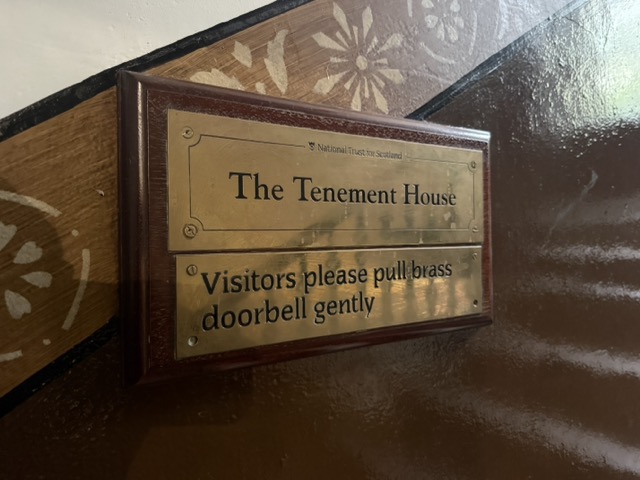
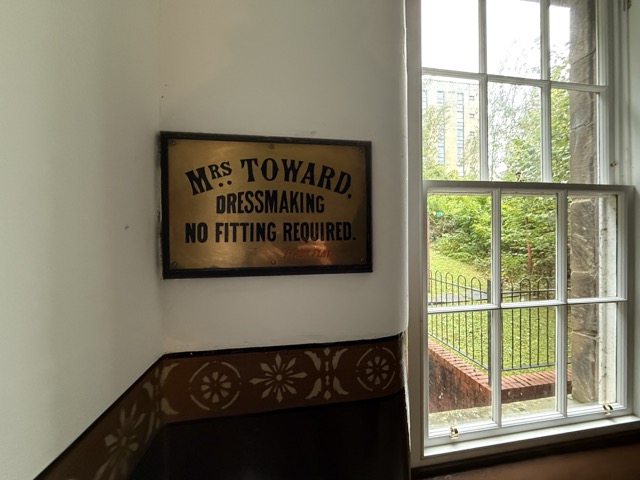
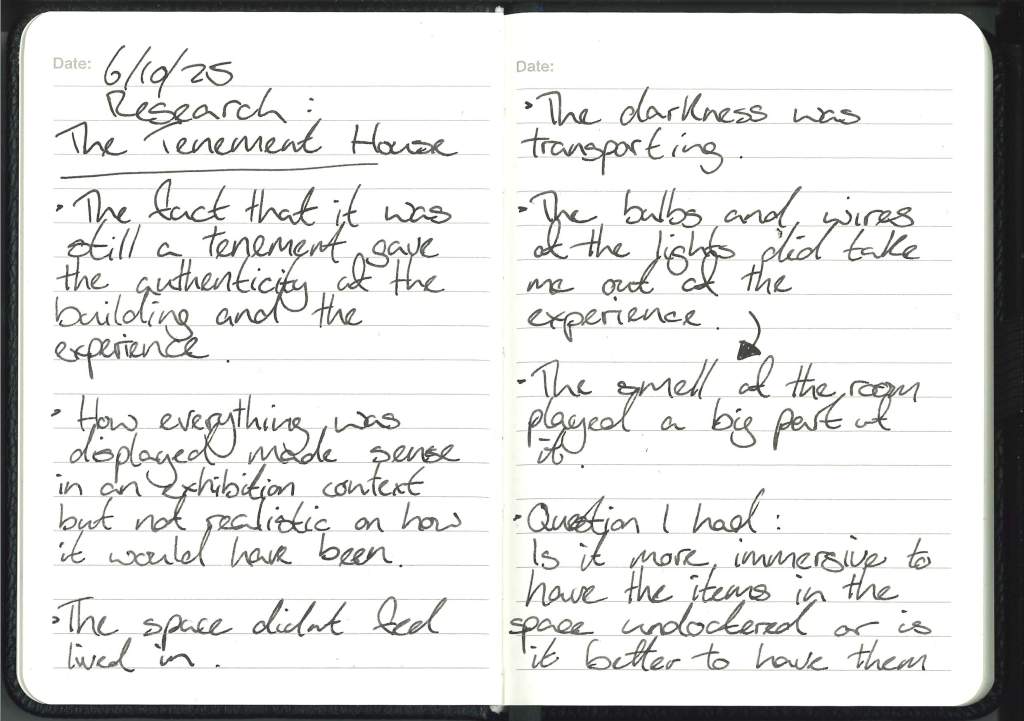
    Tenement House :

    To get the ball rolling with research I wanted to look at how its already being done. If I can start from a good place then I’ll surpass that easily throughout the year.

    As its just round the corner from the Barnes Building I thought a lunch time well spent would be going round to the Tenement House and obverse and document their immersive experience.

    Secondary Research:

    With my initial secondary research I wish to look at studios that produce exciting, interactive or technical work that tell the story, spark excitement and use technology how I would like to; sleek, cool, almost invisibly. Using the technology as a vehicle for the story.

    ISO Design:

    From ISO I want to take their work of screens and motion graphics, their composition and consideration for the user.

    Ammonite:

    https://www.ammonite.ltd/

    The work that Ammonite has done in theatre is what really grabbed my attention, their use in perspective and doing so much in a relatively constrained space, as I will also be working within a constrained space, using the space as effectively as possible is the name of the game.

    Squint/Opera:

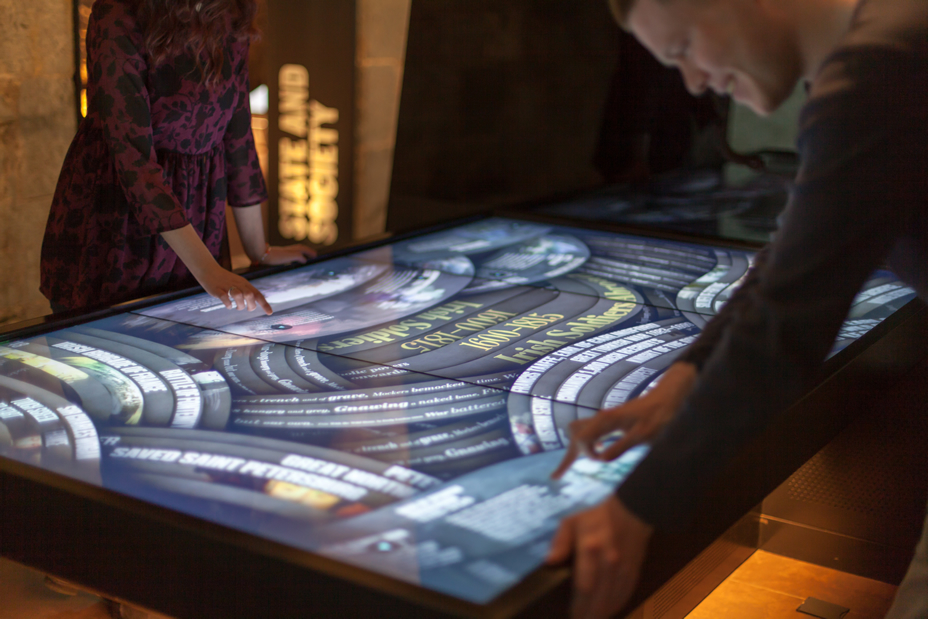
    What really grabbed me in Squint/Opera’s exhibitions is their use of the larger space and their sense of scale in each job, from the small table displays to the huge monolithic structures and how they both tie together.

    EventComm:

    https://eventcomm.com/

    EventComm uses their screen and displays in a way that I want to try and replicate, much like ISO and the work they have collaborated on, the screens are not just screens for the sake of it, they are highlights of details and visual story telling.

    CassonMann:

    https://www.cassonmann.com/

    Seen in the displays above is the same sense of fun or awe that I’d love to bring a touch of to my work, the levity is not just there in an obvious way but in more serious displays there is still a palatable light tone.

    MB Studios:

    https://www.studiomb.co.uk/

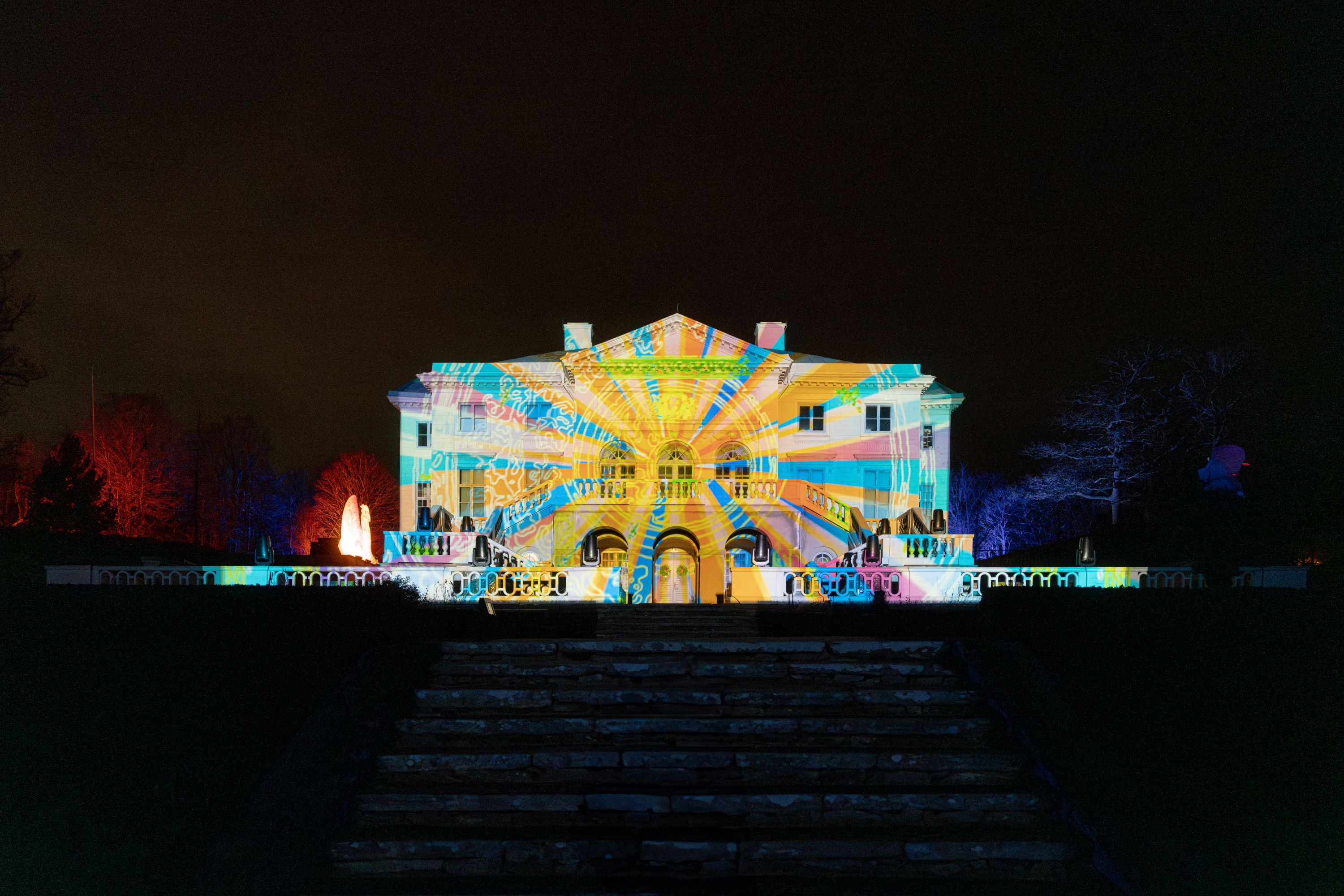
    The screen shots shown above show the power of lighting and highlighting with that intentionality to light and darkness, and I’d love to capture that same attention in my own work.

    Personal Note/Reminder:

    • ISO – Consider the displays and how people are to interact.
    • Ammonite – Small Spaces | The small spaces that you have to work with, use them wisely and efficiently.
    • Squint/Opera – Large Spaces | Use the space properly, do not be afraid to take up the space, use the hight, use the space.
    • Event – Screens and displays are not just to be thrown in, use them sparingly and focused, highlight, inform, subvert how people always see screens.
    • CassonMann – Light, levity and yet still meaningful and deep, palatable.
    • MB Studios – The power of light and darkness, how the tone changes with the light used and how the eye follows that light.
  • Open Share

    The Last Open Share:

    The end of another academic year and with that OpenShare again for IxD considering last years exhibition I wanted this one to be good, better than last year and promoted more than last year.

    So after discussing it on and off with my colleagues and with my added confidence after this year and more specifically projects such as Interactive Systems I had a want and need for this project to be better than the last year.

    My motivation is from that when I was in first year, OpenShare had such a great turn out and as a first year I really benefited from it and I think it set me up in a great space and a great mindset for the coming years after it. So when it came to my hands I wanted to pay that forward and use this as an opportunity to show off the amazing work done at IxD.

    My plan was three fold , first the posters and getting them out, second was the IxD Instagram and promoting the show online and third was word of mouth.

    IxD OpenShare

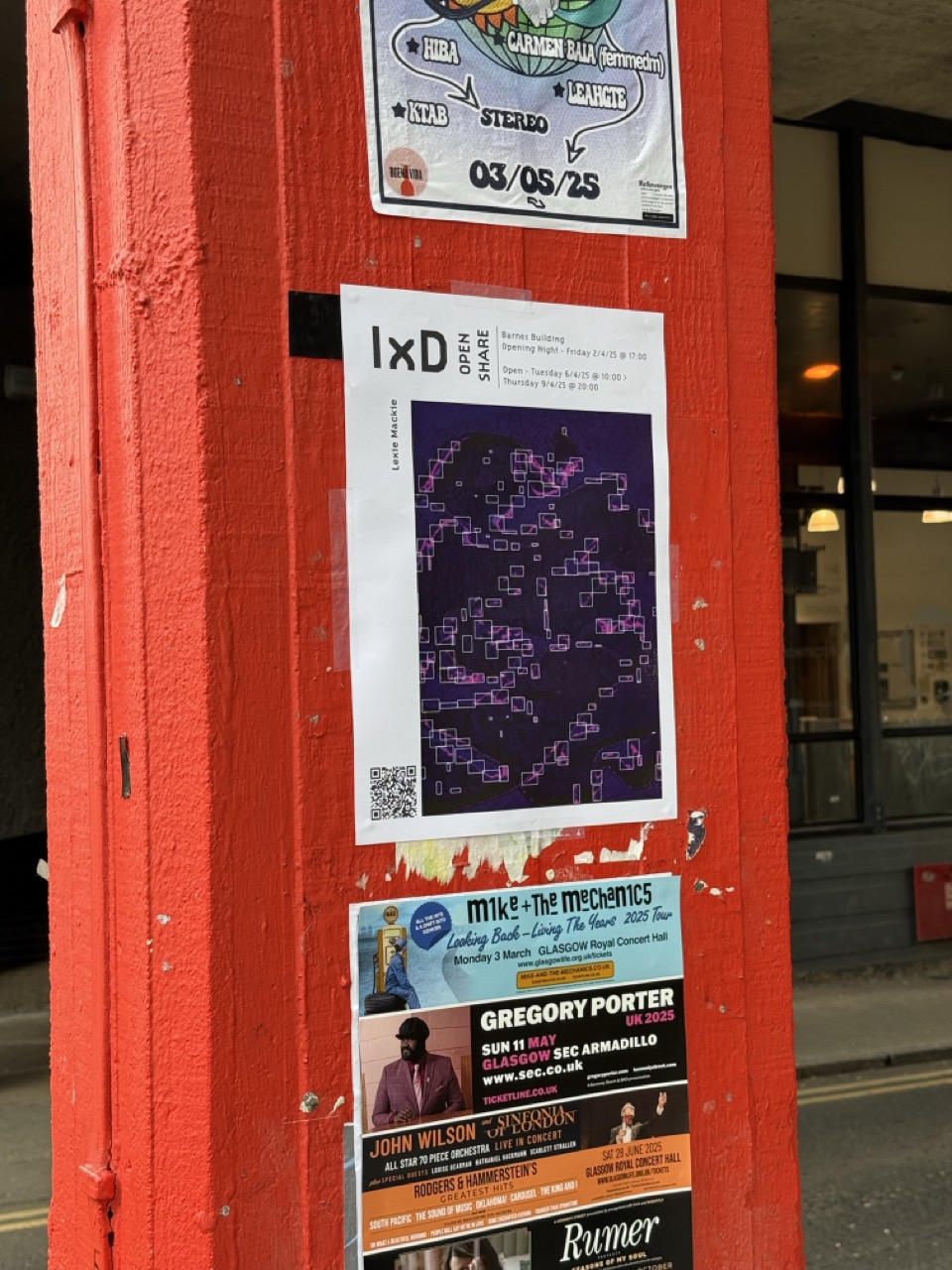
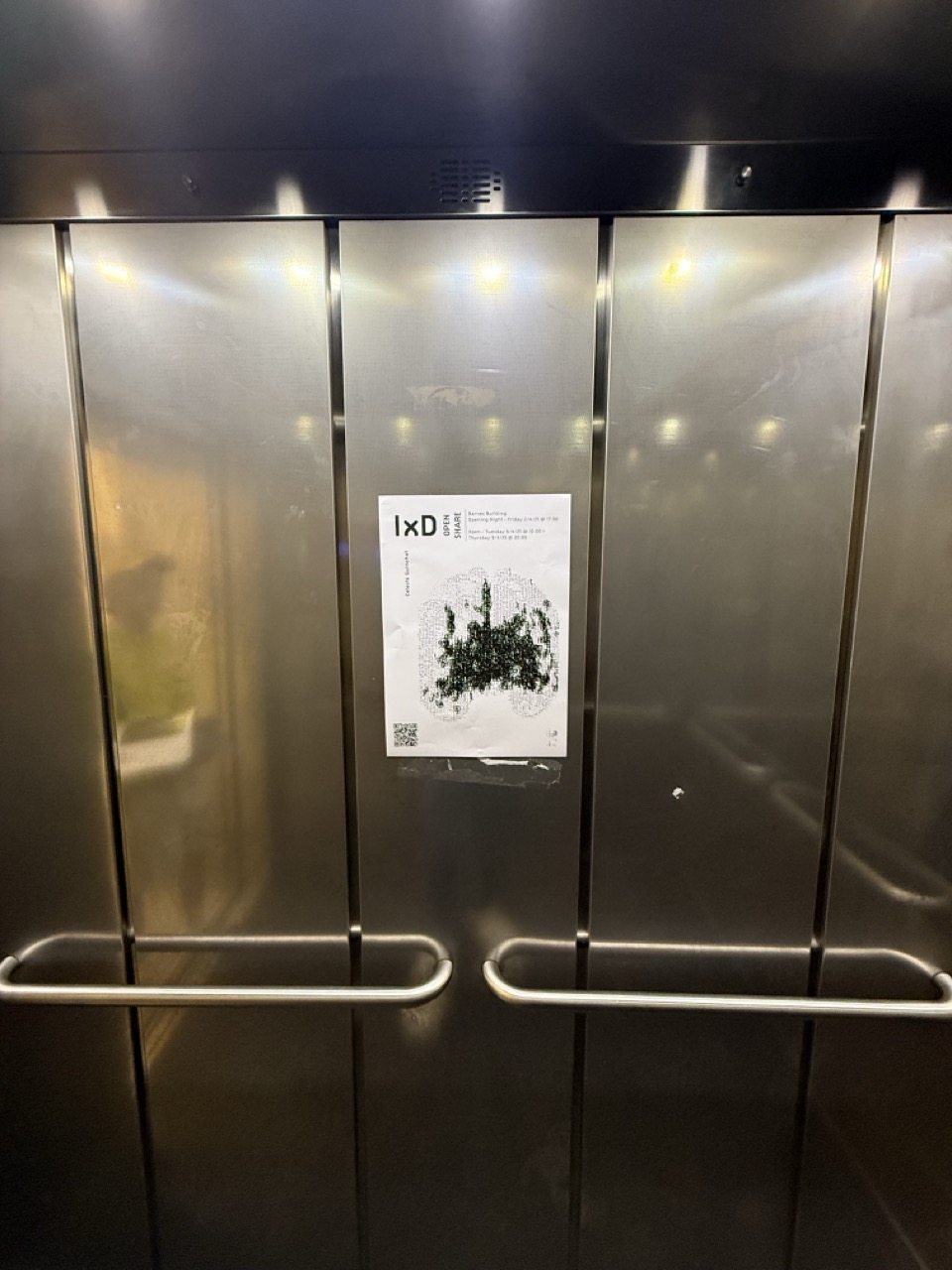
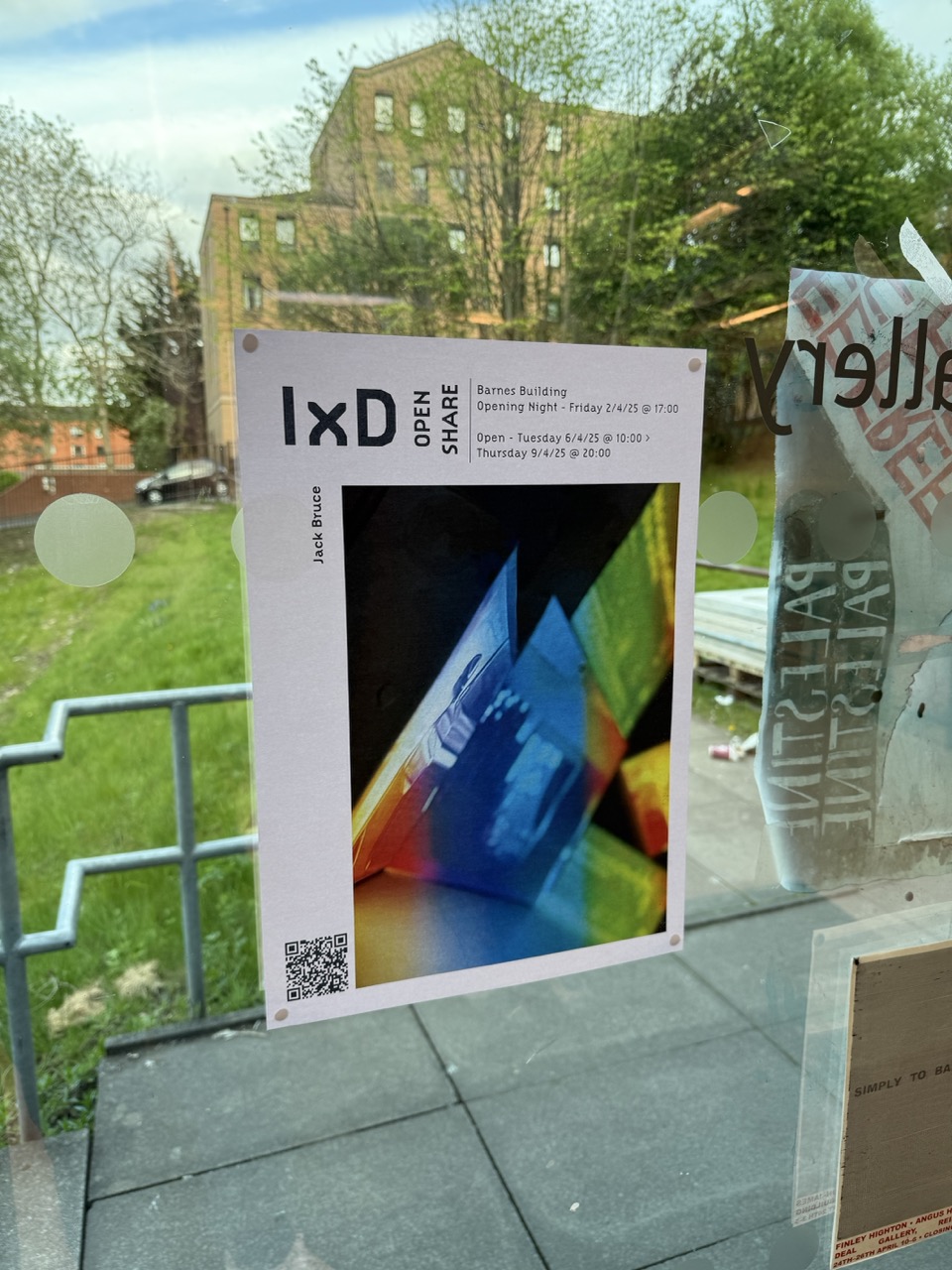
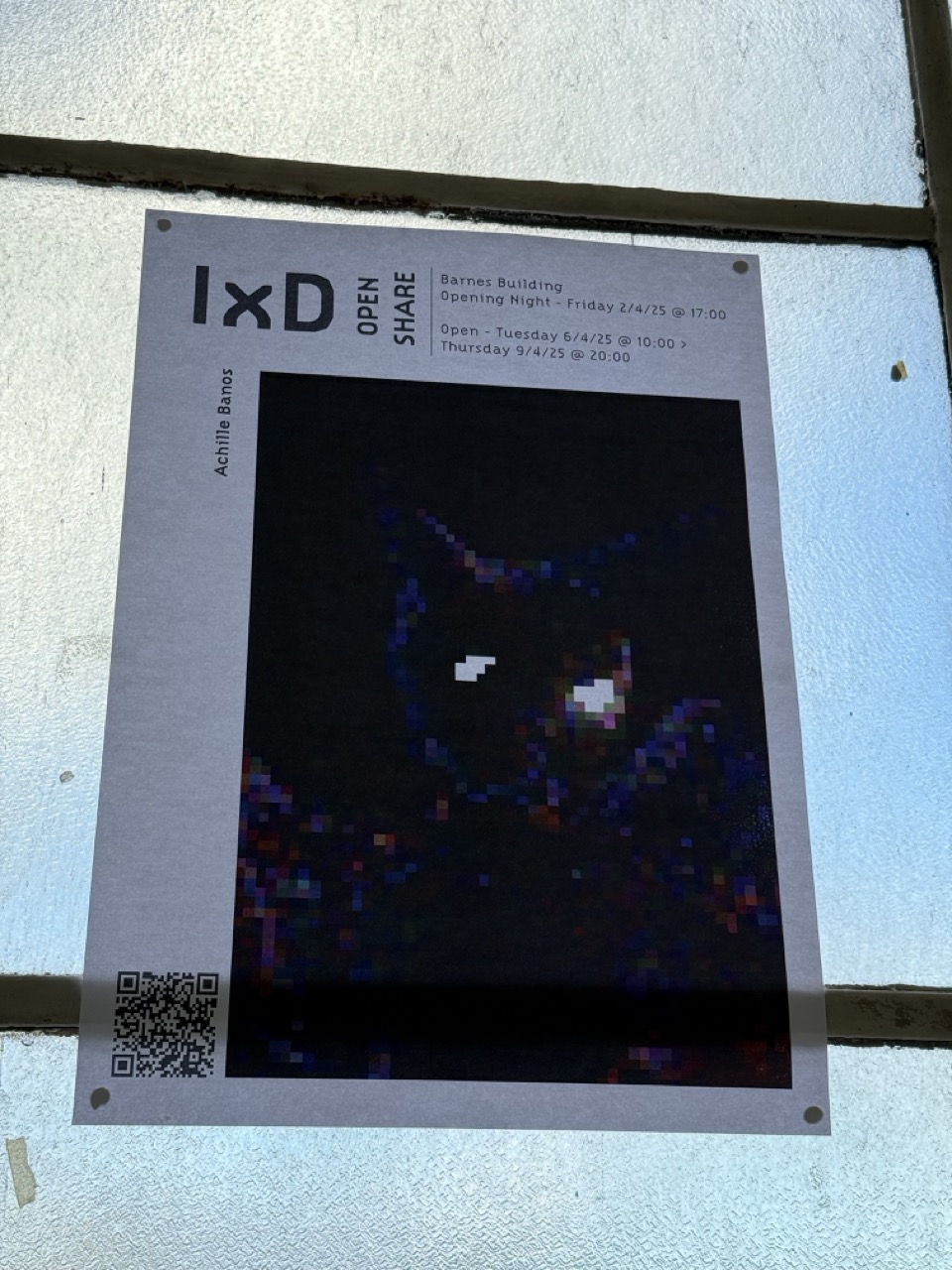
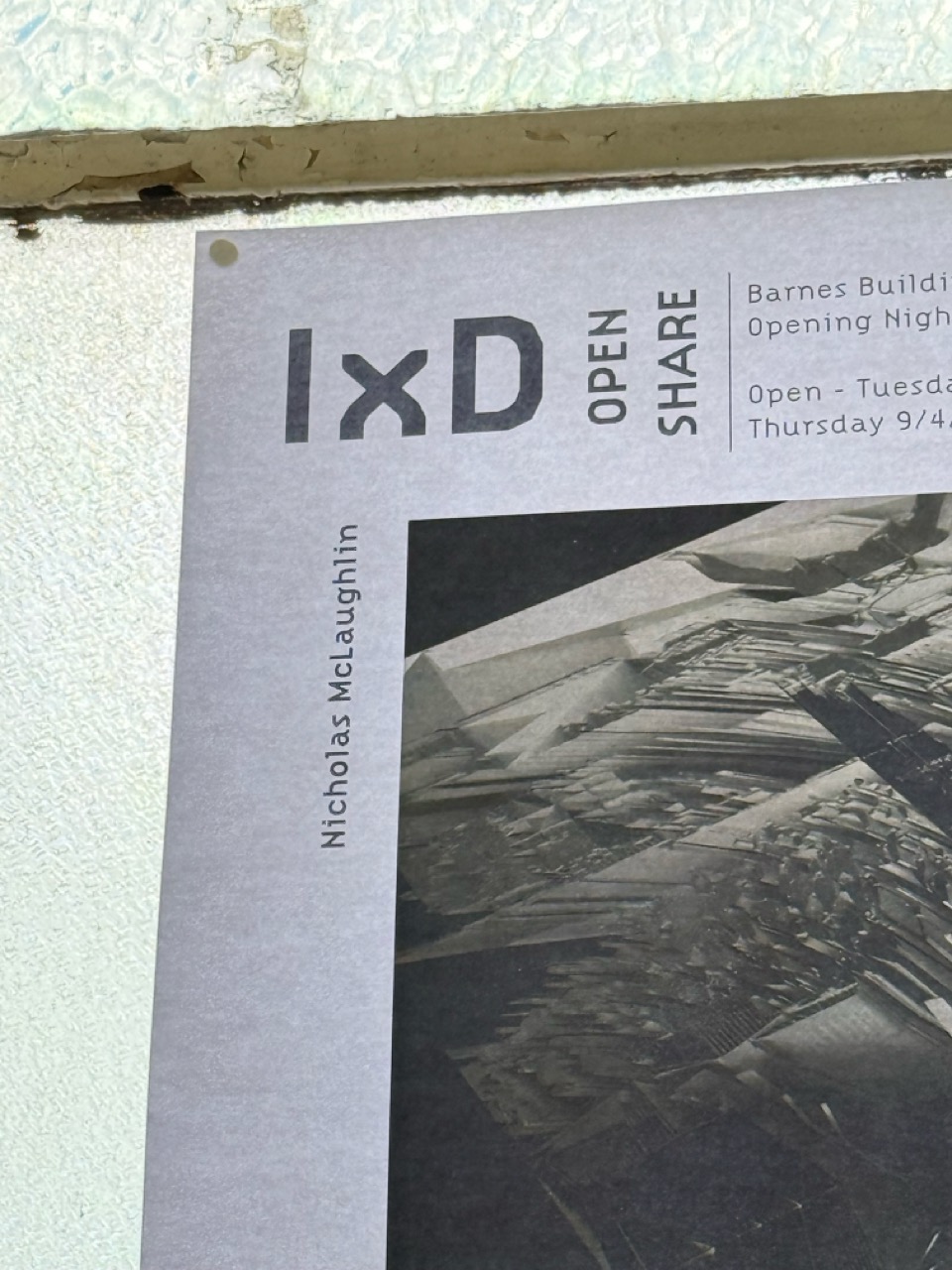
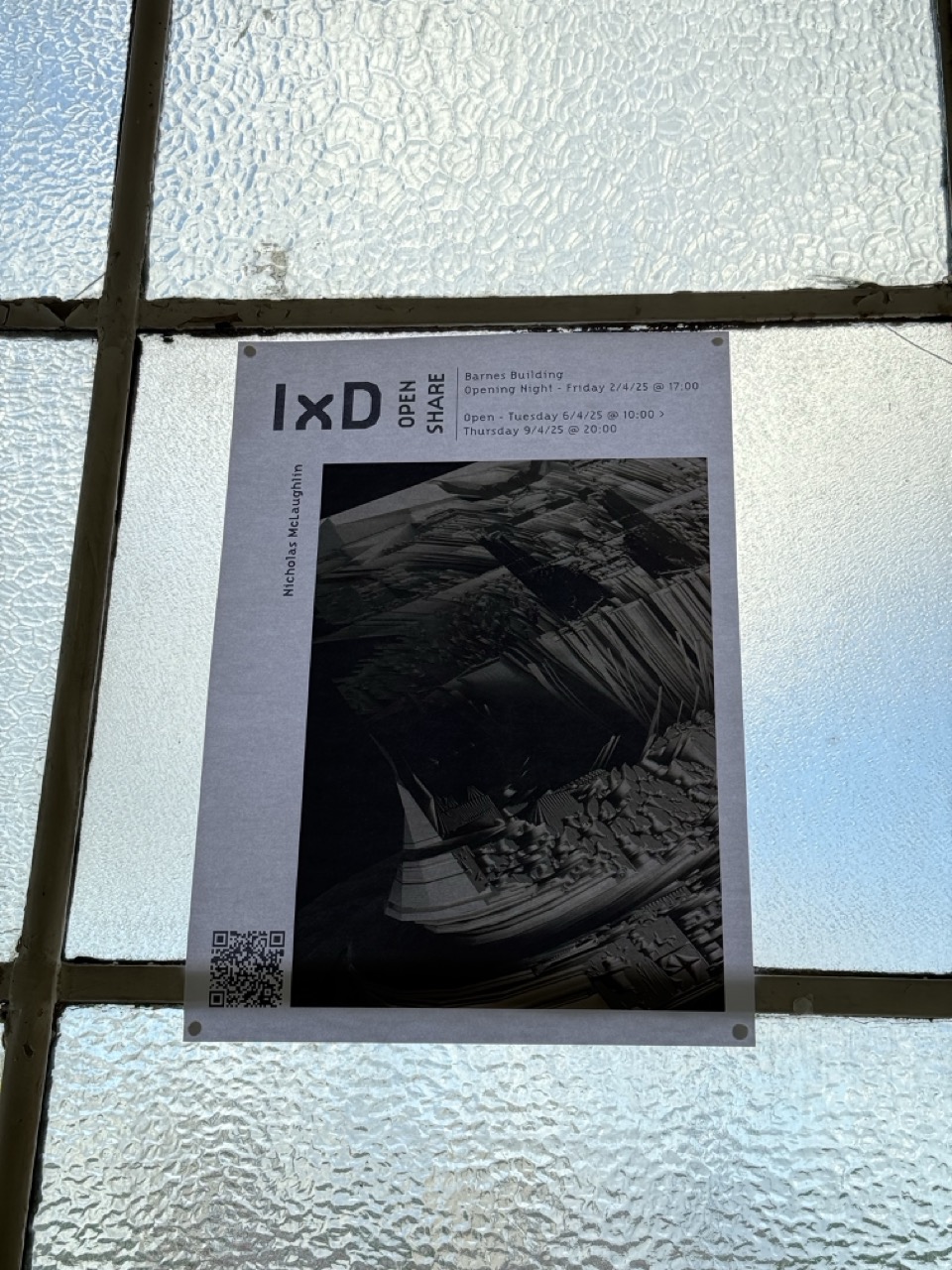
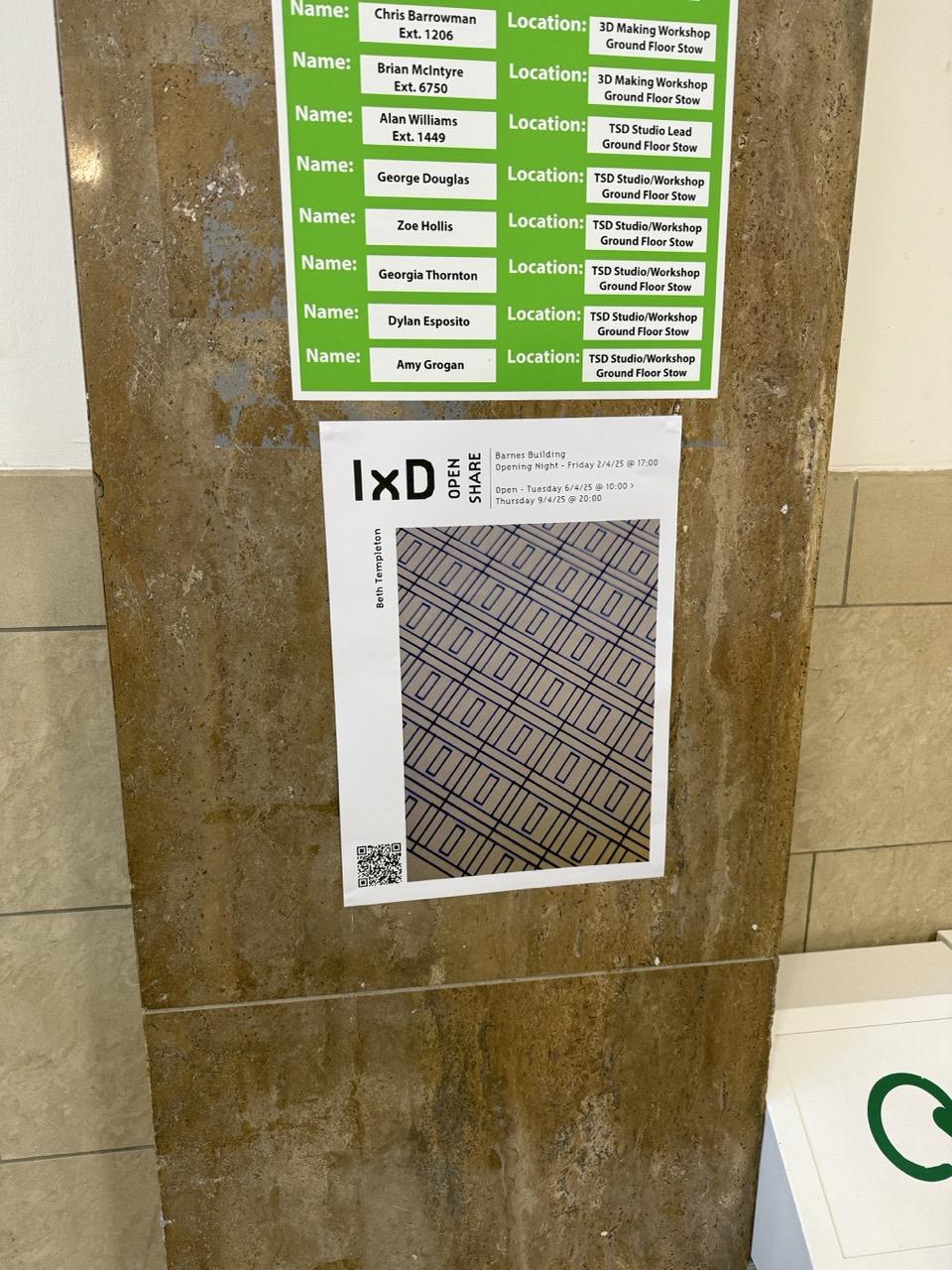
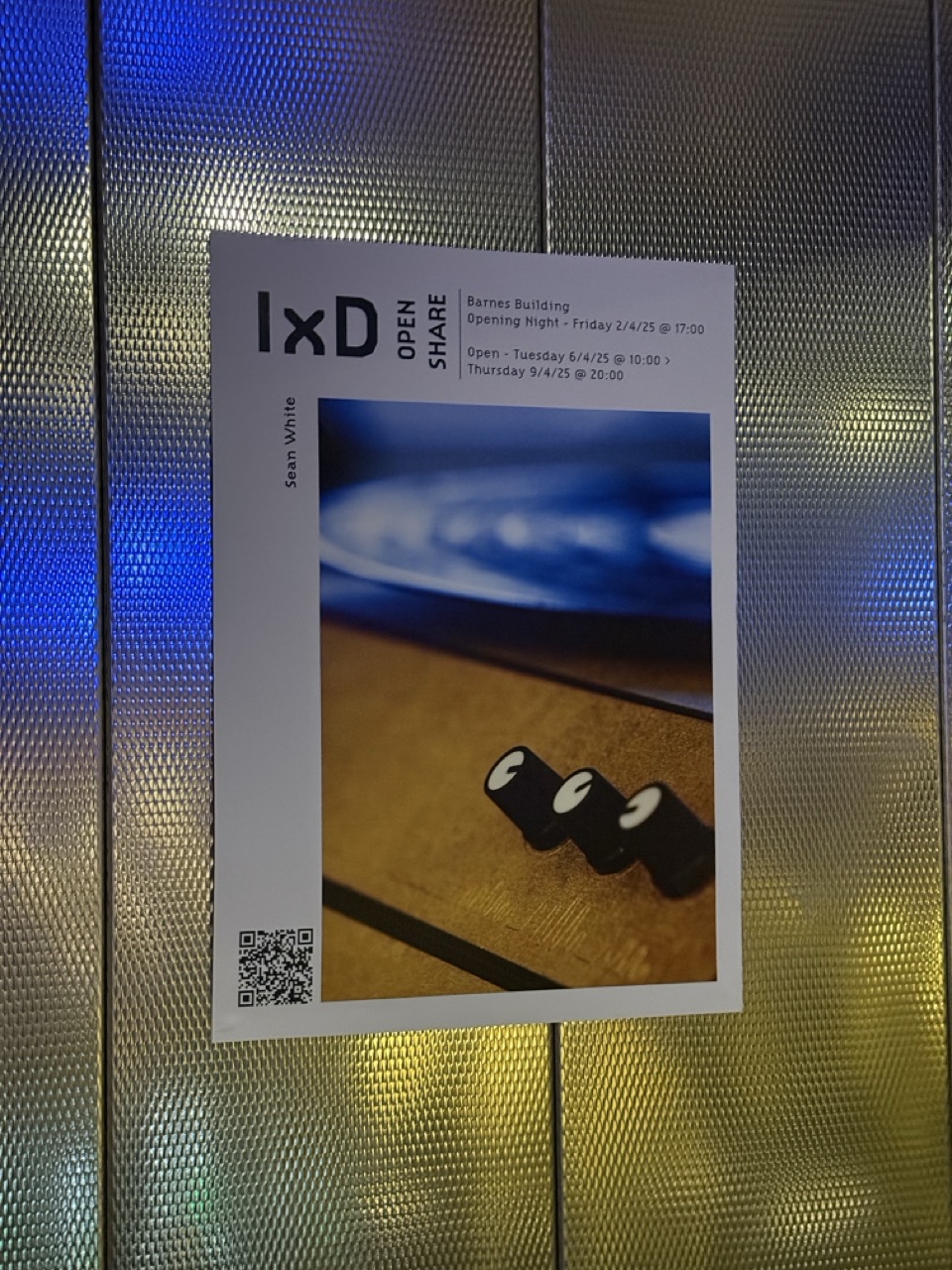
    Promo Work:

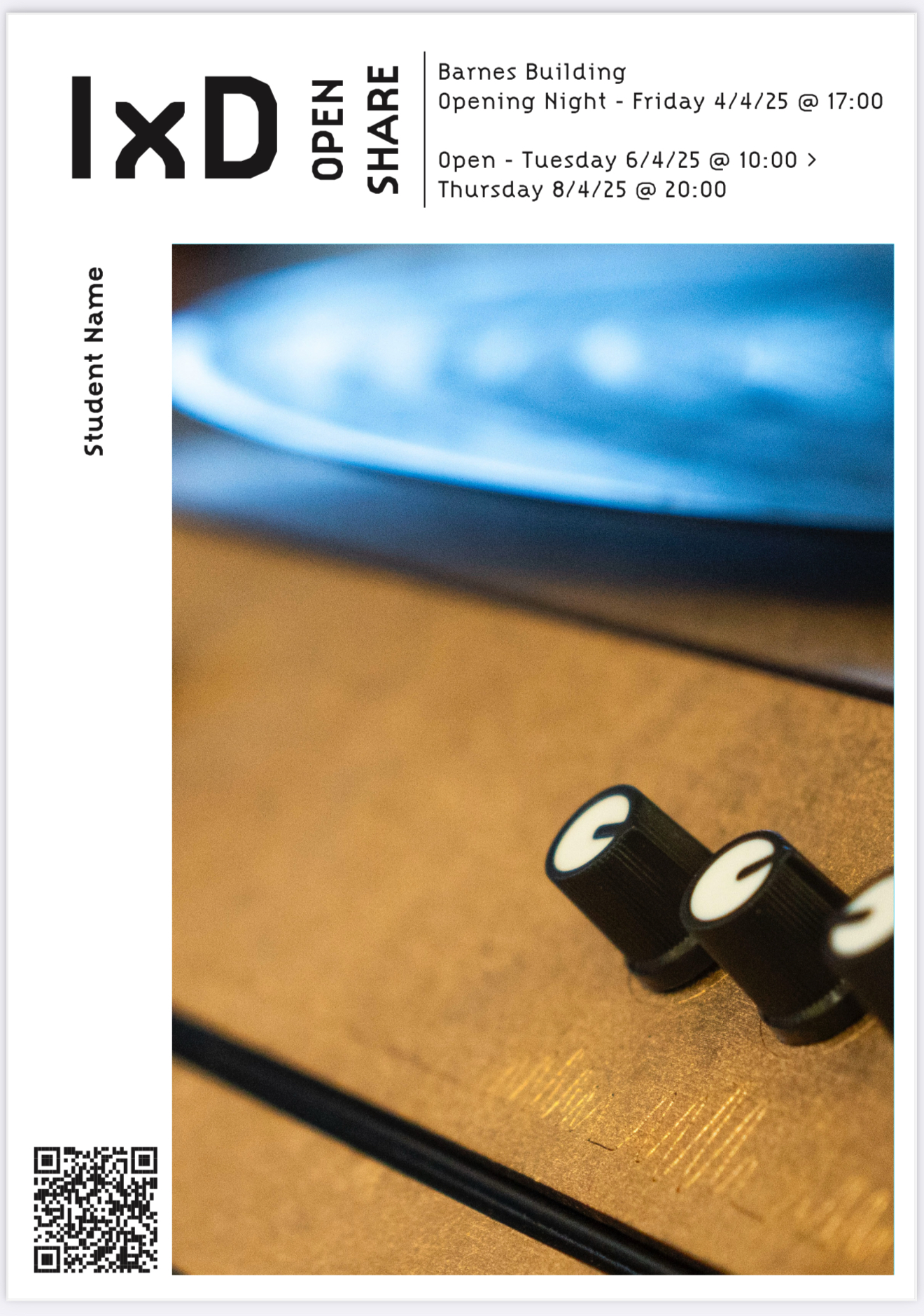
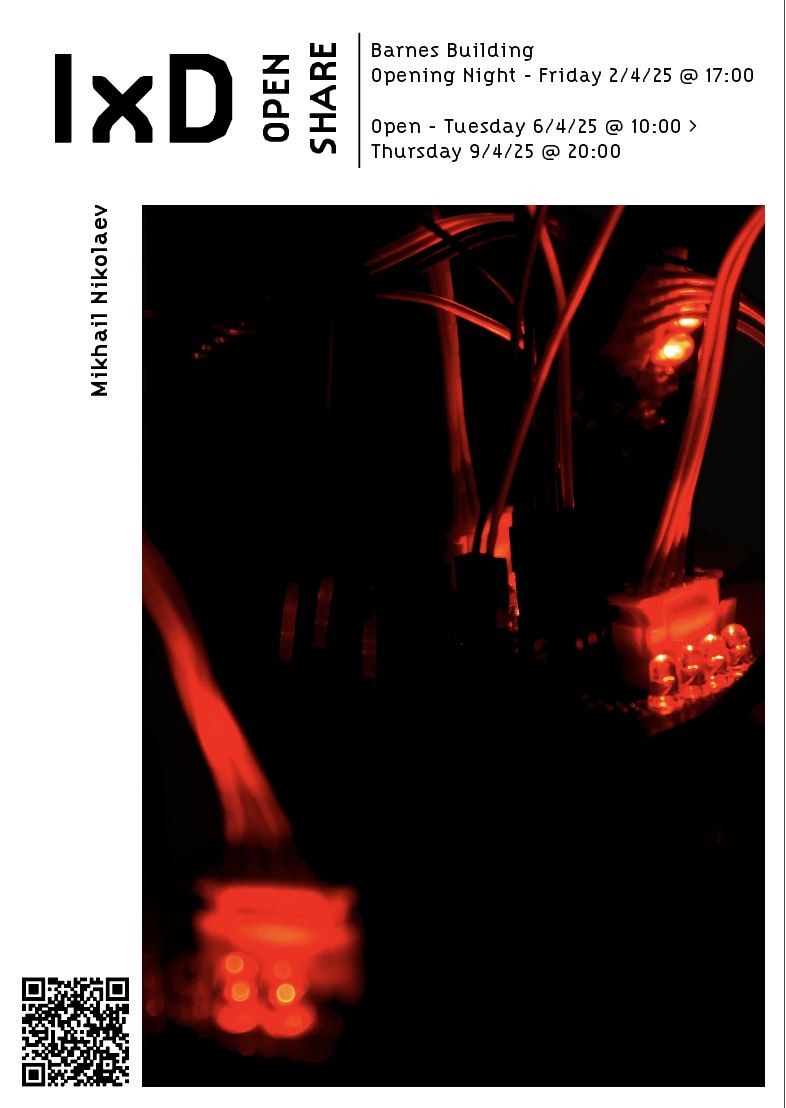
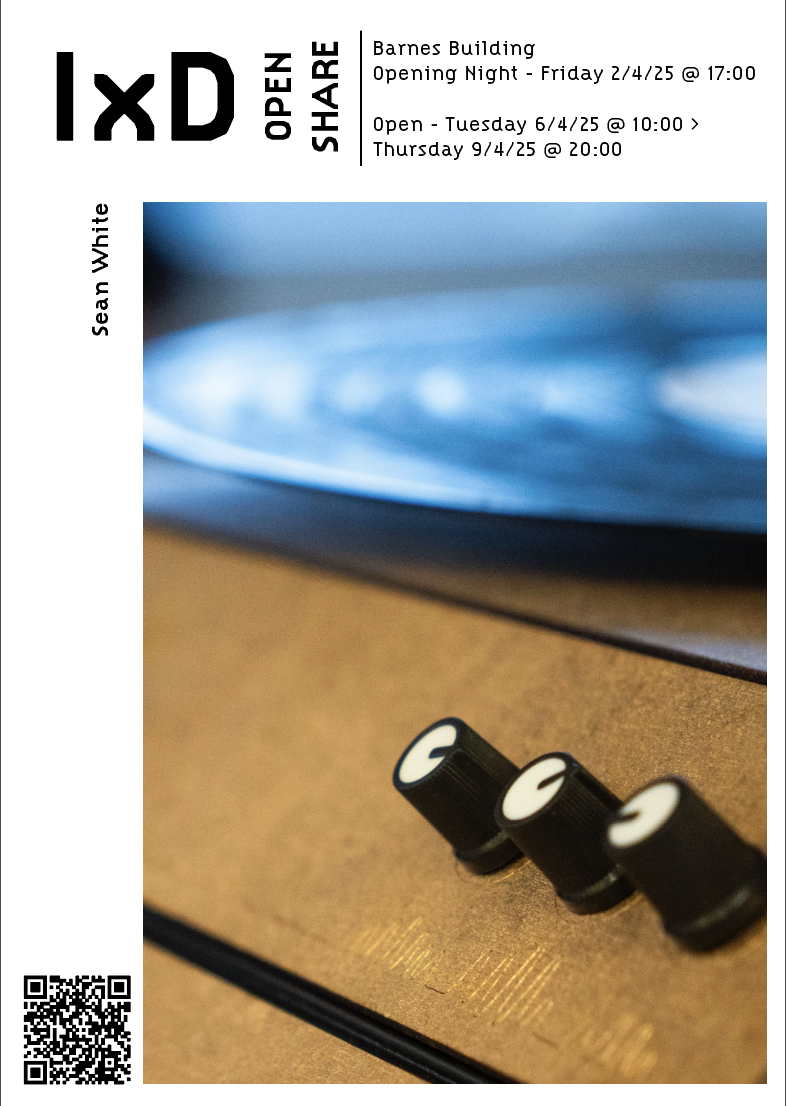
    Firstly the poster. I thought that Interaction Design has great opportunities for icons and visual identification with the “IxD” short hand but before I had the chance to complicate it or over design it, I found a fitting clean yet digital font on adobe fonts and after running it by the others it was a winning success.

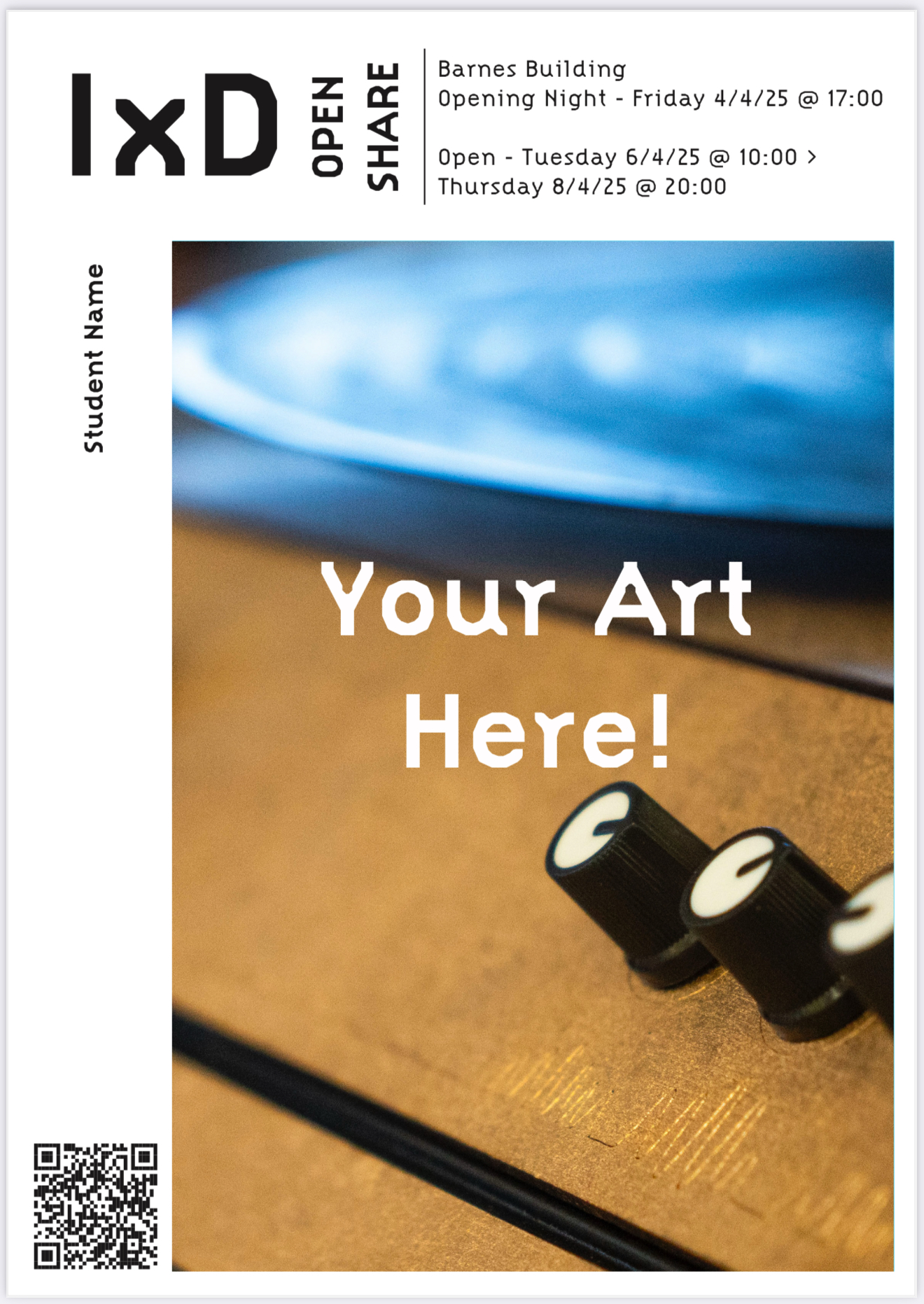
    And the main focus of this personal ‘promotional project’ is the work that the students of our course produce so it felt natural to put it in the forefront and again with input from my colleagues a framing was decided and I made a template that would hopefully work for the visuals they provided.

    Personal Work :

    For my open share project it was between my expressive data project and XR project but with the time we have I think there would be too much work to do with expressive data to get it to the place I want but with the VR project it only needs a couple of minor tweeks and possible scripted events to get it where I’d like.

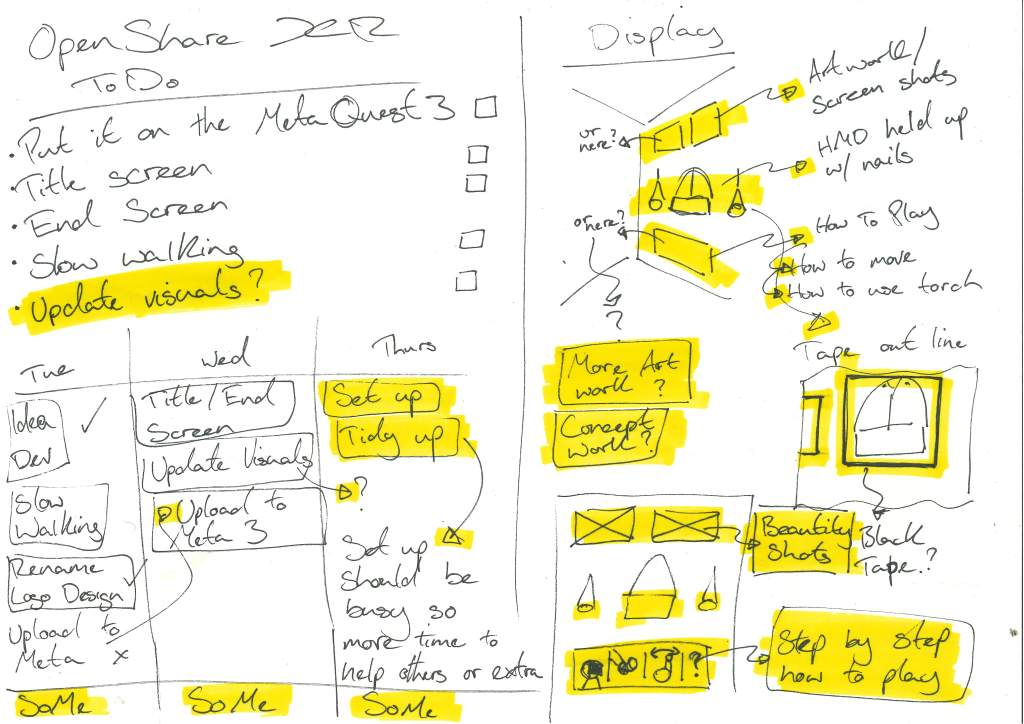
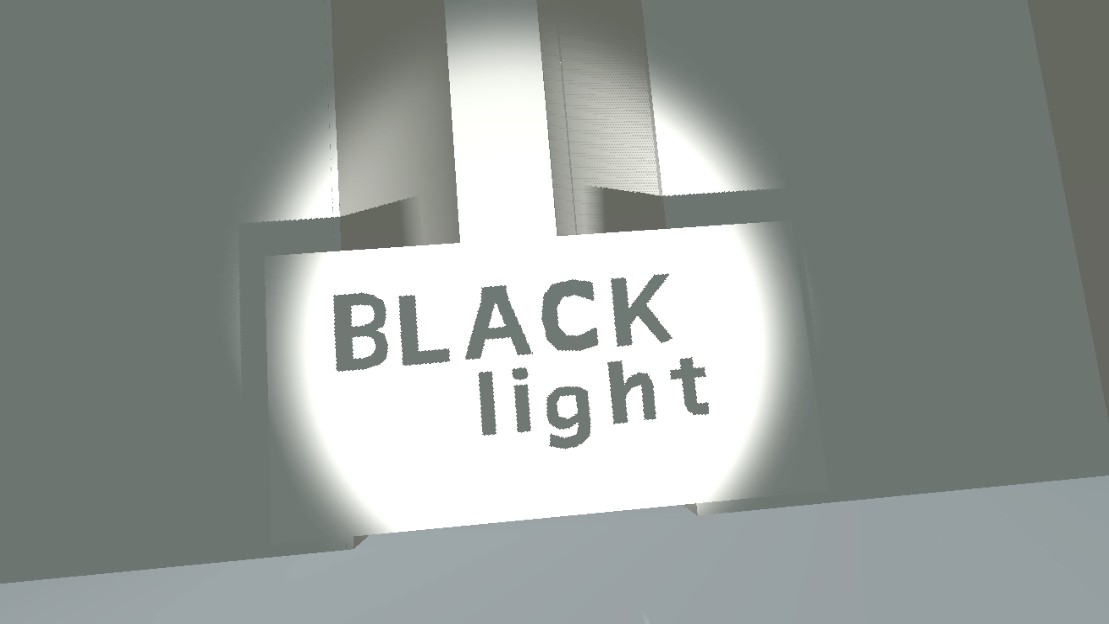
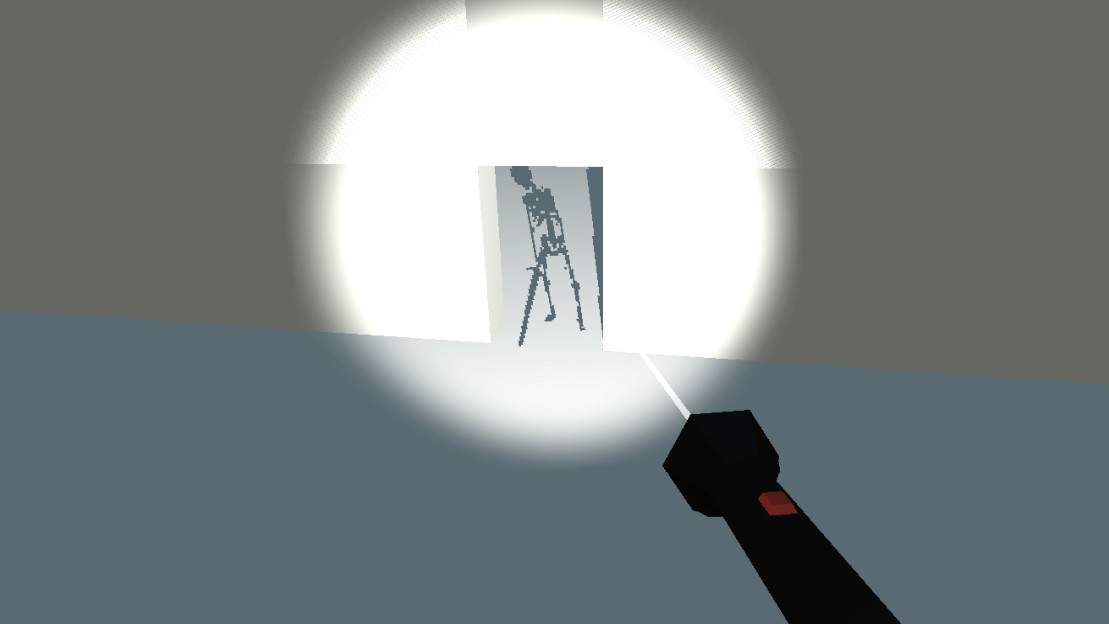
    Above is more of my mad scribbled trying to make sense of the ideas I had and trying to come up with new ones that would elevate the BlackLight demo to a higher quality.

    BlackLight Logo Design:

    As my mind was in the space of graphic design and giving things a brand I made a quick mock up of a possible logo for the finished project.

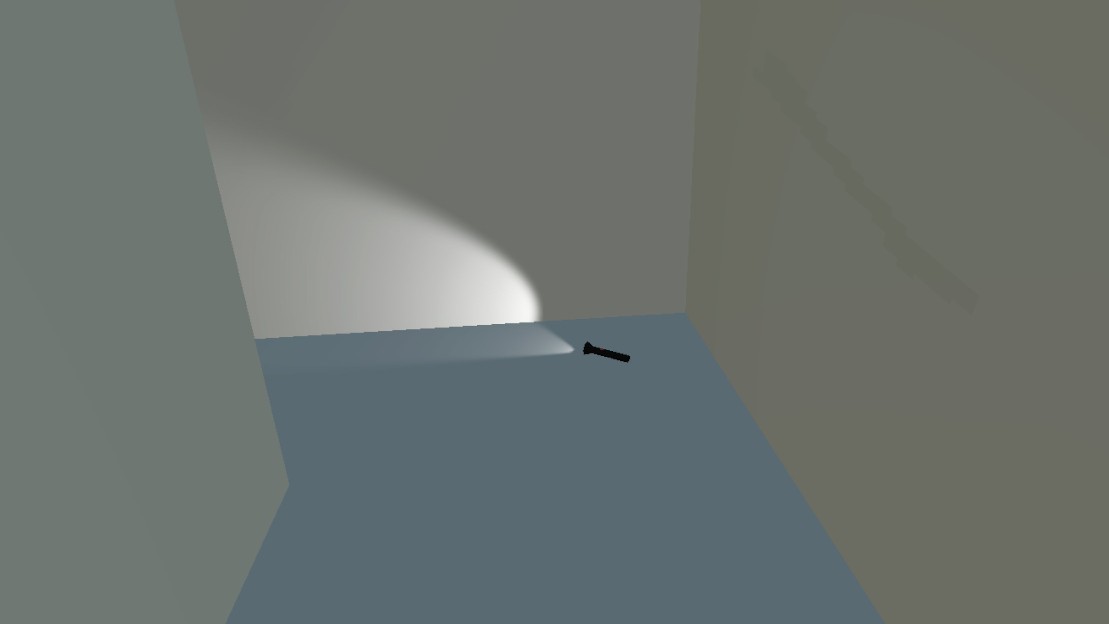
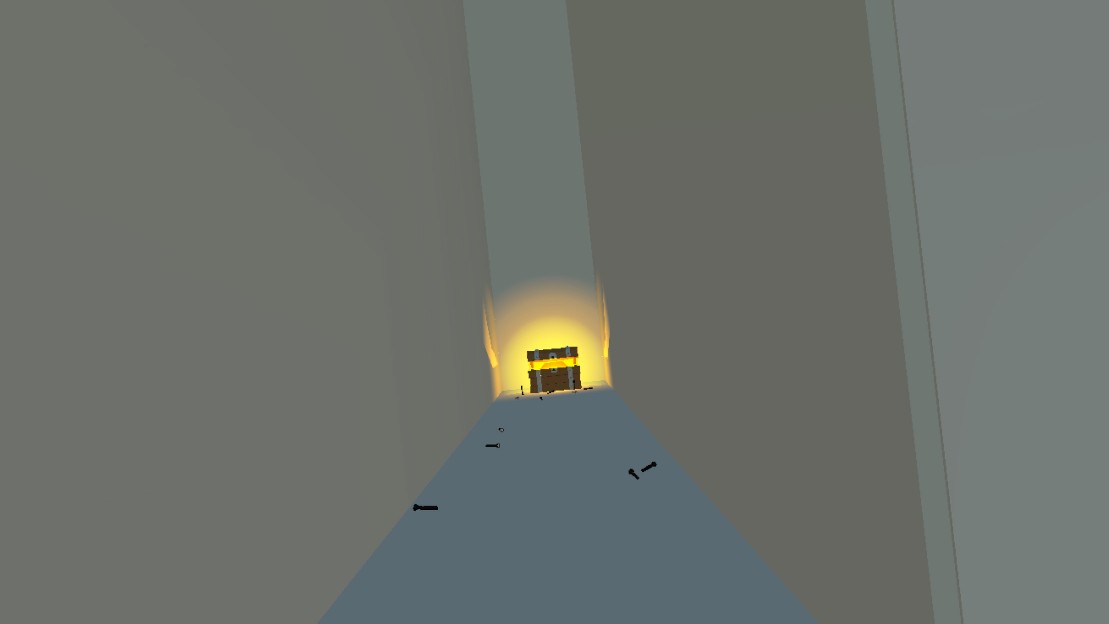
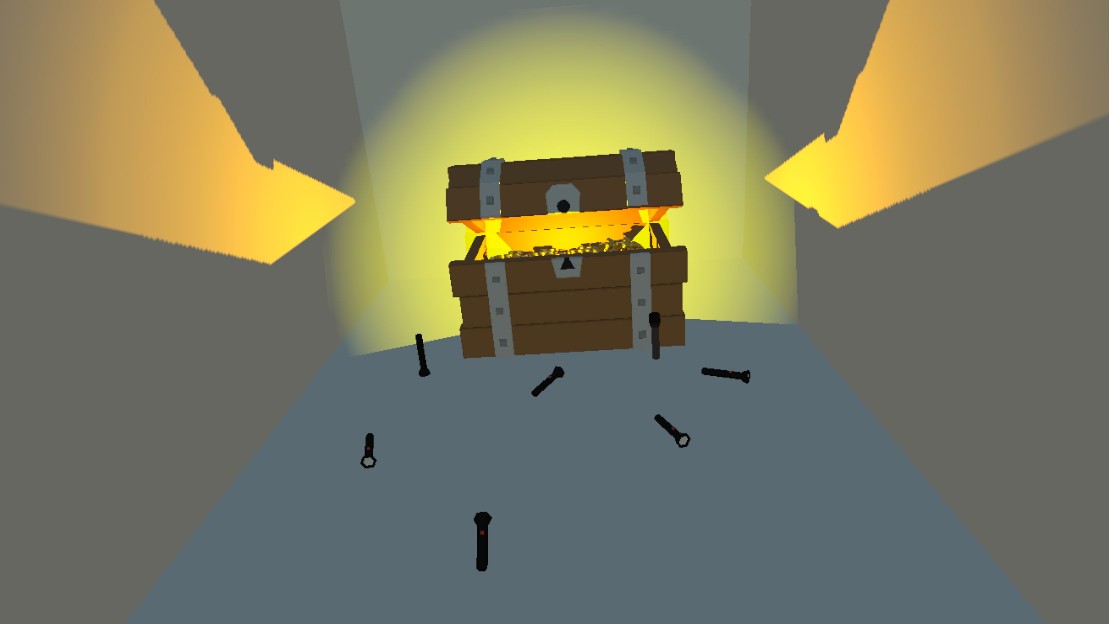
    The name change was an odd one, so initially it was called BlackLight during the concept stage when the idea was to have a custom shader or the visuals inverted so that the light itself was a cone of black in front of the player. But when re-visiting the project for OpenShare and realising I might not have time to create my own shader I thought of renaming it ‘Light the Way’ as BlackLight might not make sense but then when I went to edit the Unity file I learned that I didn’t have the most recent build and didn’t have time to rebuild it. So with the file unable to be changed in time and the name being BlackLight on the makeshift title card of the game then BlackLight it had to stay.

    Displaying the work :

    So with the work itself frozen in its current state I wanted to give more time to the displaying of the work and the promotional aspect of the exhibition.

    Insta Bookends:

    To tie the instagram post together with the poster design, I thought some designed bookends for the post could be used when uploading other IxD images.

    Troubles :

    Ok so major/ not major problem. I do not have the most recent unity scene that is running on the headset. But, it is running on my headset at home, I have a finished that version. I would have liked to improve the current version of it but to do that I would have to rebuild at least half of the project in a day which I don’t think is possible.

    As I do like this project and think it does have some legs to go further I might rebuild it during the summer in my own time improving and rebuilding it at the same time.

    But with the time remaining and what I have at this moment I’ll present my work to the best of my ability.

    Location :

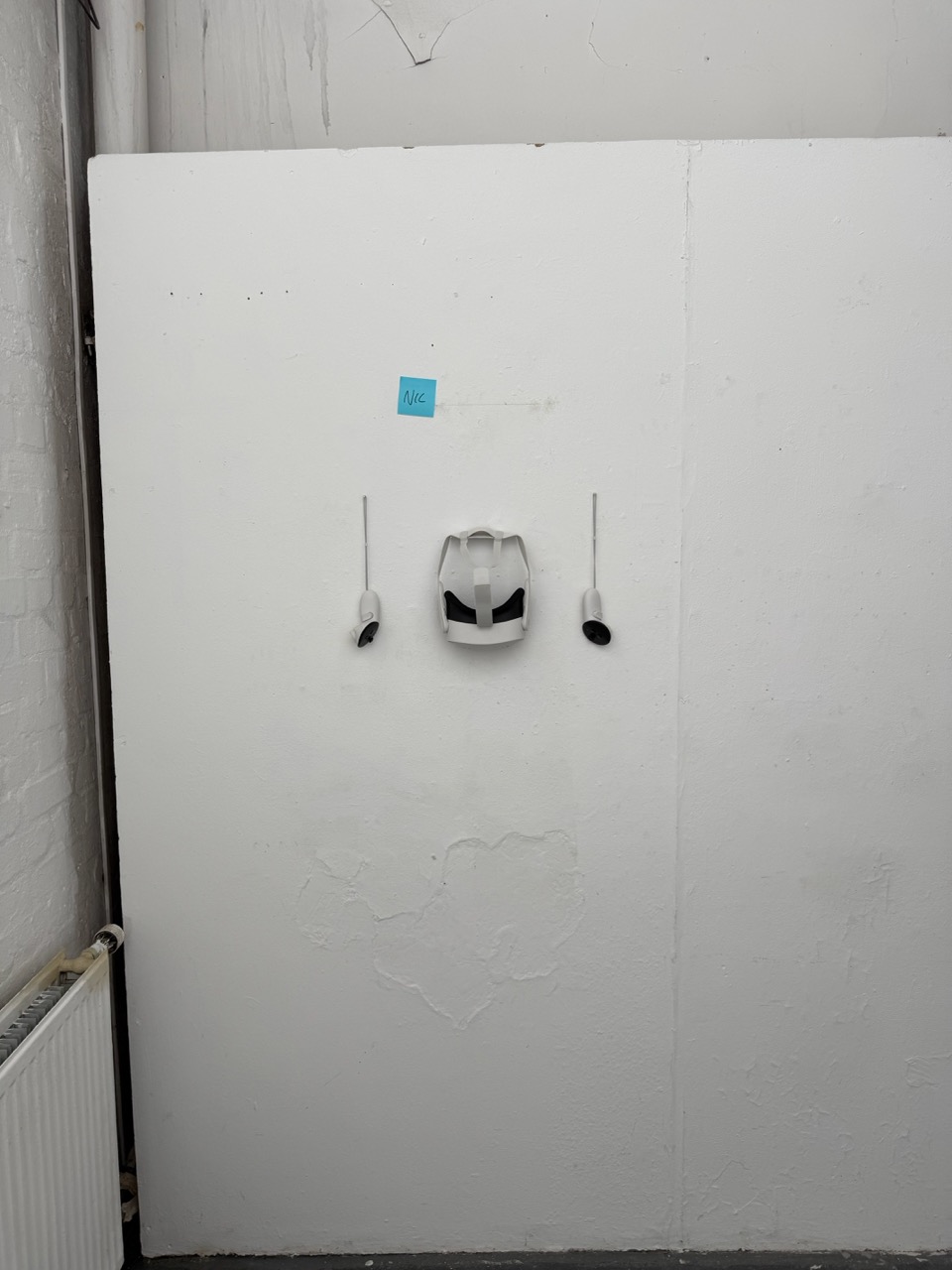
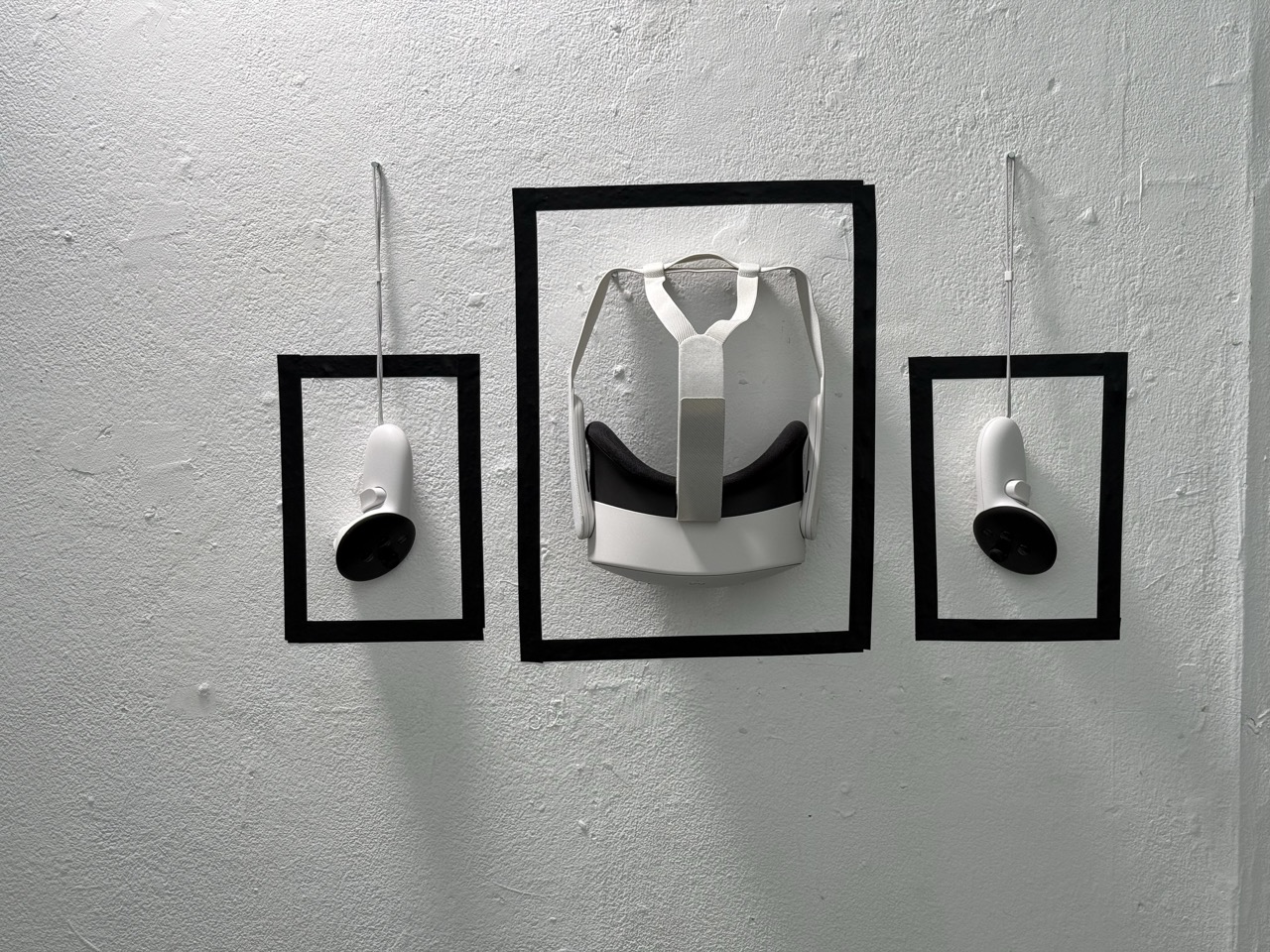
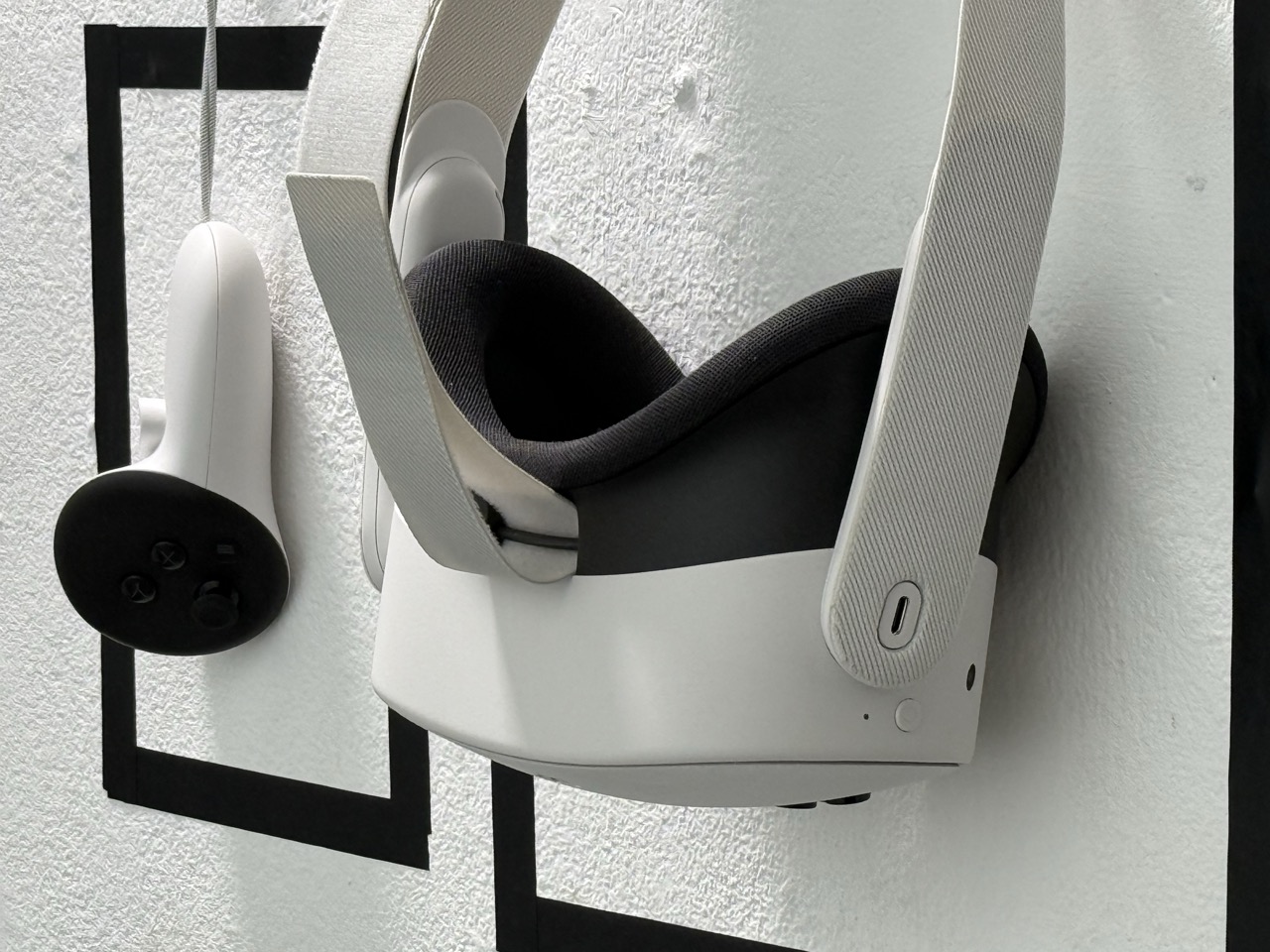
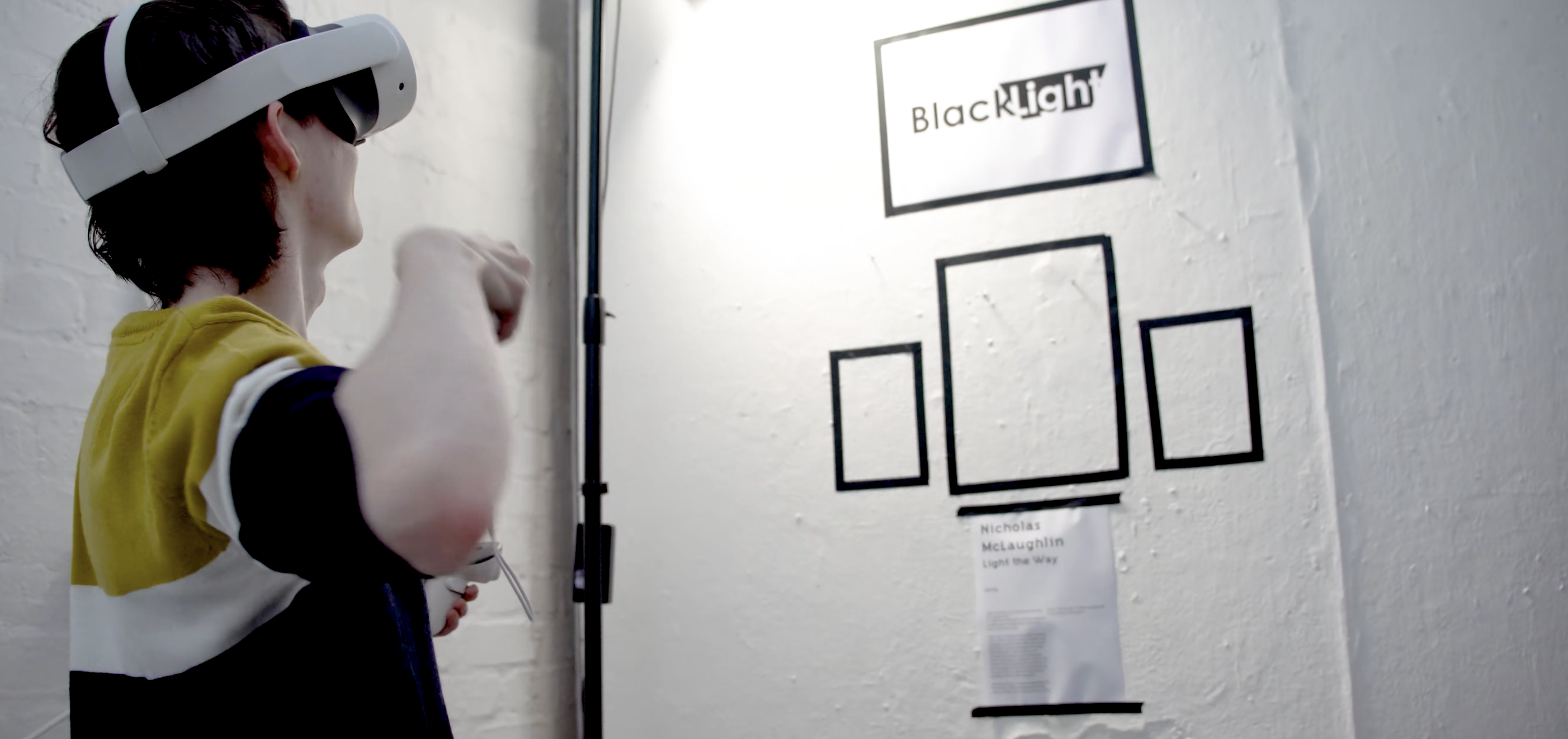
    I claimed the space closed off from the rest of the exhibition as to allow space for the people more enough and explore the space within VR.

    And by complete accident the starting point of BlackLight doesn’t look a million miles away from how the space I have in the gallery looks.

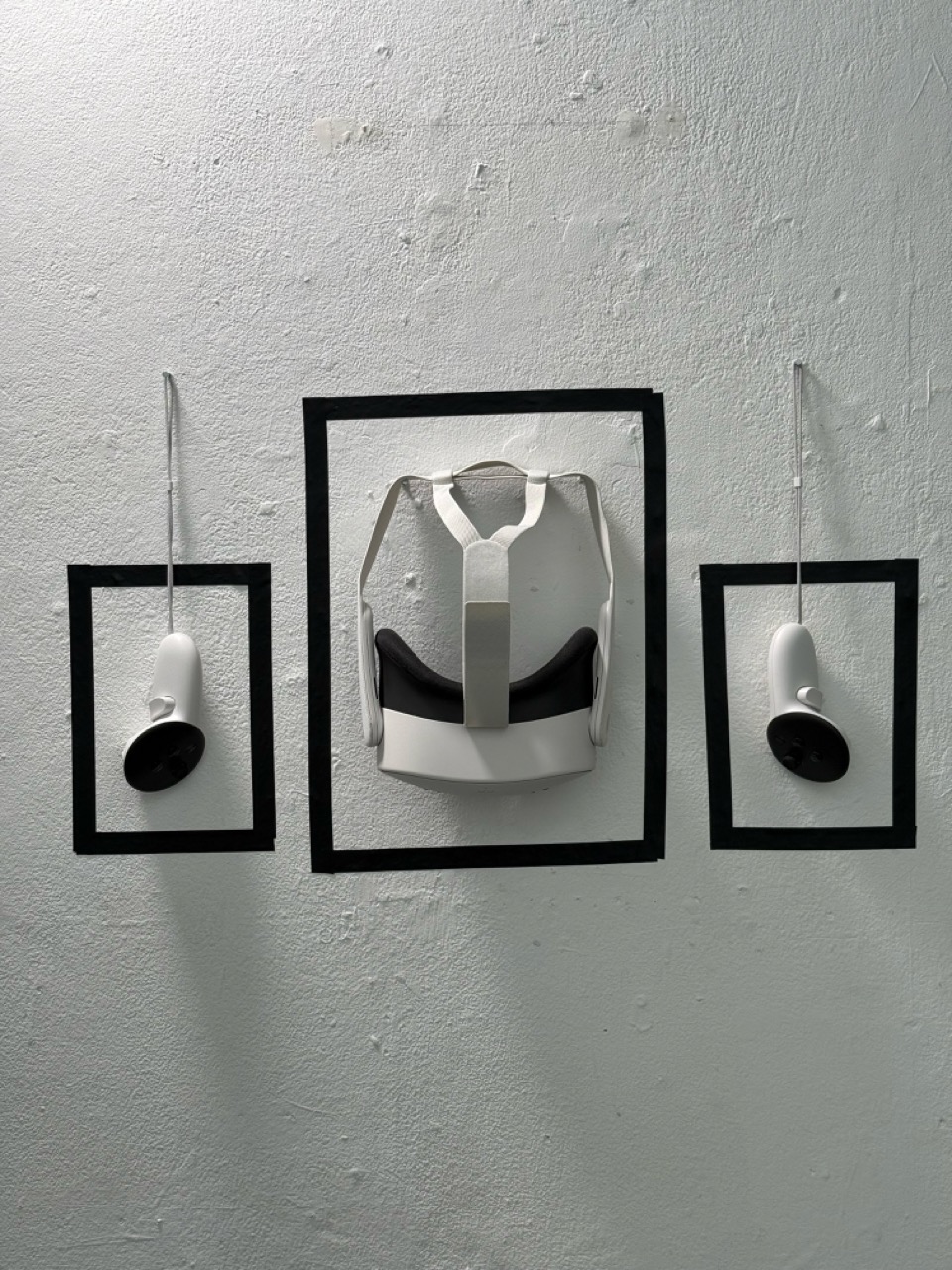
    Setting up the VR :

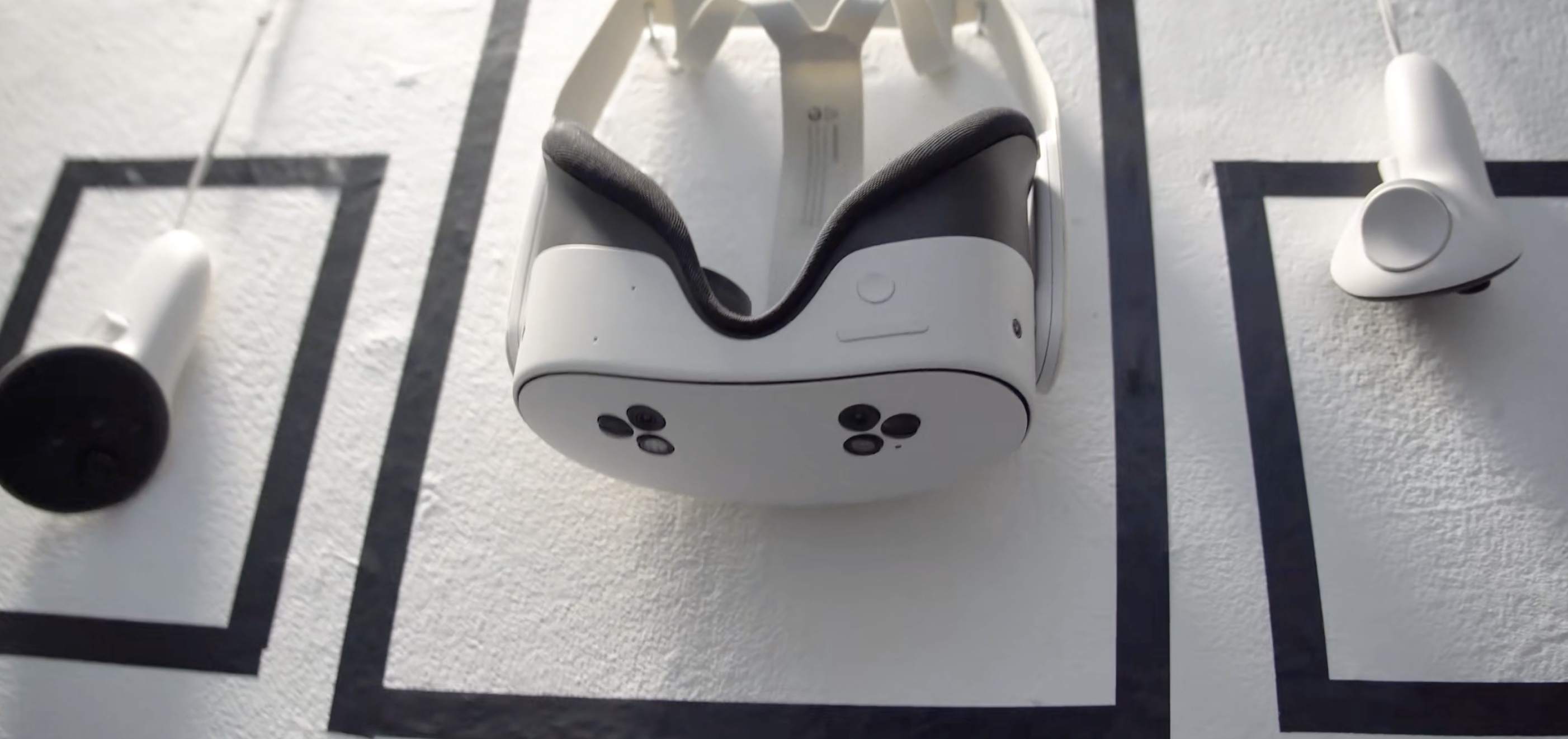
    With my work being on the VR and it being self contained, it felt like there was very little to actually display as the work was contained within so with the time I have I’m trying to make more of a display for it.

    IxD Promo Poster Collection :

    The collection of posters for the exhibition, I was so happy how they turned out and was so proud of everyone that submitted such amazing images for the posters, it really shows the varied work from everyone on the course.

    Posters around GSA:

    With the posters designed and the deadline passed we got to work putting them out around the campus trying to hit high traffic areas around GSA.

    BlackLight Screenshots :

    During this time I played through BlackLight for two reasons, one was to re-familiarise myself with the application as well as getting stills from the game to display with the headset.

    To be honest as soon as I put up the stills they felt silly and cheap so I took them down.

    Stripping back the set up:

    Before the opening of OpenShare I was just adding more and more to it, screen shots, decals, but after talking with my colleagues they reminded me that the art work is what is in the VR headset and that in that headset you are transported to another world and that world is the art, not the headset itself and to not “give it away”.

    IxD Open Share 2024/25

    Credit going to Blaise Treverton for this great video!

    Reflection:

    There is a few things that I would have wanted to do differently for this OpenShare and there are things I would have wanted.

    I would have liked to be able to improve my previous project and get it to a better level and made sure it was gallery ready with things built into it like resetting the scene when finished or failed along with title screens and end screens. I would liked to evaluate my displaying of the work within a gallery to a higher level with either a projector showing gameplay or more of a thematically representing display.

    I would have liked more engagement and energy from some of my collaborators.

    But all that aside I am very pleased with OpenShare this year, I am happy with what I got done, I am happy with the work I did in promoting IxD and the show and I am so happy and proud of everyone that put in so much work and effort into the show and helping me produce and promote everything, I couldn’t have done it alone and thankfully I didn’t need to.

    Thank you to the lectures, to everyone that helped and contributed and thank you to everyone that came to the exhibition.

  • Sense & Sensibility

    Inspiration :

    James Birdle

    Autonomous Trap 001 (2017)

    https://jamesbridle.com/works/autonomous-trap-001

    With James Birdle’s work there was a number of things that interested me, the documentation nature, the real implementations of his experiments but the main take away was the humour in it and the lightness of his work even though his work and his discoveries have very serious implication to the world we live in.

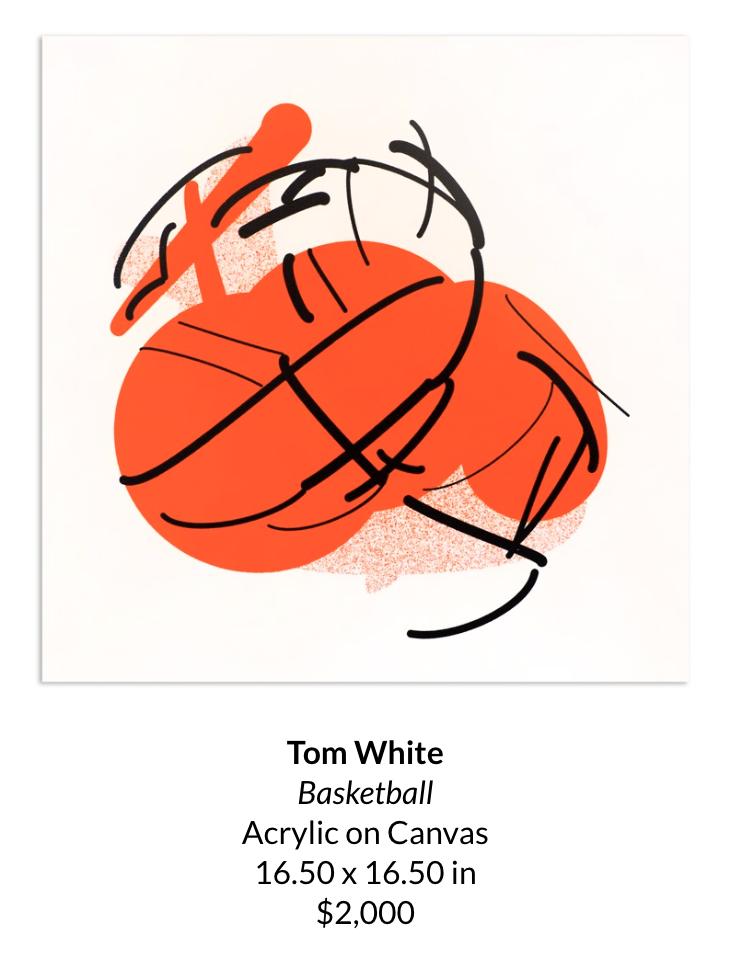
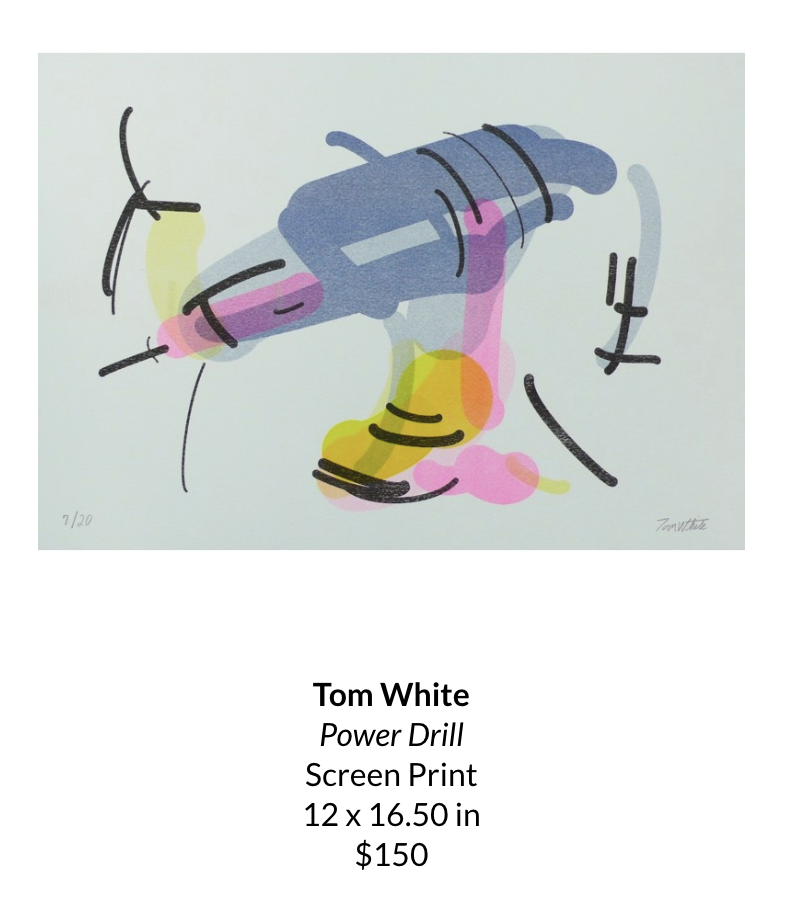
    Tom White :

    “This is not a …” collection

    https://chauvetarts.com/artist/tom-white

    I’ve been a fan of Tom White’s work since I came across it in my research for DH&T in second year, and the same thing I enjoyed then was what I enjoyed now, that being his humour and his working relationship with AI and with this project I wanted to carry this relationship and humour through my work.

    Philipp Schmitt :

    Declassifier

    https://humans-of.ai/?img=8#15745,3139,3586

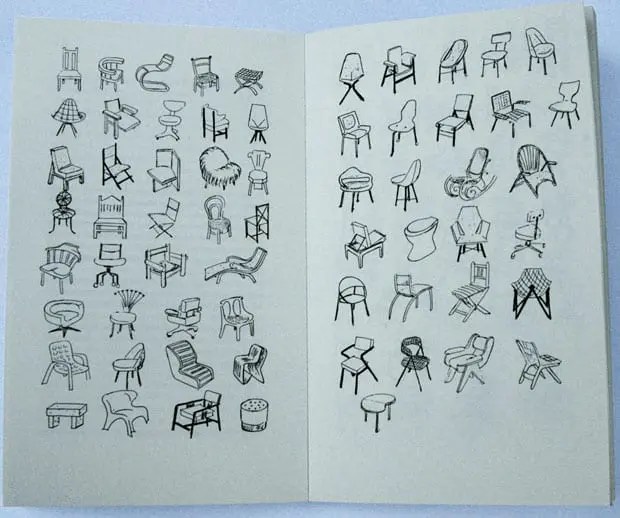
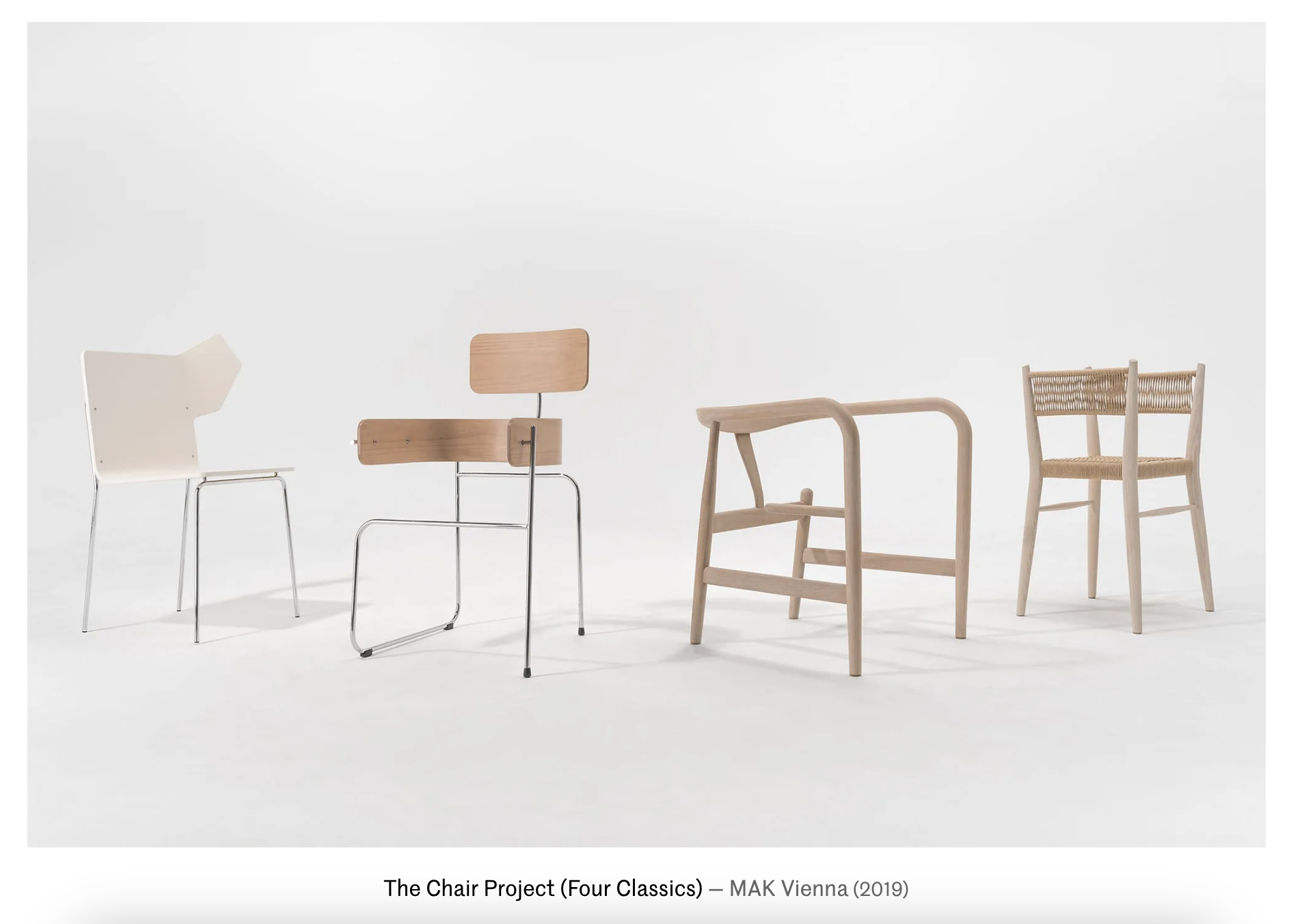
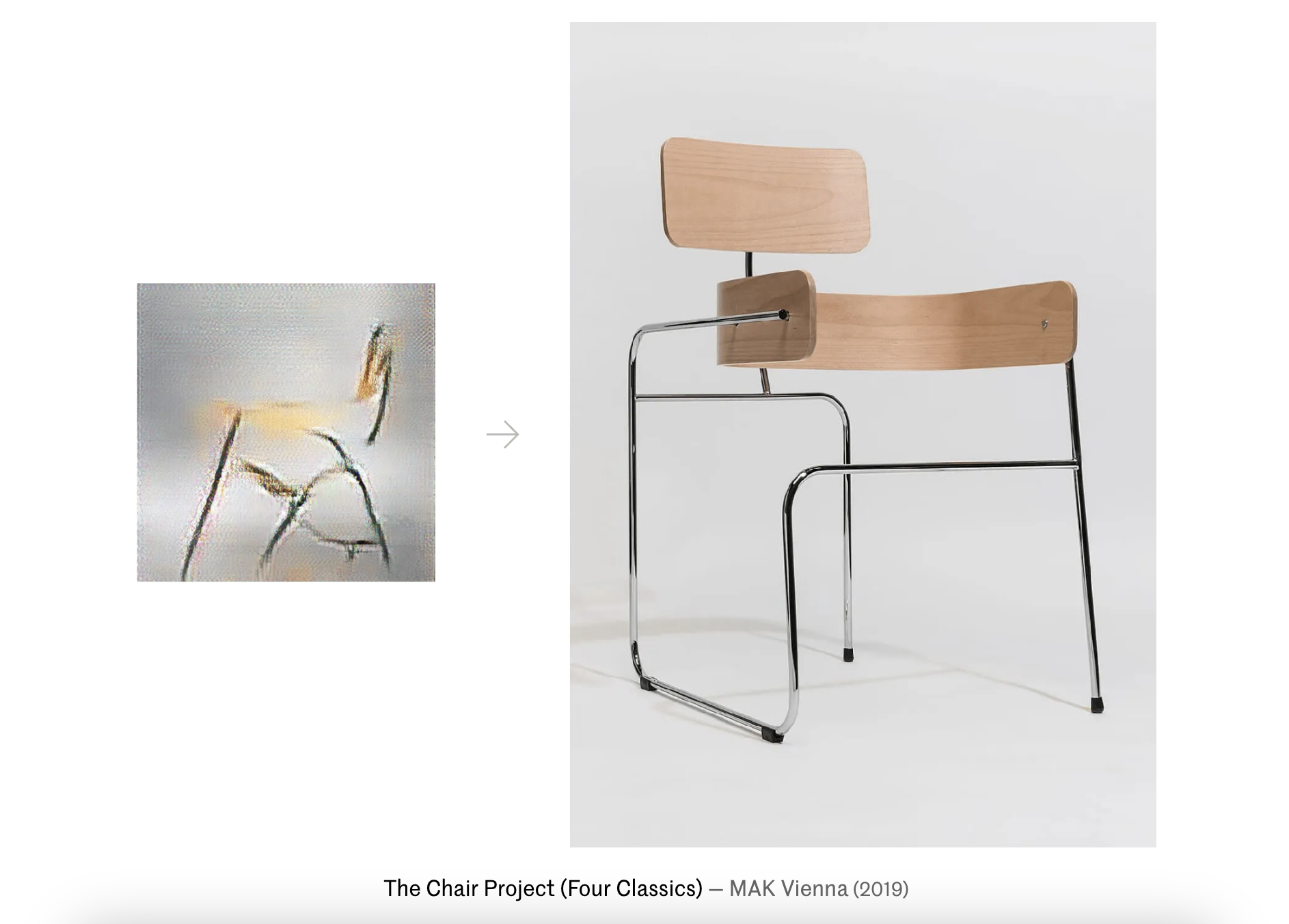
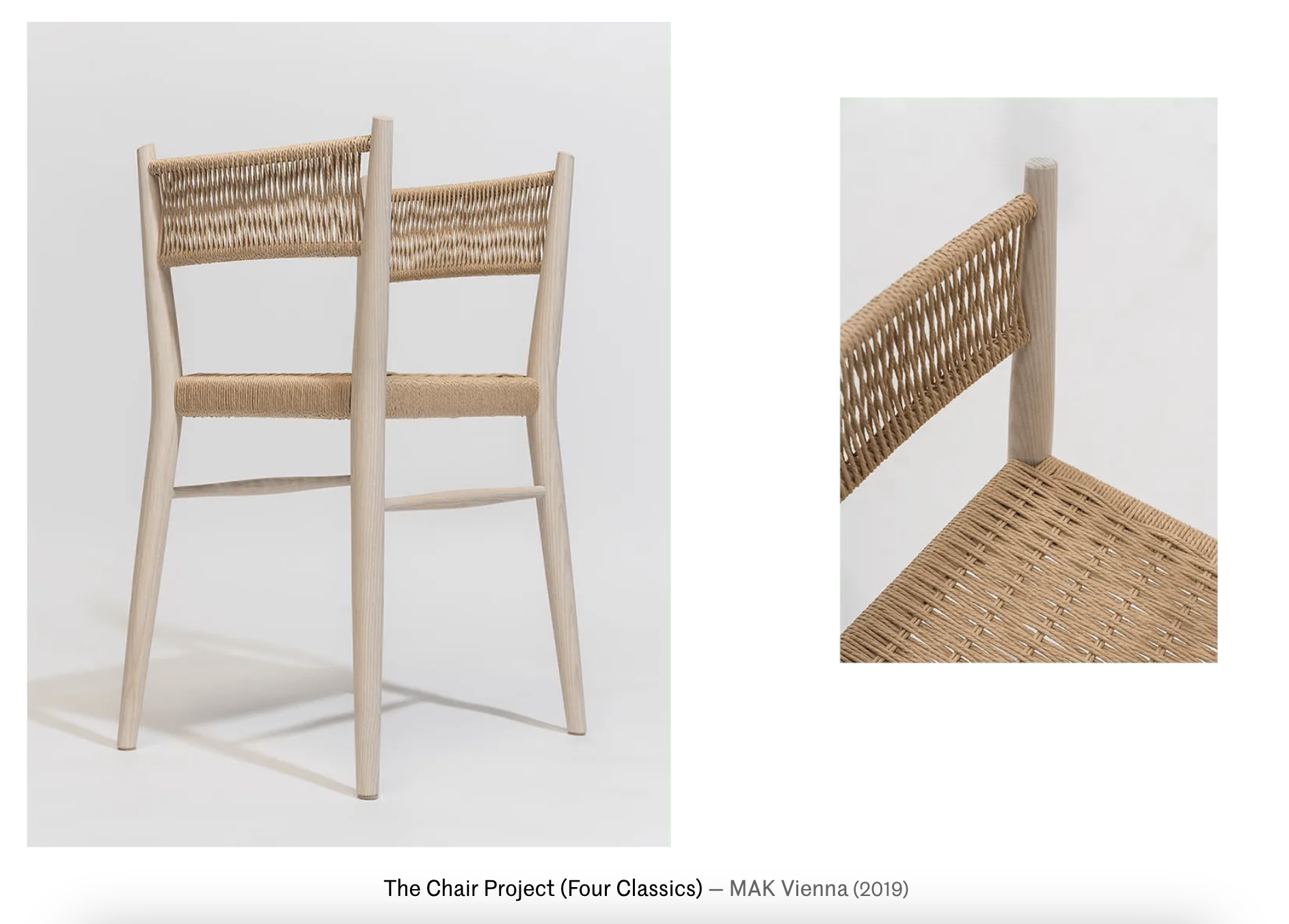
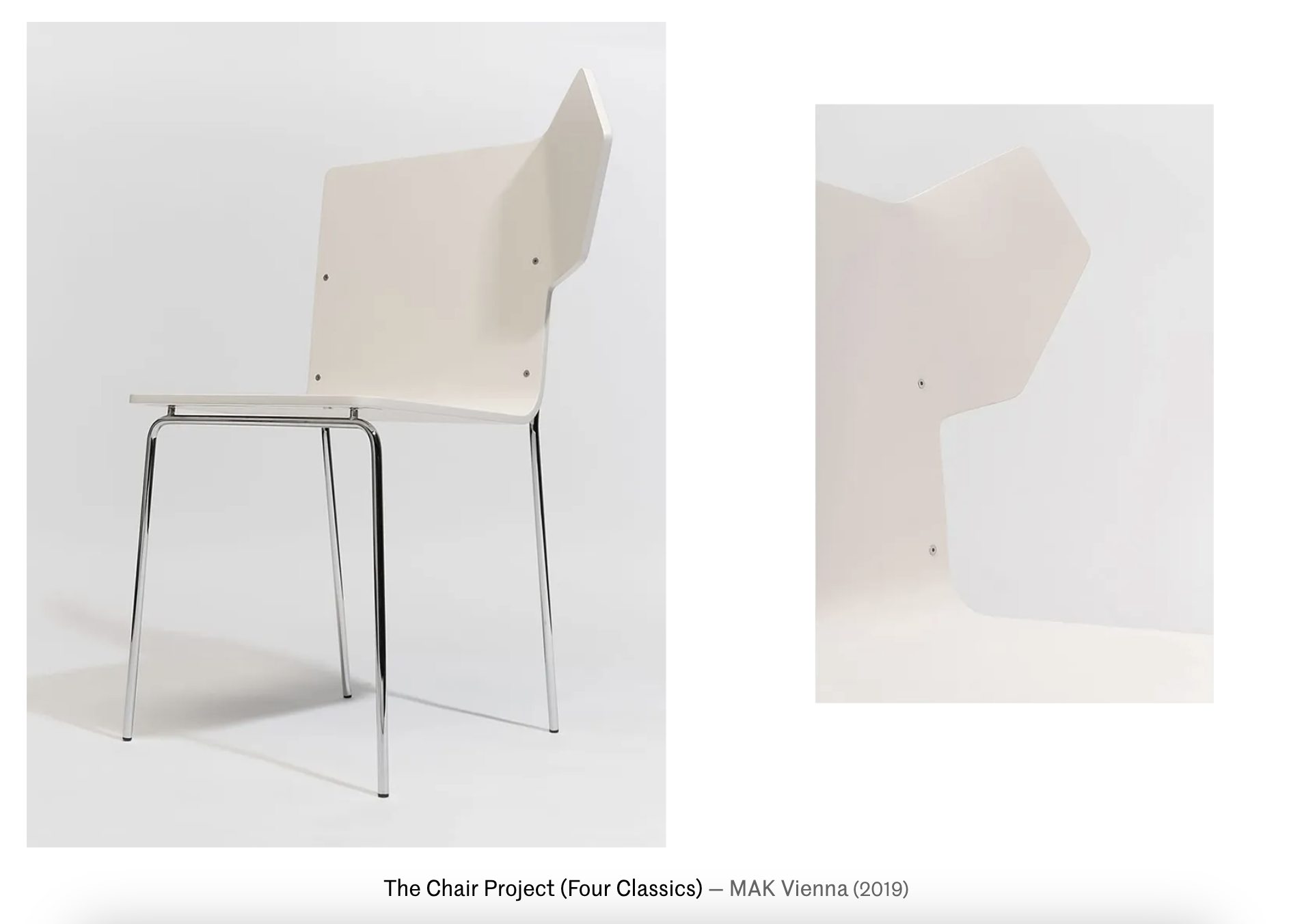
    The Chair Project ( Four Classics) :

    https://philippschmitt.com/

    From Philipp Schmitt’s work these two are the ones that spoke to me most, again for the same reasons I liked Tom White’s work, this working relationship with machine learning and AI and using it as a tool or as a collaborator in the creation of the art. And as well as their sense of humour I also like the choice of not ‘correcting’ the work and leaving the digital fingerprints on it, be that the flaws or the imperfections.

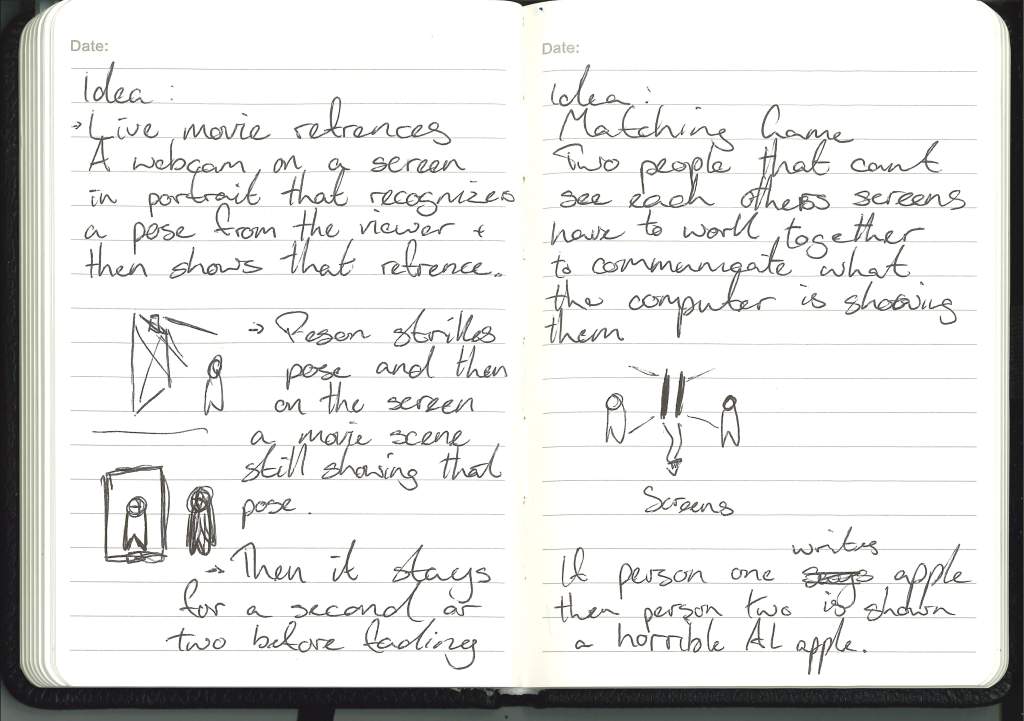
    Initial Ideas:

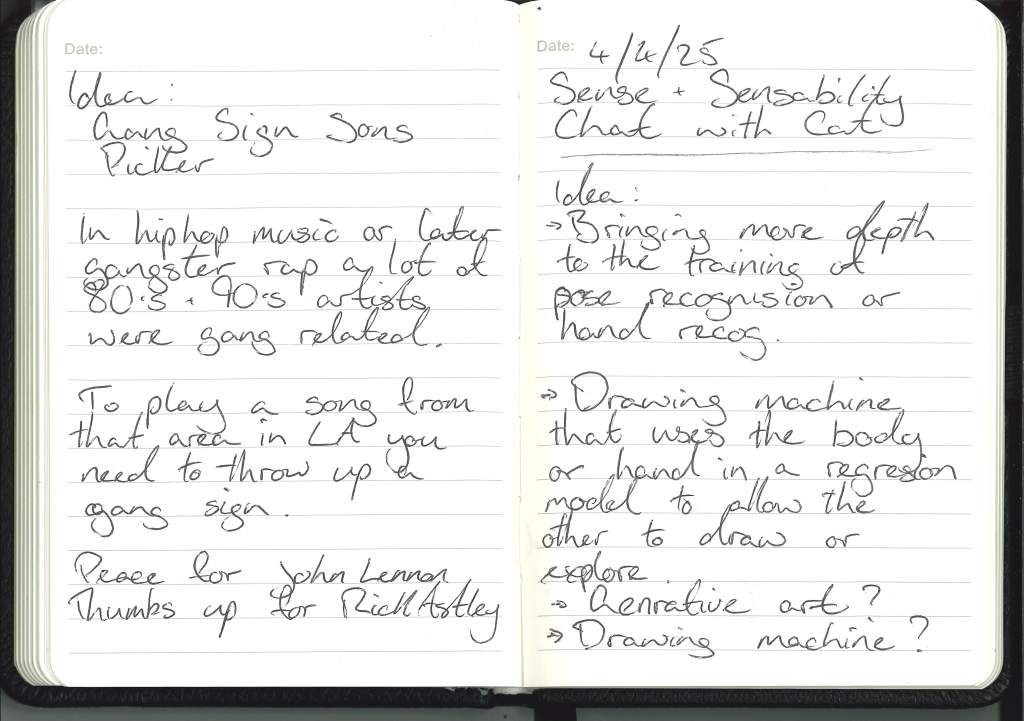
    Bringing Depth :

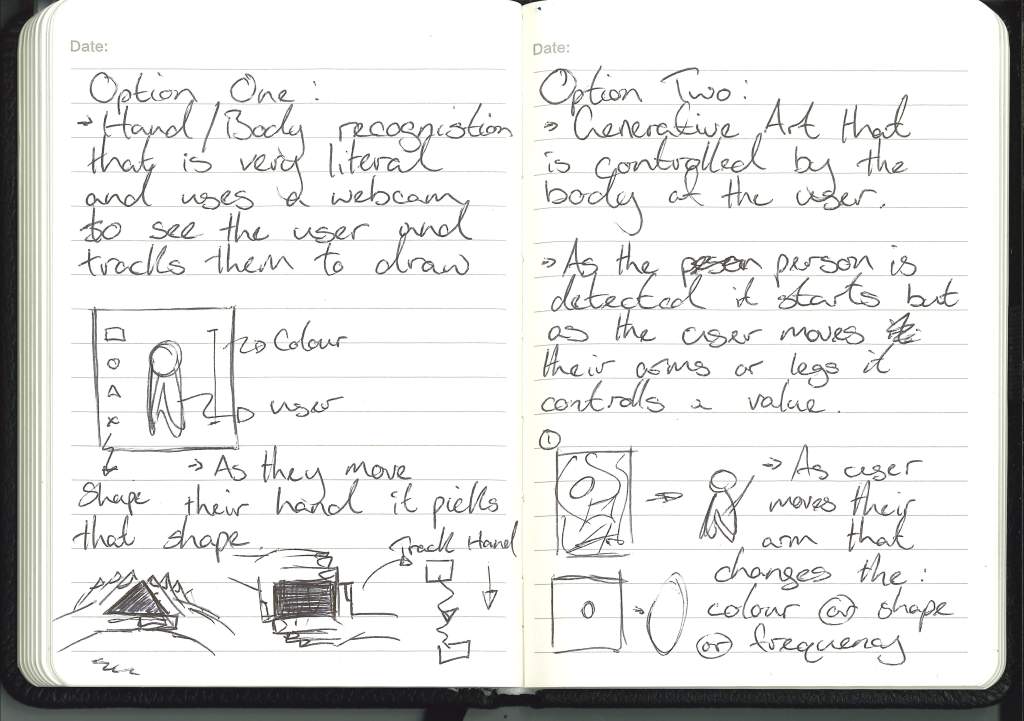
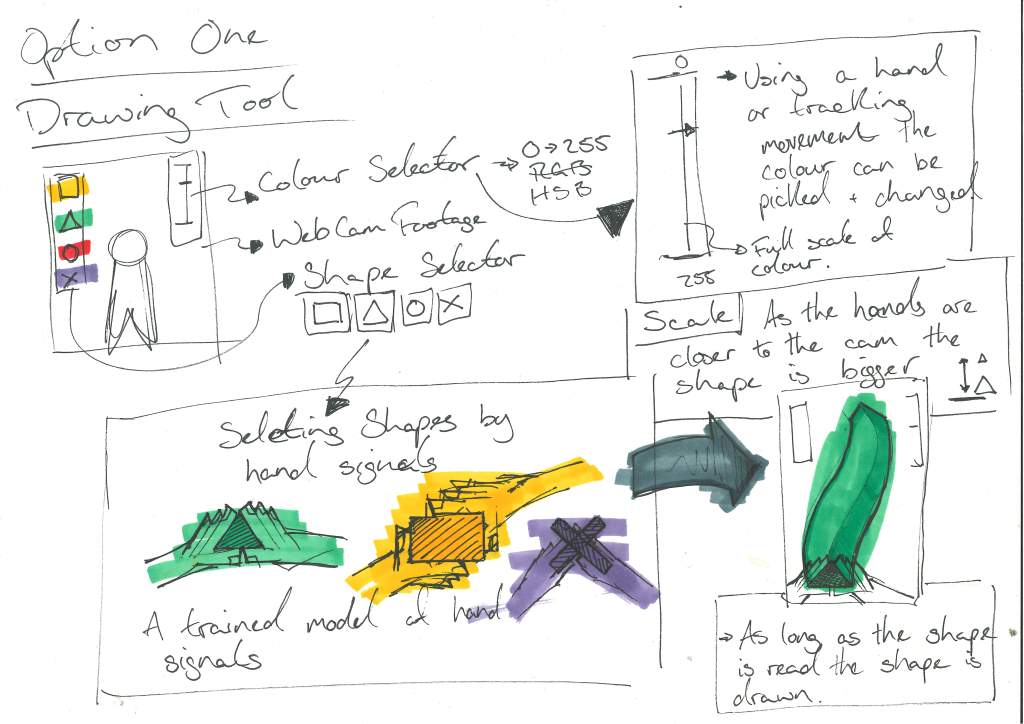
    Option One :

    Option one would be a drawing machine allowing the user to use their tracked hands to draw with shapes and colours of their choosing in a blank canvas.

    Option Two :

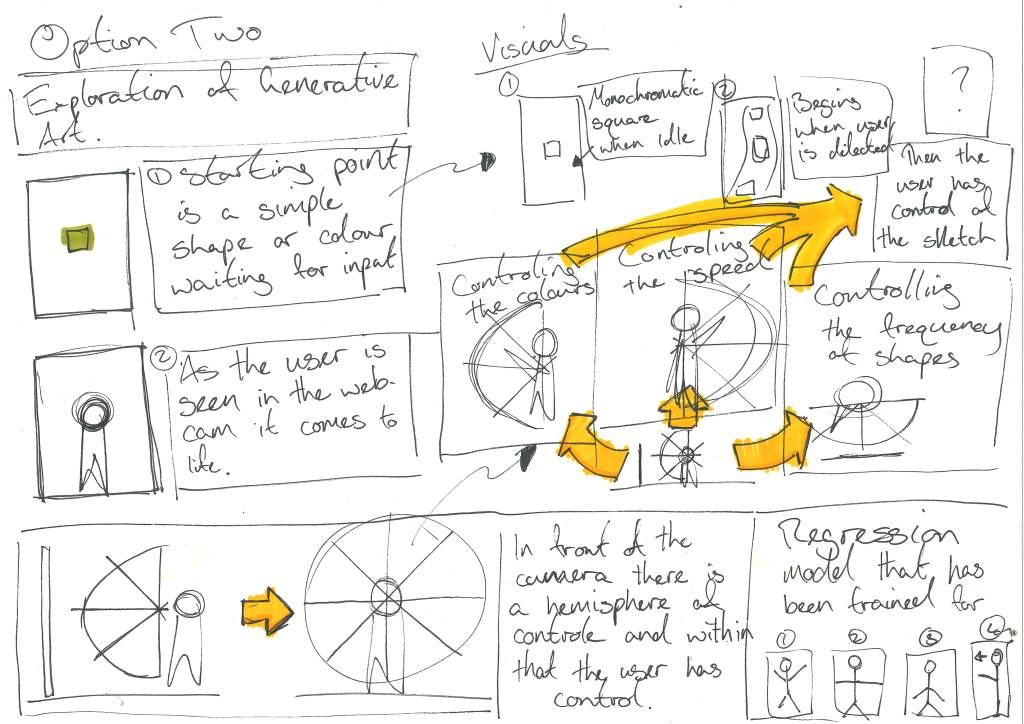
    Option Two would be a generative art piece that elements of it could be controlled by the user infront of the screen using their body and limbs.

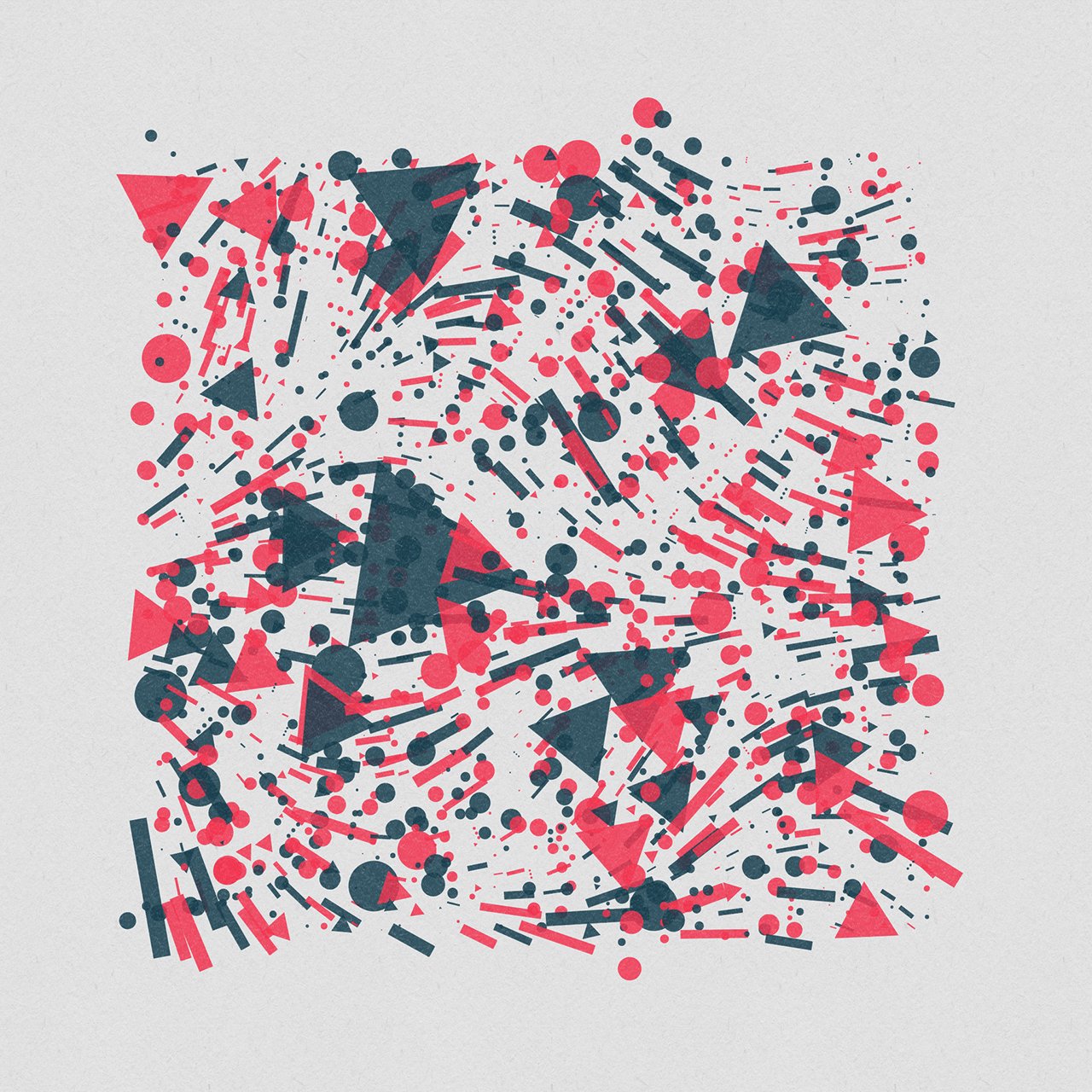
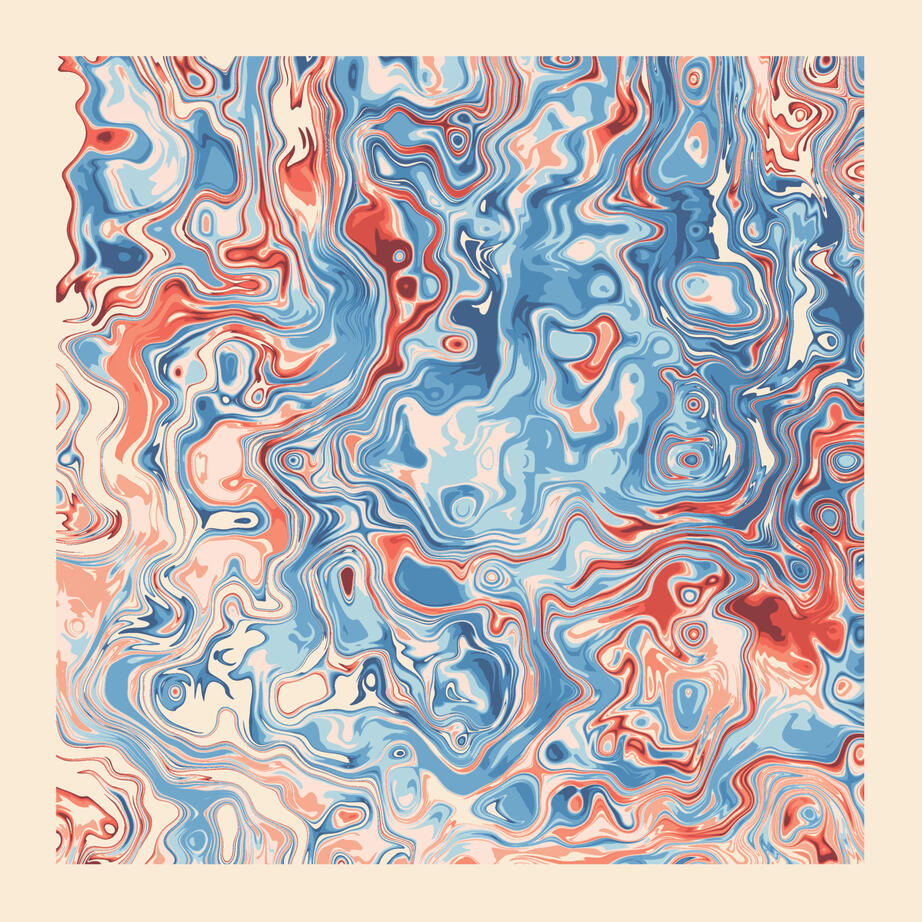
    Generative Art Inspiration :

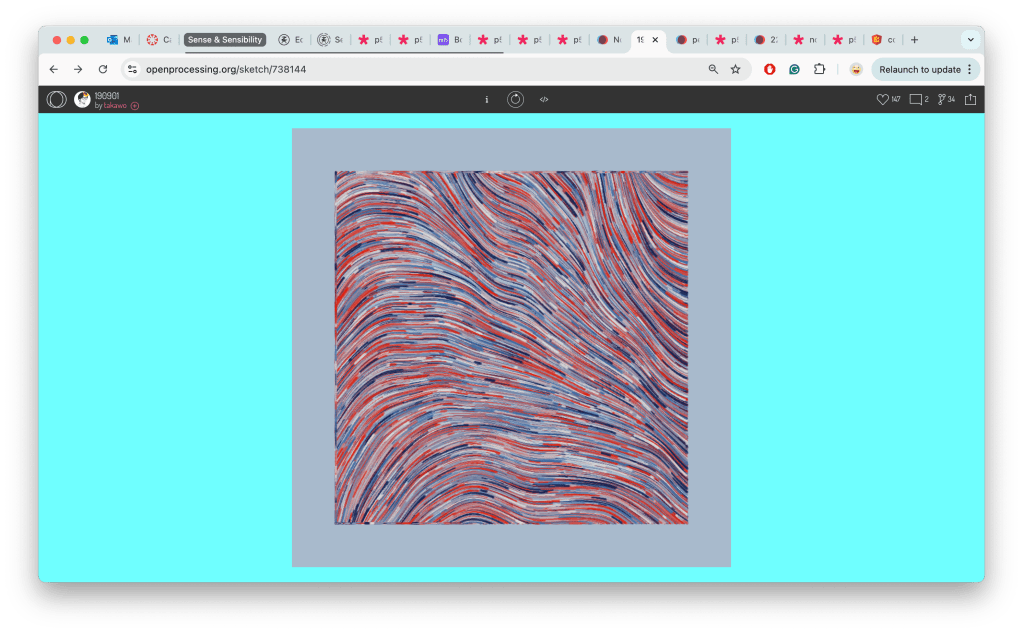
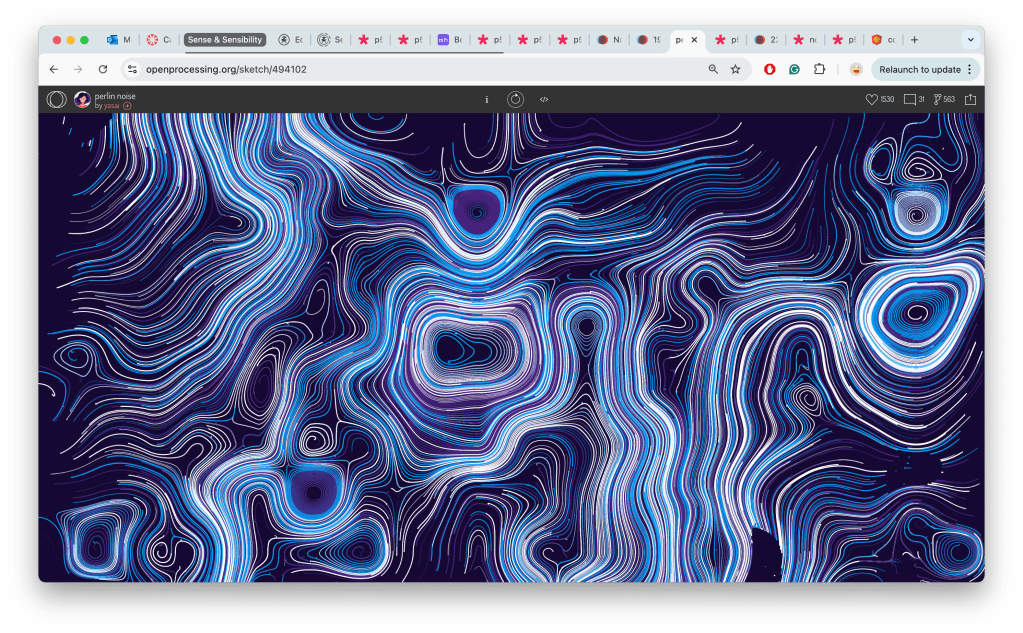
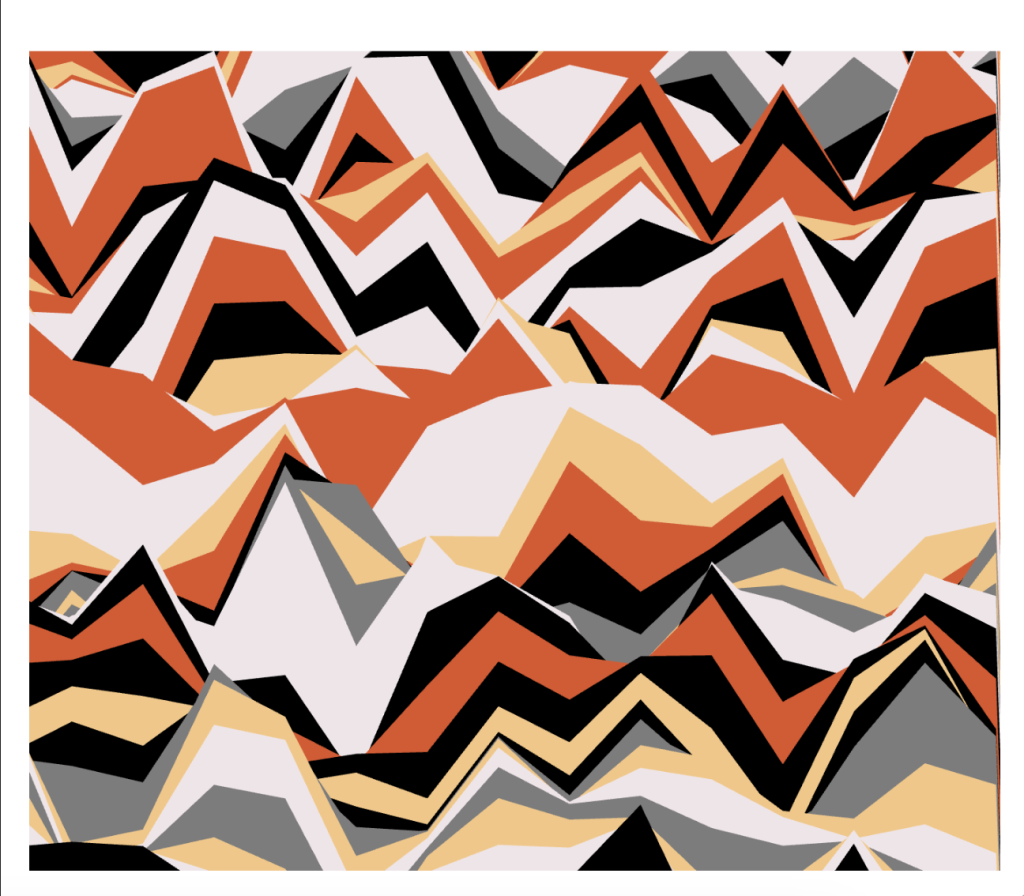
    With these examples I’d like to emulate this level of detail and use of a cohesive colour scheme.

    Like my control project I think allowing people to work within a selected colour scheme or a few colour schemes to keep an intersting and appealing aesthetic.

    Ideally I use a regression model for this so that there can me movement and control between the different positions of the users hands.

    I imagine a space for it to be used is like a hemisphere infront of the camera with trained points and then anywhere between those points would be guessed at.

    Moving Forward :

    I think I’ll go with option two for two reasons, firstly I feel that option one is very similiar to my control project from the previous year and dont want to tred the same ground or have others compairing the two.

    The other is that option two came to me more organically, I had a personal enthusiasm for it and I want to trust my gut more on this one and taking the note from Cat I belive that option two has more depth.

    What I need to do to make it a reality :

    • Train the skelton model to recognise the positions of the users hands.
    • Create the generative art model that has variables that can be tied to the values of the skeleton model.
    • Combine the model and the sketch.
    • Set up webcam and test again, retrain if required.

    BodyPose :

    https://docs.ml5js.org/#/reference/bodypose

    I think the best option for user interaction would be BodyPose detection, but thinking about it the hemisphere idea would be too inconsistent with the hands stright down the barrel of the camera and ml5 reading it.

    Tested above the snow angel idea shows the strongest areas within the space I had and with a screen in portrait and a webcam set up at the same distance it should have the same results.

    Training with BodyPose:

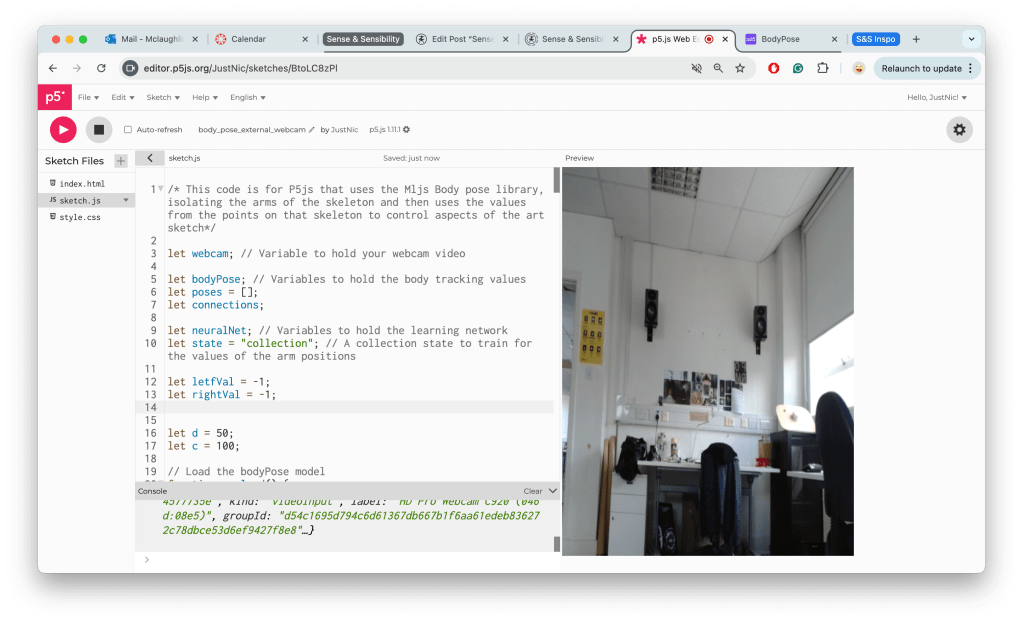
    With the ml5 BodyPose library and with the help from Cat we trained the regression/prediction model on my arm poses so that when people moved their hands in the view of the camera then it would control the predetermined values within the p5 sketch.

    Visuals Inspiration:

    https://openprocessing.org/sketch/492429

    https://openprocessing.org/sketch/1615214

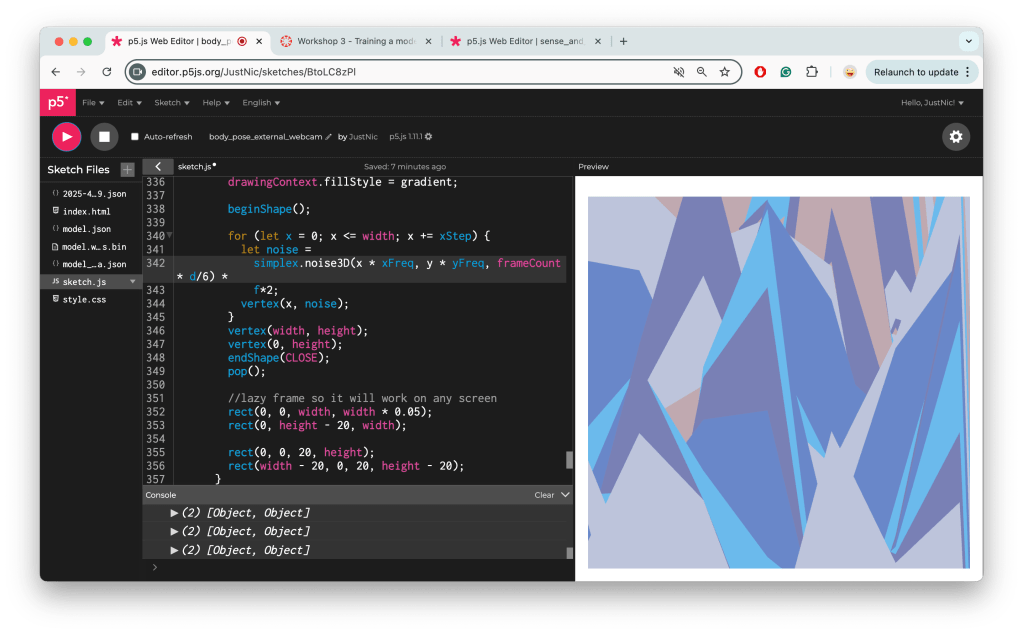
    For these open processing sketches I loved the painterly quality of them as well as their use of colour and movement, finding the line between traditional style and the digital.

    Tutorial:

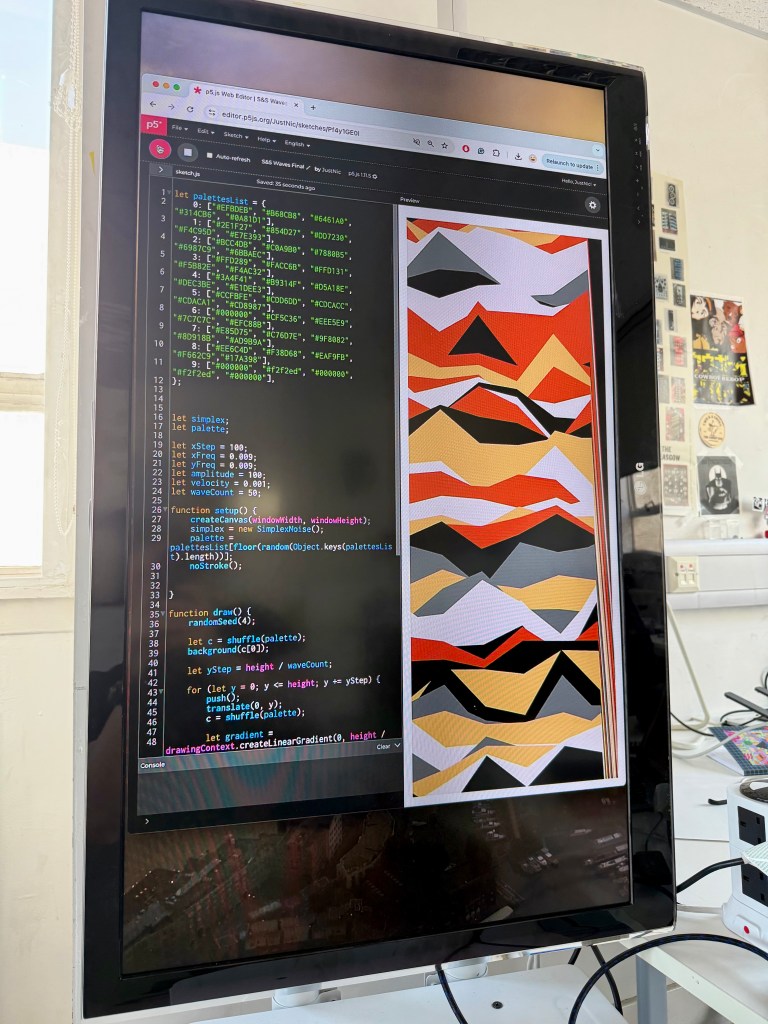
    With the visuals I had no clue, no idea but knew what I liked from open processing and when I found a tutorial inspired by the same thing I was I thought it could be a good starting point and by doing it step by step I’ll have a better understanding of what I’m doing and how I can change it how can I tinker.

    https://openprocessing.org/sketch/1776463/

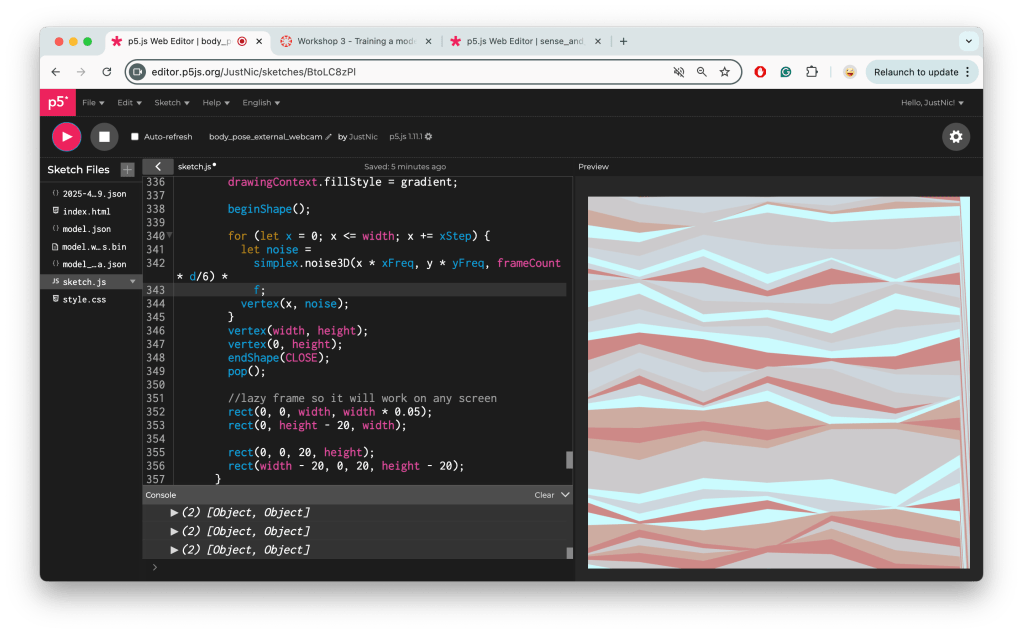
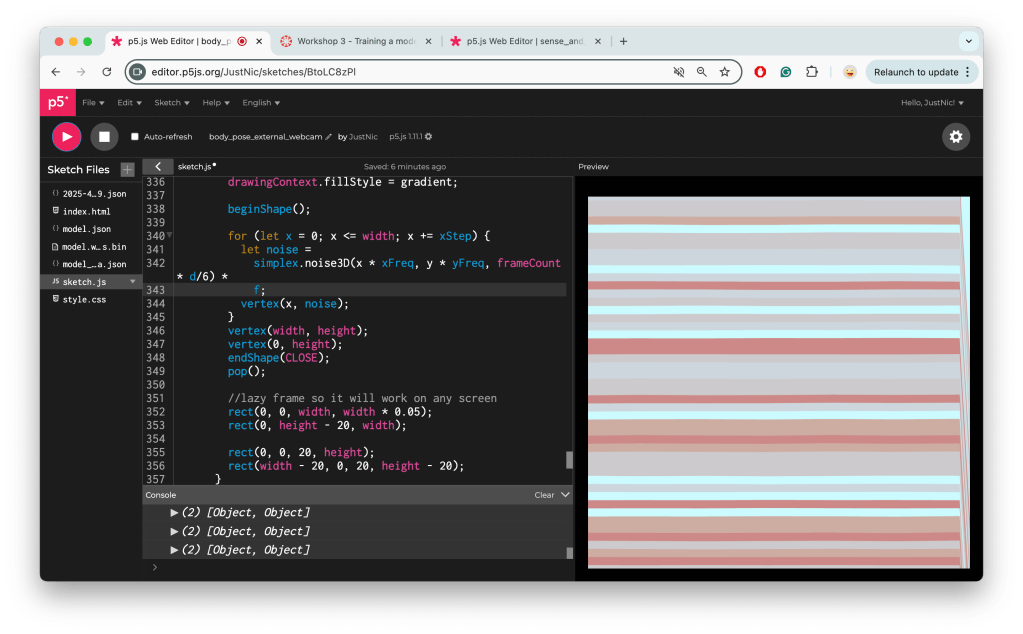
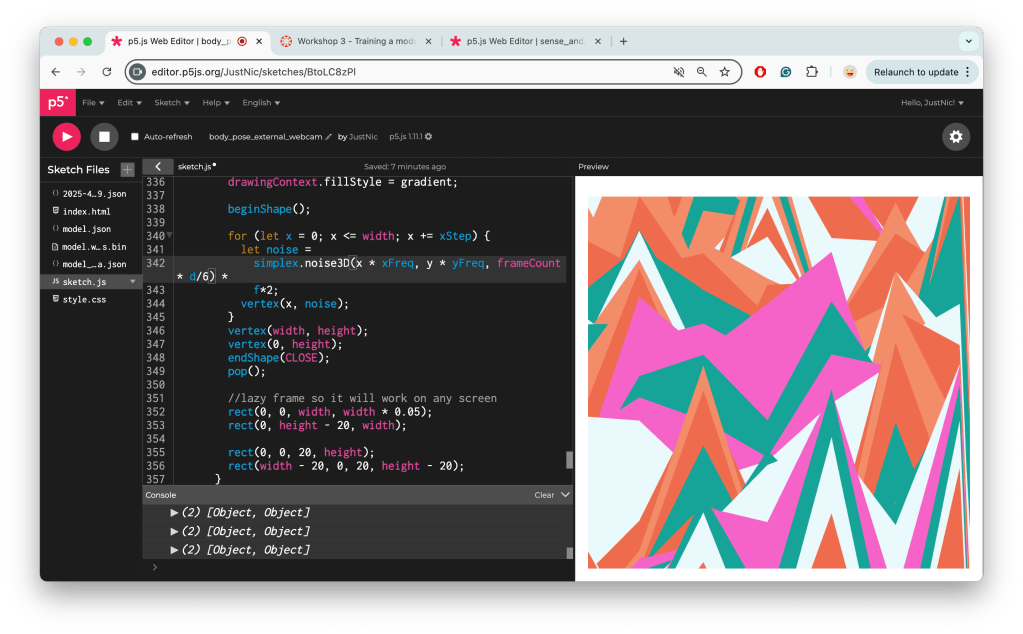
    Tinkering :

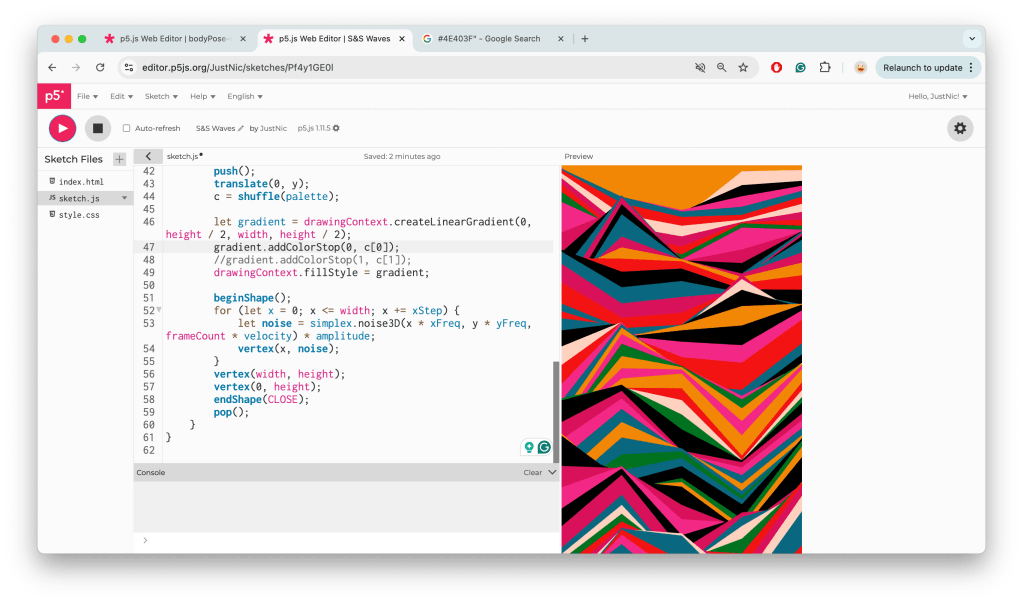
    Above is some screen shots of my tinkering and messing around with the tutorial code I followed along with. I need to remove my preciousness around working with code and continue tinkering in my own time.

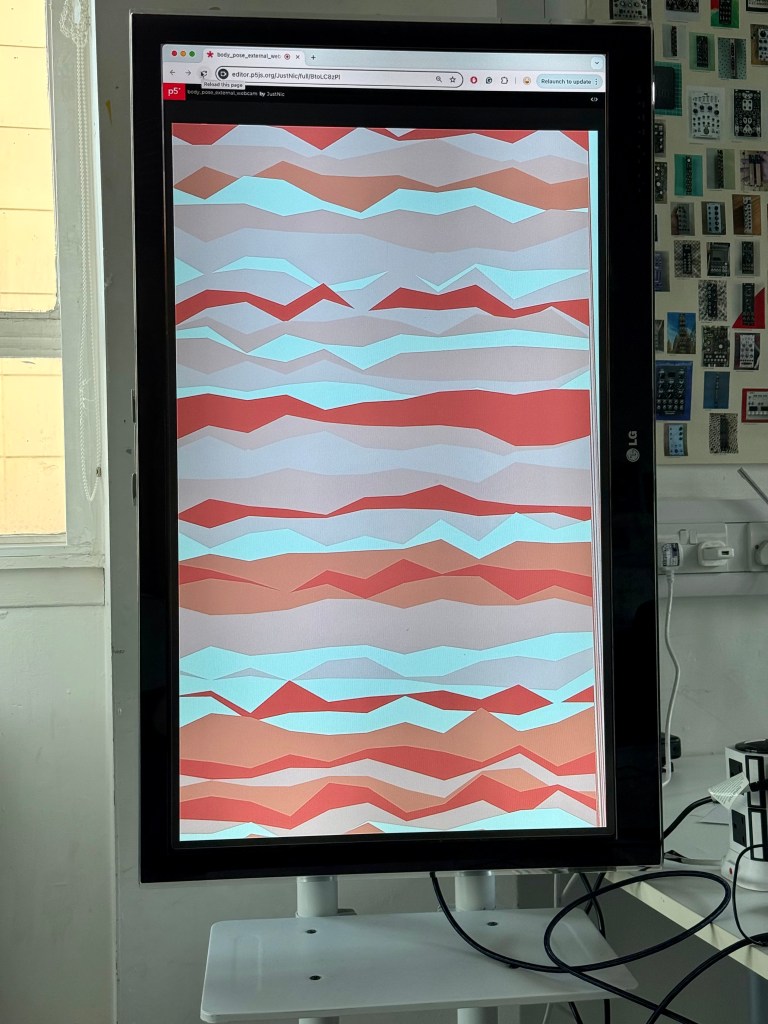
    Final Output:

    The code :

    // BodyPose Webcam Waves assembled by Nicholas McLaughlin.
    // BodyPose traing code by Dr Cat Weir.
    // Waves art code originally by Takawo on Openprocessing, original work 220717a by Takawo -- https://openprocessing.org/sketch/1615214 --.
    
    //Thank you to Cat none of this word be possible or work without you! 
    
    
    /* This code is for P5js that uses the Mljs Body pose library, isolating the arms of the users skeleton and then uses the values from the shoulders, elbows and wrists on each arm to control the amplitude and velocity of the modified Waves art sketch.*/


    let palettesList = {
      0: ["#EFBDEB", "#B68CB8", "#6461A0", "#314CB6", "#0A81D1"],
      1: ["#2E1F27", "#854D27", "#DD7230", "#F4C95D", "#E7E393"],
      2: ["#BCC4DB", "#C0A9B0", "#7880B5", "#6987C9", "#6BBAEC"],
      3: ["#FFD289", "#FACC6B", "#FFD131", "#F5B82E", "#F4AC32"],
      4: ["#3A4F41", "#B9314F", "#D5A18E", "#DEC3BE", "#E1DEE3"],
      5: ["#CCFBFE", "#CDD6DD", "#CDCACC", "#CDACA1", "#CD8987"],
      6: ["#000000", "#CF5C36", "#EEE5E9", "#7C7C7C", "#EFC88B"],
      7: ["#E85D75", "#C76D7E", "#9F8082", "#8D918B", "#AD9B9A"],
      8: ["#EE6C4D", "#F38D68", "#EAF9FB", "#F662C9", "#17A398"],
      9: ["#000000", "#f2f2ed", "#000000", "#f2f2ed", "#000000"],
    };
    
    //------------- Waves Variables
    
    let simplex;
    let palette;
    
    let xStep = 90;
    let xFreq = 0.009;
    let yFreq = 0.005;
    let amplitude = 100;
    let velocity = 0.001;
    let waveCount = 40;
    
    //------------- BodyPose Variables-----------------//
    
    let webcam; // Variable to hold your webcam video
    
    let bodyPose; // Variables to hold the body tracking values
    let poses = [];
    let connections;
    
    let neuralNet; // Variables to hold the learning network
    let state = "collection"; // A collection state to train for the values of the arm positions
    
    let leftVal = -1;
    let rightVal = -1;
    
    let d = 10;
    let f = 10;
    
    //---------------- Load the bodyPose model----------//
    function preload() {
      let options = {
        flipped: true,
      };
    
      bodyPose = ml5.bodyPose(options);
    }
    
    // Set up the canvas and the
    function setup() {
      frameRate(10);
      createCanvas(windowWidth, windowHeight);
      simplex = new SimplexNoise();
      palette = palettesList[floor(random(Object.keys(palettesList).length))];
      noStroke();
    
      // background(255);
      ml5.setBackend("webgl");
    
      //listing all your computer's available media devices
      navigator.mediaDevices.enumerateDevices().then(gotDevices);
    
      // Create a constraints object and specify your webcam's deviceId, groupId, kind, and label (this will be printed to the console by the gotDevices function)
    
      webcamInfo = {
        video: {
          deviceId:
            "81986da6f580bdf305cb87f6a276115e084e99c333d938fd64c9bcac4577735e",
          groupId:
            "2defdc8c883929d6a70b71a9c5df6f5cd2e60555fb9e09aad9cdea3e6803a437",
          kind: "videoinput",
          label: "HD Pro Webcam C920 (046d:08e5)",
        },
      };
    
      // Setup your webcam using createCapture; using the constraints set above
      webcam = createCapture(VIDEO, webcamInfo);
      webcam.size(480, 480);
      webcam.hide();
    
      bodyPose.detectStart(webcam, gotPoses);
      connections = bodyPose.getSkeleton();
    
      let nnOptions = {
        task: "regression", // a regression model so that when the arm is between postions the model will take estimates.
        //learningRate: 0.01,
        //debug: true,
      };
    
      neuralNet = ml5.neuralNetwork(nnOptions);
      //neuralNet.loadData("2025-4-24_17-52-59.json", dataLoaded);
    
      const modelInfo = {
        // Set the info associated with the model
        model: "model.json",
        metadata: "model_meta.json",
        weights: "model.weights.bin",
      };
    
      neuralNet.load(modelInfo, modelReady); // Load in the custom model
    }
    
    //changing the model from the regression state to the prediction when its ready.
    function modelReady() {
      console.log("Model Ready!");
      state = "prediction";
    }
    
    //load in the data instead of retraining each time.
    function dataLoaded() {
      console.log("Data Loaded!");
    }
    
    // Print a list of all avaiable videoinput devices to the console
    function gotDevices(deviceInfo) {
      for (let i = 0; i < deviceInfo.length; i++) {
        let currentDevice = deviceInfo[i]; // Get the current device info as a JavaScript object
    
        if (currentDevice.kind == "videoinput") {
          // Check if the current device type is "videoinput", i.e. a webcam
    
          console.log(currentDevice); // If so, print its info to the console
        }
      }
    }
    
    //key functions to then train the body pose model on how each arm position applies to each value.
    function keyPressed() {
      switch (key) {
        case "w":
          leftVal = 10;
          rightVal = 10;
          console.log(key);
          break;
    
        case "q":
          leftVal = 10;
          rightVal = 10;
          console.log(key);
          break;
    
        case "1":
          leftVal = 100;
          rightVal = 10;
          console.log(key);
          break;
    
        case "2":
          leftVal = 200;
          rightVal = 10;
          console.log(key);
          break;
    
        case "3":
          leftVal = 300;
          rightVal = 10;
          console.log(key);
          break;
    
        case "4":
          leftVal = 400;
          rightVal = 10;
          console.log(key);
          break;
    
        case "5":
          leftVal = 500;
          rightVal = 10;
          console.log(key);
          break;
    
        case "6":
          leftVal = 10;
          rightVal = 100;
          console.log(key);
          break;
    
        case "7":
          leftVal = 10;
          rightVal = 200;
          console.log(key);
          break;
    
        case "8":
          leftVal = 10;
          rightVal = 300;
          console.log(key);
          break;
    
        case "9":
          leftVal = 10;
          rightVal = 400;
          console.log(key);
          break;
    
        case "0":
          leftVal = 10;
          rightVal = 500;
          console.log(key);
          break;
    
        case "t":
          state = "training";
          neuralNet.normalizeData();
          let trainingOptions = {
            epochs: 50,
          };
          neuralNet.train(trainingOptions, whileTraining, finishedTraining);
          break;
    
        case "d":
          neuralNet.saveData();
          break;
    
        case "s":
          neuralNet.save();
          break;
      }
    }
    
    // a training state for the regression model.
    function whileTraining(epoch, loss) {
      console.log(epoch);
    }
    
    // a state for when the training is finished and change from a regression model to a prediction model based on the information it has been trained on.
    function finishedTraining() {
      console.log("Finished Training");
      state = "prediction";
    }
    
    
    function gotResults(nnResults, err) {
      if (err) {
        console.error(err);
        return;
      }
    
      d = nnResults[0].value;
      f = nnResults[1].value;
      console.log(nnResults);
    }
    
    function gotPoses(results) {
      // Save the output to the poses variable
      poses = results;
      //console.log(results);
    }
    
    //Initially drawing the bodyPose points but now just used to draw the waves visuals when a body is detected.
    function draw() {
      //background(255);
    
      /*
      push(); // Draw the flipped webcam image to the canvas
      translate(width, 0);
      scale(-1, 1);
      image(webcam, 0, 0);
      pop();
      */
    
      noStroke();
      
      //taking the required arm keypoints from BodyPose to train initially but now used to track the users arm keypoints for the prediction model
    
      if (poses.length > 0) {
        let inputs = [];
    
        for (let i = 0; i < poses.length; i++) {
          let pose = poses[i];
    
          let leftShoulderX = pose.keypoints[5].x;
          let leftShoulderY = pose.keypoints[5].y;
          inputs.push(leftShoulderX);
          inputs.push(leftShoulderY);
          //circle(leftShoulderX, leftShoulderY, 10);
    
          let leftElbowX = pose.keypoints[7].x;
          let leftElbowY = pose.keypoints[7].y;
          inputs.push(leftElbowX);
          inputs.push(leftElbowY);
          //circle(leftElbowX, leftElbowY, 10);
    
          let leftWristX = pose.keypoints[9].x;
          let leftWristY = pose.keypoints[9].y;
          inputs.push(leftWristX);
          inputs.push(leftWristY);
          //circle(leftWristX, leftWristY, 10);
    
          let rightShoulderX = pose.keypoints[6].x;
          let rightShoulderY = pose.keypoints[6].y;
          inputs.push(rightShoulderX);
          inputs.push(rightShoulderY);
          //circle(rightShoulderX, rightShoulderY, 10);
    
          let rightElbowX = pose.keypoints[8].x;
          let rightElbowY = pose.keypoints[8].y;
          inputs.push(rightElbowX);
          inputs.push(rightElbowY);
          //circle(rightElbowX, rightElbowY, 10);
    
          let rightWristX = pose.keypoints[10].x;
          let rightWristY = pose.keypoints[10].y;
          inputs.push(rightWristX);
          inputs.push(rightWristY);
          //circle(rightWristX, rightWristY, 10);
        }
    
        if (state == "collection") {
          if (mouseIsPressed) {
            let outputs = [rightVal, leftVal];
            neuralNet.addData(inputs, outputs);
            console.log(inputs);
            console.log(outputs);
          }
        } else if (state == "prediction") {
          neuralNet.predict(inputs, gotResults);
          fill(f);
          //circle(width / 2, height / 2, d);
          text("D: " + d + ", F:" + f, width / 2, height);
          console.log(d, f);
    
          randomSeed();
    
          let c = shuffle(palette);
          background(c[0]);
    
          let yStep = height / waveCount;
    
          for (let y = 0; y <= height; y += yStep) {
            push();
            translate(0, y);
            c = shuffle(palette);
    
            let gradient = drawingContext.createLinearGradient(0, height / 2, width, height / 2
            );
            gradient.addColorStop(0, c[0]);
            drawingContext.fillStyle = gradient;
    
            beginShape();
    
            for (let x = 0; x <= width; x += xStep) {
              let noise = simplex.noise3D(x * xFreq, y * yFreq, frameCount * d/2) * f/2;
              vertex(x, noise / 2);
            }
            vertex(width, height);
            vertex(0, height);
            endShape(CLOSE);
            pop();
    
            //a frame around the waves, the fill of it is still tied to d value so that I can see if its picking up a body from the webcam.
            rect(0, 0, width, width * 0.05);
            rect(0, height - 20, width);
    
            rect(0, 0, 20, height);
            rect(width - 20, 0, 20, height - 20);
          }
        }
      }
    }


    Reflection :

    Throughout this project I have been unsure, unsure of my ideas of what I want to make, unsure of my abilities with code and all that outlook is something that I think has been creeping up on me throughout second and third year along with the idea that I’m not the ‘coding type’ but through the exposure to it within every project and more specifically this one I’ve came to the realisation that maybe my colleagues have picked it up quicker but to not let that deter me from continuing with my own learning and tinkering.

    Within this project I might have not made my best work but have gained a better understanding of my self and my abilities within code and p5js and even through I might not use it for OpenShare or for the majority of my work in fourth year but throughout my life my goal is to practice it how others practice languages.

    If I had more time with this project I’d have explored this rediscovery of code and the functionality of P5js and maybe got the output to a level that the visuals were more appealing and the interactions more focused to the situations discussed at the review, making it an ambient piece that comes to live with people walking past it and gently inviting them to play.

  • Design Domain Part Two

    Return to Form

    Chat with Paul:

    What I’m Thinking :

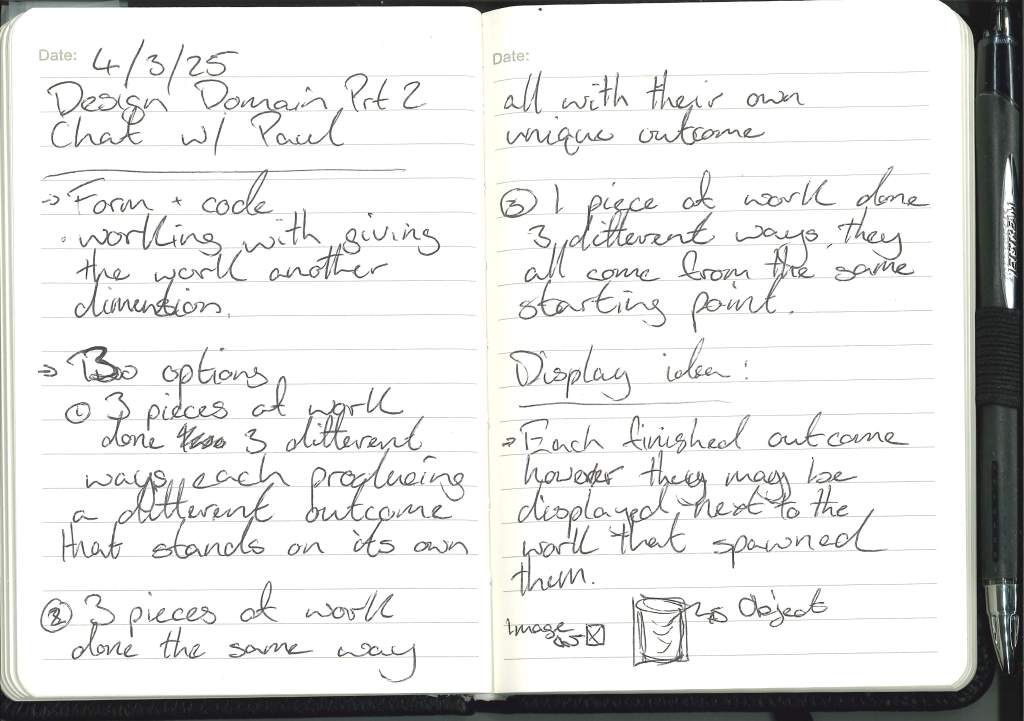
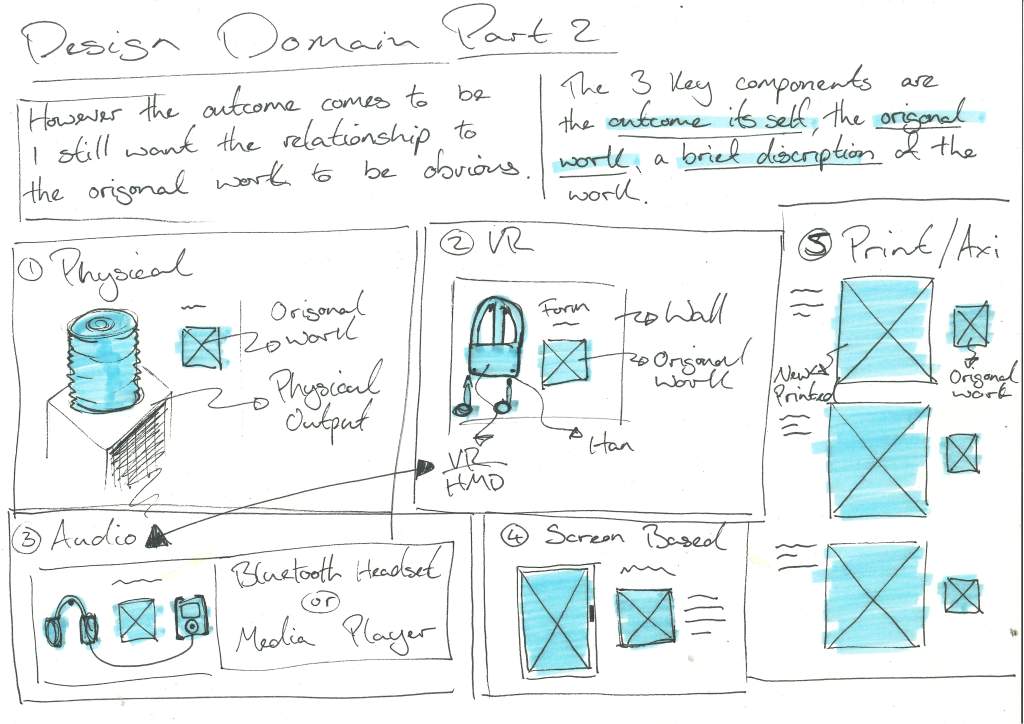
    I like the idea of having the 3 sculptures from part one and giving them 3 different outputs that lend themselves to each sculpture, whether VR, 3D printed, Axi Draw, screen-based, or even an audio output.

    Each piece has its own strengths and weaknesses and considerations:

    Form One :

    For this form I’m unsure, as its my favourite but I dont think it has an obvious output to pair itself with.

    Form Two :

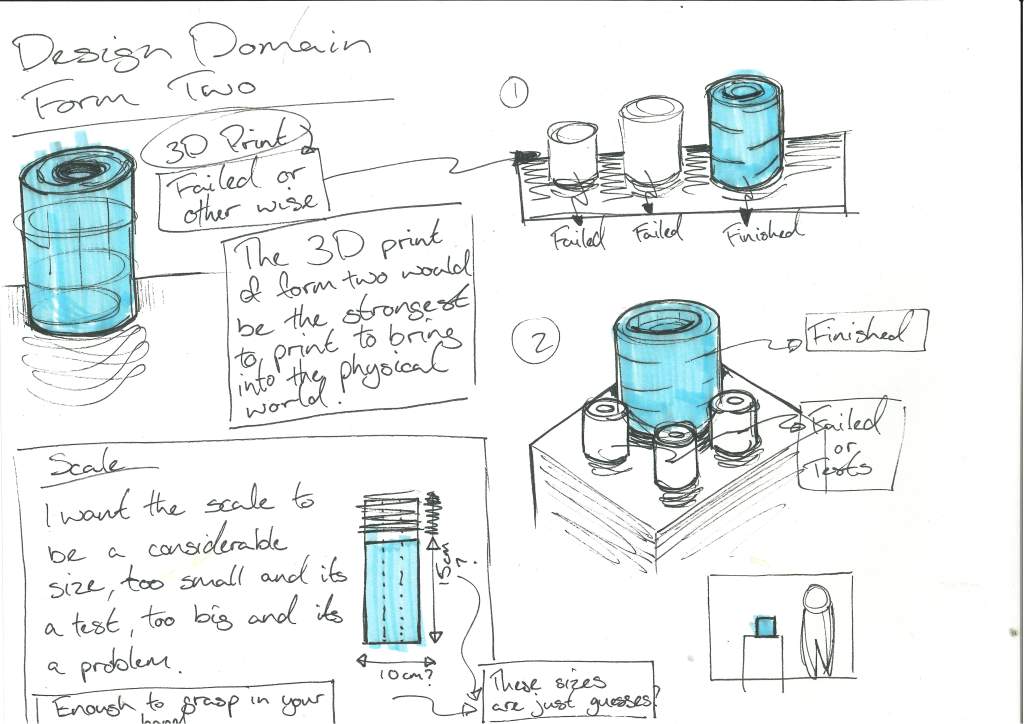
    For this form I think the output of 3D printing would be the best fit as it would have the most sound structure.

    Form Three :

    As this form has the most small stringy parts to it, a digital output such as screen based or VR/AR would be the best fit.

    Display Ideas :

    As discussed with Paul, the three different forms can be a collection without a relationship to each other, and the only relationship I want them to have is to the original work but still seem to be part of the same family.

    “Design is about the outcome; art is about the process.”

    Ok, let’s work with what’s happening first in my head.

    Form Three:

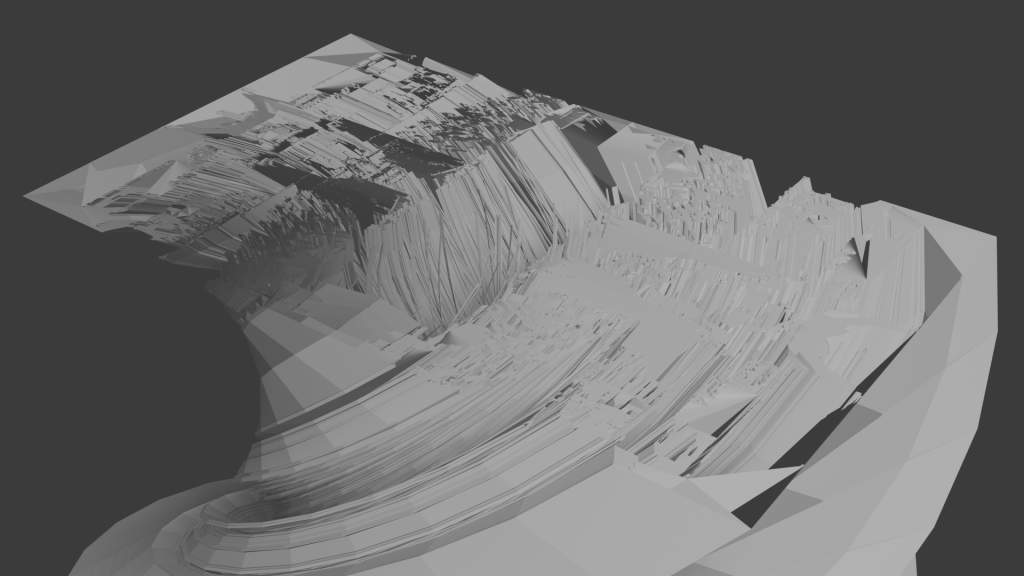
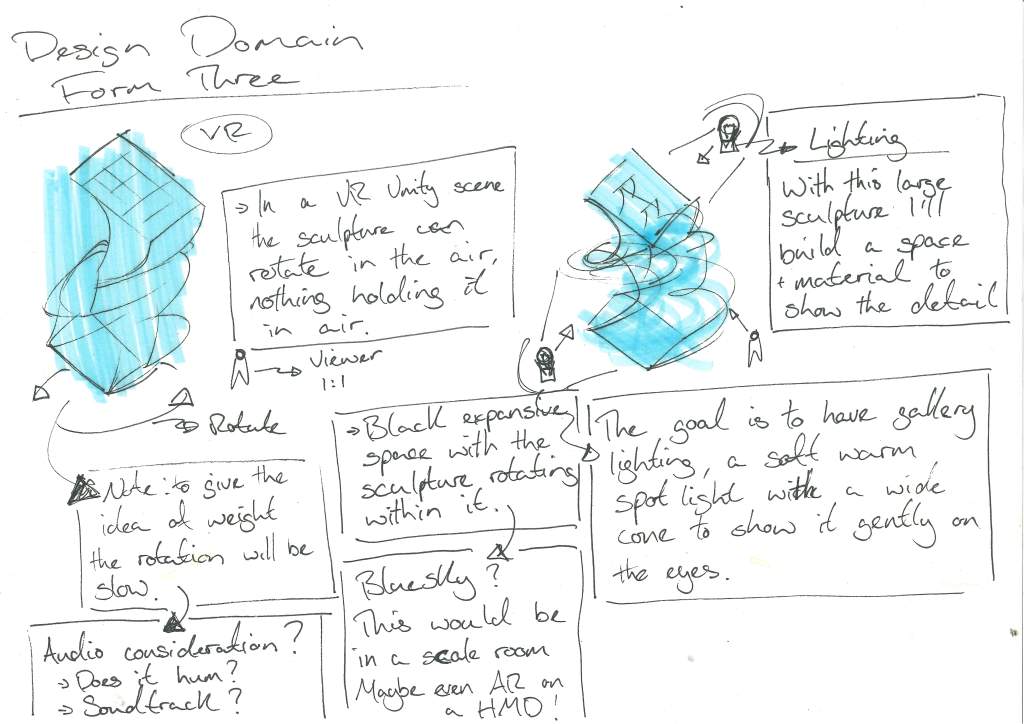
    With form three, my first and strongest instinct was to have it in VR and allow the sculpture to be shown without a restraint to scale or gravity.

    Form Two:

    Chat with Gillian:

    Again, I am going to Gillian for ideas when I hit a wall. So, after explaining that I had plans for two of the three sculptures; VR, 3D printed and nothing else so suggested that the logical next step would be to have high quality prints of the third from made, which seems obvious when pointed out, thats when you know its a good idea.

    Problems Resolving itself :

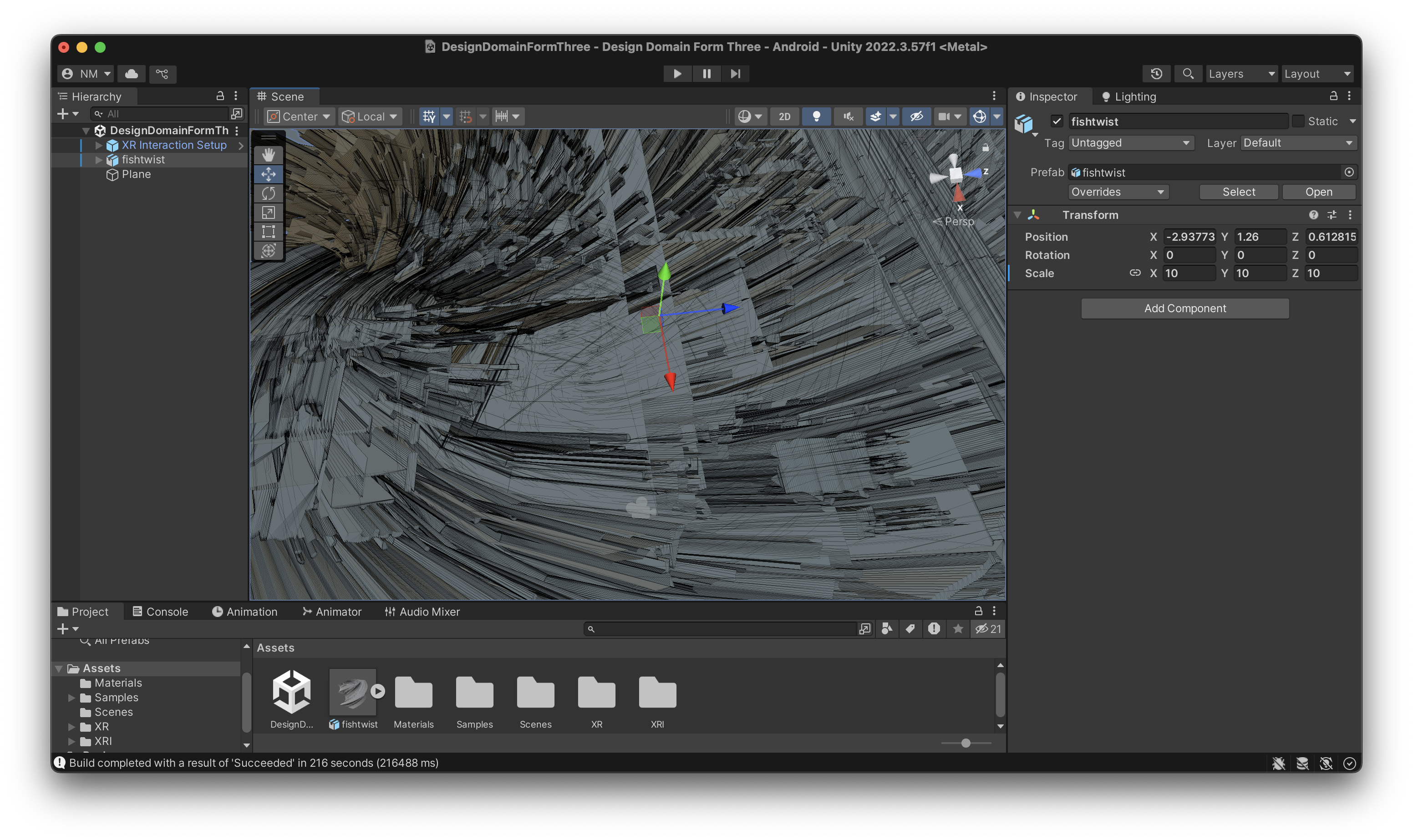
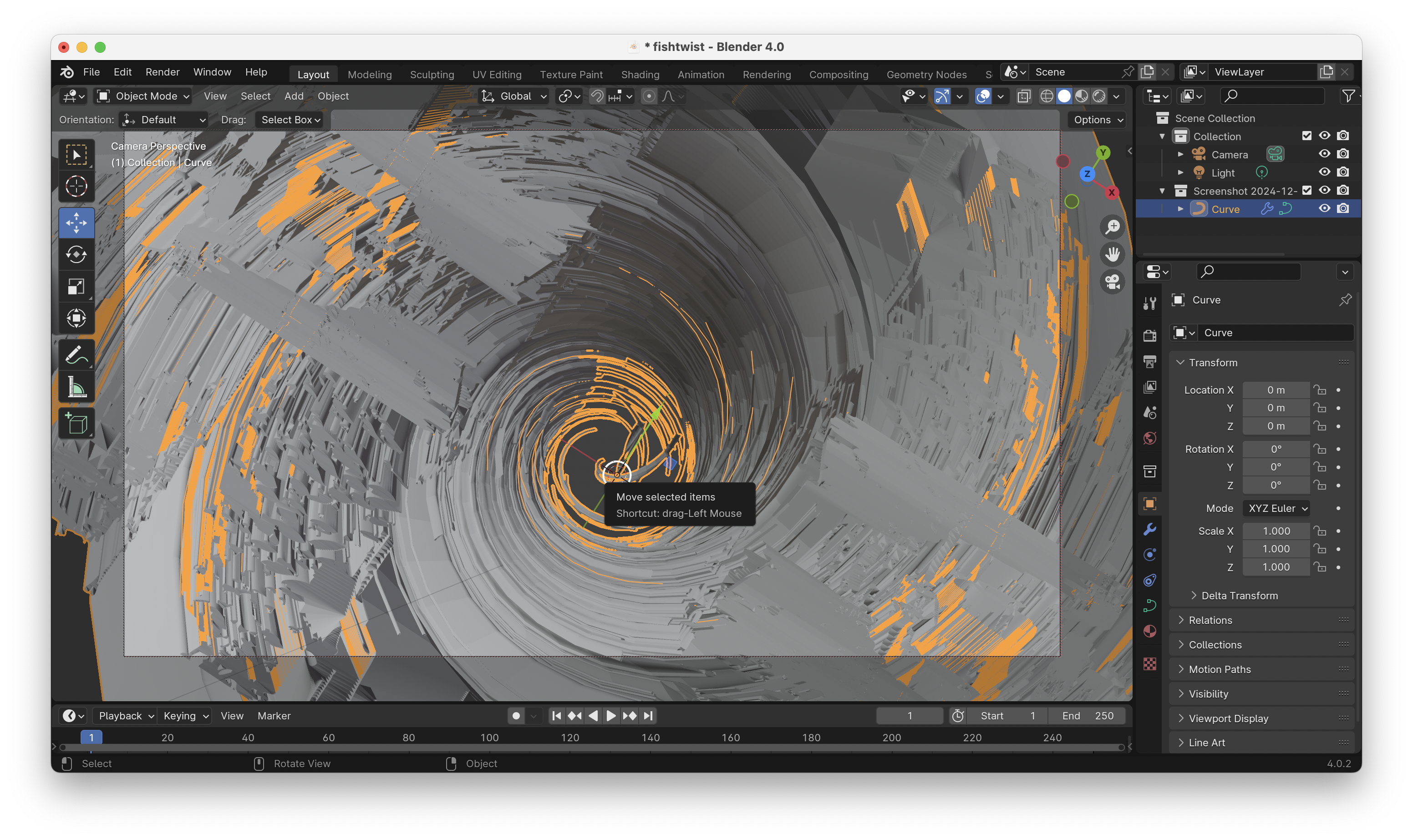
    So I planned to bring form three from blender and put it into a unity VR scene. But as soon as I put Form Three into Unity it started to struggle and even as I tried to brute force it into a VR scene the HMD would not run. But after replacing it with Form One , the sculpture that I had no idea what to do, the scene ran almost perfectly.

    After Lucia had tested it, she had a great suggestion of two at different sizes, and after I implemented that, the lighting on each sculpture with some ambient music in the background the scene was were I wanted it to be.

    Trying to print a second Form :

    So with the models I’ve made, they are not viable for 3D printing and frankly I’m surprised that my computer only crashed at one point and didn’t burst into flames.

    Ok so my Slicer does work, its just my models that are the problem.

    After downloading a tape cutter thing from Printables to make sure it was not a problem with my software and that sliced in seconds.

    At this moment:

    At this moment of reading week I have been using the time to explore and problem solve the technological problems that are facing me with my design domain outputs.

    For Form One I have it ready to go on the VR headset.

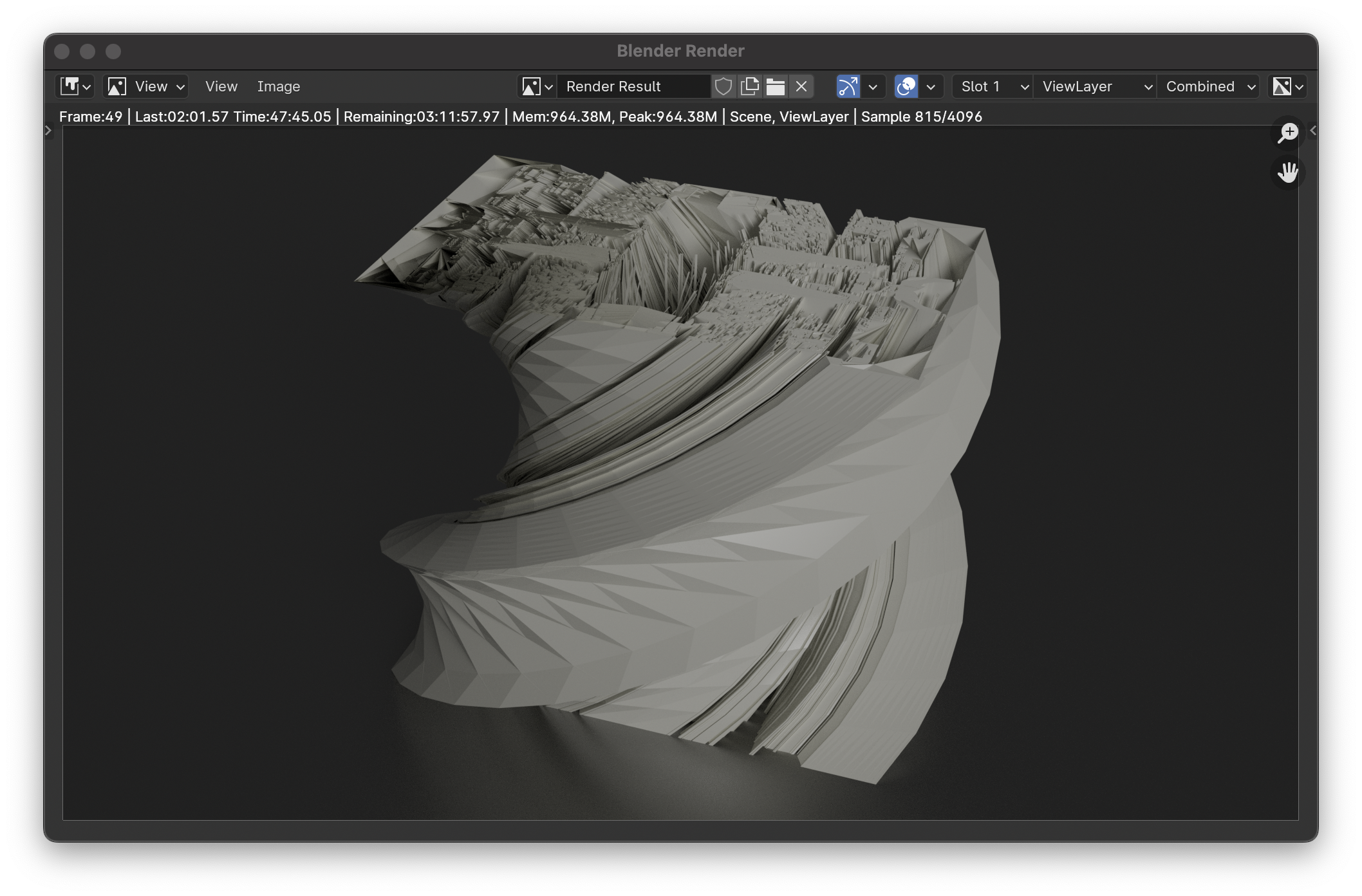
    For Form Three I am currently rendering out high quality images of it to then get them sent to the printers at either the Reid or the Stow.

    And Form Two in its current state is not viable for 3D printing so I can either continue to try and get it to work, I can try and model it again with more of a focus on it to be 3D printed and less madness or I can try and think of a different output that Form Two would let its self too.

    Rendering out Form Three :

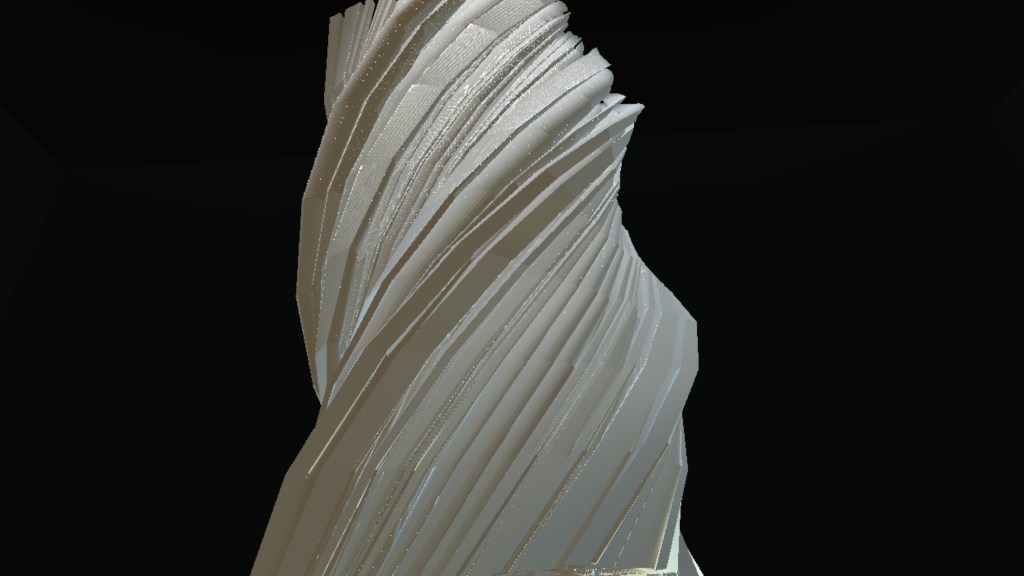
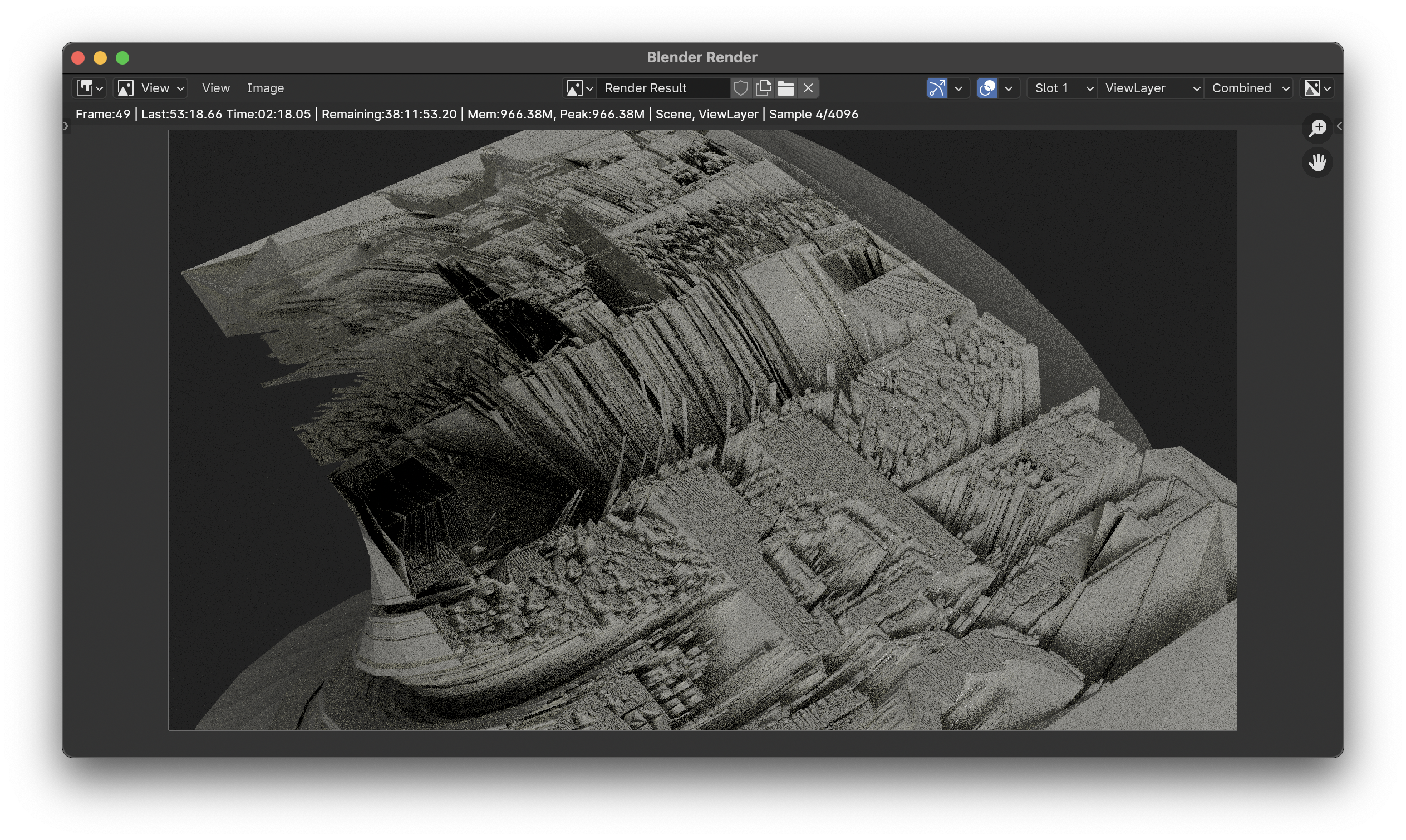
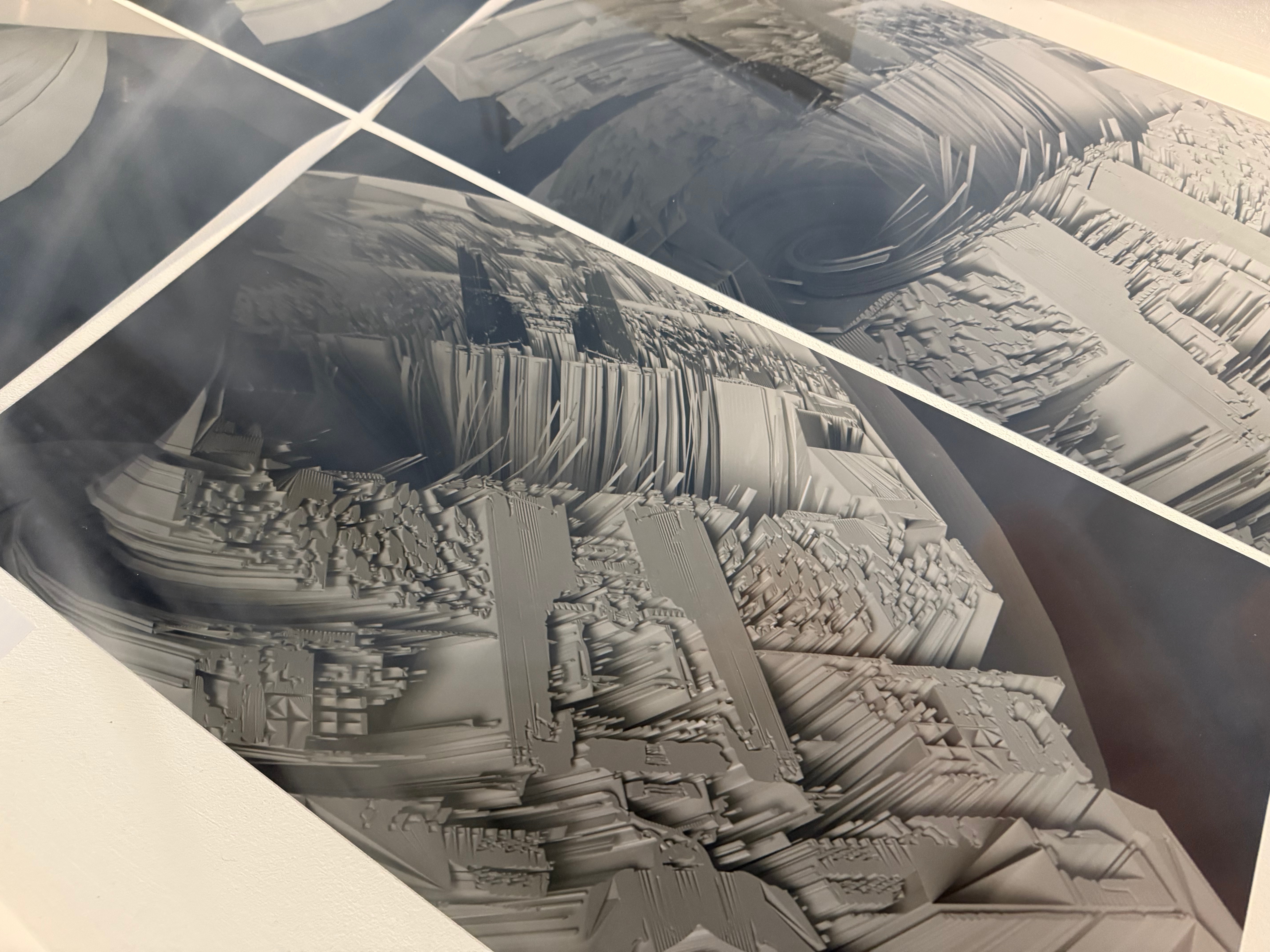
    With a focus on the composition of the render and allowing Form three to have breathing room I think three well rendered outputs that show the shape and detail of the sculpture would be good.

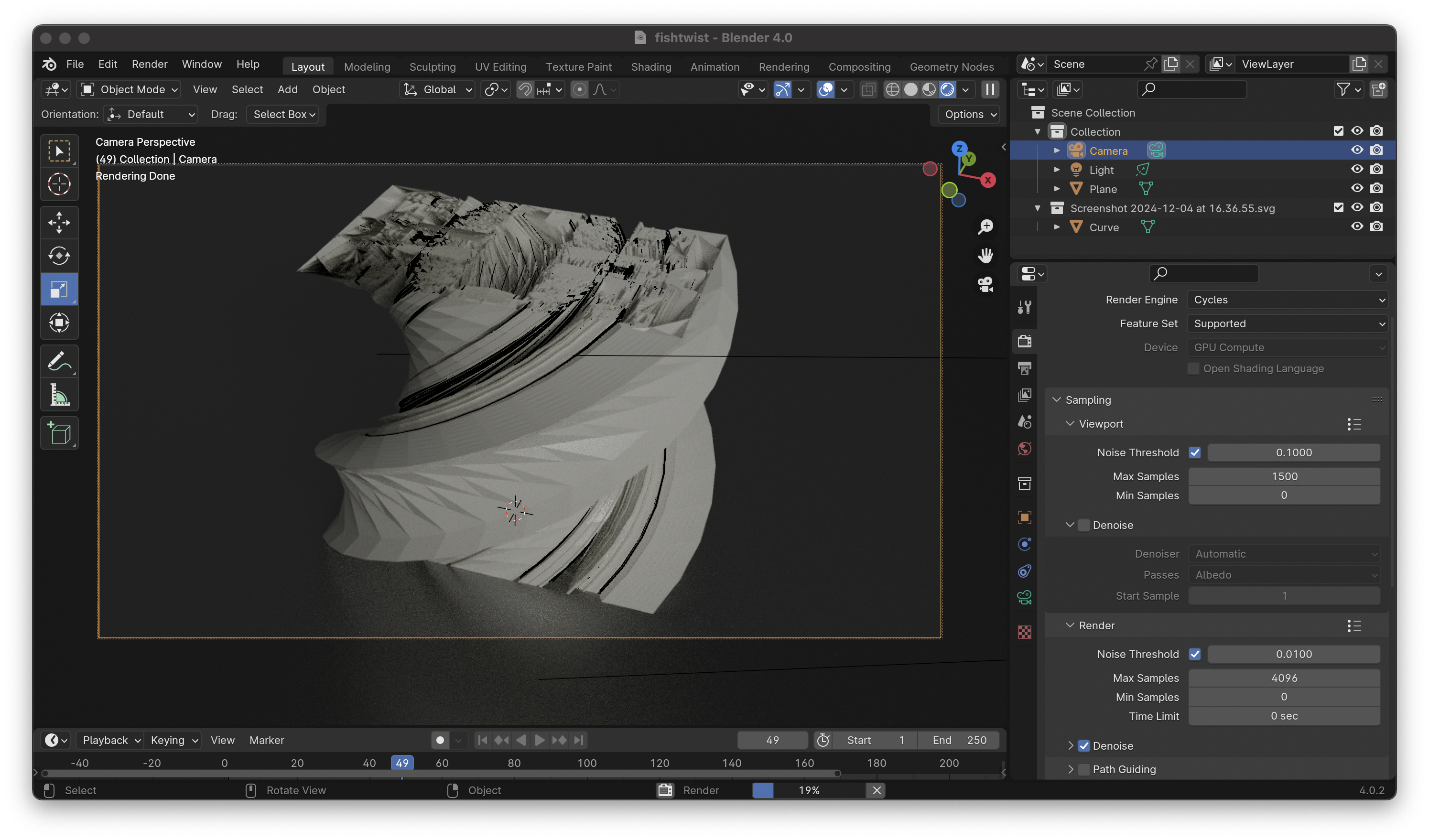
    I have tried to keep the overall image as close as I can to the original output as not to just slap some colour onto it, I’ve changed the material to a cool grey/ off white , ive build a background scene for the sculpture and included a simple soft spotlight, similar to the way Form One is displayed in the VR scene.

    The next step when these renders are finished is to have them printed by experts at GSA.

    Display Idea:

    When having the form three final renders printed, also have HQ images of each piece of work that each form has came from to show a clear connection.

    Also include a plane with the form one image within the VR space so that even when in the VR scene they can still compare it to the previous work.

    Where I’m At :

    Well first thing first. I’m an idiot. So initially the plan was to render out the images of Form Three and send them away to the printer with plenty of time and be more than ready for friday open studio but between the rendering finishing and the time I booked the printing consultation all the times were taken and the only avaliable time was 3:15 pm. So the printing will be late.

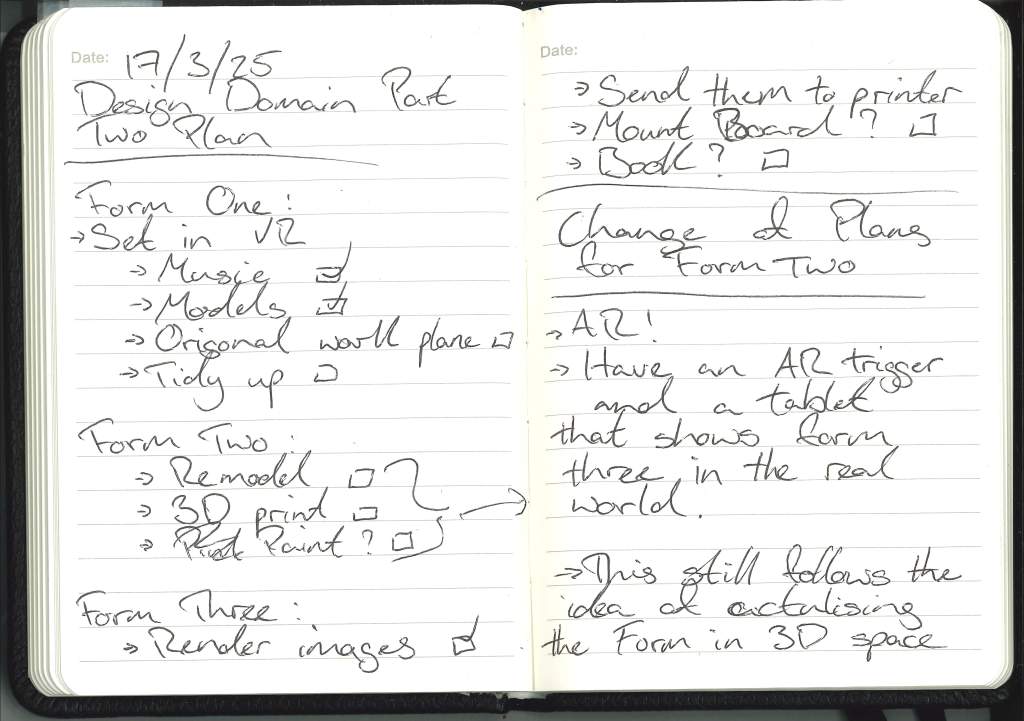
    Learning AR :

    So with the VR sorted, the renders sent away to the printing I started working on the AR. With a bit of messing around and trial and error I go it working with a simple unity scene and a trigger but again there was a problem.

    I got the AR scene working on the Samsung tablet and reading the trigger but as soon as I implimented my model into the scene the application crashed.

    I’ll swap out the model of a less strenuous model and make sure everything is working correctly and again I might just need to make a model that does allow it. Ideally I could use the model that I had made through the process in DD part one but if it wont work at all I might need to use smoke and mirrors.

    Writing for Design Domain :

    Form One : 

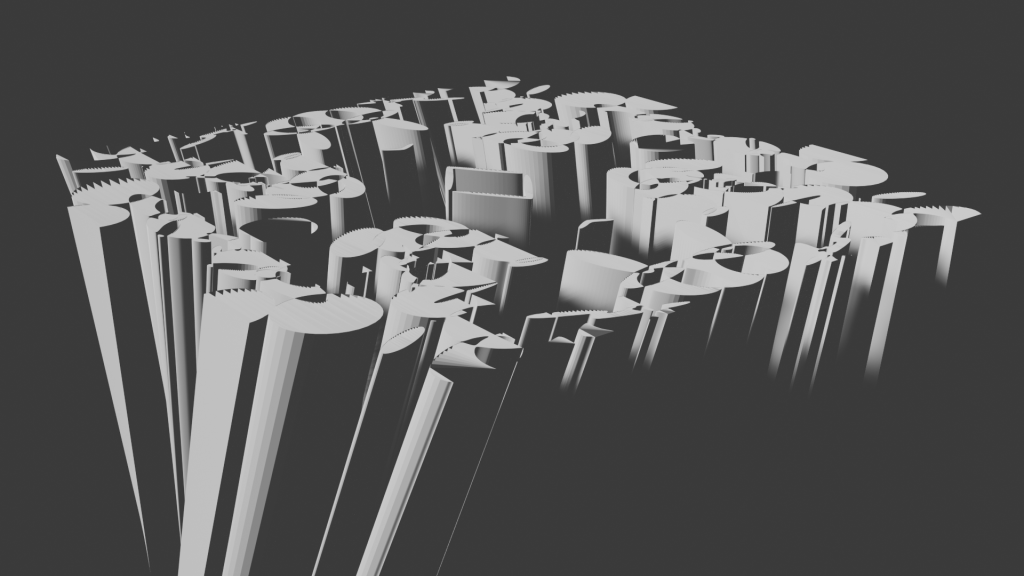
    Form One started in Creative Coding 01 using processing in the first year of my time at GSA. It was one of the first instances where I had seen the power and creative freedom of what we can do here at Interaction Design. 

    Please use the VR headset to explore the first of these digital sculptures.

    Form Two : 

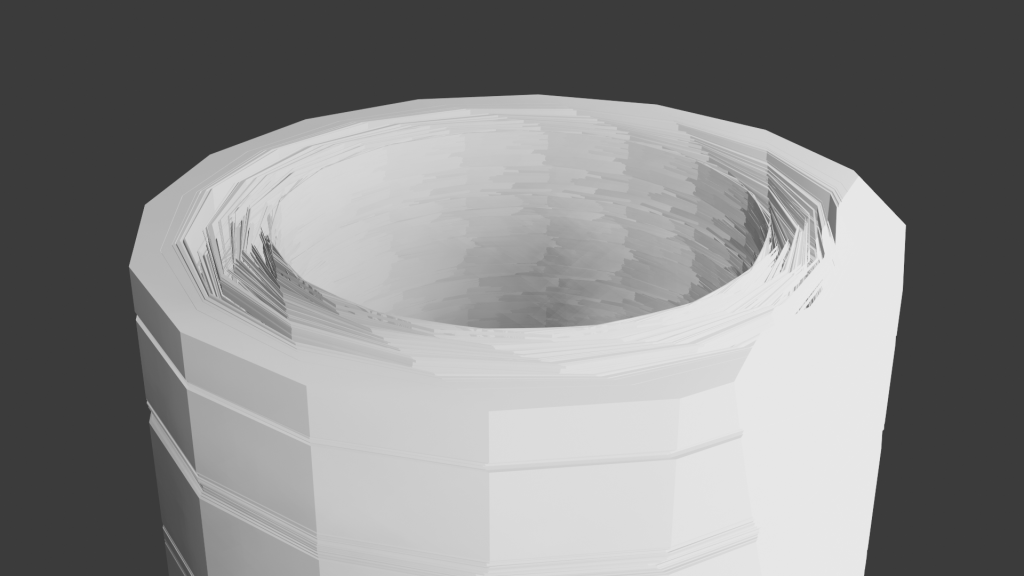
    Form Two is taken from my Realtime Events scene using Unity from my second year of IxD. It was a creative outlet when I needed it, but it also taught me that we are only limited by our imaginations in the sphere of creative technology.

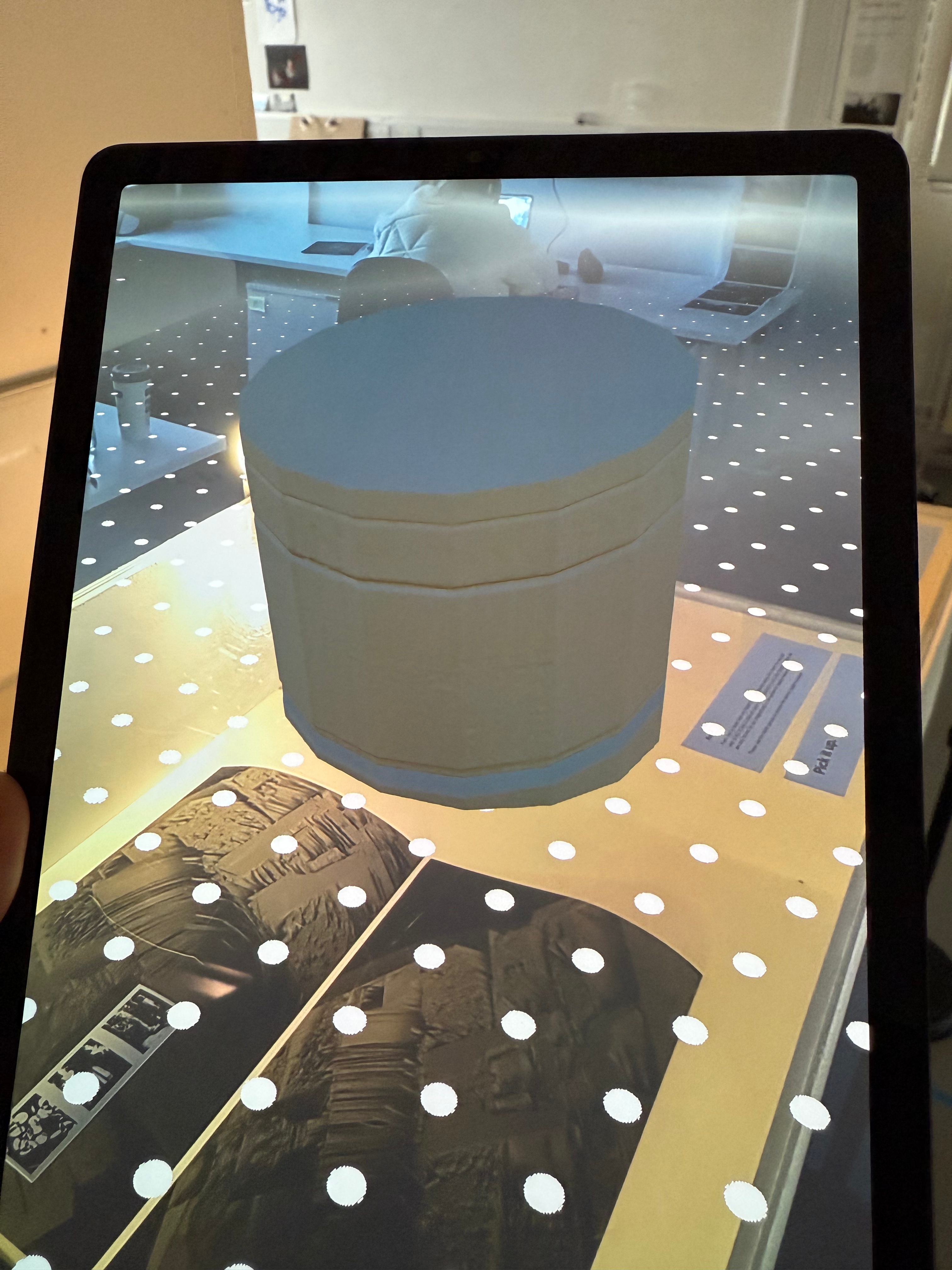
    Please use the tablet camera to explore the second digital sculpture.

    Form Three : 

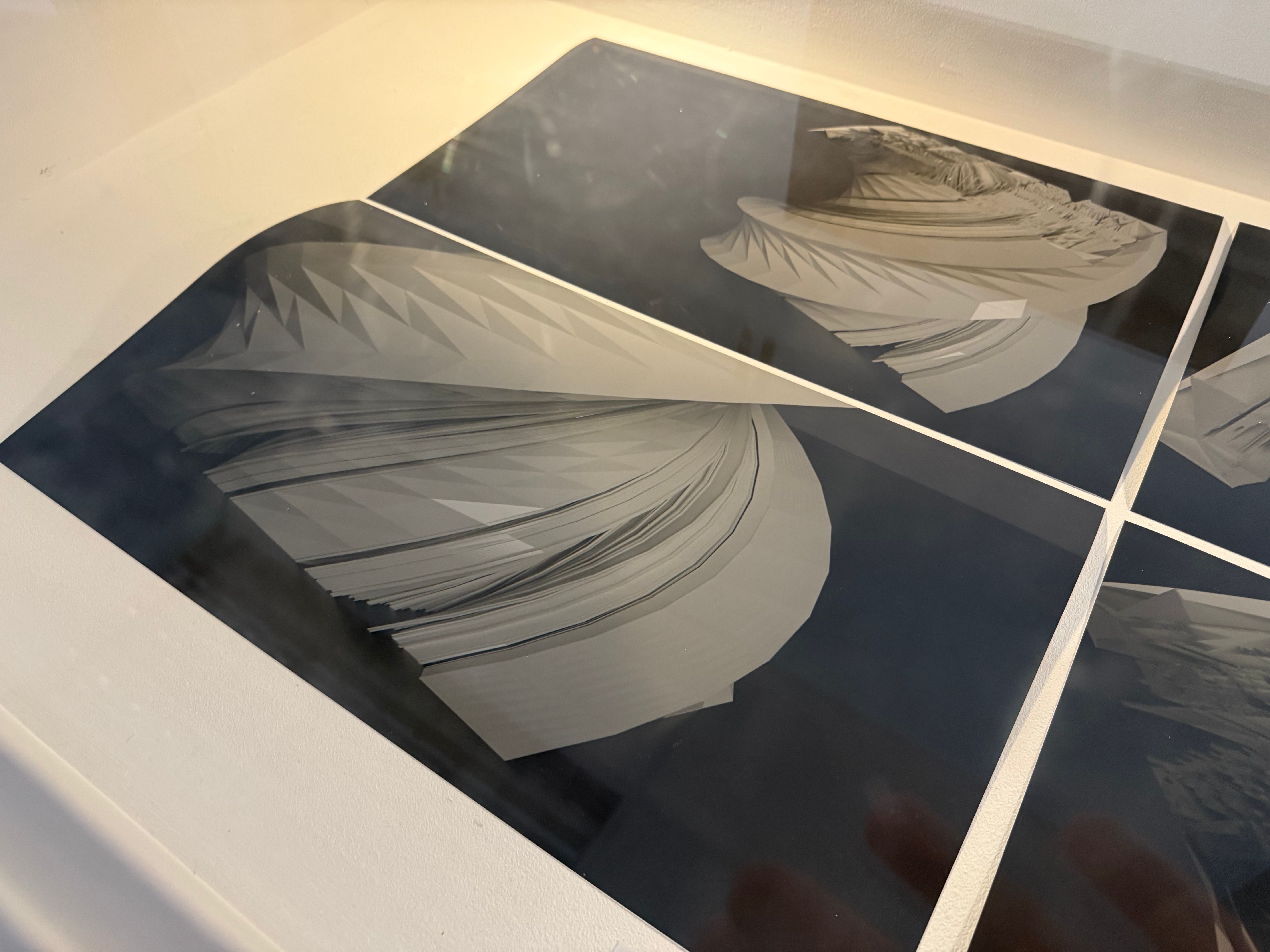
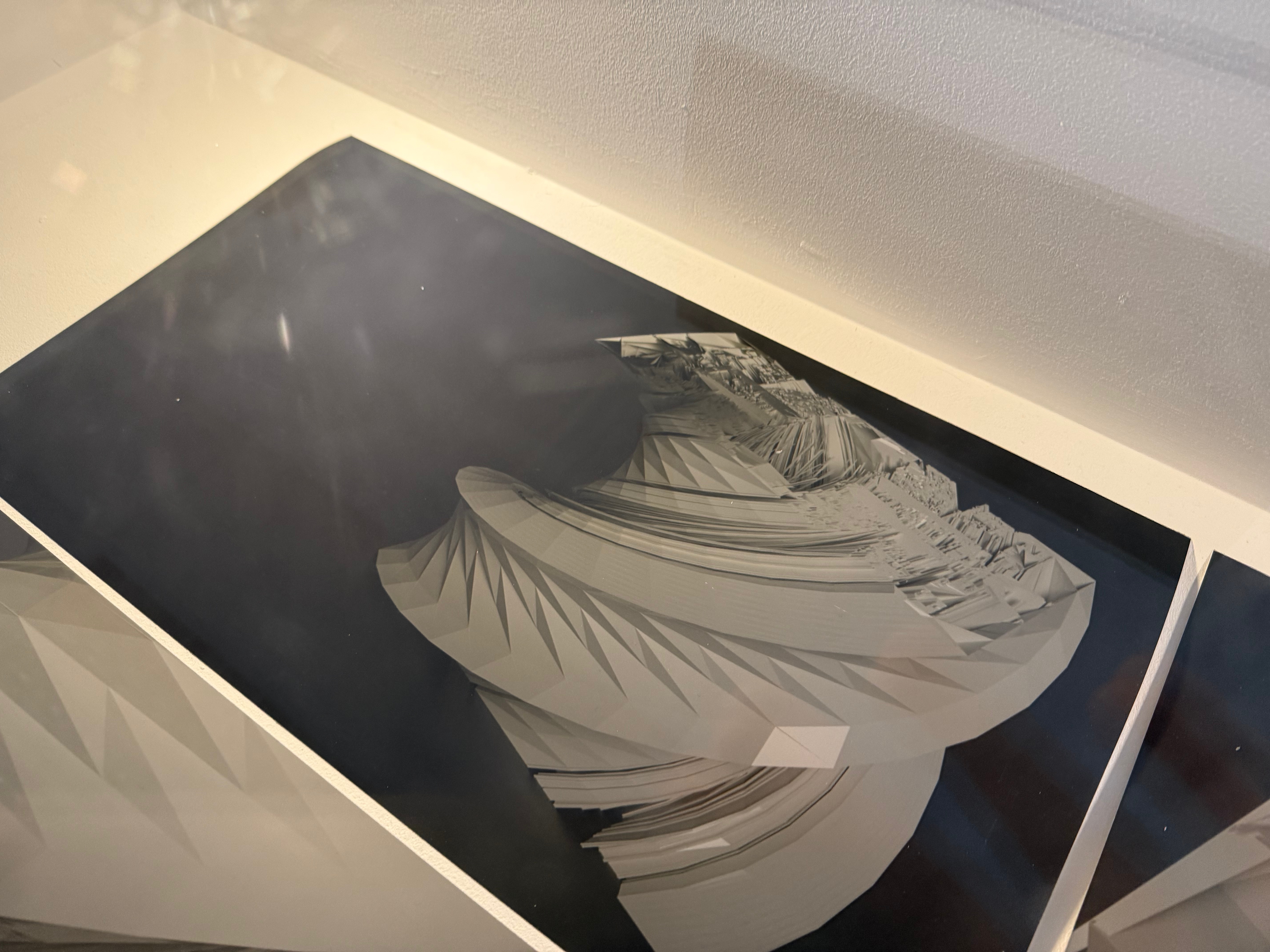
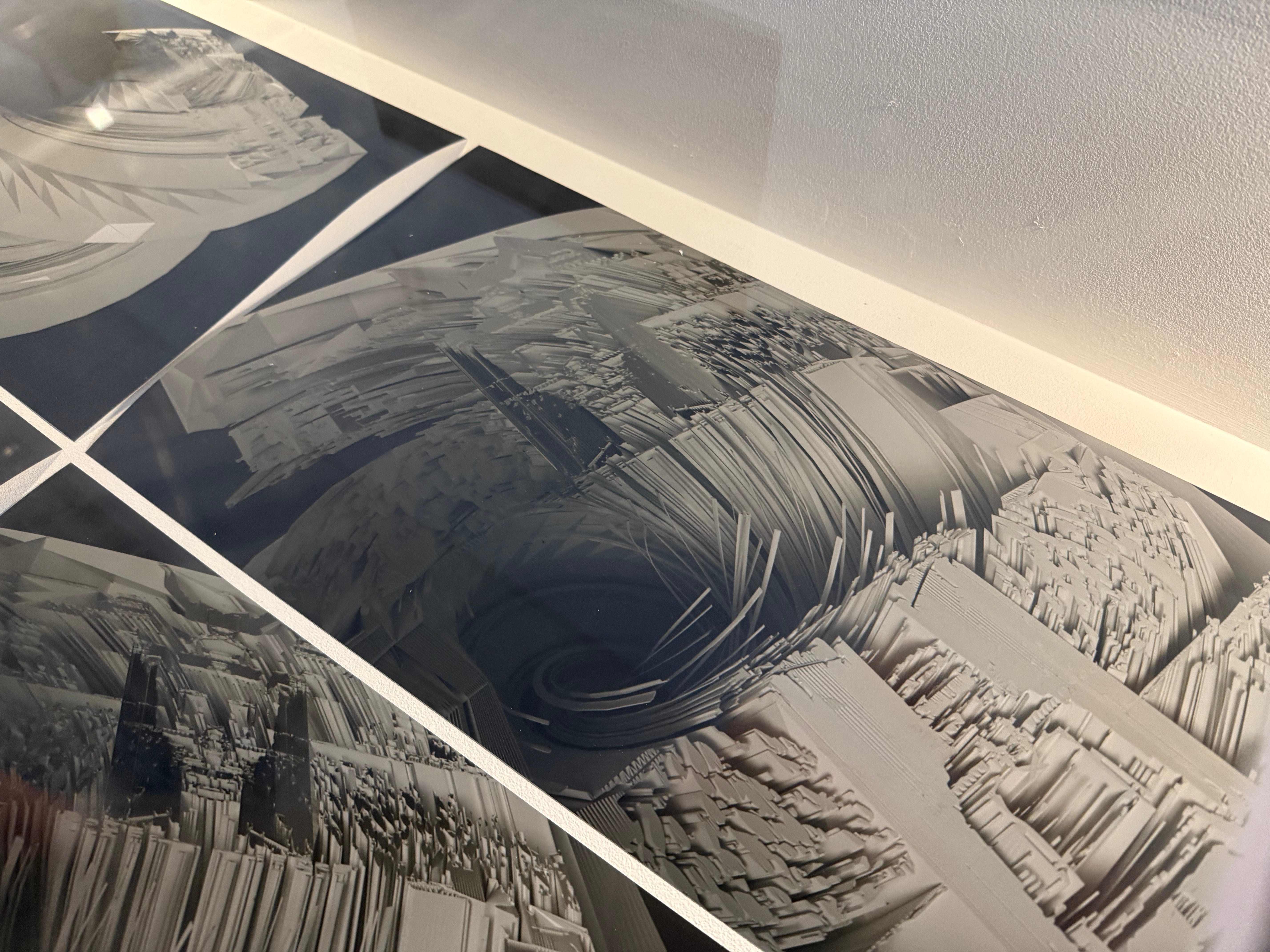
    Form Three began in Imagined Environments using Adobe After Effects in my third year. It also reminded me that the problems and troubleshooting we tackle here at GSA and IxD are not problems or roadblocks but opportunities to find new and creative workflows, processes, and outputs. 

    Please enjoy these renders of the third sculpture. 

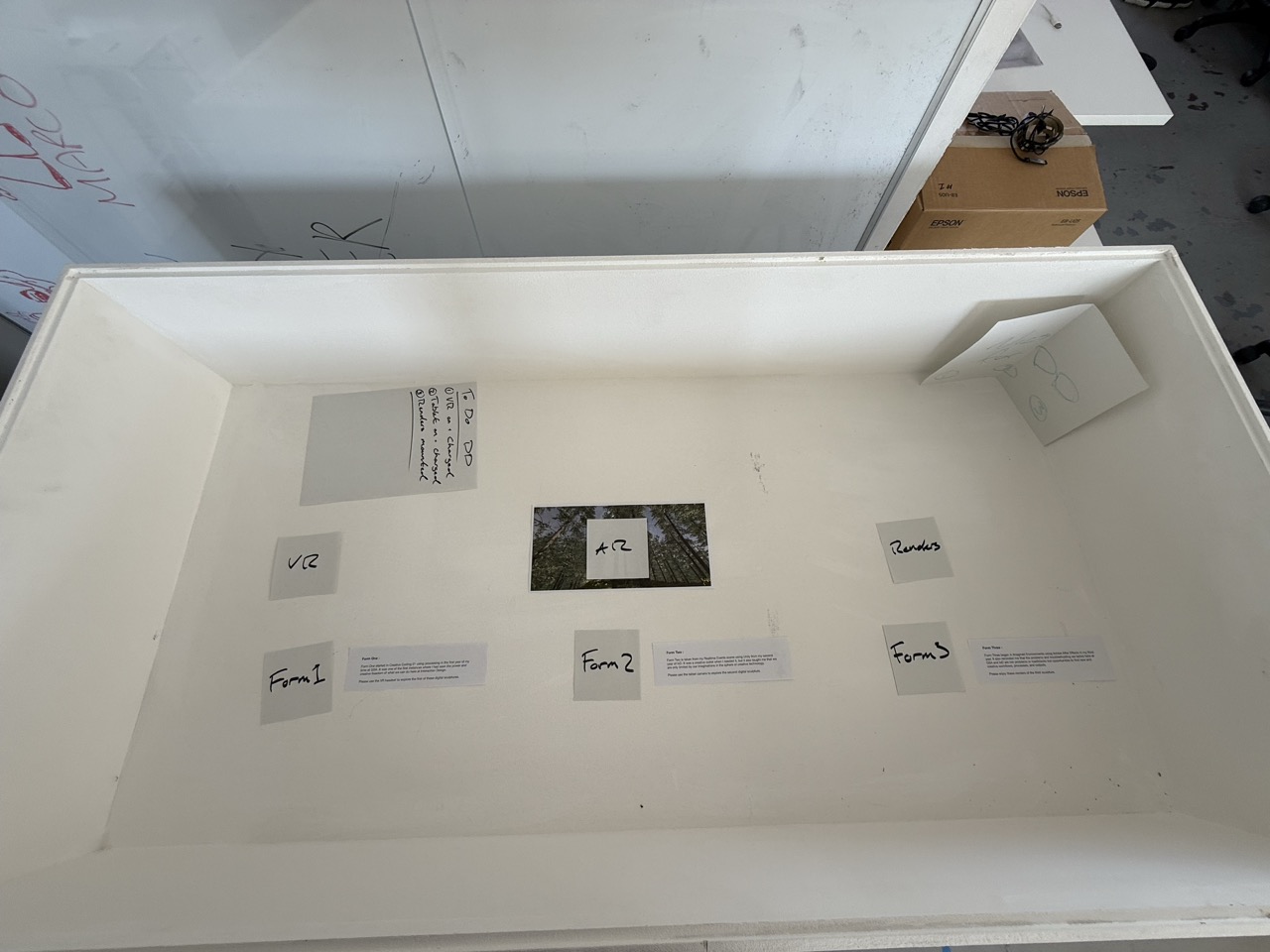
    Set Up Trial :

    With the vetrine reserved for my output I thought it would be a good chance to plan out the layout and get everything ready so that all i have to do is drop everything into it whenever its ready.

    Planning it chronological order so that when the viewer comes up to the display they can get the order of the work instantly, well complying to western conventions.

    Back to AR :

    Banana Man Test :

    The trigger for AR is working and is contined within the application, even through we didnt go through it in the workshops I wanted to figure out this way so that the AR isn’t relying on a shakey internet connection whether it works or not.

    It worked well, if a little shakey with the banana man model as a place holder.

    Form Two Test:

    With everything else ready I had time to continue working on the the Form Two AR and getting it to work as much as possible.

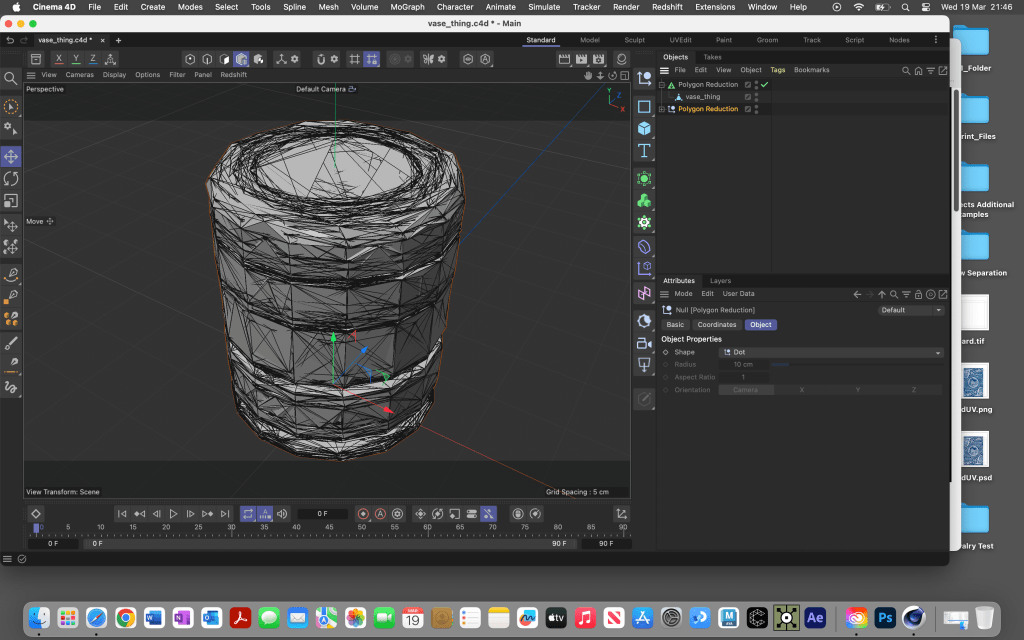
    With the trigger image of my unity image working with the placeholder banana man model I put the model of Form Two into the scene and it ran and seemed to work at a certain distance but getting close enough it tank the frame rate and would crash the scene.

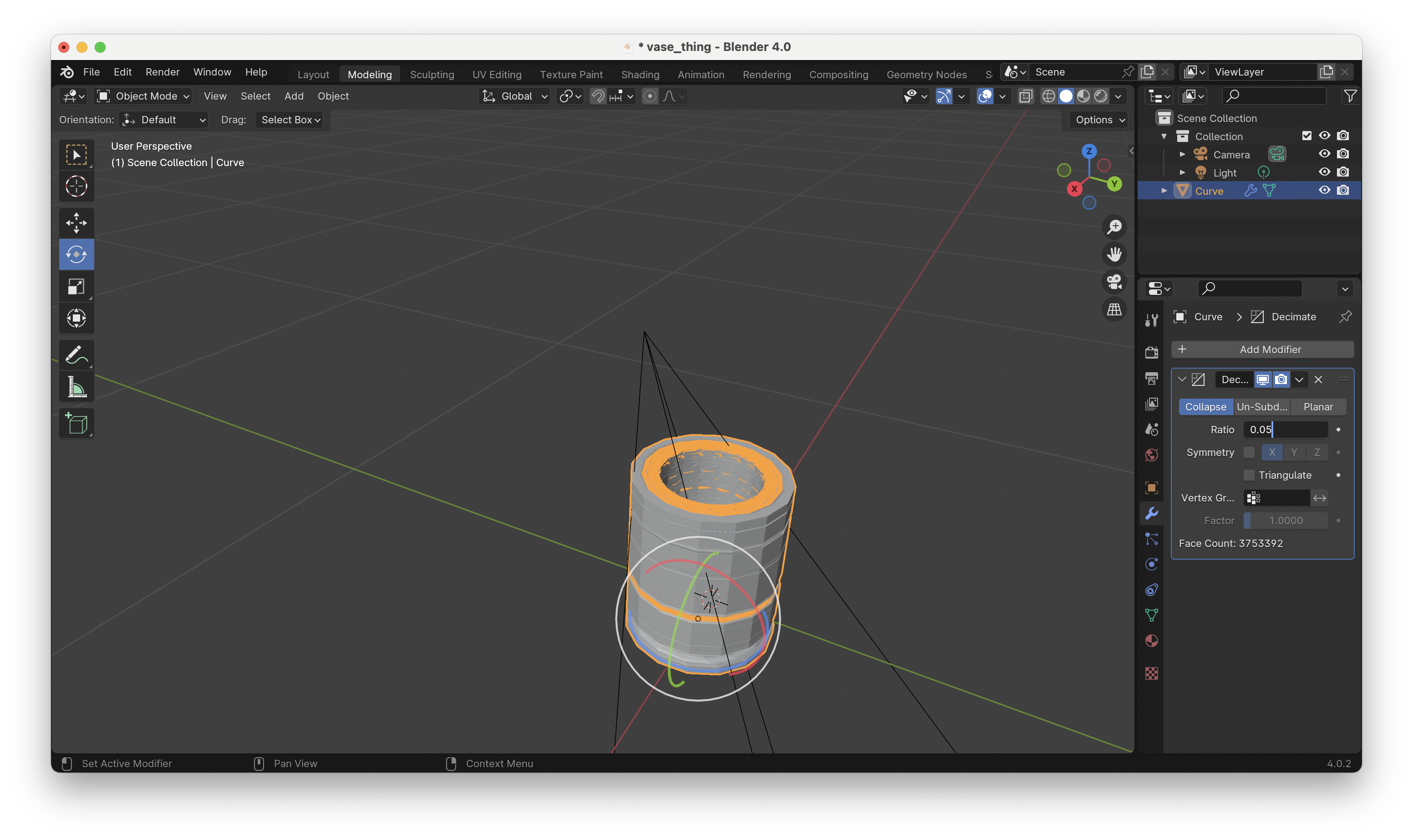
    I need to try it with a smaller model or just allow it to crash if I cant get a decimated model of Form Two.

    At this point :

    At this point Form One is in the VR headset ready, Form Two is working on the tablet with AR even if it is running very slowly. And Form Three is scheduled to be printed Friday afternoon.

    Thursdays ToDo List :

    • Put VR headset on charge.
    • Put AR tablet on charge.
    • Try and make AR model less taxing on the tablet.
    • Set up lights for box

    Friday ToDo List :

    • Set up VR
    • Set up AR
    • Turn on lights
    • Submit Name Card
    • Collect Prints
    • Cut out Prints
    • Present.

    Getting Ready :

    With everything ready, well almost ready, I had time to consider the presentation of my work more and plan out the interactions as much as I could.

    Gillian Saving me:

    Gillian yet again saving me by getting the models into a state that can work within the tech we have like the AR scene.

    There is some detail lost in models, which to be honest I expected because there was no way they would run on a tablet unless I get a brand new Ipad pro or a Galaxy S9. And as it still fits within my theme and practice for this project I think it means more that the AR actully works, even if detail is lost.

    Morning of :

    With the VR headset charged and ready, the AR tablet charged and ready and the prints due later on today I had more time to work away on the AR and impliment the new decimated models that Gillian has gave me and get the AR running even smoother.

    Last minute change up :

    During the final day I had the set up finished, or what I thought was finished, until I got the prints of Form Three back and had the thought that after going through all this effort for the prints they should be displayed. So after a lot of waiting around there was a lot of running around and trying to cut out the prints as perfect as I could and as quickly as I could.

    Final Output:

    What work was shown in the display:

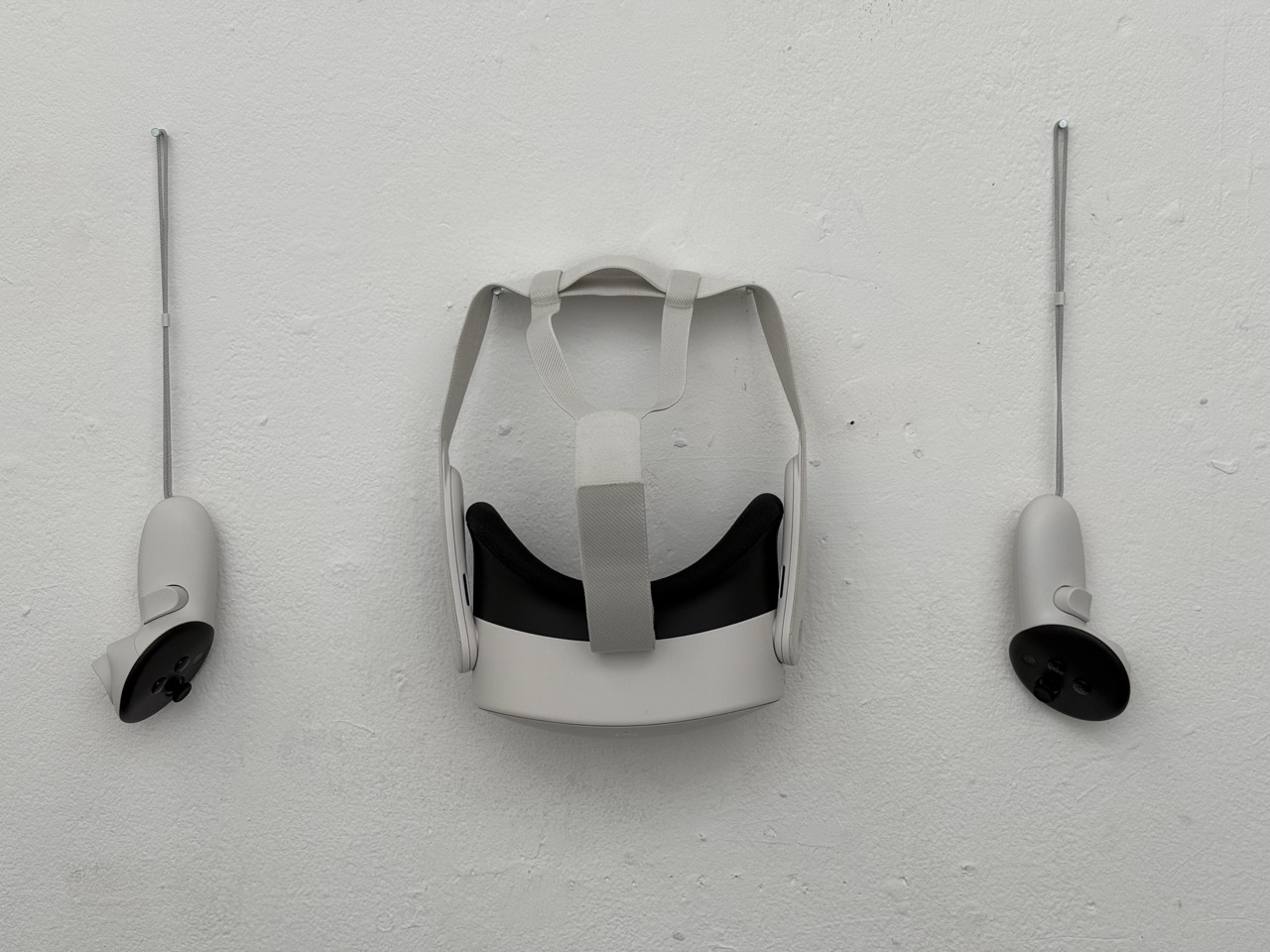
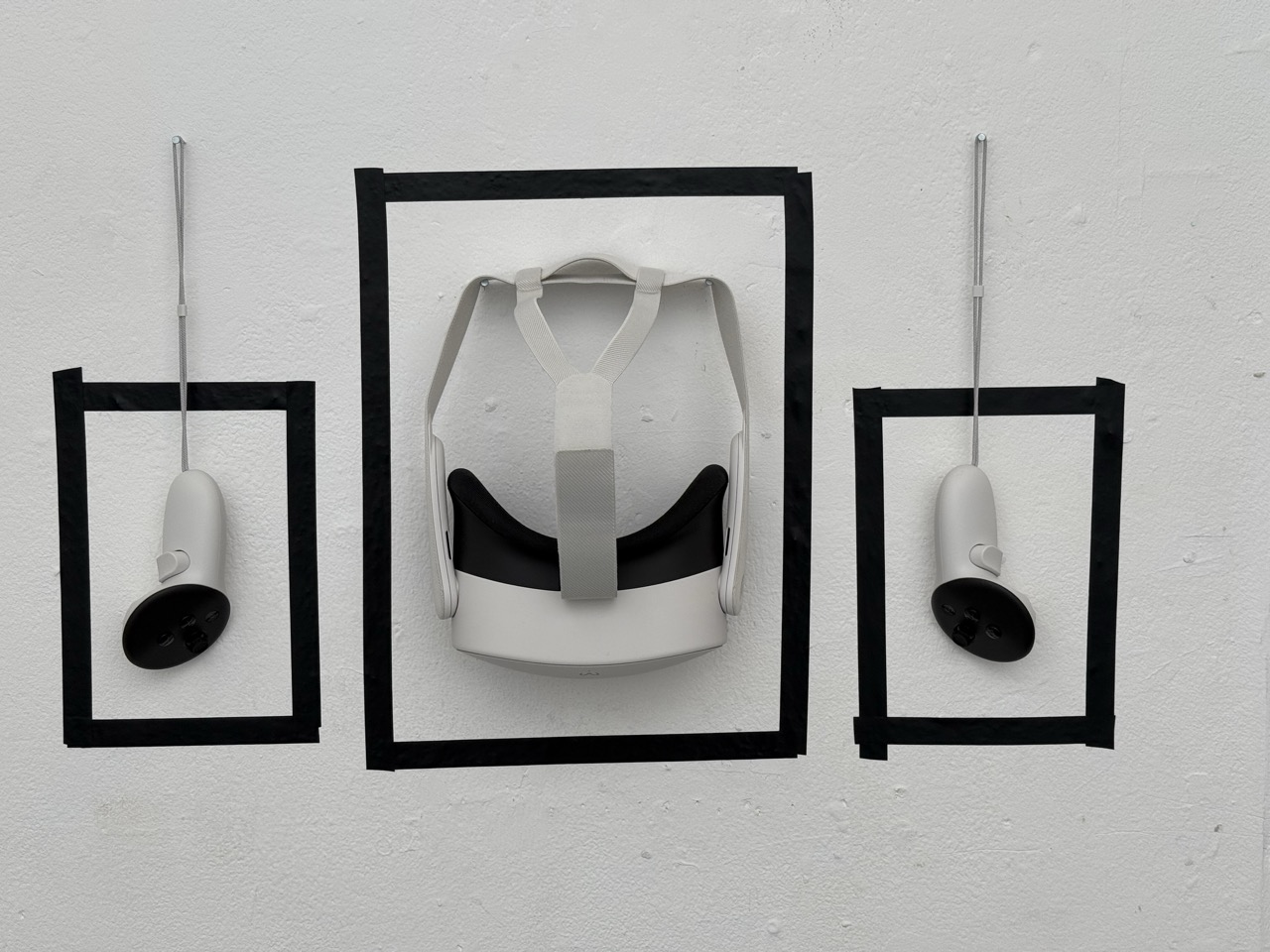
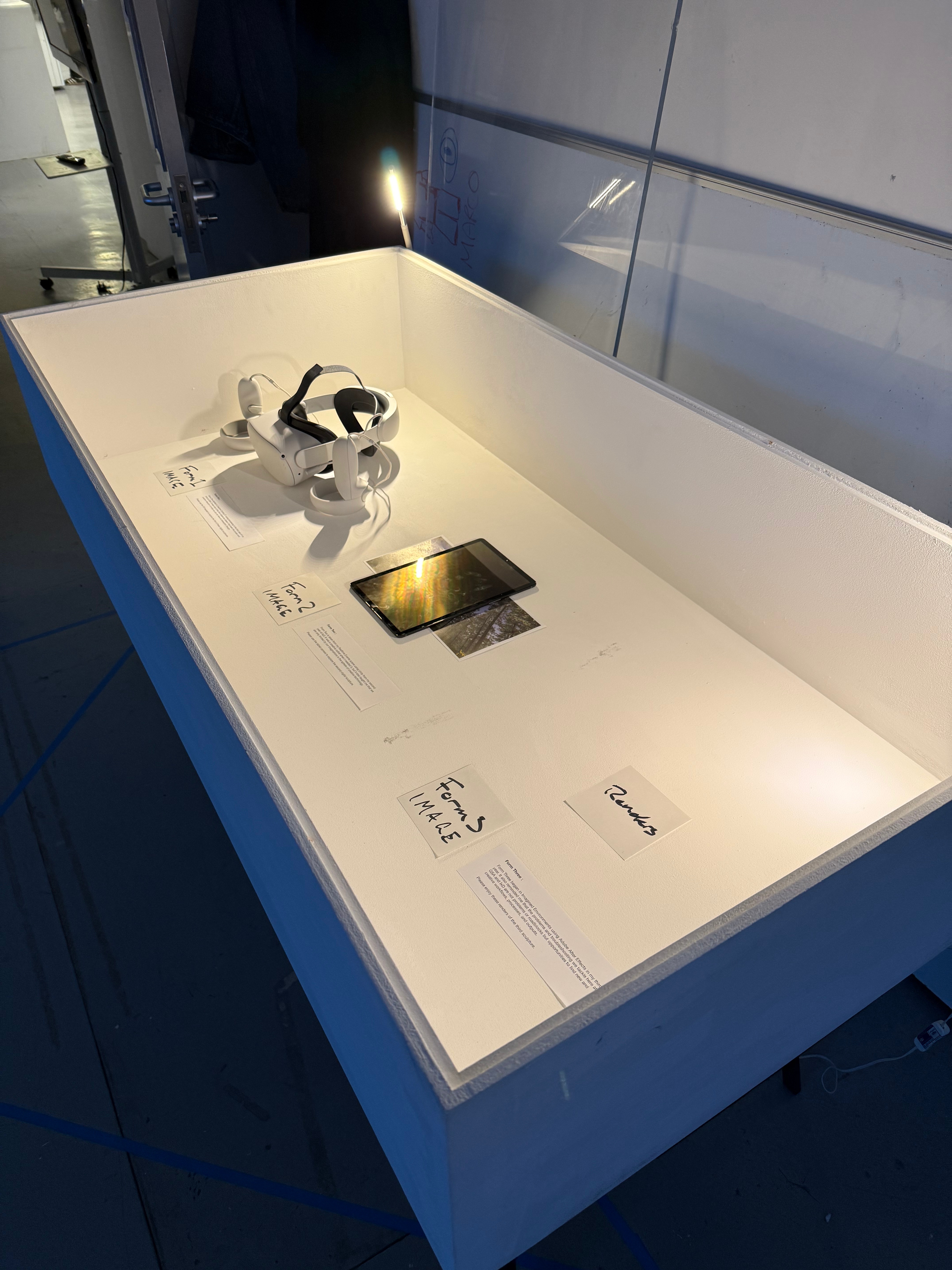
    • The discription of the work with a QR code that takes people to this very page and next to each output is a brief discription of the work and what project it was based on, along with a prompt of how to interact with each piece.
    • The Meta Quest headset with the unity scene of Form One in it and the left controller to more around the scene freely.
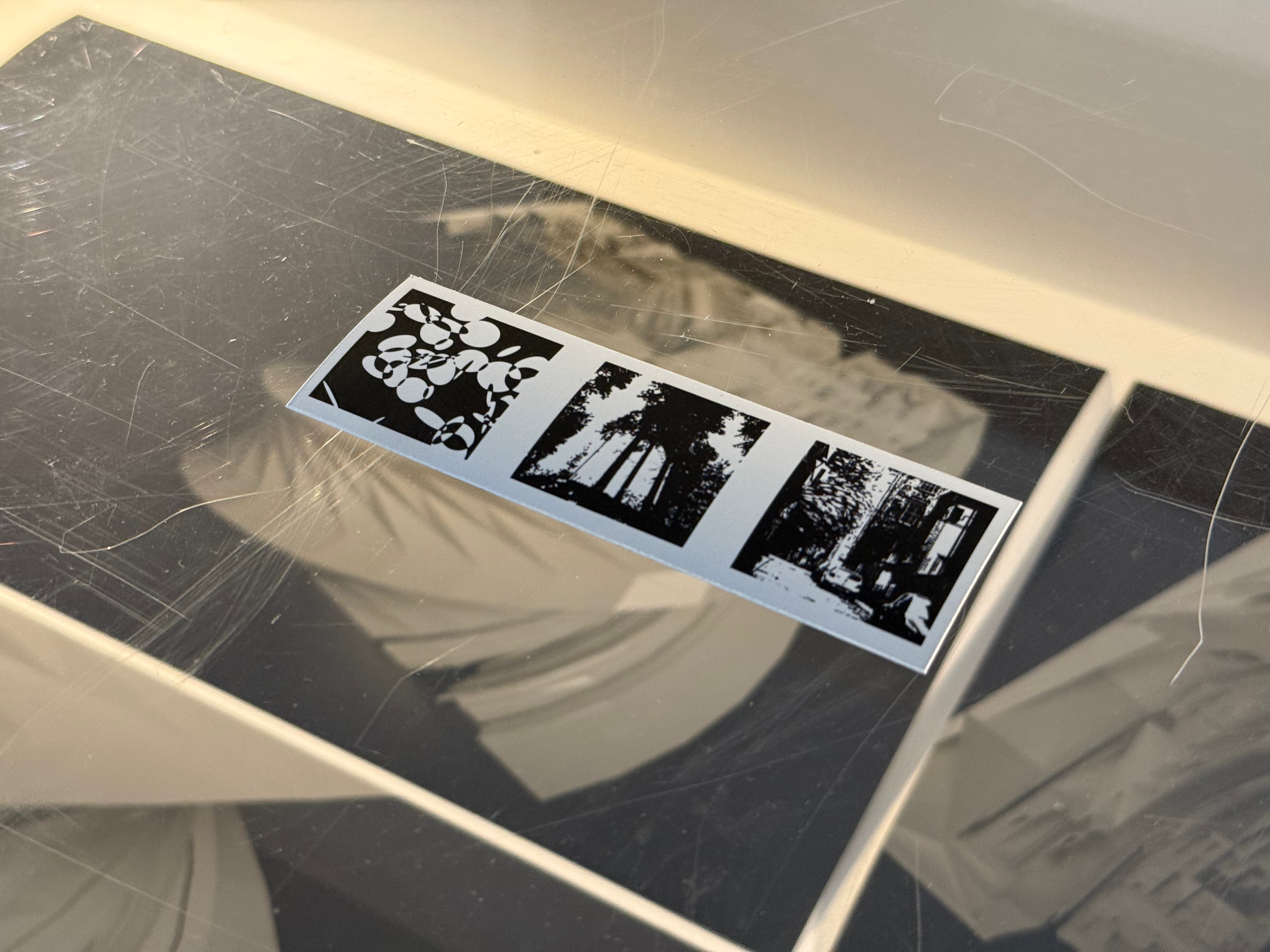
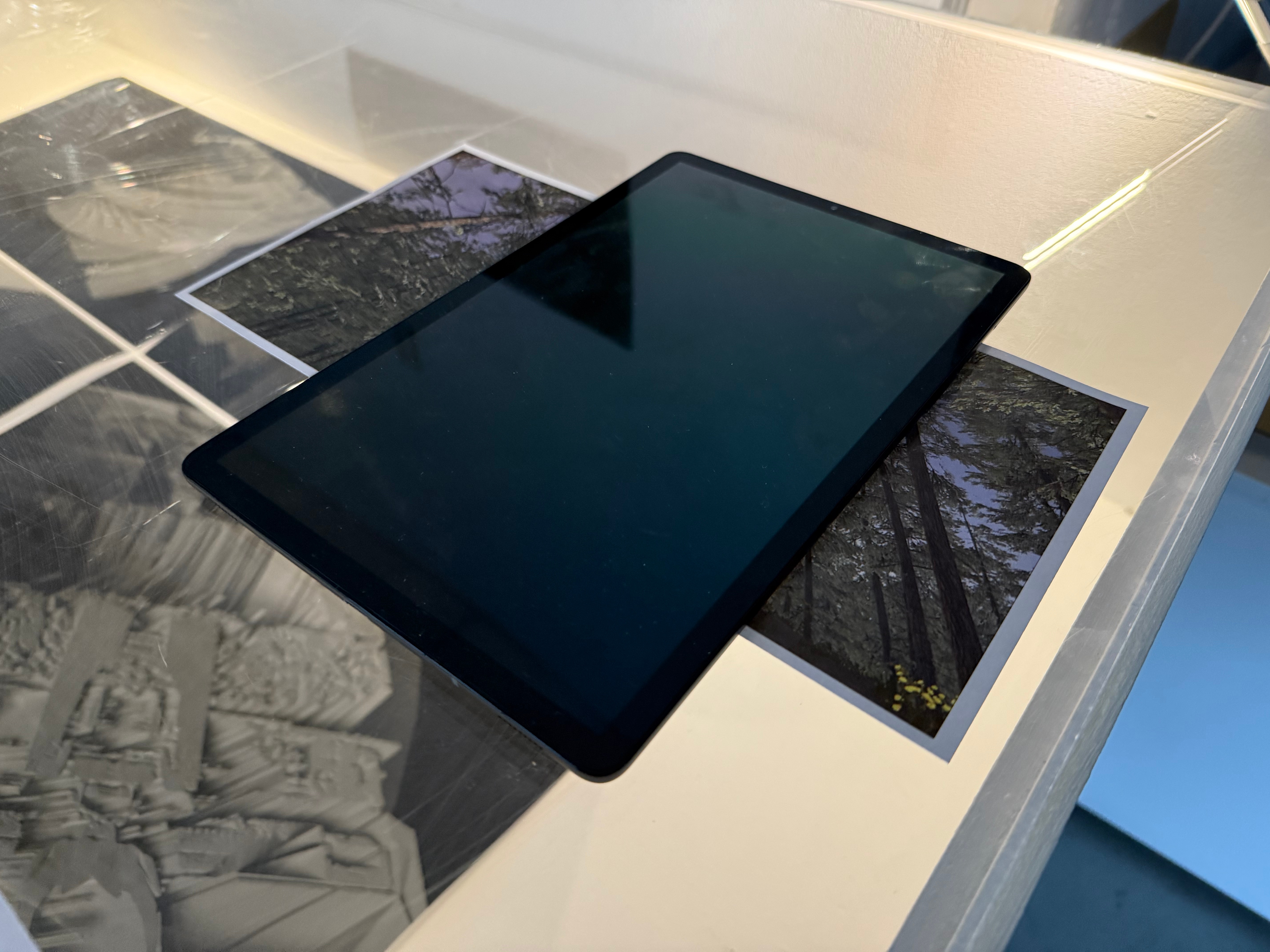
    • The Samsung Tablet with the unity AR apk for Form Two pre-loaded and self contained and the printed trigger image.
    • The Blender renders of Form Three printed by the photography printers in the Stow building cut and displayed in the vetrine.

    Return to Form :

    For Design Domain I focused on two things, my own work and my pratice of always wanting to perfect everything and design a product. Within this project, my goal was to challenge myself to lean into the imperfections of digital mediums, the interesting forms and materials within them that would be difficult to replicate anywhere else. I would have never made them consciously, but by taking my previous work from each year and creating these sculptures by exploring a software I’m unfamiliar with and not trying to ‘fix’ them, I wanted to shake myself out of my usual way of working and then show off these ‘odd’ pieces with pride and confidence, allowing them the space they deserve to stand alone and be considered as works of digital sculpture.

    Evaluation :

    If I could do it over with more money and more time I would like to have each sculpture shown perfectly in their respective outputs, give more time and consideration to the space within VR and maybe give the user more control to explore the sculpture in a space with no restrictions.

    I’d have improved the AR experince by maybe have the tabelt waiting in a better position and of course have the undecimated model of the form in AR allowing people to explore the detail and odd interior of it.

    And for the third I’d like to plan better in the future to allow myself more time to display the prints better or even have time to think of how the renders them selves could be improved while still allowing for their form and material.

  • Extended Reality (XR)

    Initial Ideas :

    With the first idea shown on the bottom left of the page I had the idea to meld both the digital world with the real world but not through a frame or portal that is often done but more like the work done by MarshmallowLaserFeast – In the eyes of the animal.

    https://marshmallowlaserfeast.com/project/in-the-eyes-of-the-animal/

    In the work ‘In the eyes of the Animal’ the audience is sat in a forrest before even putting the HMD on and when put on their head they see the scene they’re already sitting in creating the relationship between the real world and the digital. I’d love to have this relationship in my work.

    The second idea at the top of the left page is an exploration of the idea that VR can give people experiences that they would never be able experience and can bring a sense of wonder to the audience that they might have never experienced, for example, space travel. But as not to make this project just a tech demo and more emotionally engaging, the scene would maybe have an impressionist style, an exaggeration of the real thing.

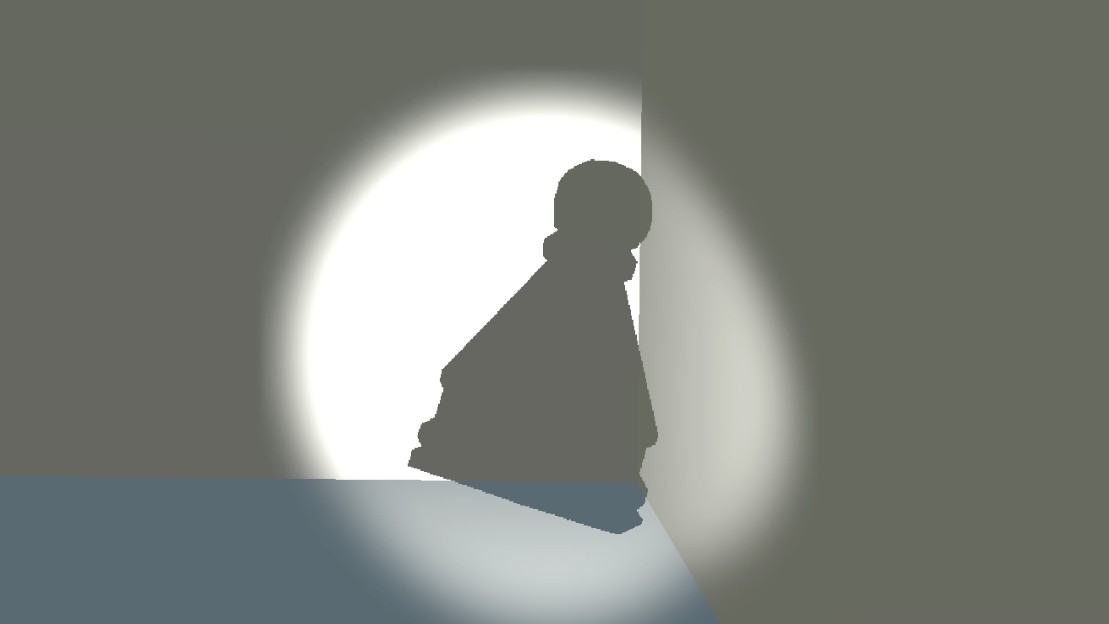
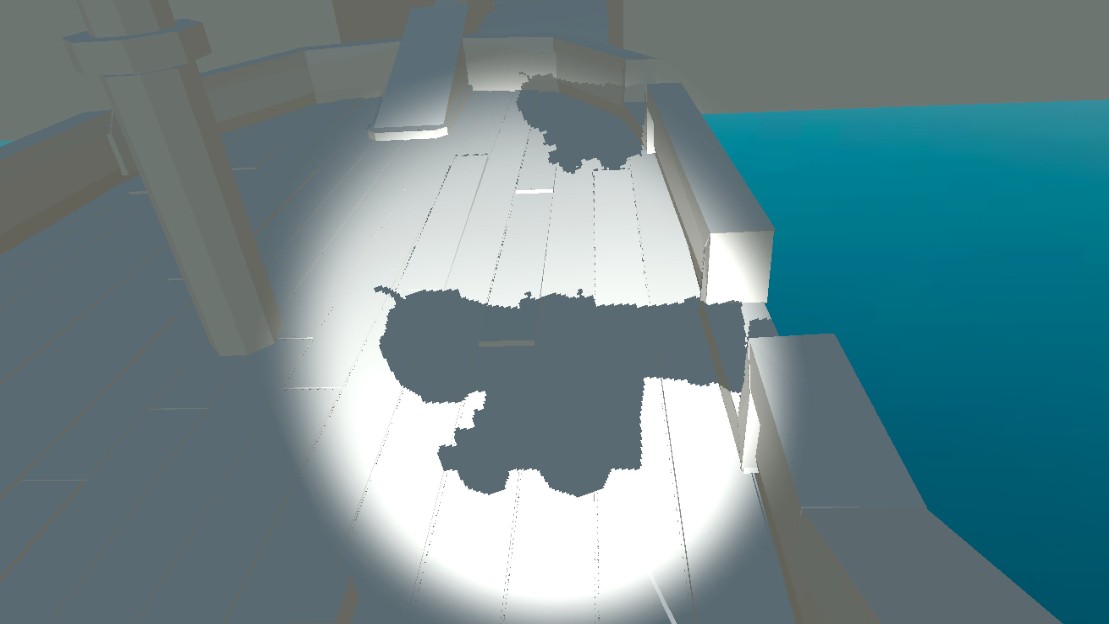
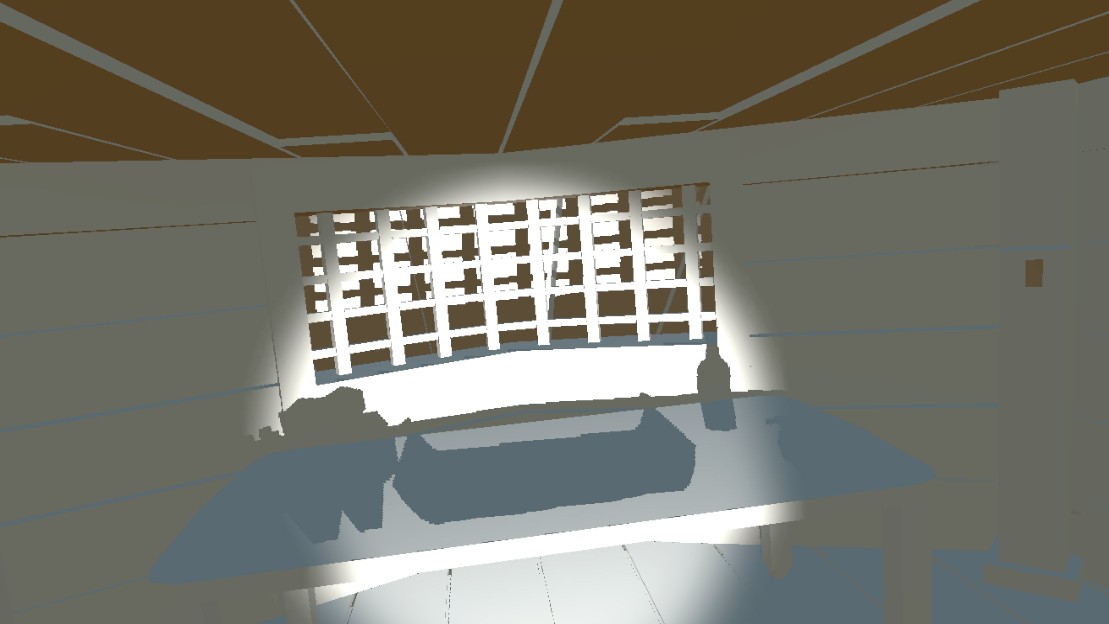
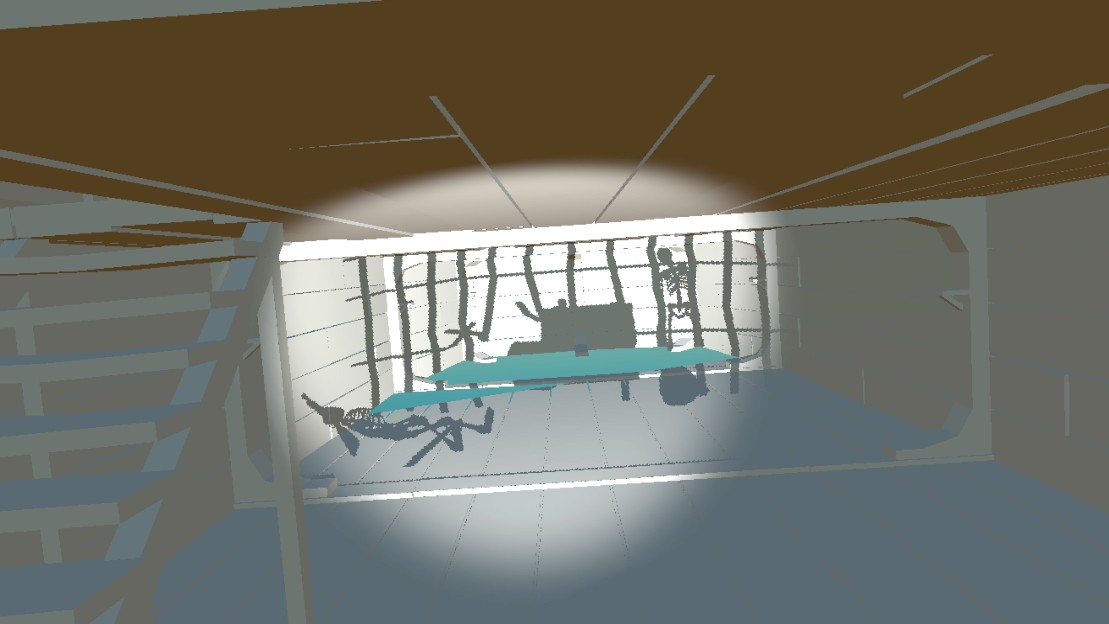
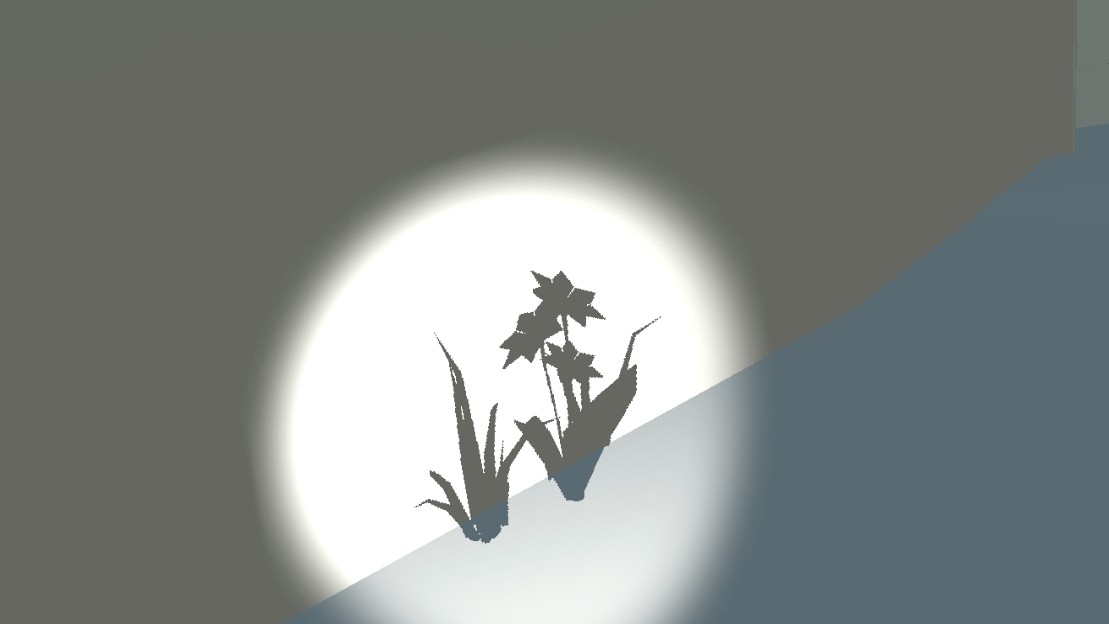
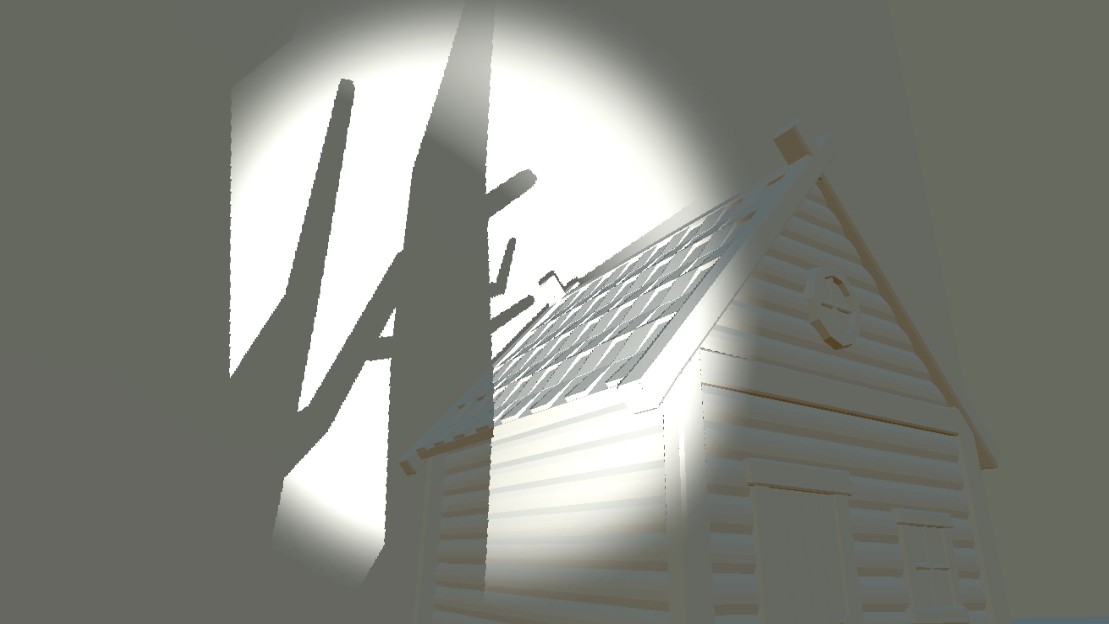
    The third idea at the bottom of the same page is another interactive VR experience that uses light shadows and objects being implied by their shadows. Inspired by the feature of digitial objects in an AR space projecting AR shadows in the real world as well as the use of white space and black paint in the game The Unfinished Swan.

    Idea four, noted on the left page is pretty much as it says there, a VR museum of dead technology and experiences that have either died due to technological advancements and a lack of support or an idea that was killed by those that had to pay for it, or even all of the above.

    The museum would be a place for these 3D animation and effects to be shown in a virtual gallery.

    This fifth idea is the concept of using materials that are not normally related to digital media to trigger a digital response such as a QR code made out of wood or moss or have a AR target made out of organic materials.

    Testing AR :

    Exploring Commercial AR :

    Pokemon GO in the studio:

    Amazons products placement AR:

    Acute Art VR app :

    My thoughts at this time :

    At this time in the project, I keep thinking about the fun that can be had with AR and VR, this idea of making the real world magical and lighthearted and beautiful. Using technology to make magic happen.

    Light hearted, joyful, magical, fun.

    Finding joy in artwork:

    Bird (2008)
    Natasha Light (b.1976)
    Ceramic & fishing line
    H 46 x W 20.5 x D 6 cm
    Peace Museum

    In lights ‘Bird’ the grace and beauty is something that draws me in, with such a simple visual style the grace of a birds flight is captured.

    Joie de Vivre (1998)

    Mark di Suervo

    The joy I found in ‘Joie de Vivre’ (Joy of Living) was the essence of play, the colourful figure in stark contrast of the grey architecture and business people of New Yorks lower Manhattan financial district.

    Seven Magic Mountains Land Art in the Nevada Desert 2016

    Ugo Rondinone

    Again as with ‘Joie de Vivre’ its the contrast between the work and the situation it sits, in ‘Seven Magic Mountains’ the outstretching harsh Nevada desert is harshly and unapologetically interrupted by these colourful standing stones.

    La Joie de vivre [The Joy of Life]

    Max Ernst

    Talk with Neil:

    BlackLight Idea

    Inspiration:

    Unfinished Swan:

    With Unfinished Swan the art style was a huge inspiration for me on this project, mainly for its visuals but also the way they introduce the main mechanic at the start of the game.

    Shadowmatic:

    I love the use of shadows to create different shapes, I’d love to work this into my project somewhere.

    Schim:

    With Schim I want to carry over its sense of warmth and joy in every situation, you work within the shadows in the game but at no point is it scary.

    Superliminial:

    With Superliminial, its the sense of joy and wonder in the majority of the game, using the one function of shifting and controlling perspective throughout.

    Understanding Shadows:

    As the Unity scene will use shadows as its main interaction I think its good to look at them with a different focus, obviously we encounter shadows everyday but looking at them in a different lens or with a different context will give me a better of idea of how my scene should look.

    Testing Light in Unity :

    By turning off the mesh render but allowing the shadows still to be cast, it gave the effect that I wanted. And as it still has the mesh/ box collider then the player cant just walk through it.

    Building a Scene:

    My initial thoughts were to have a maze that was completely shadows but as you need the shadows to be cast onto something the white walls of the maze were made.

    Planning Scenes and Interactions:

    So with the basic concept of the torch sorted and the idea of a maze sorted I needed something for the player to do in the maze and with these interactions I wanted to use the functionality of VR and actions that were exclusive to VR.

    Setting the Tone:

    In the scene I want to spark joy through this unknown and adventure, that yes there is a little bit of fear but at no point are you in danger. Through not knowing what is around the corner but being called to find out I want to have a sense of adventure. Think Indiana Jones; the Mummy in movies or even the games Portal and Ratchet and Clank. All of these examples have fun, mystery and danger but at no point do they take it to horror.

    More Primary Research – PowerWasher VR:

    So with knowing my concept and my functionality I went back to some personal research to see how other studios have done it and with Power washer Simulator it had simple concept, simple movements and functionality that was only in VR so the footage above shows myself messing around and exploring the functionality of VR again through the lens of my own project.

    Building the initial scene and proof of concept:

    At this point I was having trouble with the VR headset so to the best of my ability I began modelling my scene. During this process I had the idea that as the world would be using shadows then recognisability would be a big factor, if the player doesn’t have an idea of what the object is then there wont be any spark of joy or fun because they can not relate the object to anything in the real world.

    The soundtrack:

    After the previous project when audio was the main focus, I didn’t again want it to fall by the wayside and not give it the time it deserved. So as I didn’t think that I would have enough time to do it justice but I had an idea of tone I asked a friend of mine if he would like to make the music for it and he thankfully accepted. I have lots of very musically talented friends but I knew Michael would be the man right for the job.

    Below is his Soundcloud if you want more.

    https://on.soundcloud.com/38jtdNRKCKnNvwds6

    All the prefabs:

    As the scene developed and got bigger and bigger I used more and more prefabs with recognisable silhouettes to fill the scene. This step had a lot of trial and error, I was very conscious that with such a simple concept and such a minimalist art style there wasn’t really anywhere to ‘hide’.

    Building the scene:

    I’ll be honest at this point my documentation was a bit poor as it was a lot of quick ideas, quick changes and quick implementation that didn’t really seem like much at the time but looking back now it was the scene becoming a basic interaction and maze to demo that it is now.

    Play Testing:

    Above is footage of my class mate Lucia testing out the scene. After this session of play testing with both Lucia and Mikhail I finished the final scene and removed the snap turn on the controller.

    Note:Fix:
    Motion SicknessRemoving Snap turn
    Reduce walk speed
    Removing Vignette
    Eye StrainIncreasing light temperature
    Lower Light Intensity
    Lack of EndingAdding in a final scene
    Defining a narrative

    Planning the End :

    Behind the scene:

    Above is stills of the scenes in unity using a green wire frame of the prefabs to show the invisible elements.

    Black Light :

    The Story of BlackLight –

    In Black Light you find yourself in a odd space armed only with your wits and your torch.

    Step into a world where time stands still, filled with intricate mazes and shadowy corners that feel strangely familiar. As you navigate through the labyrinth, you’ll encounter various structures and pathways that invite you to explore. Each area holds its own mysteries, waiting to be uncovered. Embrace the journey as you shine a light on

    the stories hidden within the shadows.

    Where are you ? What happened to the king ? What happened to the men on the ship ? And whats at the end of the maze ? What happened to the heros?

    Reflection:

    If i had more time and more resources I really feel like the concept has legs to stand on and could even be taken further to a full fledged game for VR, at this point it is a proof of concept or a demo.

    If I was to do anything different or take it further, I would like to develop my own shader that gives the same effect as unfinished swan and lean into the reliance on the torch more.

    Also one of the concepts that I didn’t implement was inverting the colours and making the white black but that would either need an after processing effect on the entire scene or another custom shader.

  • Audio Visual

    Research :

    At this point I have no clear plan for this project but I want to keep it that was for as long as possible. At this point I’m exploring the links Paul provided for some inspiration.

    Also the feedback from my summative assessment thats in my head at this point are trying to widen my search for inspiration and connecting a number of different media, I’m not going to force it if it doesn’t happen naturally but still keep it in mind.

    The psychedelic visuals of the classic iTunes visualiser has a nostalgic flair to it and a part of me does love some of the visuals of it but it doesn’t feel like its 1 : 1 with whatever music is played on it.

    Take away : However the audio is visualised or represented, its more appealing when its 1 : 1 and you can see what your ears naturally pick up.

    An Optical Poem – Oskar Fischinger

    With An Optical Poem the visuals have a clear relationship to the music played and convey Fischinger’s personal vision and relationship to colour and music. Even though he was restricted to the media of the times the emotion and energy conveyed still feel indicative of the music. The problem is that this is one mans vision and connection to the music and might not relate to others, that might relate different colours, motions or shapes to different movements or instruments in the piece.

    Take away: An Optical Poem is one mans personal response to the piece of music and might not ‘line up’ with others ideas.

    Electroplankton – Toshio Iwai

    Electroplankton by Toshio Iwai really makes the act of discovering, creating and visualising music obtainable and accessible. The light hearted nature of the program removes the intimidation that some may experience when interacting with technology or music production. Even if it does become a bit mad at times its very forgiving for mistakes and discovery.

    Take away: The interactive nature of Electroplankton allows the user to both create a relationship to the sounds they’ve discovered and see a direct correlation to their actions.

    Personal Note : I want something that can be moving to the user and to help, in one way or another, create a realtionship between the viewer/user and the music they see/hear/create.

    Test Pattern 100m Version at Ruhrtriennale – Ryoji Ikeda

    Idea Sketch – Sound clock :

    The sketch above in my note book is an idea about logging the sound waves of an area or room and logging it in the formation of the hours on a clock face to produce a collection of prints.

    Inspiration – George Crumb, Spiral Galaxy (1972)

    With Crumbs spiral sheet music, it sparked the idea of the music being shown through time and then the idea that the ambient noise of a location at the corresponding time being logged on the sketch, then producing a visualisation of the whole 12 hours.

    Idea Sketch – Audio leading Audio :

    With this idea the concept is to have an audio processing sketch that is driven by an external microphone that picks up the ambient noise of a room and controls wether the music plays or not. Initially the idea was to only play the music when the volume level of the room was below a certain threshold. But I actually think it would be more interesting to invert it and have the music only play when the room is loud enough adding to the noise .

    Idea sketch – FFT Relations:

    FFT images of two different songs mirroring each other on the same page.

    FFT Relationship Development : Instead of two different songs its the same song but the audio waves on the left side of the image is the regular wav file and one on the right is the compressed mp3 file so that on the print you can see the relationship between the two and see what information is lost when an audio is compressed even if you cant really hear it.

    FFT Relationship Development : The visuals of the audio could be either the lined edge justified frequency of the audio or the spectrogram visuals of the two audios and allowing them to overlap or reach out but never come into contact with each other.

    All three ideas above allow themselves to be displayed in a number of ways and that can be explored in the development of this idea.

    Idea Sketch – Three Visuals One Audio :

    The first iteration of this idea is similar to the audio leading audio idea but with a video or movie only played when there is audio detected, playing on the convention of being quiet when watching a movie. This could be displayed as a projector and a mic.

    Concept Test – Sound Clock :

    Inspiration – Albert Bernal, Impossible music #9 

    With Bernal’s mushroom cloud of musical notes, I was inspired less with the image its self and more with the density and overlap of the music notes used to make up the image.

    Sound Waves + Compression :

    Personal Thoughts :

    At this point in the project I am lacking inspiration. I’ve naturally came to the idea of the printed audio visuals, a data visualisation of audio or audio decay. But I cant shake the idea that my work for this project could be more exciting or more interesting.

    The Idea : Audible Decay

    One idea or concept that is really interesting to me is the loss of information or loss of audio quality.

    How can this lost data be shown or be represented to the viewer.

    Digital Visualising Audio :

    Fragile Territories – Robert Henke

    https://roberthenke.com/installations/fragile_territories.html

    With Henke’s work the striking visuals with the awe inspiring scale was appealing to me. The ability to be both still but still energetic and almost breaking out nature of his works in Fragile Territories.

    Minimal Visual Inspiration :

    Frank Stella :

    With Frank Stella’s minimalist work from 67, I was drawn to the creation of shapes within the lines as well as the simplicity of the monochromatic colour scheme.

    Within my work I was considering a monochromatic colouring as not to distract from the audio. A visualiser inspired by Stella’s work would react and shift with the audio without being distracting.

    Dan Flavin – untitled (to jan and Ron Greeenberg)

    In this untitled piece by Dan Flavin from 1973 I love the use of contrast in colour and the use of the space, the wash of colour with the inviting passageway of the blue inviting the user in.

    In this project, as previously stated I don’t think I’ll use colour as not to distract from the audio as can colour carry its own connotations within a work.

    Talk with Paul:

    Don’t just deliver.

    After my conversation with Paul this sentiment kept rattling around in my head.

    I think I keep focusing more on delivering a finished piece or product and less on the creative exploration of the project. I’m thinking like a corporate designer and not like an artist.

    Testing Audio :

    Original Audio :

    I chose the ‘pas de deux‘ by Tchaikovsky for a number of reasons. Firstly it is one of my favourite and most moving pieces of classical music and I was reminded of it through a number of examples that use classical music as well as Paul talking about how music “moves people” and how I was moved by this music.

    Secondly I considered how that with my theme of audio data I was emotionally moved by a piece of music first preformed on 18th December 1892 at the Mariinsky Theatre in St. Petersburg, Russia. This piece of music being streamed over the internet from a server in the UK to my phone that is then sending those signals through a bluetooth connection to my headphones and finally to my ears eliciting a response.

    Through my exploration of effects on Pas de Deux and toying with the effects on Audition it became less of destroying the music and more of isolating an element that would catch my attention and pushing that to its extremes.

    Reverb to extremes :

    Delay to Extreme :

    ⚠️ WARNING LOUD AUDIO at 0: 30 ⚠️

    Different Samples :

    Other than a beautiful piece of classic music I want to use other meaningful audios aswell.
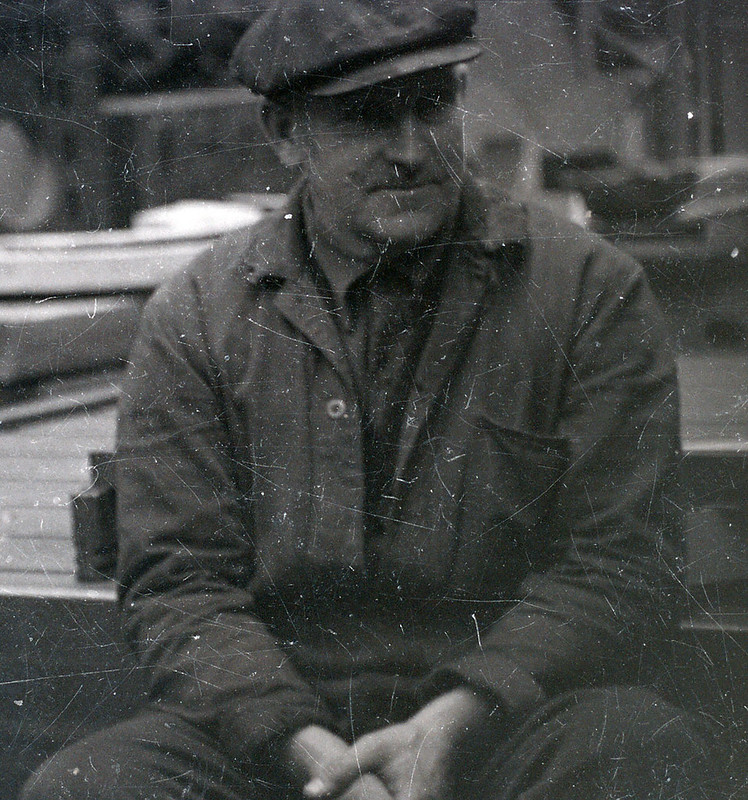
    Above is the first commercially released digitial audio track on PCM which is the jazz album by Steve Marcus and Jiro Inagaki.

    I didn’t decide to take this any further but if this project is revisited then this could be taken further.
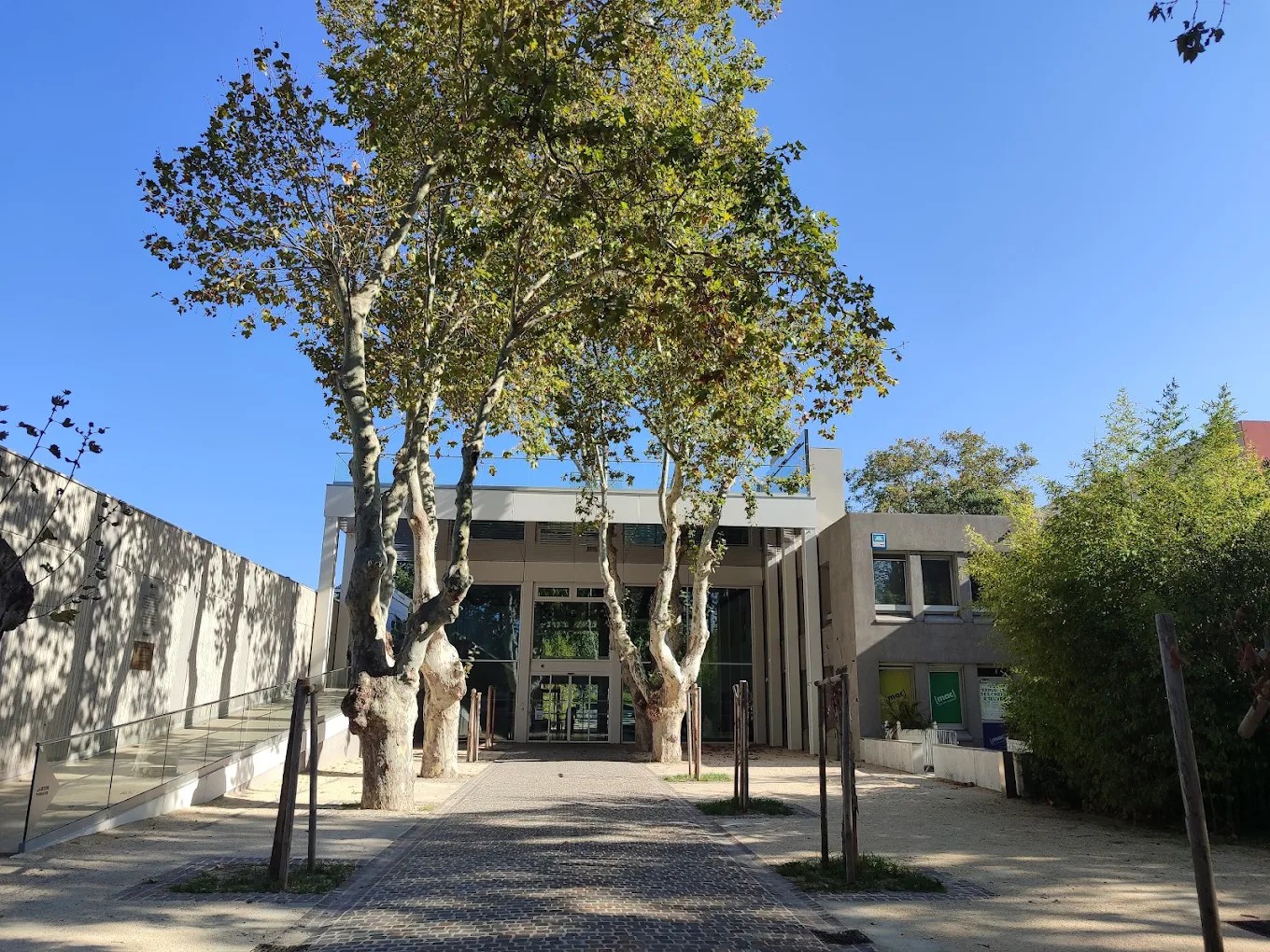
    When looking for meaningful quotes, Mikhail had suggested Marshall McLuhan as a known and insightful voice in the world of technology.

    Exploring Effecting the Audio:

    At the most violent moment of the audio, the detached voices of Marshall McLuhan has been processed through the distortion effect to push them to extremes.

    Above is the spectrogram is the digital router noise. I personally loved the visuals of the digital messages.

    For the time stretched router noise I used the denoise to either extreme and syned up as the bed of the audio.

    With Pas de Deux the Studio Reverb on after effects gave the piece of music an ethereal tone with the higher notes dragged out becoming a constant of the piece.

    The screenshots above are the visuals of the archive footage using effects to make them unrecognisable.

    Final Audio:

    The isolated audio without the visuals of the piece.

    Taking it further:

    In my head I envisaged this final piece as a teaser reel of a gallery piece that would be more long form and on a larger scale.

    Lost Global Village

    With my final piece the lost global village I took the 3 audio elements in the composition pushed to extremes with effects and the visuals are archived footage of 3D animation promo footage from the 90’s with the same treatment applied to the effects.

    I had a personal outcome in this project to not just deliver a finished product but to explore.

    Reflection:

    Feedback Notes:

    Personal Reflection:

    I came into this project with pre conceived notions of using personal projects and producing a music track and using midi controllers but that felt like what I usually do lock into and idea.

    So in reaction to this preconceived notion and after a conversation with Paul I tried to not deliver a clear finished product and which I think I failed at and should have leaned into it more.

    If I was doing this again I would listen to Paul and Mikhail’s feedback and allow the work so go to extremes and not get in the way of the process and subdue it. To use one element and let it loop until it becomes ‘difficult’ and allow myself and my art to become comfortable with taking up space.