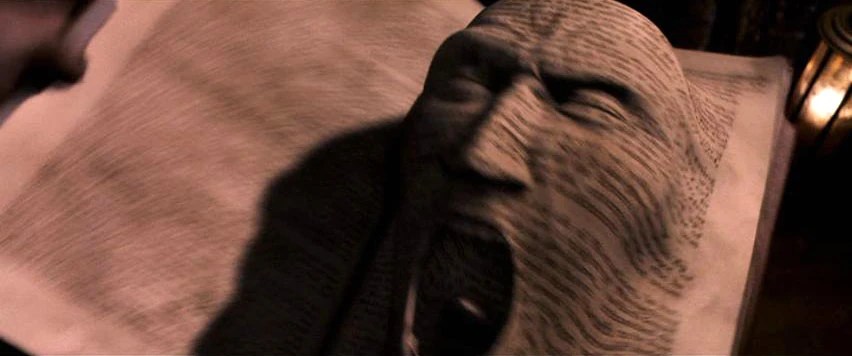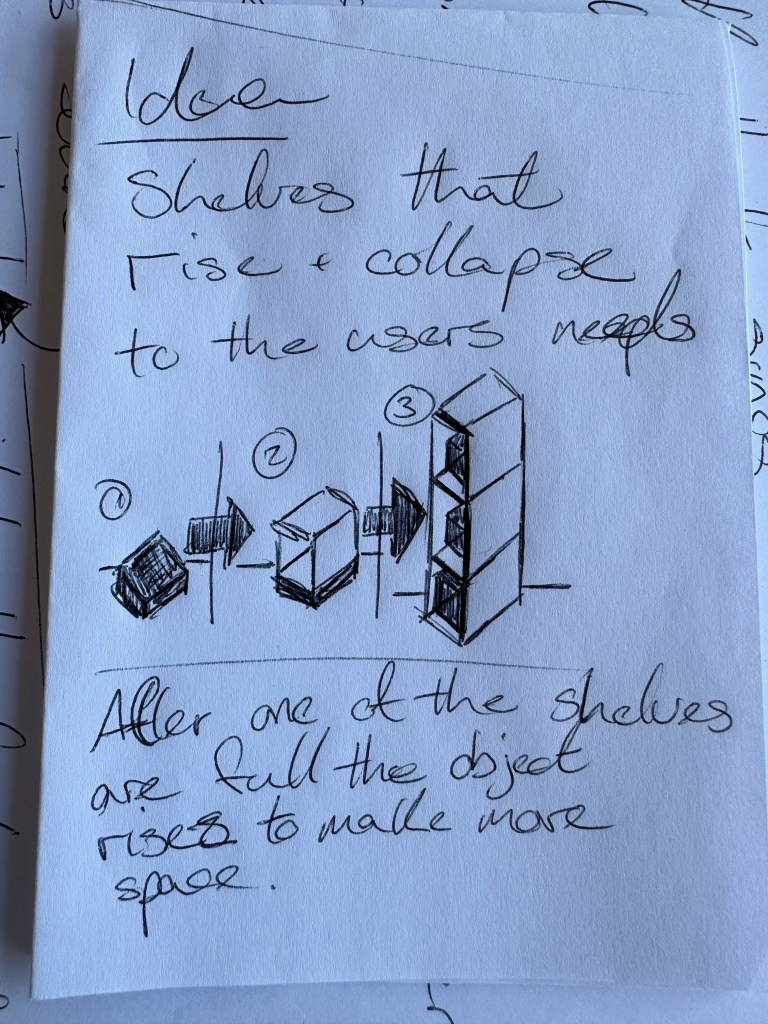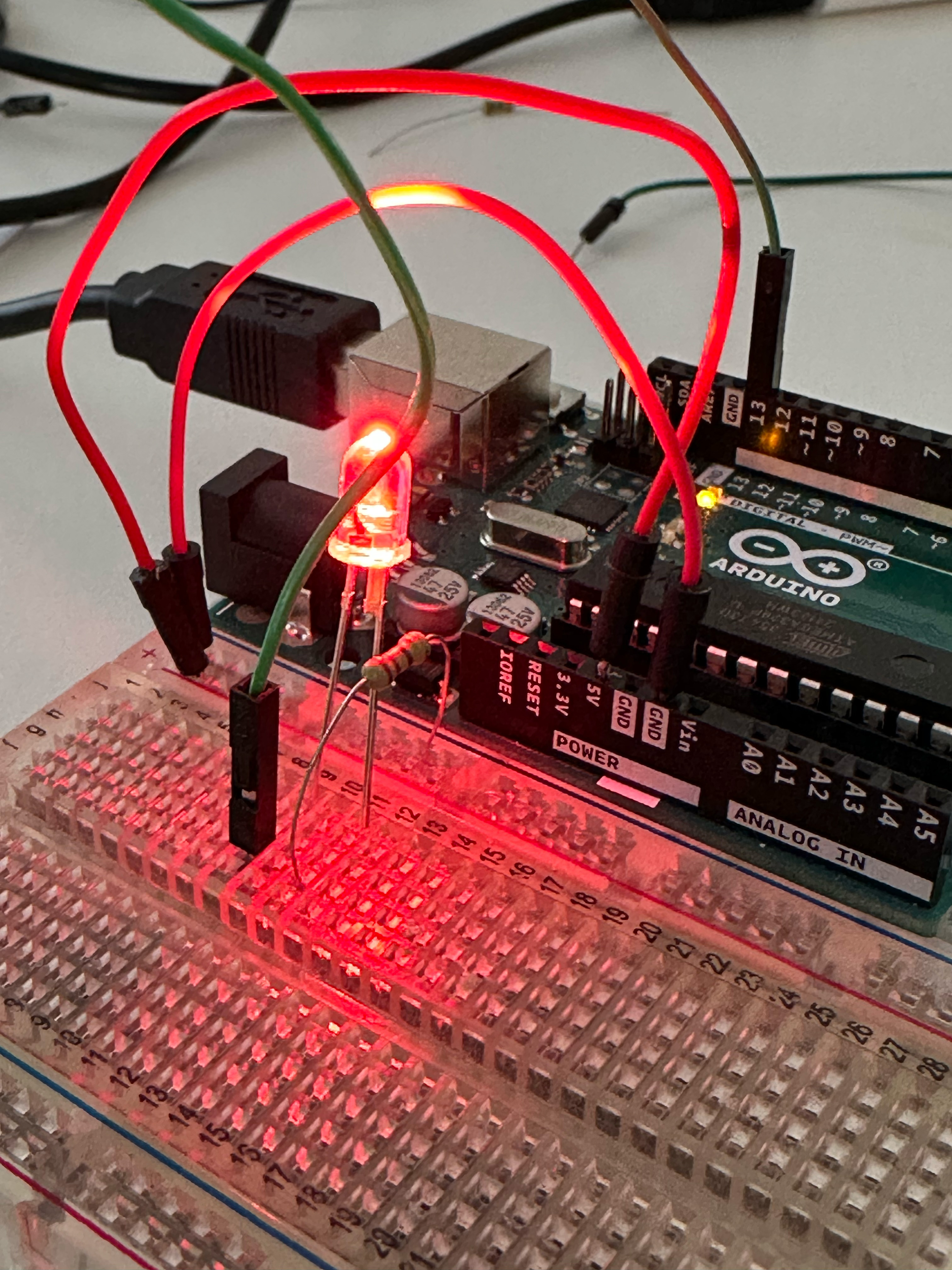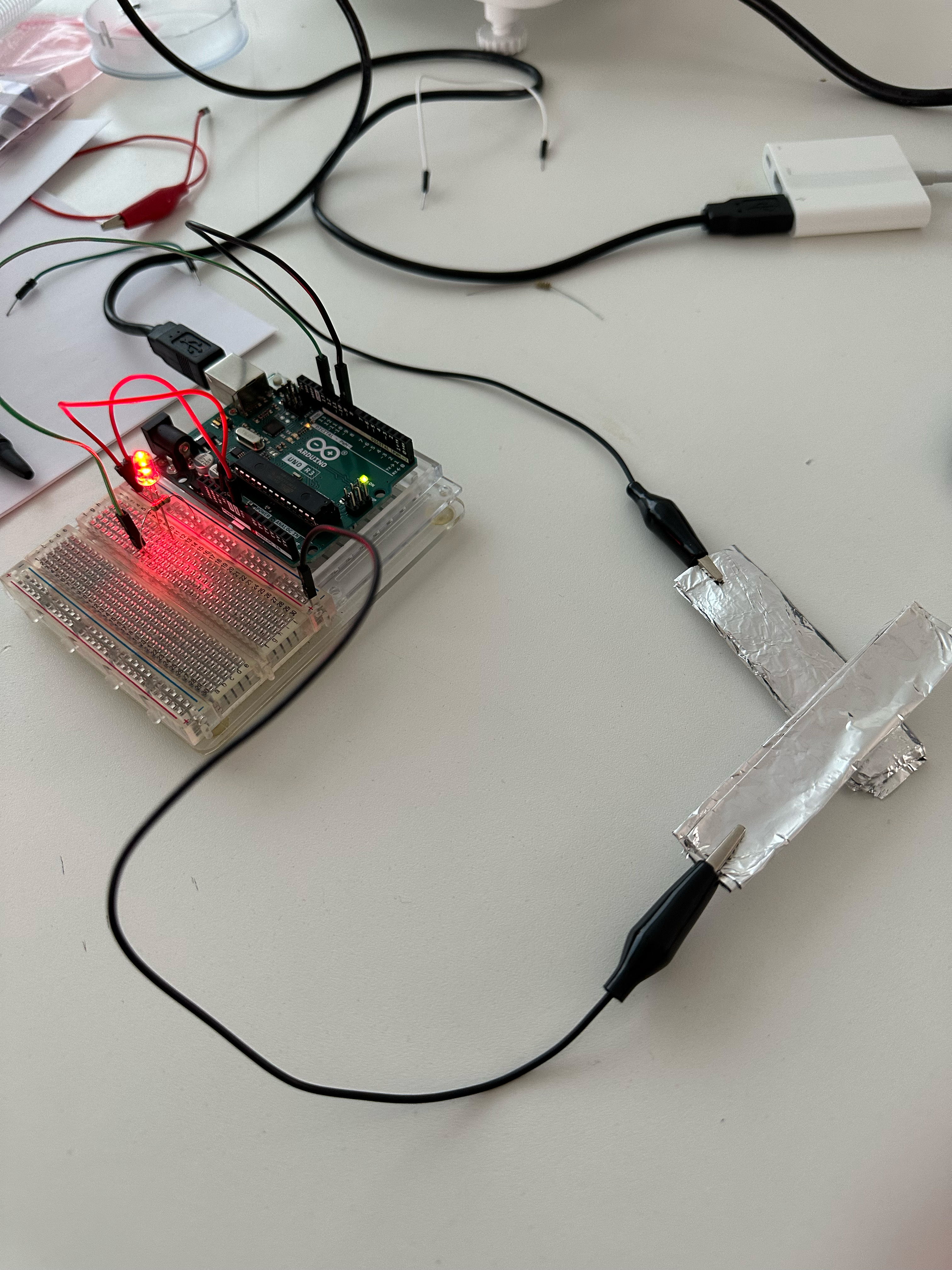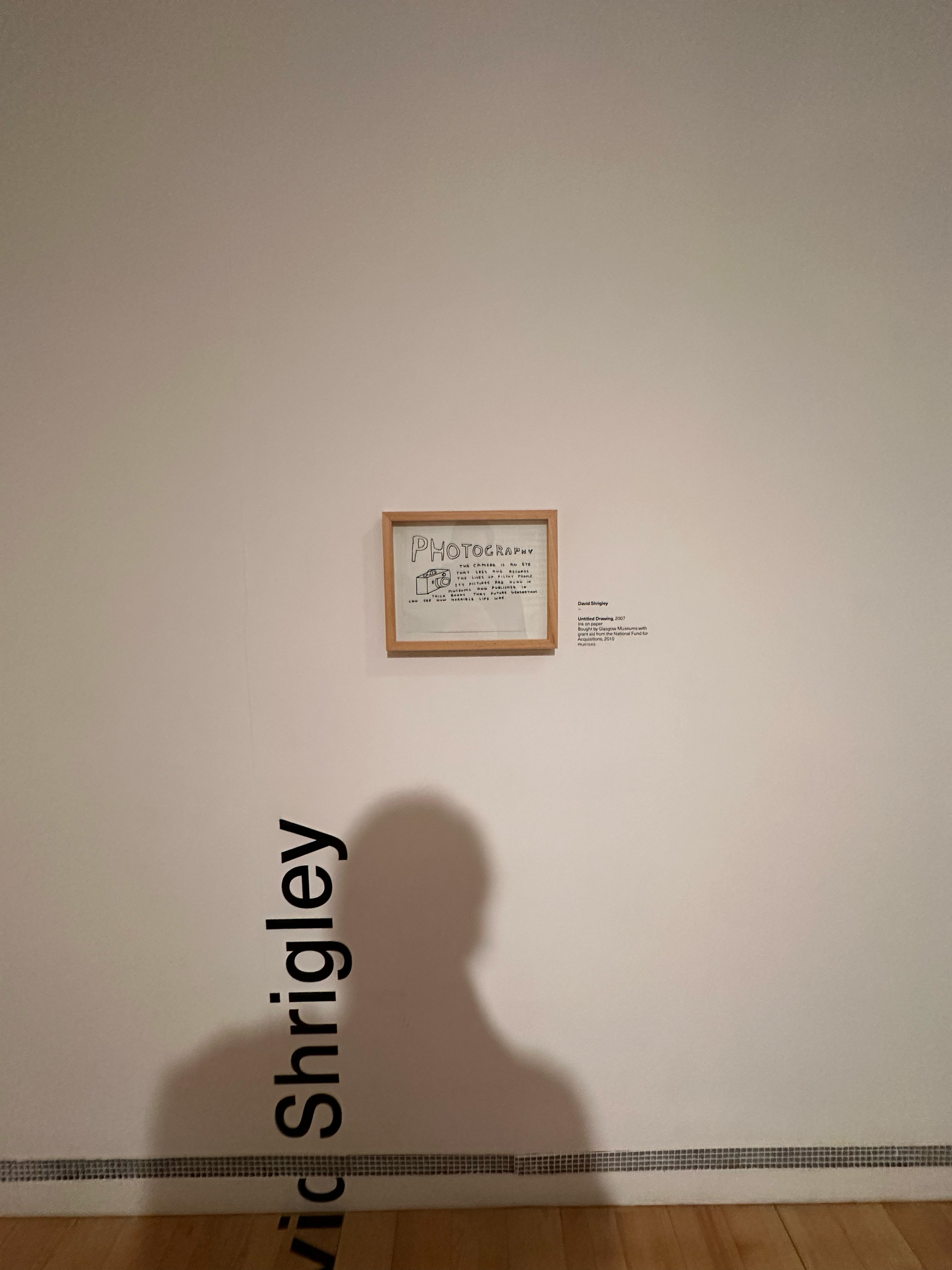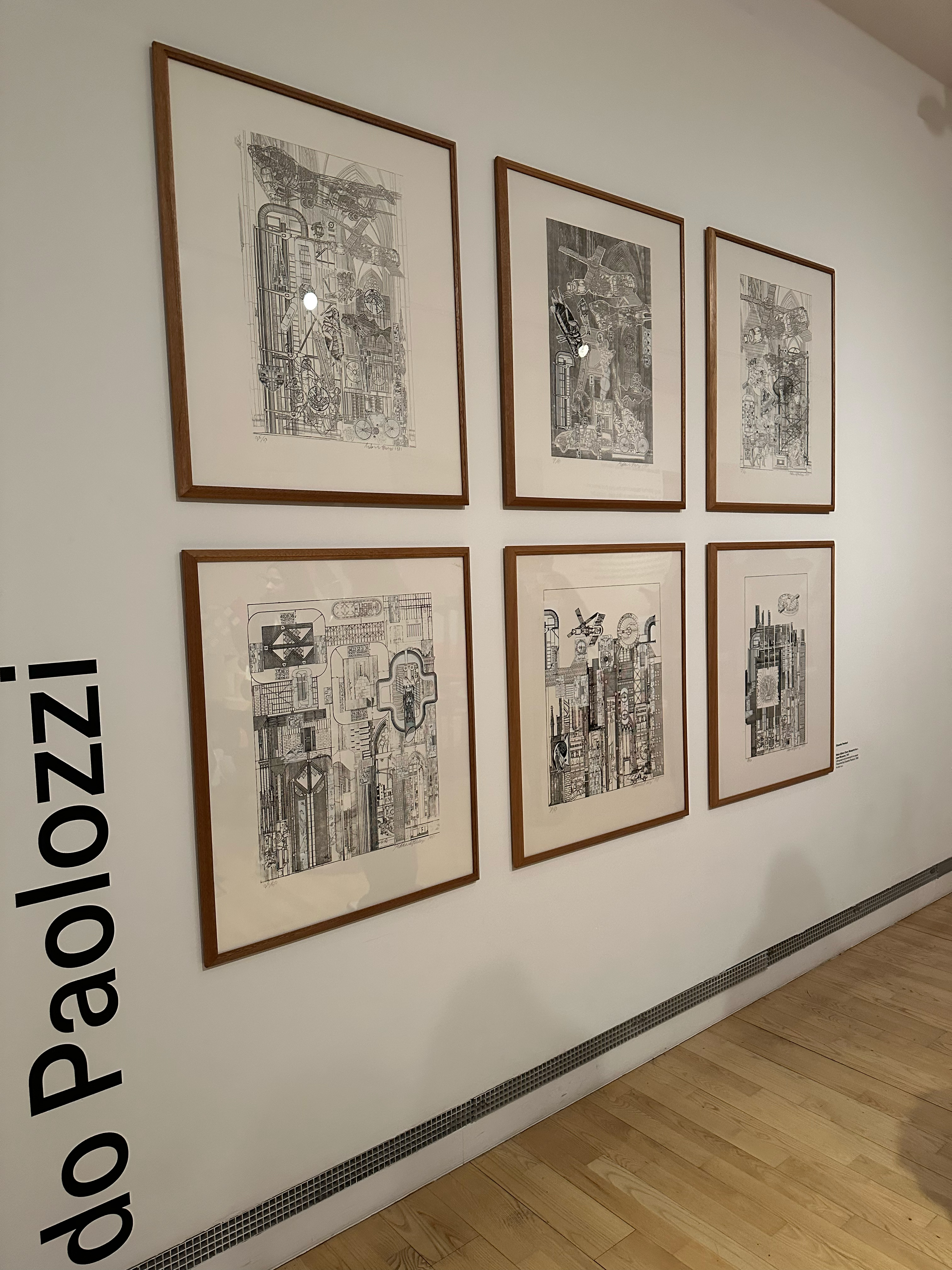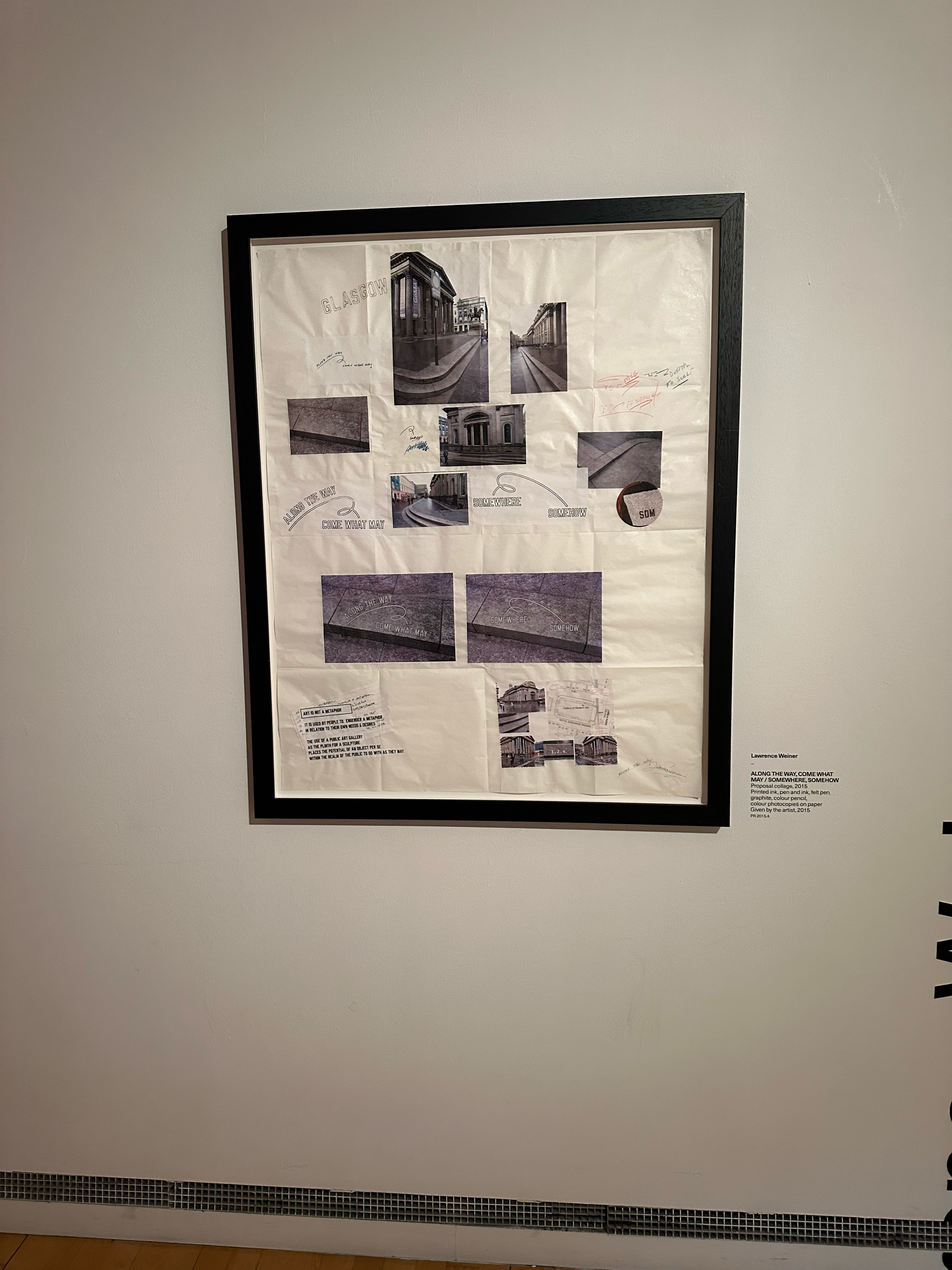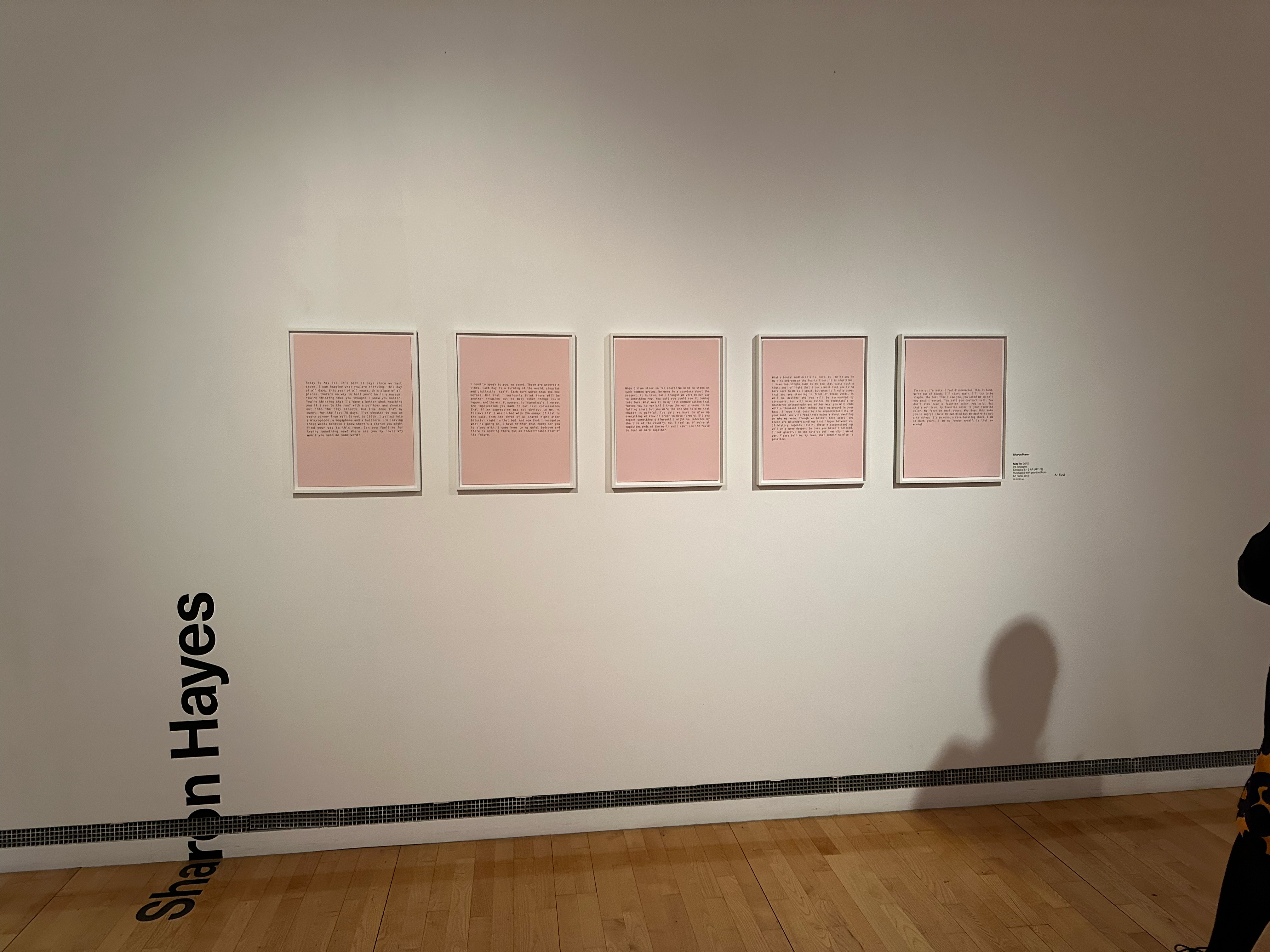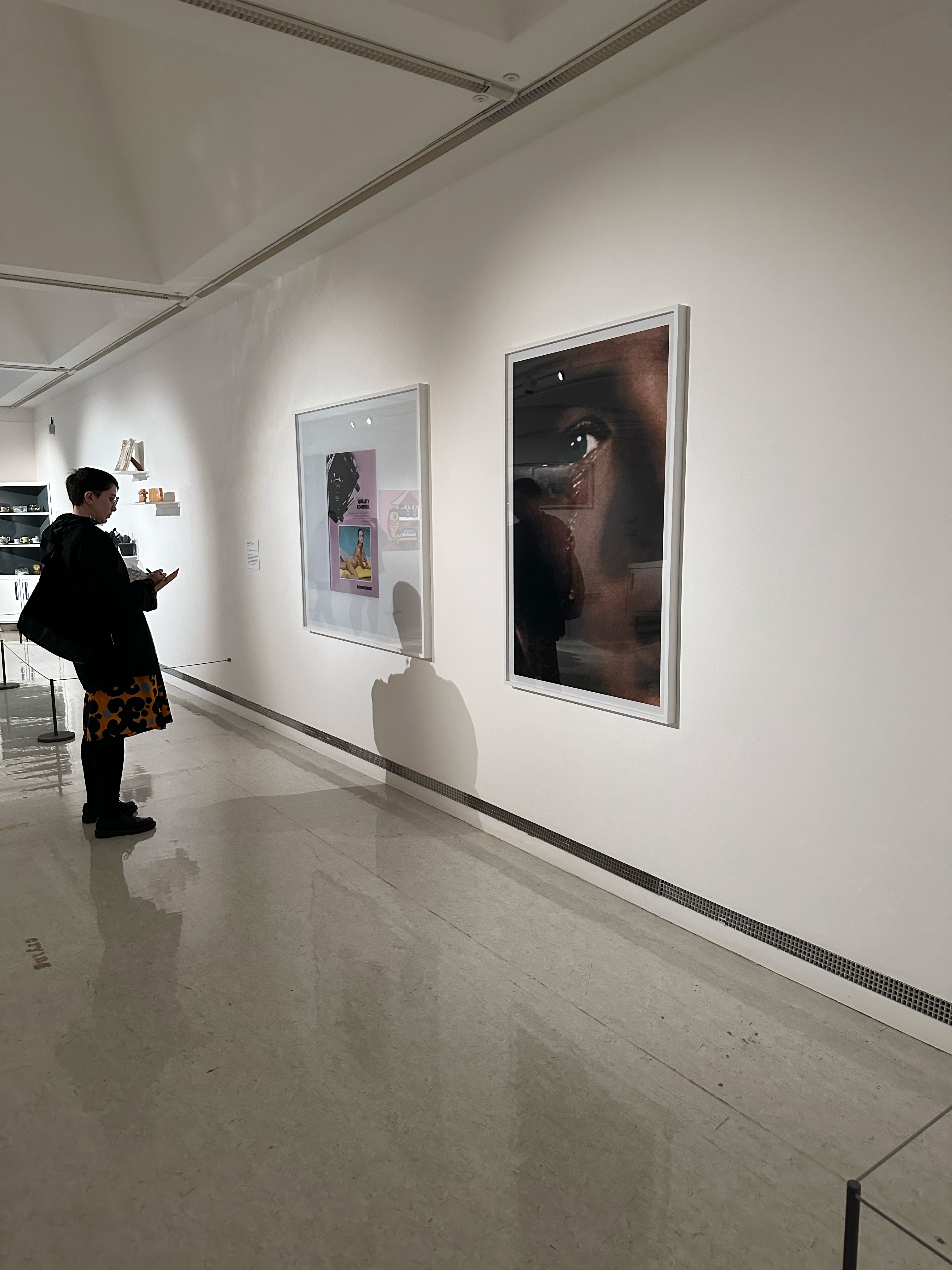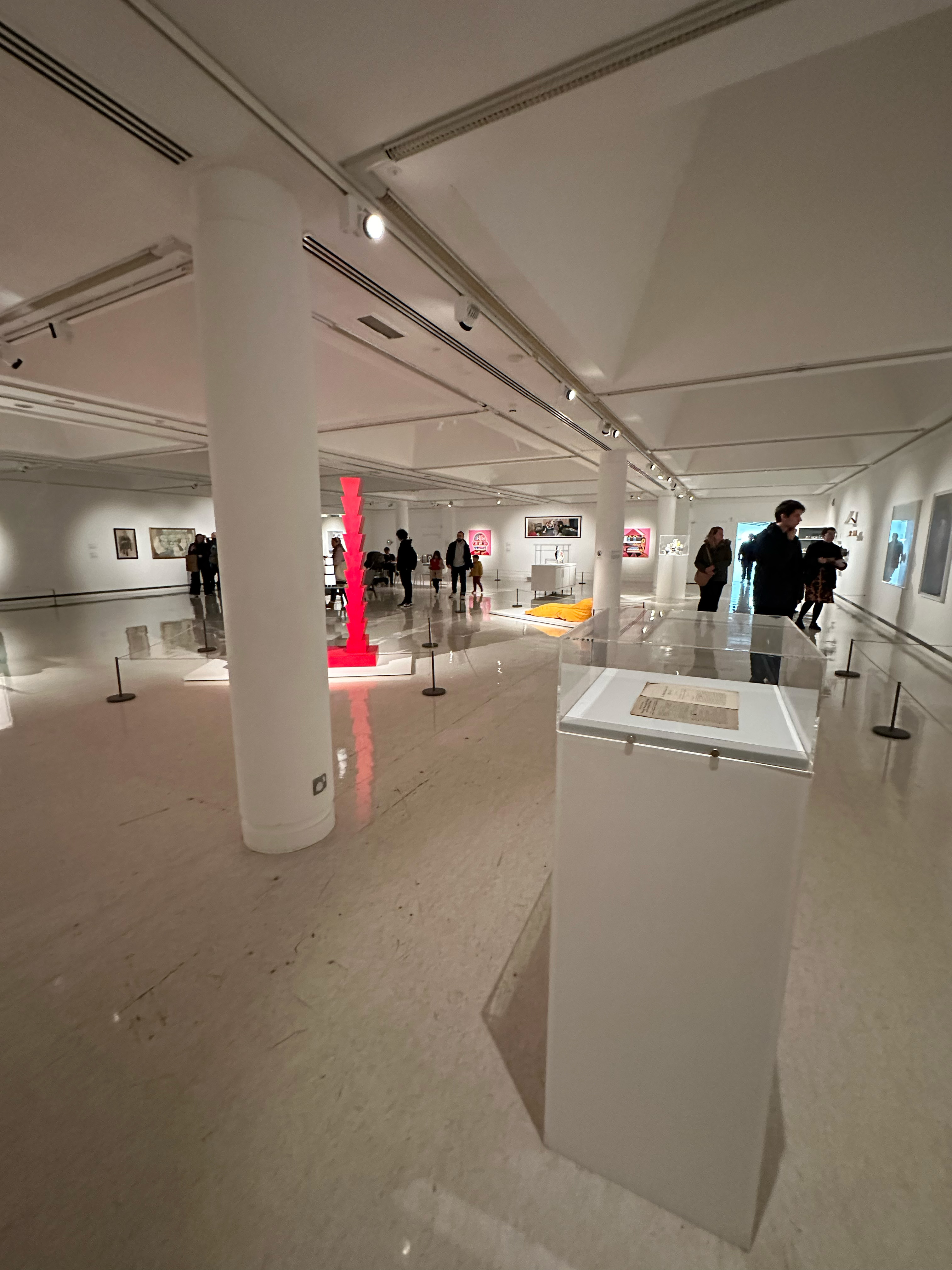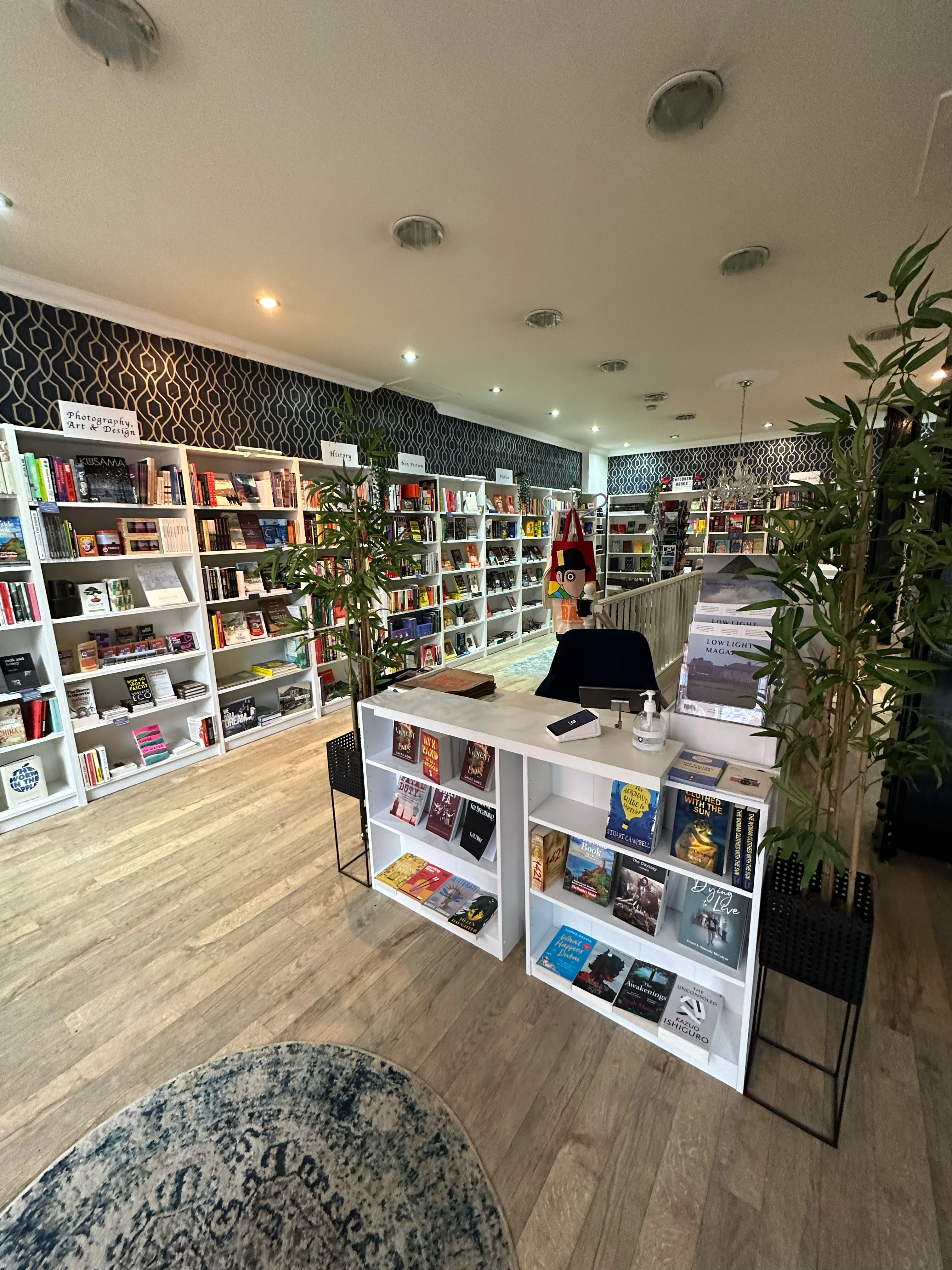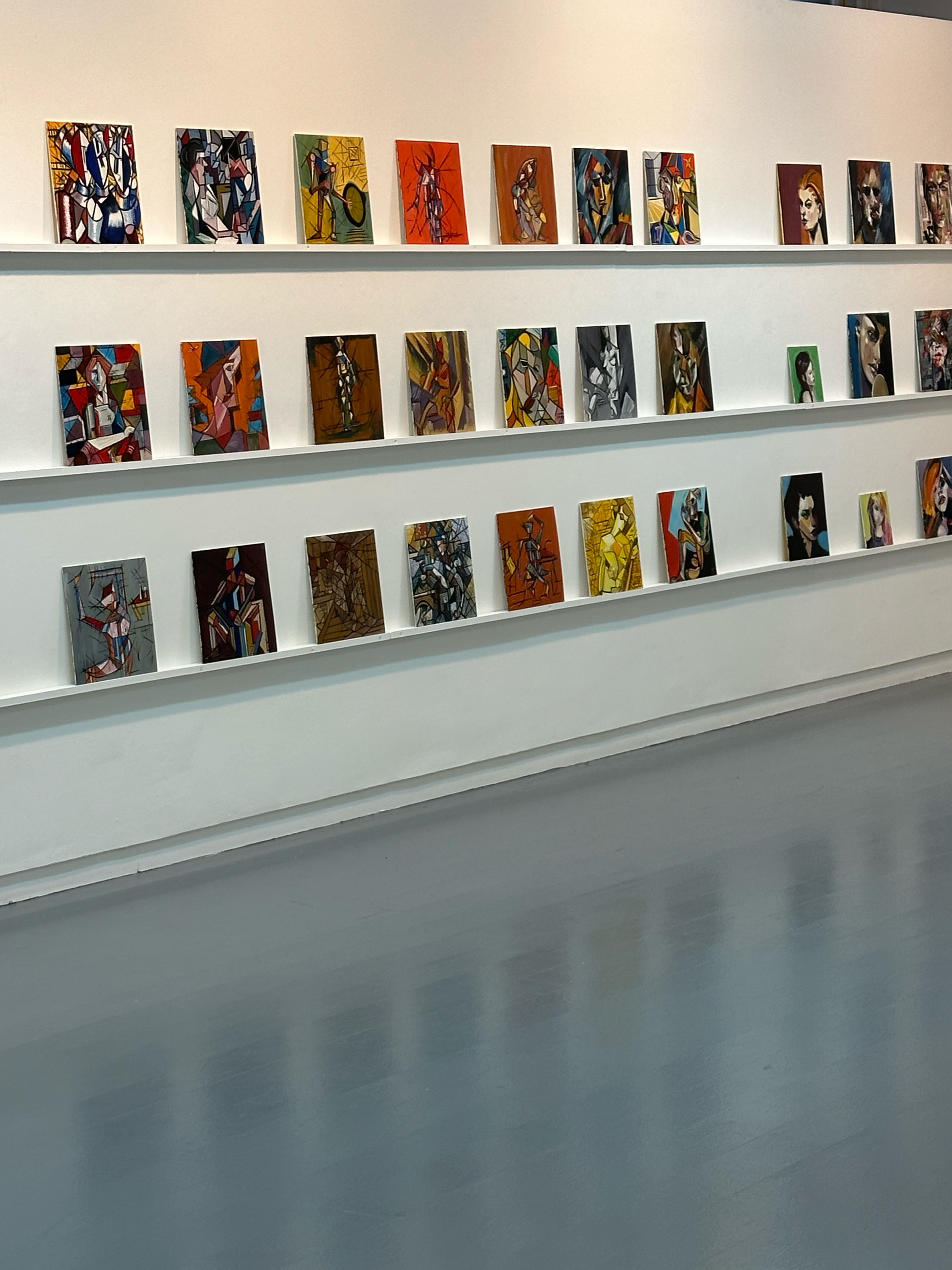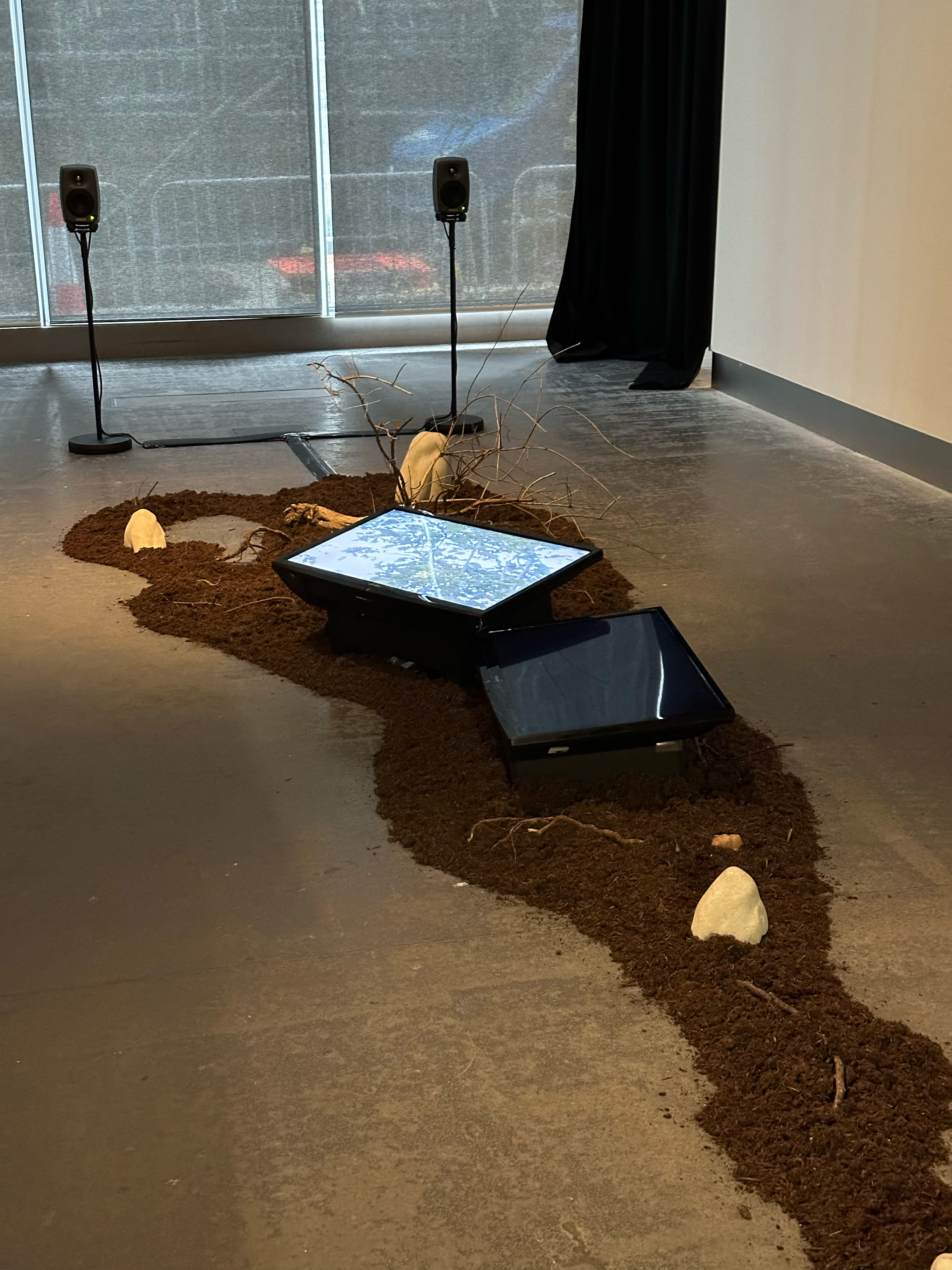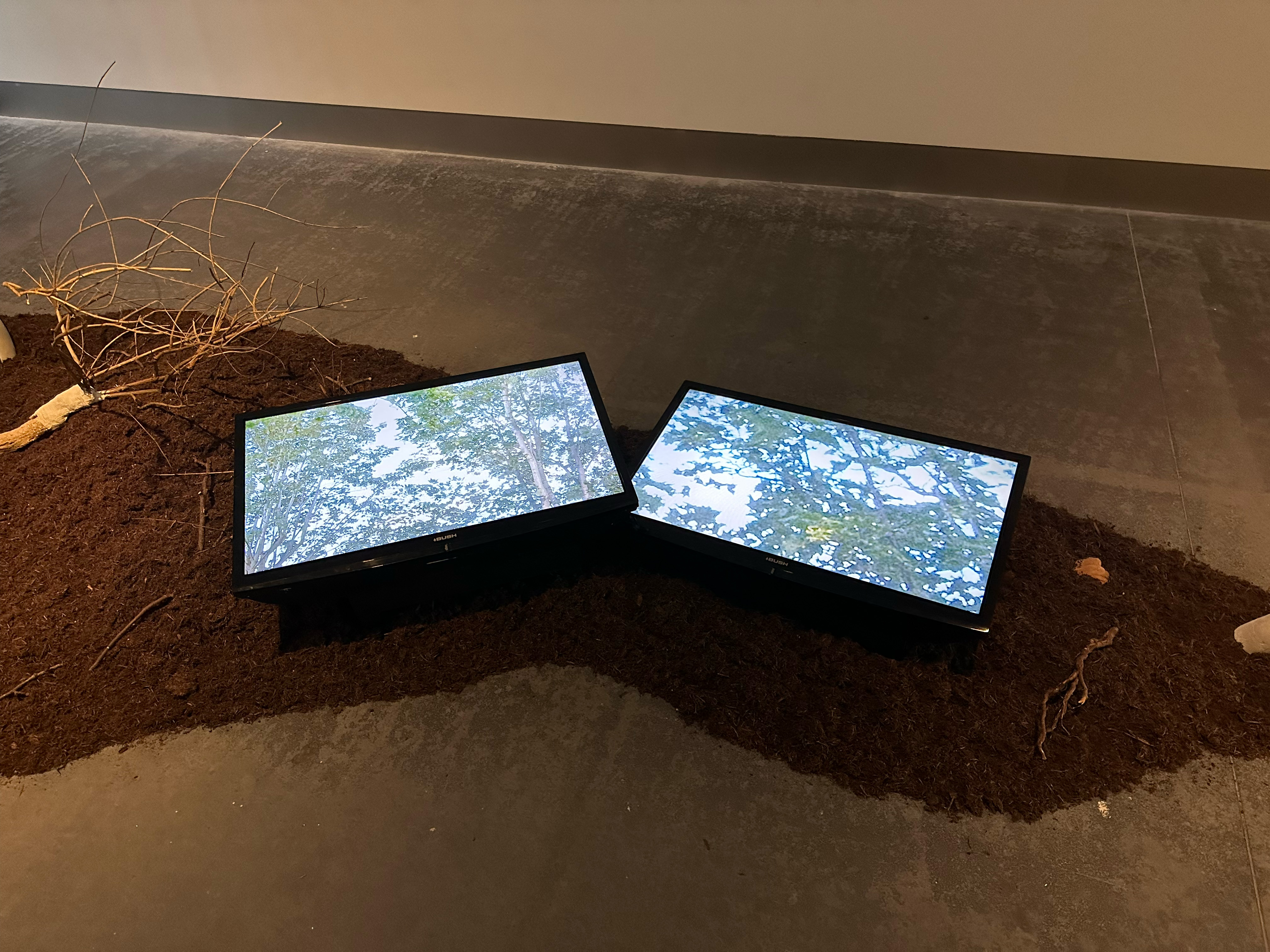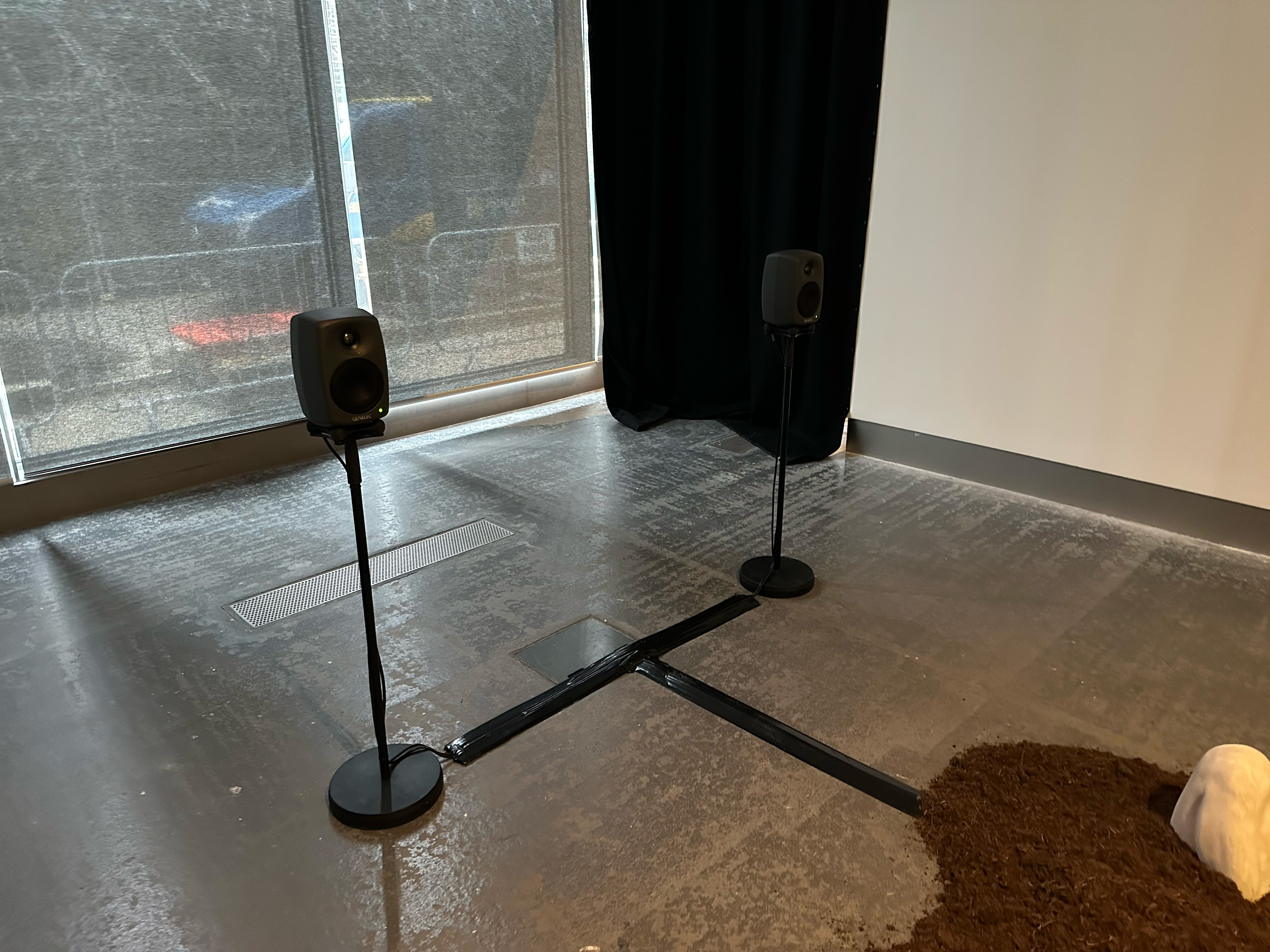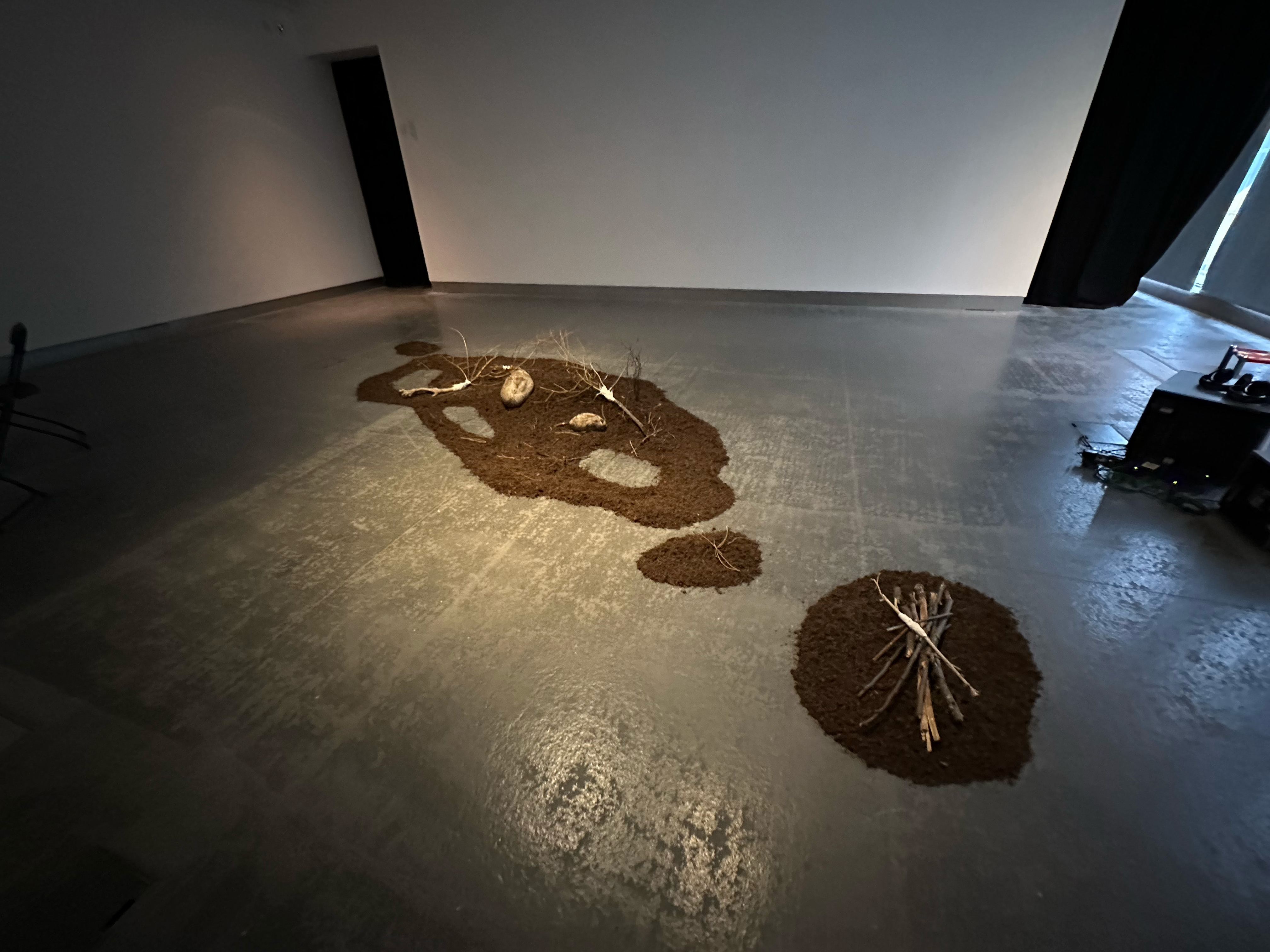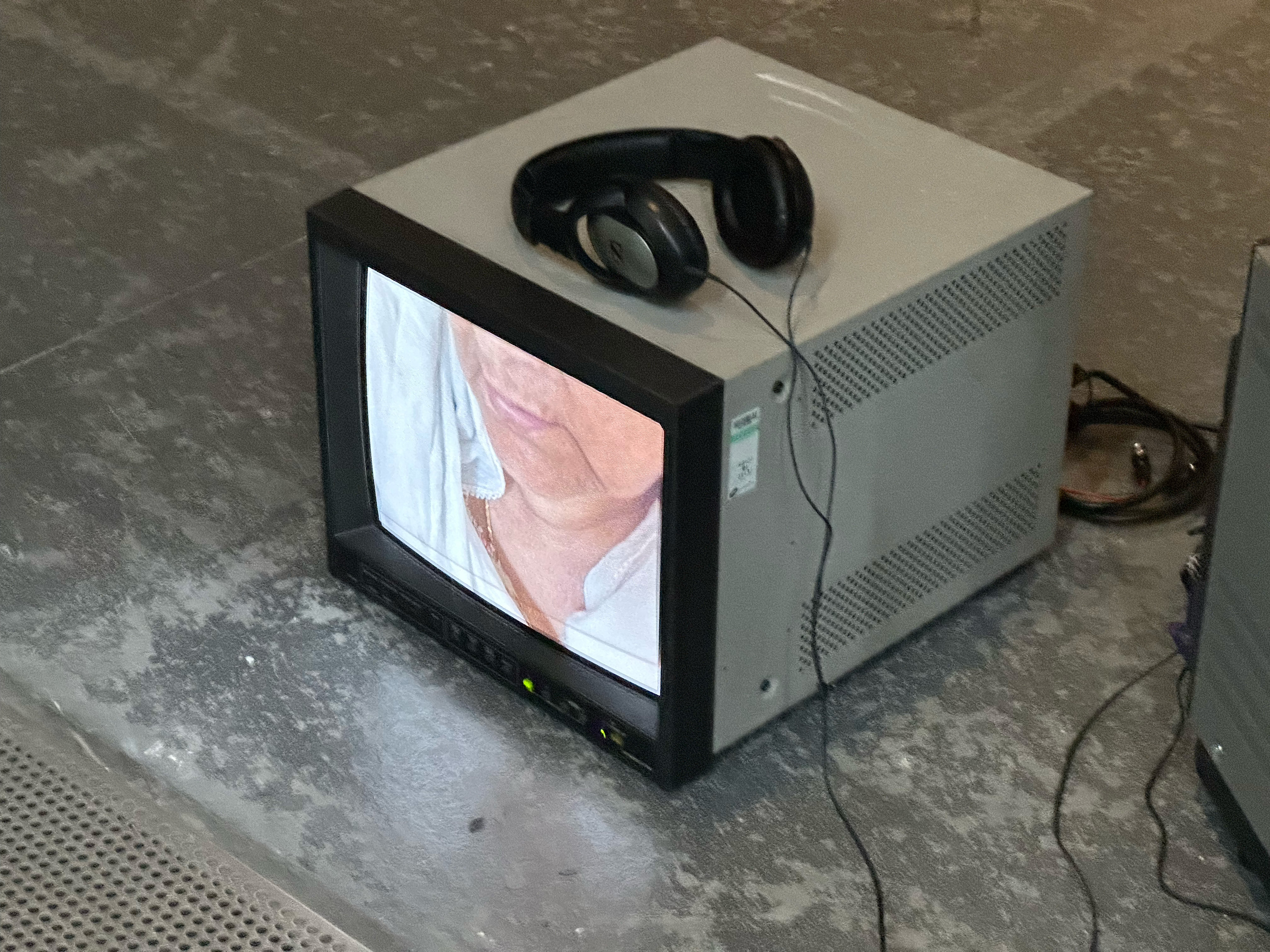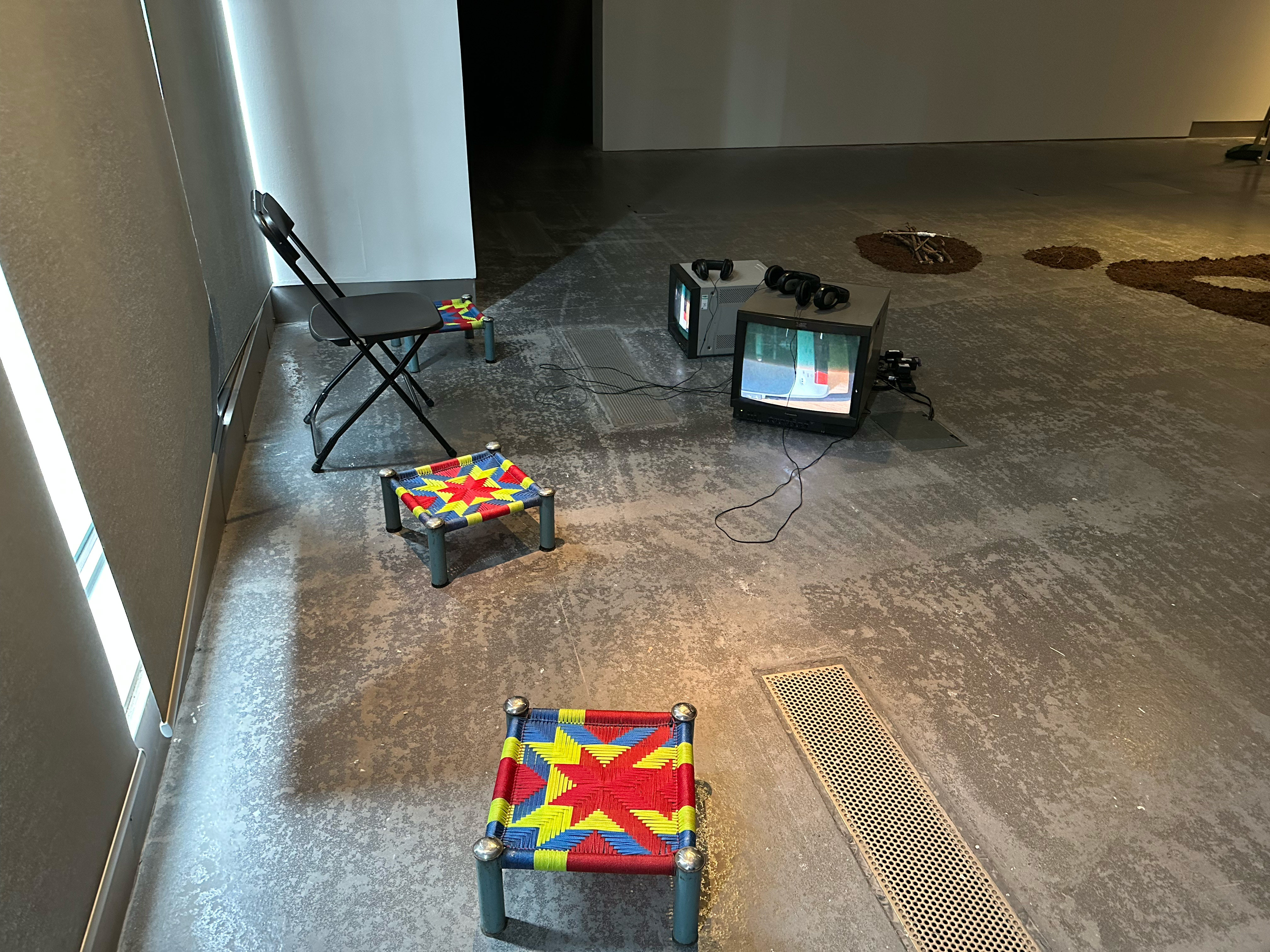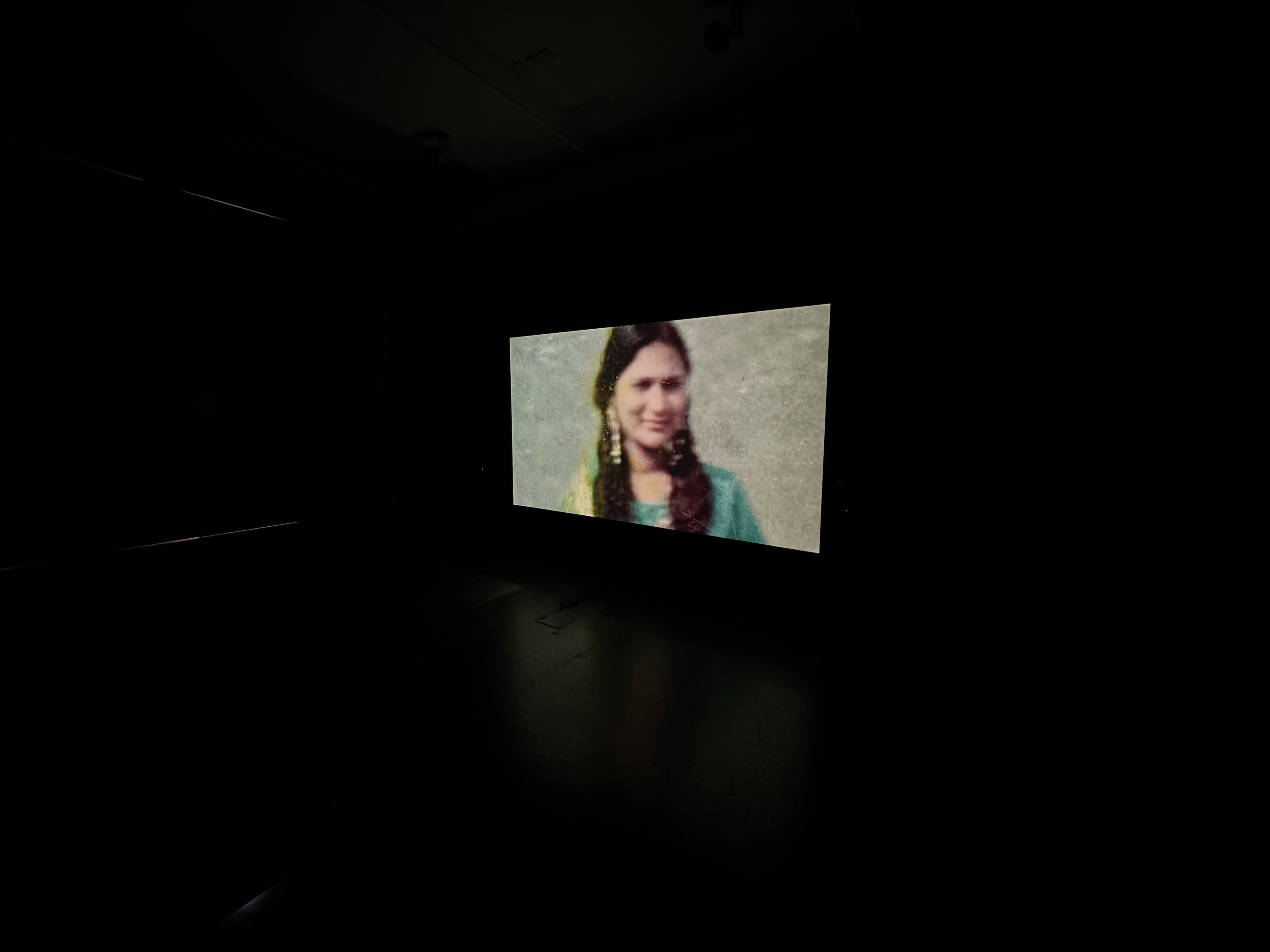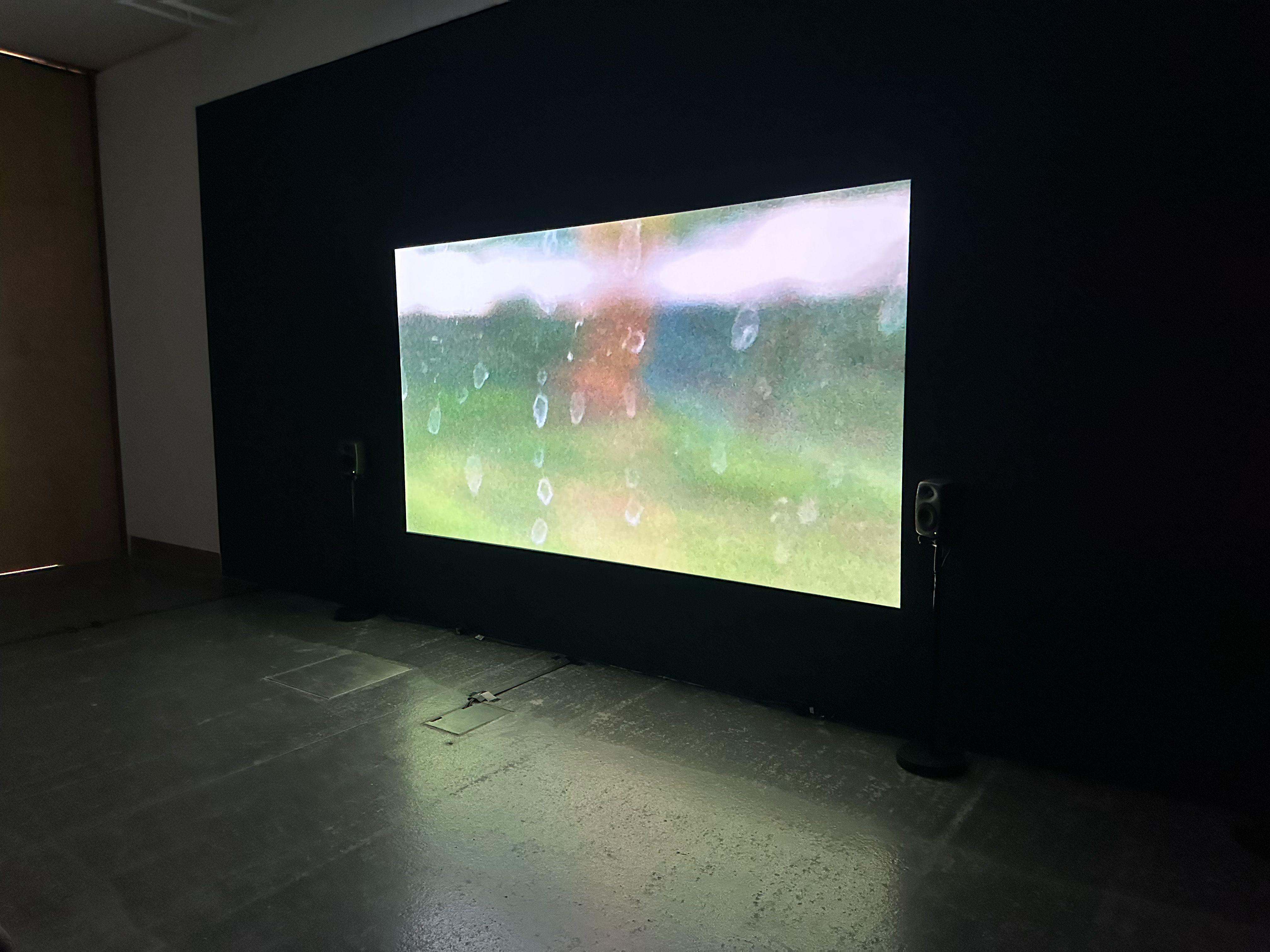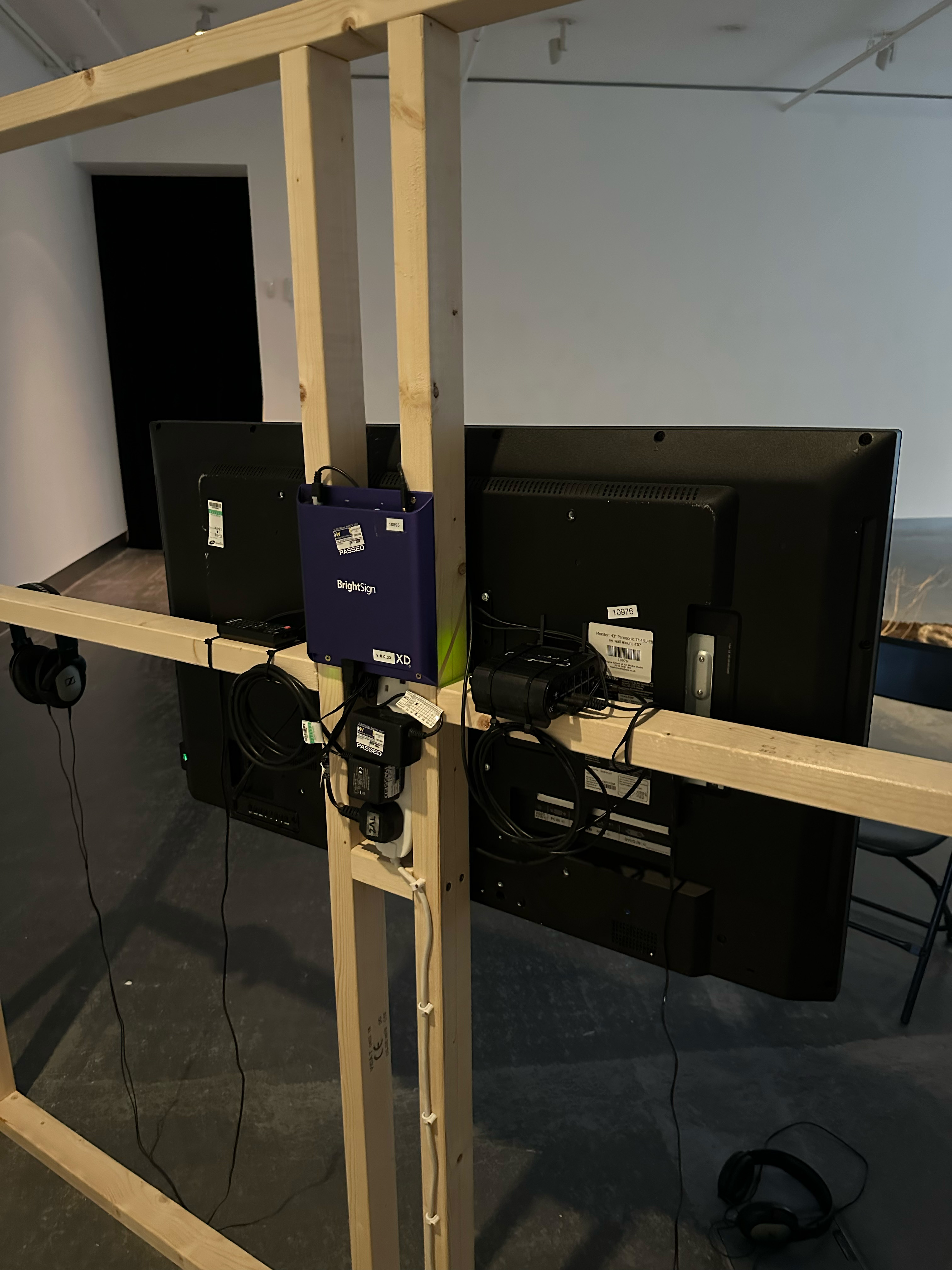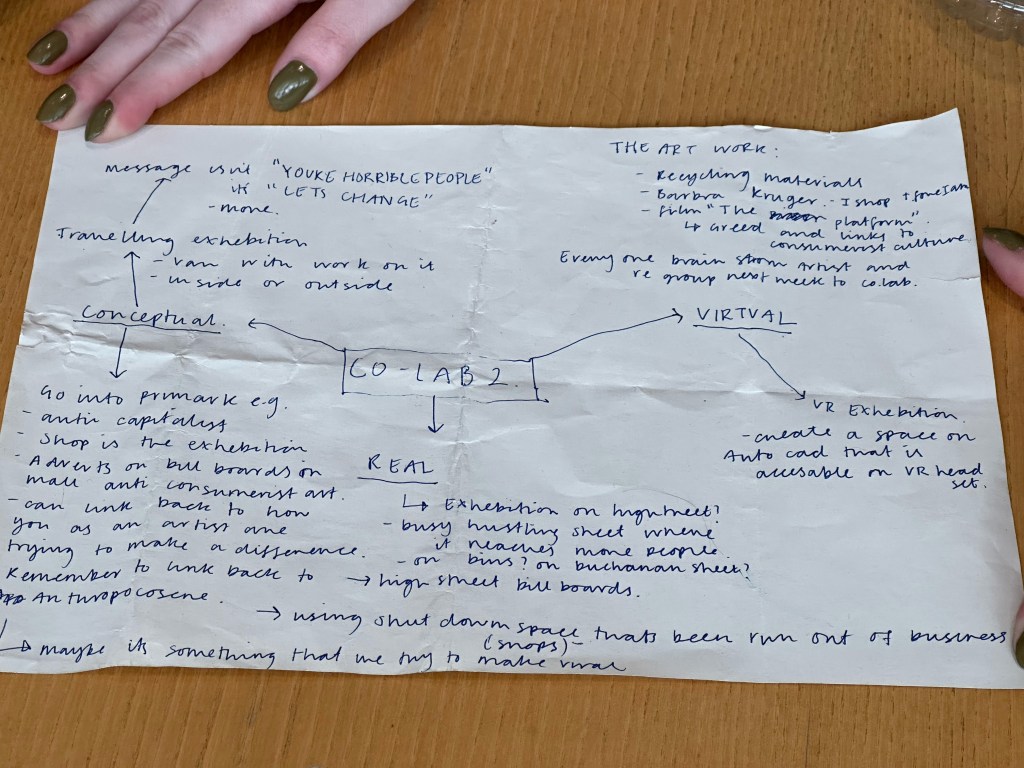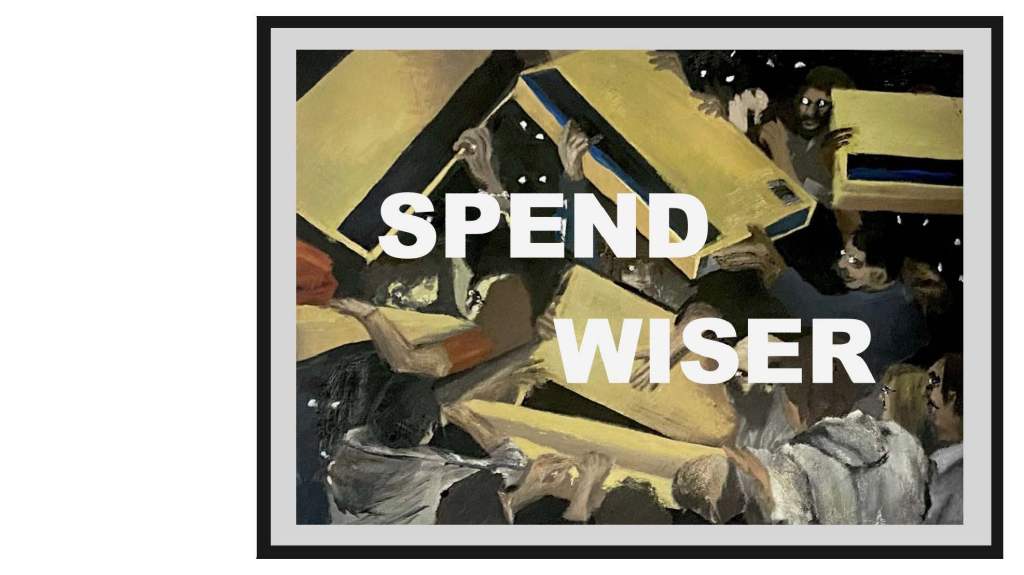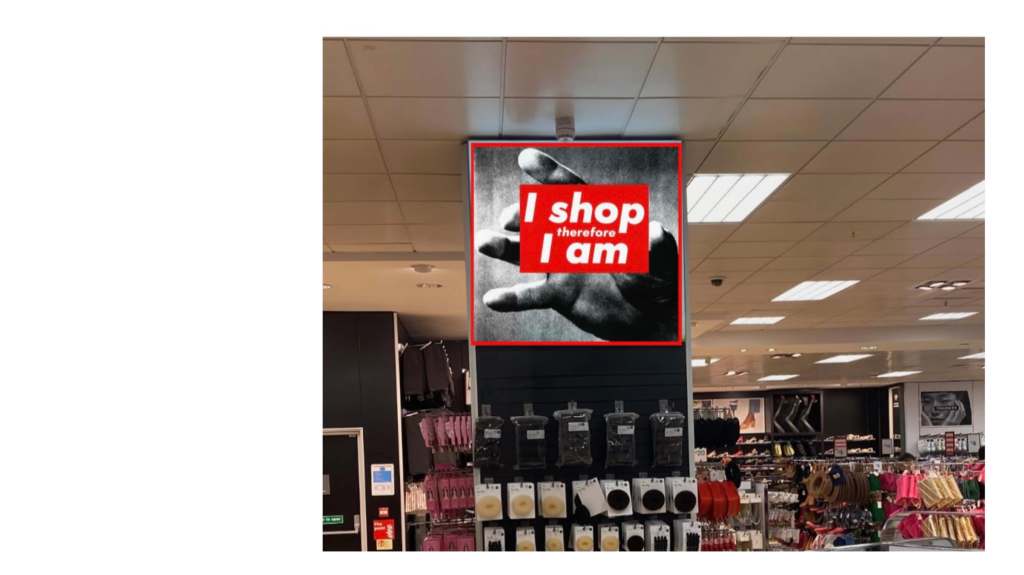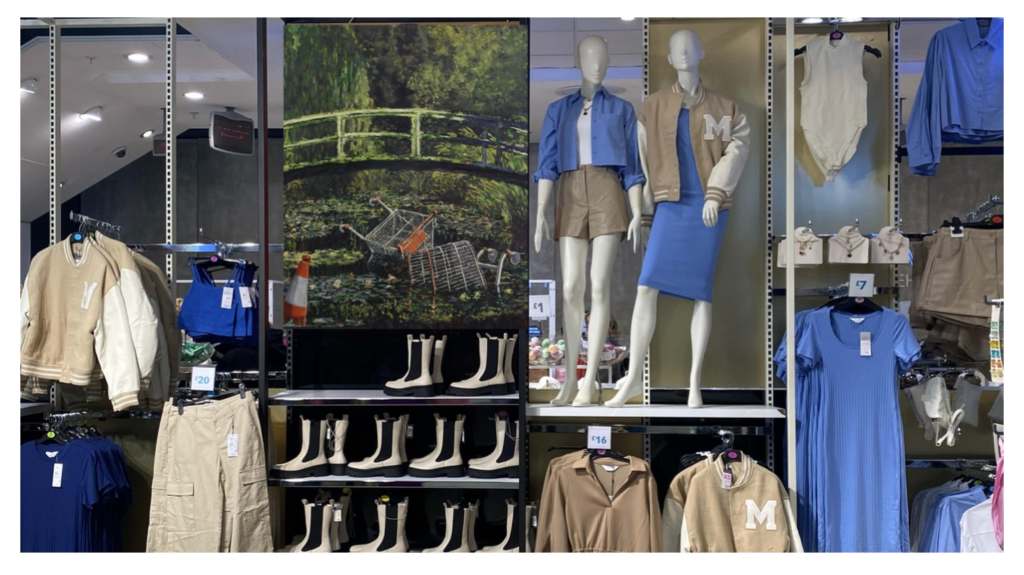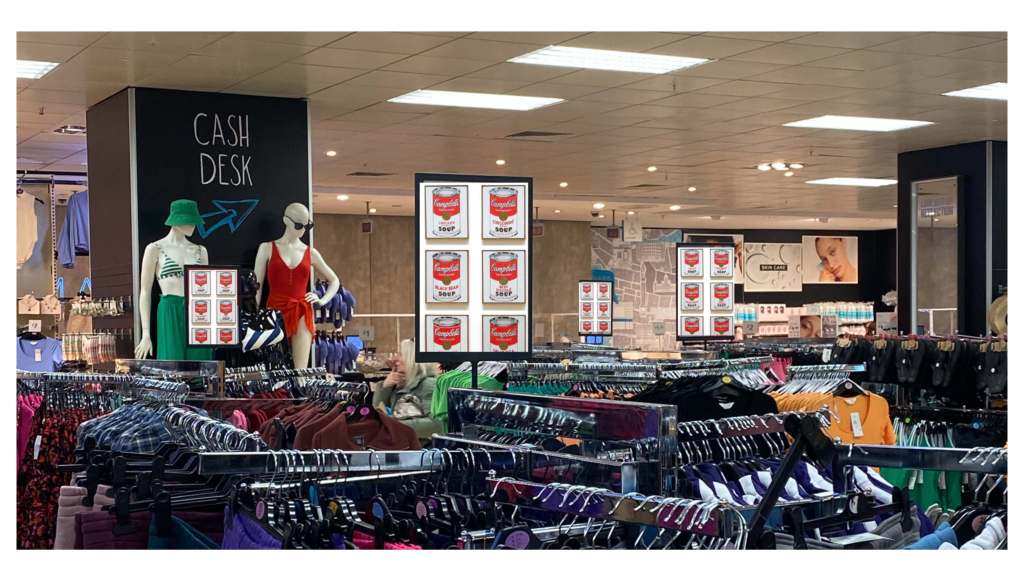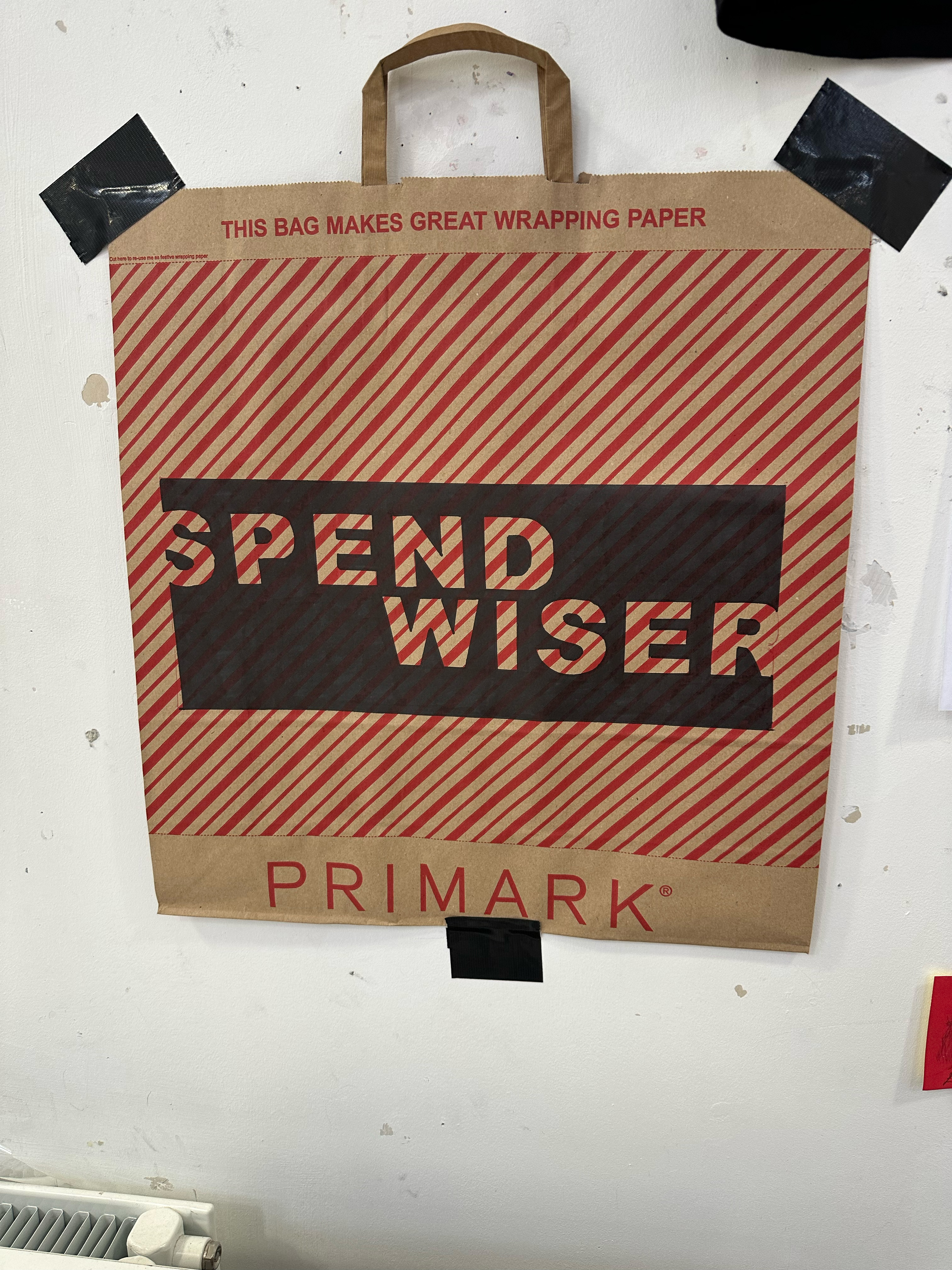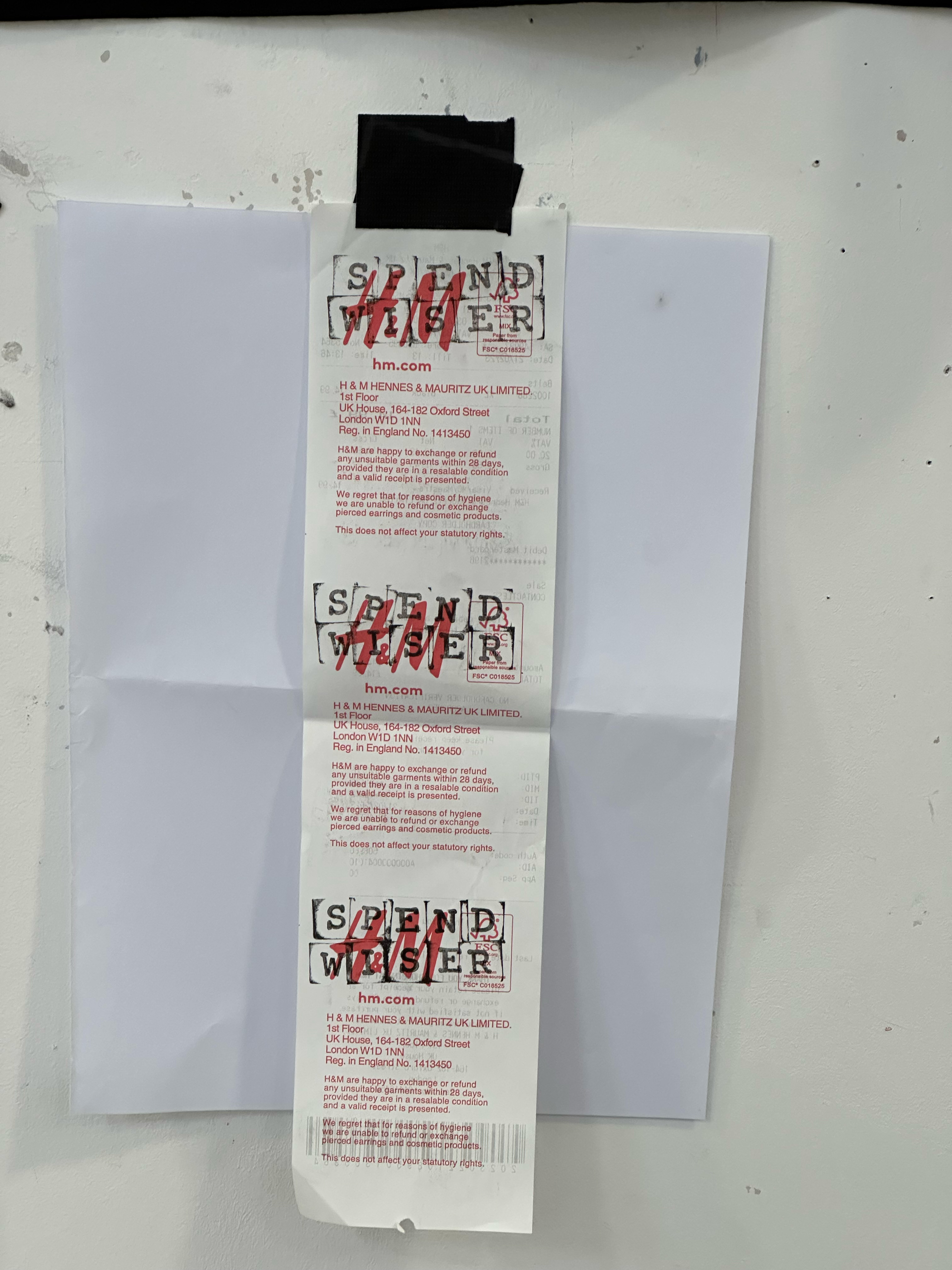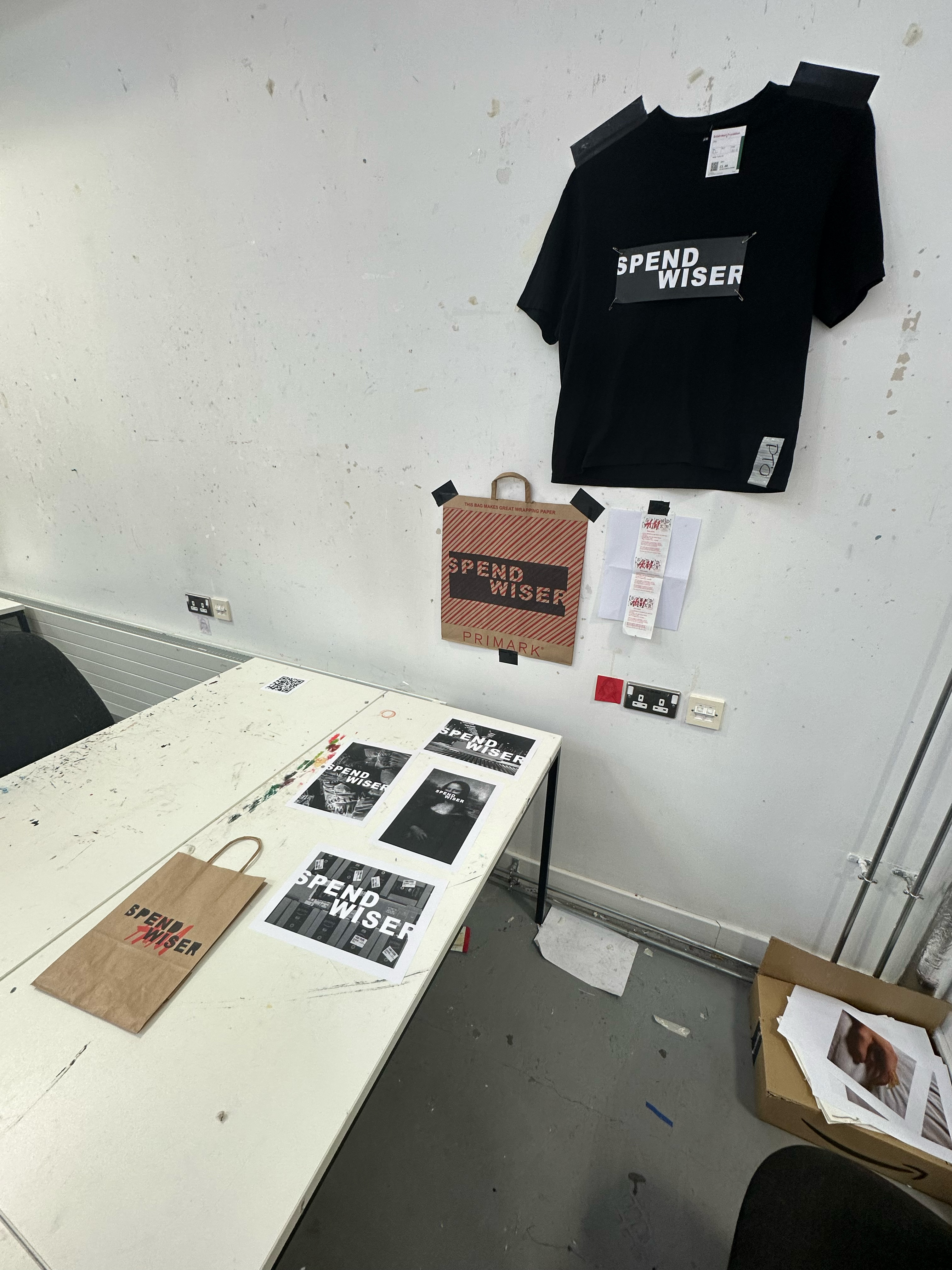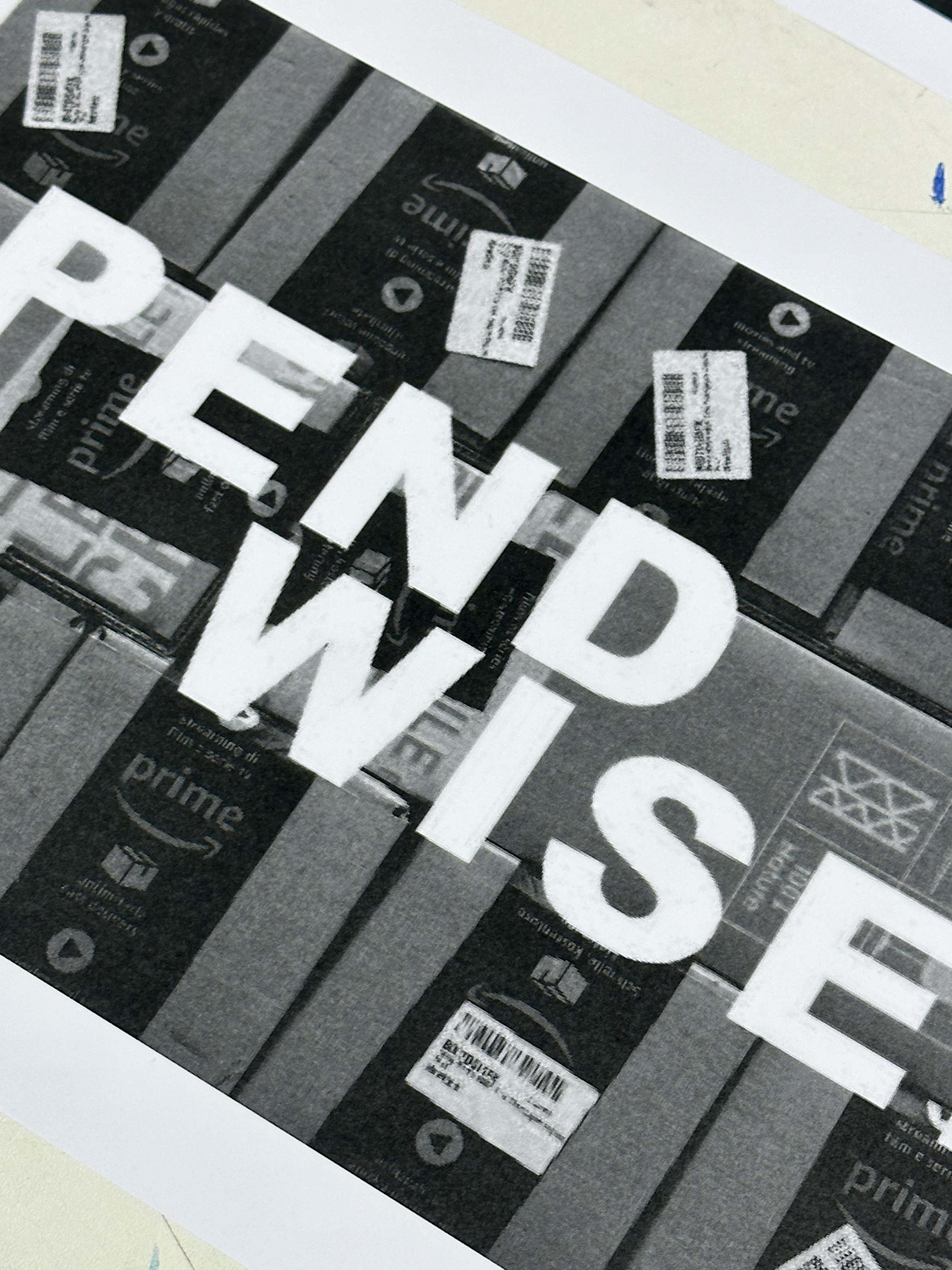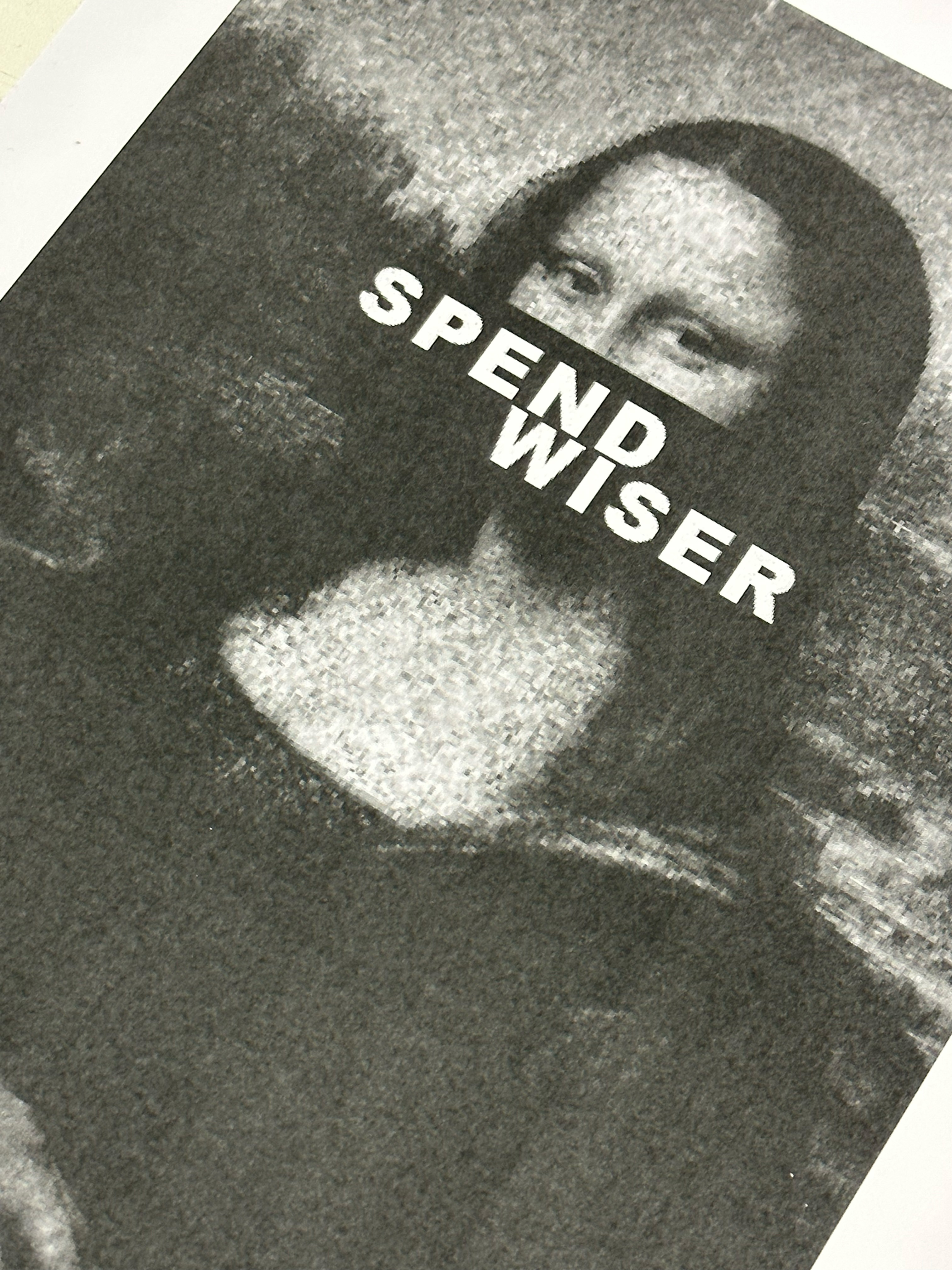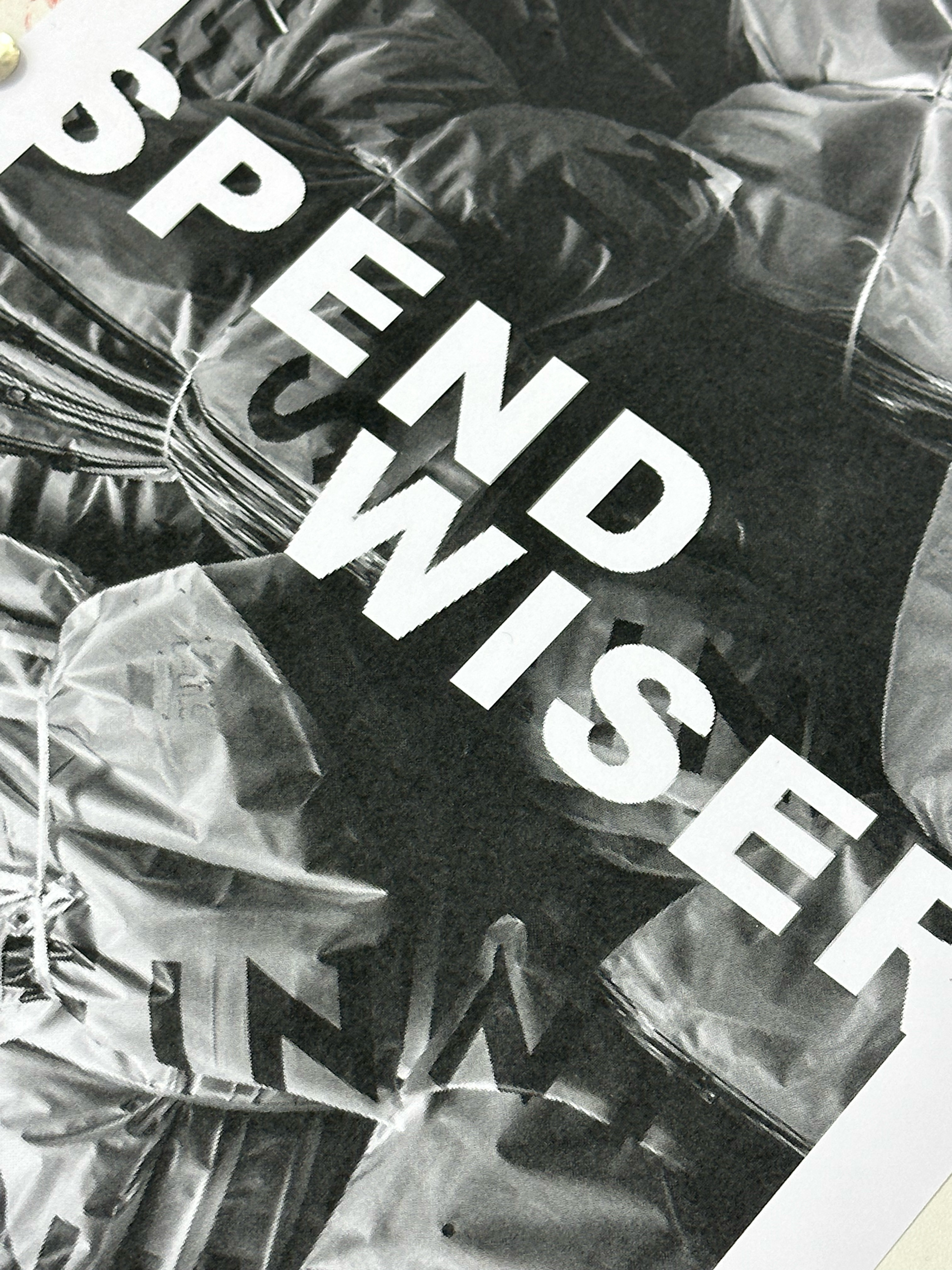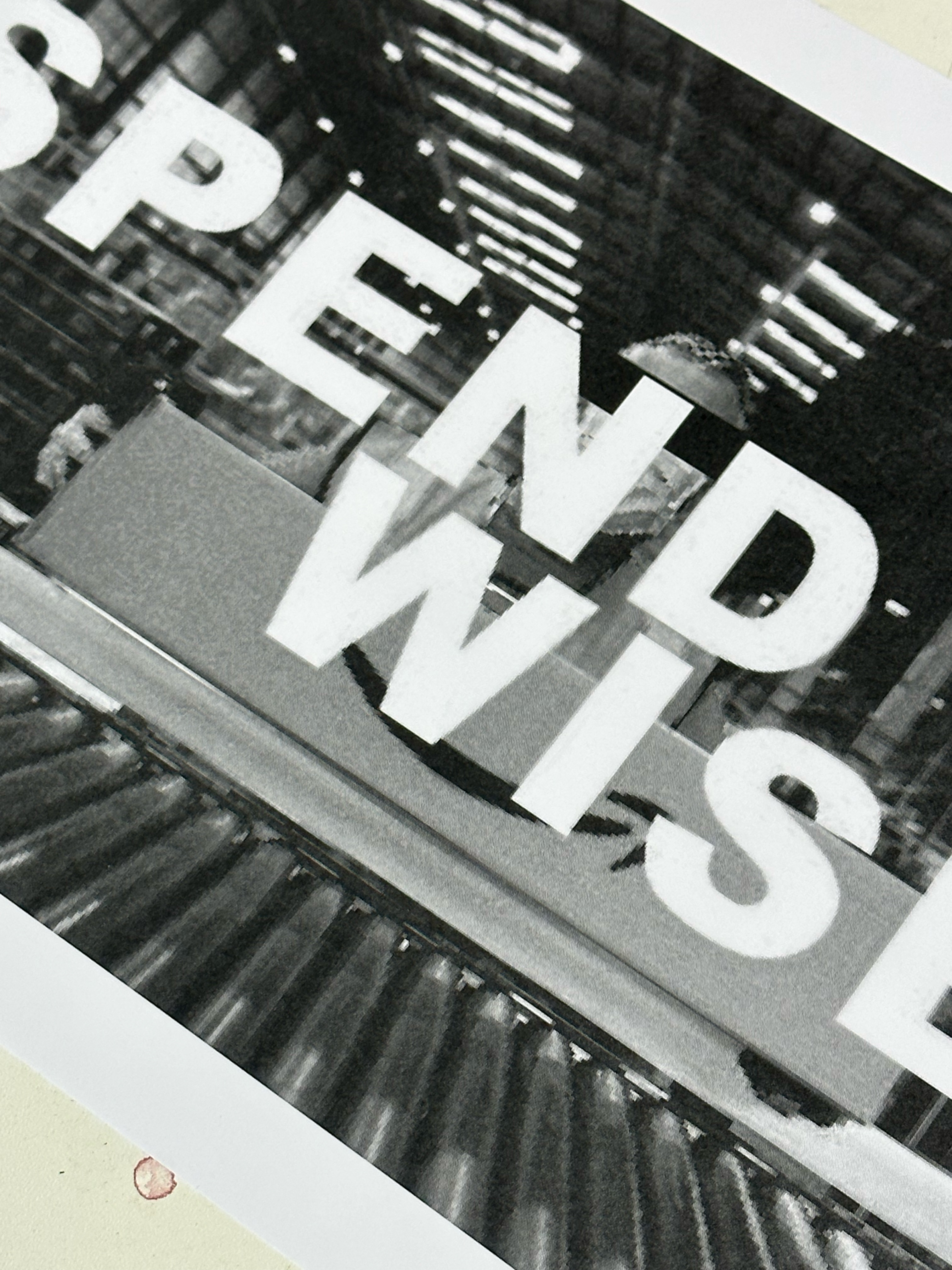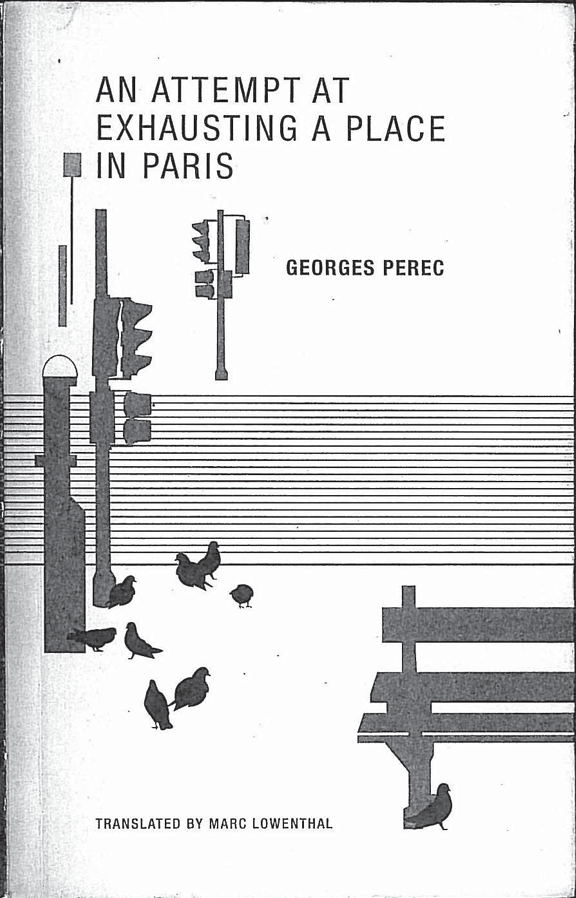
In this example, exhausting a crowd takes inspiration from Georges Perec’s ‘An Attempt at Exhausting a Place in Paris’ to then let people from all over the world tag who they see the footage.
After using Processing in my Creative Coding project, I don’t feel that I am going in completely blind, but to borrow my analogy from my creative coding work journal. If that was learning a new language, this is like learning a new dialect.
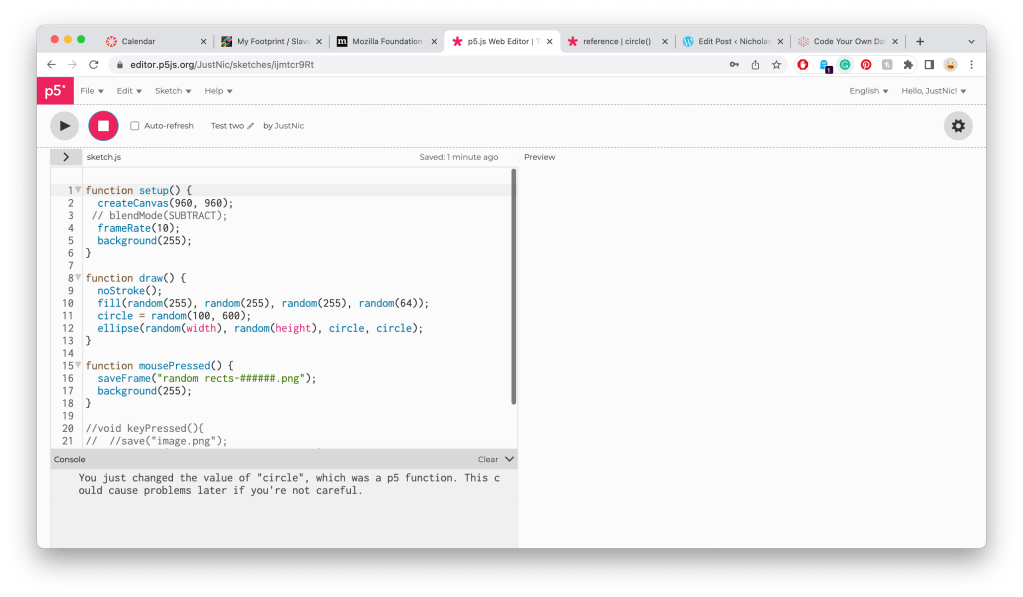
The next step was testing out the older code I had taken from Processing into P5js and then sharing it with my phone to see how it worked on other devices.
I then went on to mess around with the accelerometer on an android tablet to both have a chance at messing around with that function as well as gaining experience with an OS that I have no idea about.
As well as a bonus of troubleshooting and highlighting the question of access to the accelerometer on the Apple OS.
The second class was using code to gain access to certain functions like the motions of the phone and specific access. I’m still trying to figure out what I want to do for my mobile web project, but I know I want to integrate physical motion into my art. Either through the code affecting the phone, such as vibration or noise, or the phone affecting the code using the distance sensor or accelerometer.
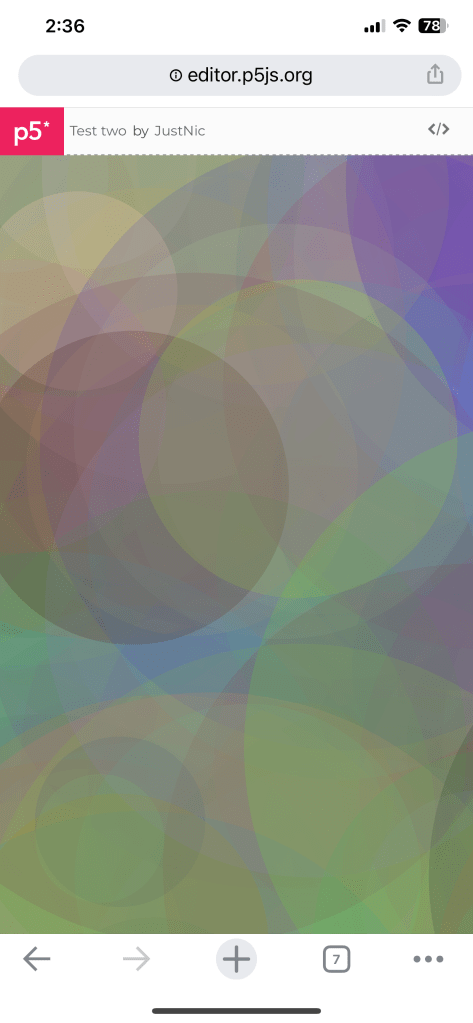
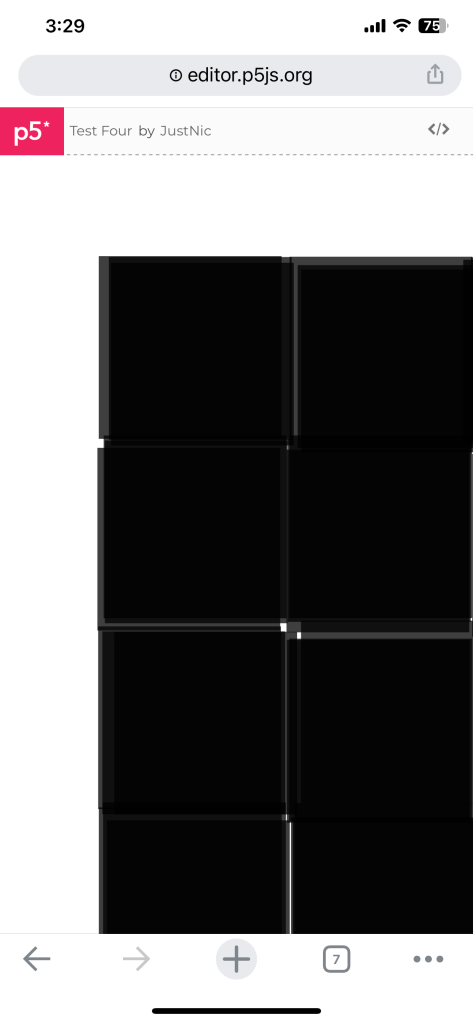
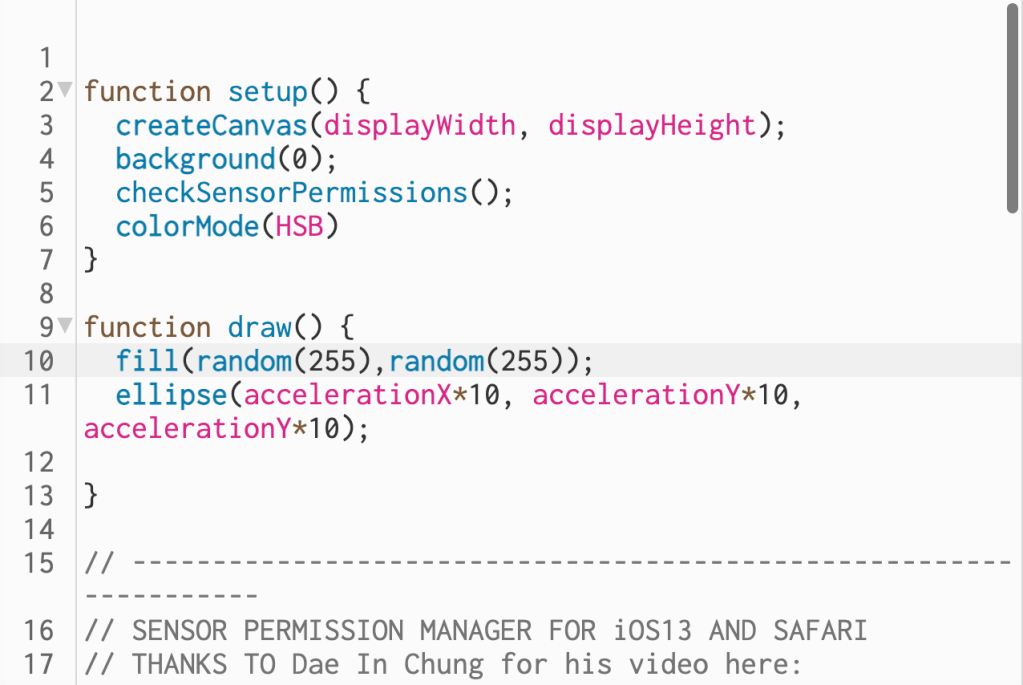
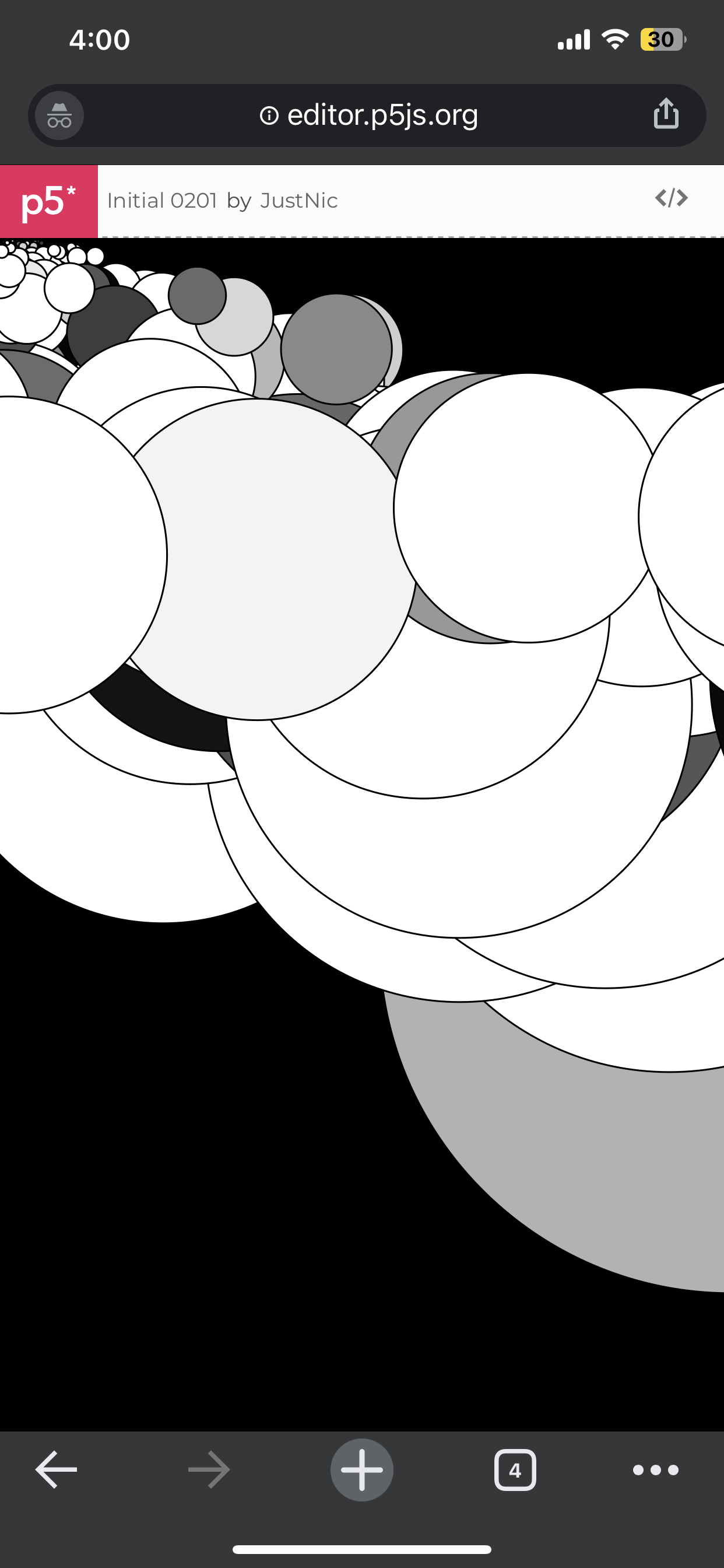
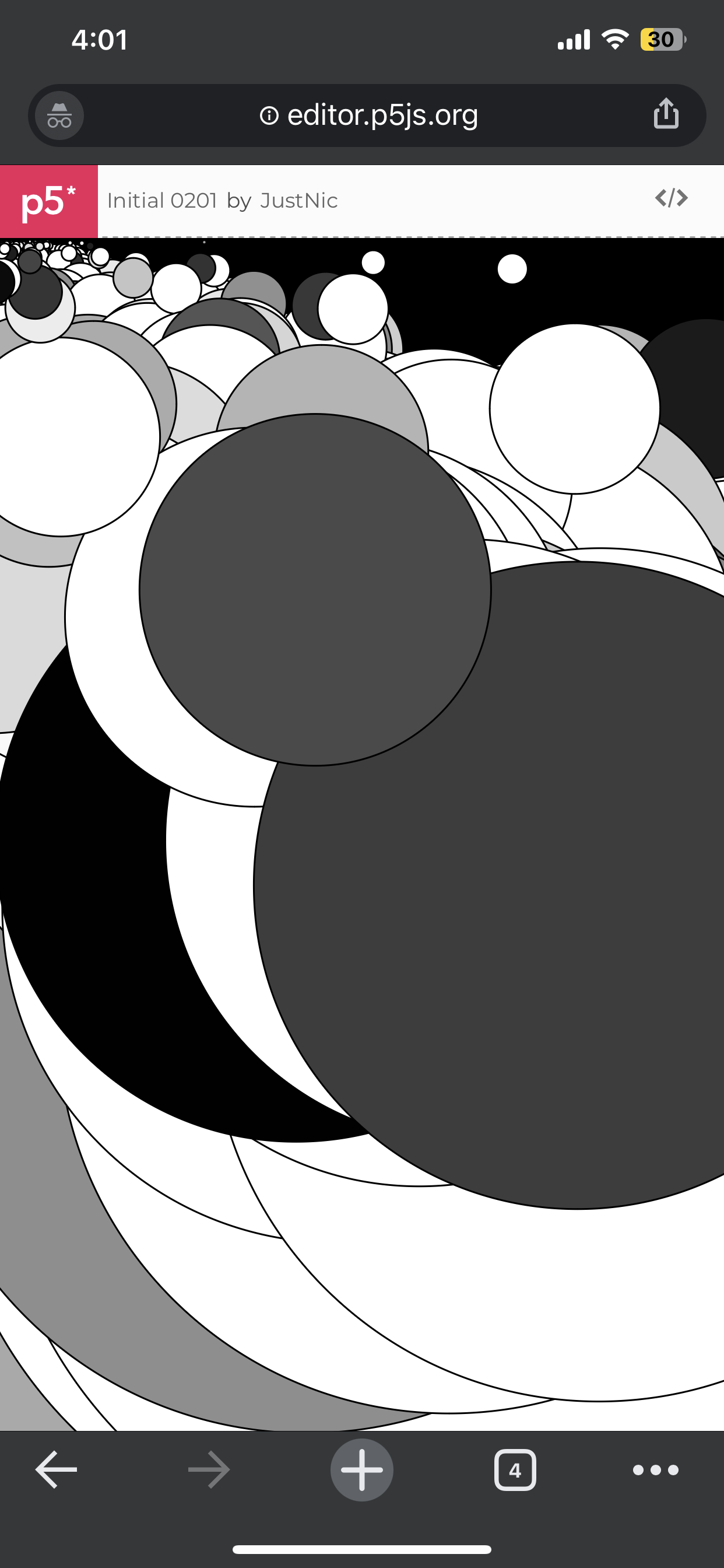
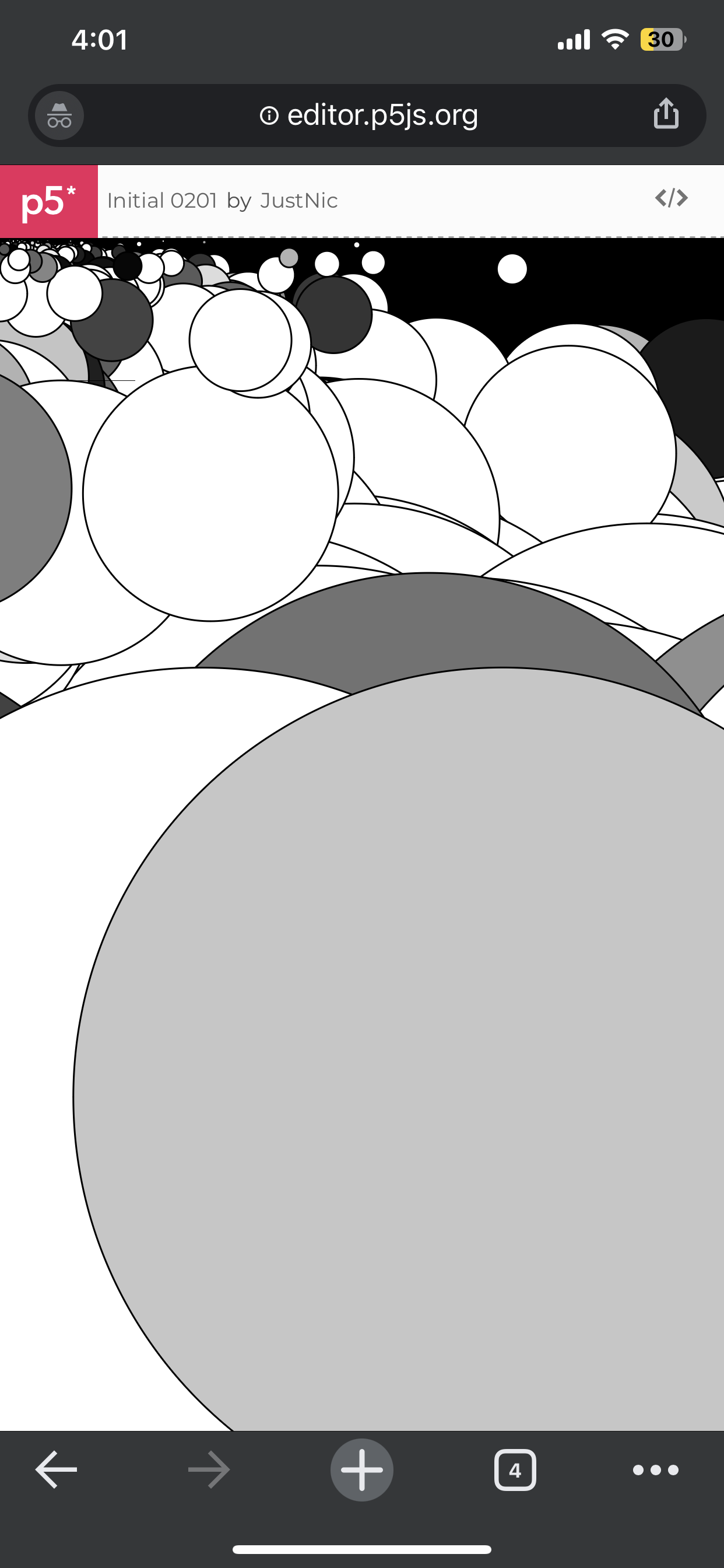
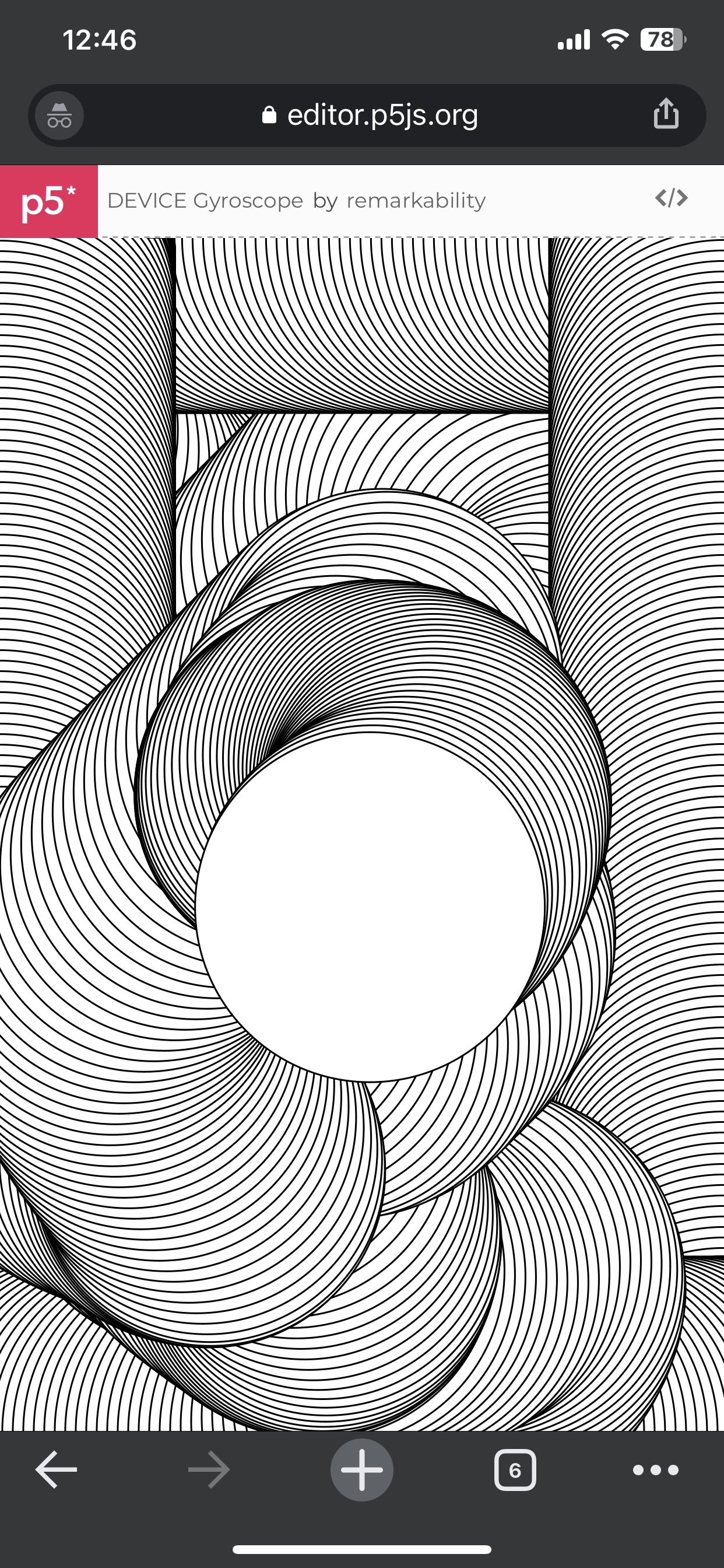
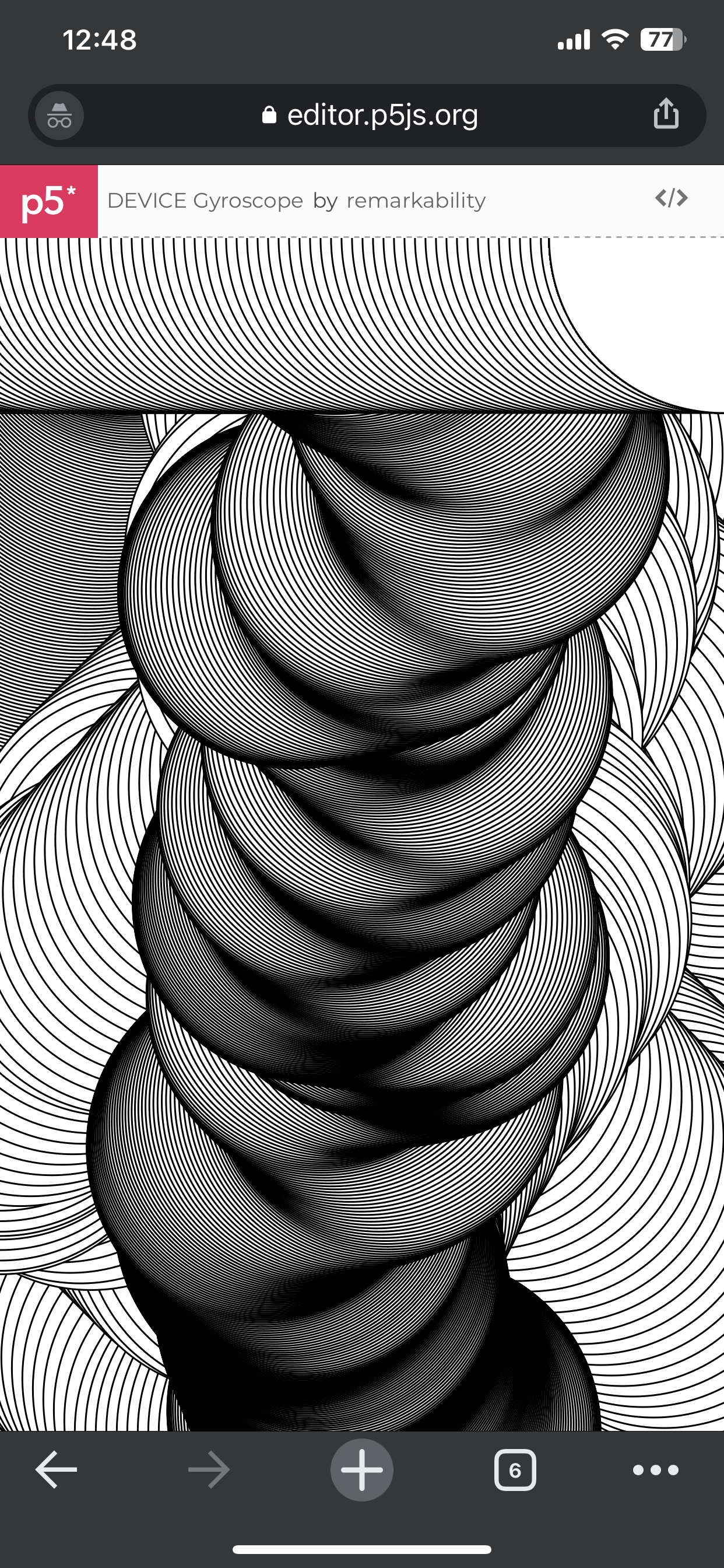
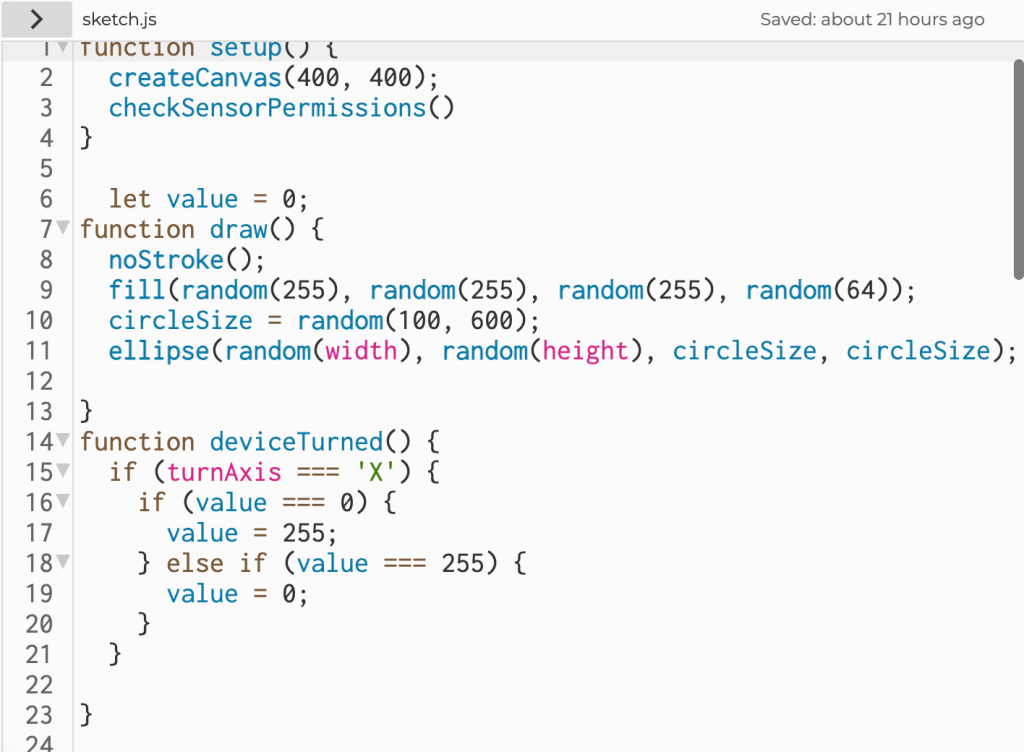
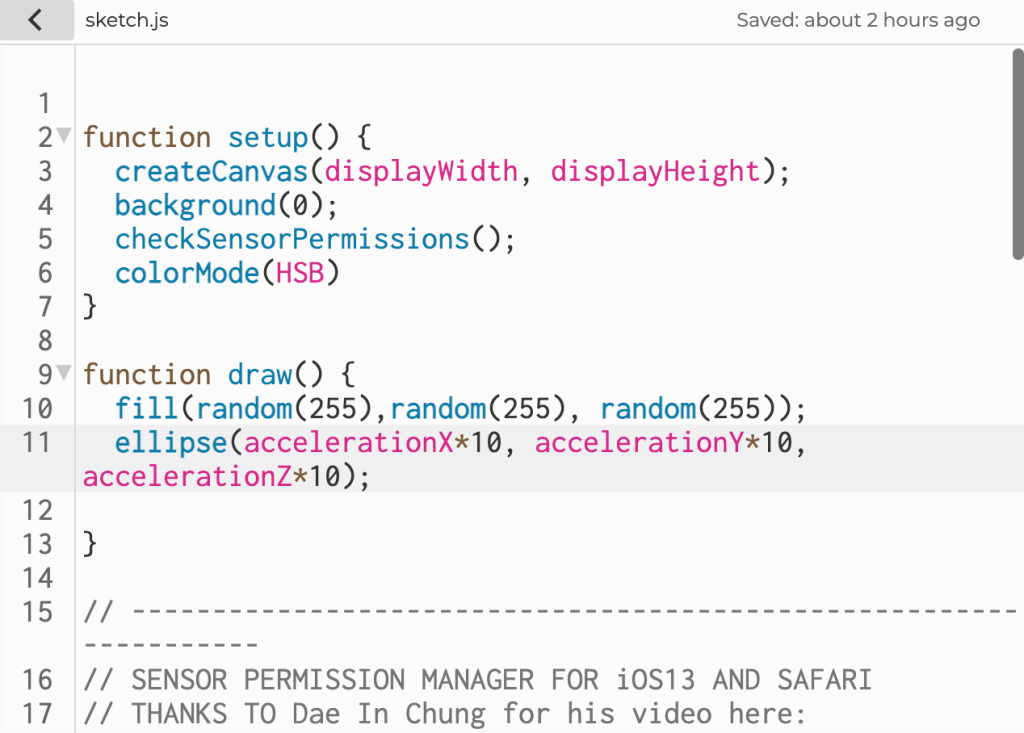
The images above show tests I did with the accelerometer I did in my phone (IOS), I also tested it on an android device so that I know that its not one operating system.
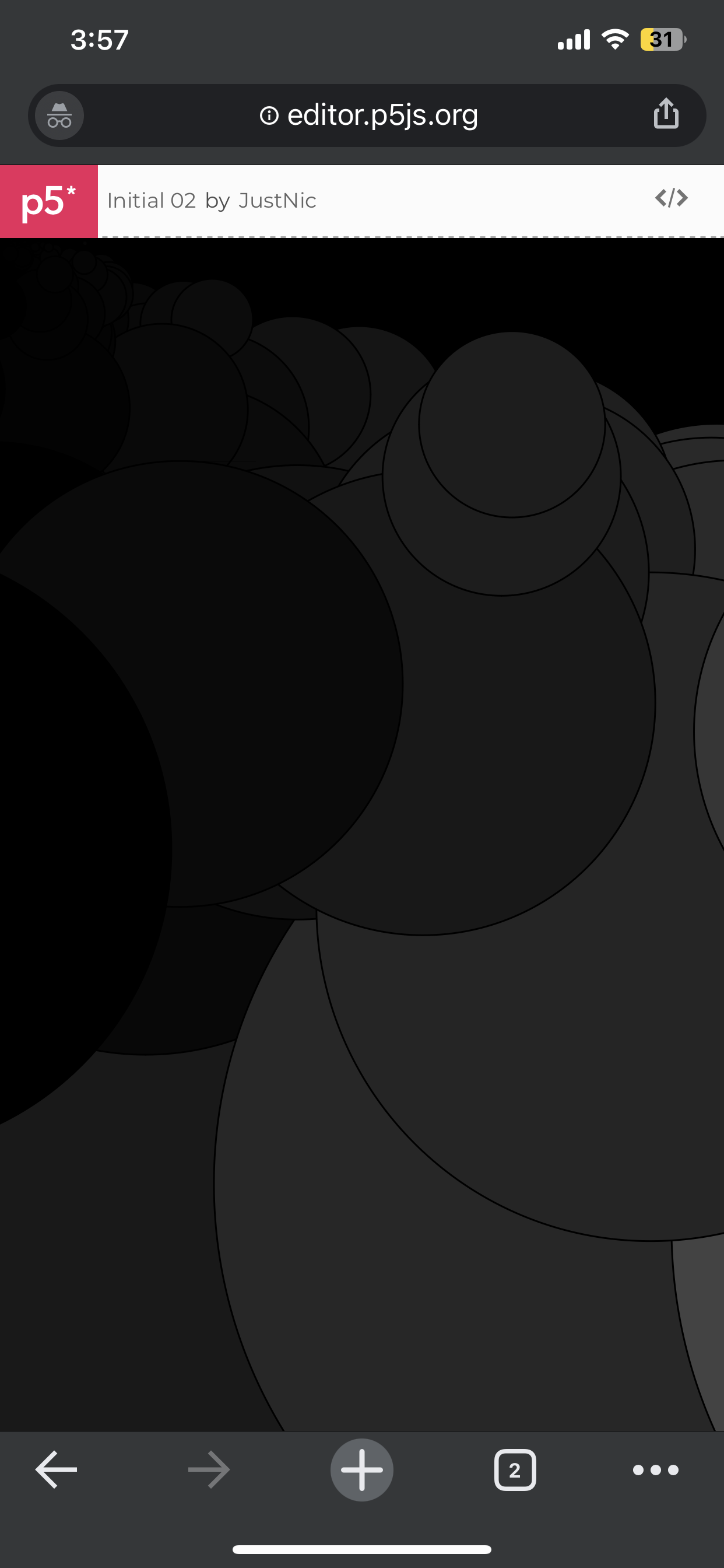
This is footage of the final idea being run on Chrome through an iPhone. The accelerometer is still the driving force of this test. Still, in this iteration, I have also lowered the effect of the accelerometer on the drawing, as I added the random colour aspect to it.
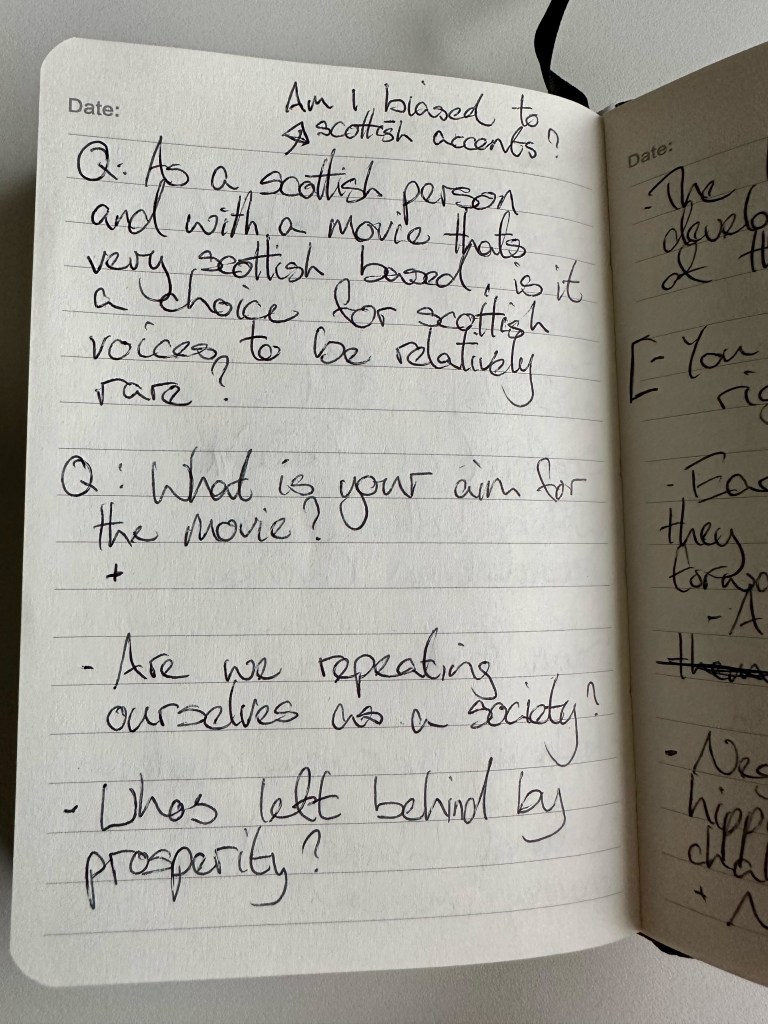
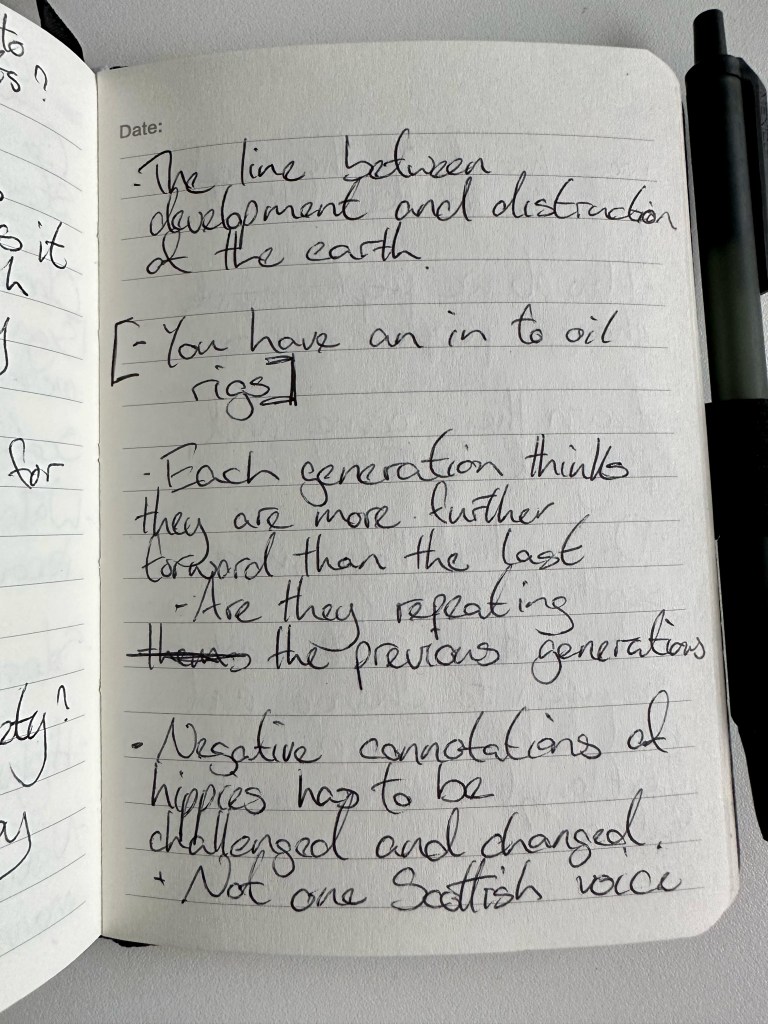
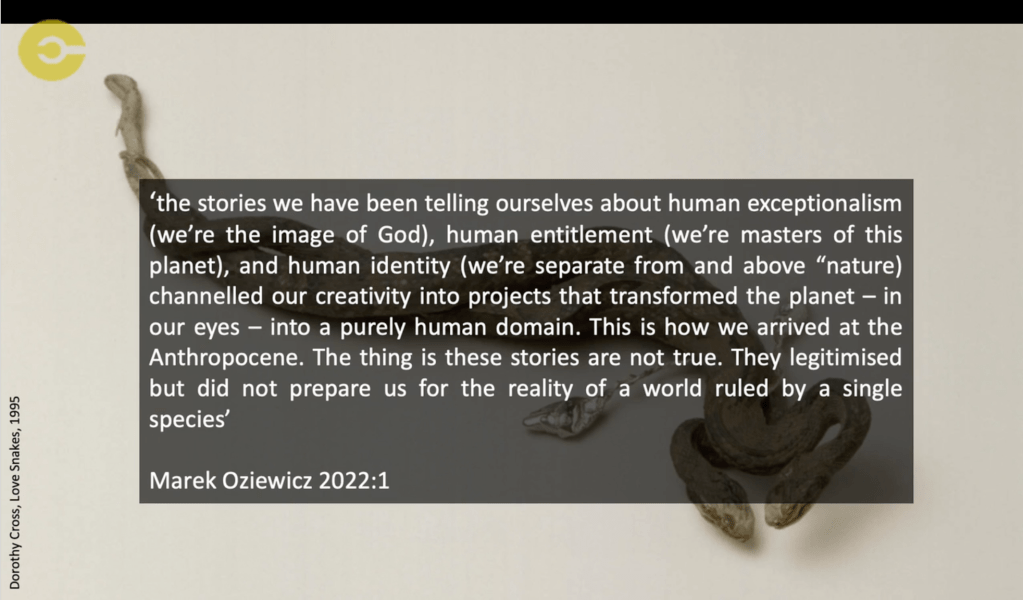
An introduction to the Anthropocene. The Anthropocene was a brand new concept to me. Going to the Glasgow Film Theatre (GFT) was an informative experience. It opened my eyes to more effects the human race is having on the planet and how much damage is being done without the majority of the world knowing. However, the film did have some weaknesses that I felt when watching it, such as how it almost vilifies small local communities for how they live and doesn’t consider that the jobs they have might be the only ones available to them. Of course, these jobs are damaging to the environment, but it’s not constructive to highlight a problem without suggesting a solution. The movie also felt very detached from the human aspect of Anthropecy. The human race causes damage to the earth and the environment, so it only seems logical that the answer will come from humanity. The earth and the human race can only continue to coexist in a symbiotic relationship. And it might be too big of a task for any one person, but I’d like to take a step in the right direction.
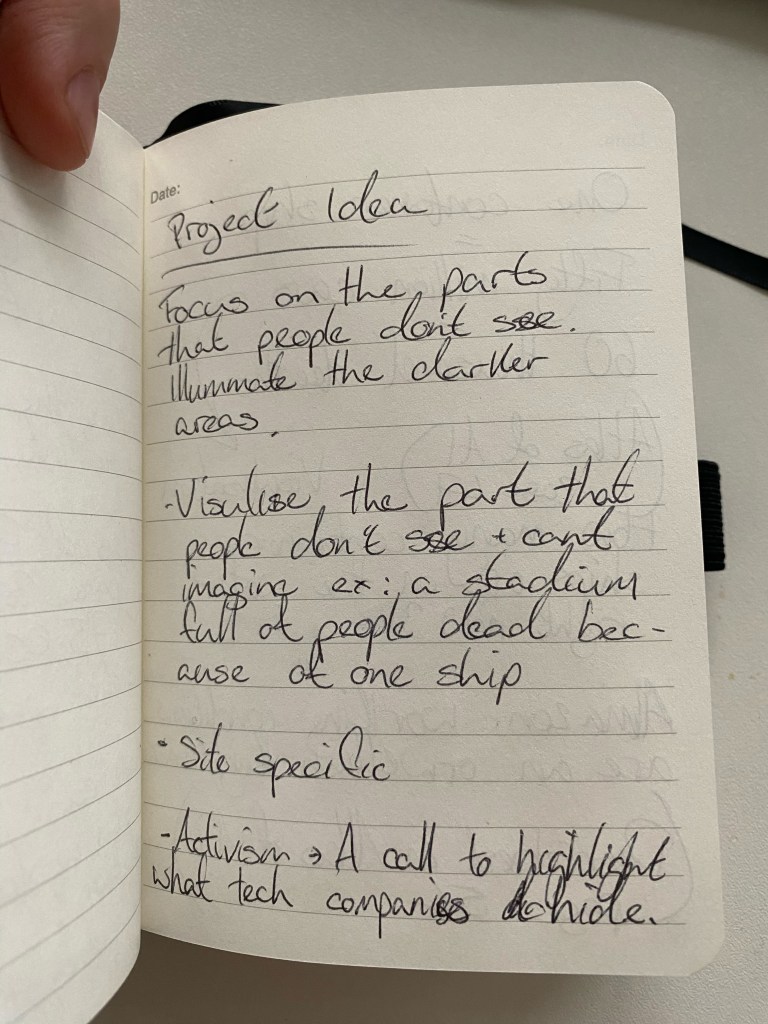
The first week of Co-Lab has been a lot of knowledge and information in one wave. So The main task was taking this giant subject and personalising it, both to me as a human being as well as to my discipline and what my project will mean to my field and those in my domain.
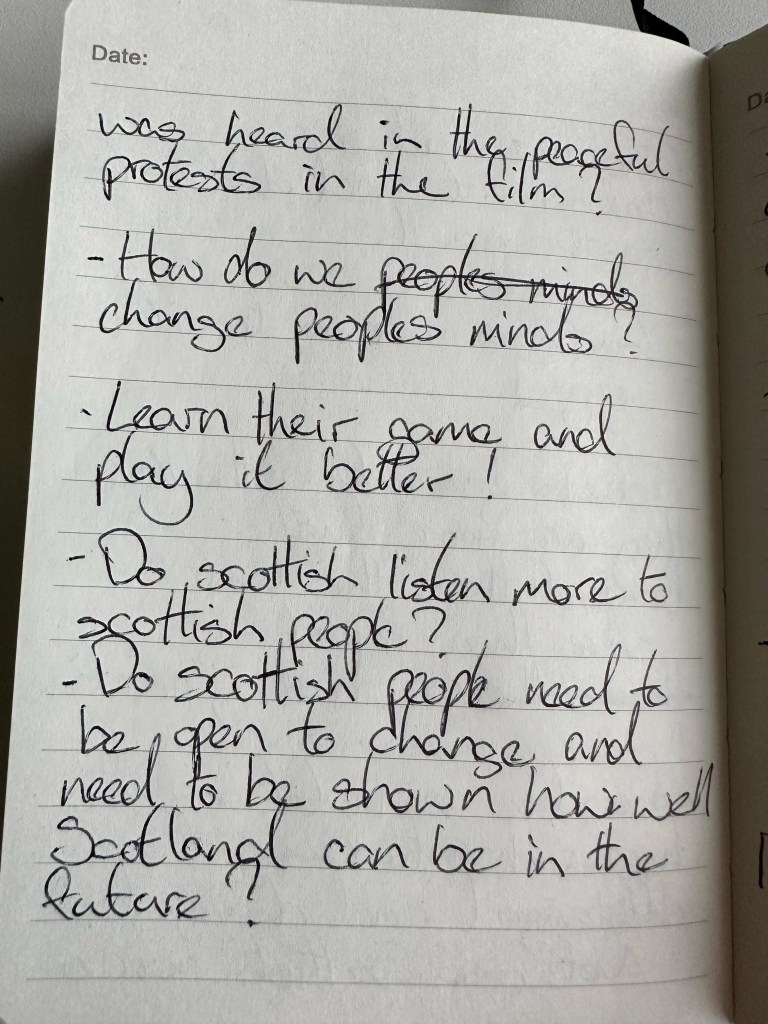
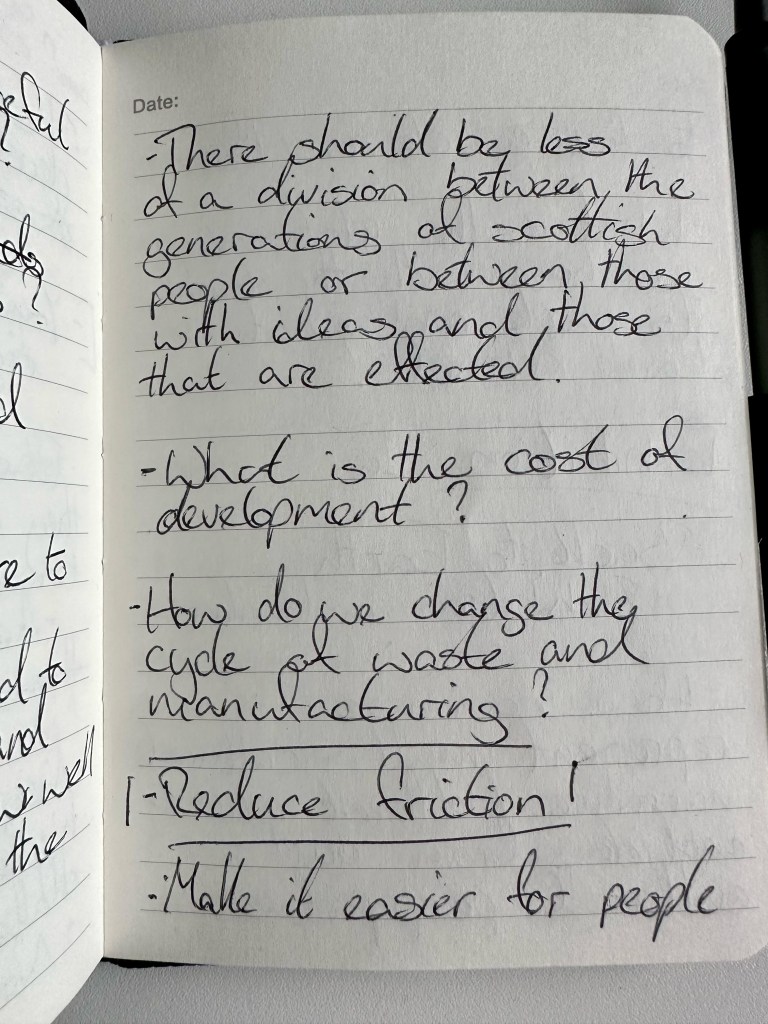
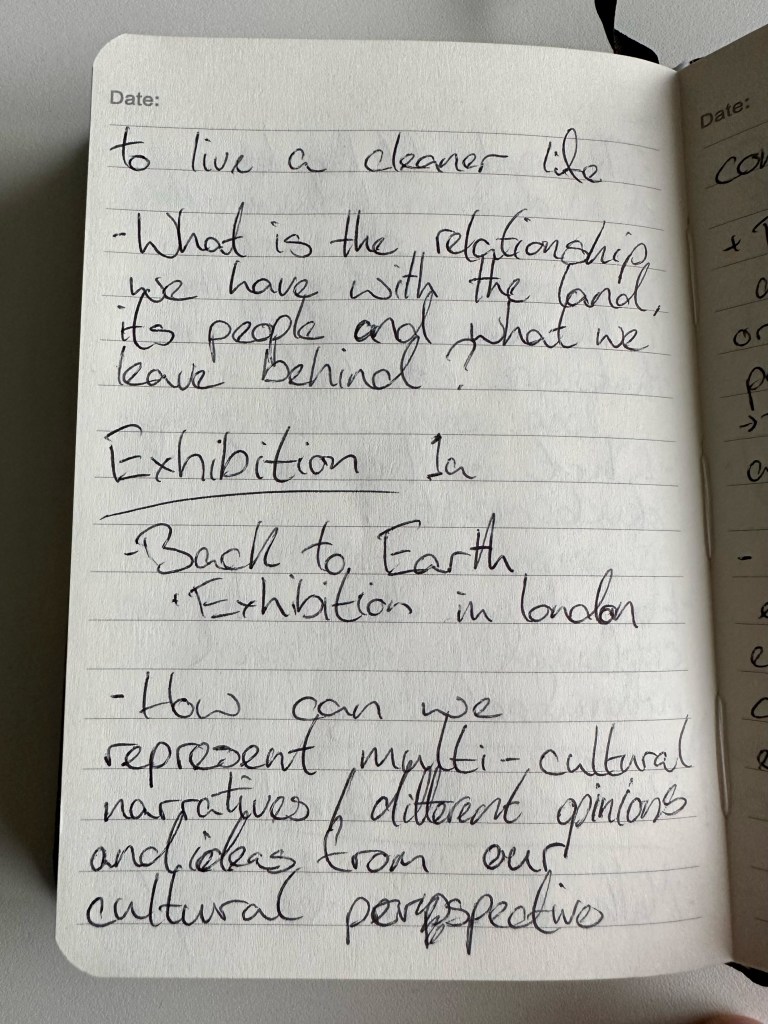
At the point of this note, I was still determining how to explore the relationship between the Anthropocene and my discipline and how I could personalise the tech we use and educate people on the process those materials go through before they get to us.
Here again, is another idea of trying to personalise and qualify the effects of the Anthropocene and make it more tangible to people and, in turn, harder to ignore or turn a blind eye to. Again, I will put my hands up and admit that I don’t do enough when it comes to the climate crisis. One of those reasons is because it’s easy for me to cast it out of my mind, it is easy for me to distance myself from it, and that’s something I want to tackle, and if the climate crisis is looking the people of Glasgow in the face, then it’s more challenging to ignore.
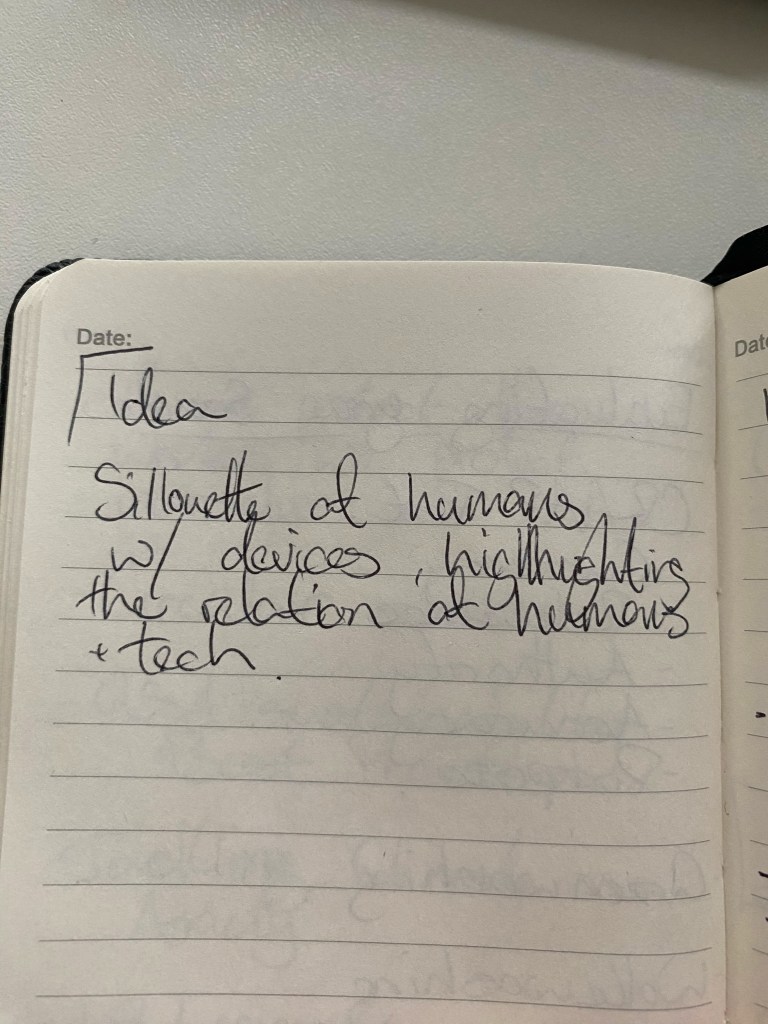
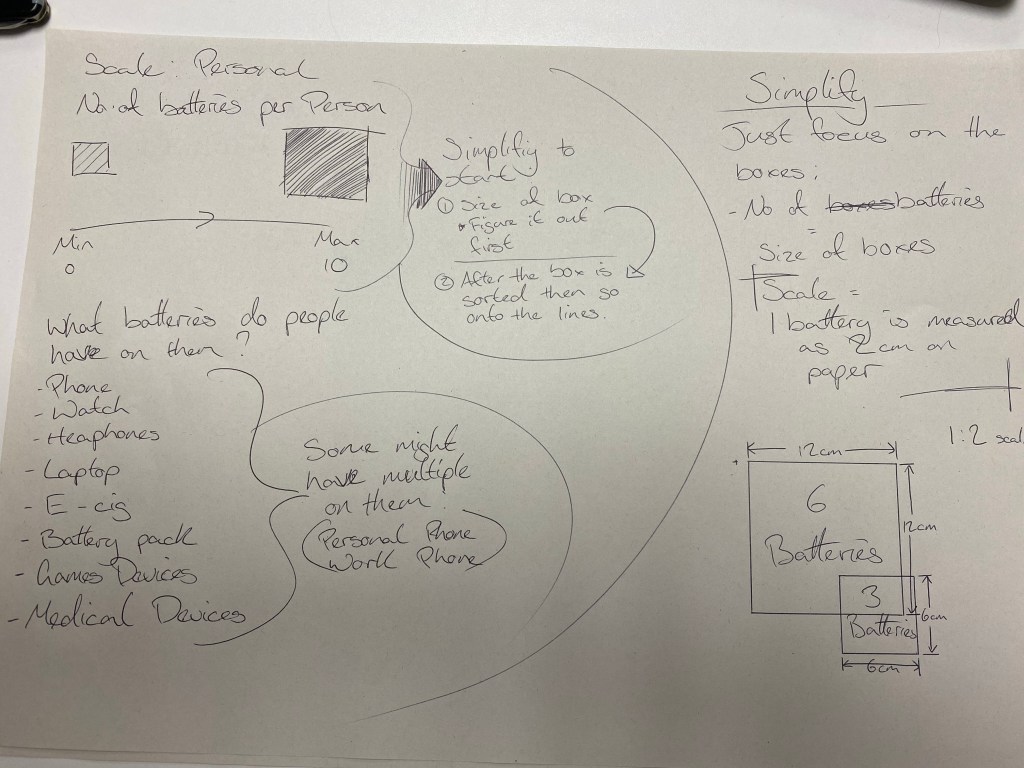
Here noted is one half-baked concept I had to highlight or embody the relationship between the tech we use every day, who we are with this tech and the cost that tech has on the planet. This concept might be realised in a series of street photography images that show how many people have multiple devices at any one time in the heart of Glasgow.
Research
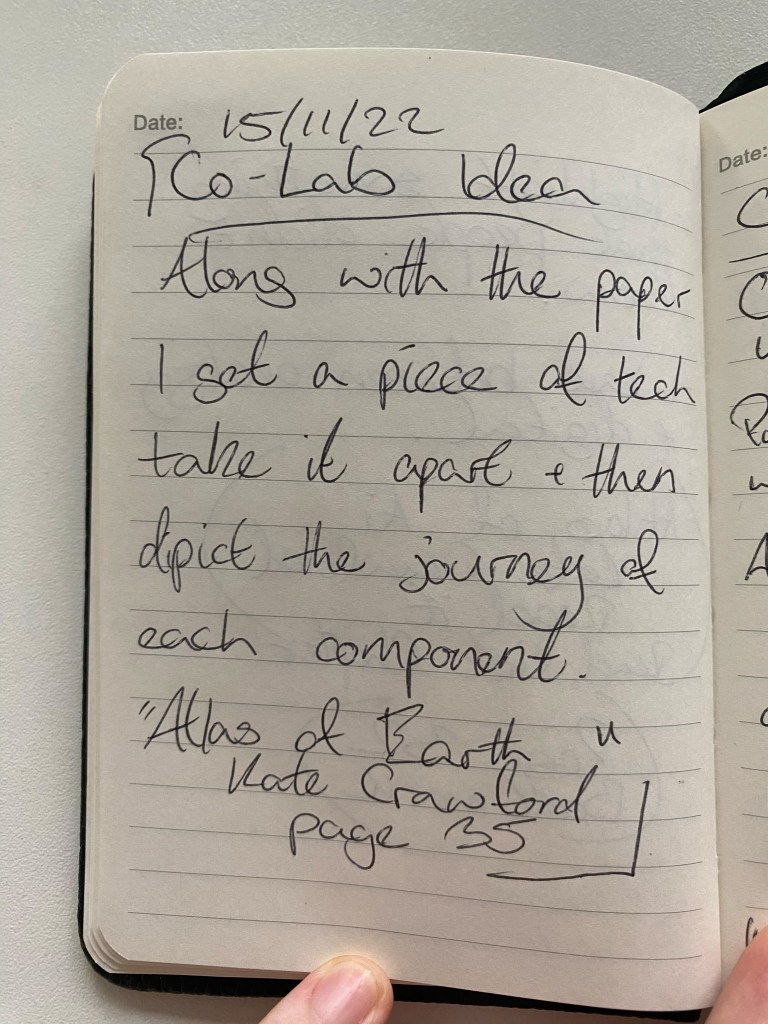
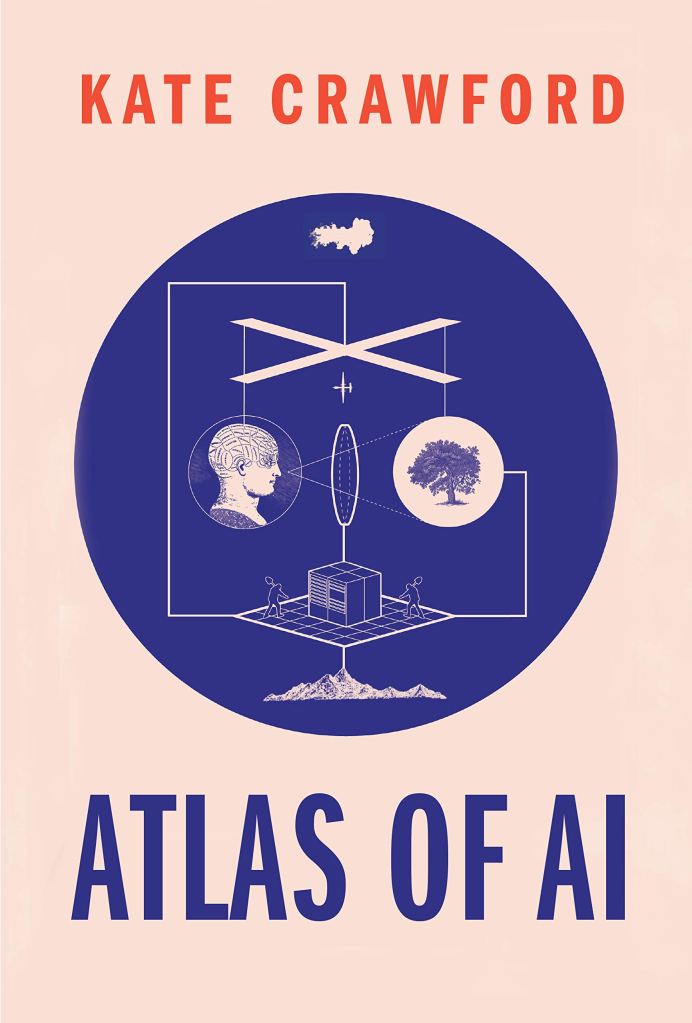
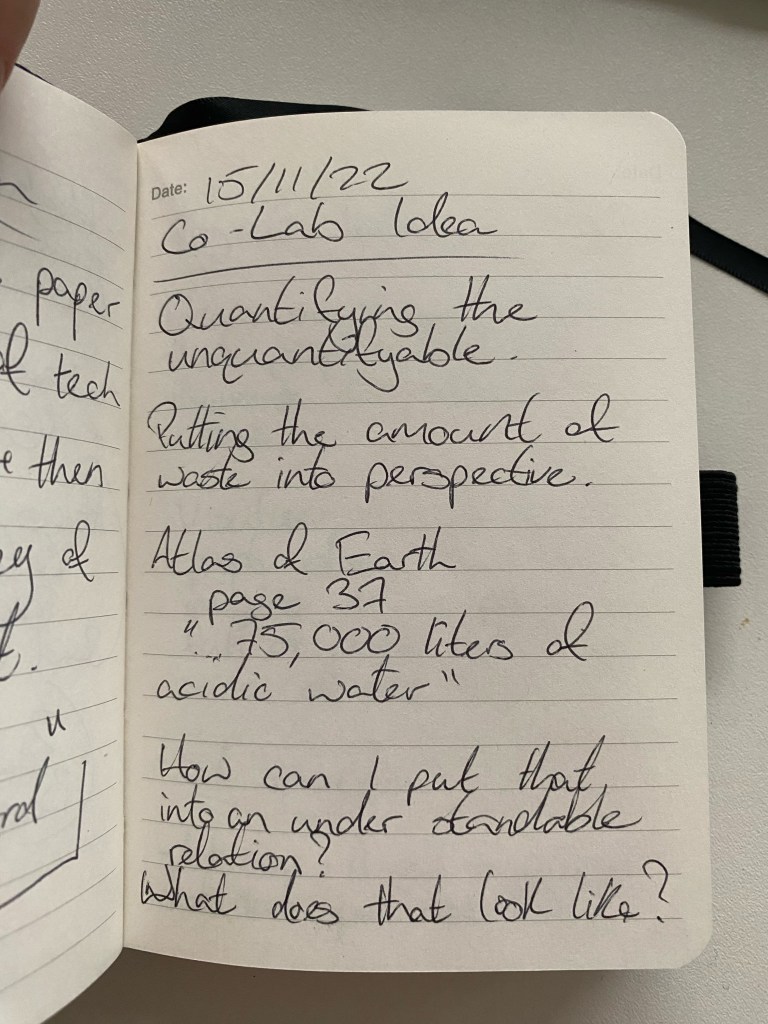
After reading the first chapter of ‘Atlas of AI’ by Kate Crawford, the Anthropocene felt more localised to IxD and how I contribute to its problems and how I can negate those problems. One idea that came to me when reading was how unfathomable some of the statistics are and how their weight is lost on me because I have no reference and no comparison.
Within my research, one aspect that jumped out at me was Lithium batteries within the context of the Anthropocene. Huge landscapes are being mined and converted to power our devices and technology. The lithium battery is marketed to the public as the green step forward as the alternative to foil fuels. However, the same battery that powers electric cars is not recyclable; they are used and then disposed of like general waste into another technological landfill. Lithium battery production is initially thousands of feet of caves through the earth to harvest the raw materials. After that, acres of land have been covered to farms of vibrant pools that starkly contrast with the desert landscape sacrificed for it.
I need to research more on Lithium batteries and their consumption on a personal level within my life and those around me.
Week 02
Mark Making Workshop
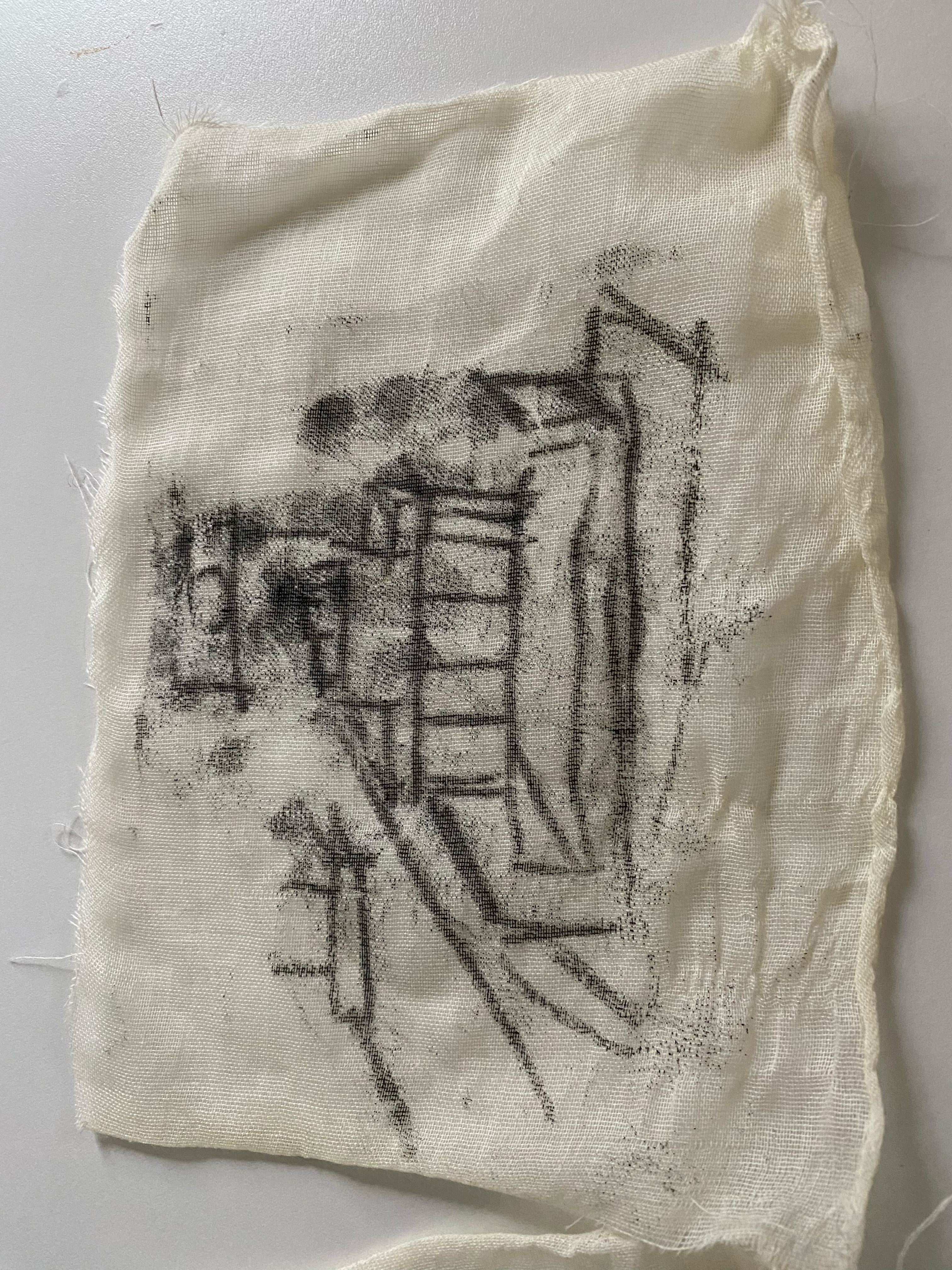
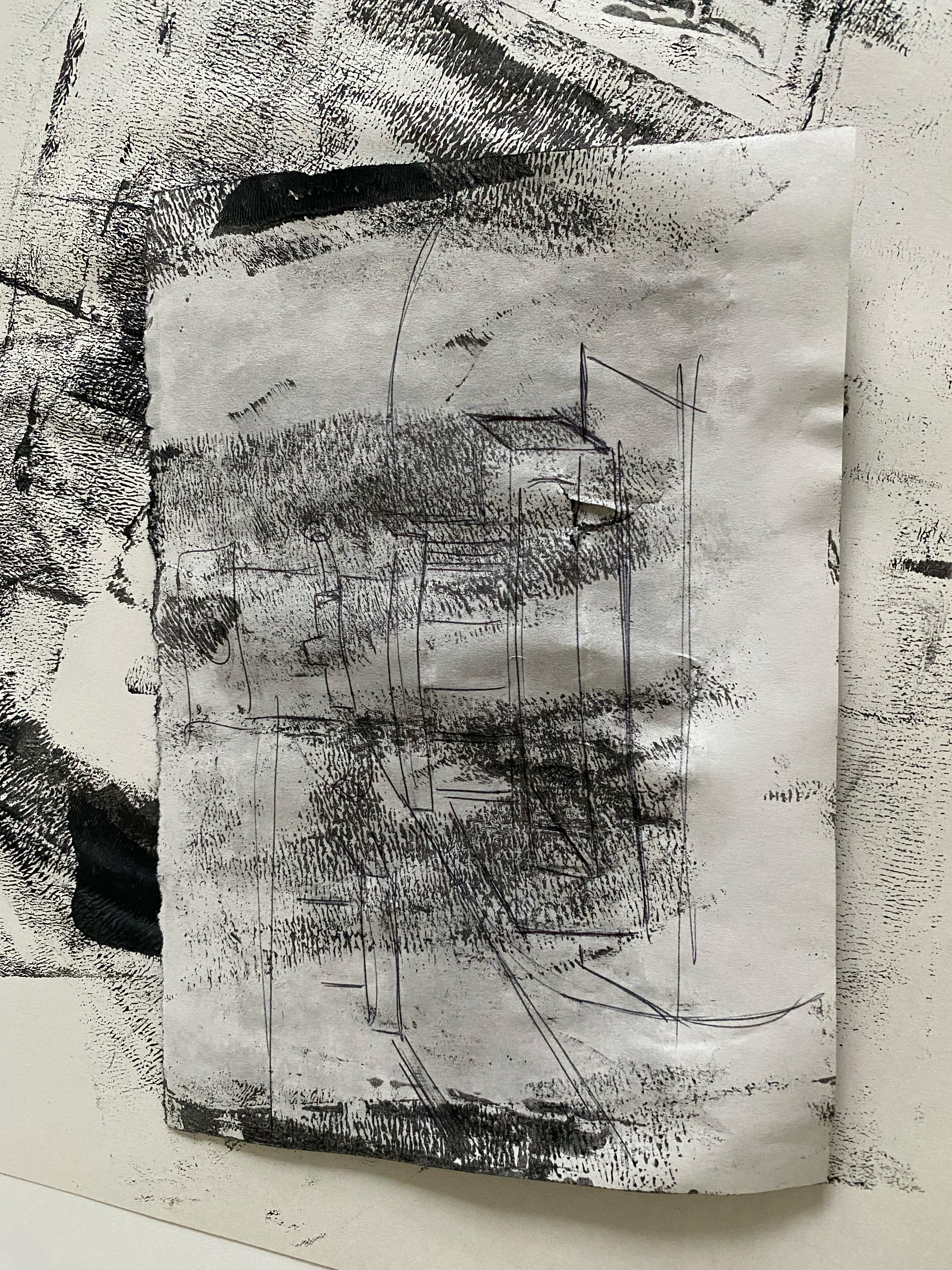
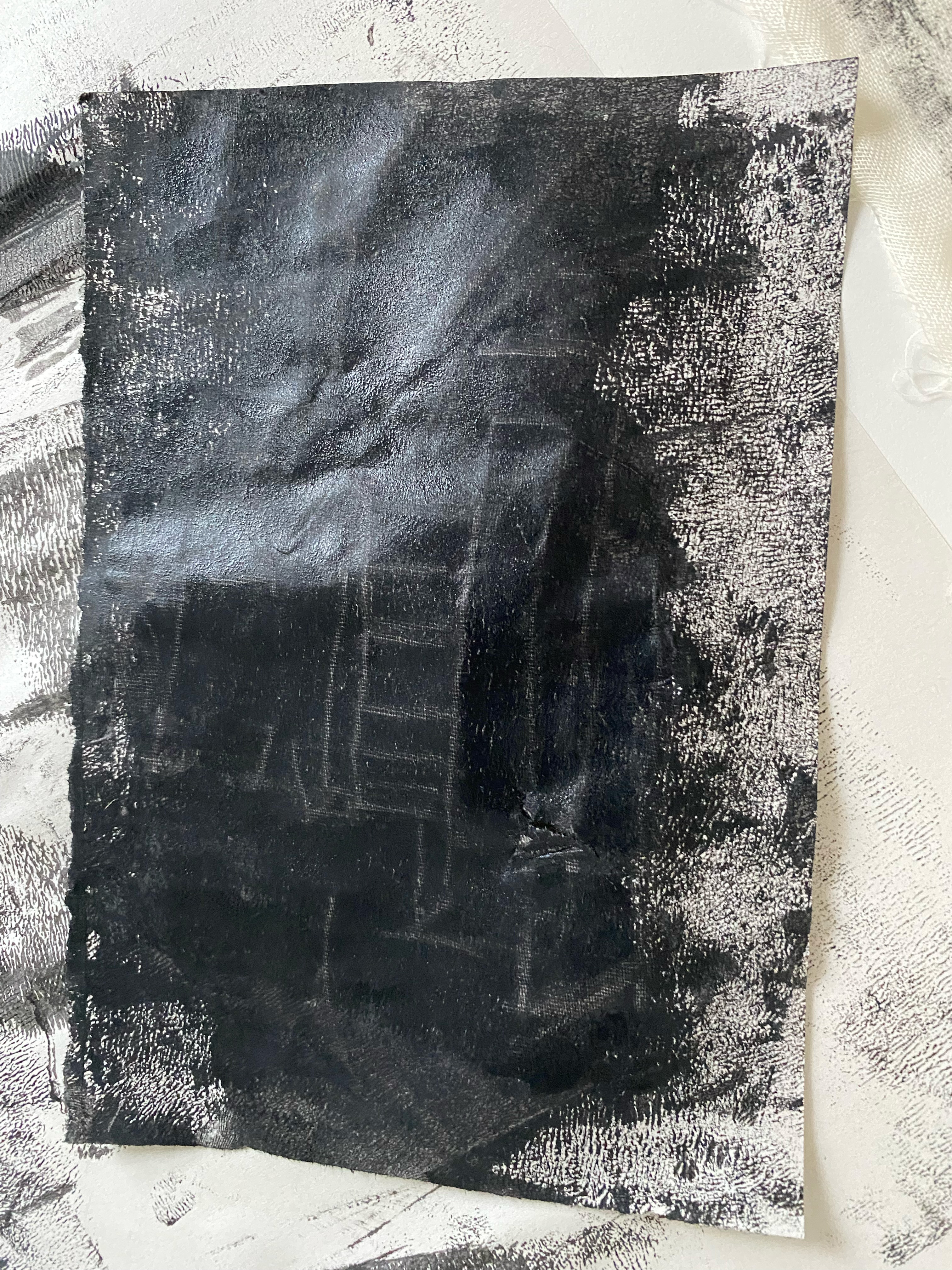
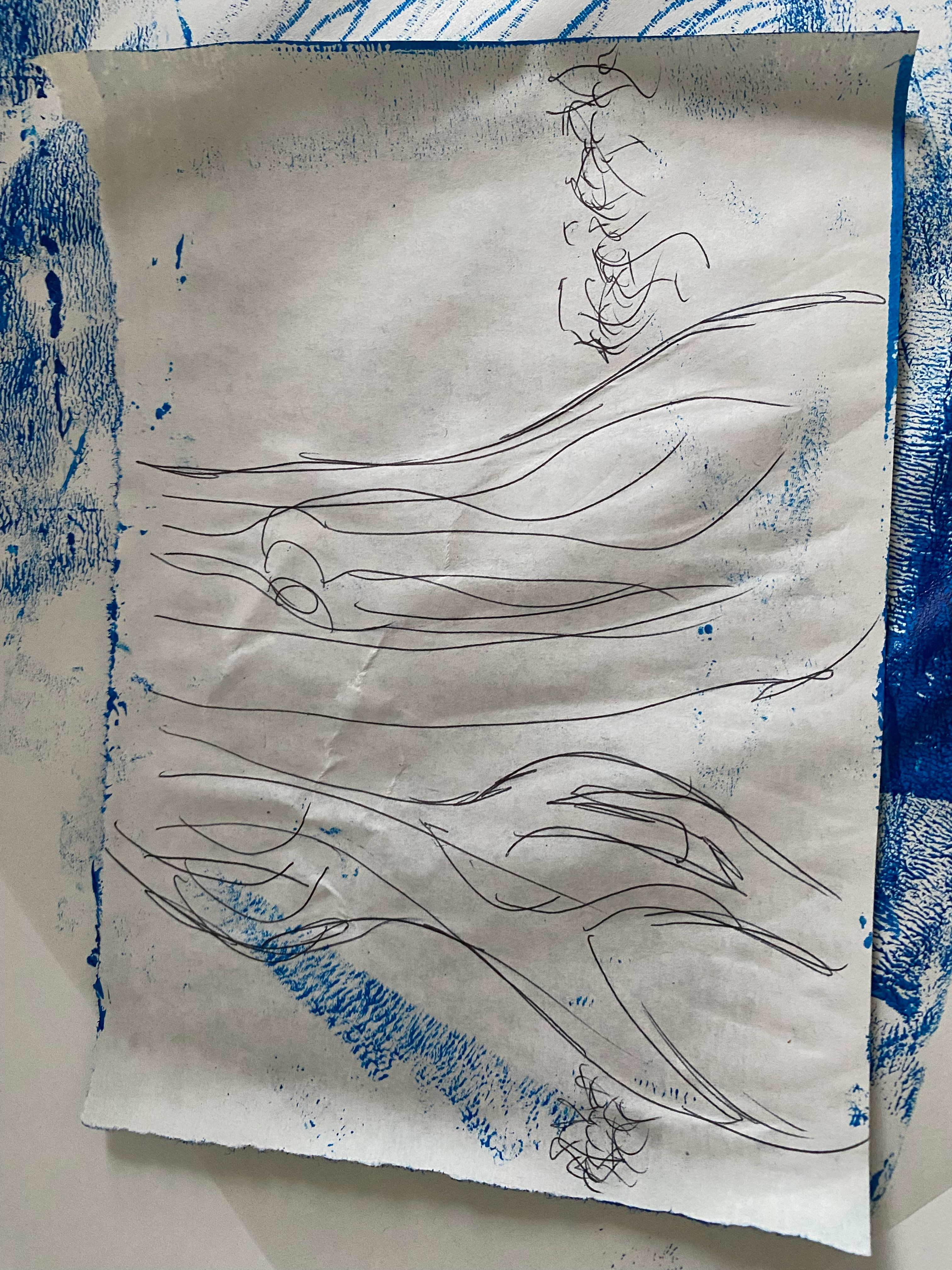
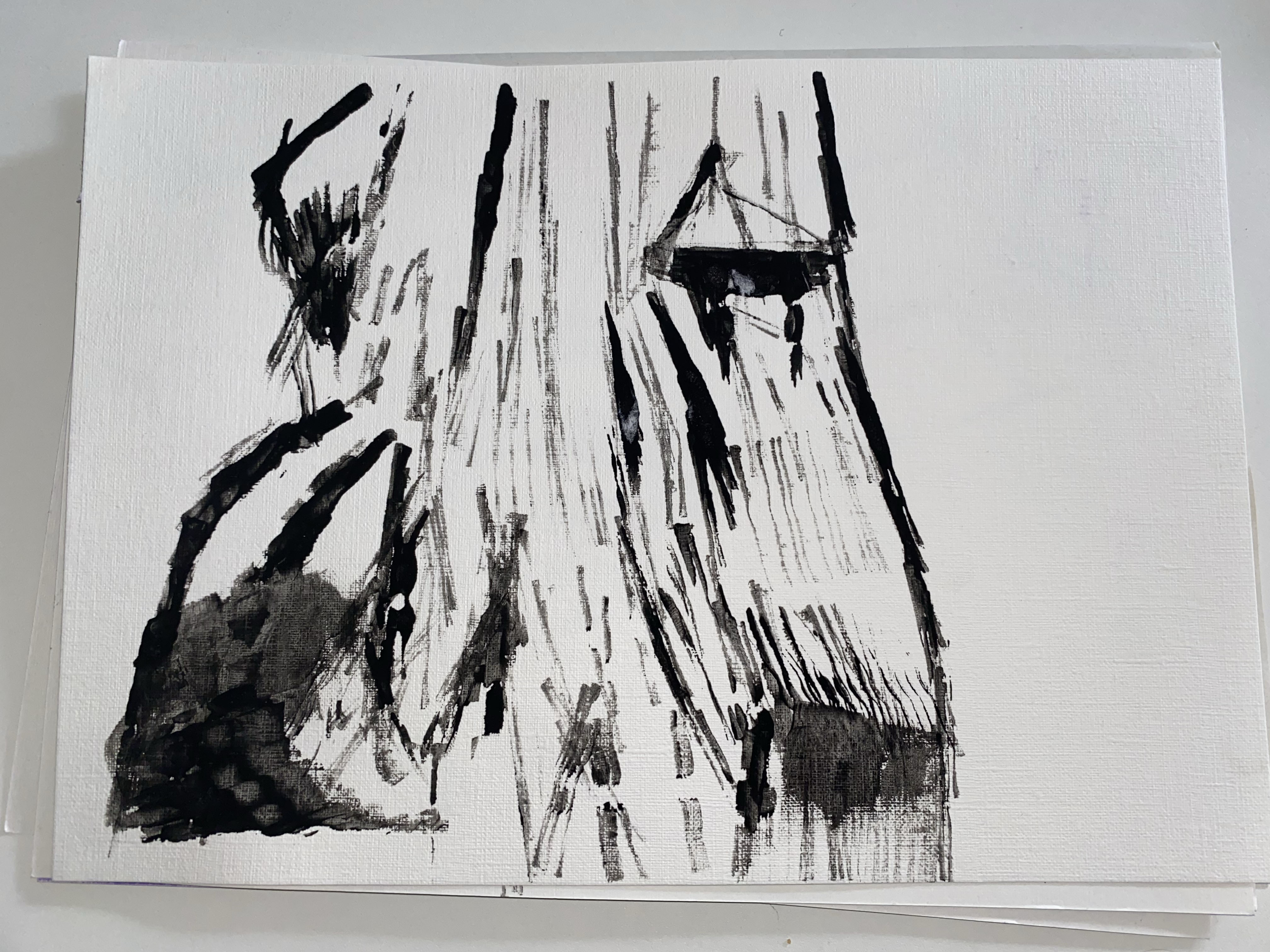
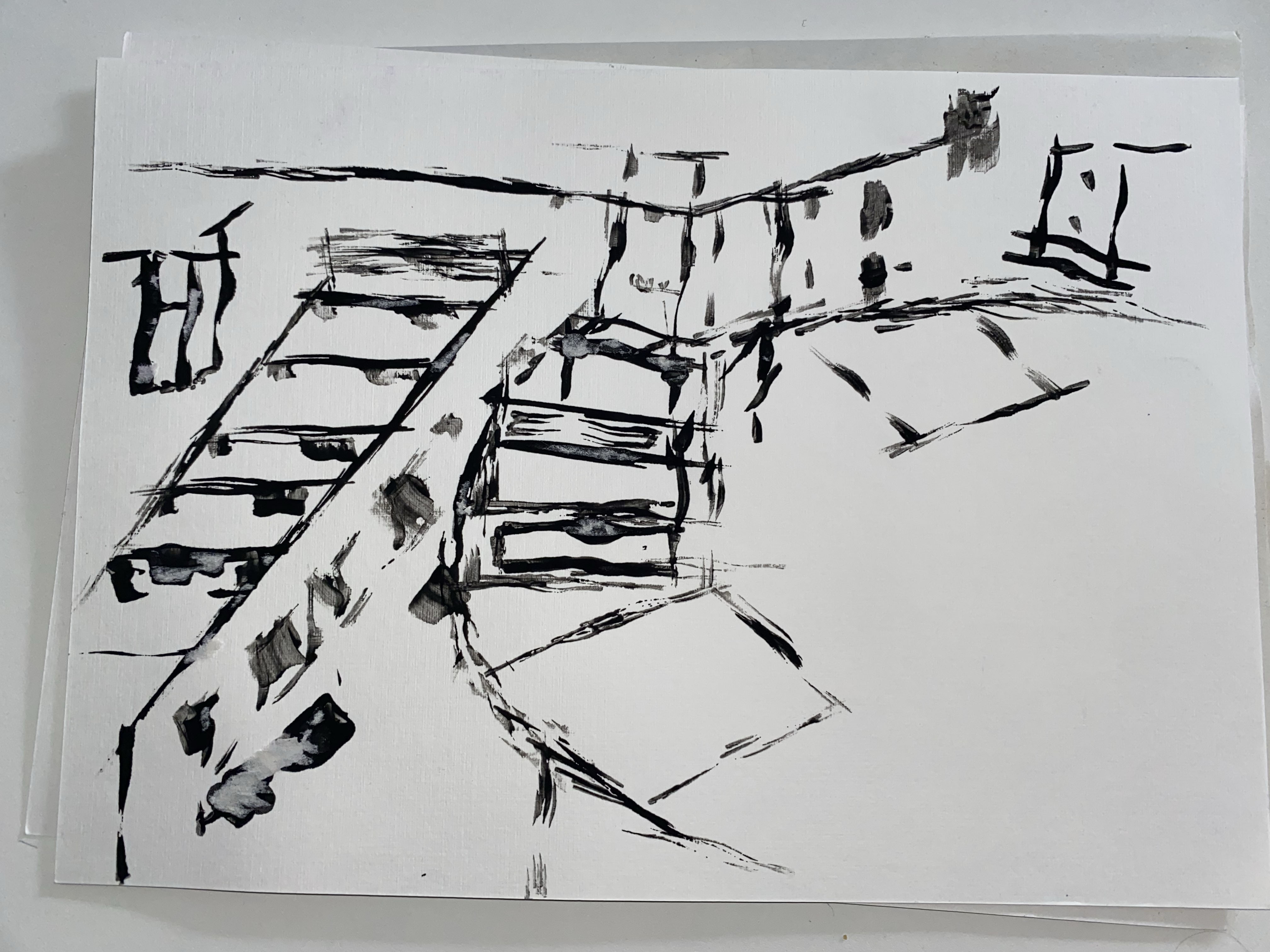
As someone that’s alien to mark-making, I was out of my comfort zone but with guidance, I was exploring mediums that would have, in all honesty, steered clear of.
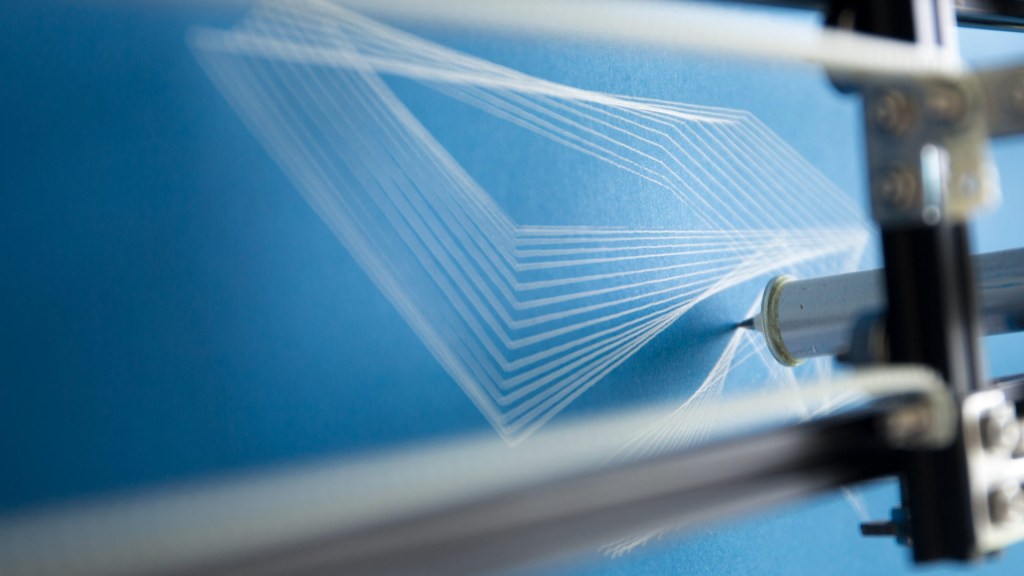
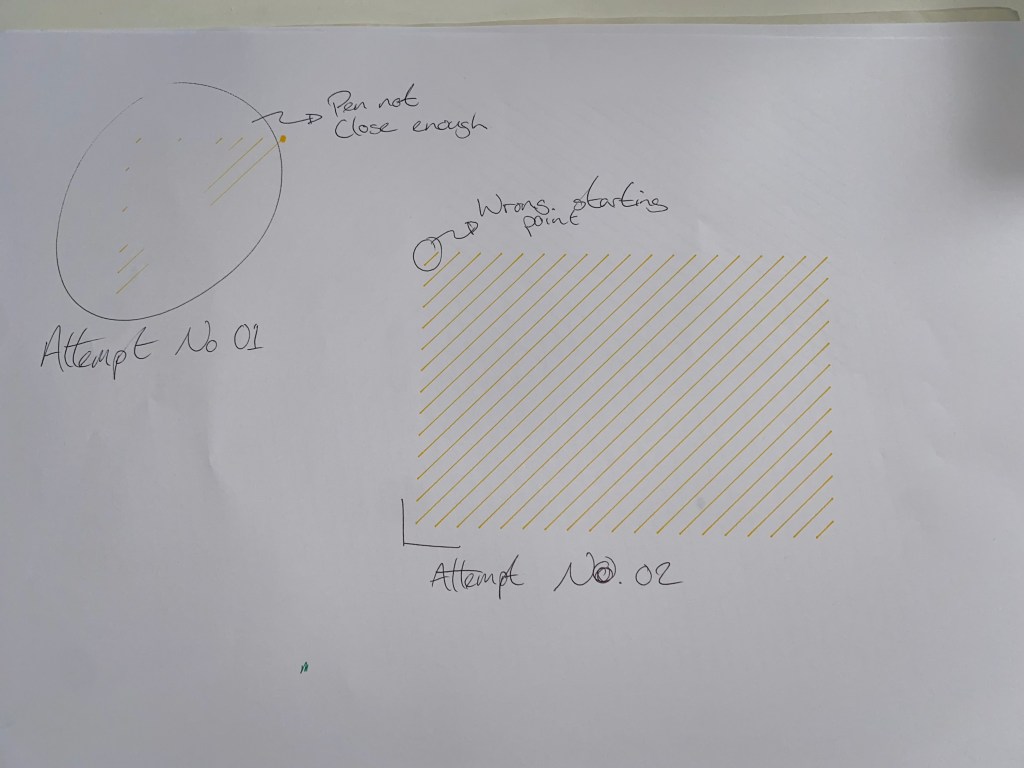
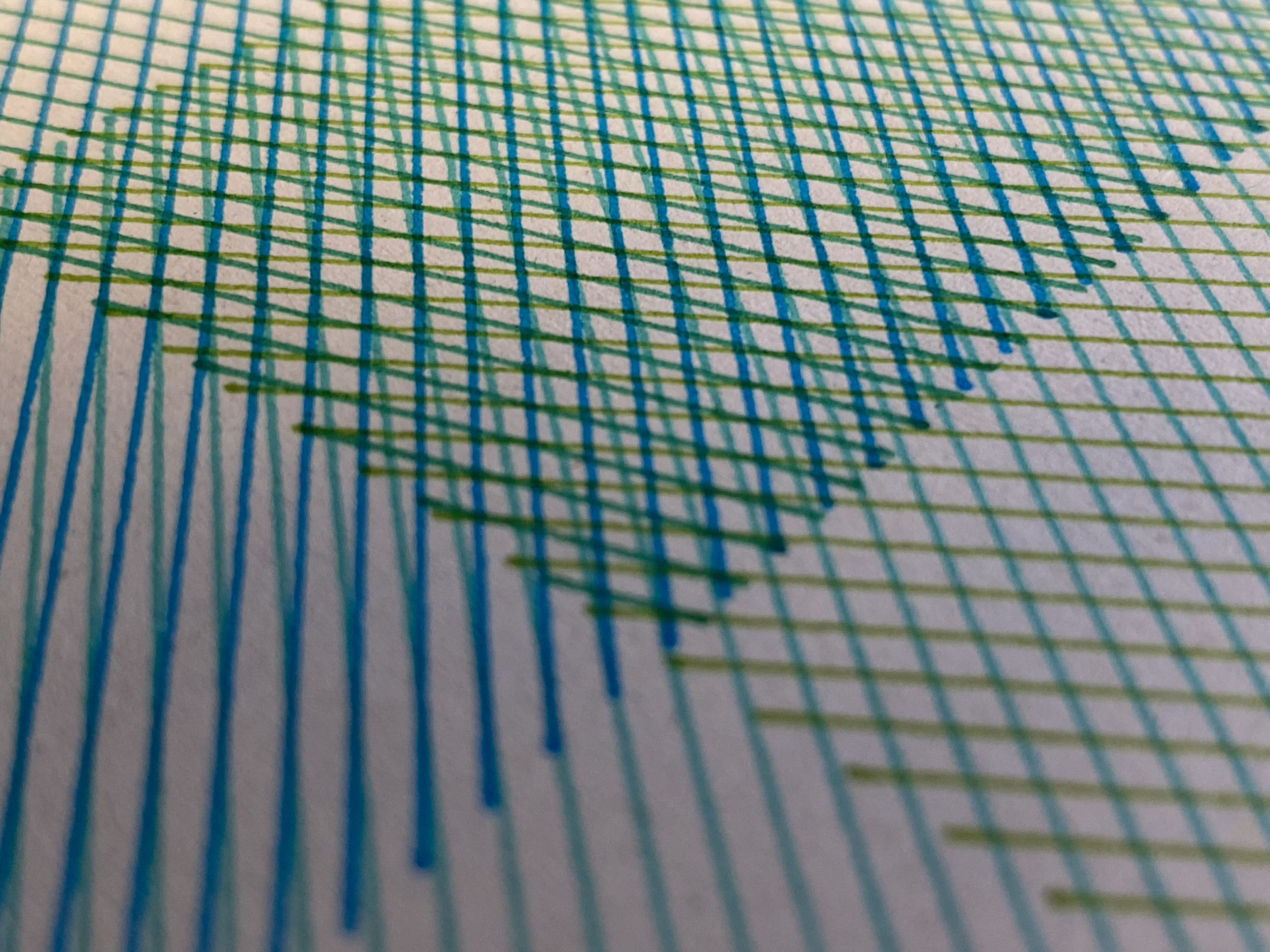
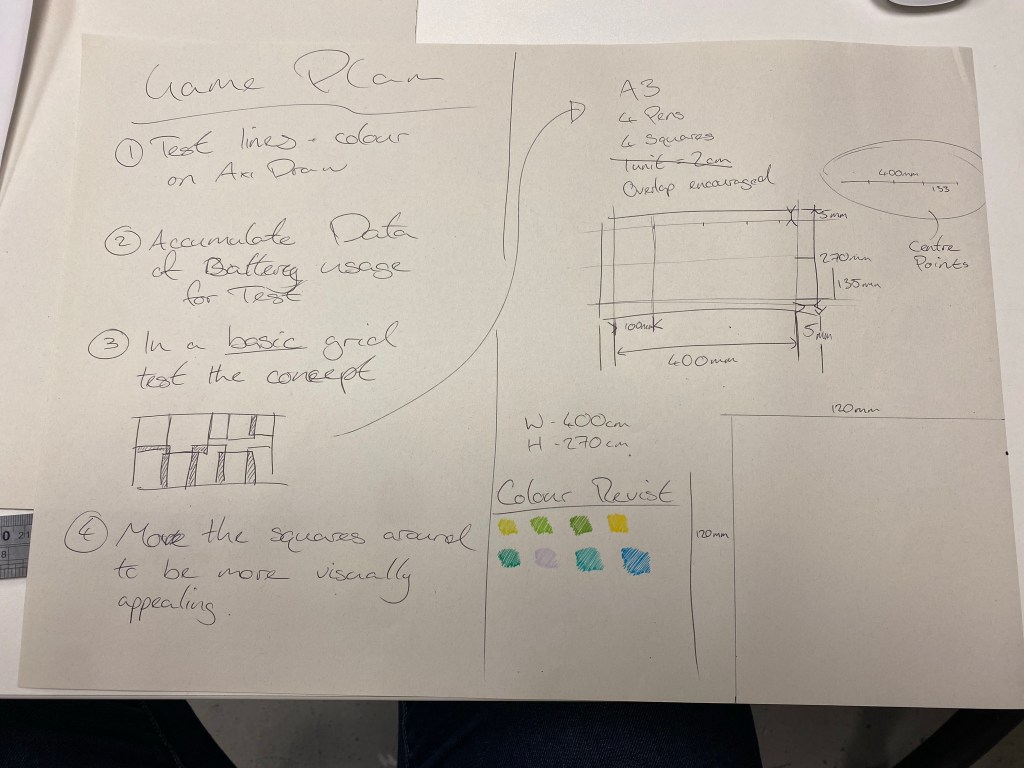
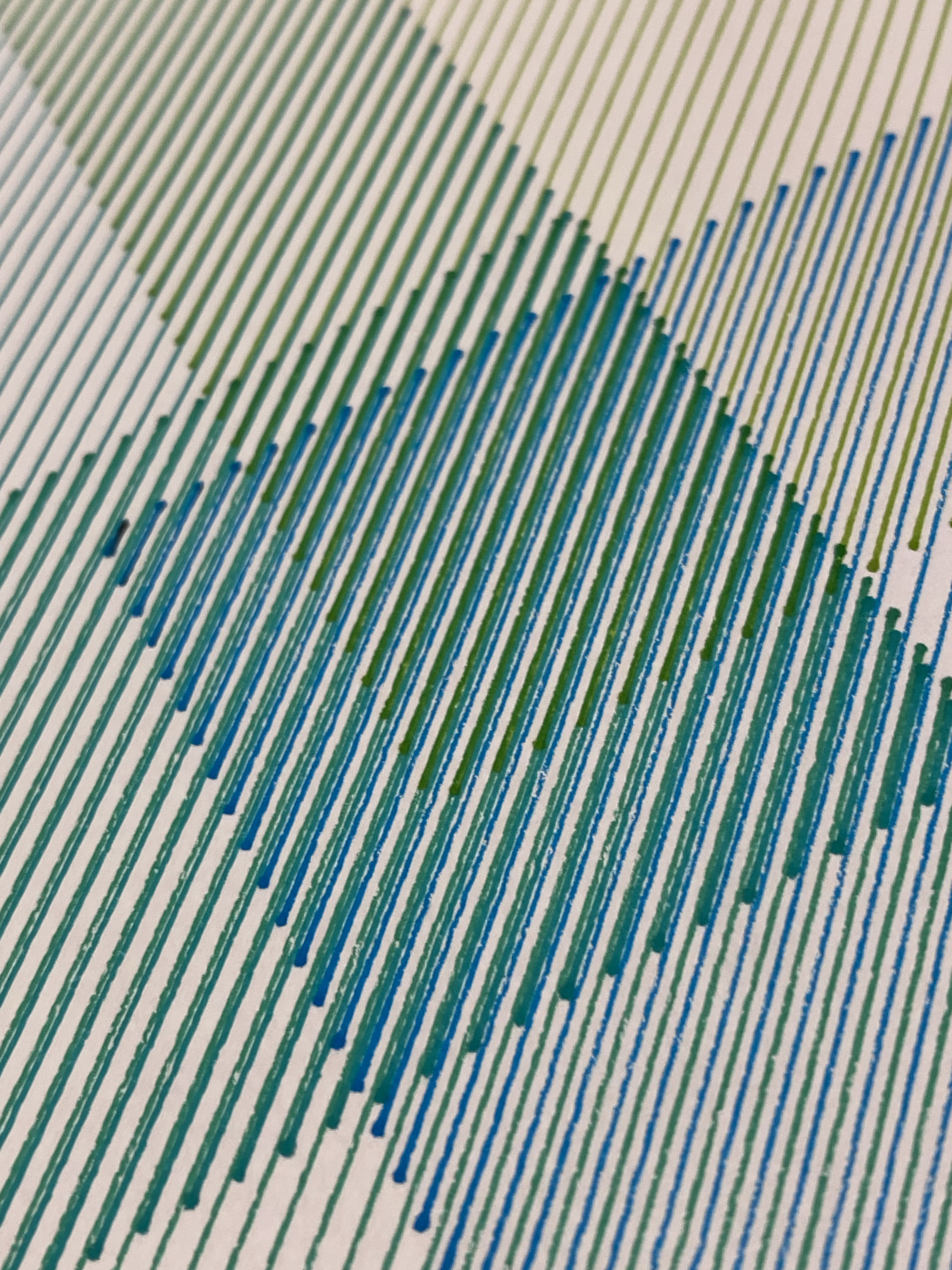
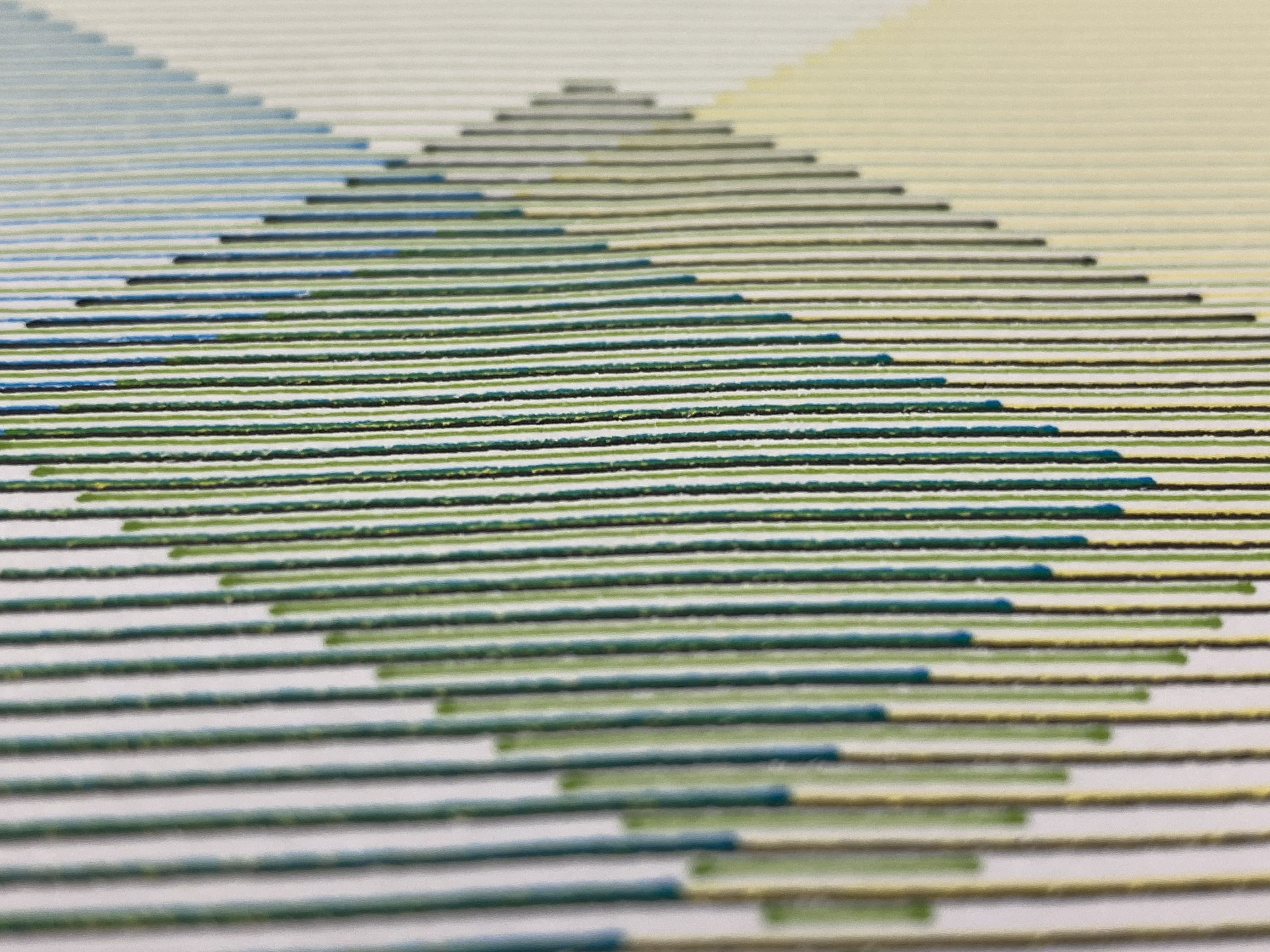
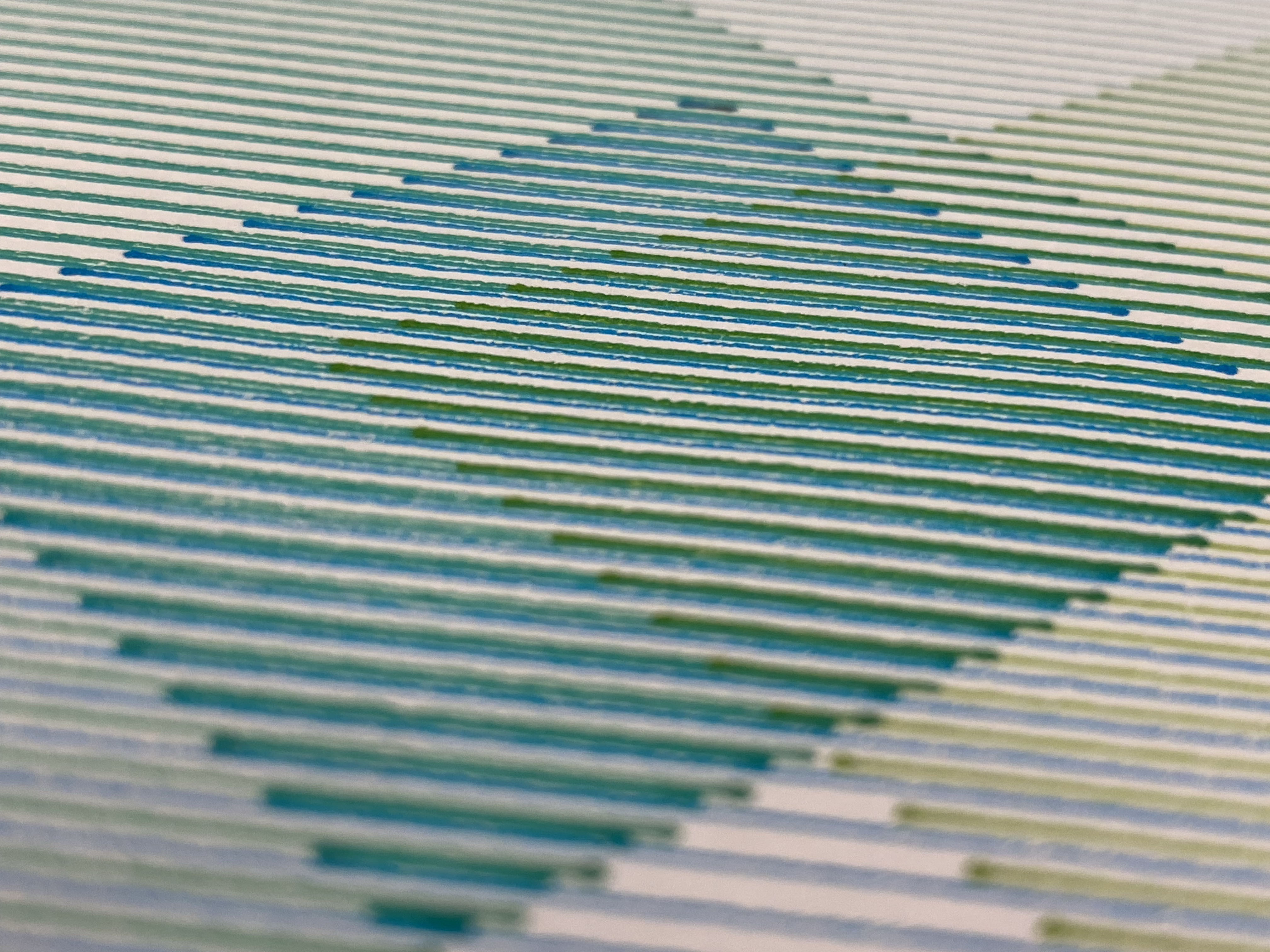
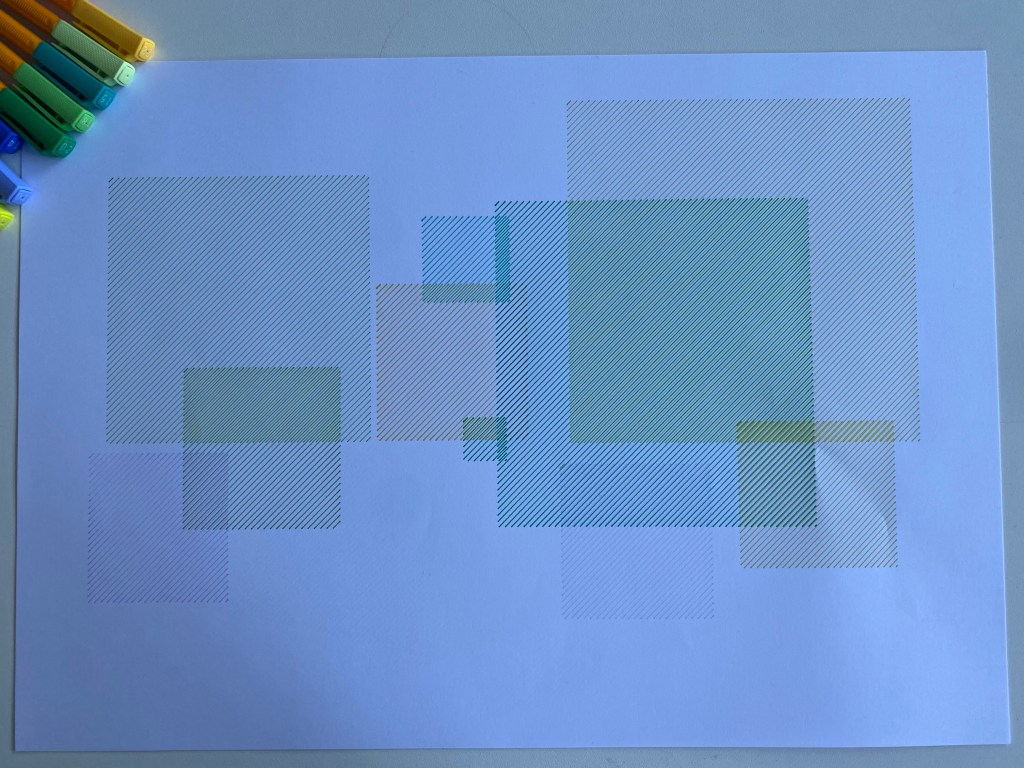
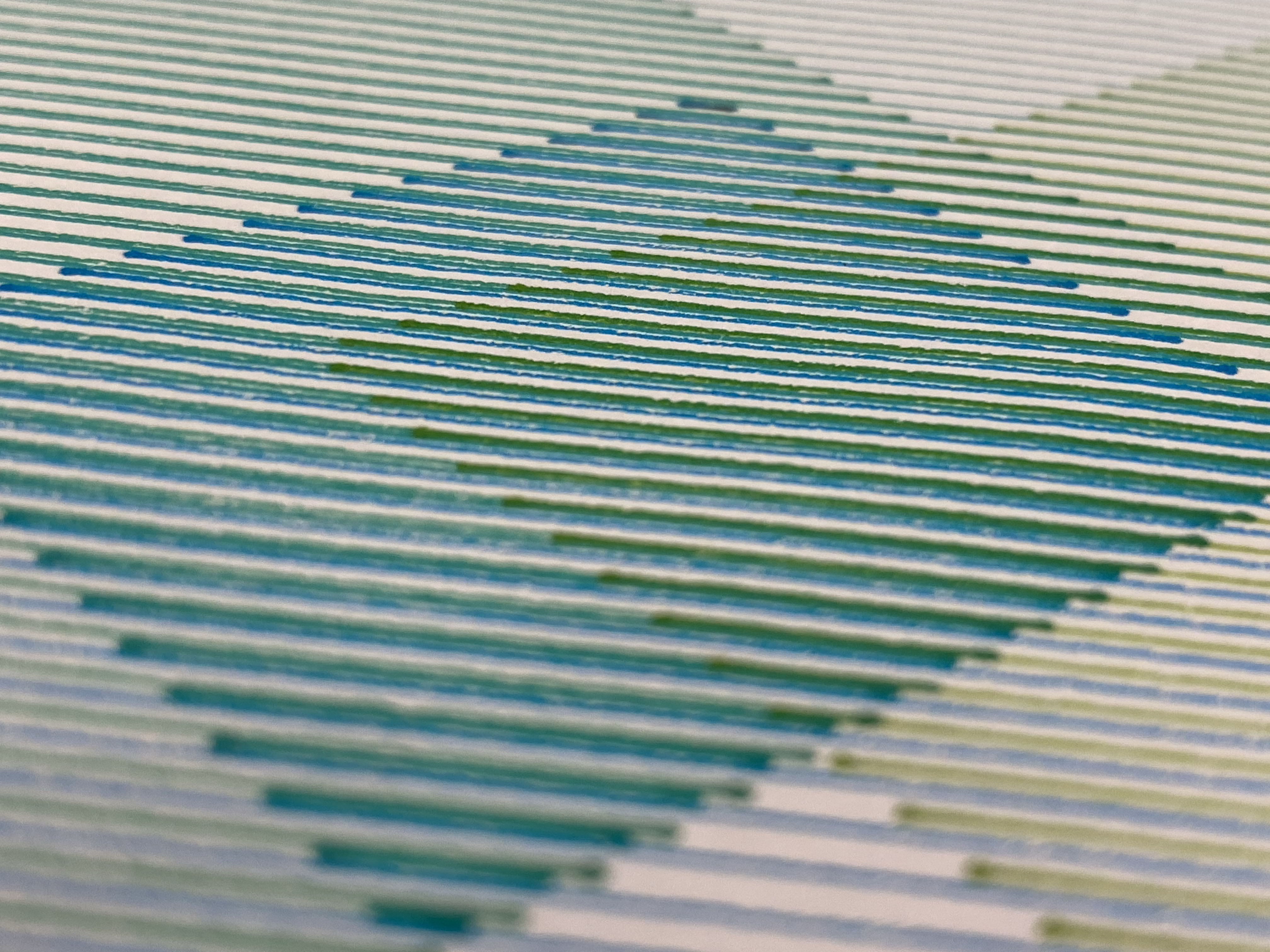
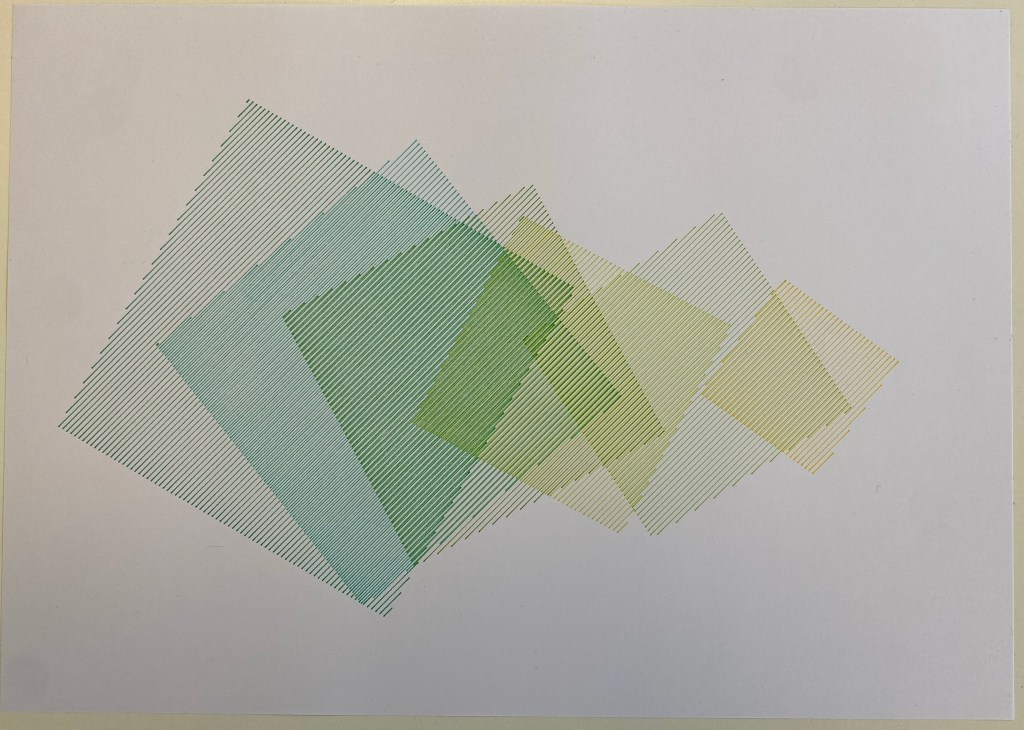
One experiment shown here was mainly for me to get familiar with the Axi Draw and explore one avenue of mark-making; the idea was to isolate the artificial grid structure of the lithium fields that are rechargeable come from.
Inspiration for Axi Draw Mark Making
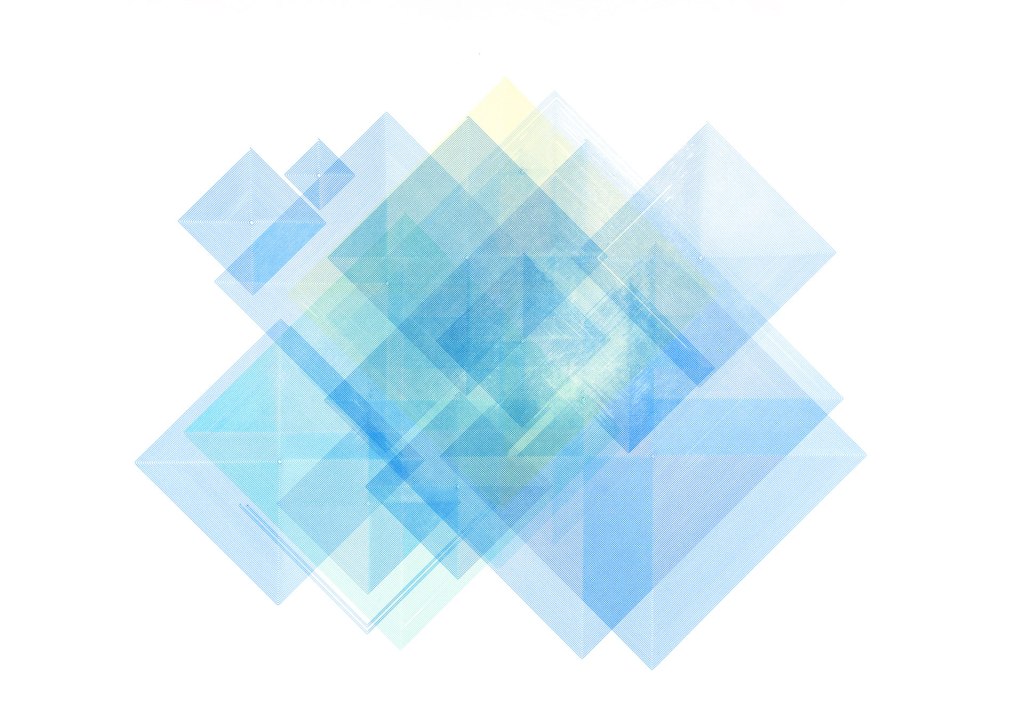
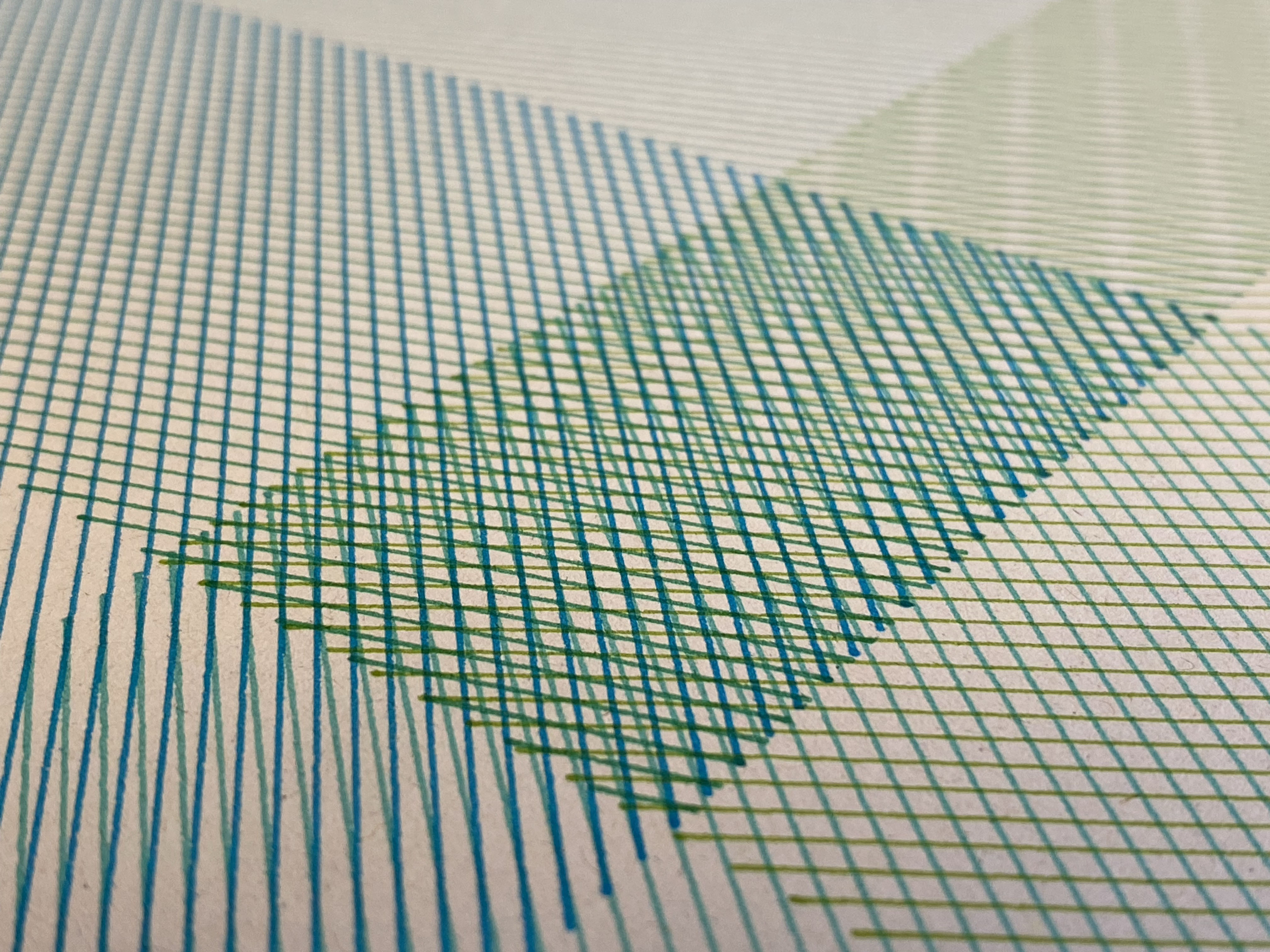
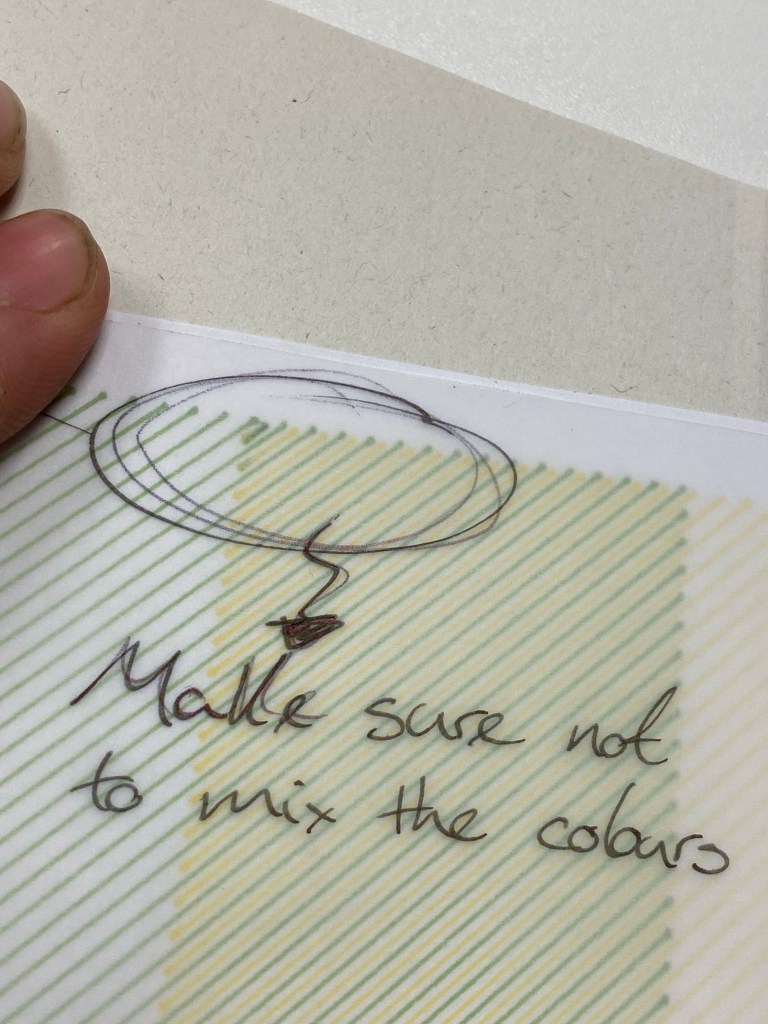
Damien Borowik was an artist that caught my eye with his use of tight squared spirals and his use of colours that don’t meld in a traditional sense but trick the eye into finding new colours within those combinations. I enjoyed the relationship between spirals that work between the lines of one another, so they don’t cross at parts but run within one another.
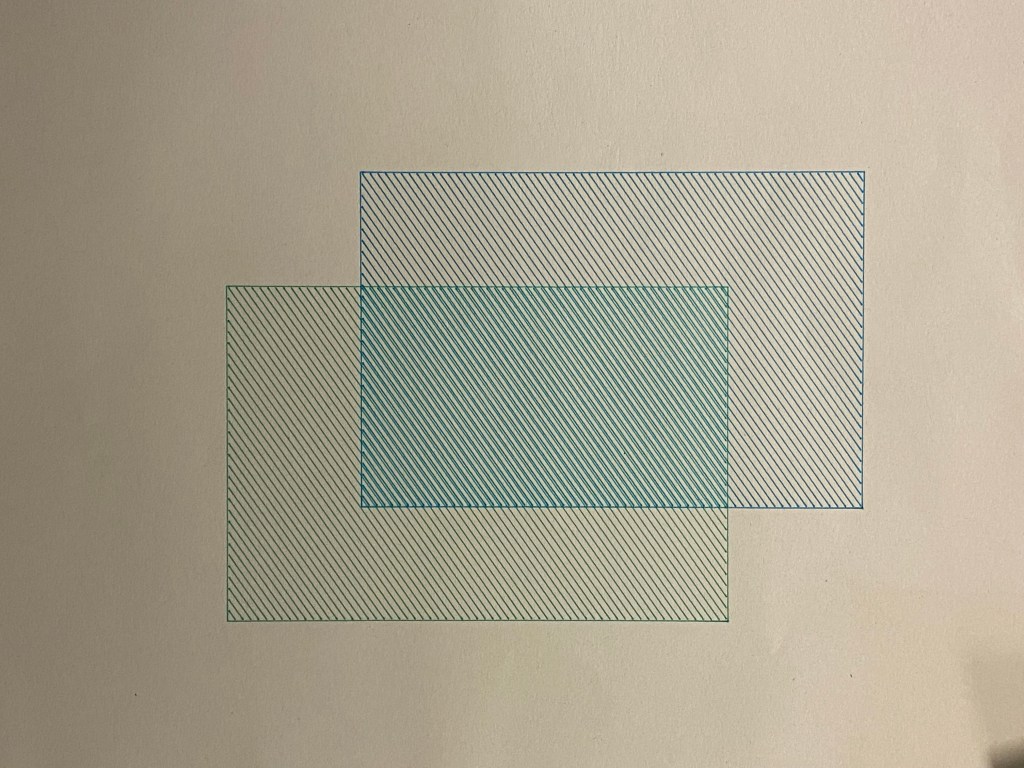
This is the second experiment using the Axi draw. Again, I isolated the core elements from what I have seen within images of lithium fields, the vibrant yet unnatural greens and the artificial grid structure of the landscape and interpreted them in another way.
After Review
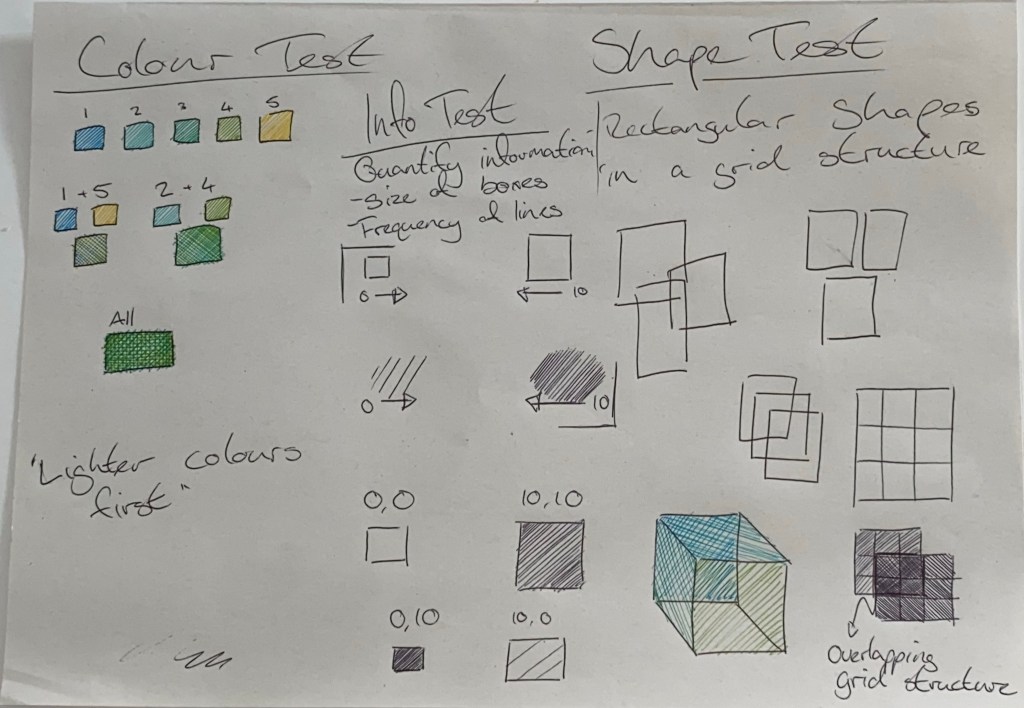
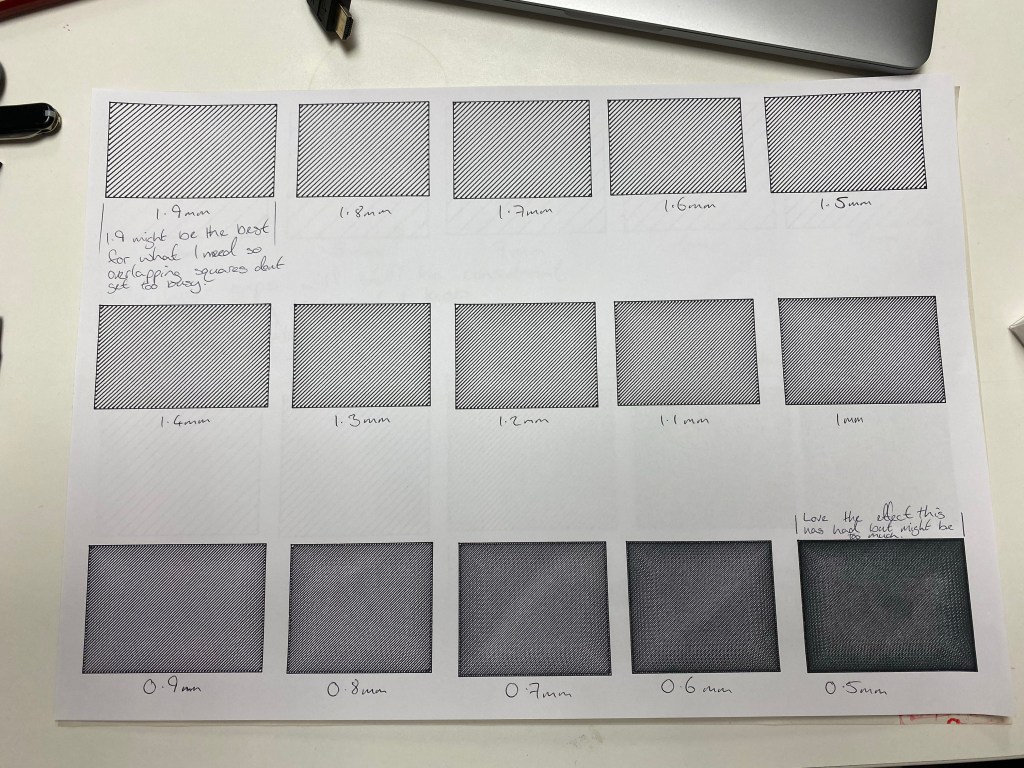
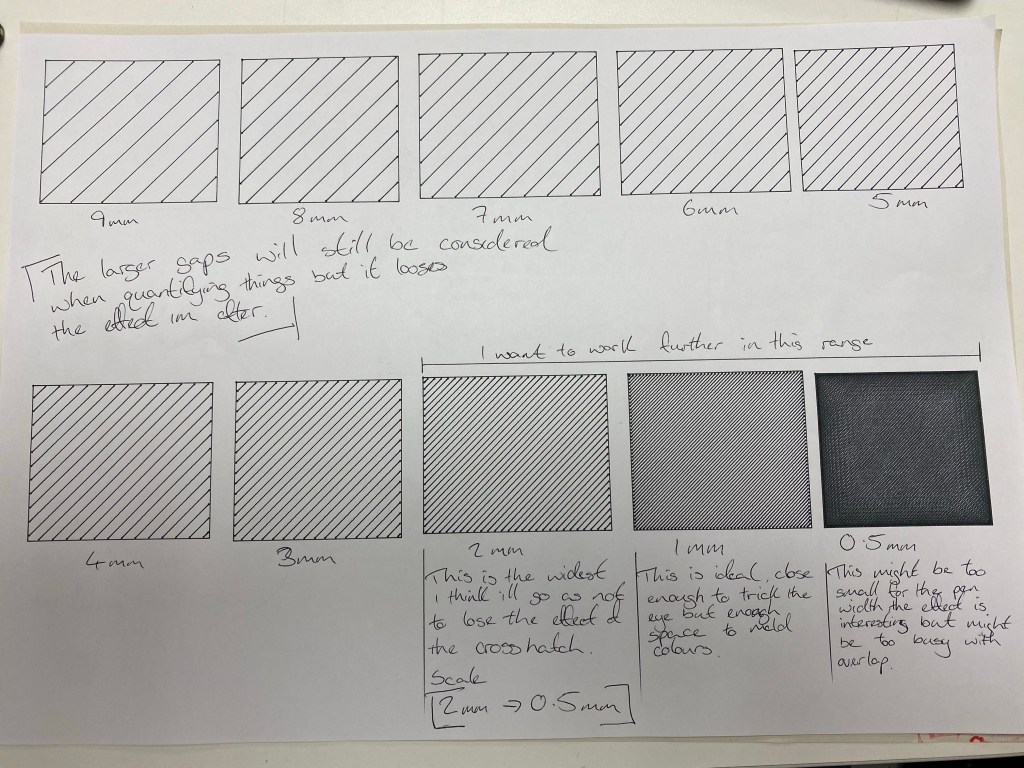
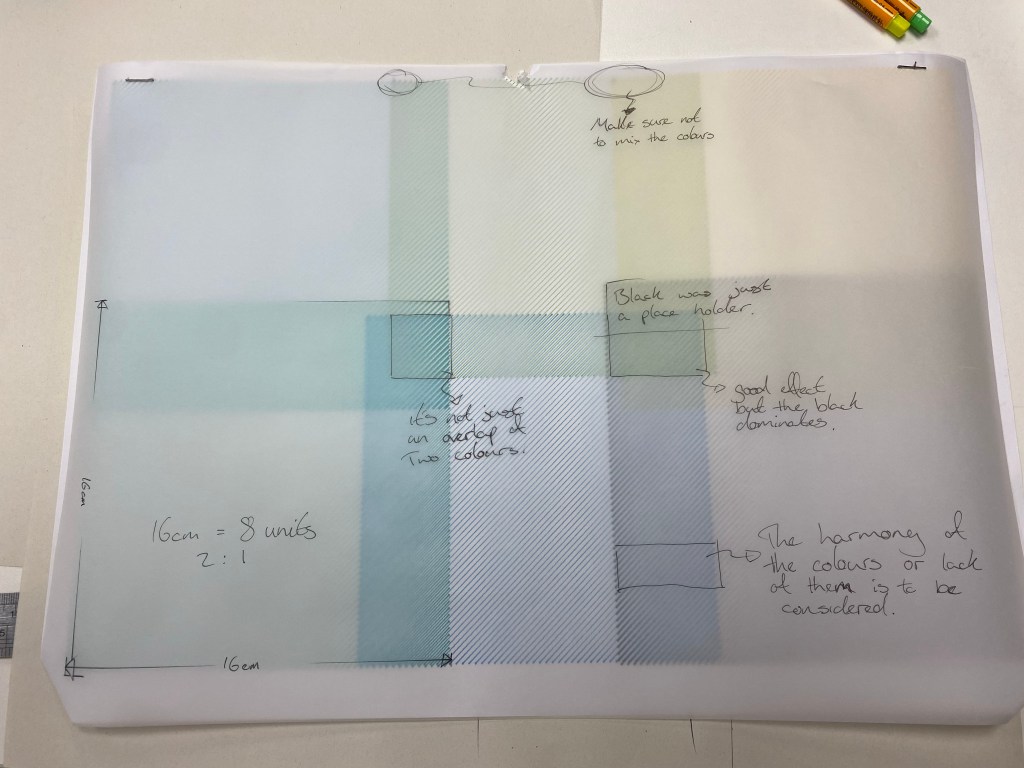
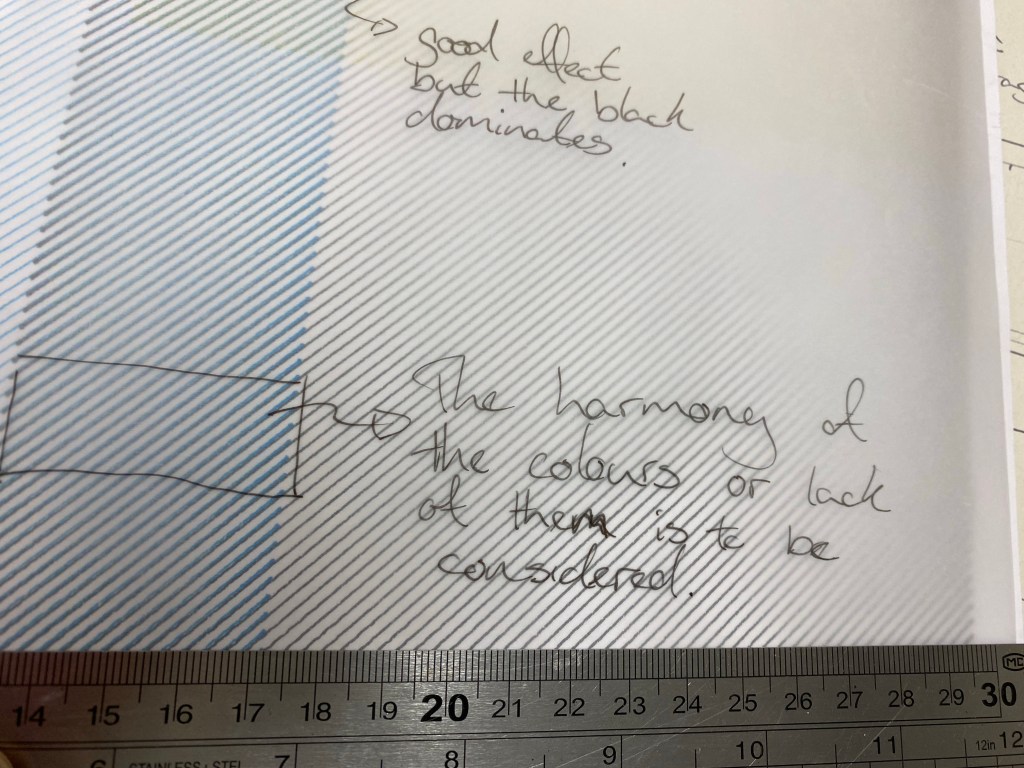
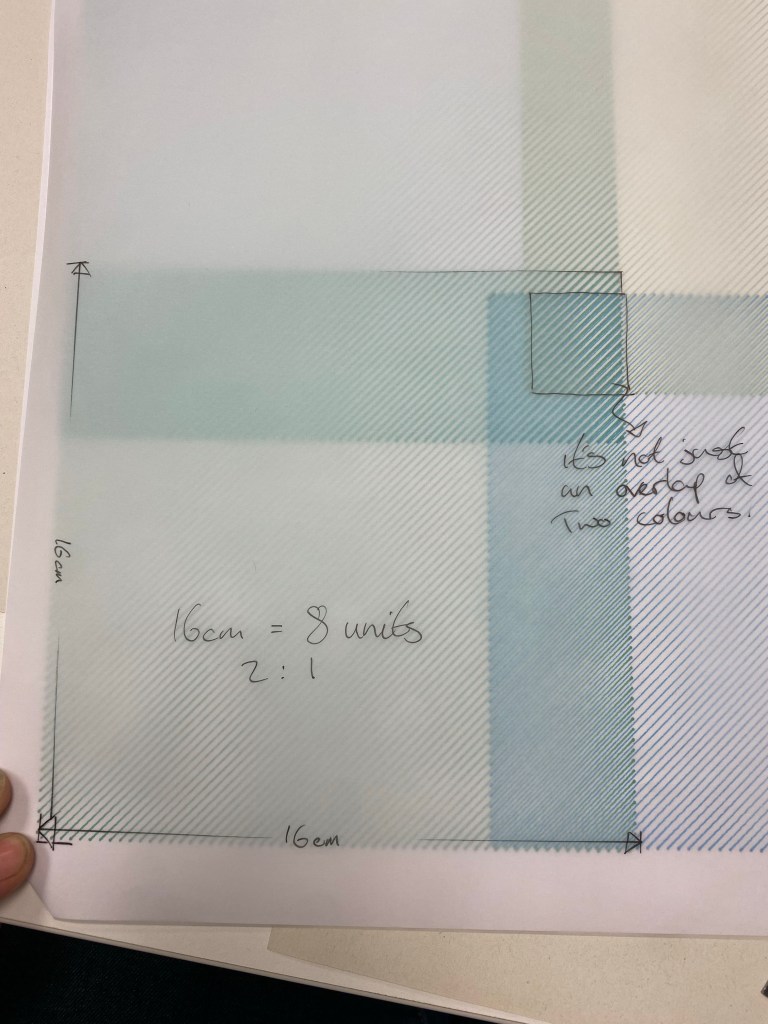
In the review, Cat suggested using the hatched rectangles as the quantifiers. The bigger the square, the more lithium is present. Taking this further, I would like to explore the frequency of the lines being an indicator of quantity. The size of the square indicates one factor, and the frequency of the lines indicates another.
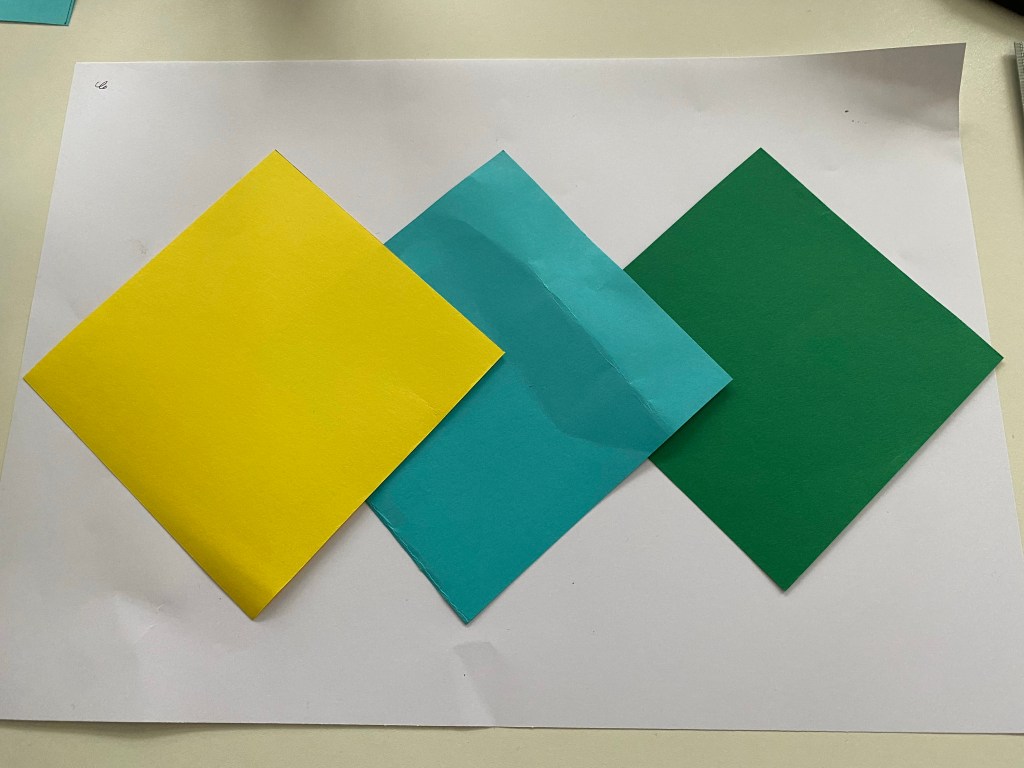
This experiment forced me to step away from the Axi Draw and try something else; I took what I had already identified as the core elements of the lithium fields, the colours and the shape and applied it to something else.
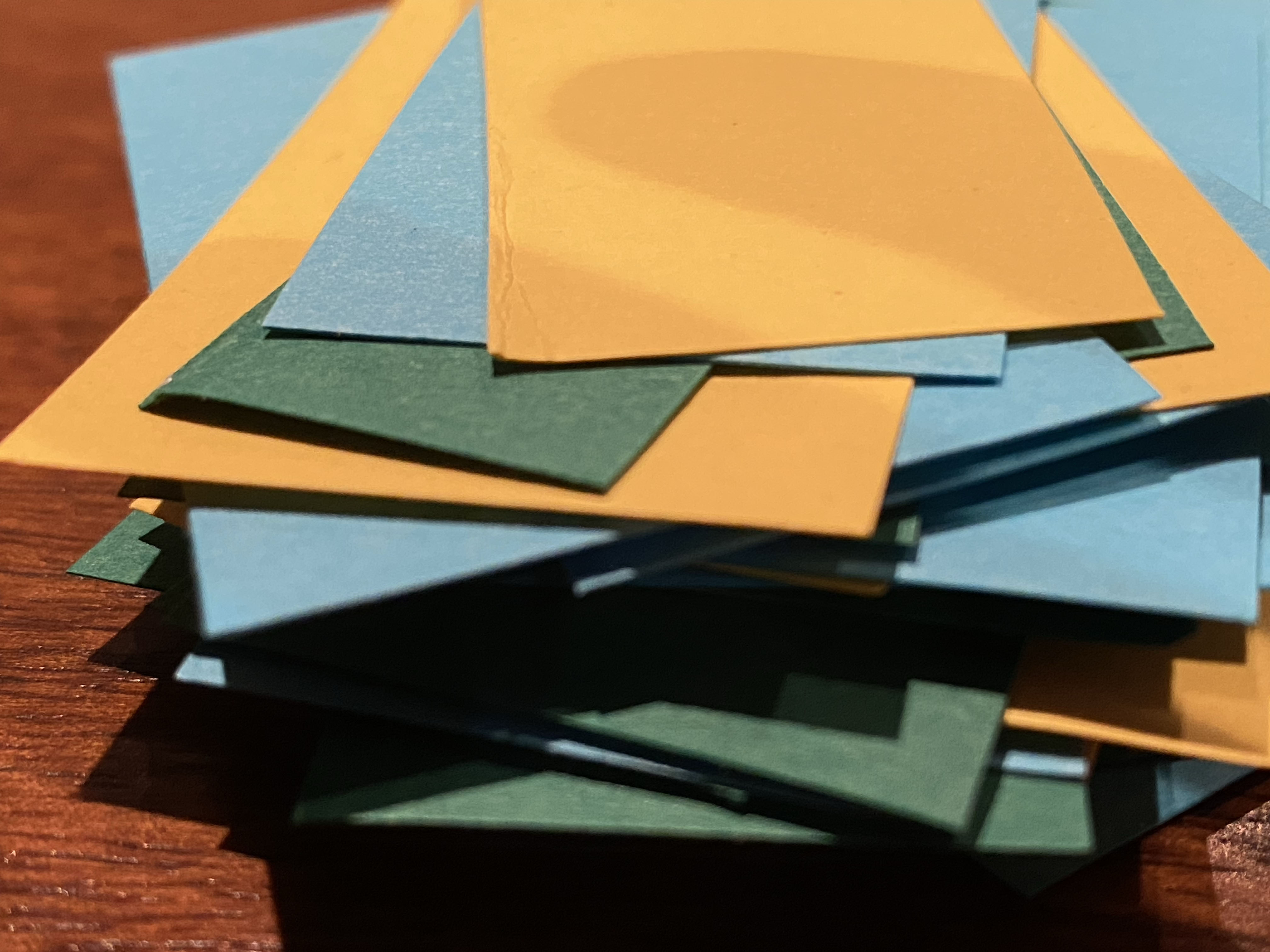
One idea this experiment did give me was to use these representations of lithium fields as the quantifier. The higher the stack, the more lithium is present.
Self-Review
As I review the work I’ve done so far, a throughline I’ve noticed is the Data Visualisation and illuminating aspects of the Anthropocene to the viewer. This now has been focused on the journey of Lithium from manufacturing to the devices we use daily and how the lithium-ion batteries that are marketed as a green alternative end their life in the same tech dump that the “worse” tech ends up in any way.
Note to self: Remember always to bring it back to a personal level. If the final piece is too abstract, that might take away from the message, what you’re trying to say, and what you’re trying to highlight. To show people how much lithium they use and how that is damaging.
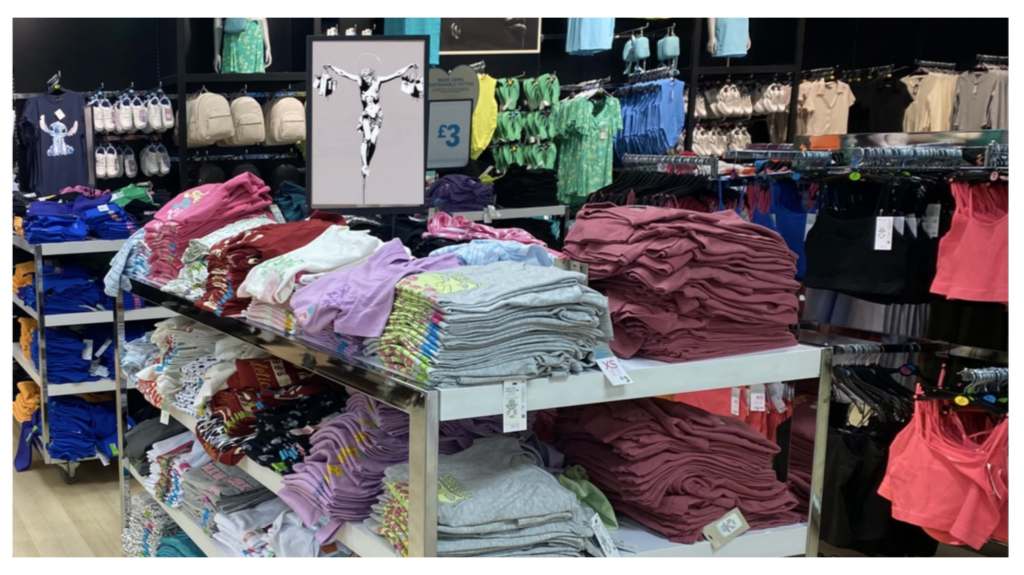
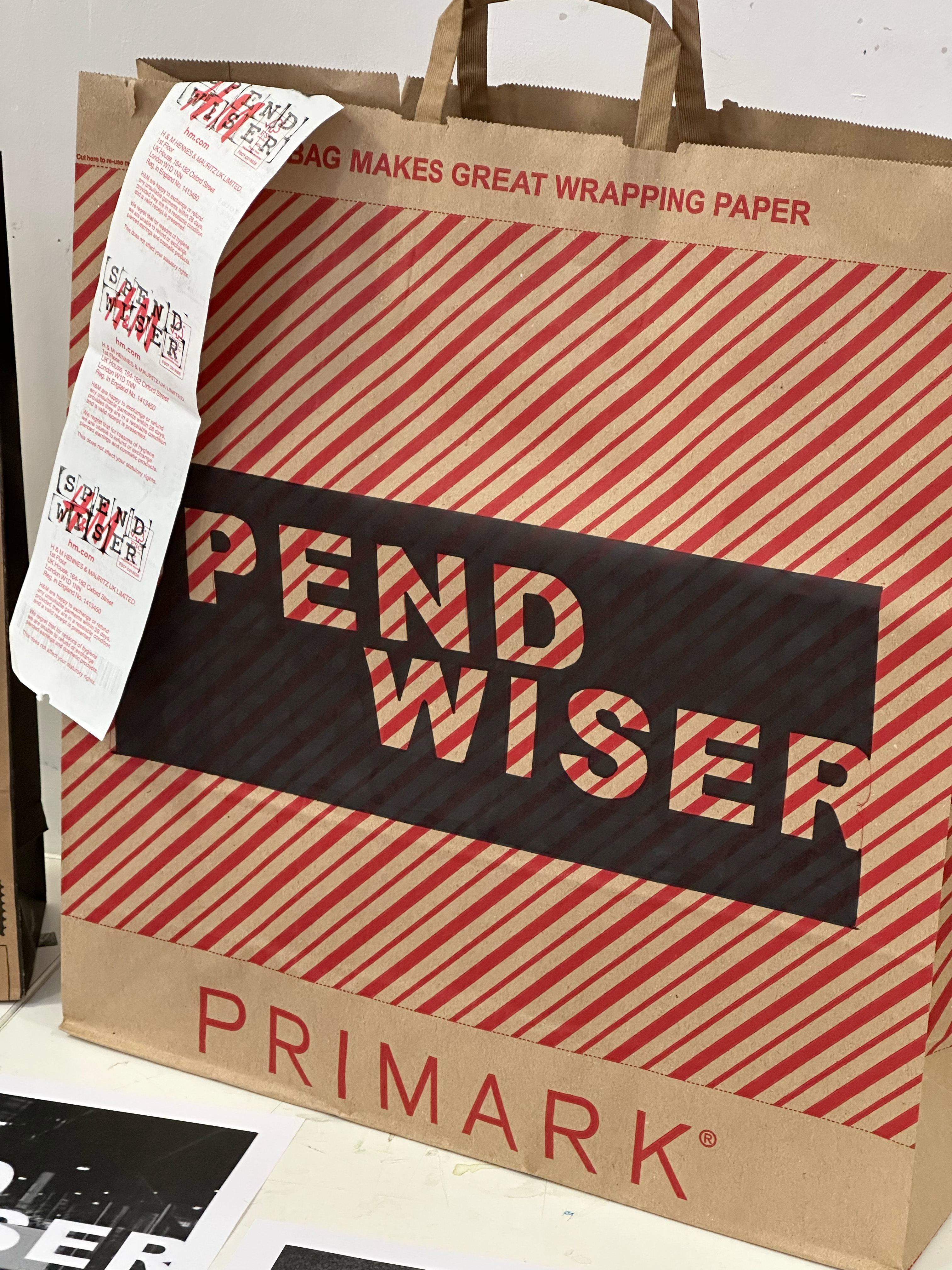
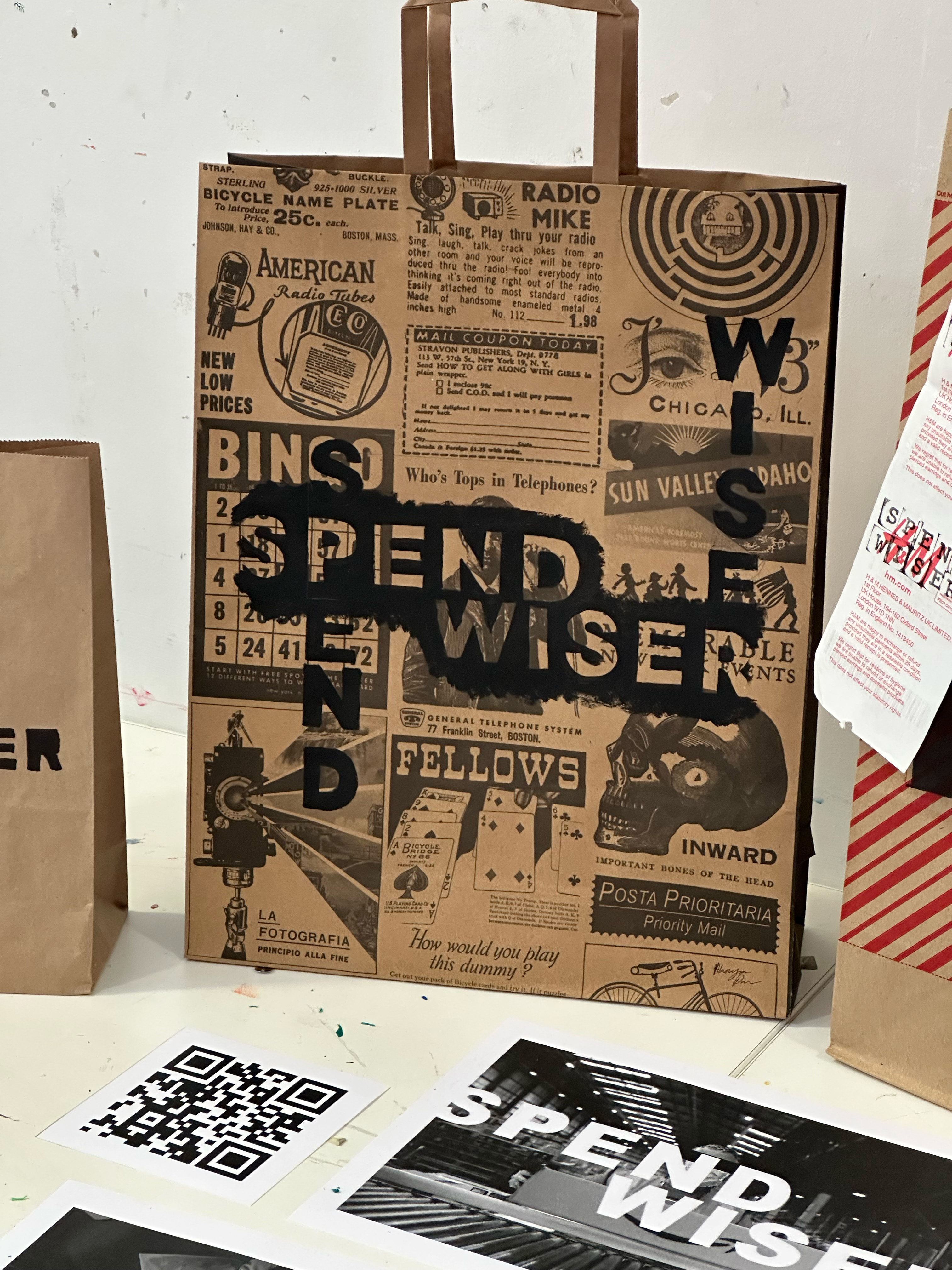
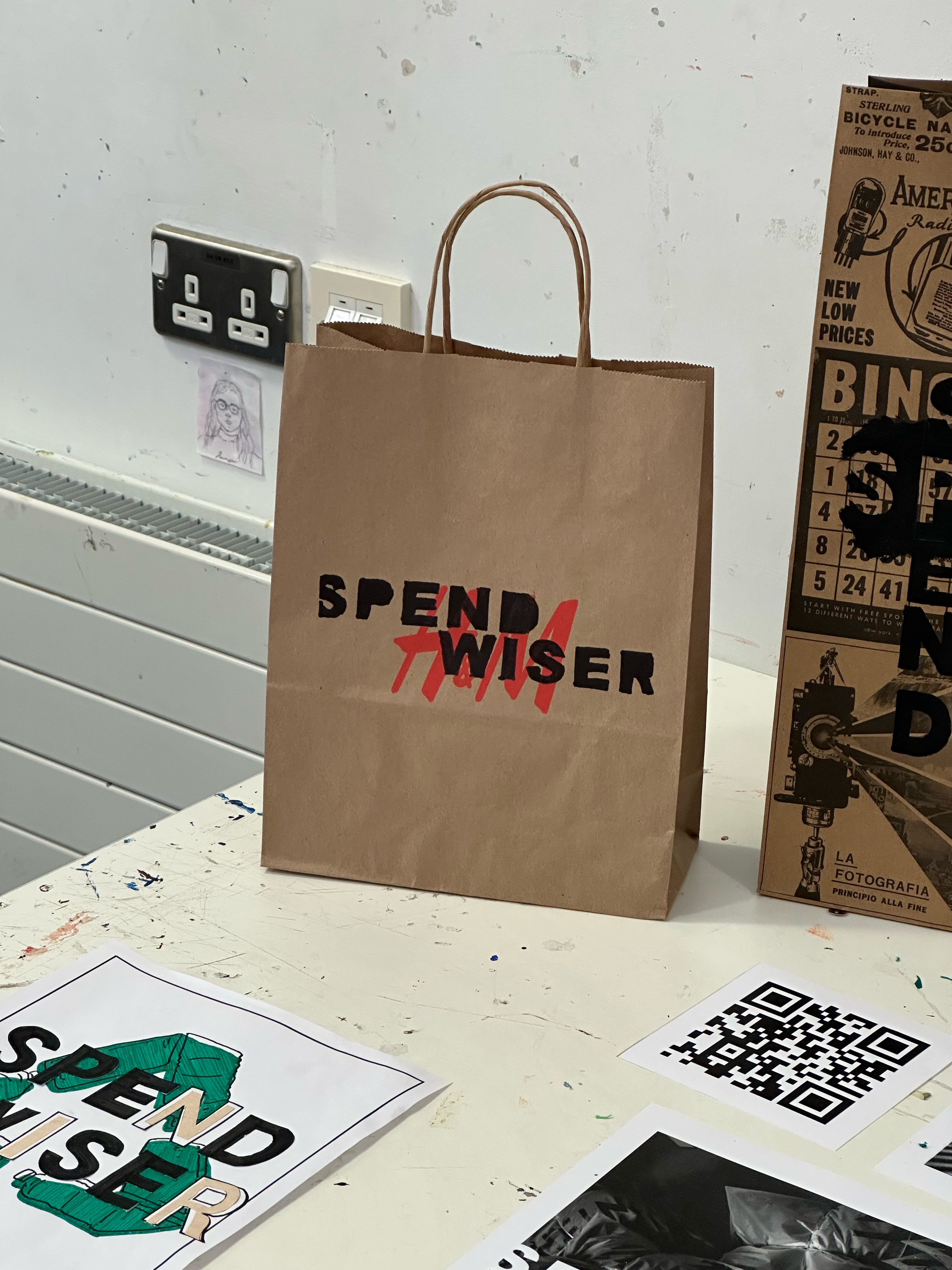
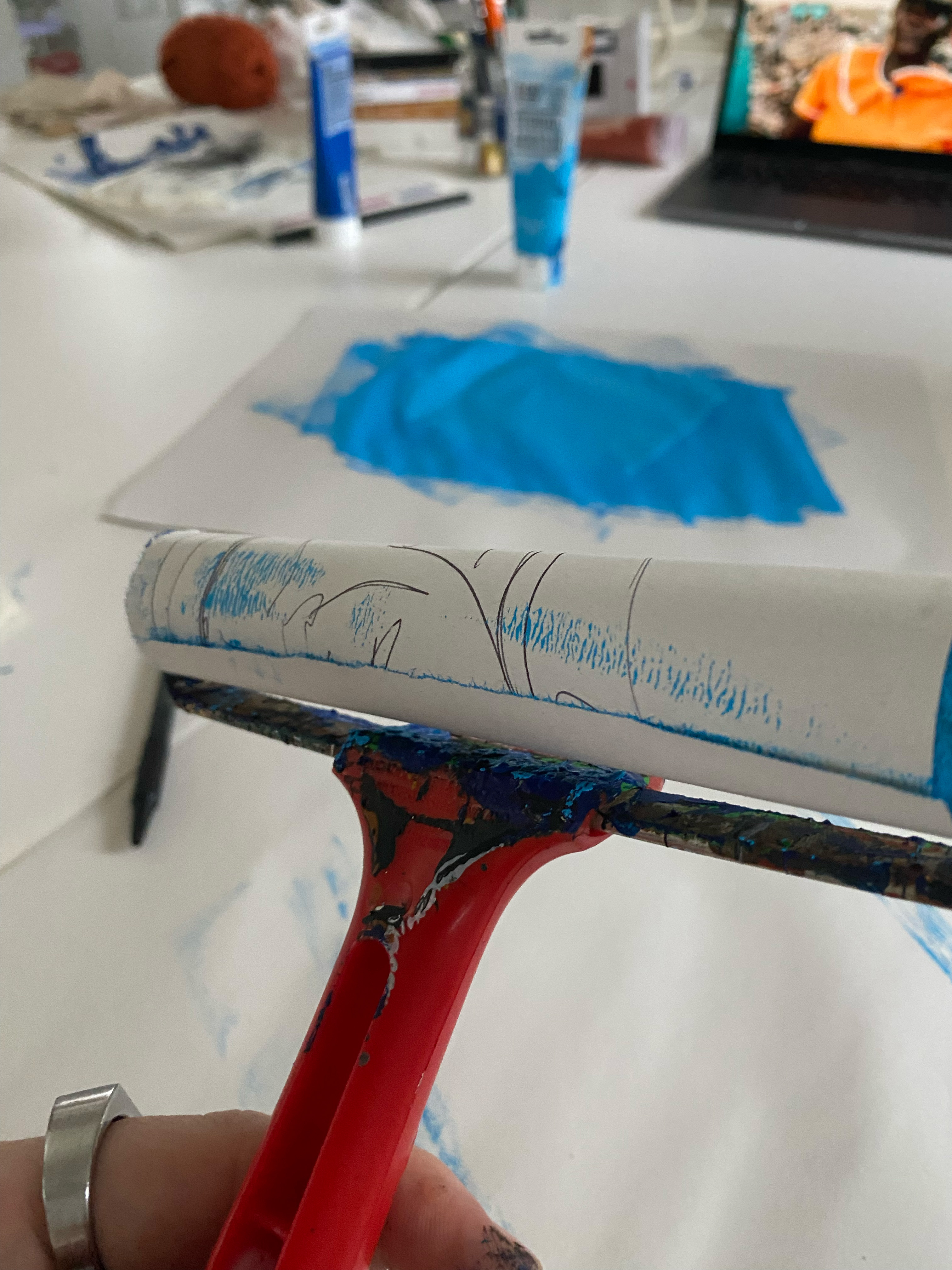
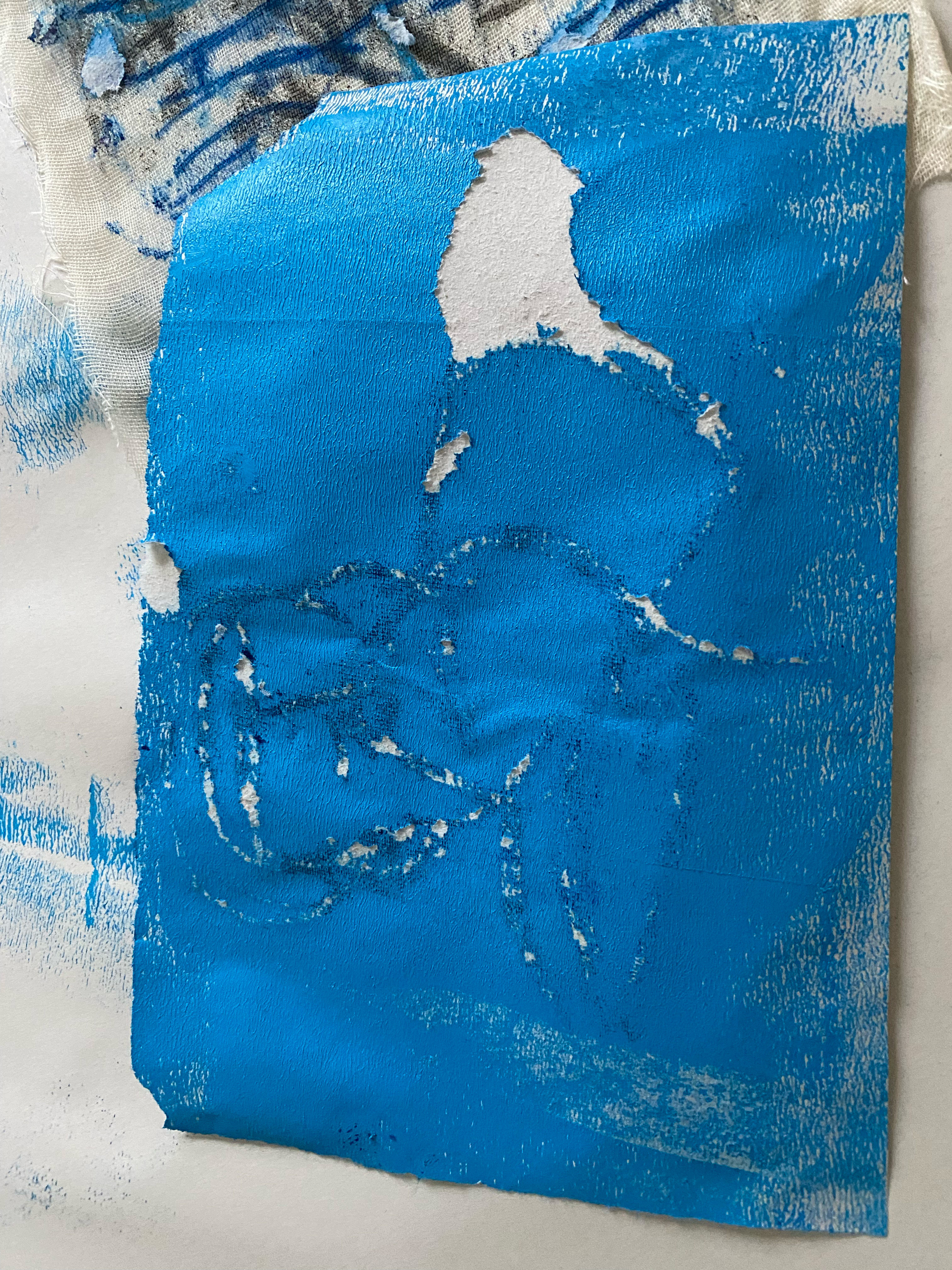
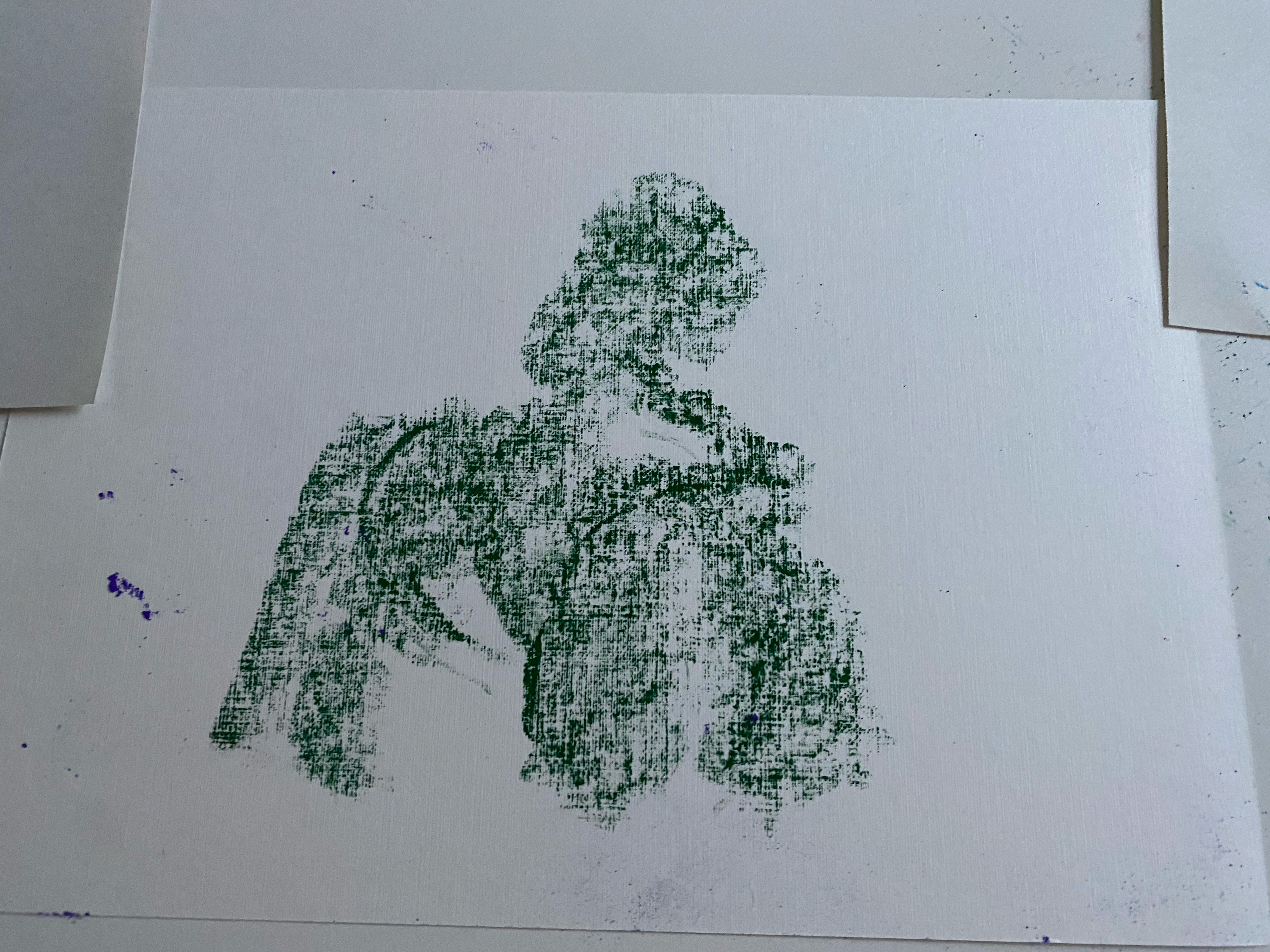
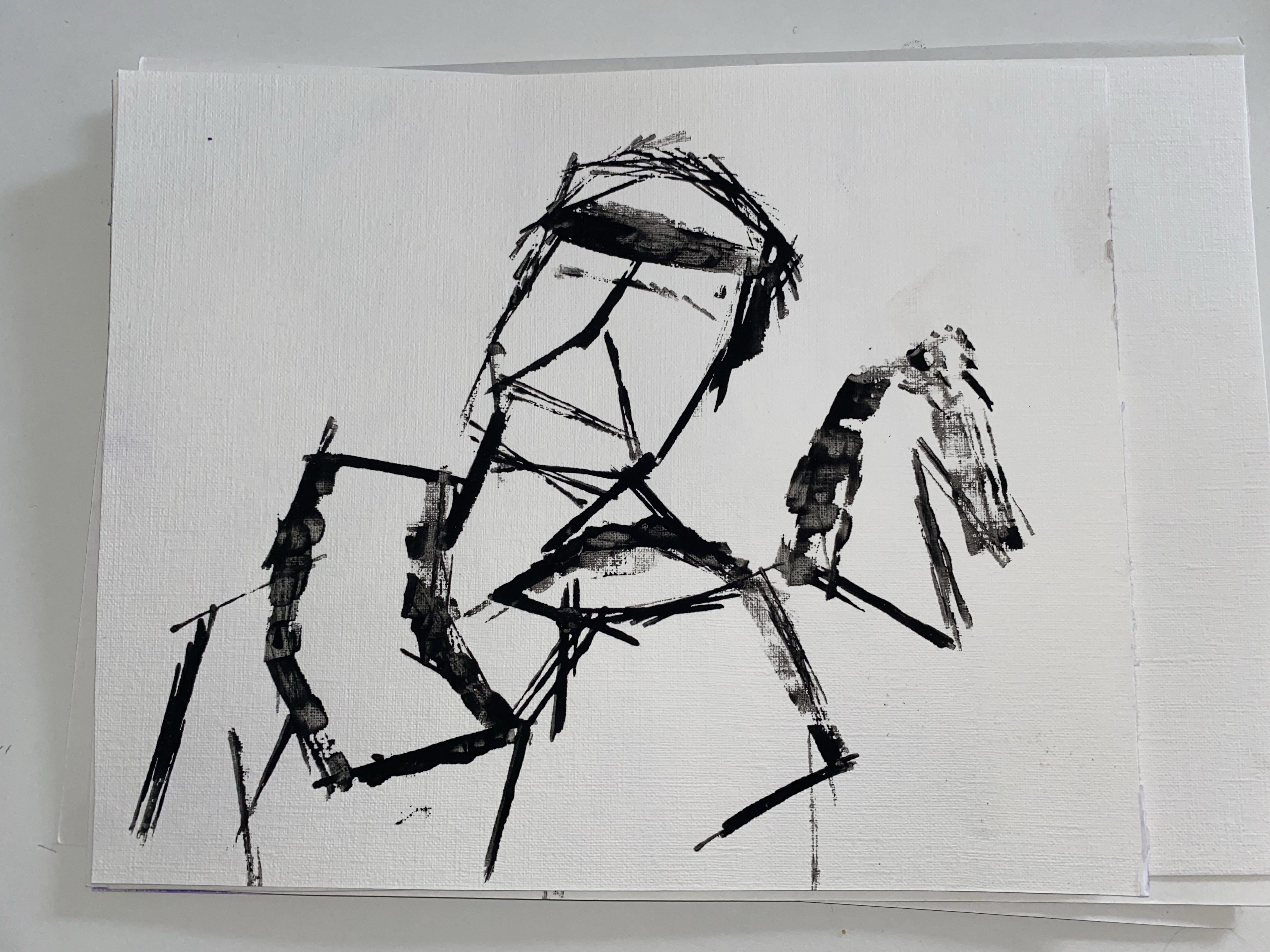
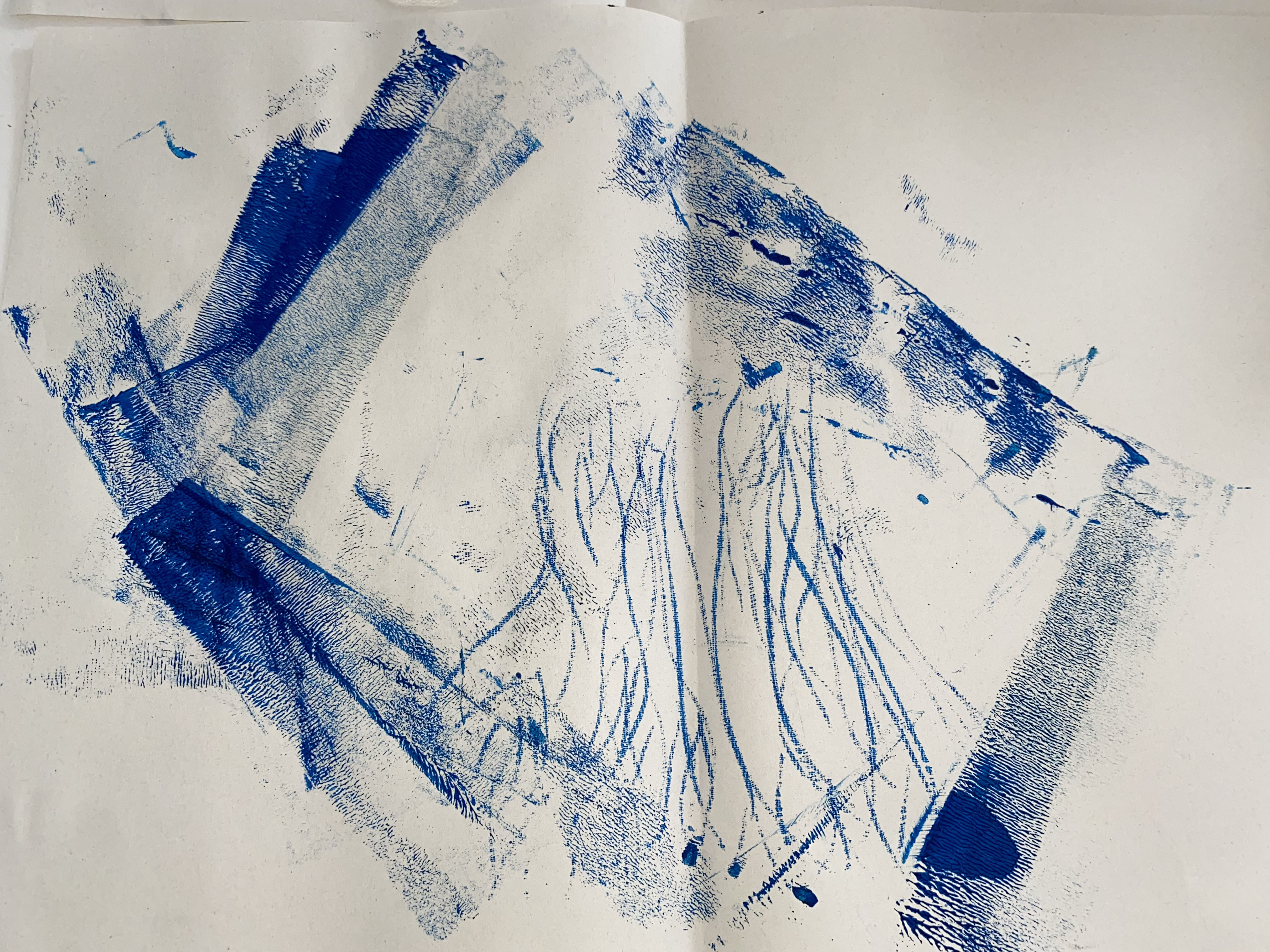
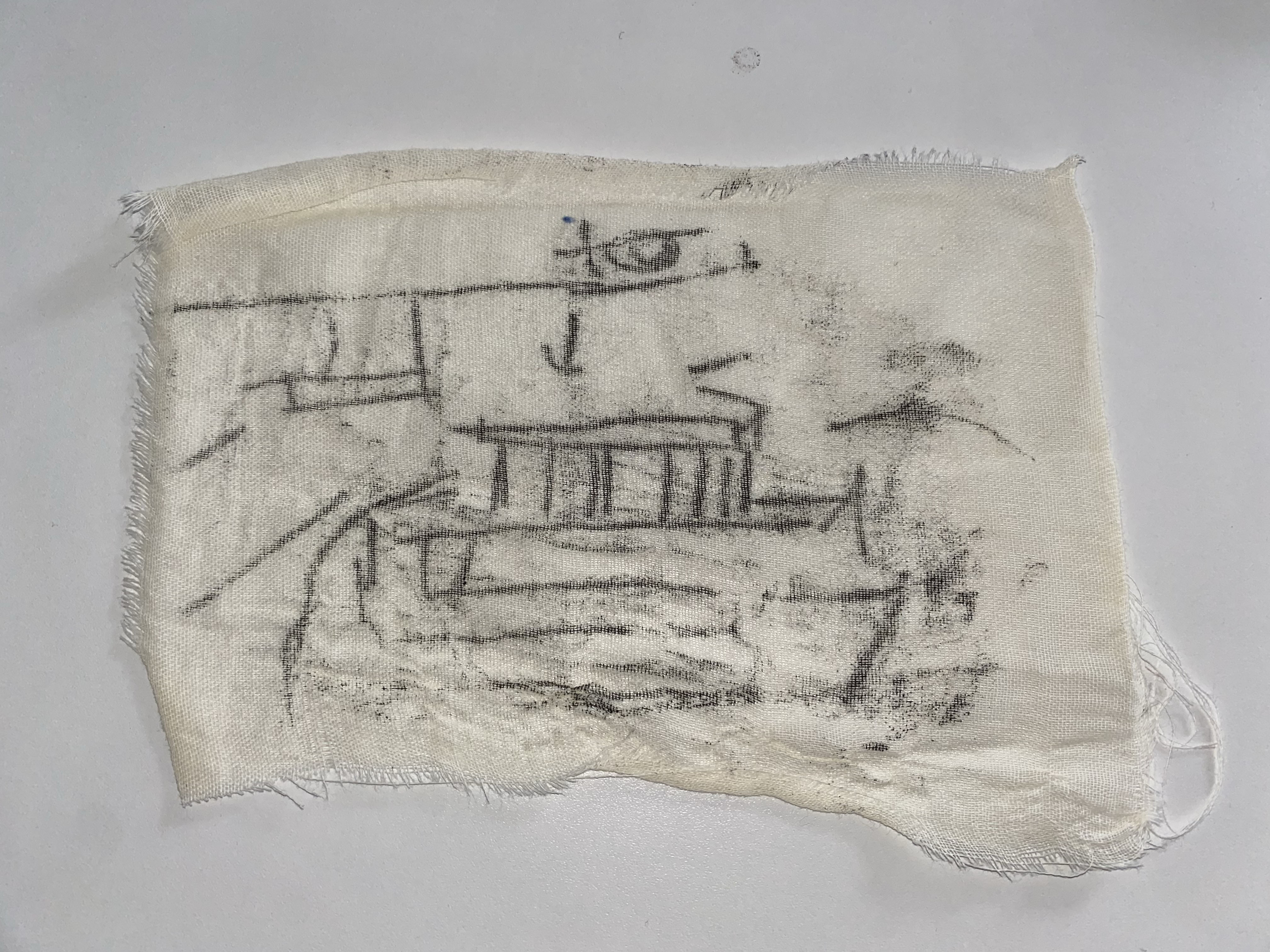
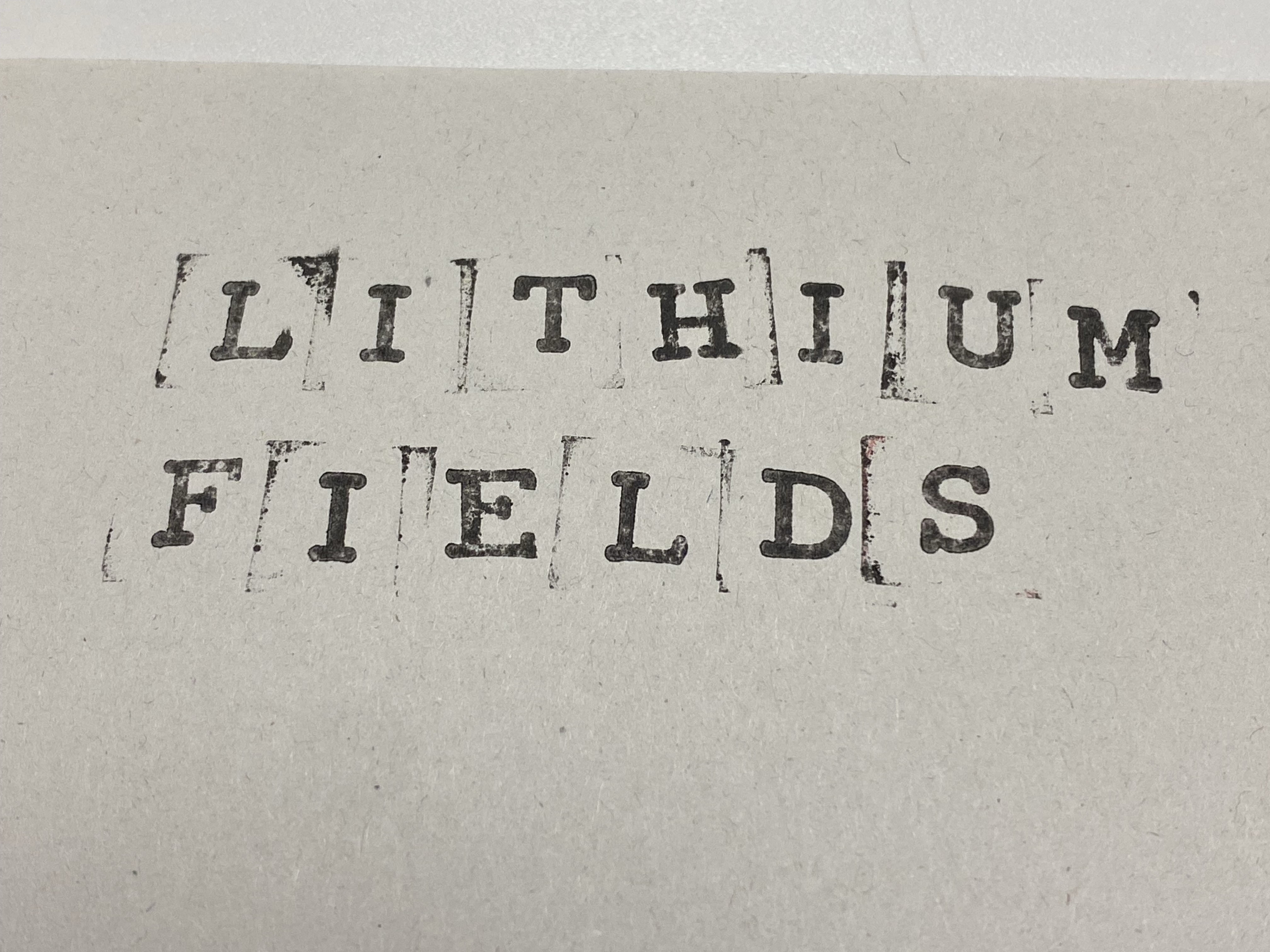
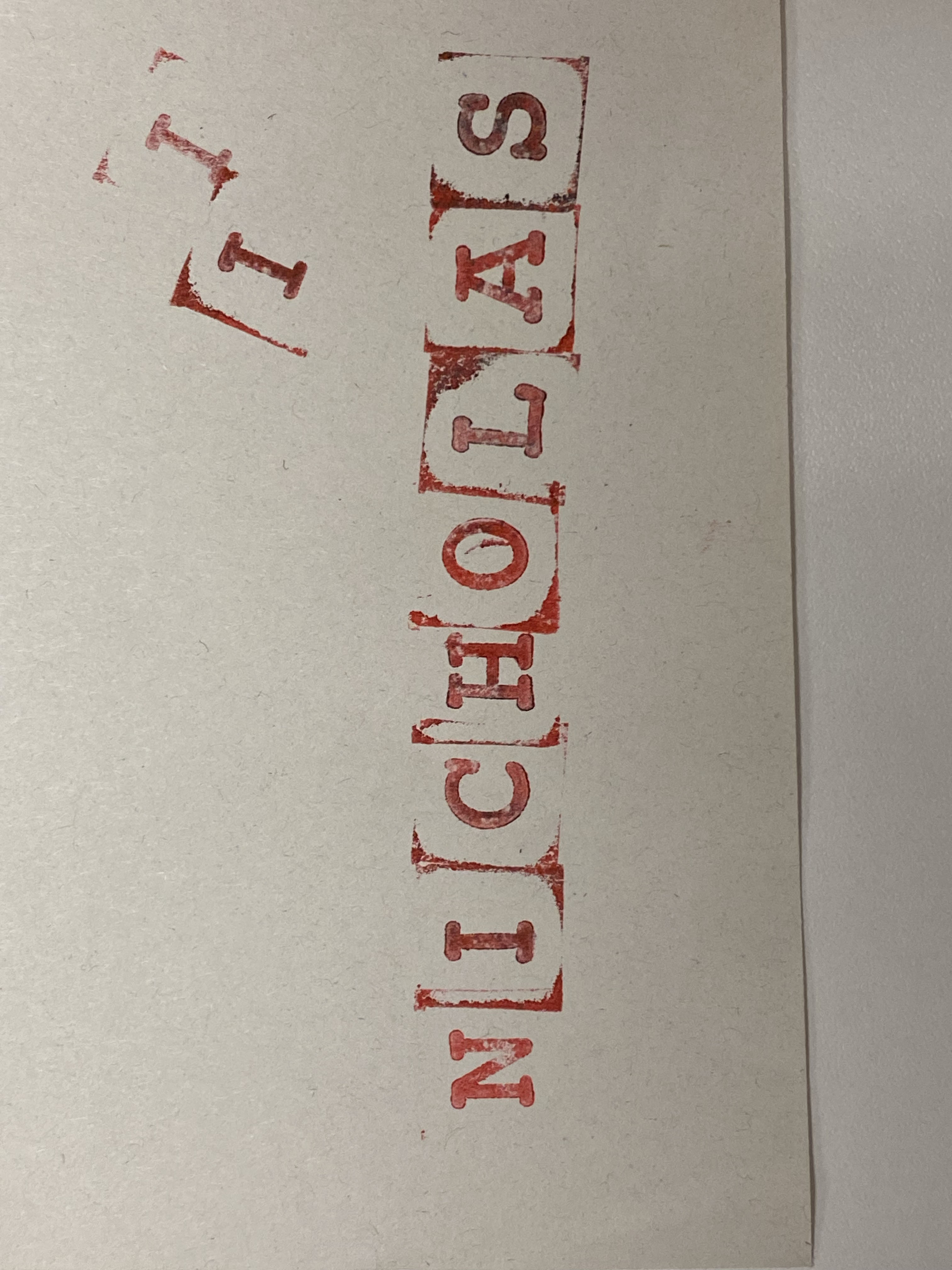
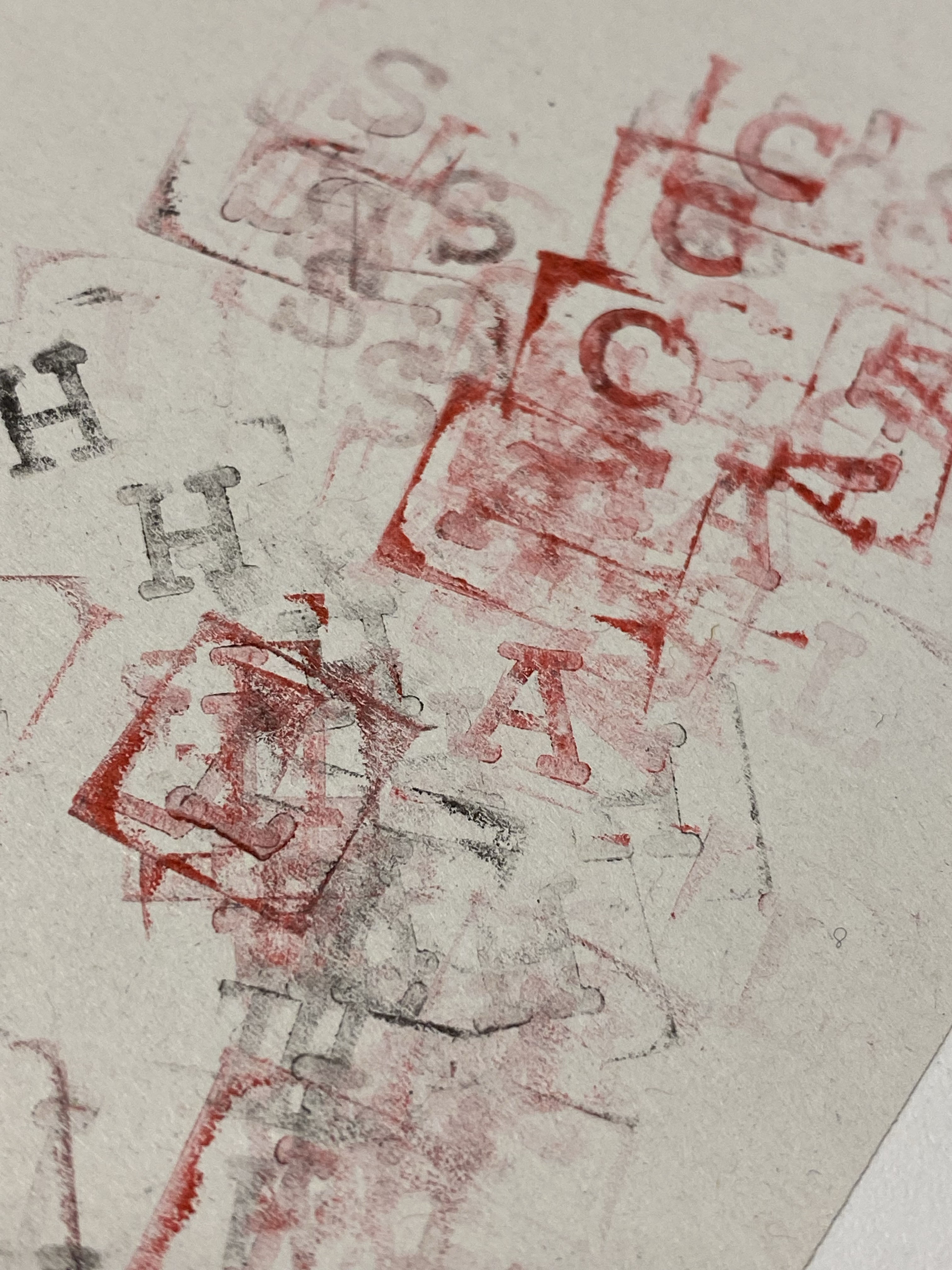
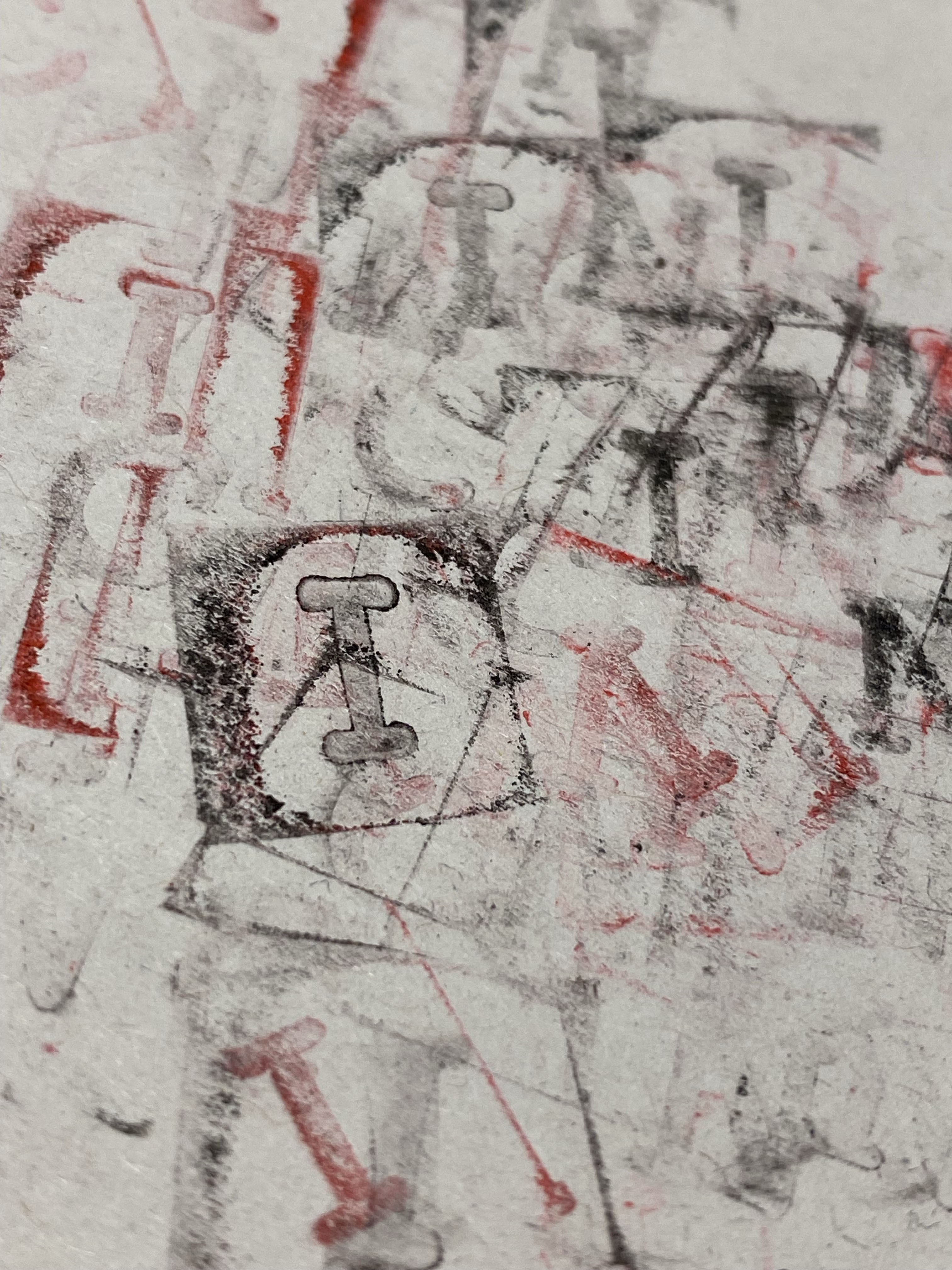
This was just a test after these lettering stamps caught my eye when shopping, the idea being that I continue to open myself up to using different mediums and techniques.
Upclose and Personal
Layout Creation
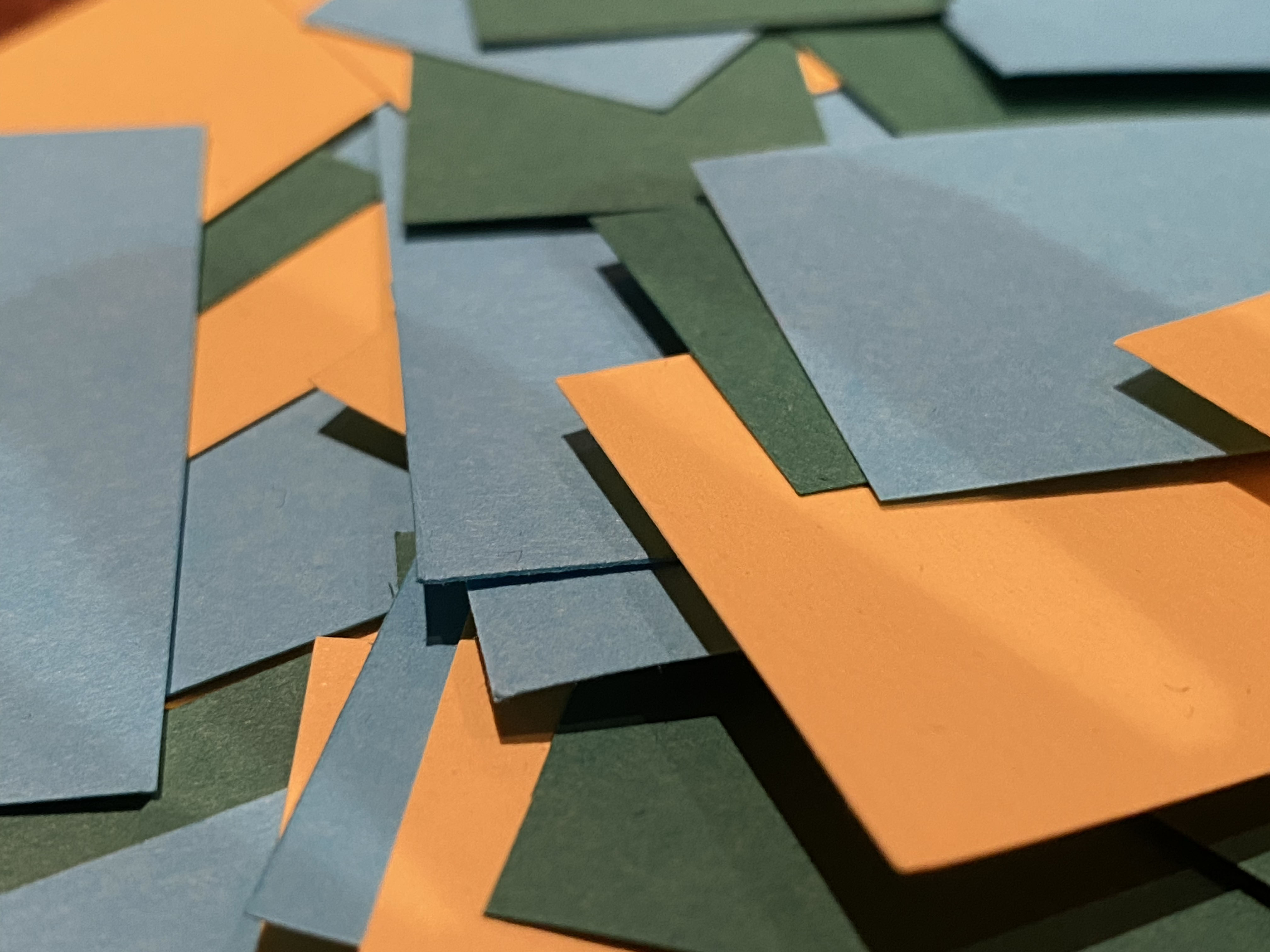
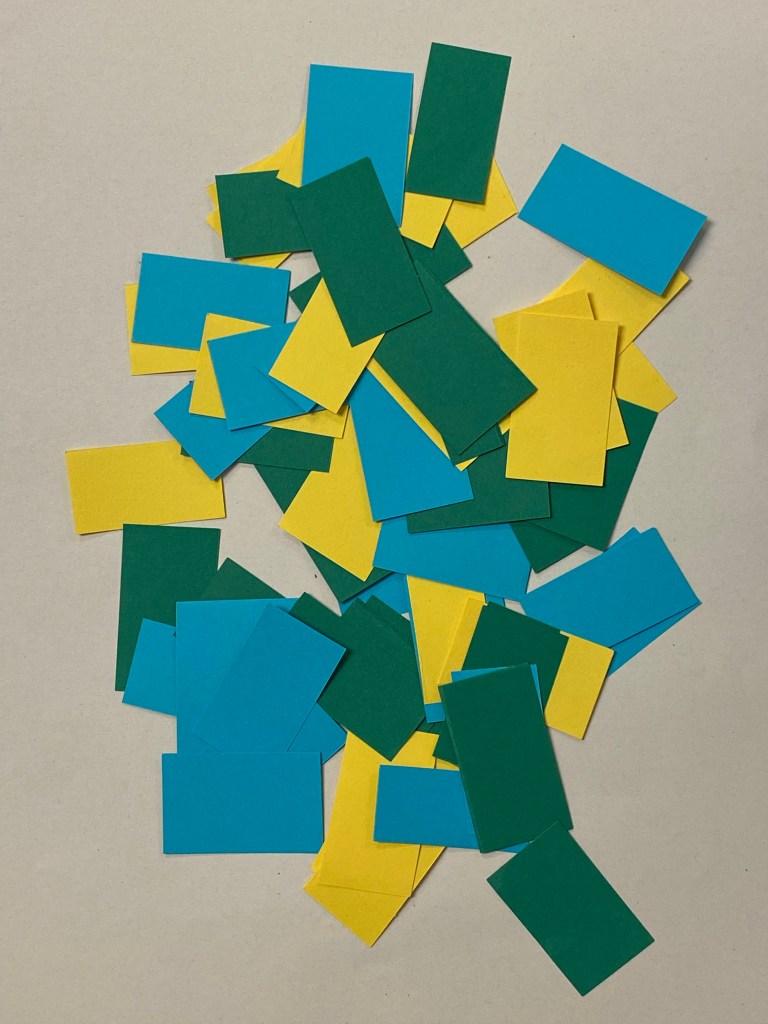
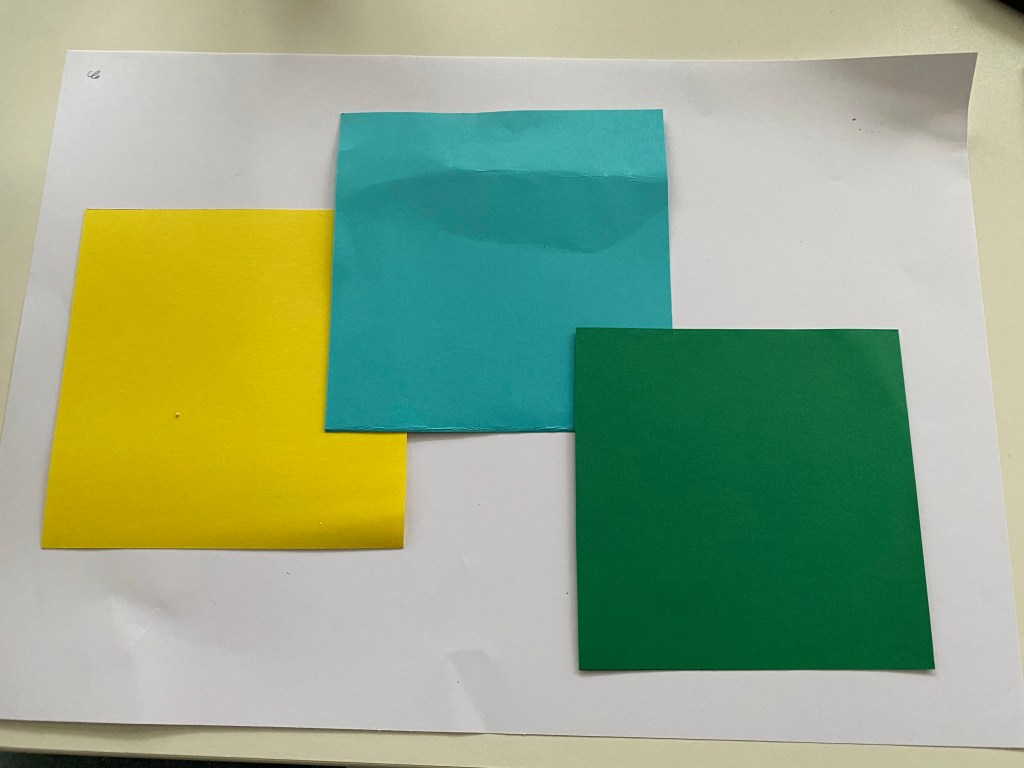
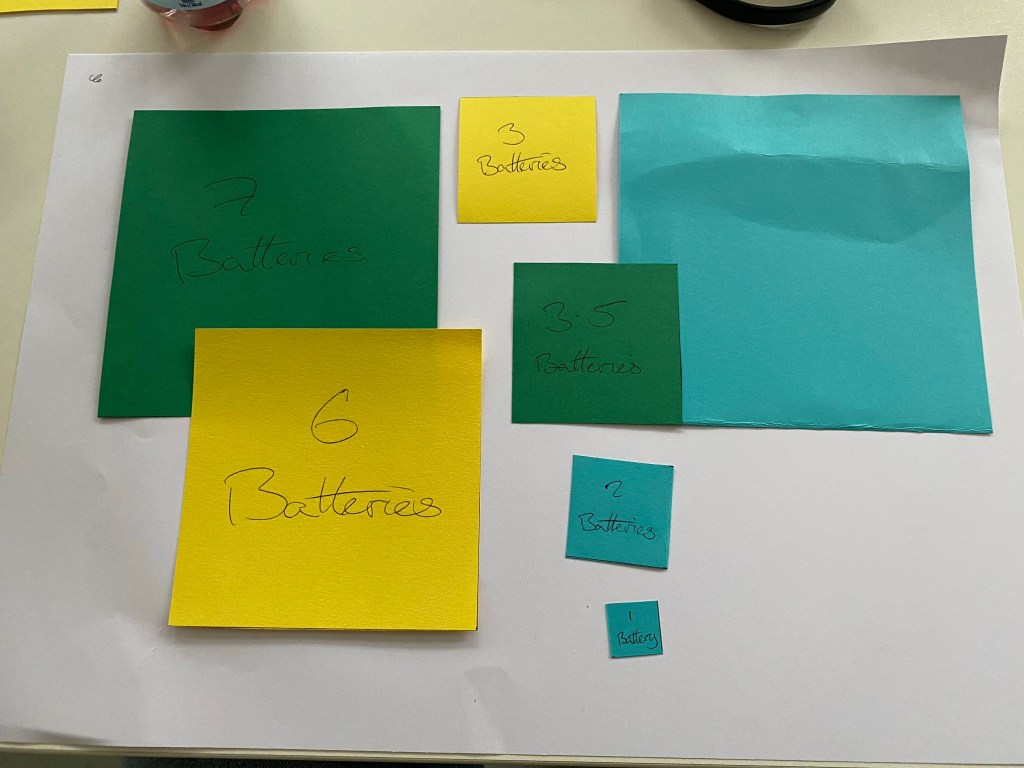
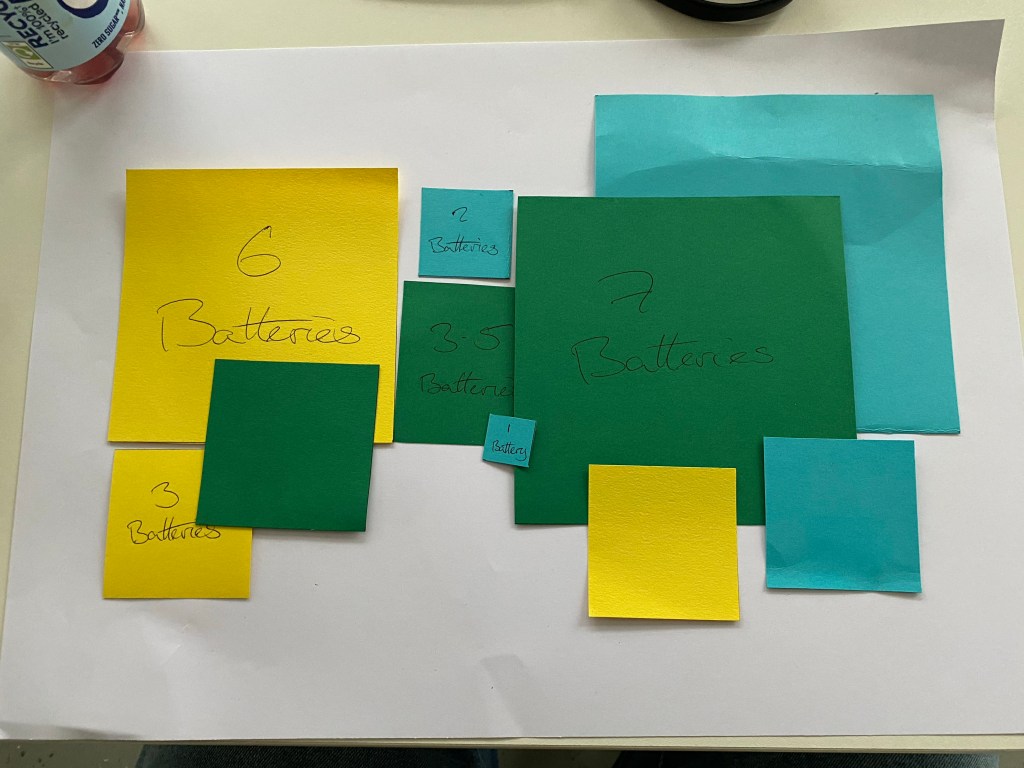
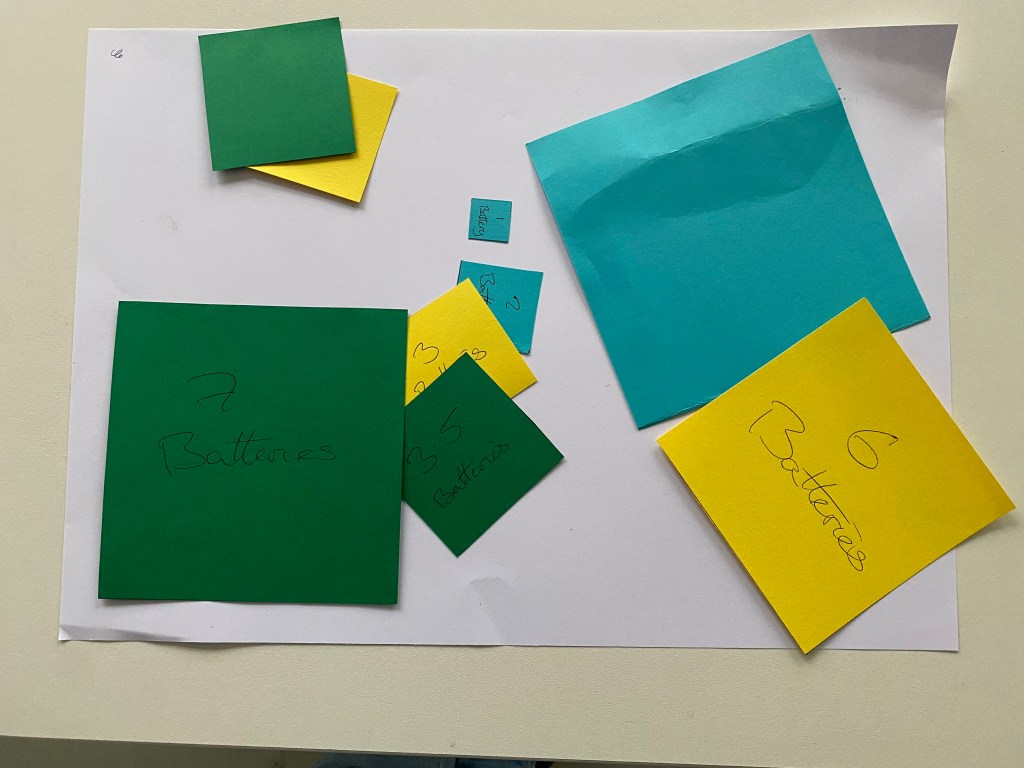
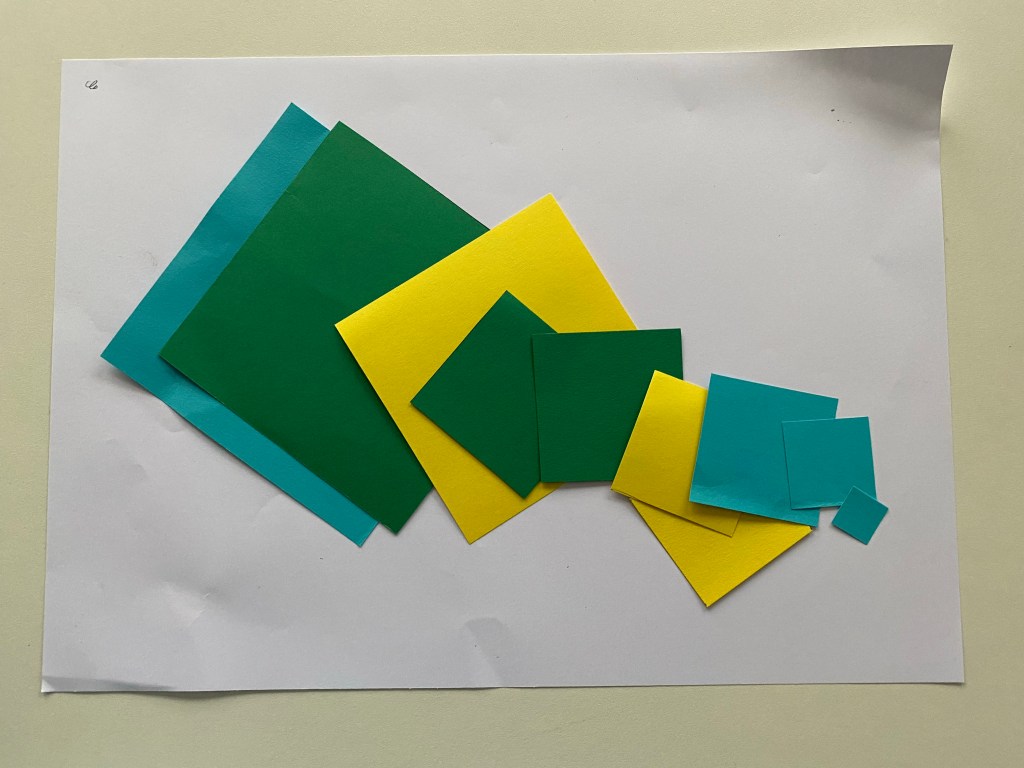
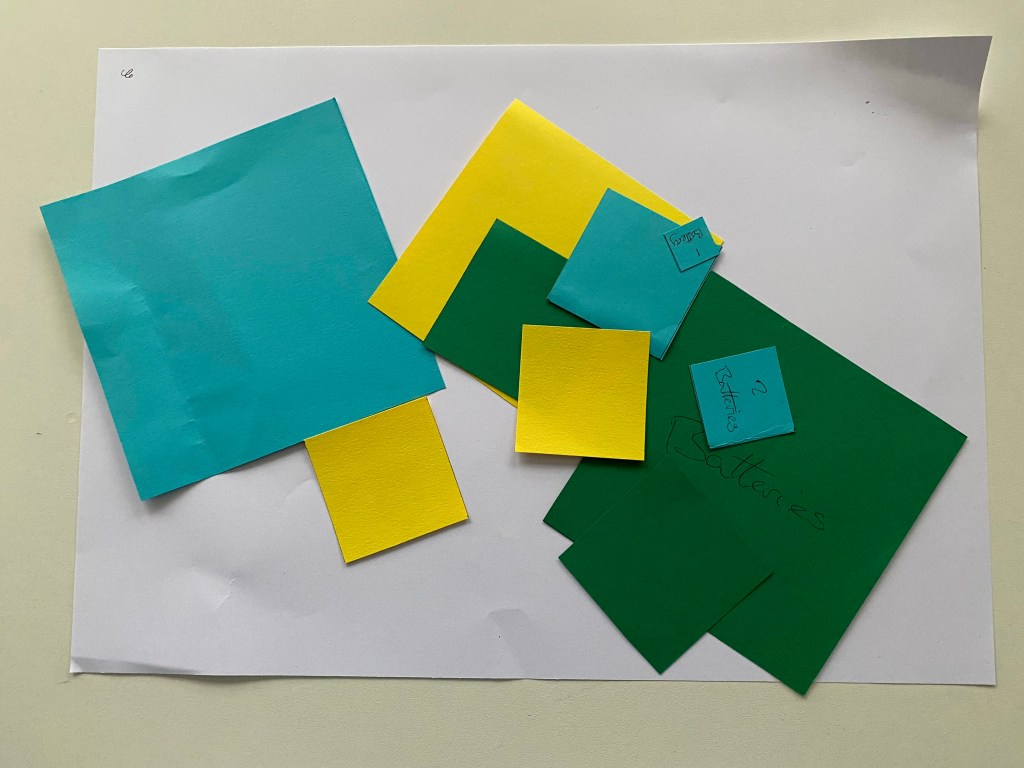
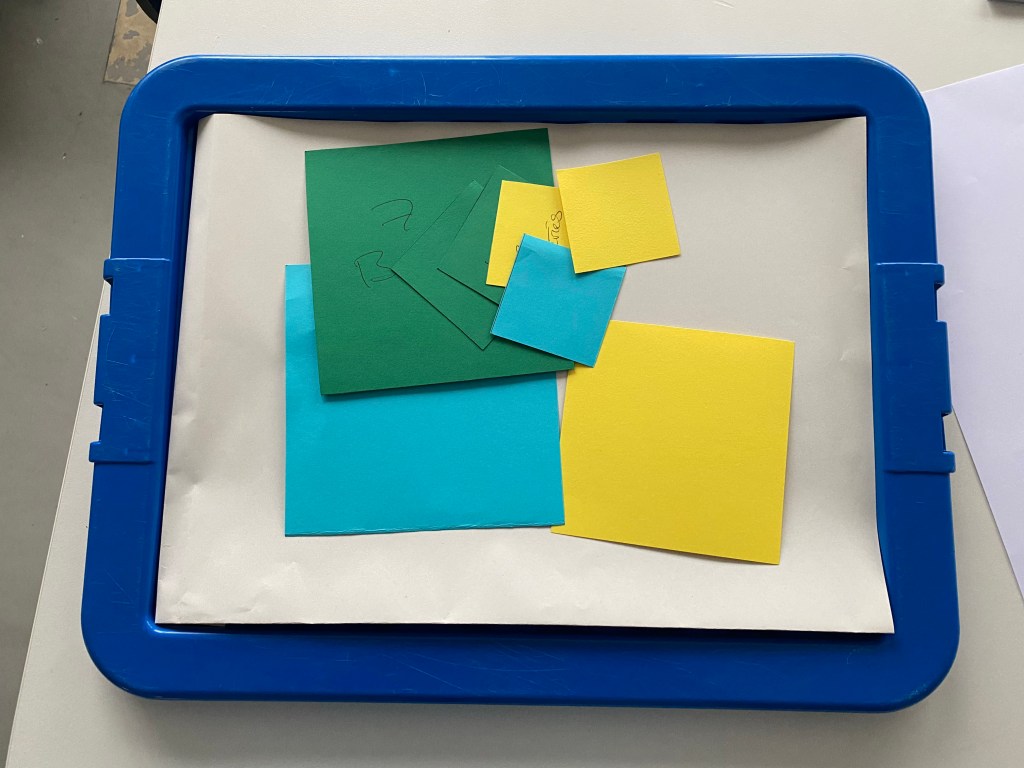
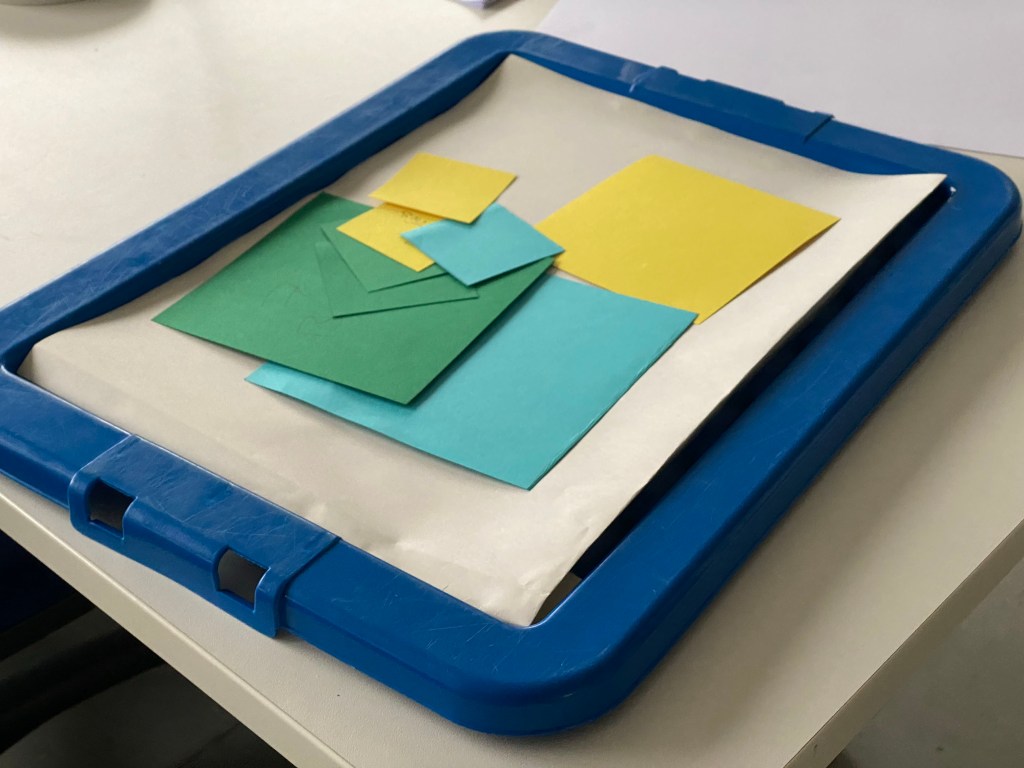
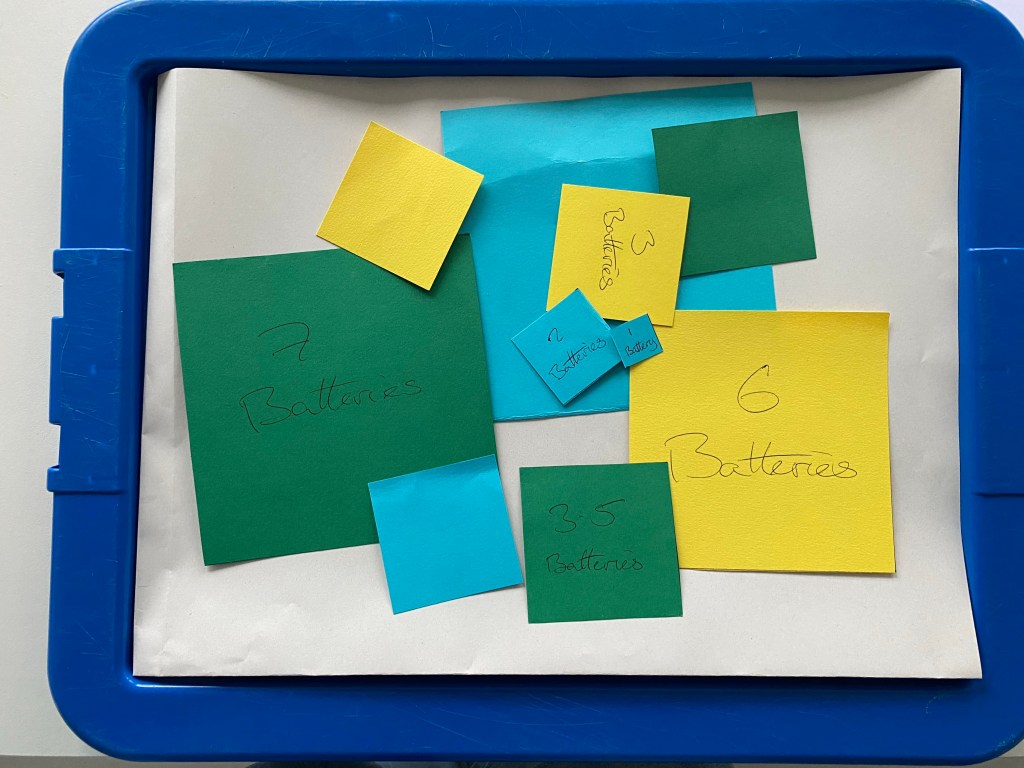
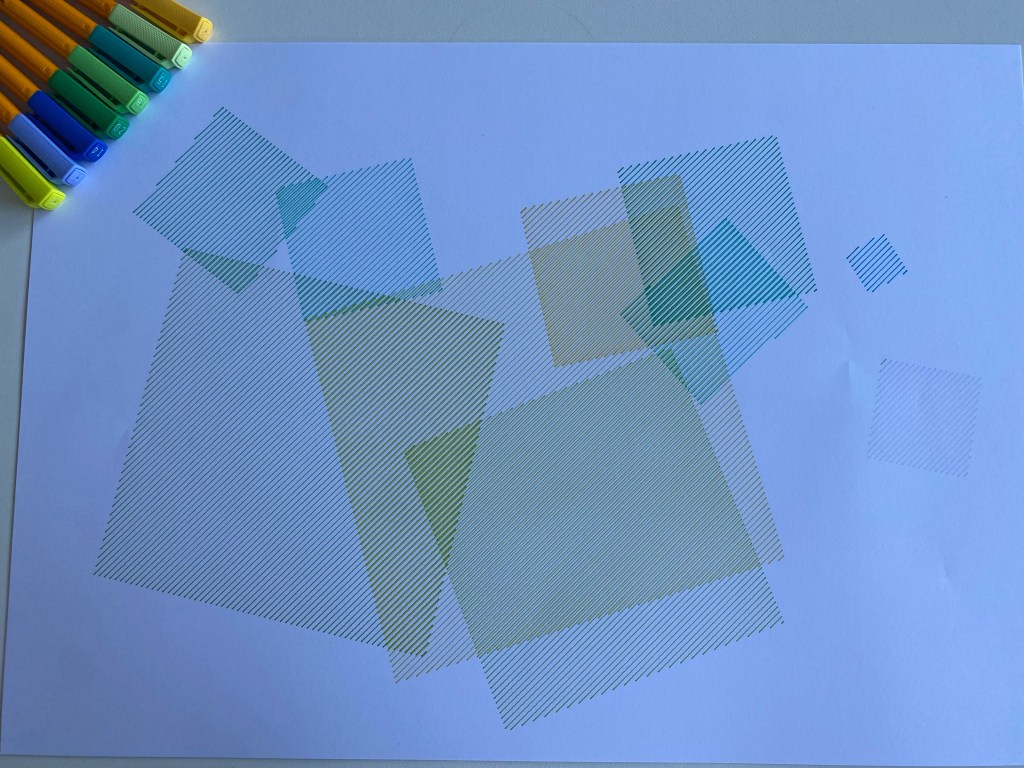
The next stage I wanted to tackle was the layout of the squares. (These sizes and quantities of squares might not be the same as the final outcome, but I wanted to create a general shape for each size of the battery)
I used several methods to make/discover the layout, mainly to remove my OCPD from the process and discover more random and potentially engaging layouts.
Firstly, standard layouts and organisation.
Secondly, asking my colleagues to organise it how they would set no parameters on them.
Thirdly, let the squares from a distance and let them fall where they may (with slight adjusting if they went too far off the paper).
Finally, I used a container lid to hold the squares within the paper and ‘shoogled’ them around within the frame of the lid so that they all stayed closer together but still had an element that I might not think to replicate usually.
Layout Tests
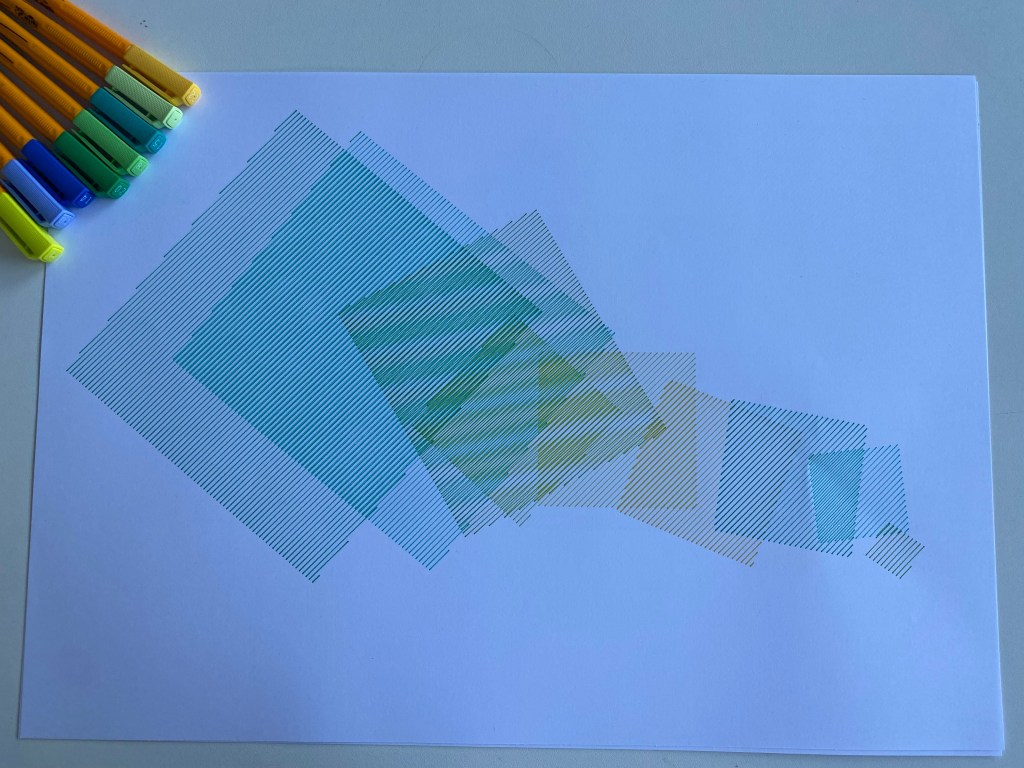
These are the selected layouts taken forwards from the card test to see how they work with the colours selected and on the axi draw.
Collecting Info
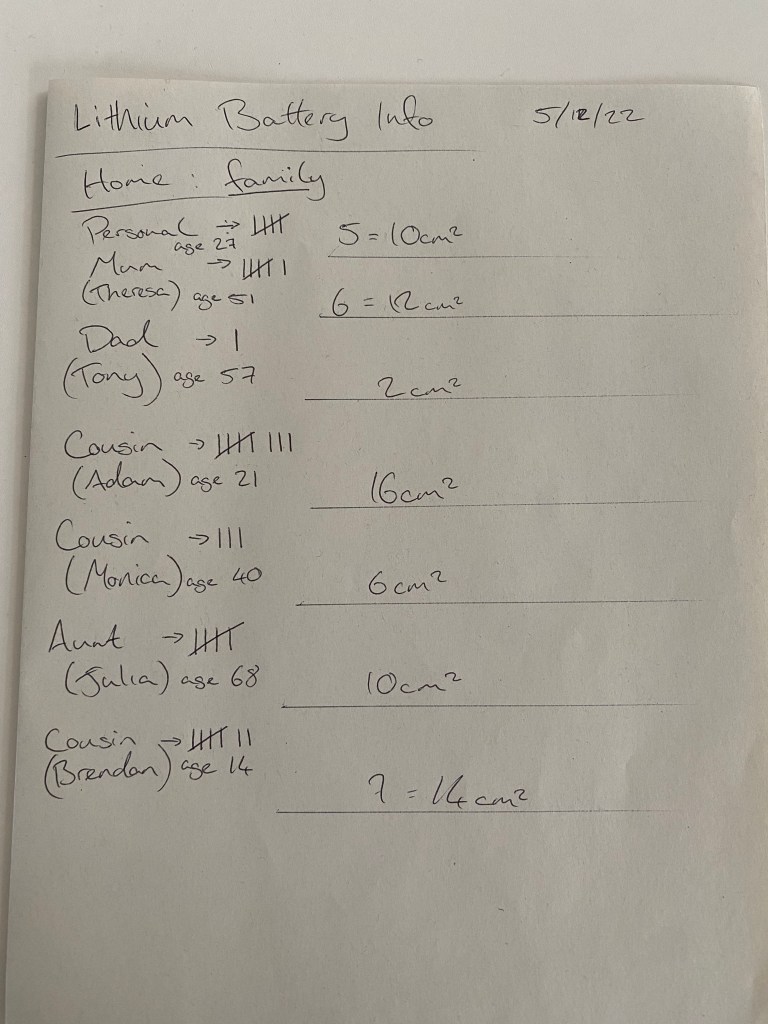
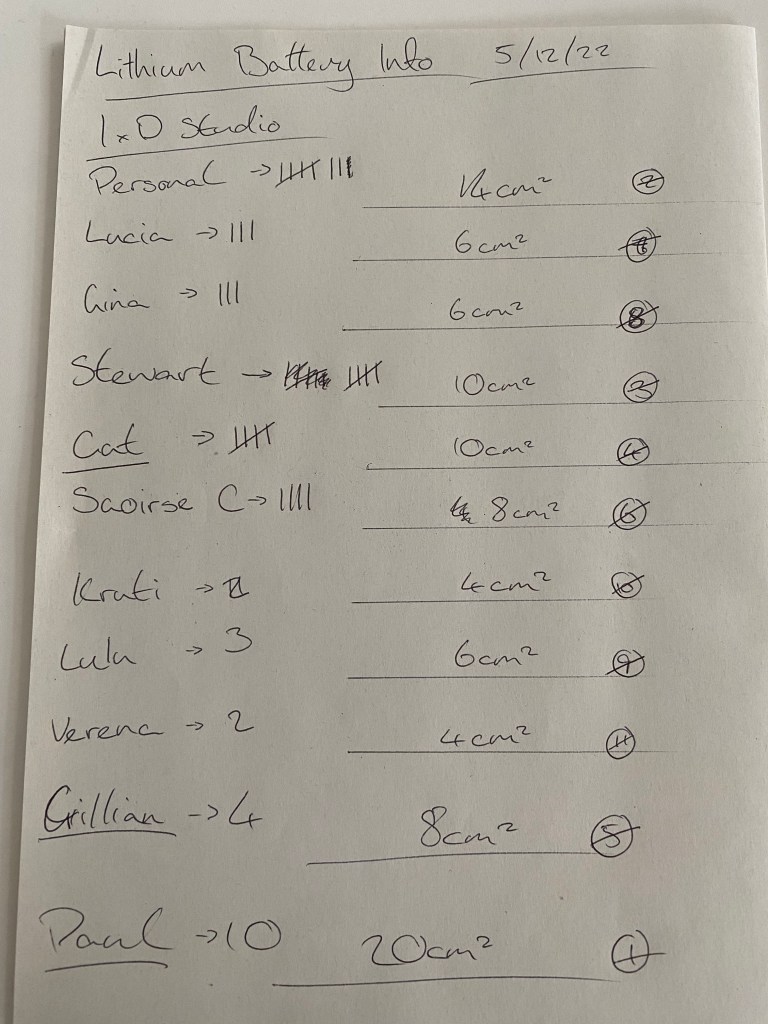
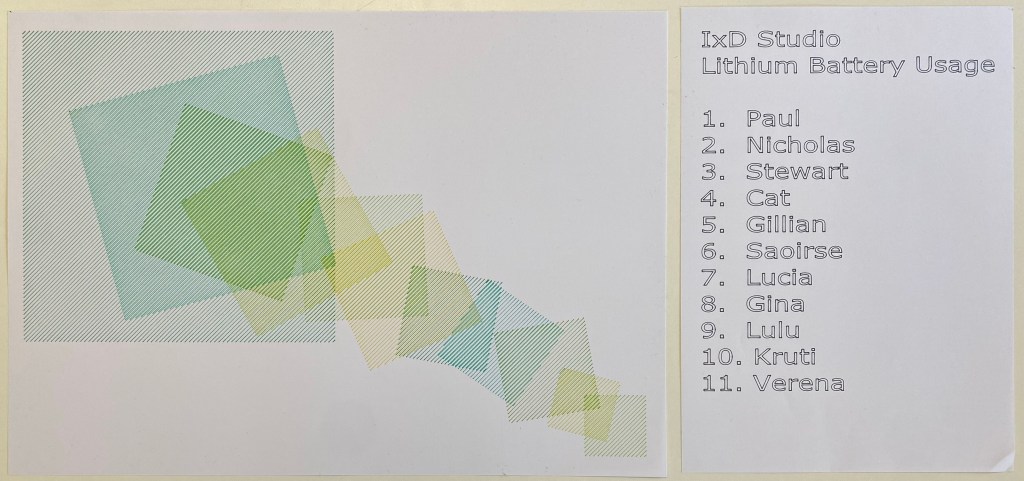
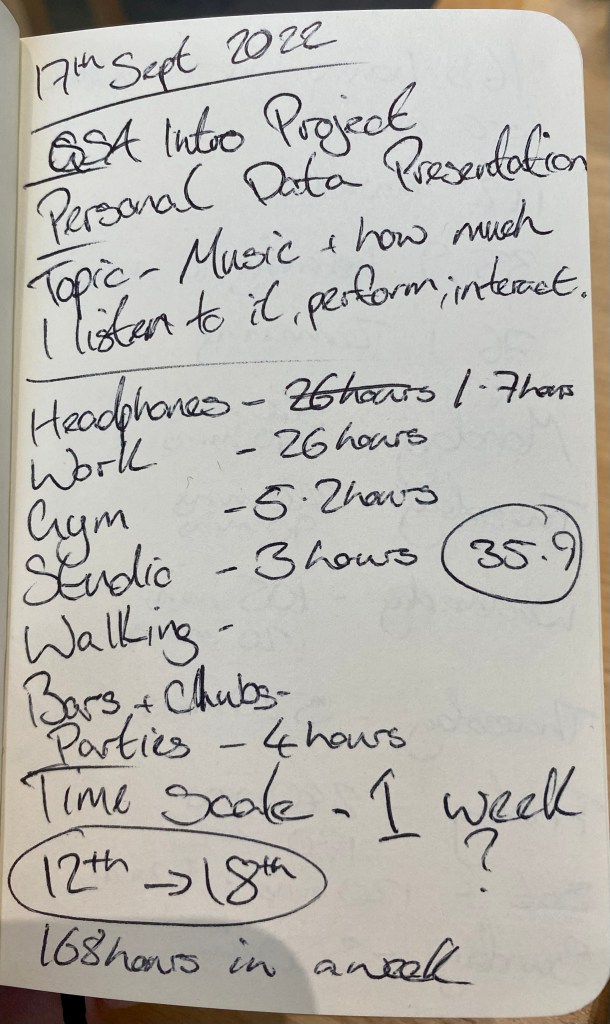
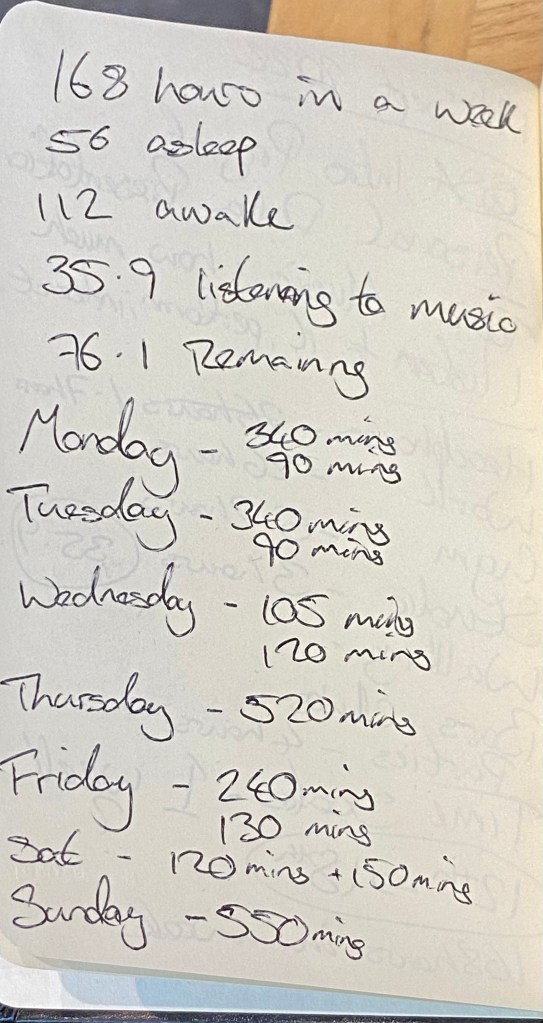
These notes are the drafts of data collection that are then used on the final pieces.
The Lithium Closest to Us
The Lithium Closest to Us – FamilyThe Lithium Closest to Us – Studio
My introduction to soundscapes. Music and sound have always been a big part of my life, but I’ve never given the everyday sounds the focus I should have. I play video games and watch movies and always direct my focus on the score. I am aware of ambient sound but have yet to truly understand its power to paint the environment or convey information about that environment. Or how specific isolated sounds could be used in a creative space or medium, that sound itself is the art and can stand alone to convey the artists’ intentions.
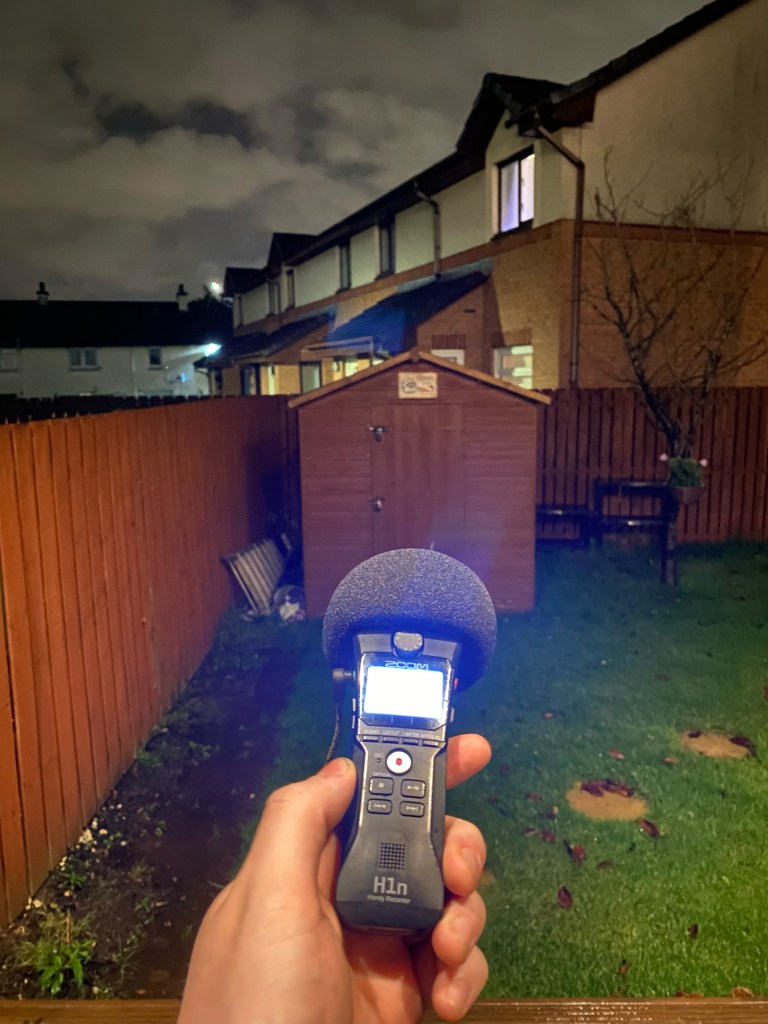
Going out on the streets of Glasgow with the H1n tuned me into the everyday sounds I have tuned out and how much information or emotion they convey. I’m guilty of always using my headphones at a loud volume because I love the music or the noise, so I’ve either missed this sound or forgotten about it. So even when I wasn’t using the directional listening of the H1n, I decided to keep my headphones off and keep listening and to focus on the sounds; people talking, the wind in the trees, the different soles of shoes on other surfaces and people living their lives around the city.
Self Learning 01
Even at home this evening, I listened to the different sounds more intently and heard things I had never noticed before with the H1n, like the mechanism inside my door that I’d been opening and closing for years.
I found it amazing that I could hear the different parts of the lock mechanism moving and interacting.
Or enjoying the sound of the planes I’ve learned to tune out after years.
Class 02
Audio Editing. Previously I’ve used Adobe Audition for the bare minimum, but after spending a couple of hours with it, I can see how complex it could be. I have focused on how some audio can sound empty and clinical without ambient noise and how the world around us is never really silent. So I want to make sure my project has that reality of the natural world if that’s what it’s trying to replicate.
Self Study 02
I’ve gone out to capture the noises that most people ignore or tune out daily to tell the story of my daily journey and how even a short sound or snippet of a giant sound can communicate a location or situation.
The direction of the audio in speakers or headphones is something I want to focus on because it’s something I’ve always enjoyed since hearing it in Space Oddity, giving the illusion of being surrounded by music.
Self Study 03 (Kind of)
Well, I tried to do work on Wednesday, but that didn’t go to plan. The H1n micro SD was corrupted, and I lost a lot of audio, so I couldn’t record any of the audio I wanted to in my house for the beginning of the soundscape. I then decided that if I couldn’t work with the recorder, I would work on what I could using my laptop, but in another stroke of genius, I had left my charger in the AV room, so my laptop was dead, and I lost a day of productiveness. Lovely.
Self Study 04
The first thing in the studio was to get the recorder fixed and the laptop charged. Done. With the limited time I had left, I decided to change my soundscape; because I already had the audio of the planes over my house; I used that as a starting point to build the soundscape of an airport runway around it. The soundscape differs from my initial choice, but I still wanted to carry through aspects I liked and could with the time constraints, such as communicating a journey, even if it is a bit smaller—the journey from inside the airport, out onto the tarmac and then into the plane. My initial idea was intended to exaggerate reality to make it more engaging and expressive instead of listening to a train ride for 20 minutes and steady walking for 10 minutes. I’ve applied that thinking here by making the runway overly busy and dynamic whilst still based on reality.
Final
Runway Soundscape
With the runway, we start inside the airport coming out to the wave of noise and activity with trucks, engines, runway workers and planes flying overhead to populate this busy runway before heading upstairs to the cabin ready to board the plane. In theory, it seems like a quick small journey that nearly everyone has done but by drawing attention to the sounds big and small I wanted to capture the whole experience and maybe excitement.
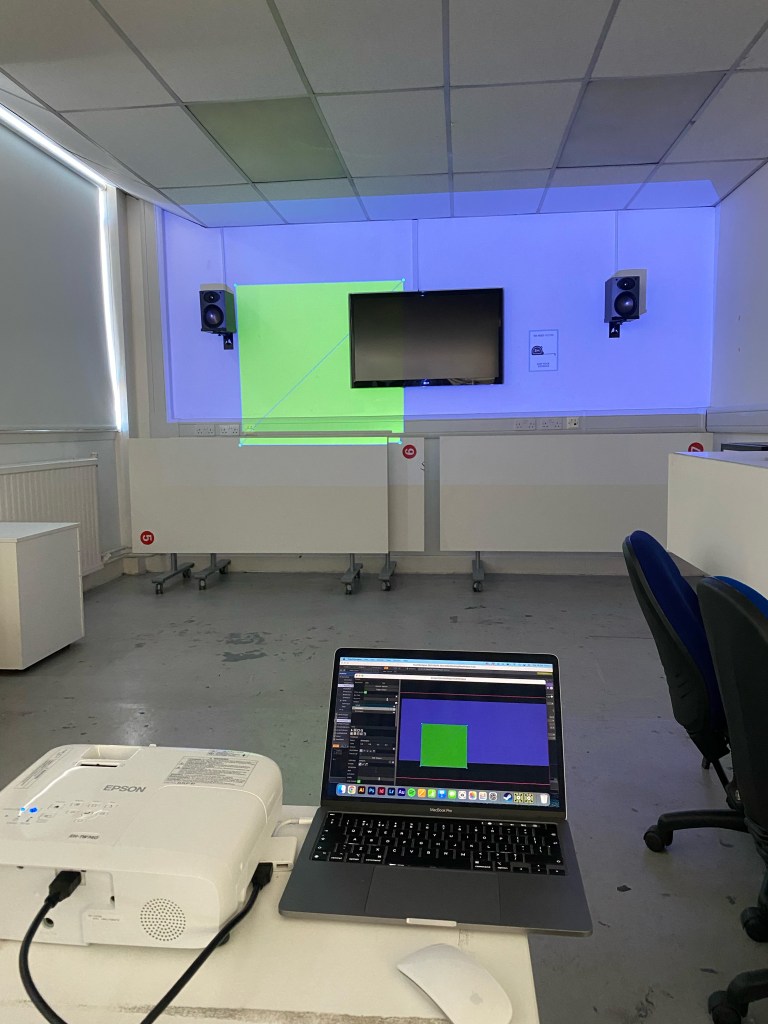
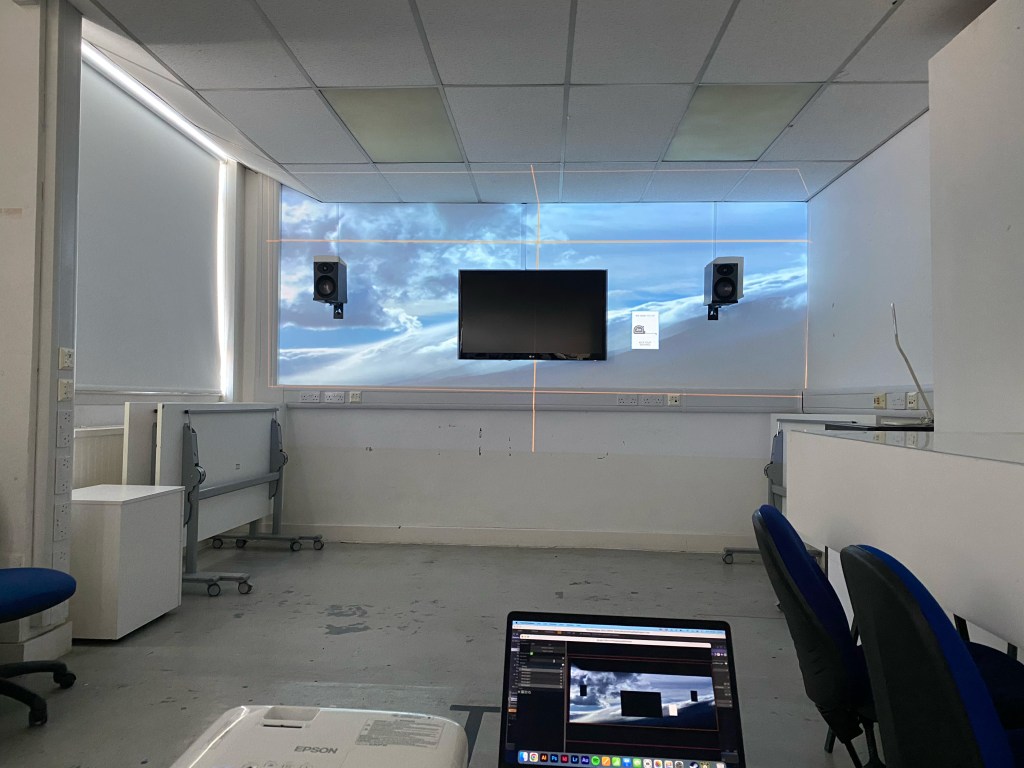
Introduction to Projection Mapping. My first hands-on experience with projection mapping showed me that using projections for art is a lot more accessible than I thought and they’re not just used for heartless power points.
Self Study 01
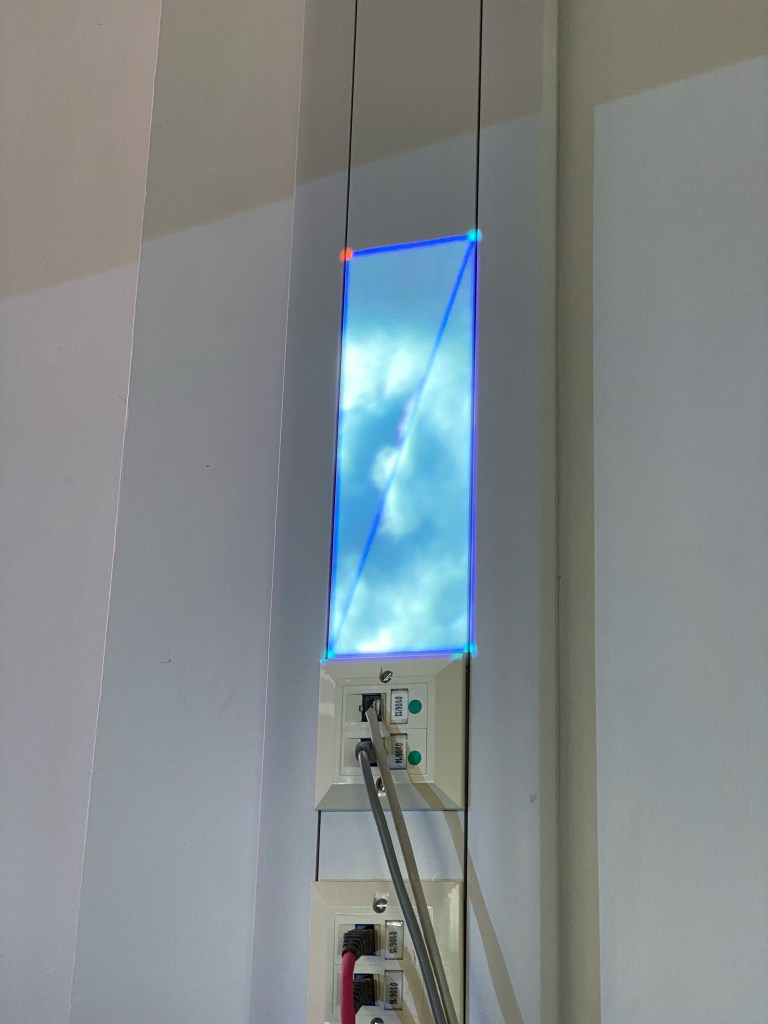
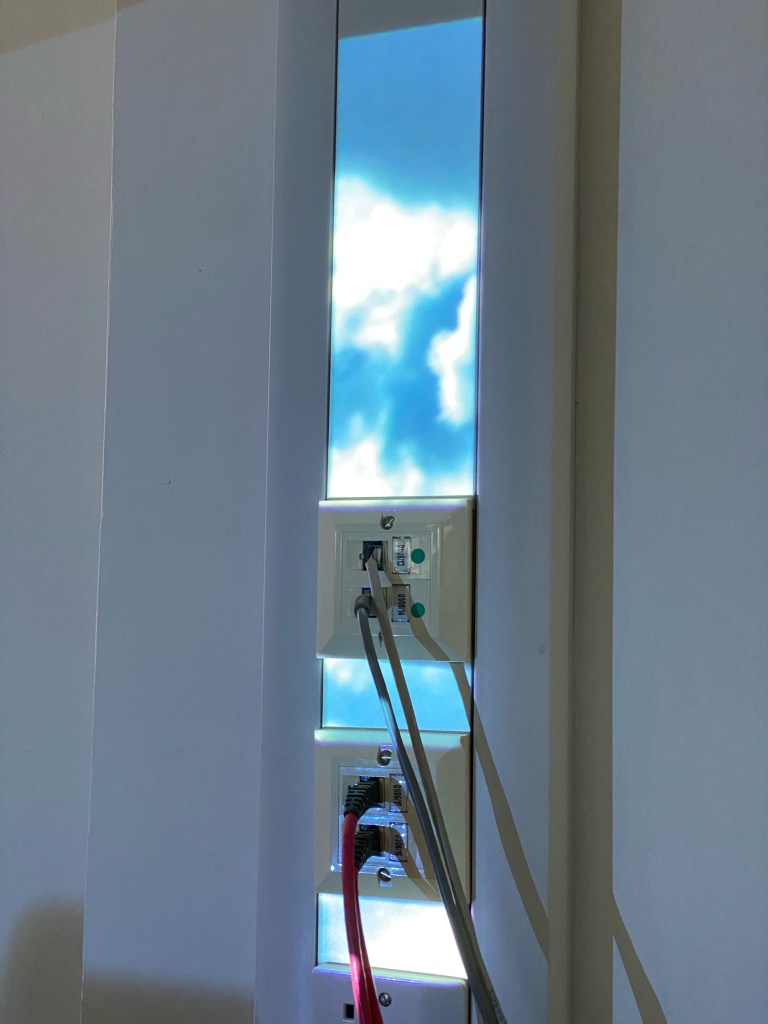
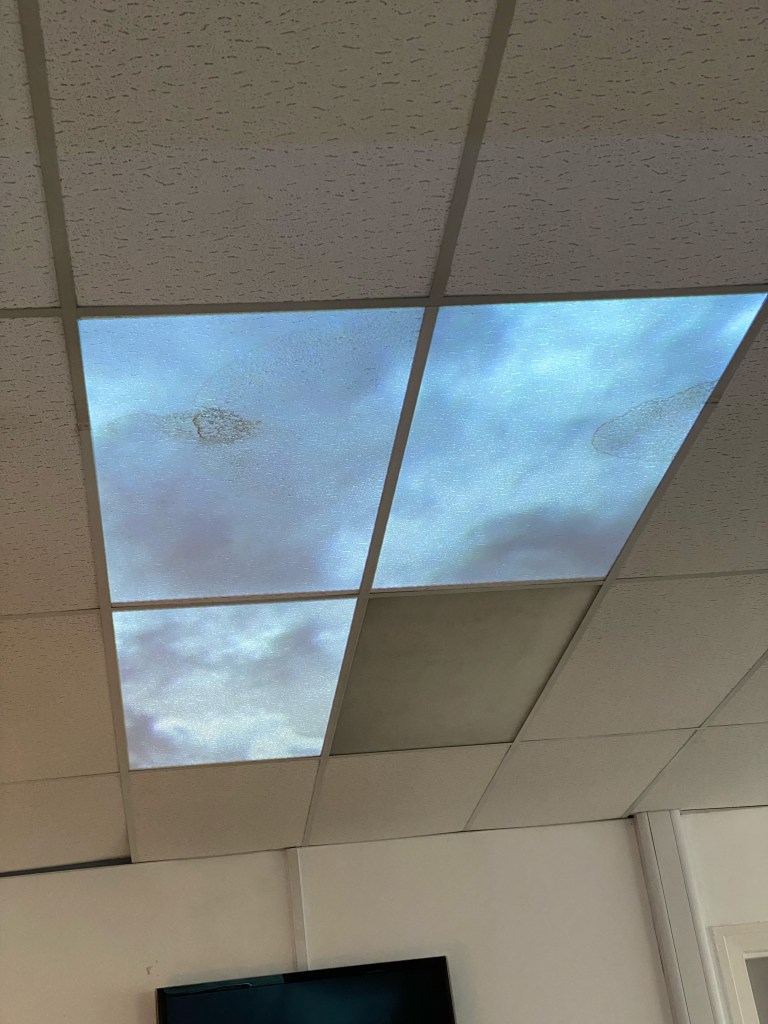
I wanted to create the illusion that I accidentally touched on in class 01, bringing the outside, inside. As Touch Designer is not the most stable software I had some teething problems with trying to expand on the cloudy sky window idea I did in class01.
Class 02
Boxes and noodles and how I can generate images within ToughDesign to use in projection mapping. The first level of Touch Designs UI makes more sense to me and how programs are visually represented as self-contained boxes with webs or noodles connecting them.
I need to shake my basic thinking regarding projection mapping and focus more on dynamic planes and 3D images or visuals, or at least their illusion. The window idea I got a little lost in feels too simple and one-dimensional.
One idea I have is to replicate a plinth surface and use an effect to make it seem that it changes the density or is moving from the inside.
Self Study 02
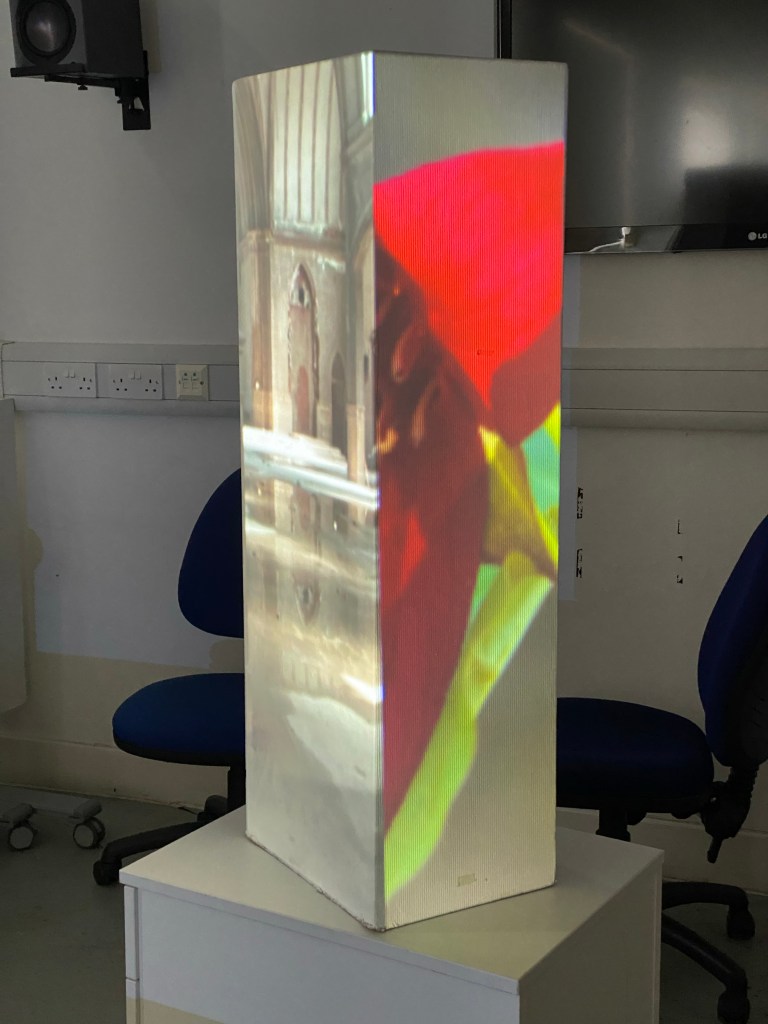
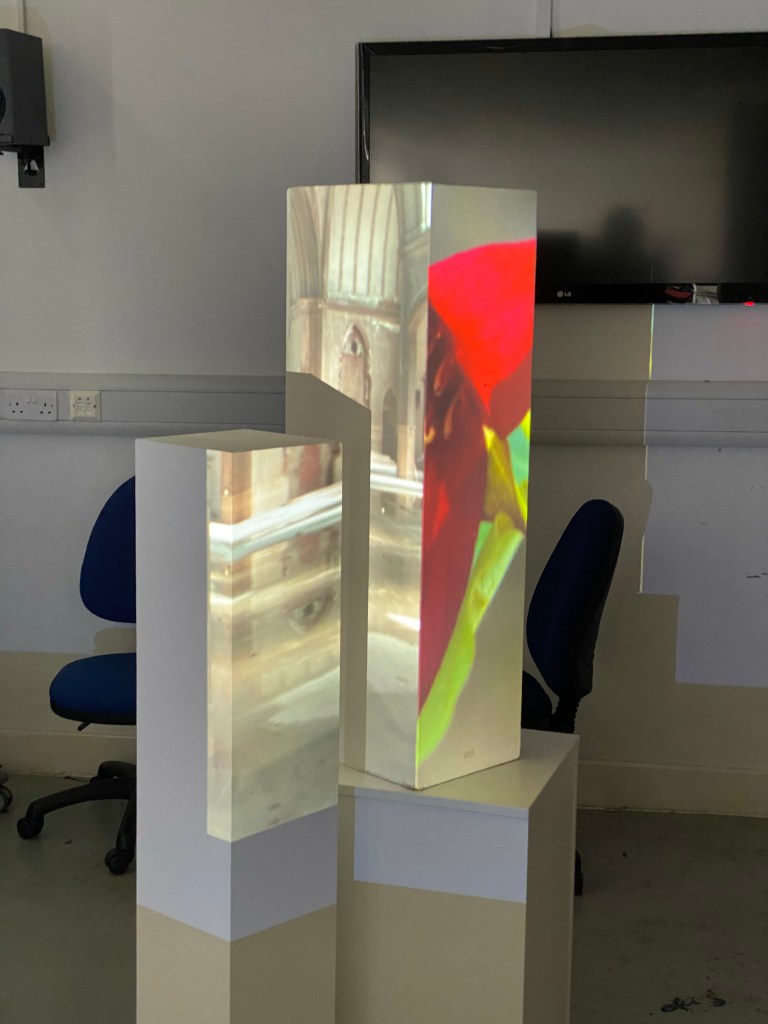
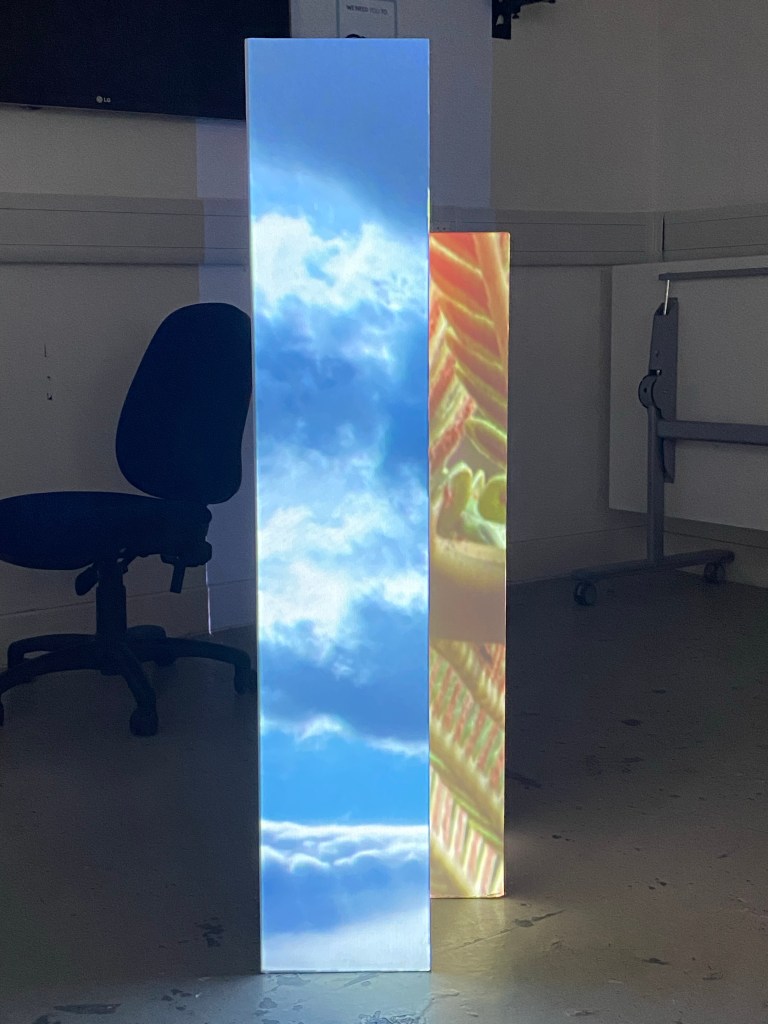
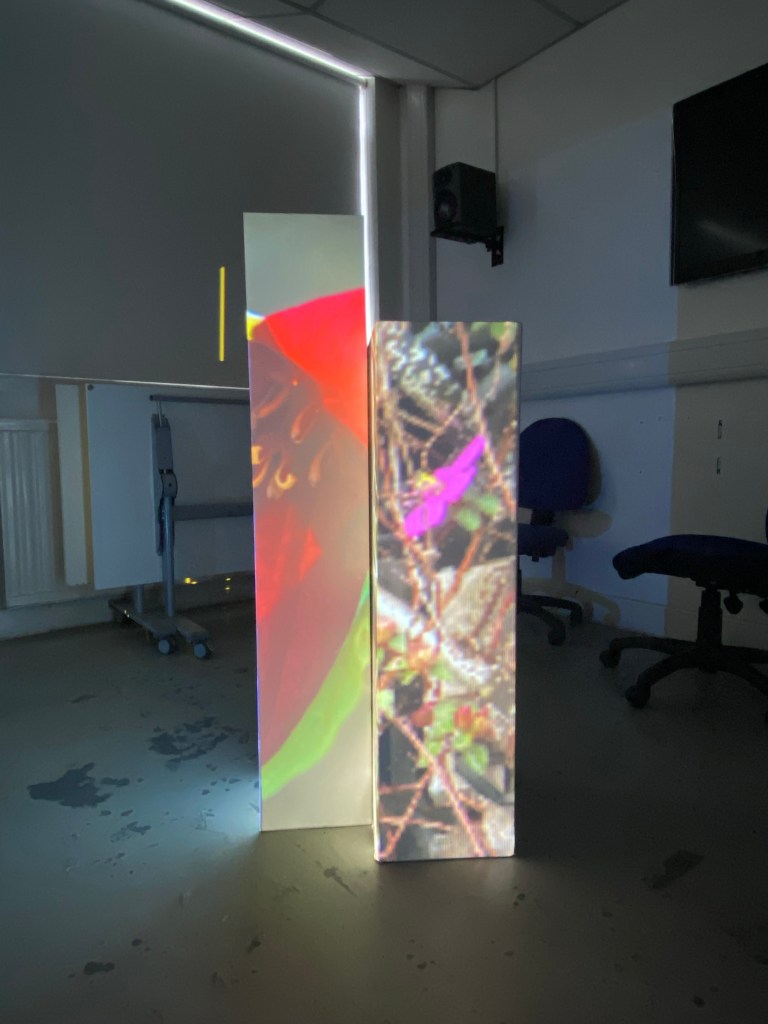
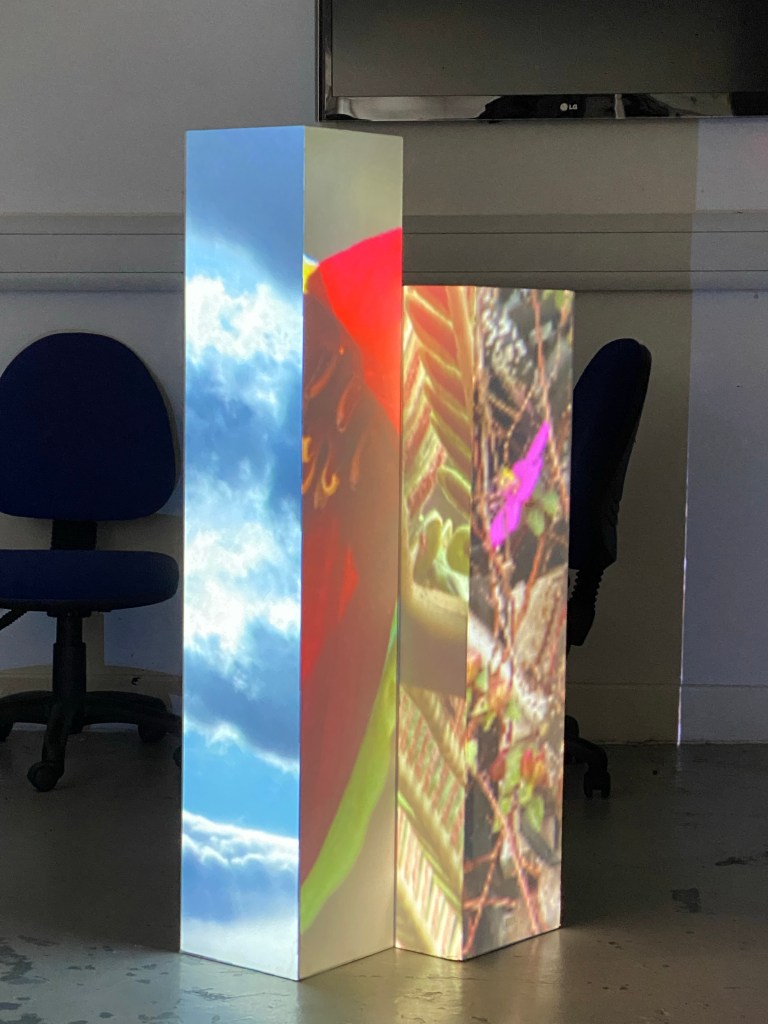
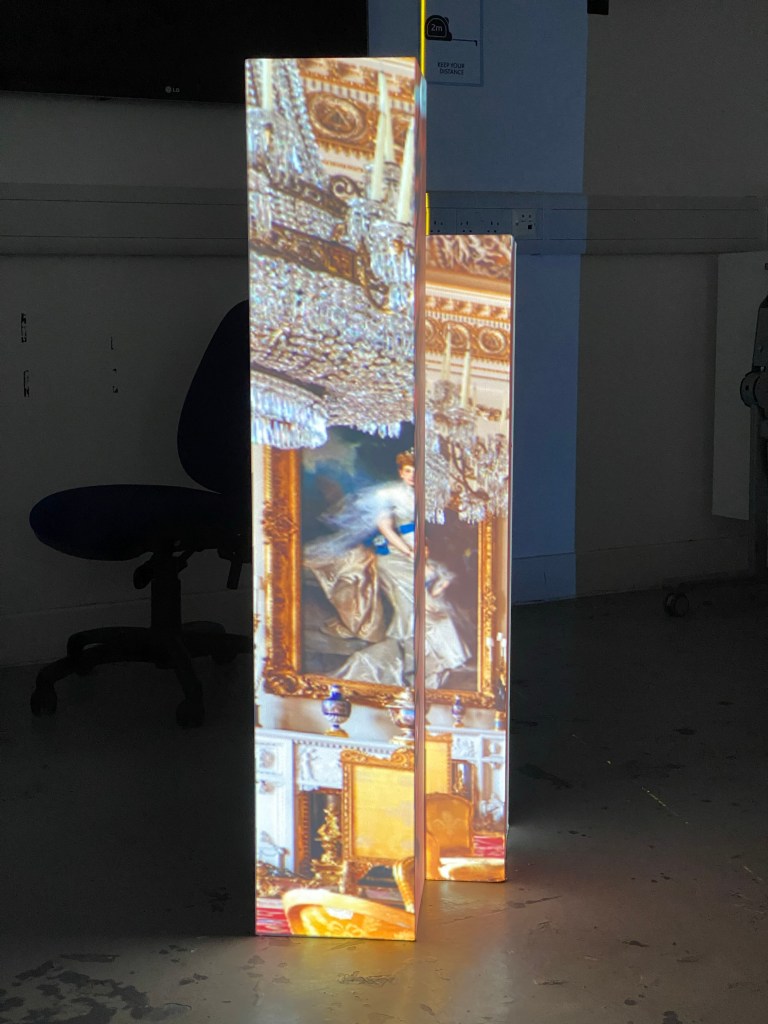
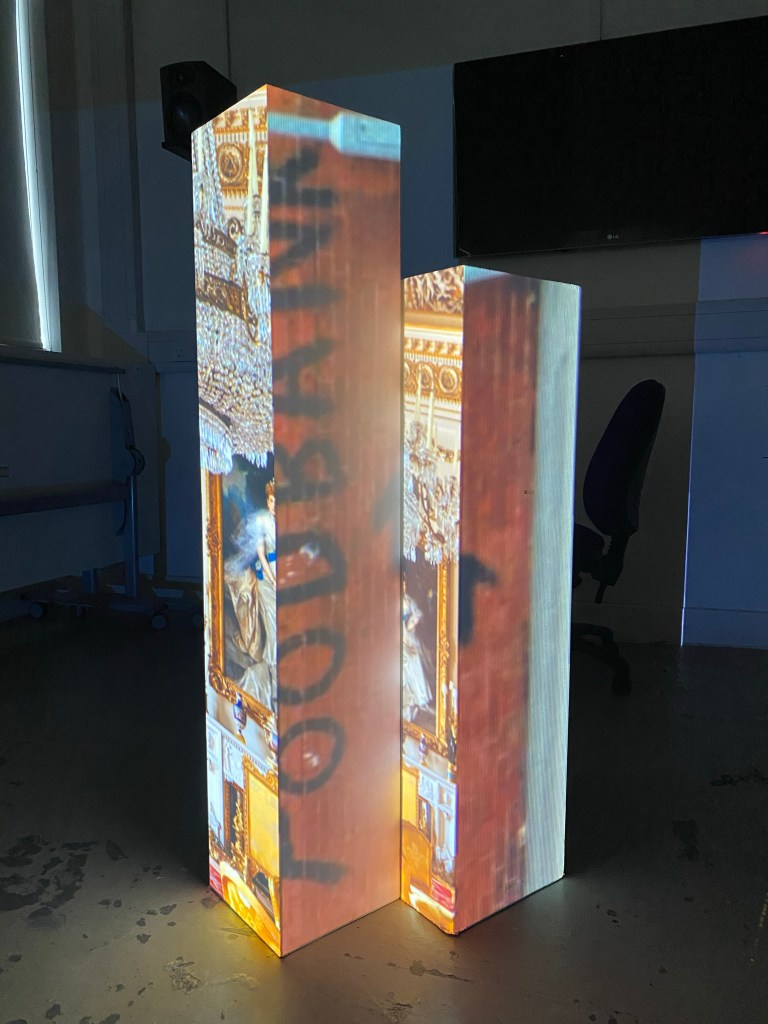
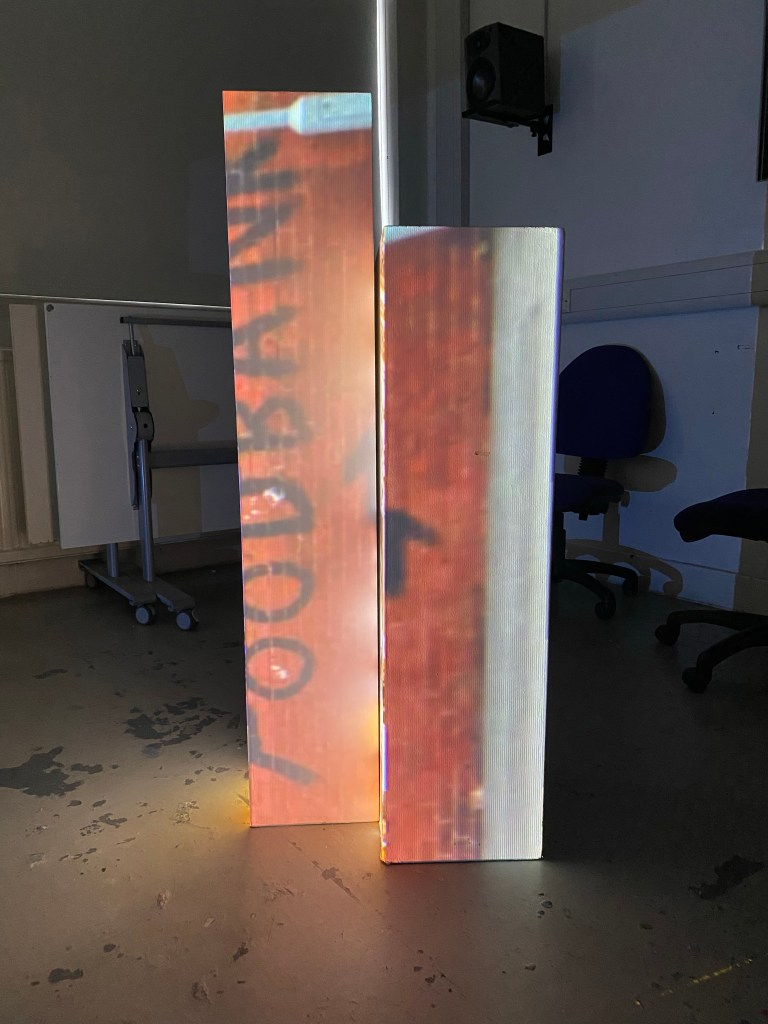
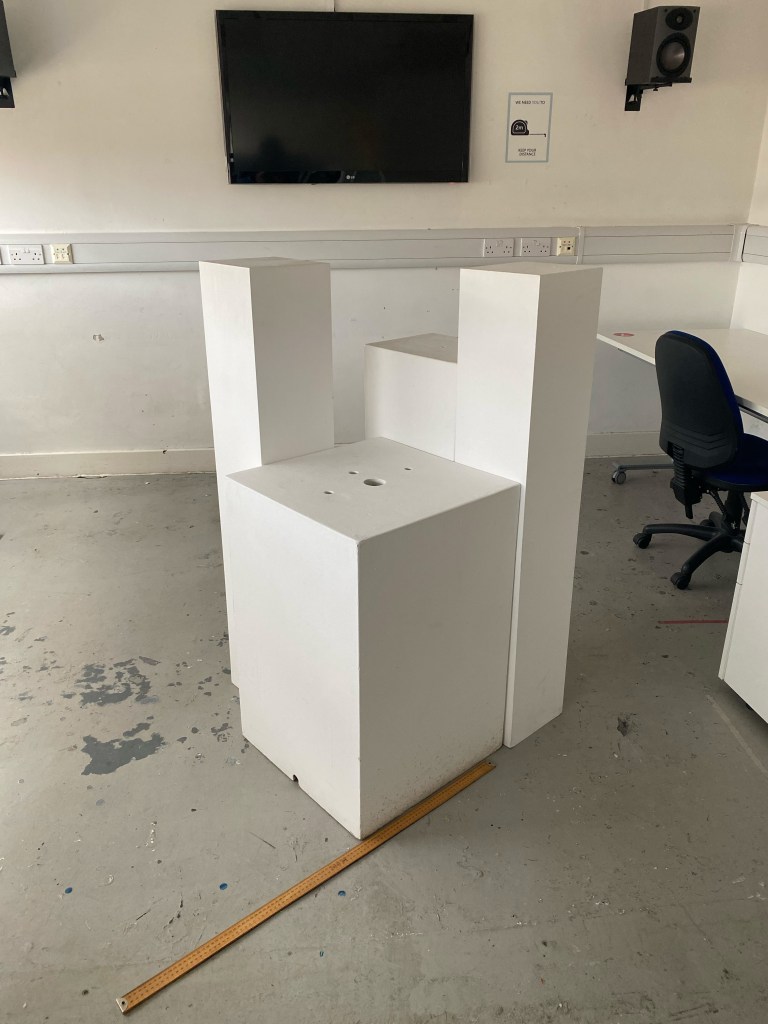
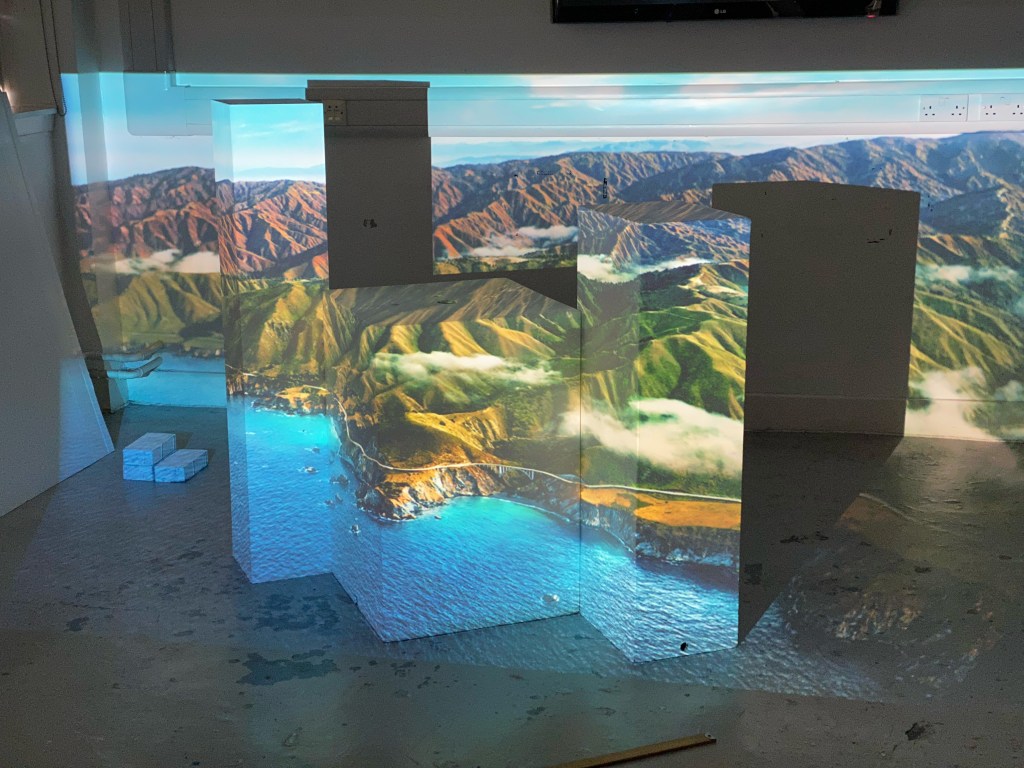
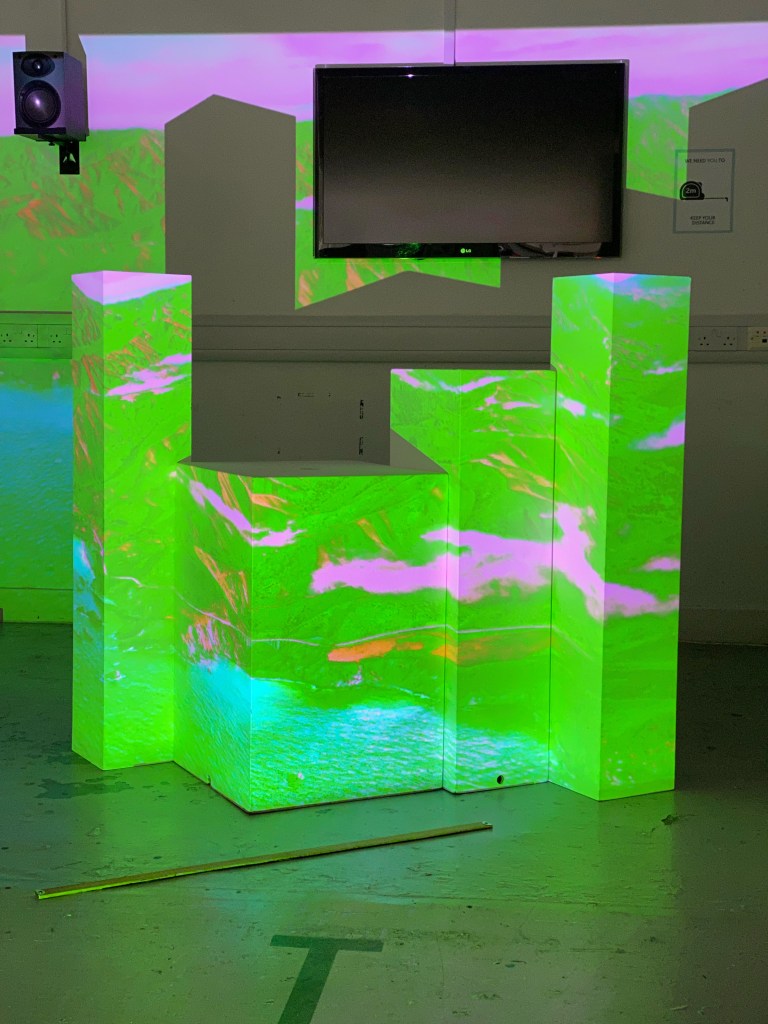
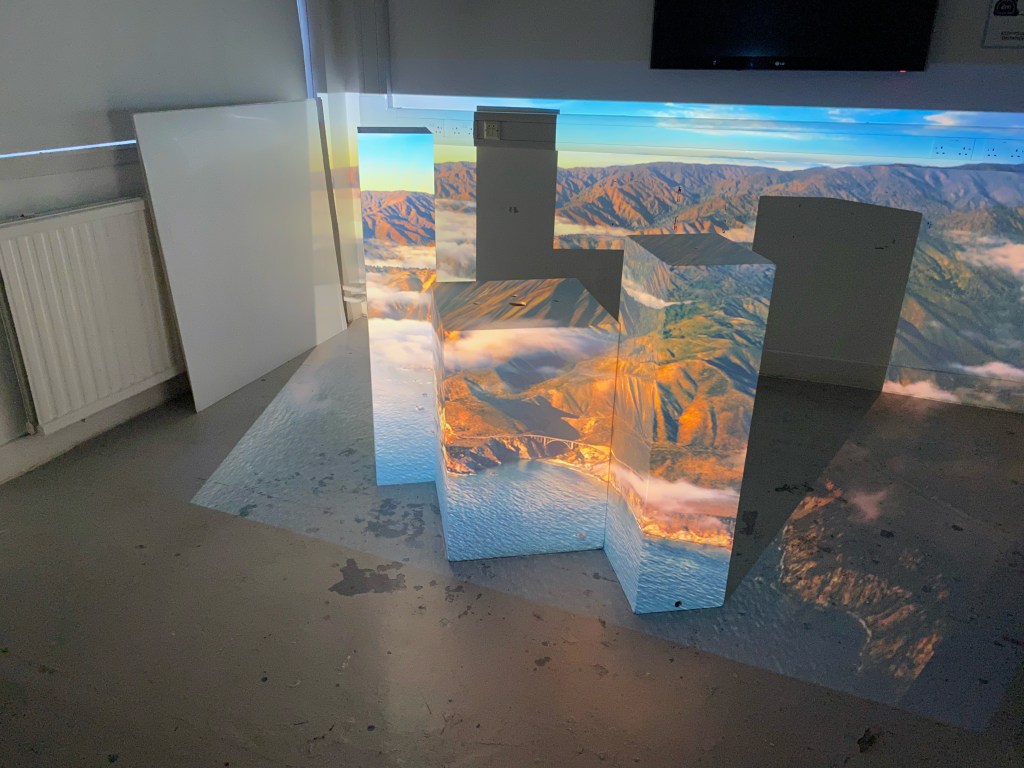
At this time in the studio, I started by experimenting with different boxes and setups, the images used are test images to see how well the perspective worked with different images.
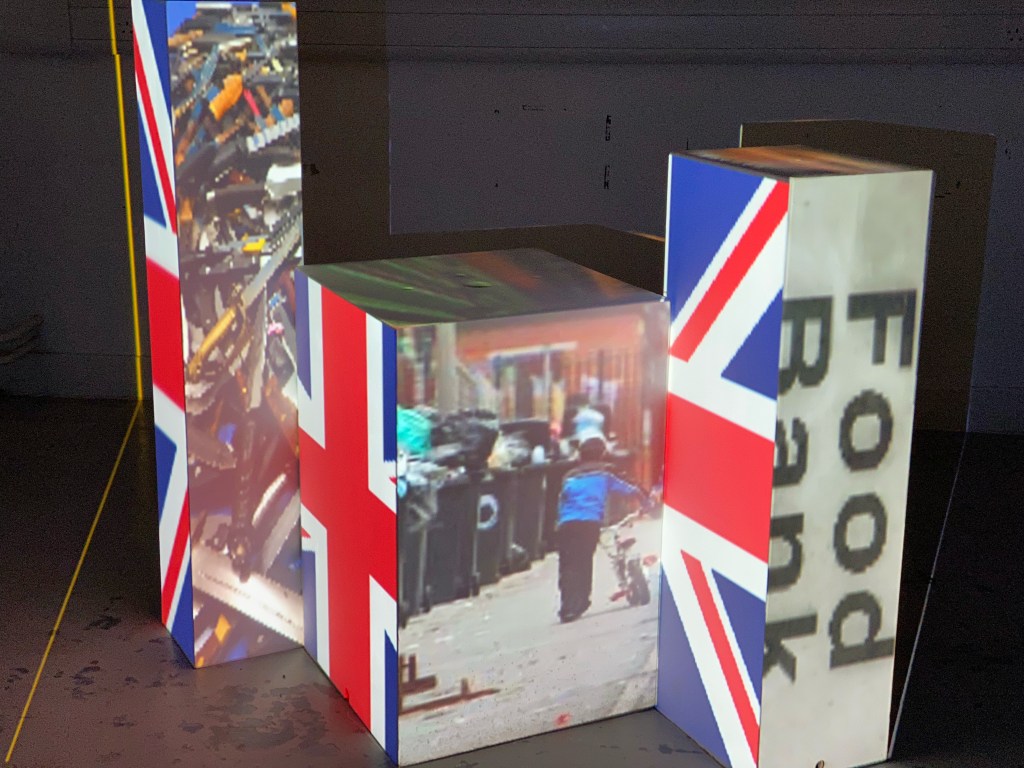
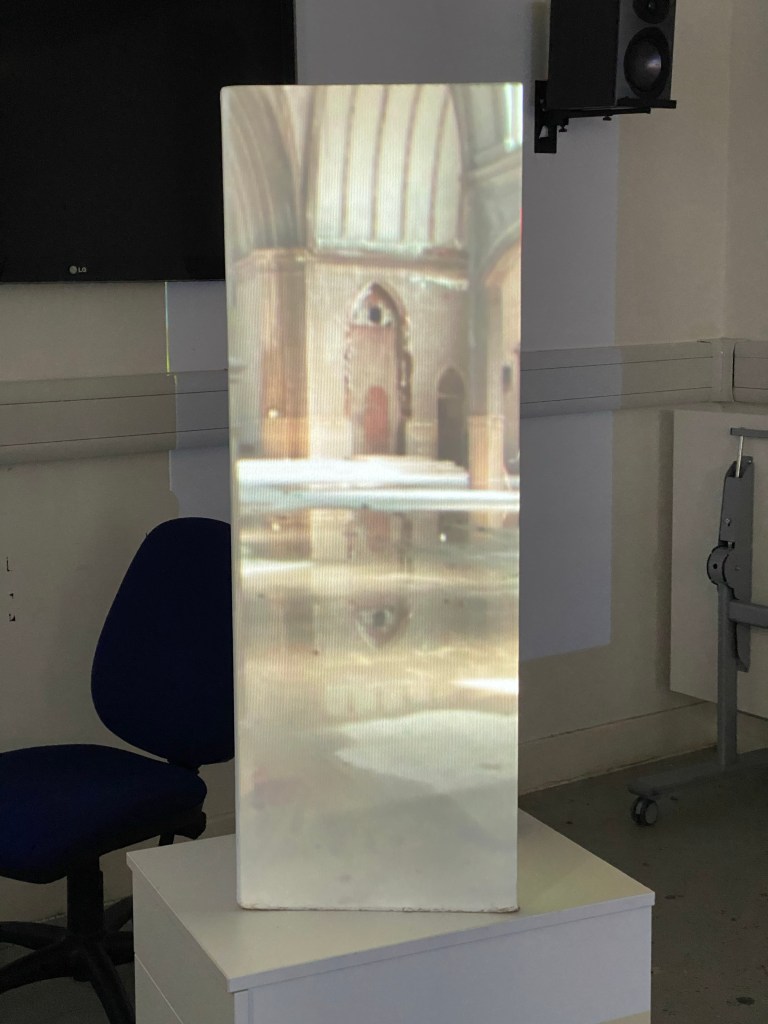
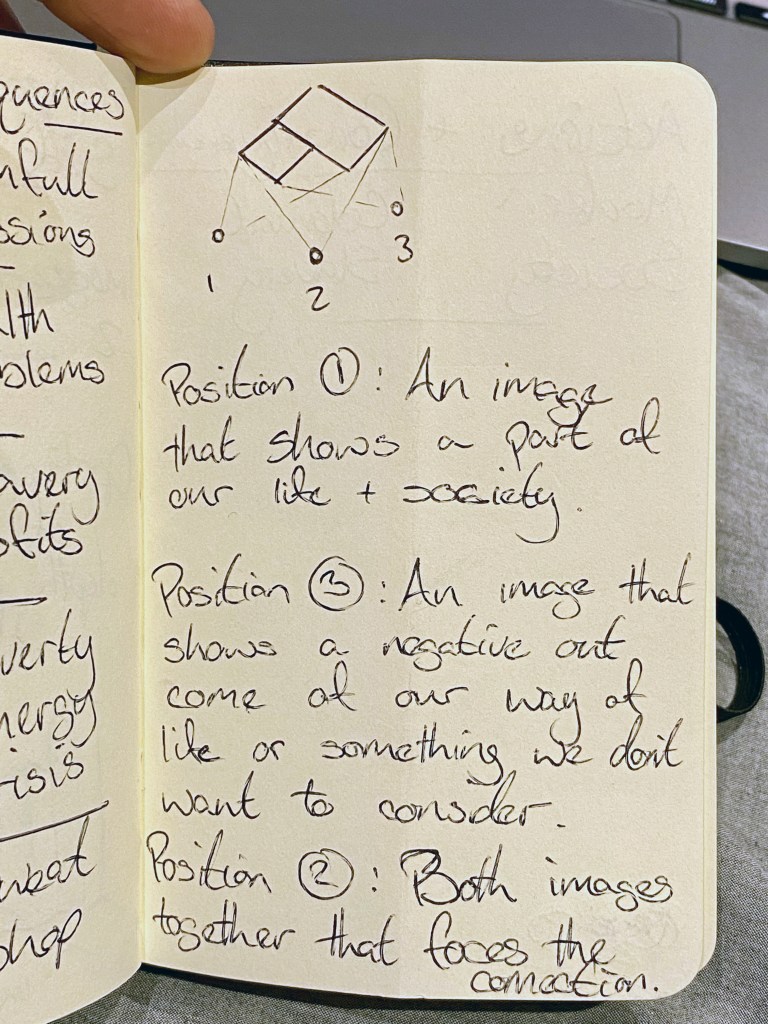
At this point, I was reminded of holographic prints that would change the image depending on what angle you viewed it from. So running with that idea I wanted the images to have a connection so that when viewed at position 2 the correlation was obvious.
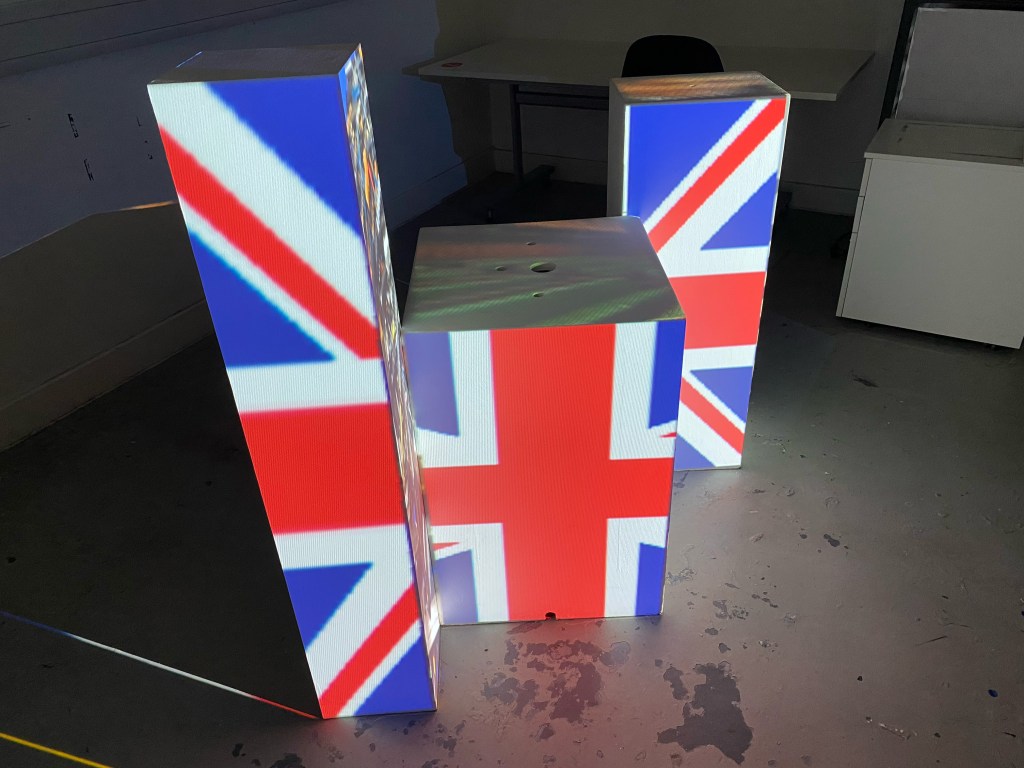
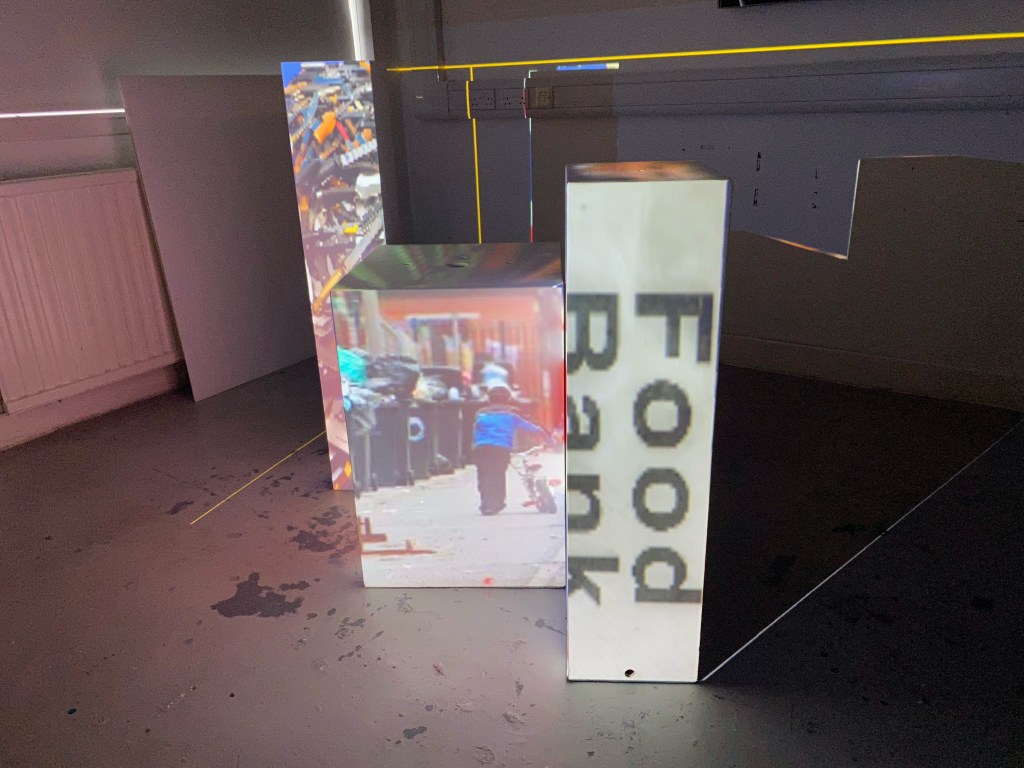
Lifting from recent personal experiences the stark difference between the opulence of royalty and the demand for foodbanks up and down the country came into my head. From position 1 you see the wealth and decadence from the interior of Buckingham Palace and from position 3 you see directions to a foodbank taken from a picture of a neighbourhood wall.
Position 1Position 2Position 3
Edit: Since I’m taking this concept further I want to expand upon it, look at other societal Cause & Effect situations as well as trying a different arrangement of boxes and exploring the top of the boxes as well.
Self Study 03
Today I think I was in the studio to experiment (mainly the support session) to see what happened, what would come to me and what I could discover/produce. The positive outcome is that after the support session I now have my heading.
The Actions & Consequences display I had in Self Study 02 is something I’m going to take forward. I was hesitant at first because I got some pushback from people I asked outside of the course but I shouldn’t let that deter me.
I believe in the concept, the medium and the message I’m trying to convey.
Self Study 04
When I go in with a game plan, it speeds up the process. That sounds obvious, but for some reason, I hadn’t planned what I would do in the studio to this point. So let me clarify: I had ideas and suggestions of what I wanted to do but just neglected the logistical stuff until I had to deal with it; the obvious, simple fact of planning my setup left me more time to focus on my project.
Initially, with my final design, the first step was the setup. I needed to have the correct box set up so that the viewer could easily move between positions 1,2, and 3 to get the full effect of the projection. As well as considering the viewer’s position, I also had to consider the faces of the boxes I was using and give them enough breathing room.
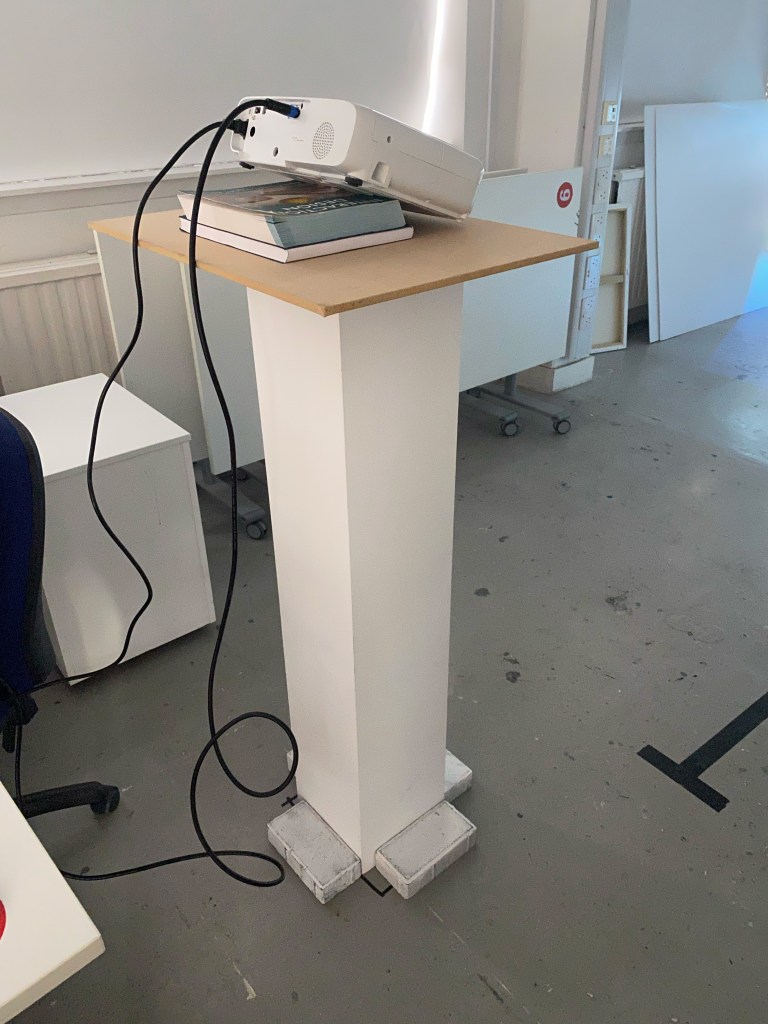
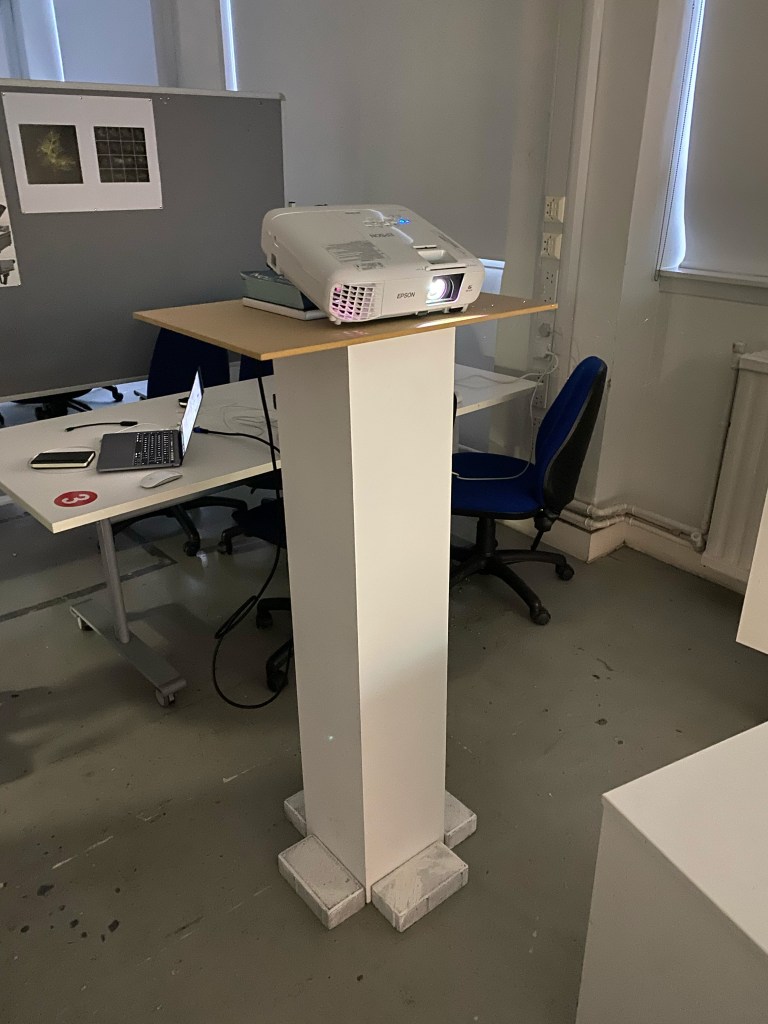
The projector was on the plinth contraption to get as much height as possible. If I had the chance to improve this, I would mouth the projector on the ceiling to allow for a more diverse placement of the boxes and utilise the top of the boxes.
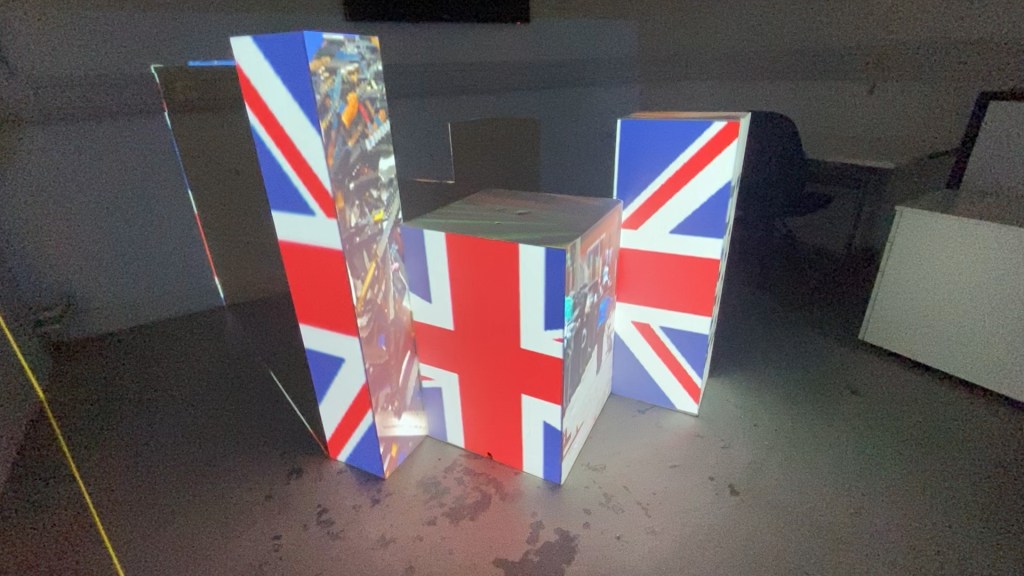
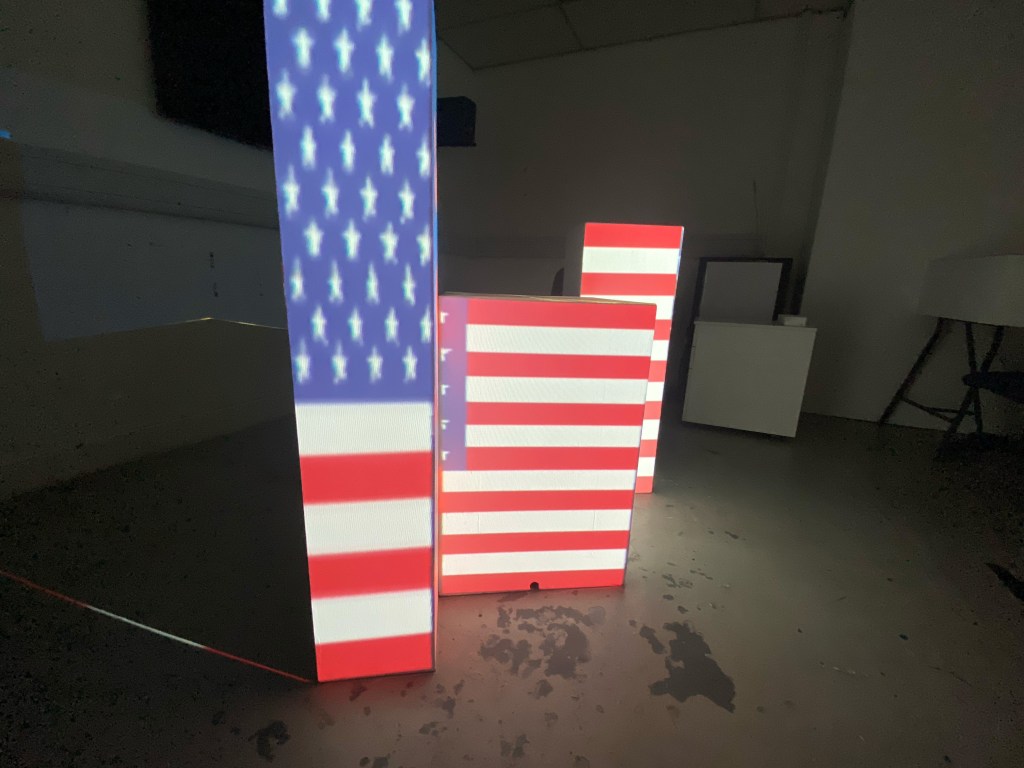
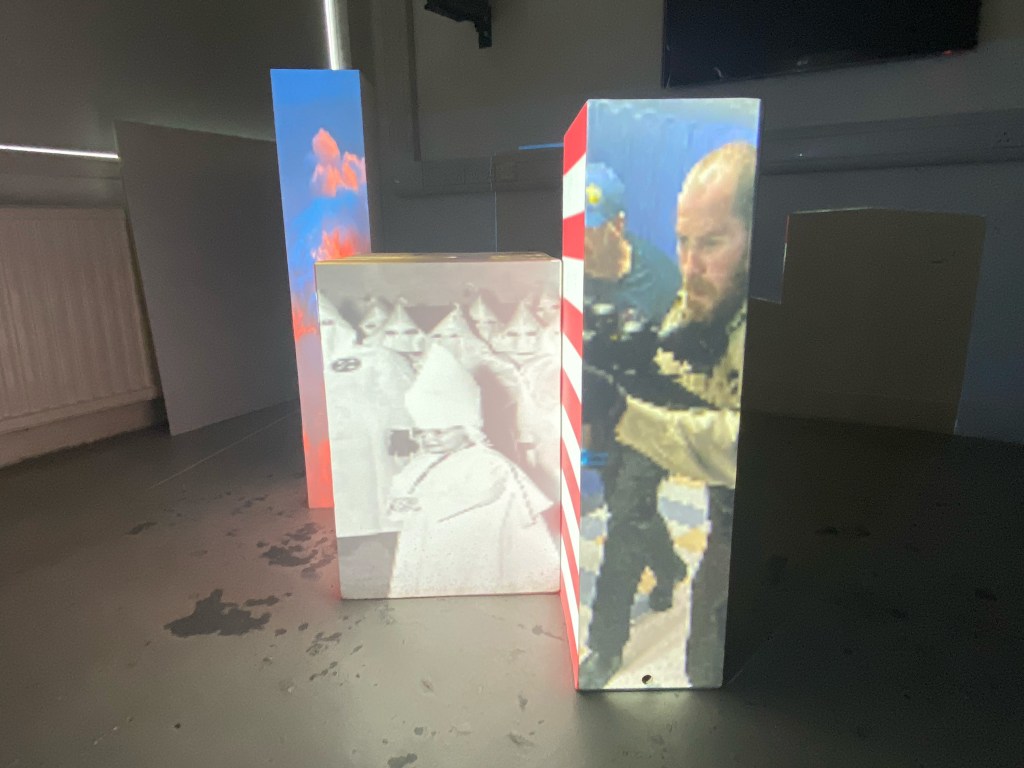
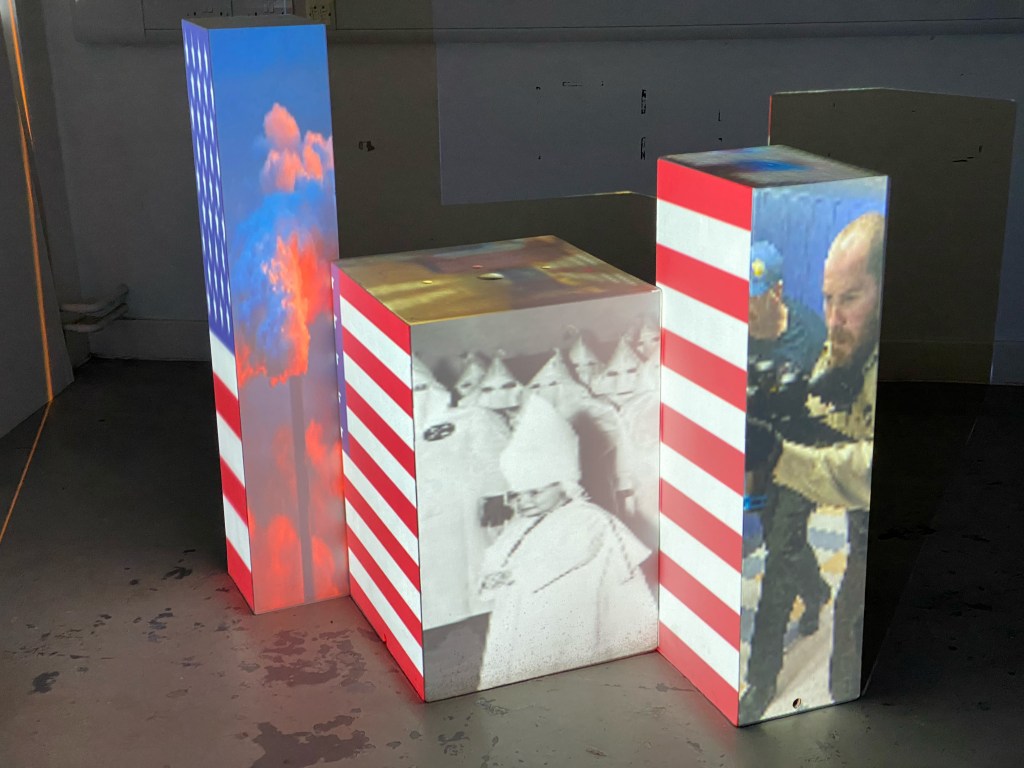
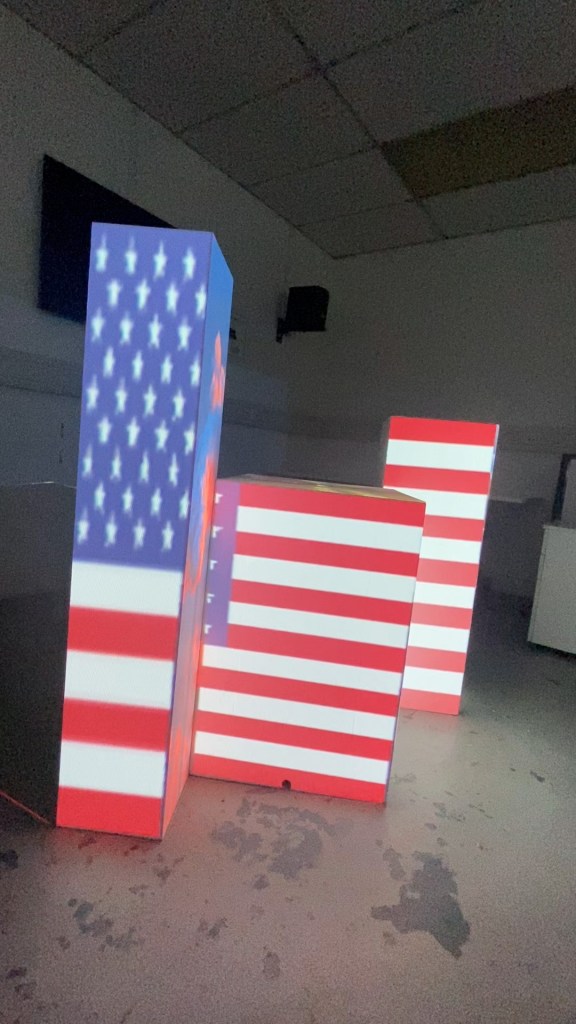
I didn’t set out to make my project political, but it fit when I stumbled into it. The different perspectives of the project mirrored the different perspectives people take when looking at issues of viewing a country. Some people might focus on the flag instead of what the flag hides or condones.
My first take was on the UK because its closest to home and how I can personally see an abundance of wealth in our royalty and our houses of government on any TV or media, but anyone can walk 5 mins from their homes or places of education and see violent crimes, poverty or growing lines for foodbanks.
From even the perfect angle, each flag is disjointed and imperfect. I initially spent a bit of time trying to get the UK flag perfect, but after showing my project to people, I found that the viewer spent more time trying to line up the lines of the flag, trying to solve the puzzle. So I decided against this as a possibility because it distracts from the point and makes the viewer spend more time on the flag, not what the flag is hiding. I should have documented this, but honestly, it was a change done quickly and out of dissatisfaction that the main subject of my project was getting overshadowed.
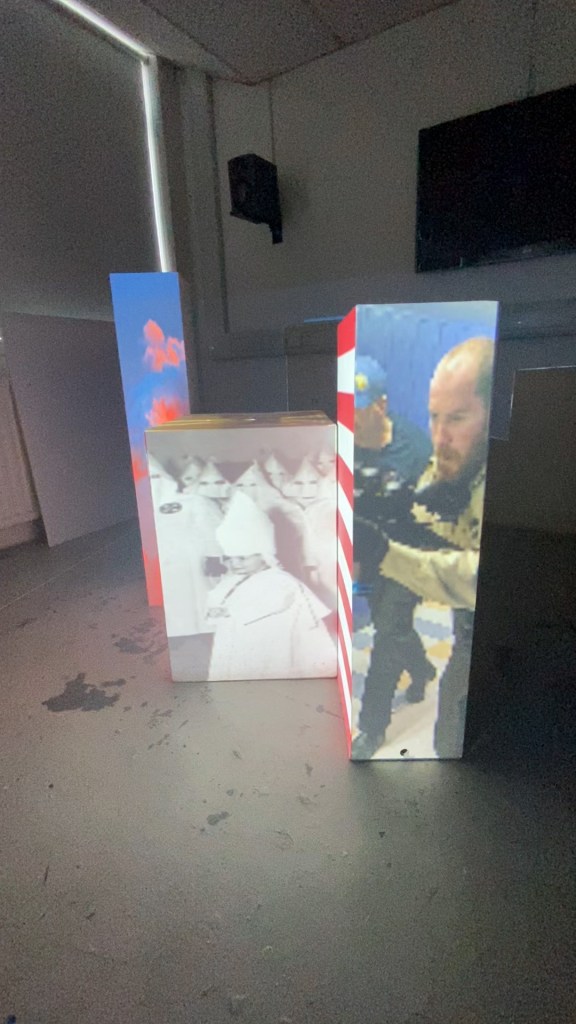
Secondly was the US because they’re always bigger and better than everyone else, even when it comes to horrifying societal norms. Similar to what I did with the UK, I wanted to look at images that would be harder to see, pollution on a massive scale, trained gun-wielding police officers in a school hallway and an innocent young child being indoctrinated into a group of evil and hate.
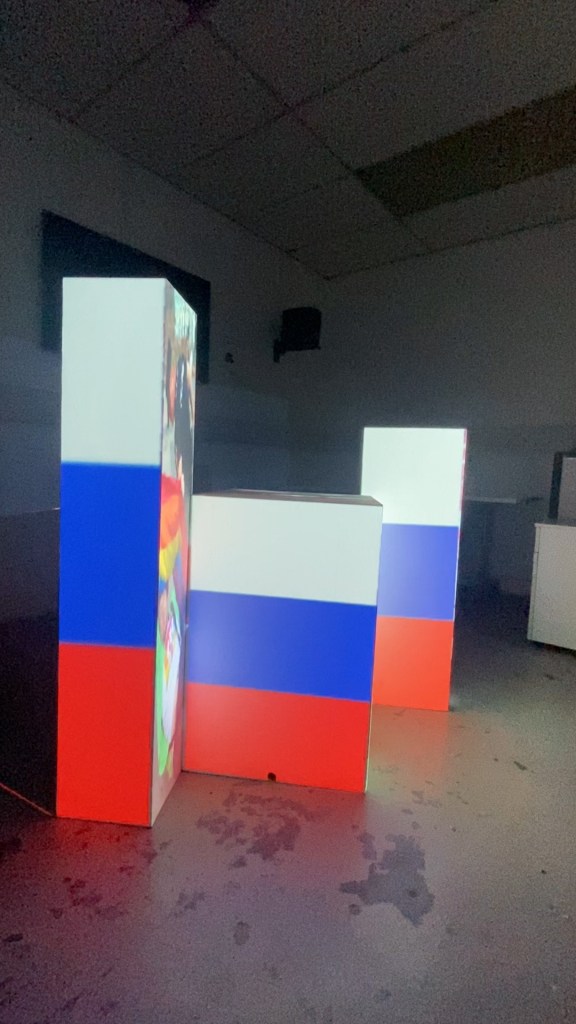
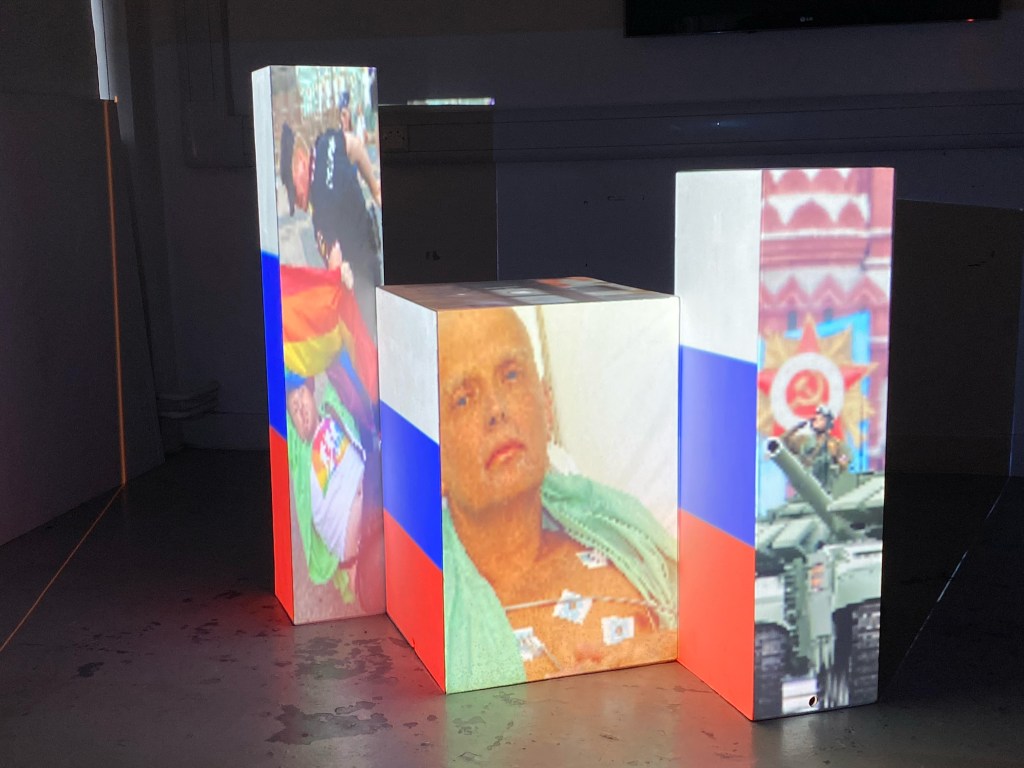
Finally was Russia, which came as a request from a fourth-year IxD student, and once they asked, it seemed apparent. Russia has become synonymous with oppression, corruption, espionage and political grandstanding in recent years. The images I chose reflect the denial of someone’s fundamental right to love who they want, the silencing of Russia’s enemies and the facade of unity and power.
After completing my three projects / unsubtle political statements, I was struck that almost every one of these images are not exclusive to the flag I have assigned them to. Each country varies in their subtlety to the highlighted issues, but they overlap in one way or another. There are still those in the UK that have homophobic views, there is poverty and food banks across Russia and the US, and racism and xenophobia across all three.
Looking at what’s wrong with the world all day puts you in a downer, I’ll be honest. But the thing that it made me think about was the positive similarities between people. The resilience and passion for going against what’s wrong no matter how scary, massive or faceless the opposition might seem. So my project focuses on the negative to inspire the positive.
I am a complete stranger to coding and all its faculties but with each lesson, I am slowly and steadily grasping the basics.
Lesson 01
An introduction to coding and its potential. From the outside looking at coding was a foreign language to me, the Matrix from the outside, the screens that Neo would look at in confusion was how I did with lines of code in Processing examples. I had the incorrect perception that it was reserved for the computer scientists and cyber security hackers of the world but not designers and creatives.
Thankfully I was proven wrong throughout the run time of Hello World! Processing. My perception of design was rooted too deeply in understanding that a product would have to be conceptualised, evaluated, finalised and developed traditionally but as I could watch the Hyphae Lamp by nervous system ‘grow’ in front of my eyes the symbiotic relationship between a designer and coding became apparent. Each lamp, like the fungus itself, is completely unique. This could have possibly been done through traditional sculpting methods and a lot of painstaking hours but even then I believe it would lose the aspect of its organic nature and randomness.
As one preconceived notion was blown out of the water another one met its demise shortly thereafter once I heard about Sol Lewitt’s instructions for his artwork and how he essentially sent code to a gallery and received a similar outcome as he might if he used Processing.
The idea of code and data visualisation is not only confined to computers and Processing but can be translated and displayed in a number of creative, expressive and exciting ways.
Lesson 02
Once I got my hands on Processing it became even easier to understand. I can now do things that would have seemed out of my reach in lesson 01, now it is still the basics and the bare minimum but seeing how a simple command can change the actions and appearance of the outcome has done so much to show how accessible it is.
I found myself drawn to the ability to have completely random aspects within the code and how each time I ran the code it would produce something completely unique.
Lesson 03
“Clarity of sketch, clarity of mind”. Housekeeping in code will help me wrap my mind around it and the use of substituting integers in place of repeating numbers streamlines the whole process. I think before I was trying to look at processing like a language or paragraph but I can make more sense of it by treating it as algebraic equations. Clarifying the values of ‘nudge’ or ‘wonk’ at the top of the code flips a switch in my mind.
Lesson 04
Sometimes I think I understand what I’m looking at and sometimes I don’t. A trick that I need to do is to translate it into basic English. I need to practice writing code more to get more comfortable and fluent with it but I’m sure that will come with time and exposure to it.
for (int y = 0 ; y < rows ; y++);
Translate: The int is y and y is 0, if y is less than the number of rows then add one onto y.
Self Study 01
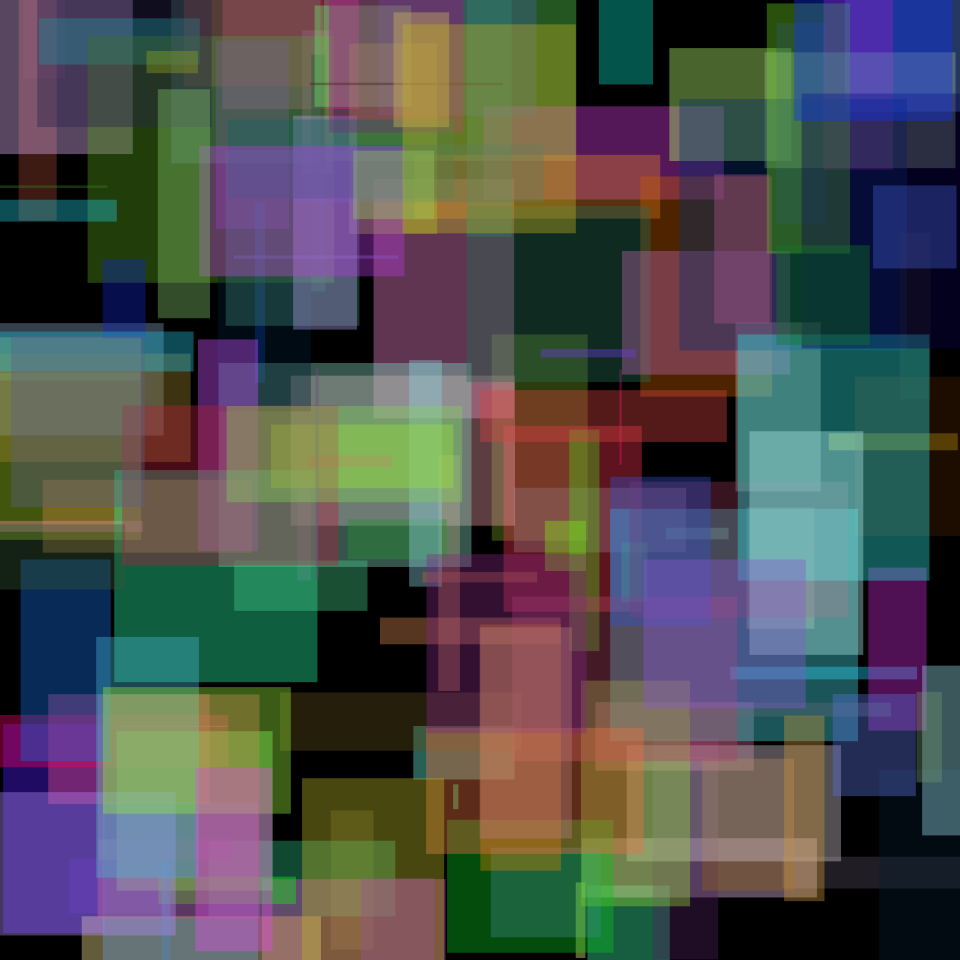
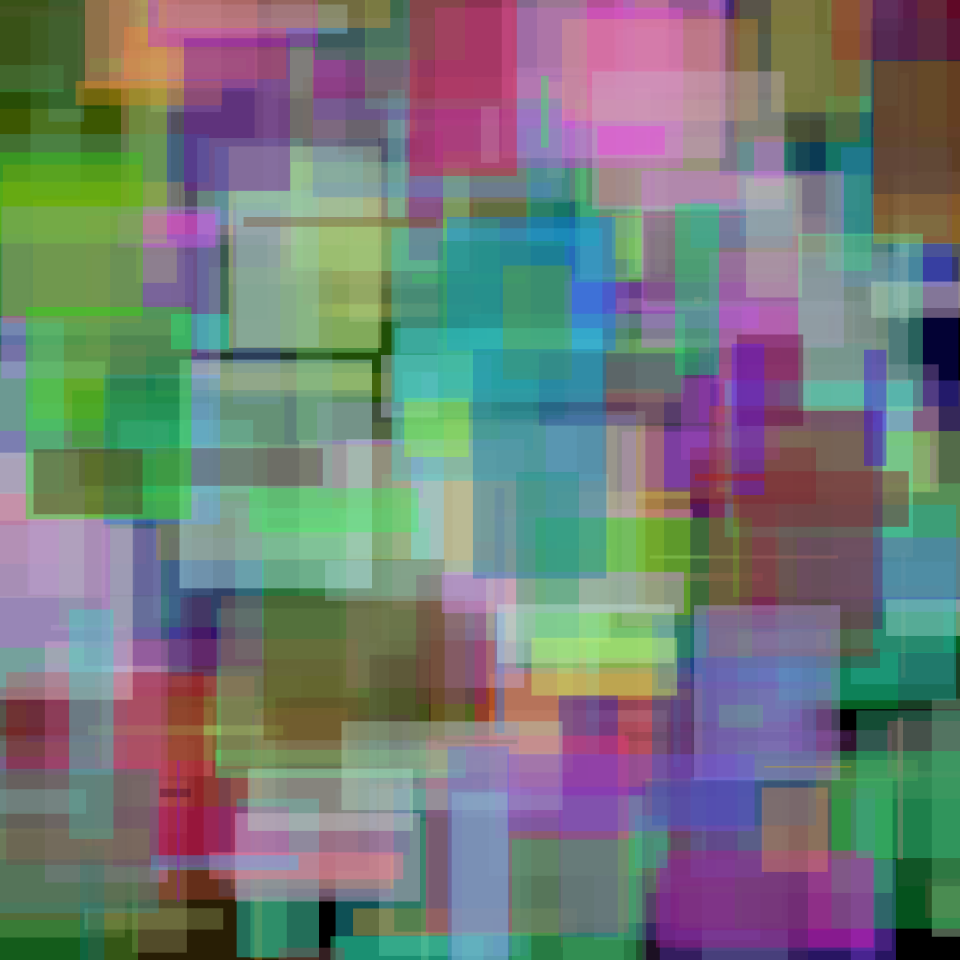
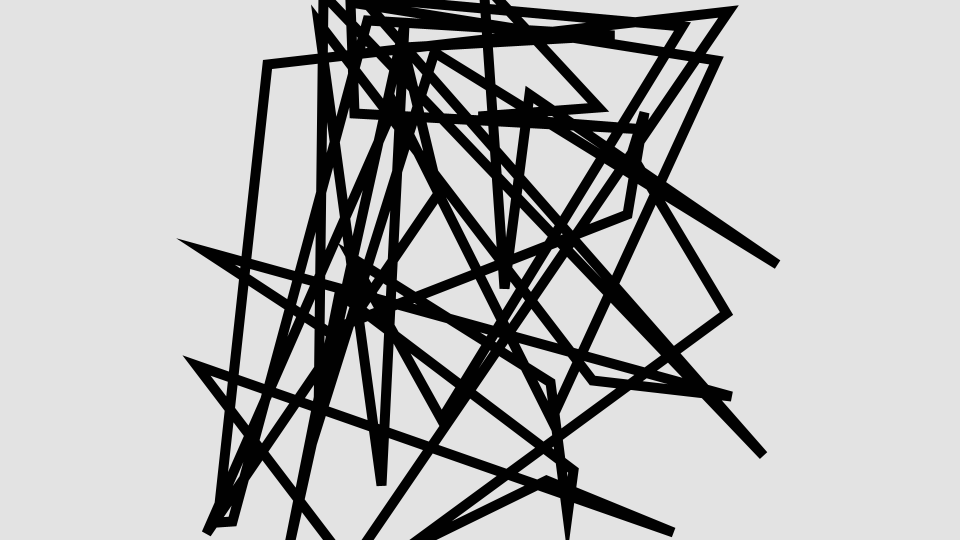
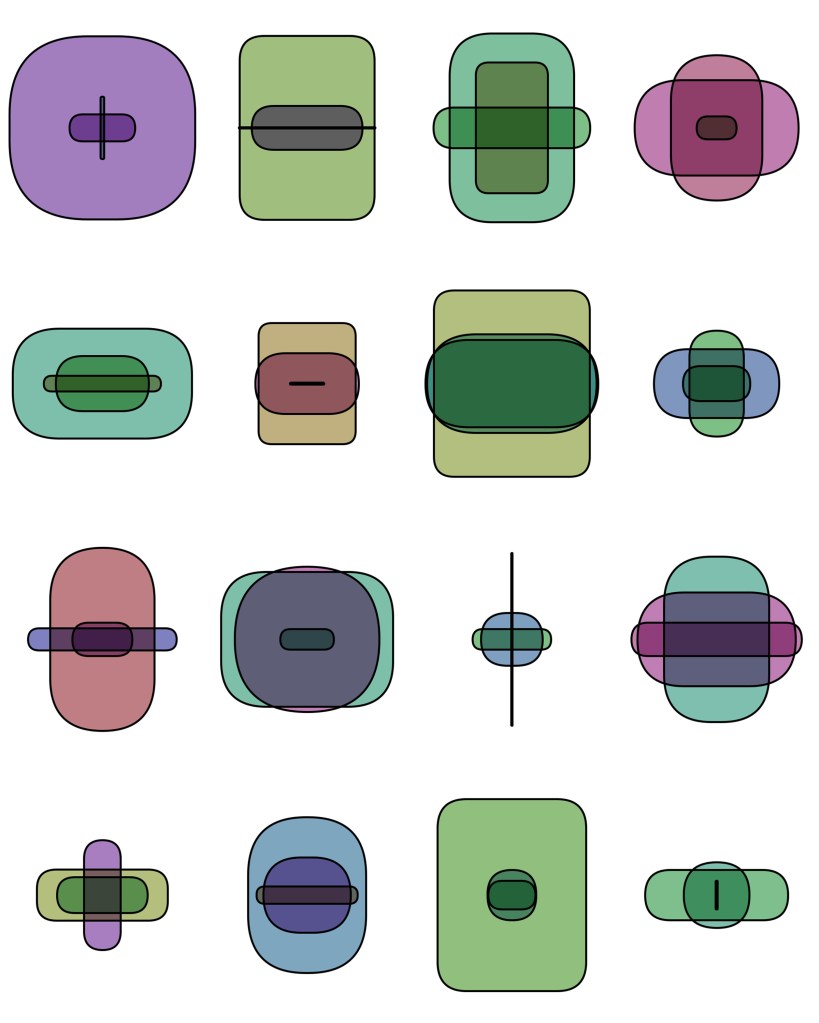
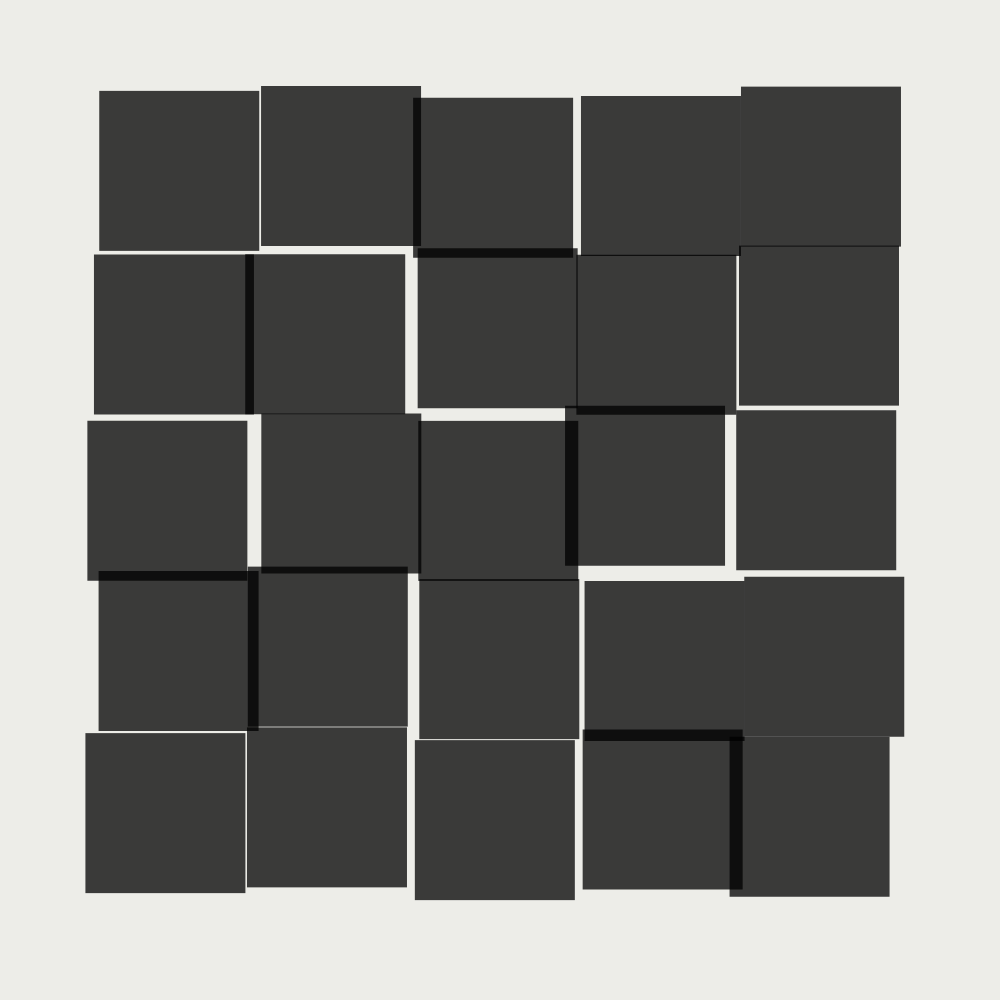
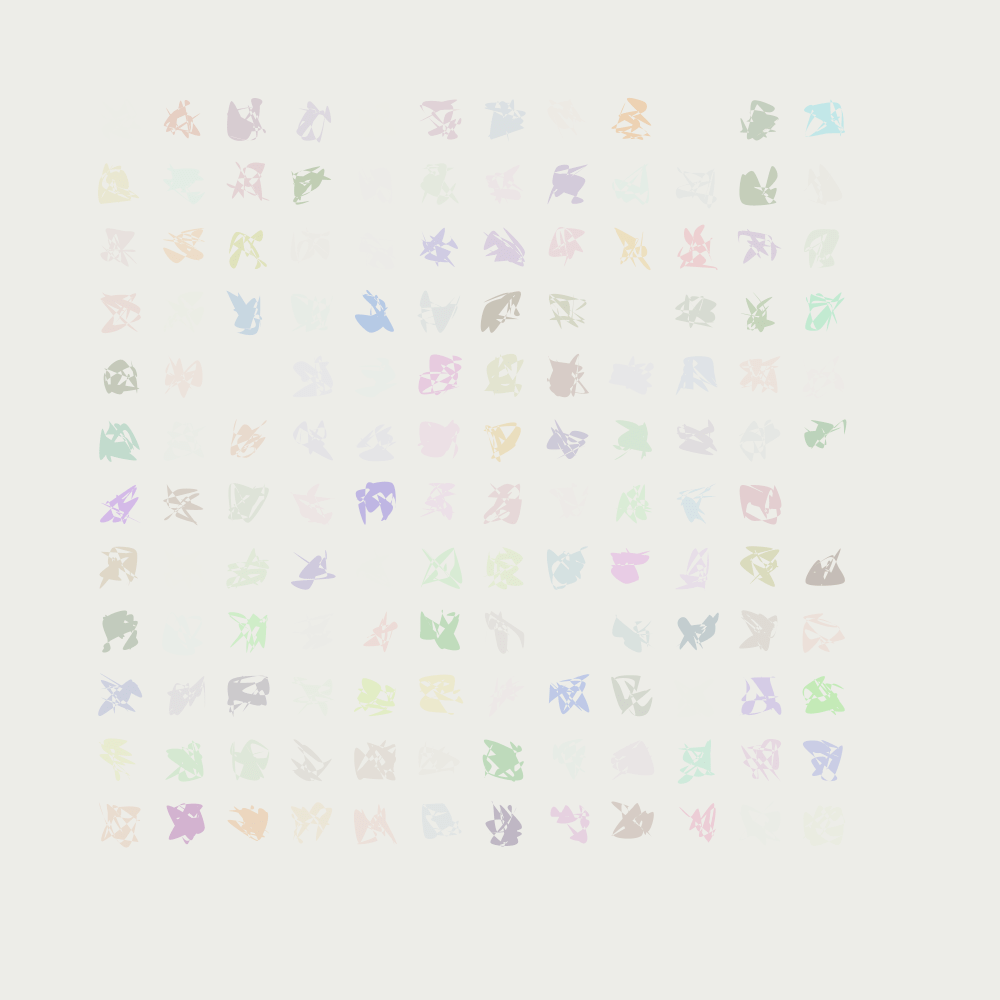
In my own time, I wanted to explore how the images from lesson 02 would change with added variables and filters such as BLUR or ERODE.
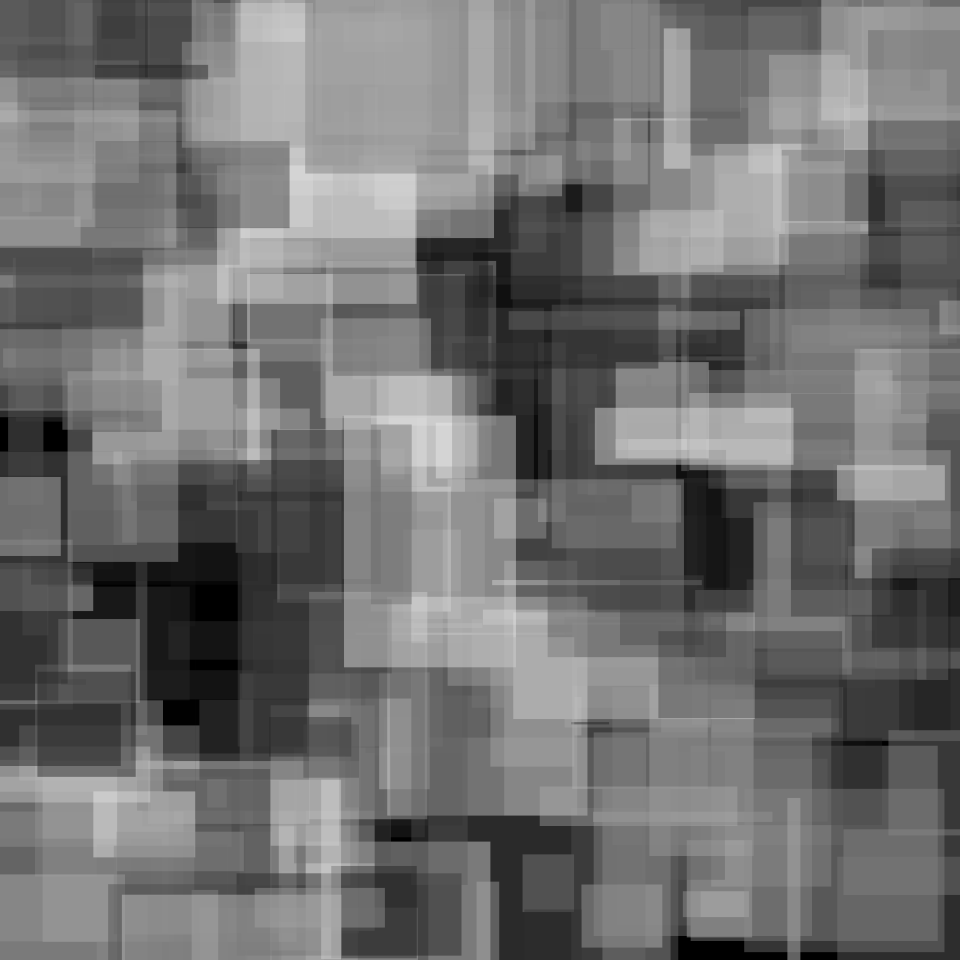
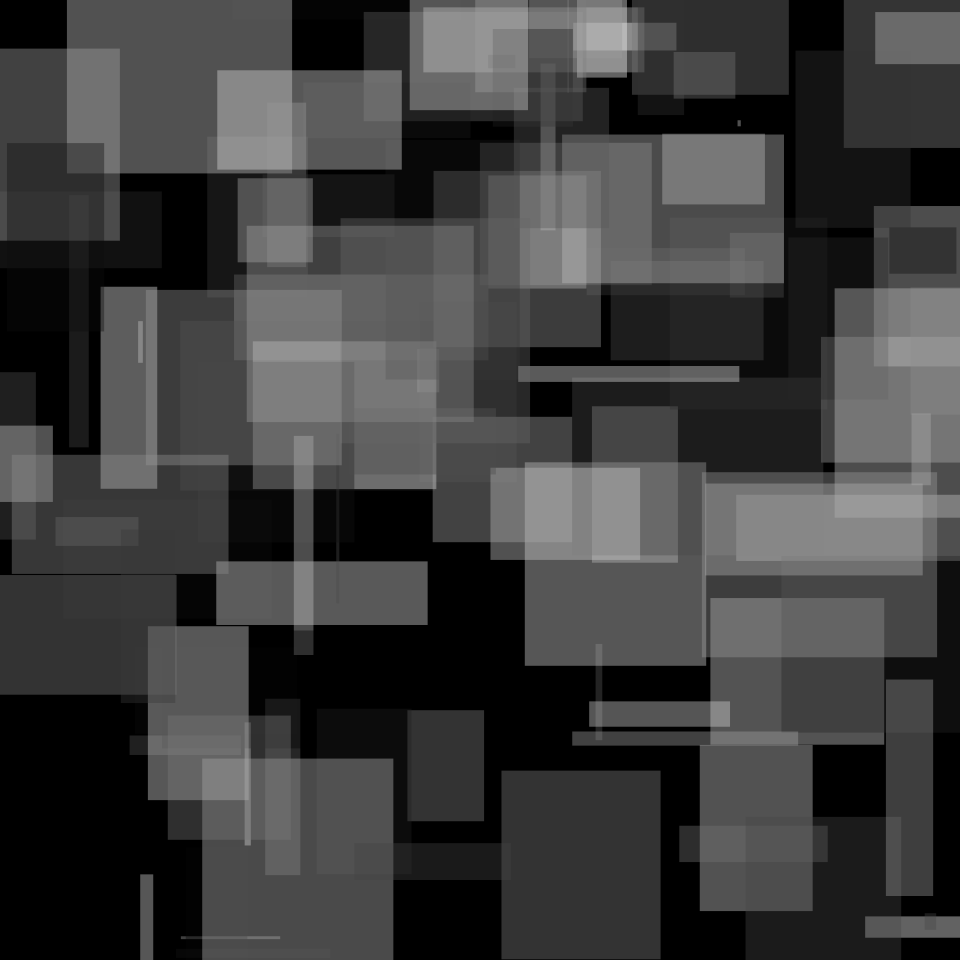
One that surprised and caught my attention was the outcome in image05 and image08 that with a certain transparency the random rectangles had the same effect as a sample of linen or a low thread count material.
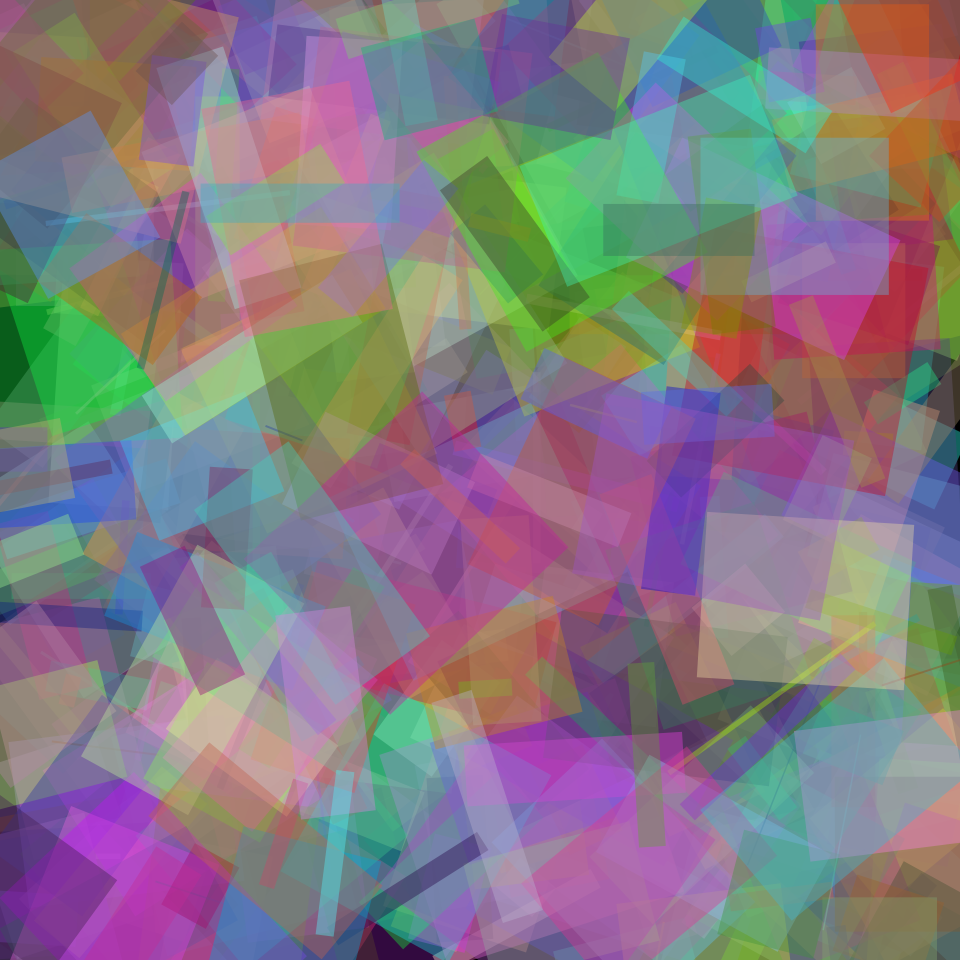
With help from Ally, she introduced me to rotating the primitives, I’ve not fully grasped it yet but I’ve got the basics and need to look into it more.
Self Study 02
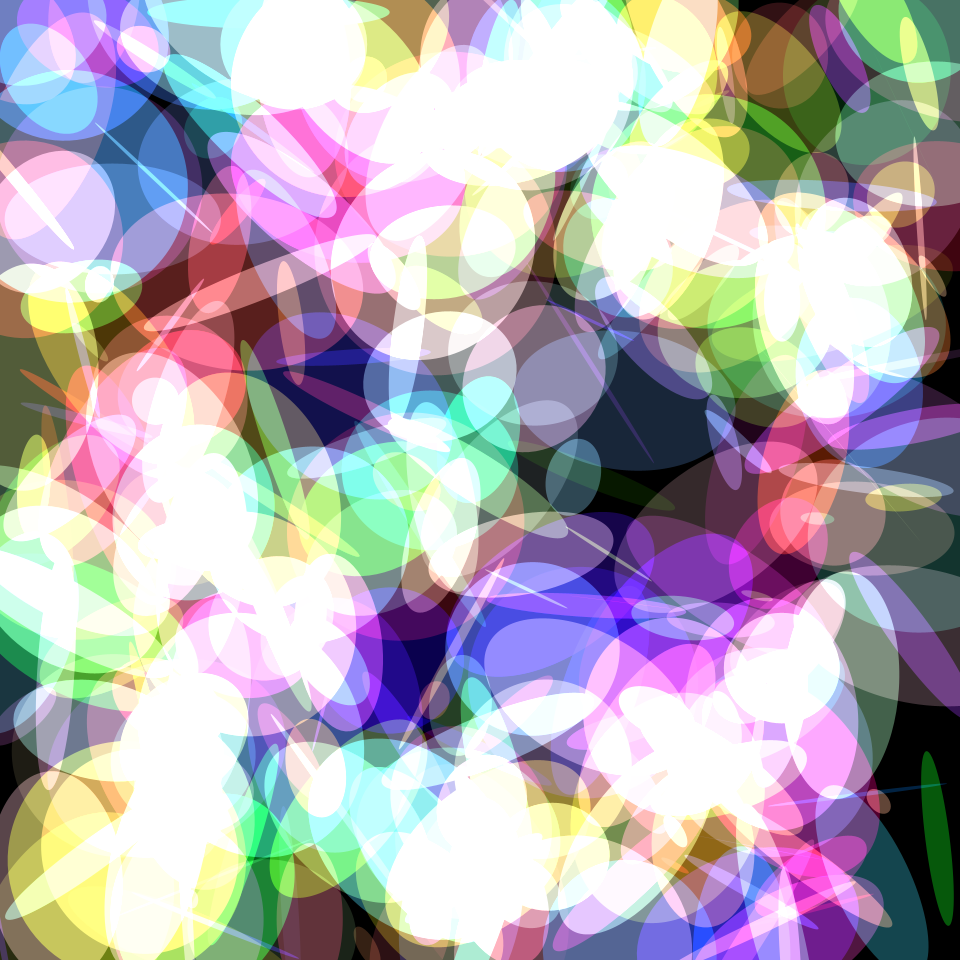
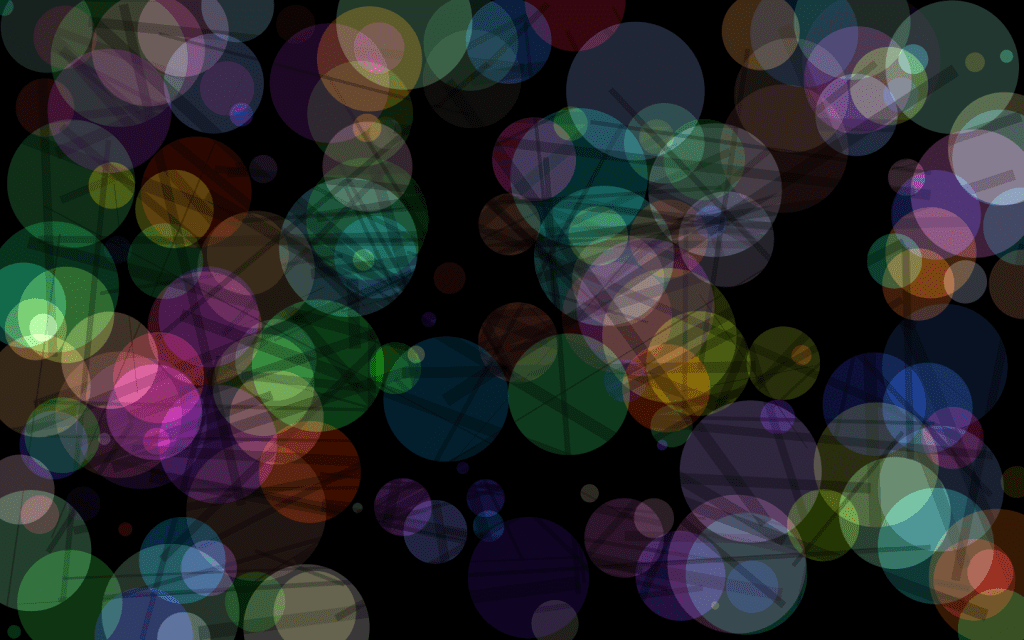
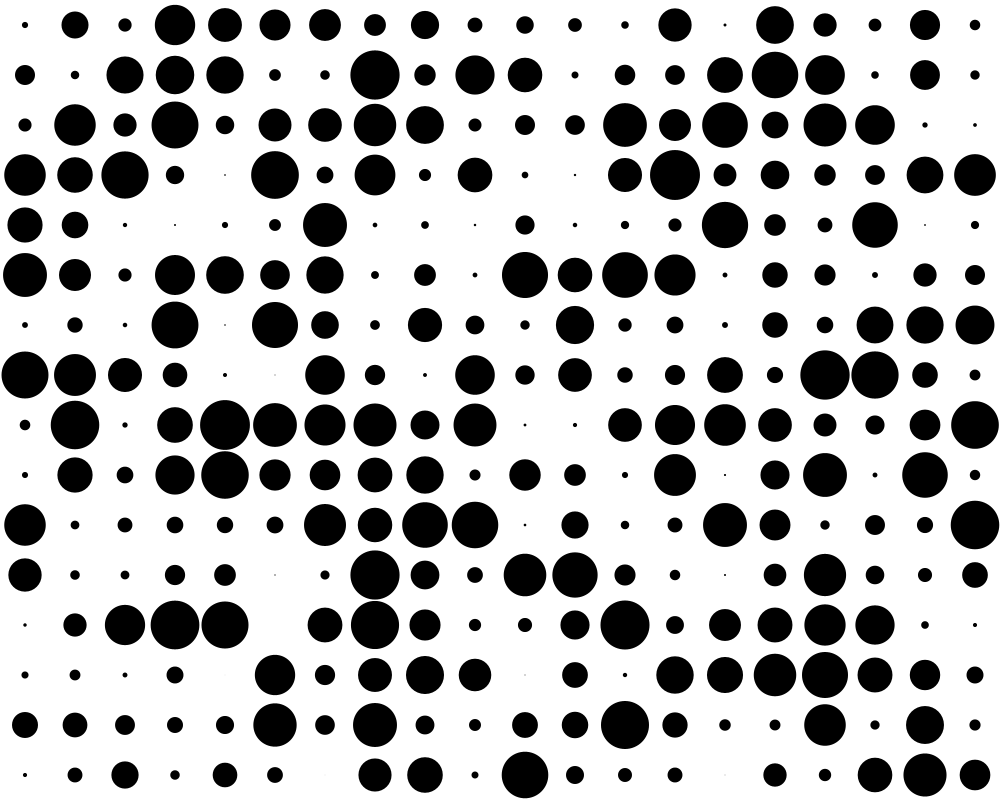
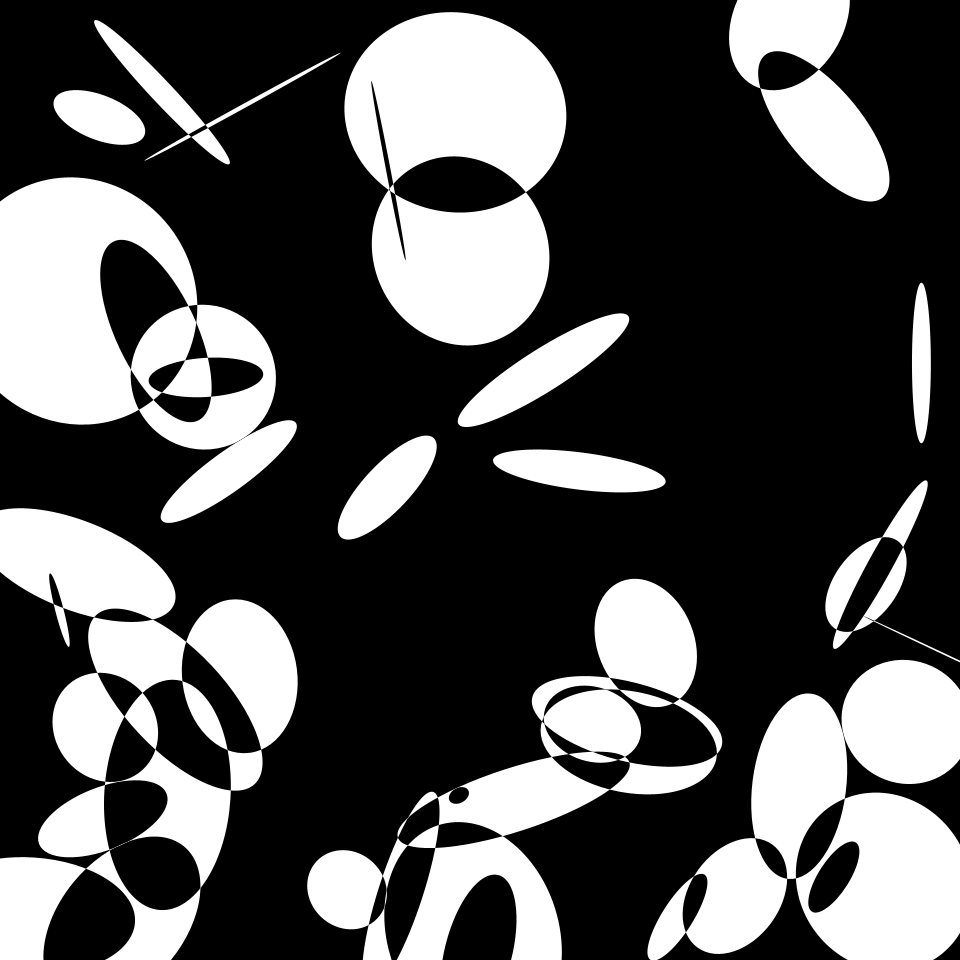
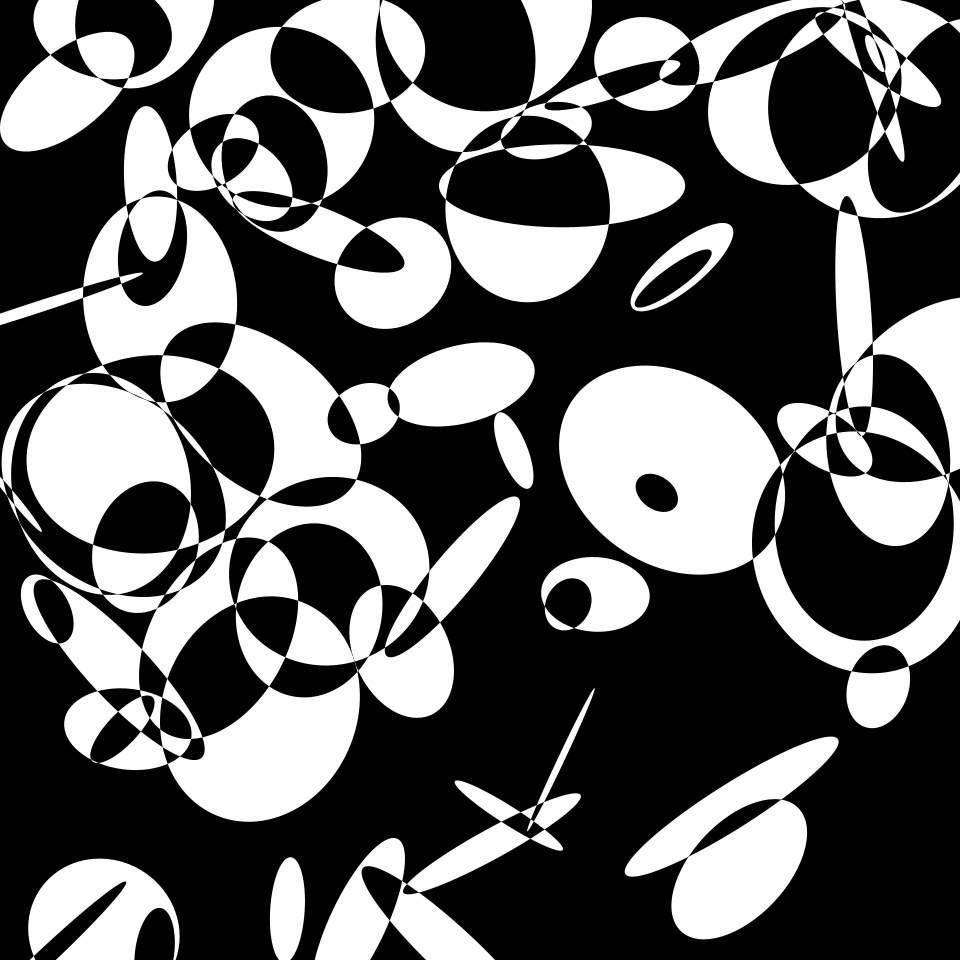
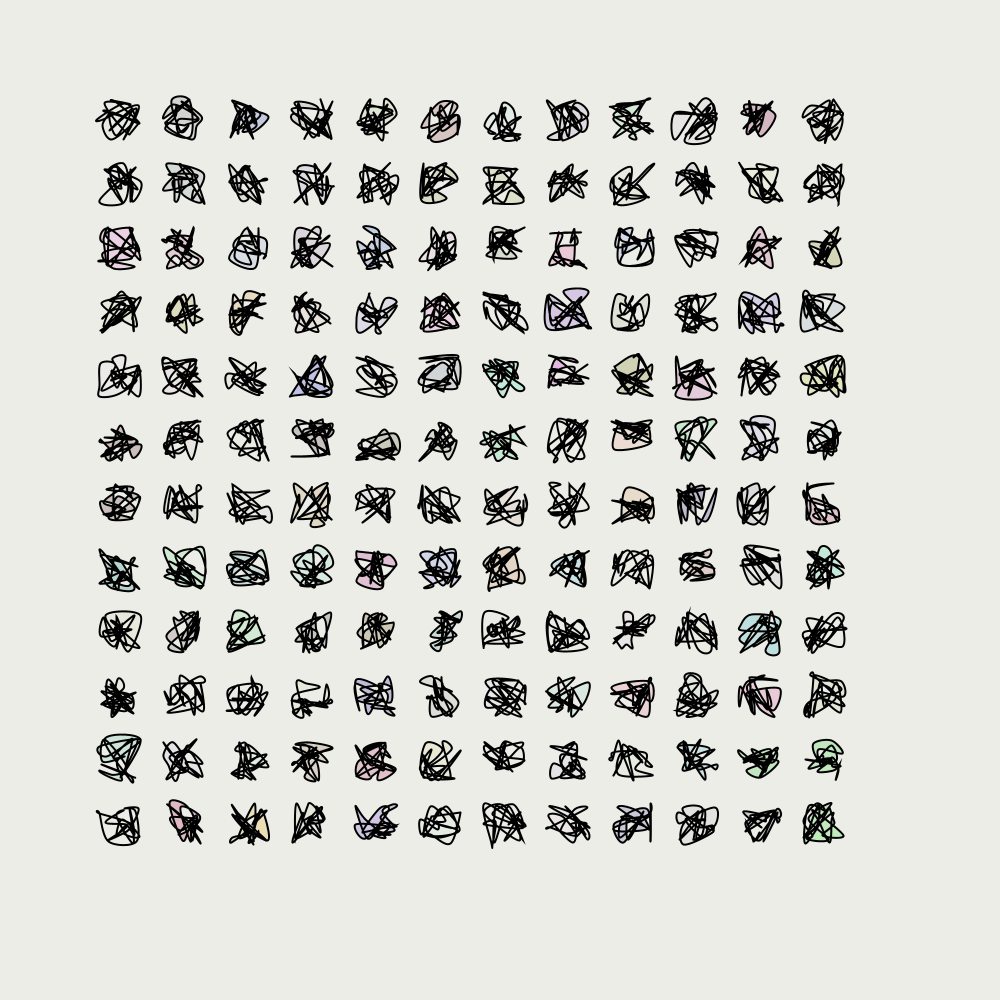
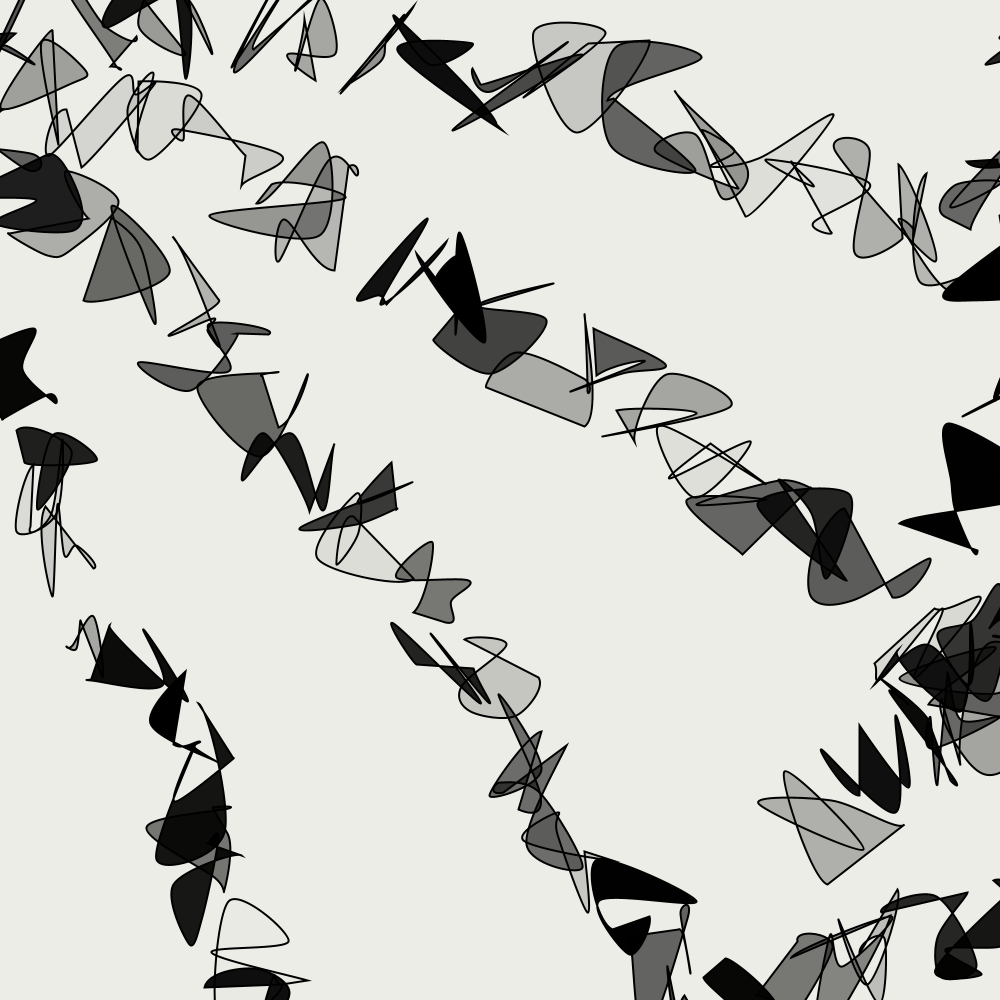
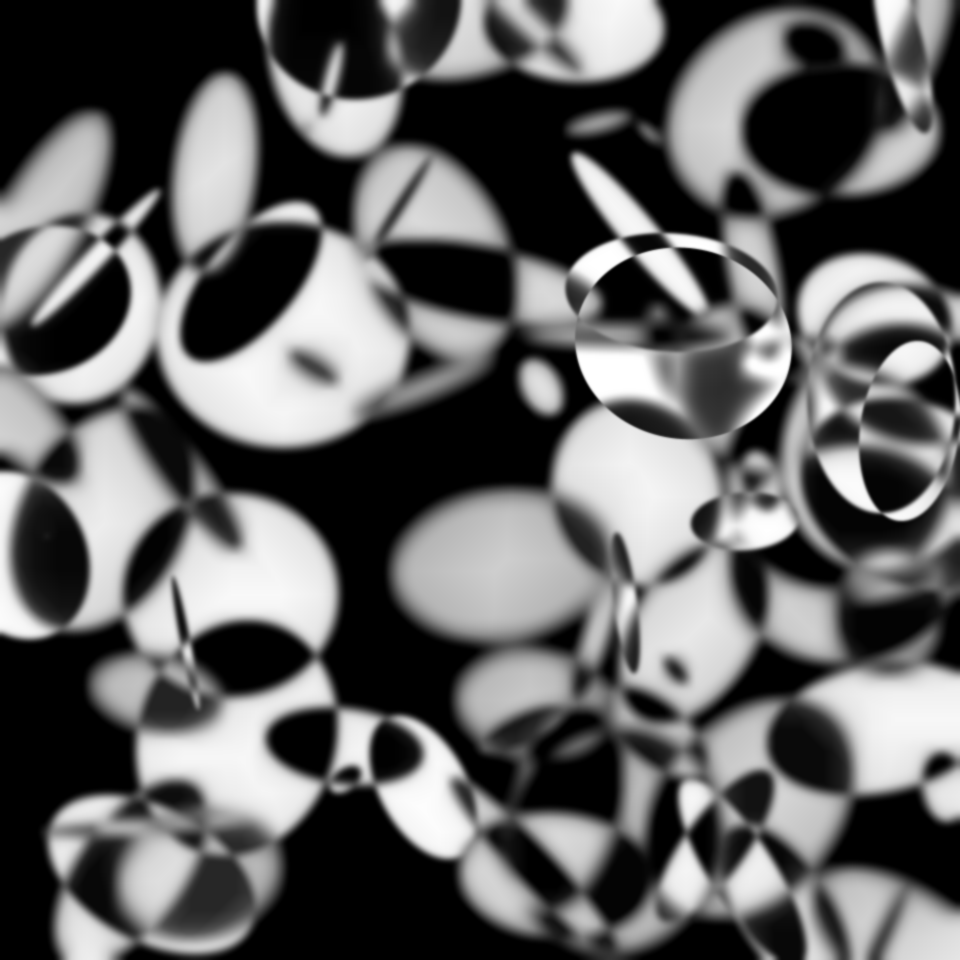
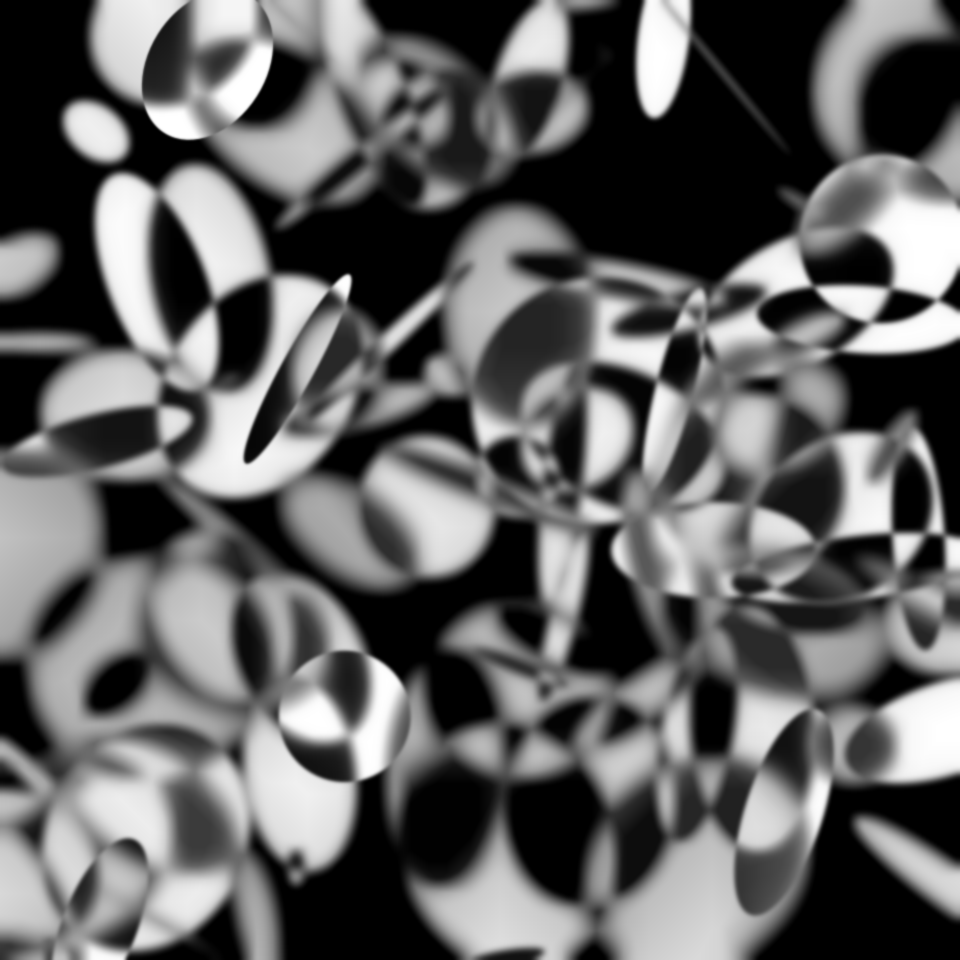
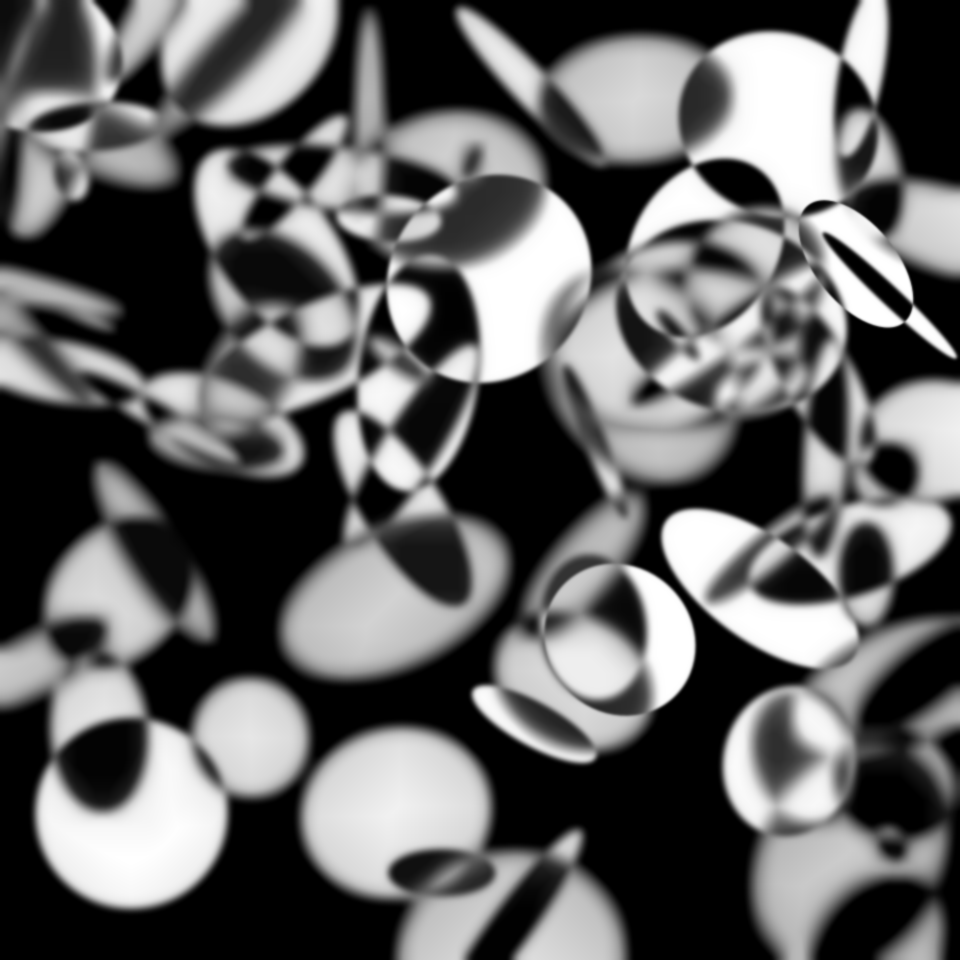
Revisiting the random circles again in my own time but experimenting with different blend modes such as DIFFERENCE, with a monochromatic colour scheme, the rotation aspect from the previous self-study as well as letting it run for different times to see how dramatic the effect got.
Self Study 03
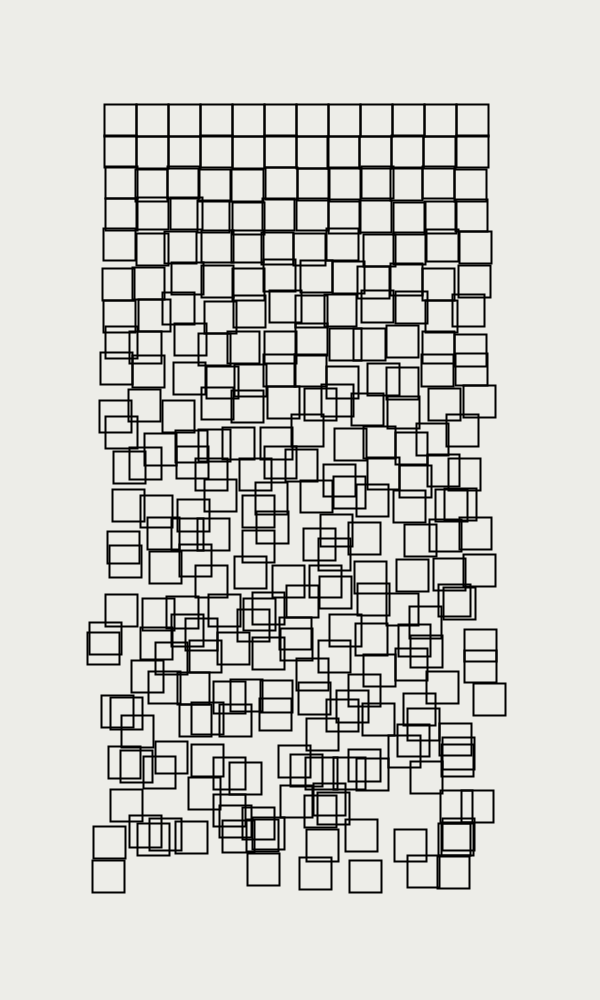
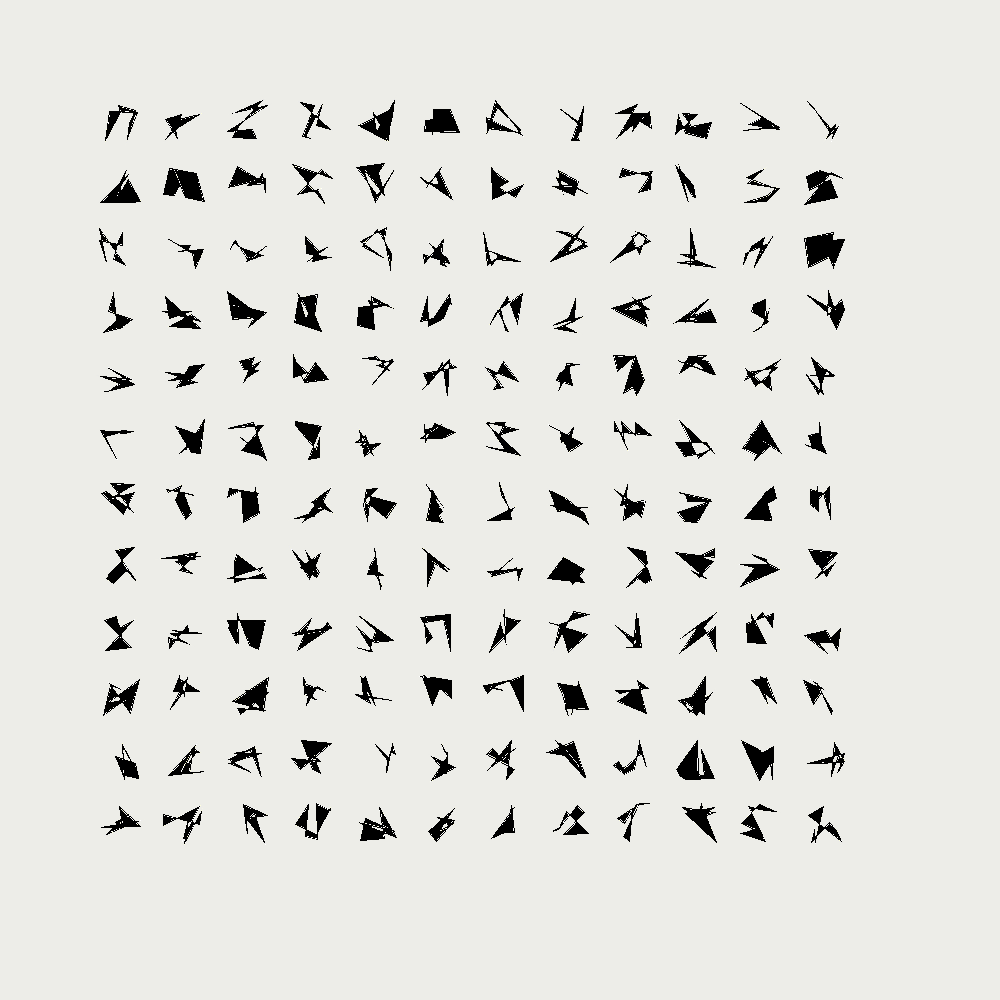
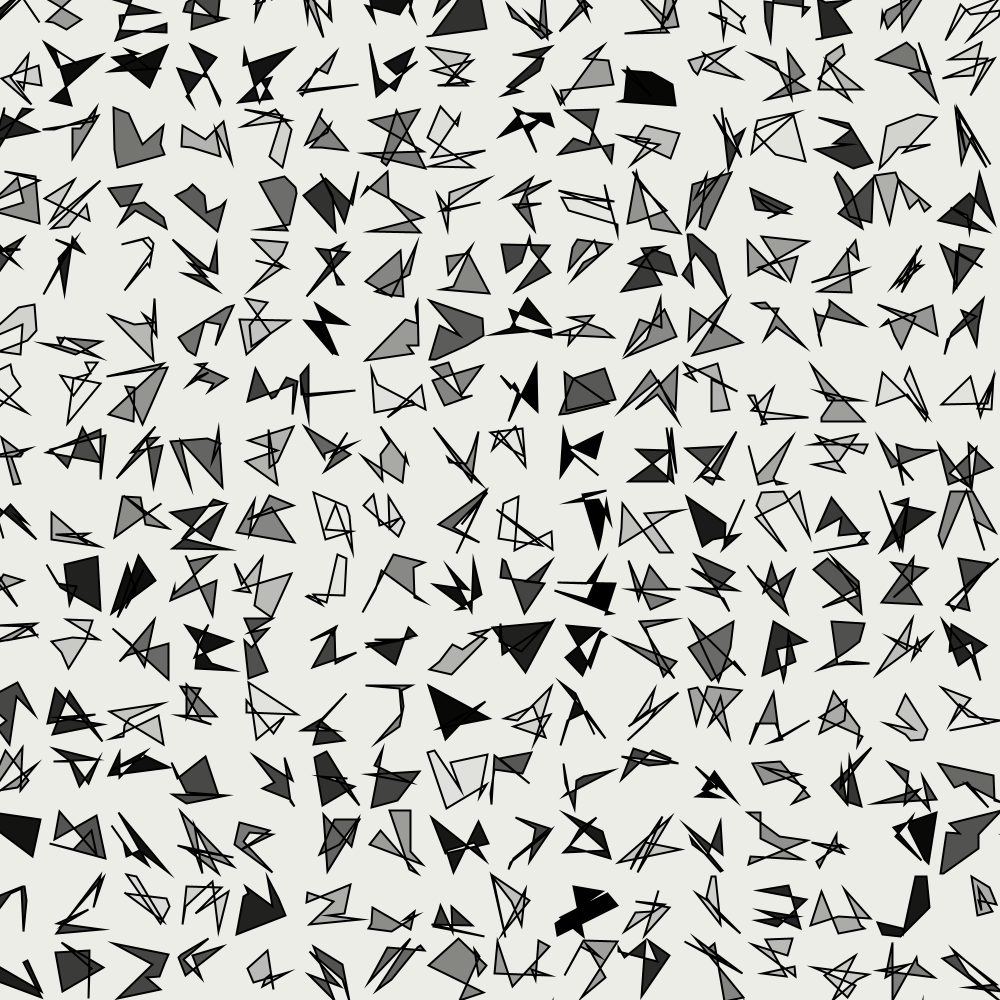
Messing around with the vector grid was where I understood the whole purpose of just messing about with code to see what happens. I’ve been trying to make things too perfect right out the gate.
I’m just mark-making at this point and I’ve been trying to make the equivalent of the Sistine Chapel ceiling, so I took the vector grid and changed things, plugged in numbers, took code from other images and stitched them together (Franken-code) and broke it to see what changed and what didn’t.
Self Study 04
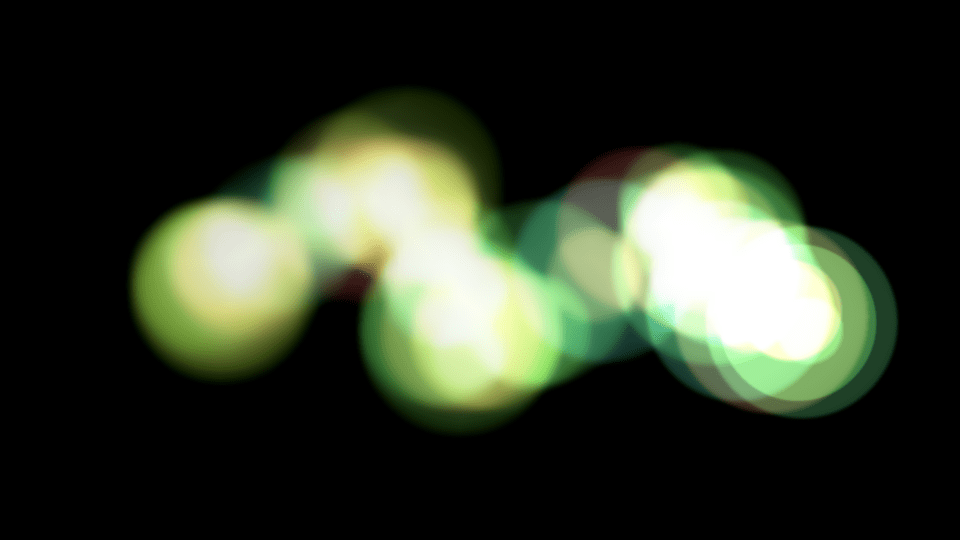
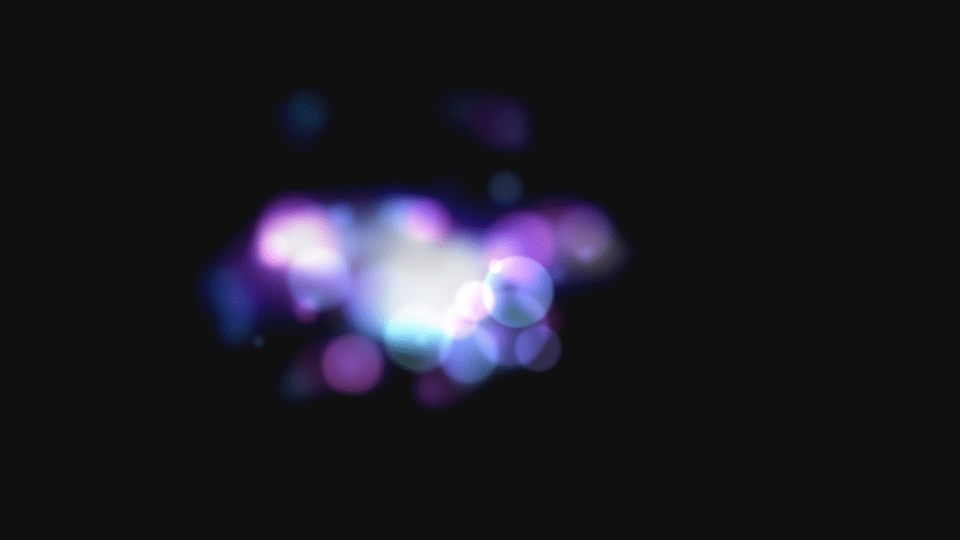
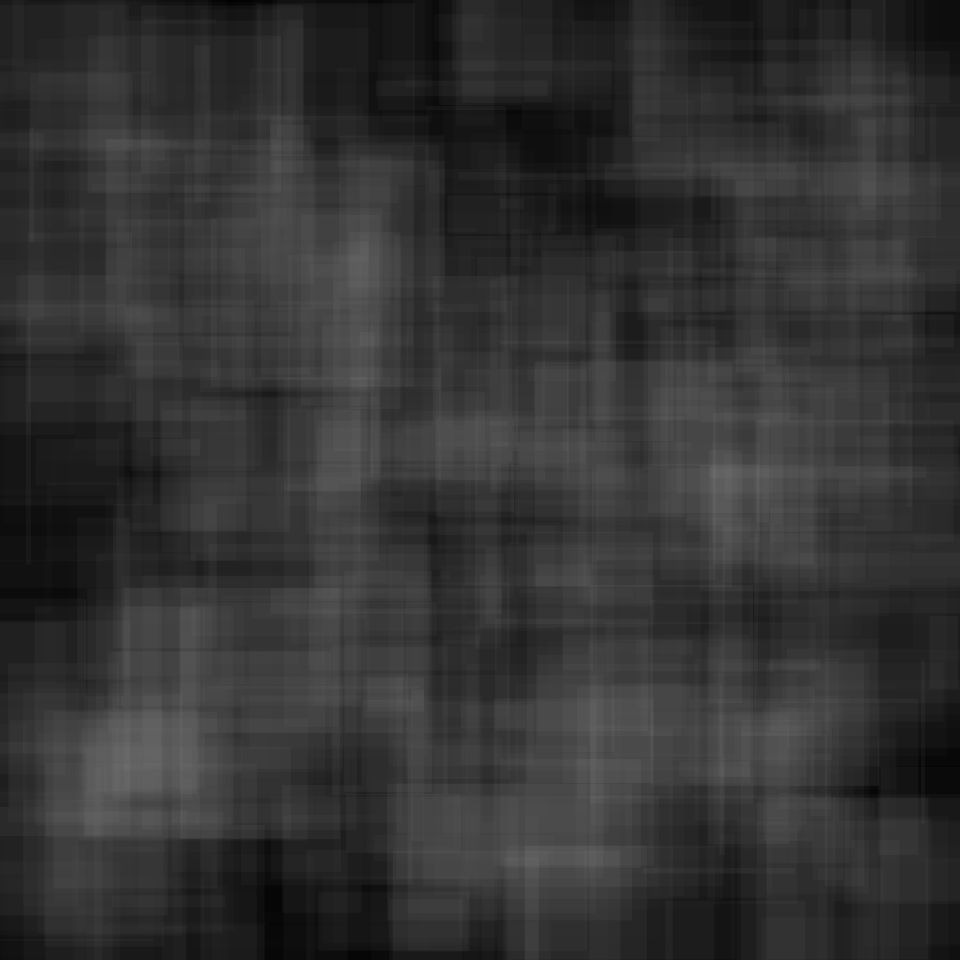
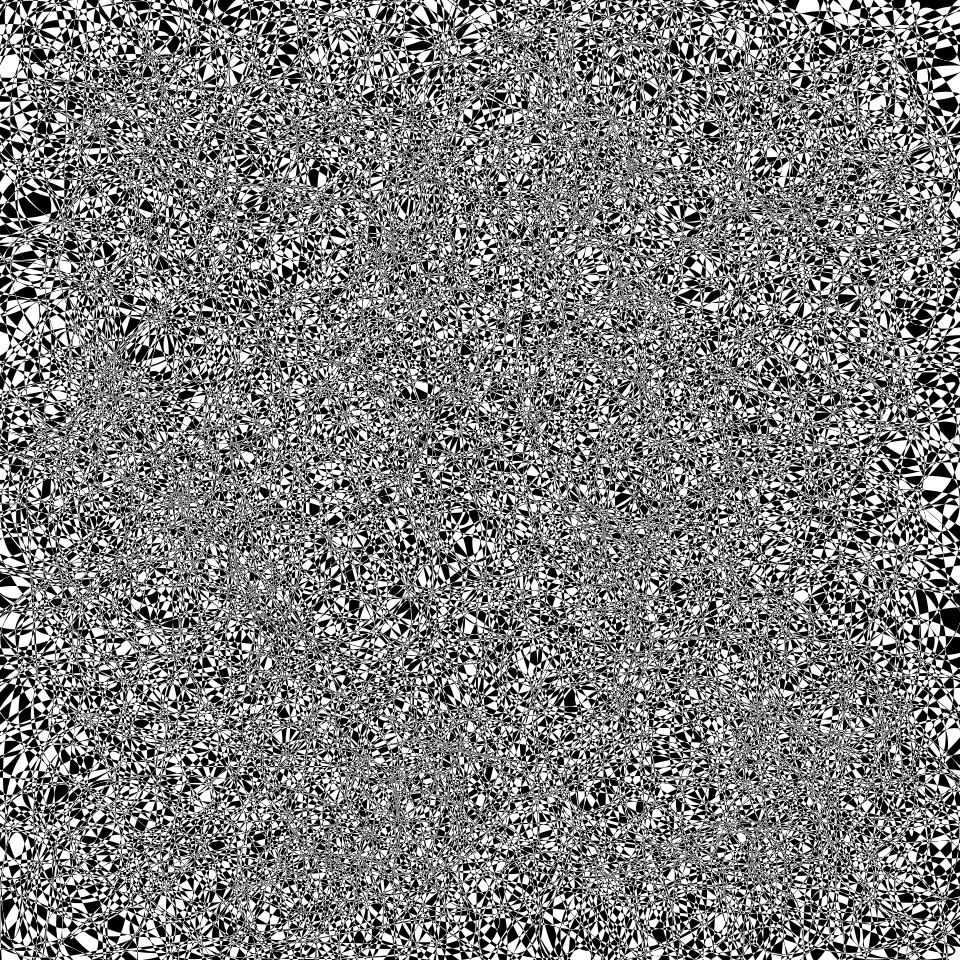
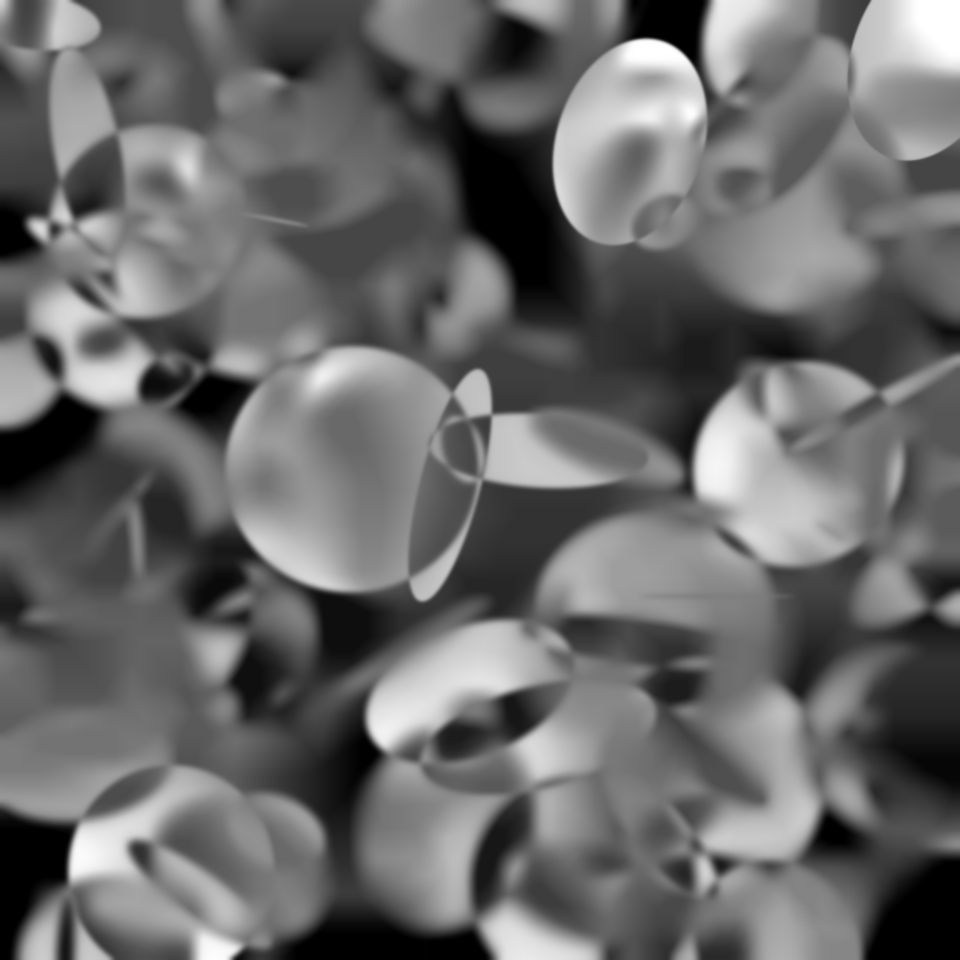
These images are of the exact same code as in Self Study 02 but with blendMode(BLUR) and drawn on a loop, which I think gives it the illusion of depth as if it’s been shot on a camera with a shallow depth of field.
I was getting in my own way before, trying to overcomplicate things. I would look at all these amazing and detailed things people would do on OpenProcessing and my eyes would go fuzzy at the lines and lines of code, but complicated visuals are not always good visuals, art doesn’t have to be incredibly detailed to be good or liked.
The visual outcome of this image is simple but when I try to think of how it might be attempted without processing I start to see how Processing is not a tool to replicate what can be done with other techniques but how it is its own tool. You wouldn’t replicate paint with a pencil so why try and replicate anything else with Processing.