Formative Assessment:
What should I take away from formative assessment, and how will I realise it moving forward? That being said, I am conducting a deeper exploration of the research, establishing a clear direction for my project, maintaining good documentation, and finalising the pieces of work from the archives.
More Making:
When it comes to the materials and physical construction, I have done enough research and planning for this project, and now I am ready to start. I have already completed both the metal and woodworking workshops, but if my plans are correct, I might also need the casting workshop to create the interactive objects for the table idea.
When considering the electrical work, I have a sense of what I’ll need, but I’ll allow for some trial and error as I build it, so I can fine-tune the pieces. As the final idea will seem simple, I want to focus on the minor details that will elevate the work, and those details can only be ironed out with prototyping.
With ‘The Wall’, the motion graphics will need to be fine-tuned, with particular attention to the speed and style of the information presented.
With ‘The Table’ again, motion graphics will be a big part of it, but I think the timing and speed of user interaction will be the main focus to achieve that professional polish.
Deeper Exploration:
With my ongoing research, whether through artefacts or trial and error, I aim to ‘show my workings’ because I have the habit of knowing what I mean and assuming everyone else does. So, moving forward, deeper exploration of not just my research but also each aspect of the process, writing about what worked and what didn’t.
Clear Direction:
A lot of semester one was spent trying to find my direction, what I want to make, and who I am as a practitioner. But after the winter break, I feel like I am coming back to this with a clear head and a clear direction. I am a designer and will produce an interactive exhibition that showcases the lives of industrial workers in West Dumbartonshire through archival photography, design elements, and documents, creating a moving and engaging collection.
I will also be rewriting a brief to keep my vision on track.
WIP Briefing:
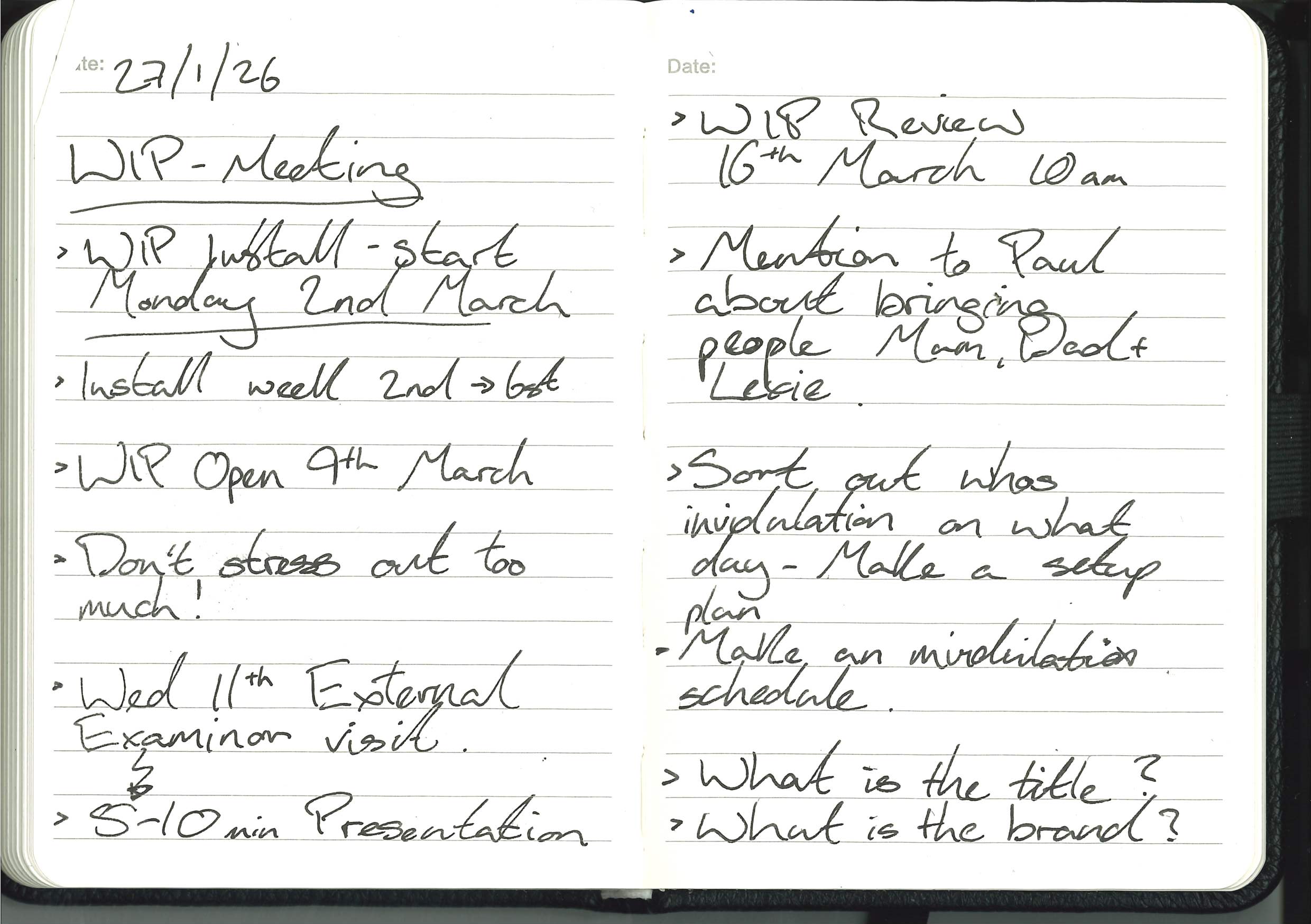
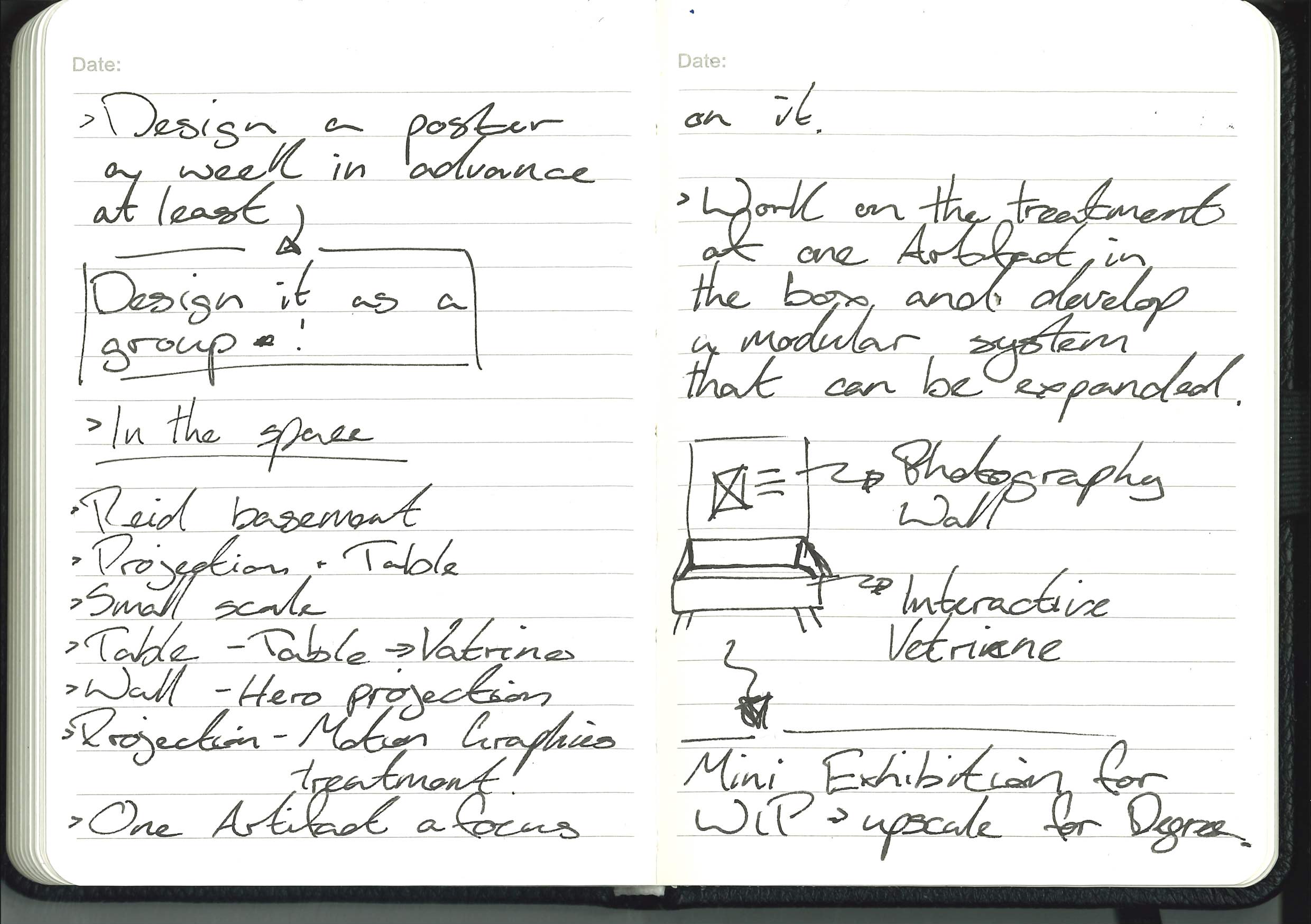
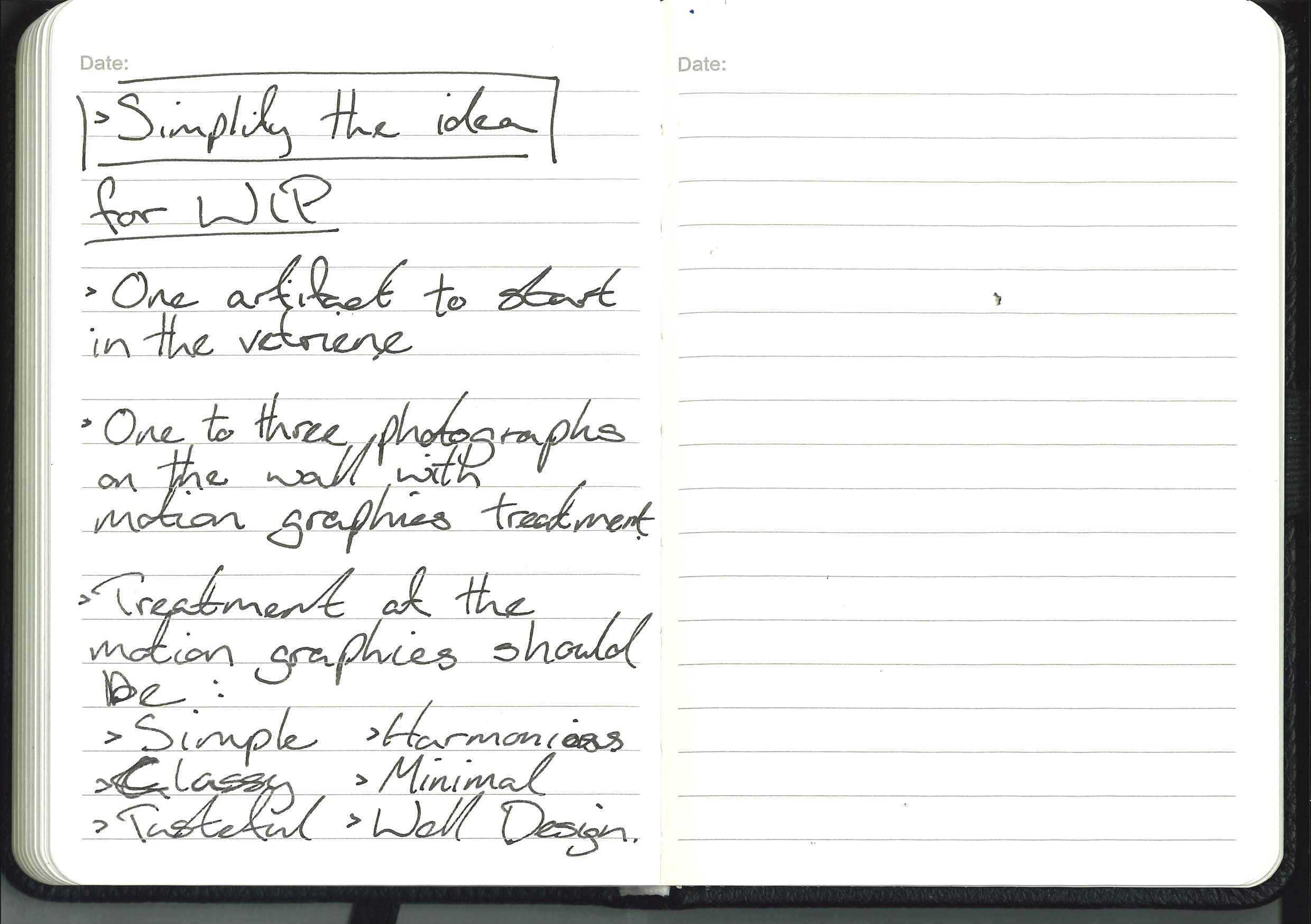
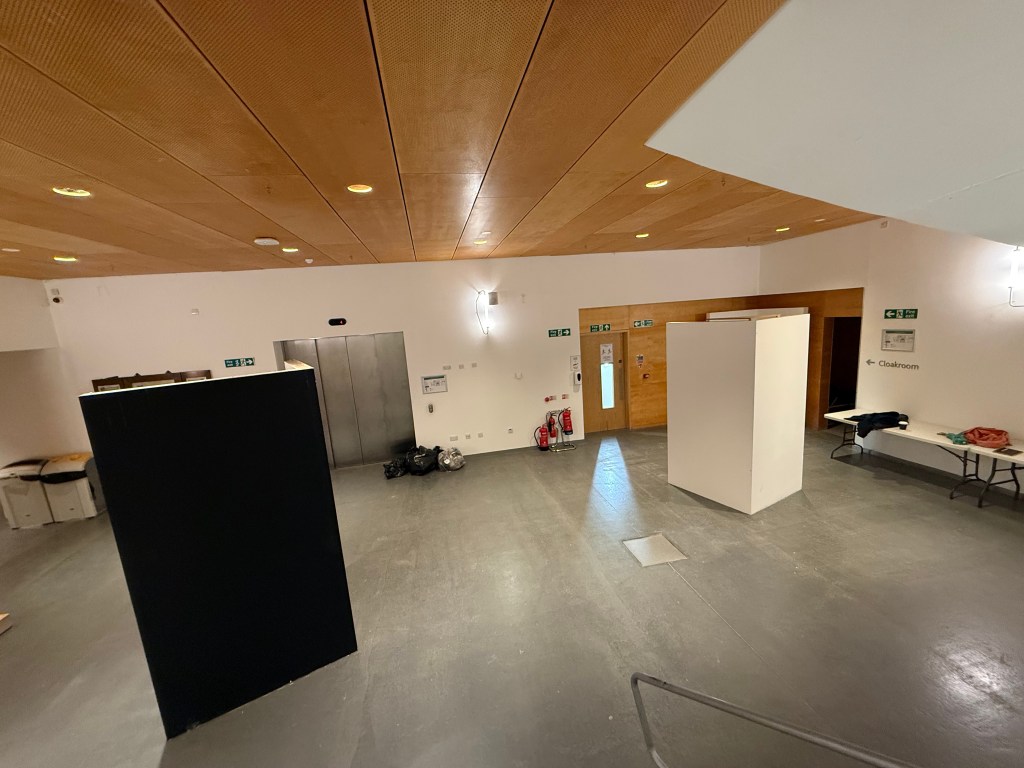
After the WIP briefing and the walk around the Reid basement, a few things differ from the initial plan. After discussing with Paul the idea of a wall projection, an interactive table, and a vitrine, it was deemed too much for now, and that, by developing a more modular system and finalising the look, feel, and initial piece, more could be added later.
The wall is staying as it is, and I’ll start prototyping it as soon as.
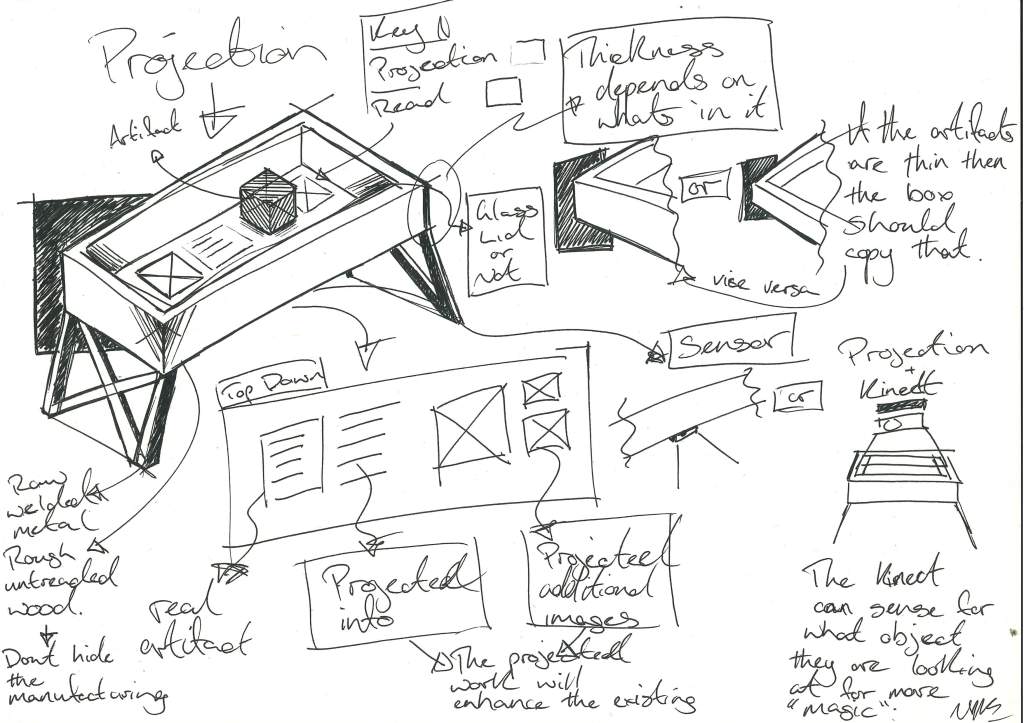
When discussing the table and the vitrine, there are two options:
Option One – The table and the vitrine are two separate pieces; the table is an interactive piece with large, accurate replicas of machinery used in shipbuilding, and when the table is moved, it will display more information.
Option Two – The table and the vitrine are combined into a single piece for the WIP, and, either through user interaction or by sensing when the user approaches the vitrine, the artefacts will be enhanced or ‘brought to life’ within the box.
Lighting :
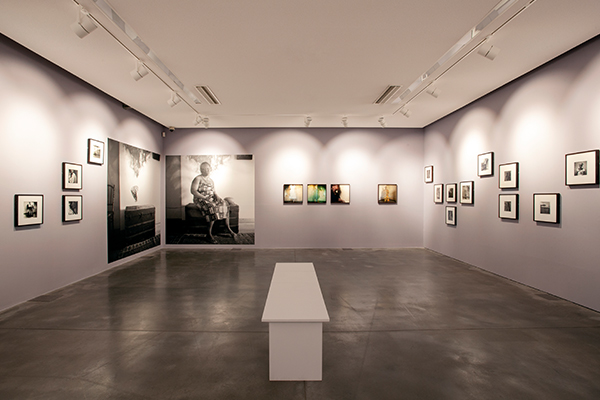
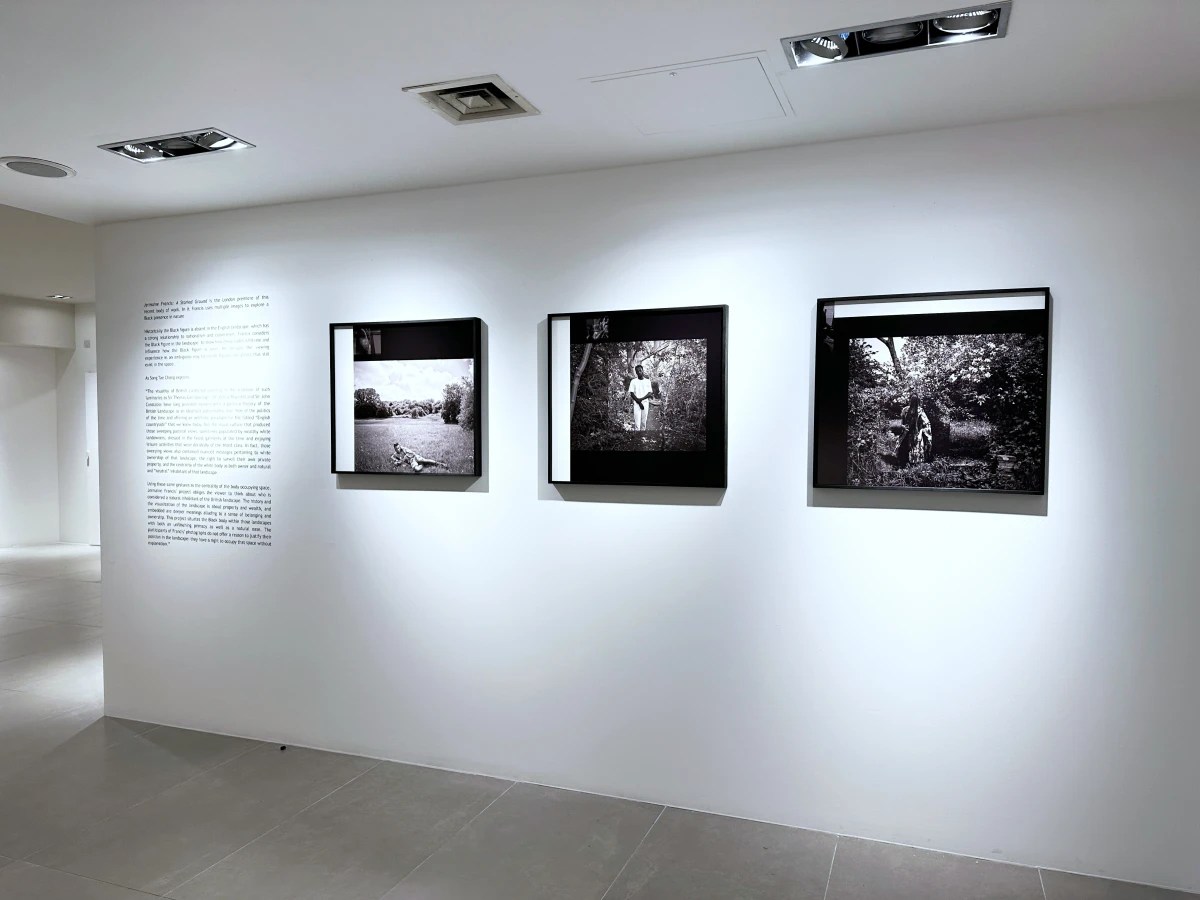
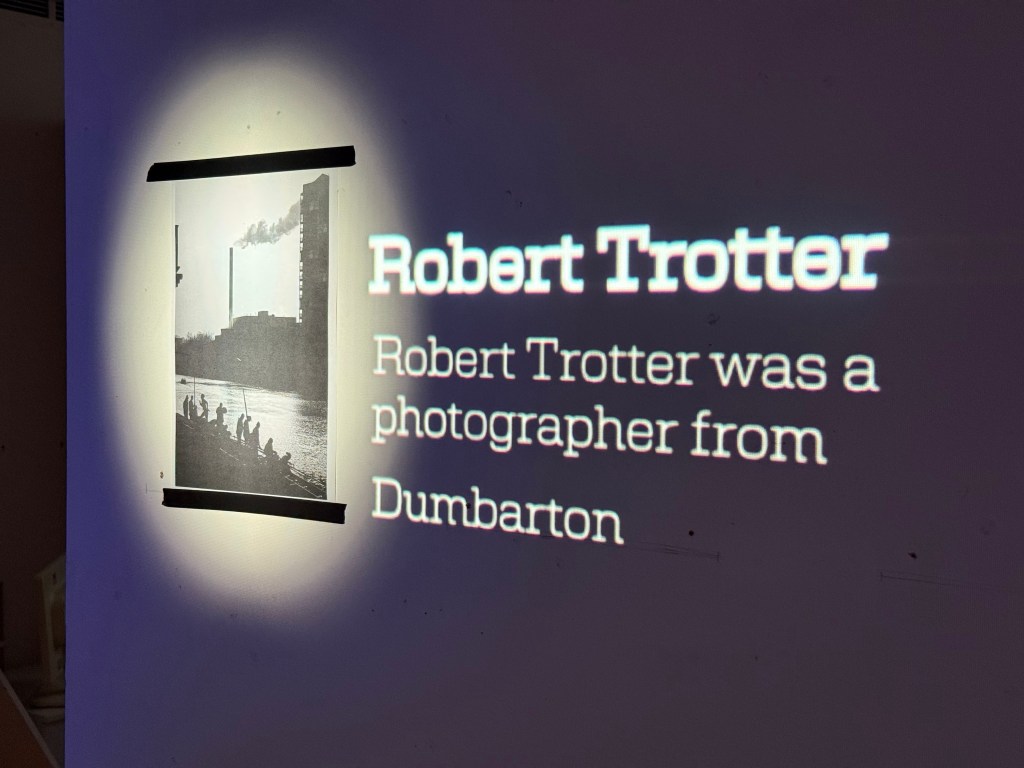
As with photography exhibitions, great consideration is always given to lighting, with spotlights used to highlight work and draw attention. But in normal exhibitions, the lighting is usually stationary spotlights. But since I am using a projector, I can replicate the look of those spotlights and have more control over the simulated lights.
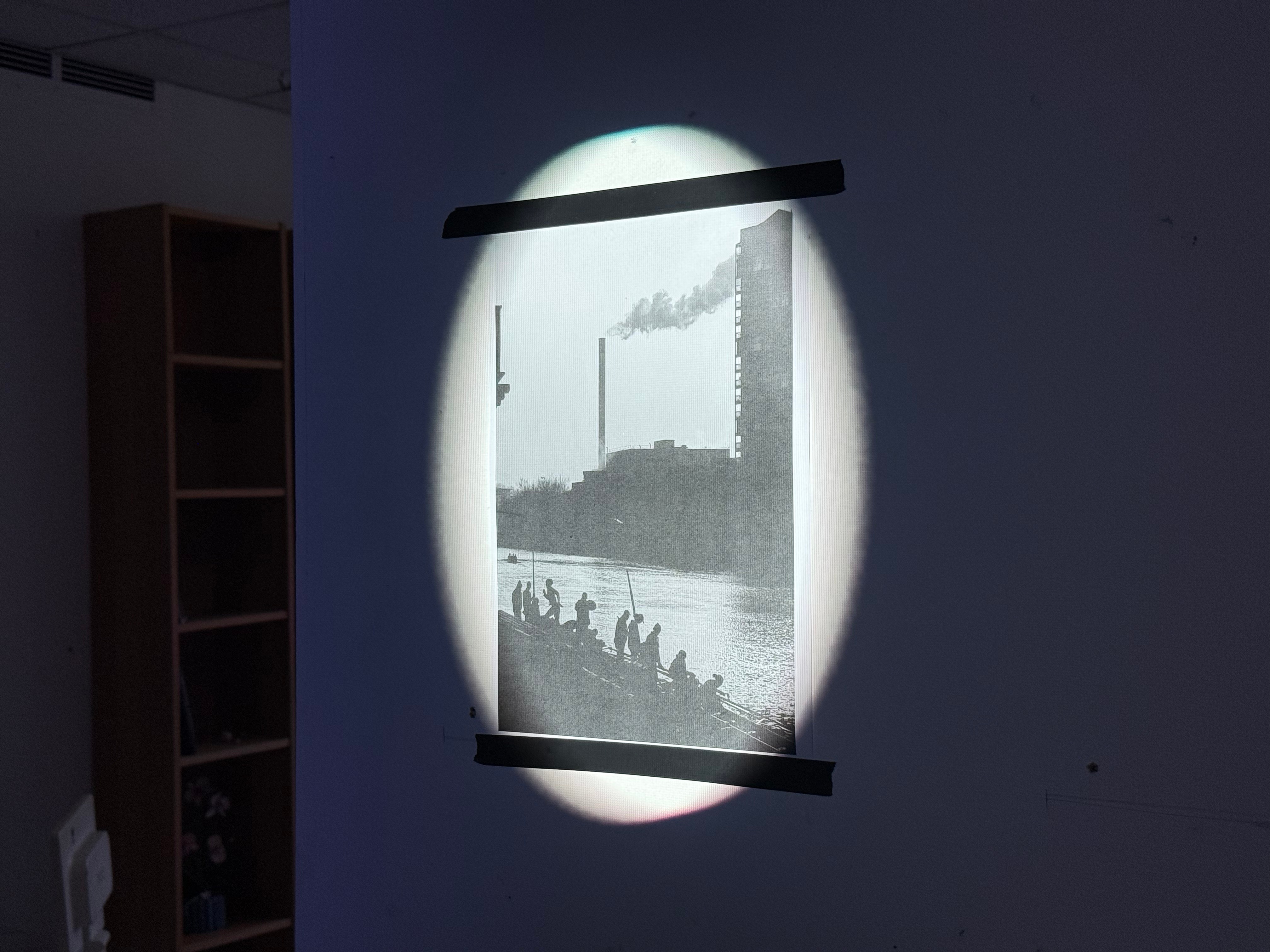
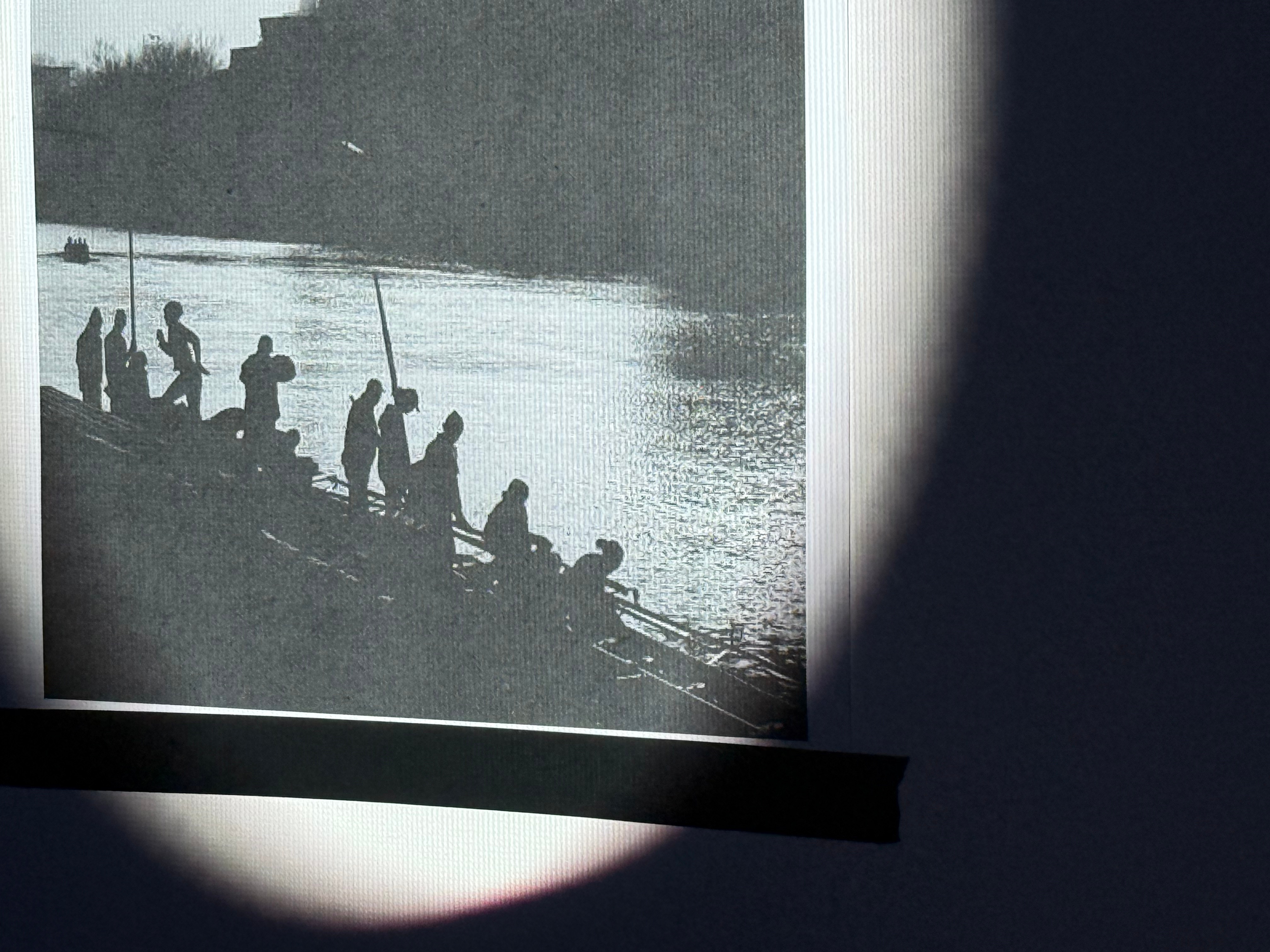
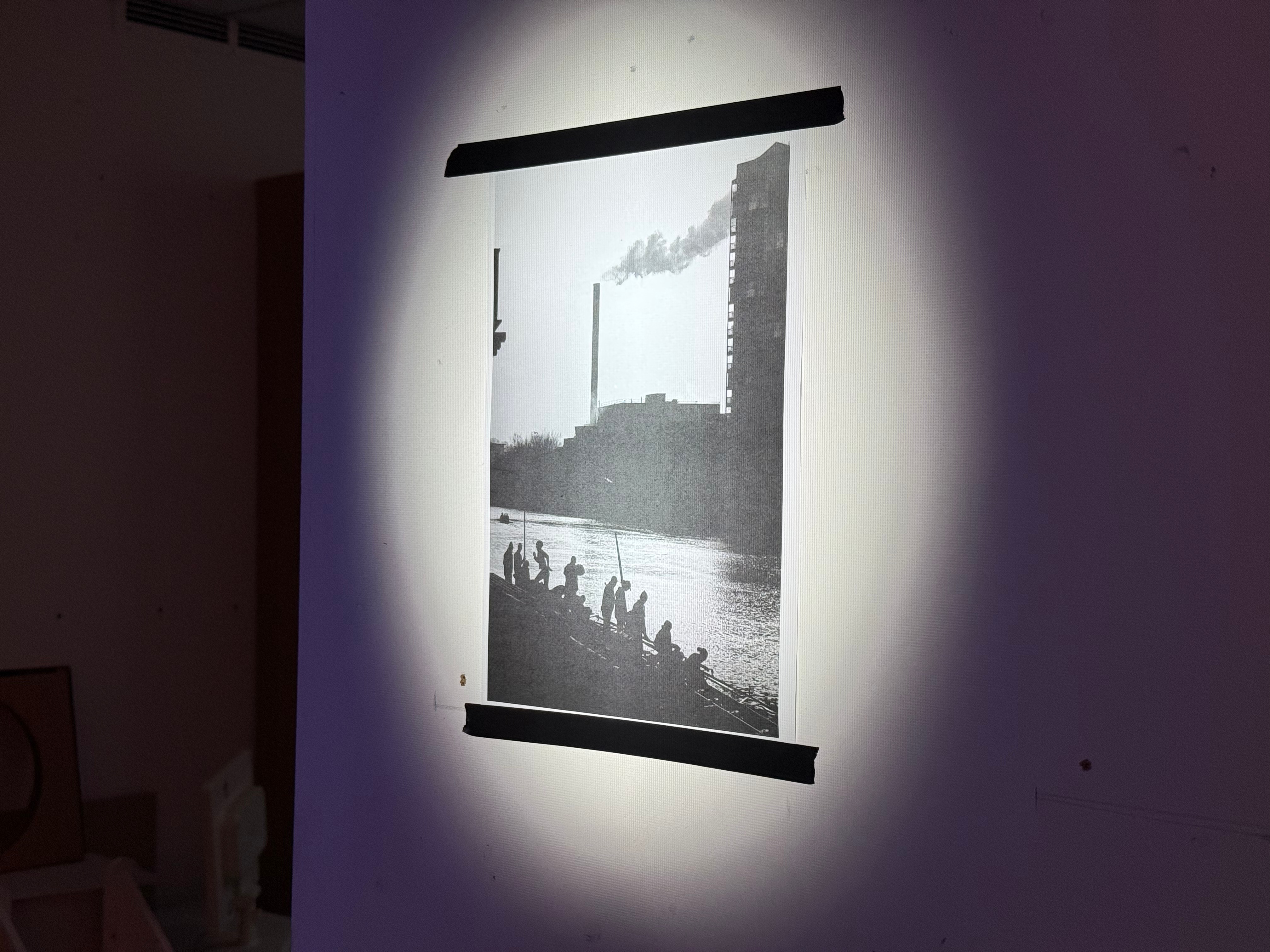
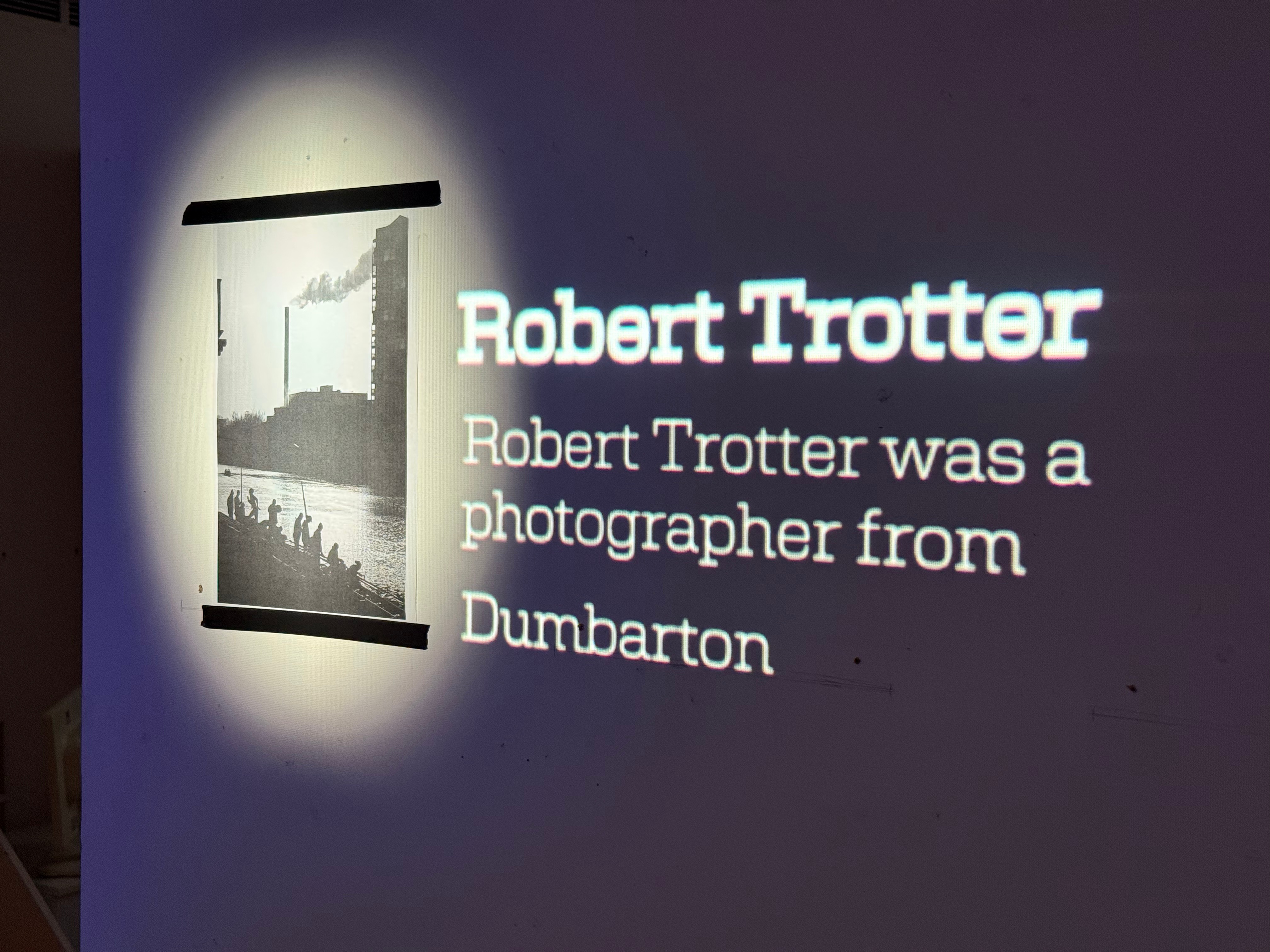
Above is a test of the fake spotlight effect; the lights will be programmed so that when each photograph is being explored, it will have the “spotlight”.
Plan of Action:
I find myself getting stuck for no reason. I know what to do, I have an idea of how to do it, and I know that the most I’ll learn is through doing it, trial and error, but I find myself overthinking or overplanning things again. Scared to take the wrong step, I take no step.
GSA Archives:
Robert Trotter:
https://en.wikipedia.org/wiki/Robert_Trotter
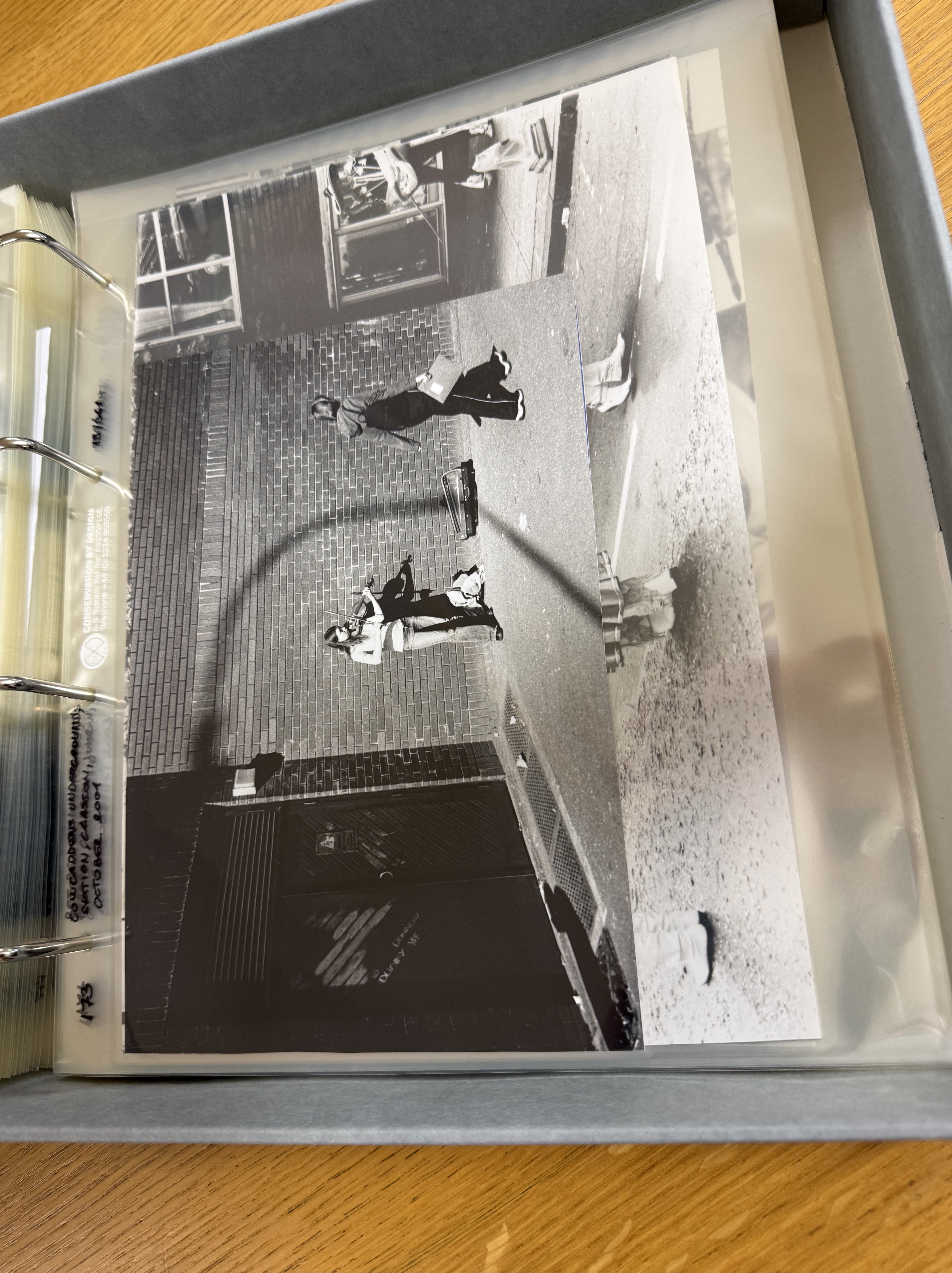
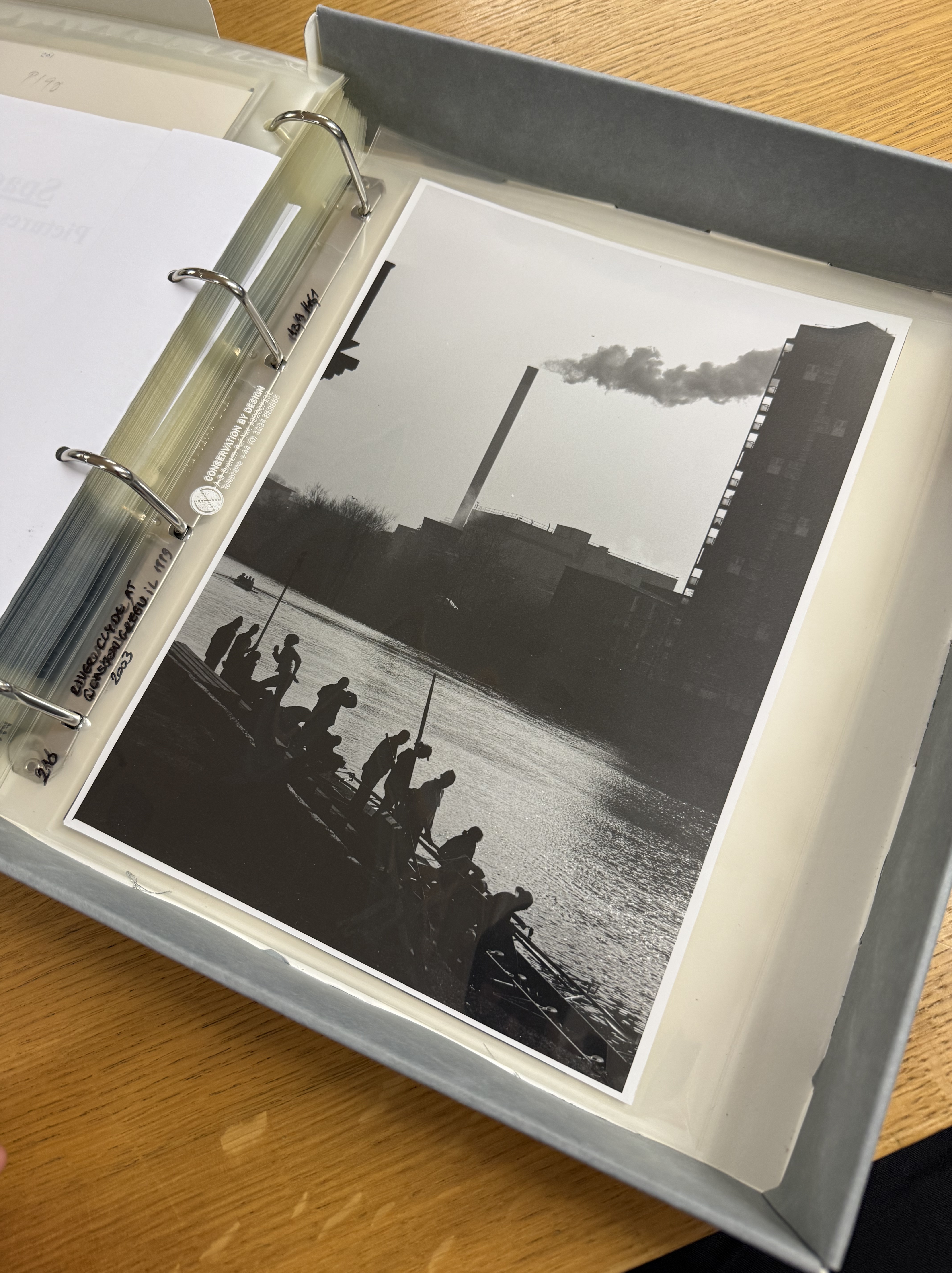
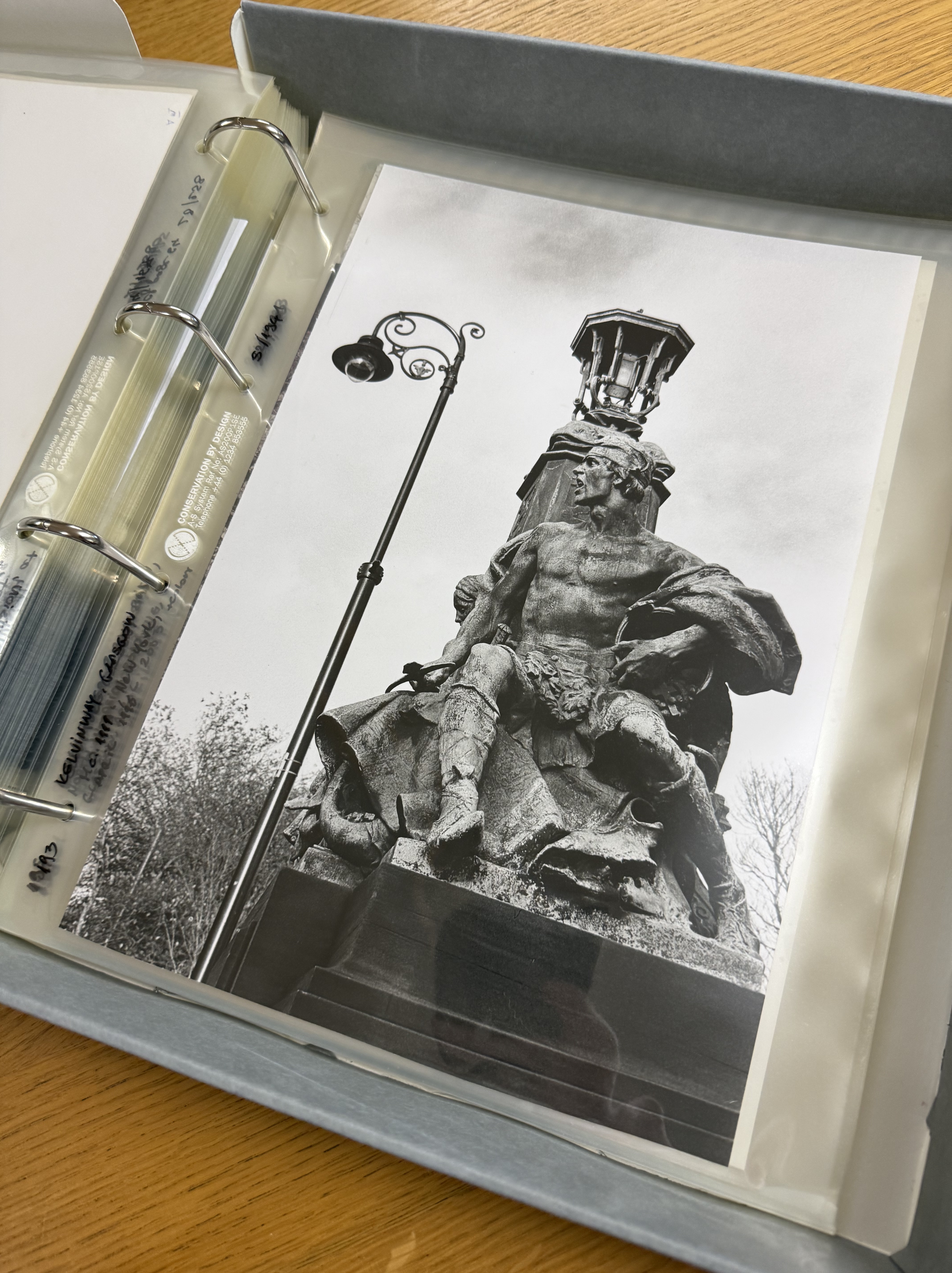
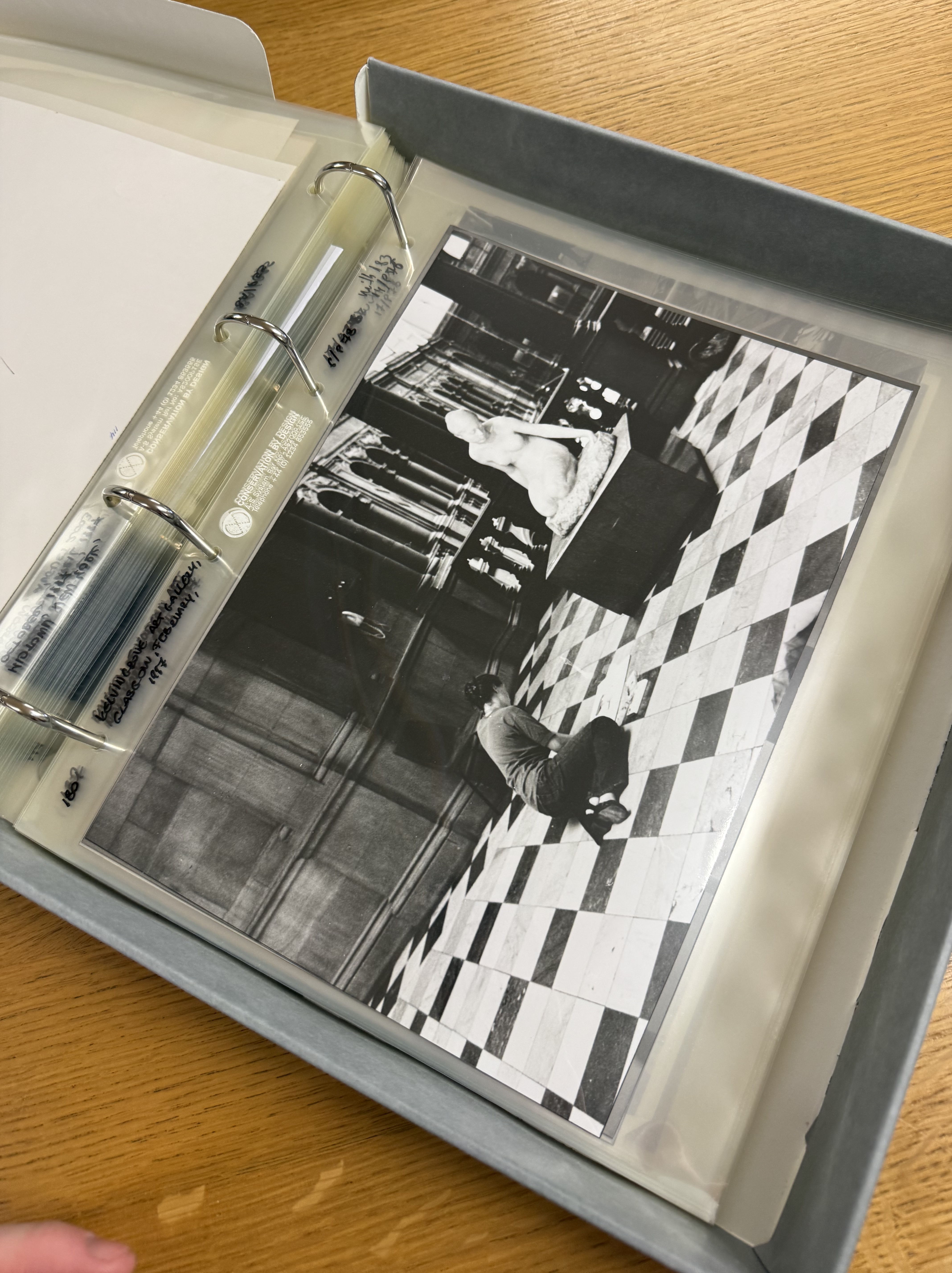
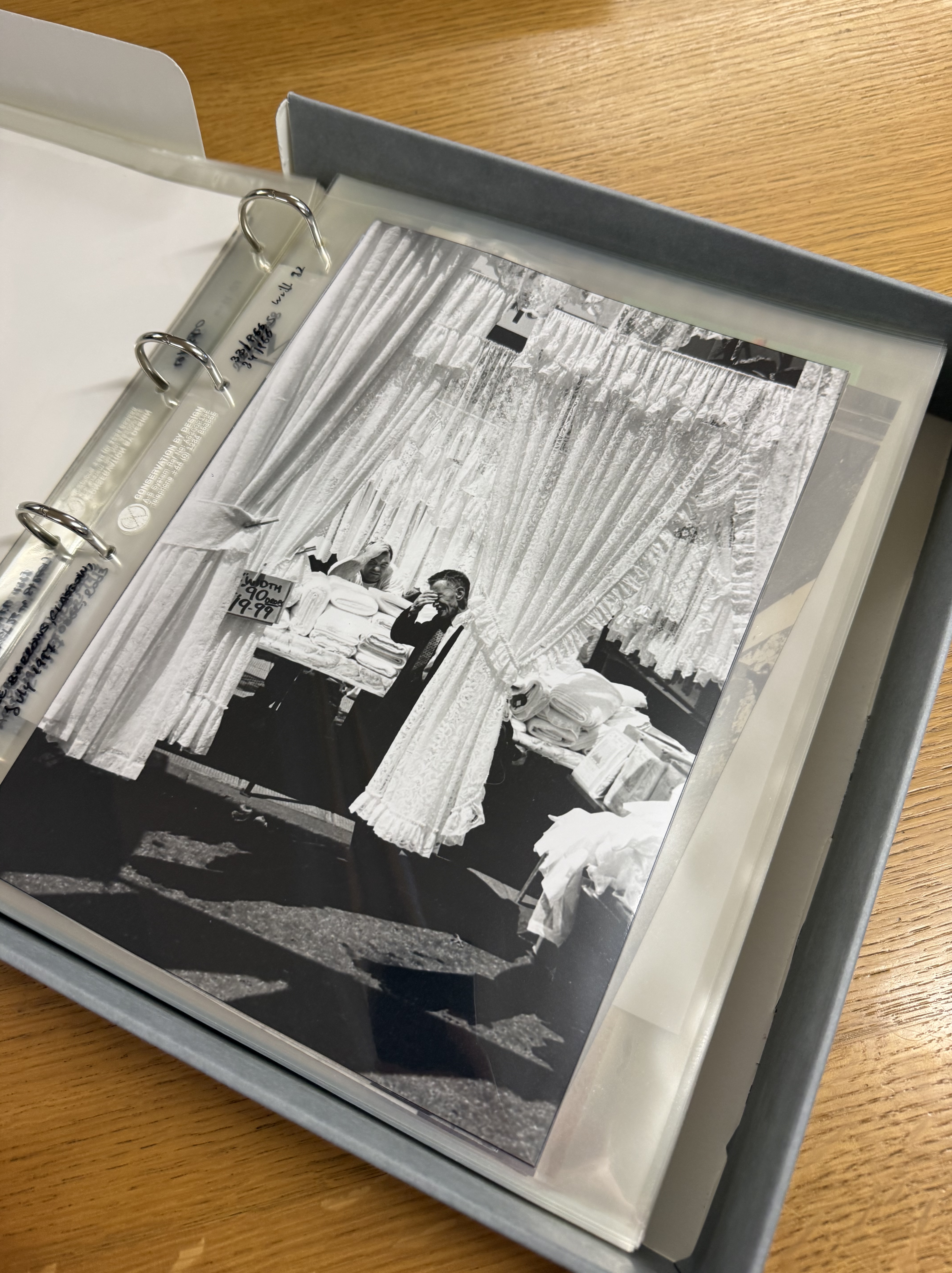
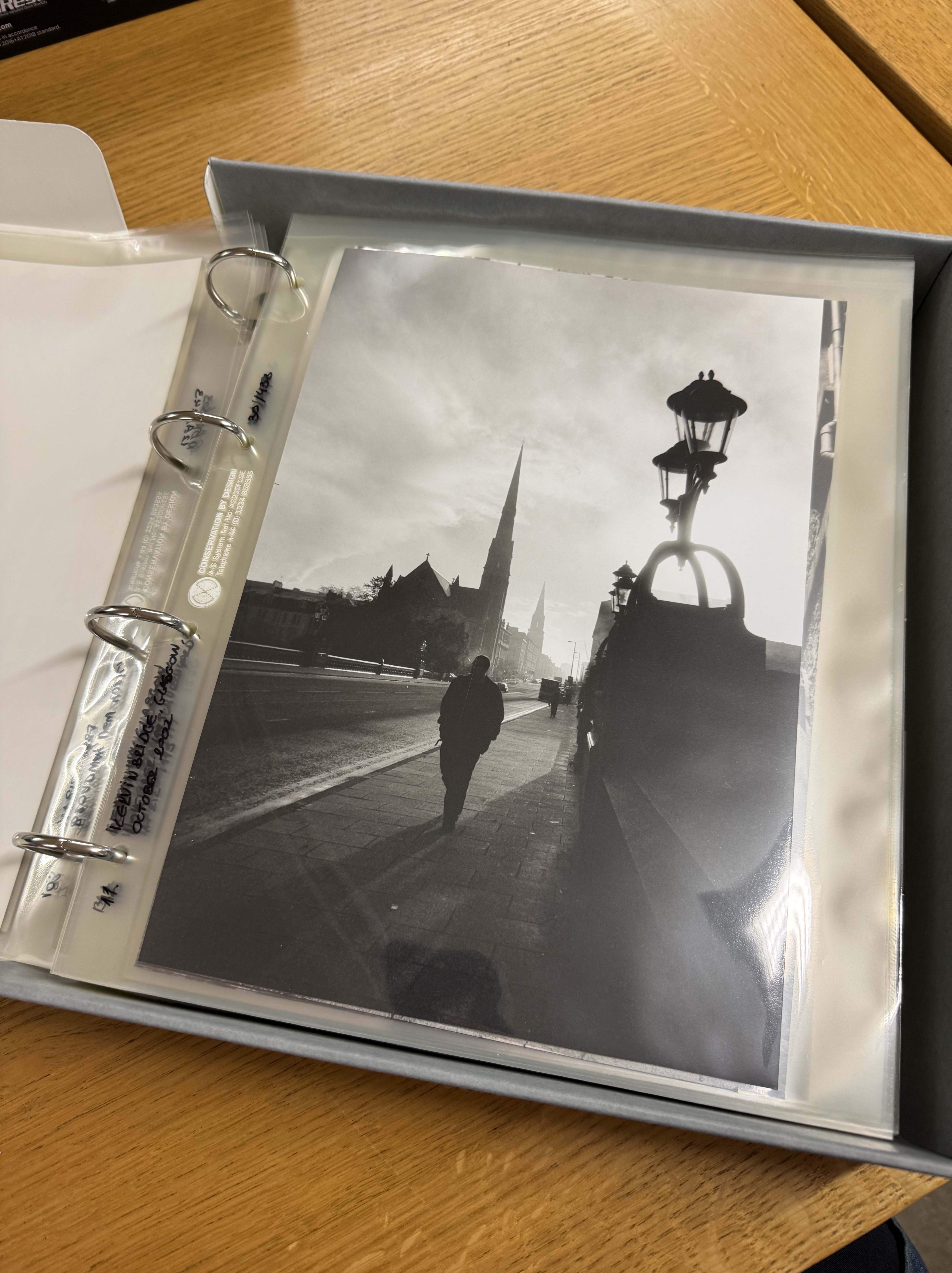
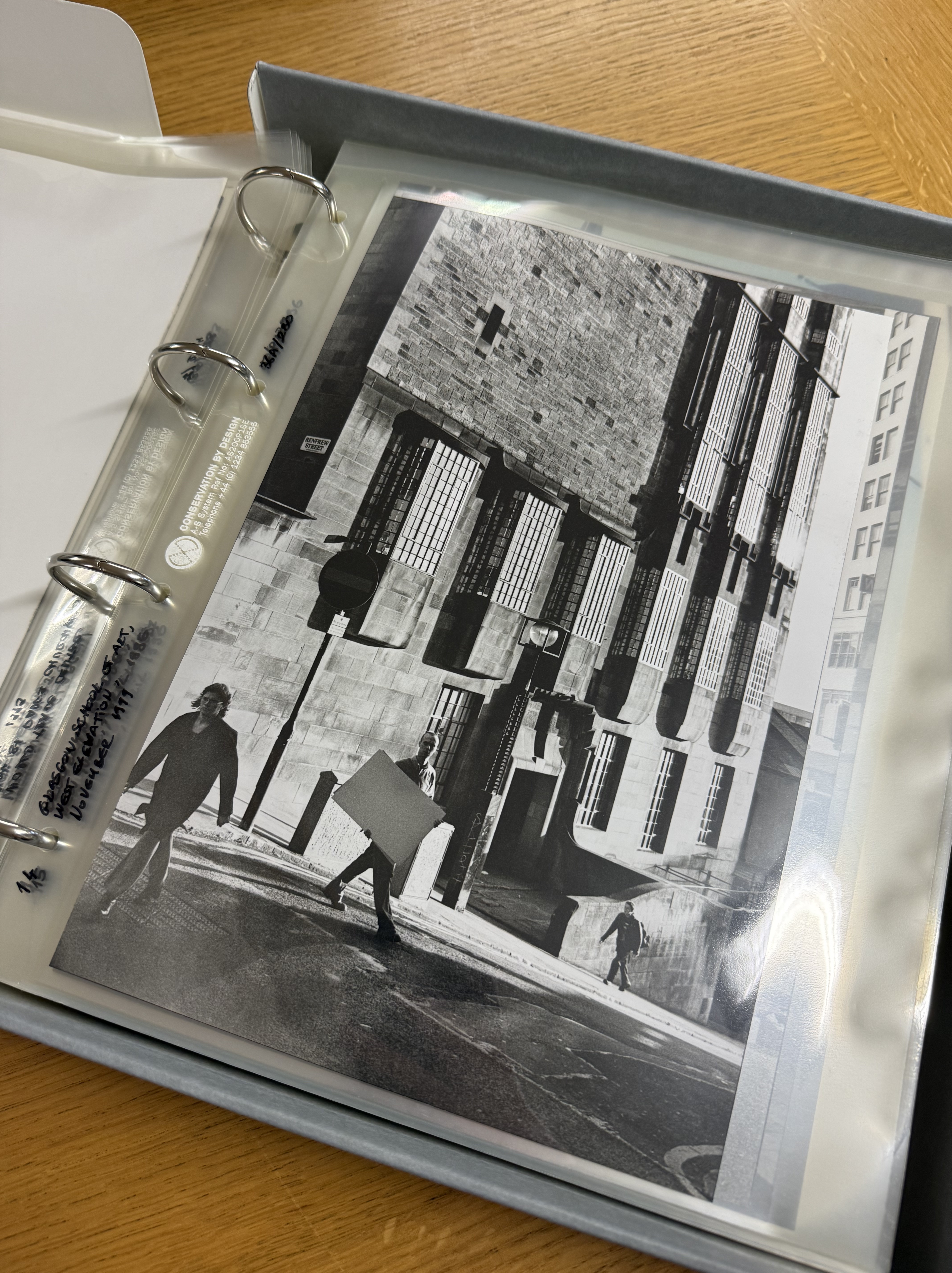
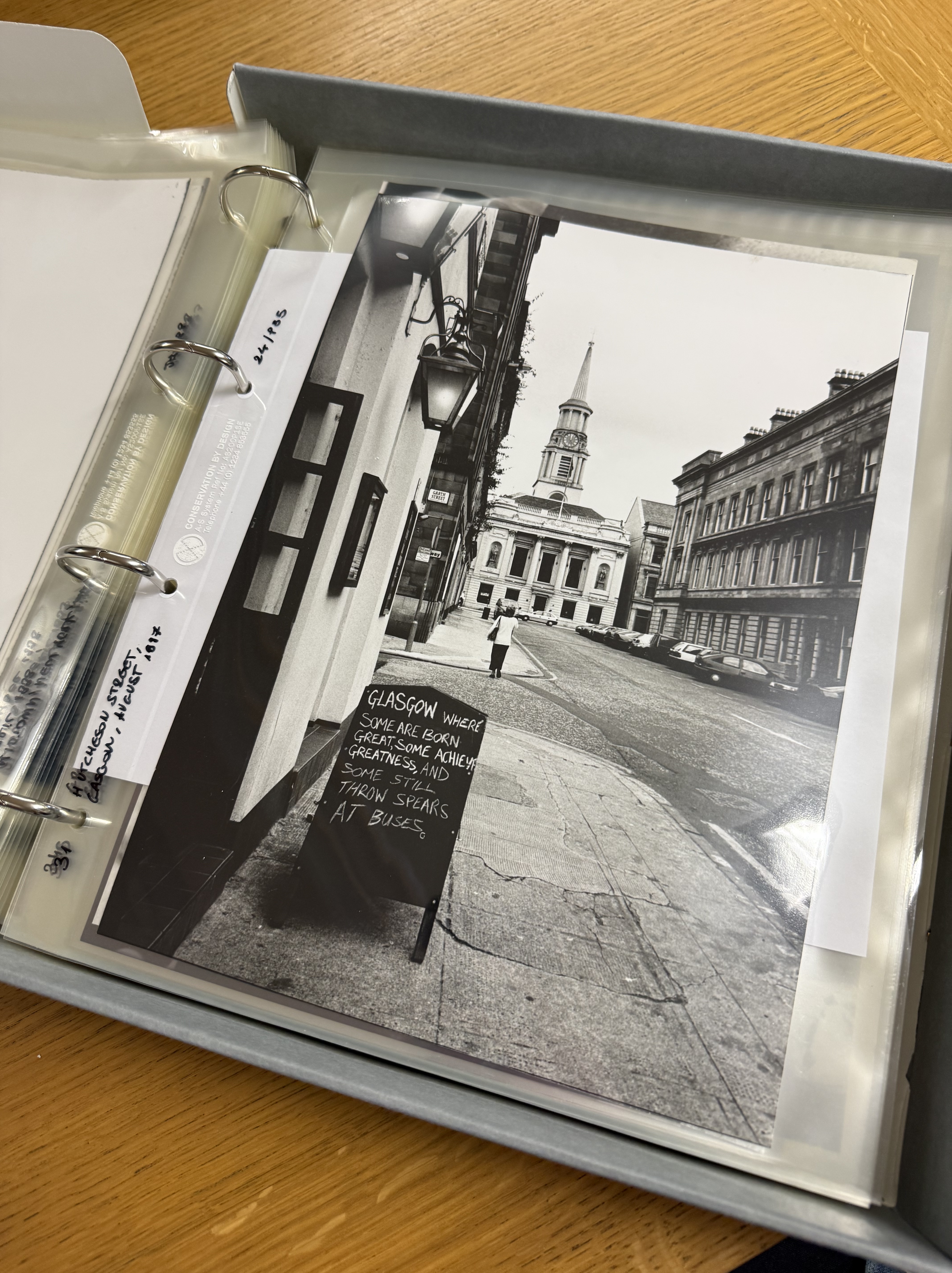
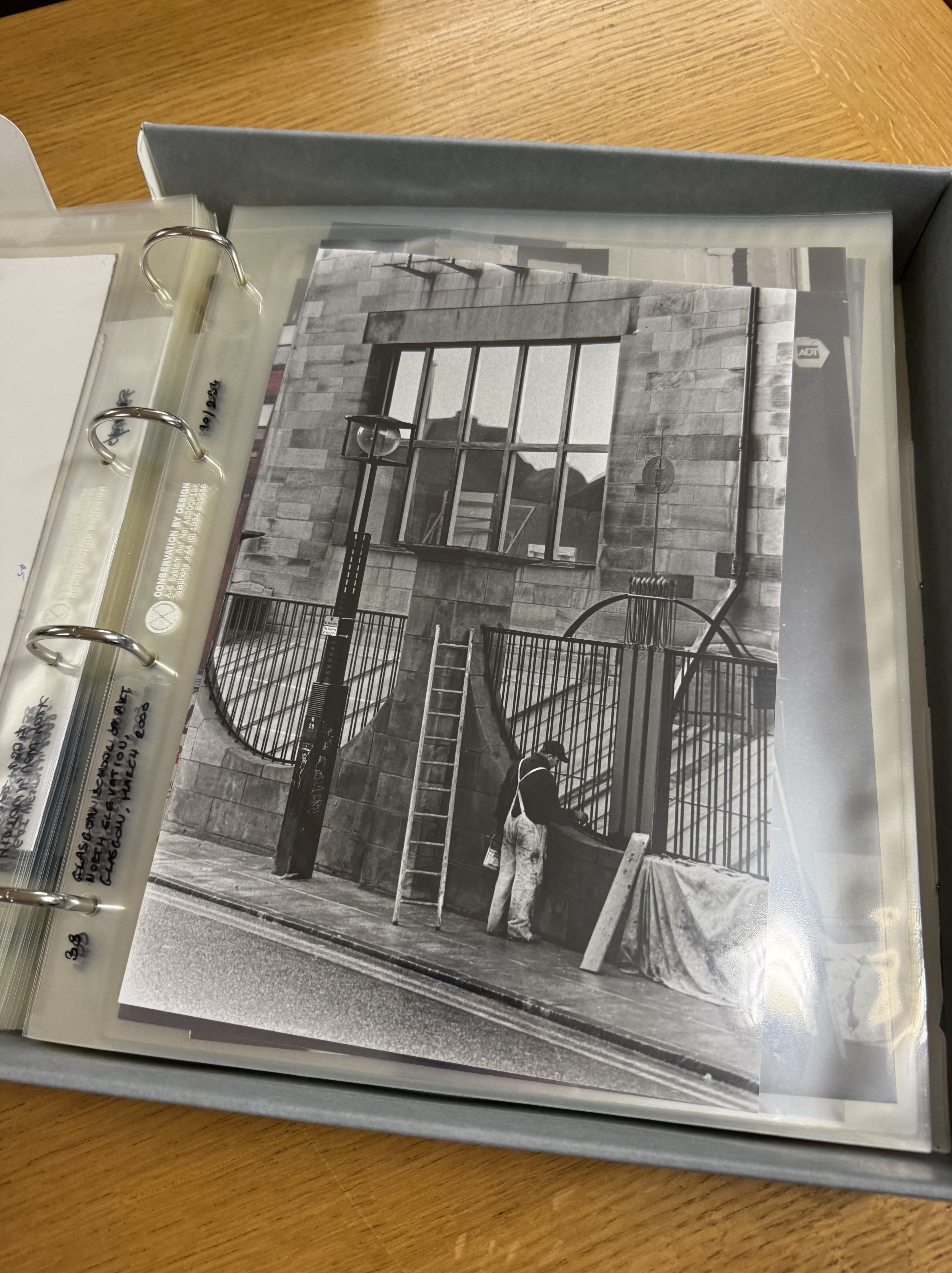
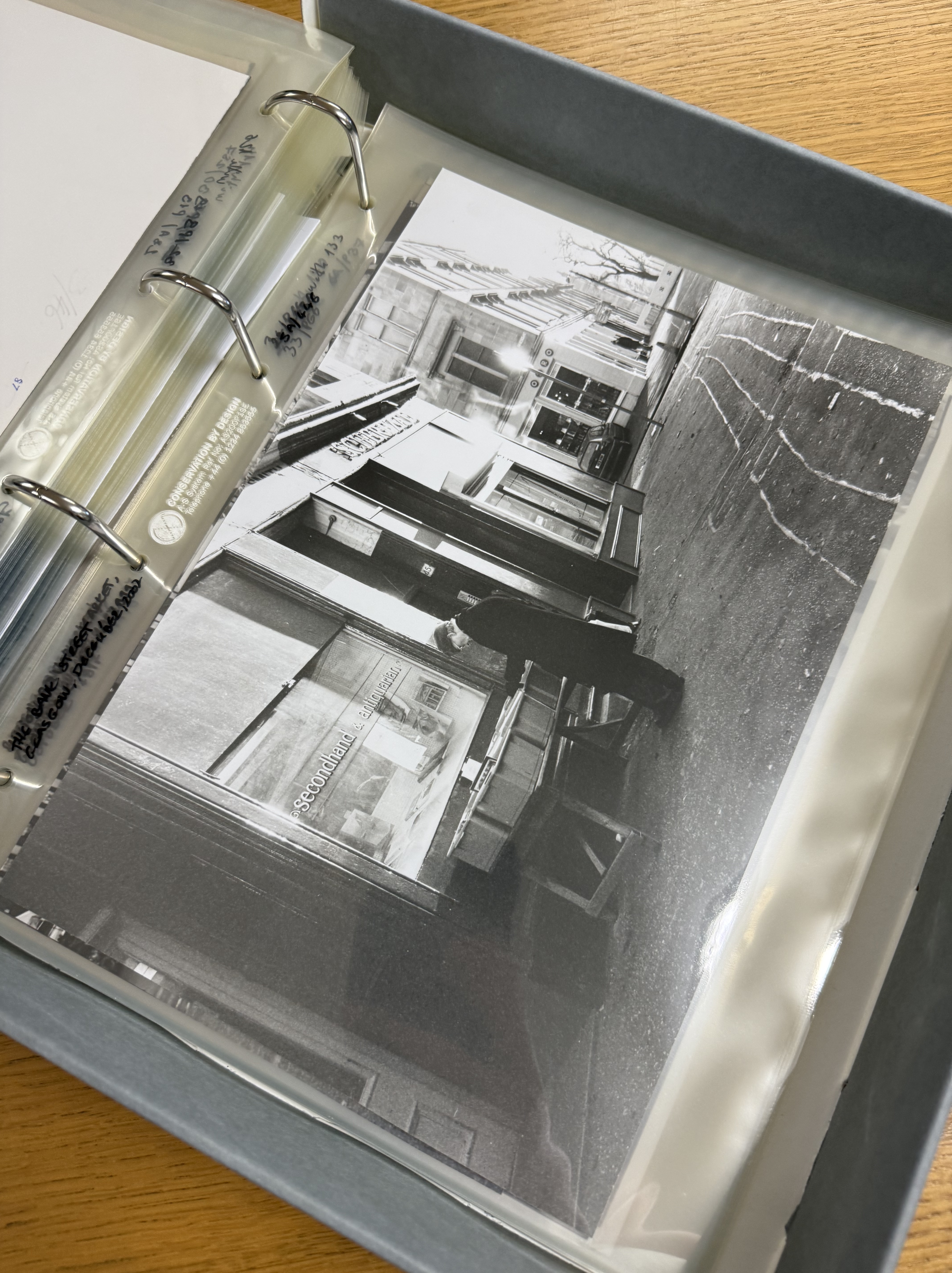
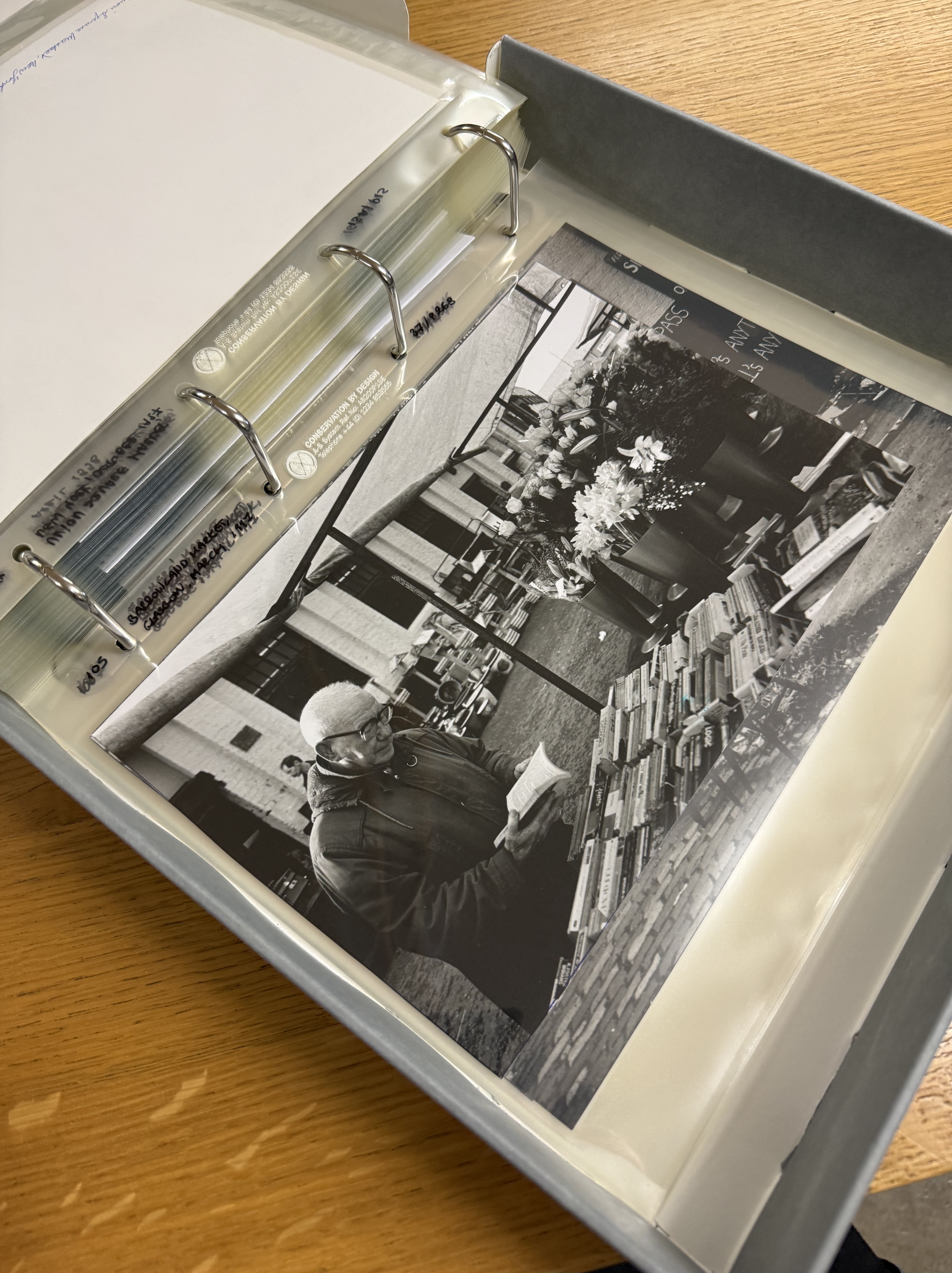
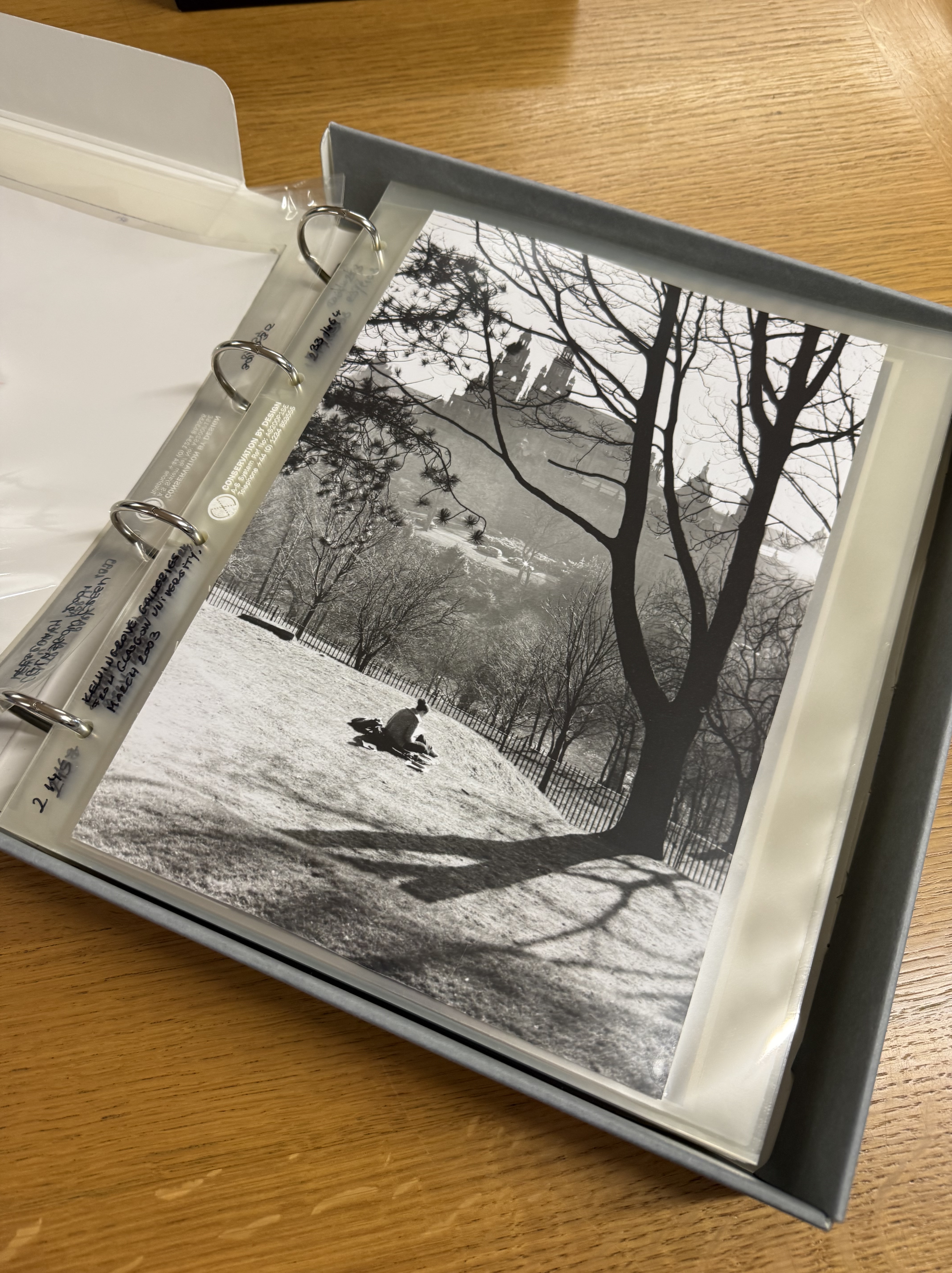
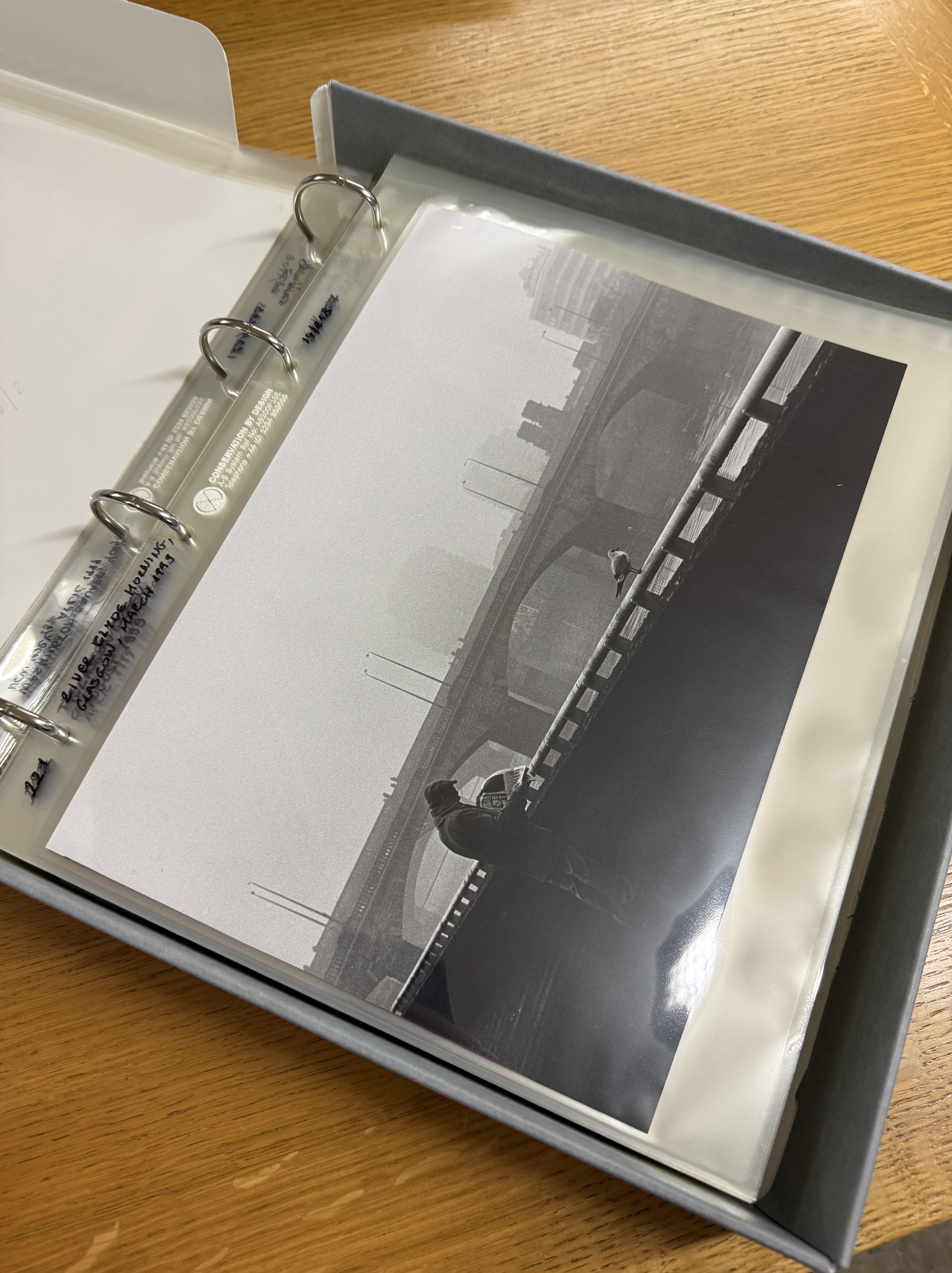
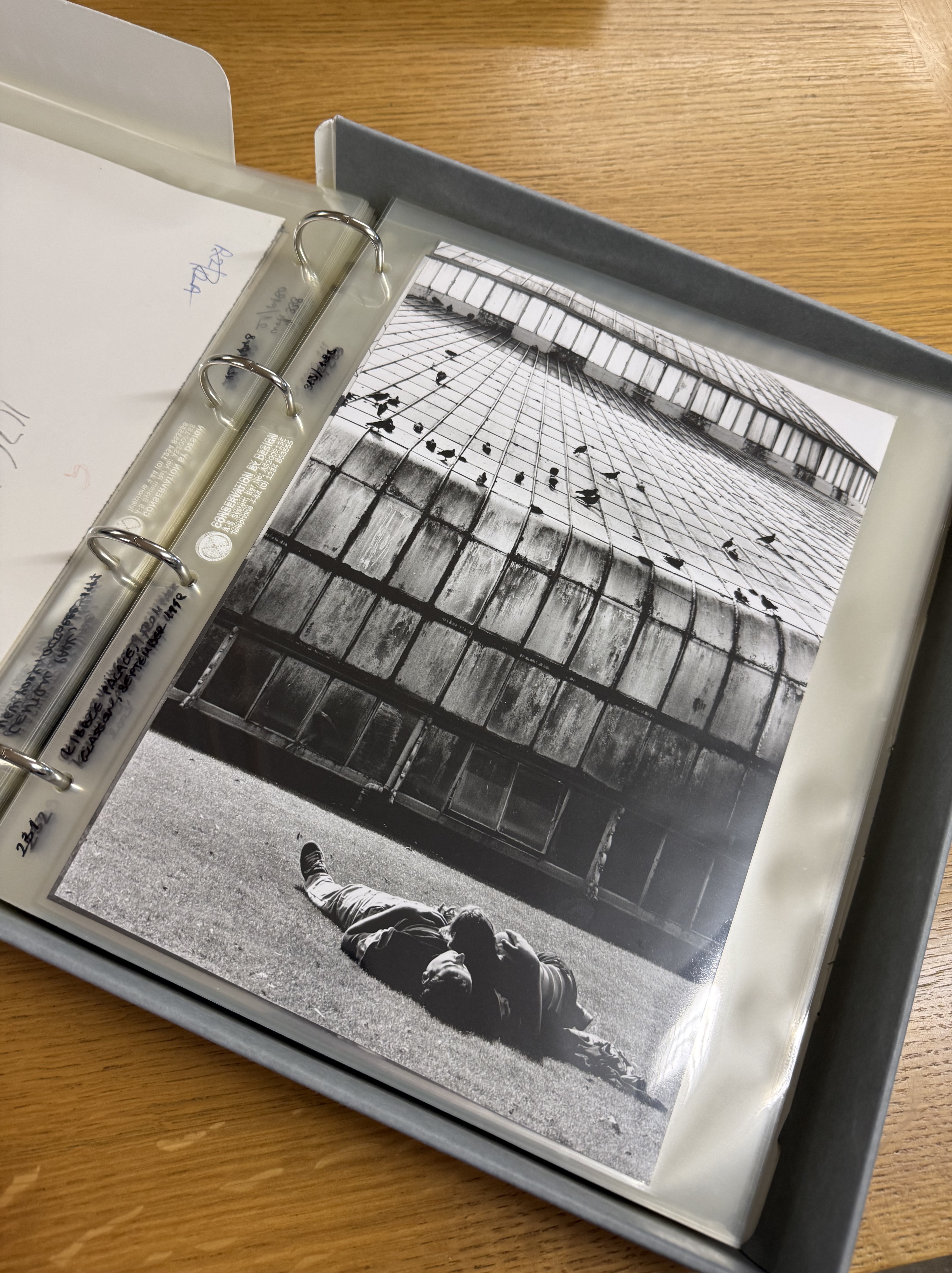
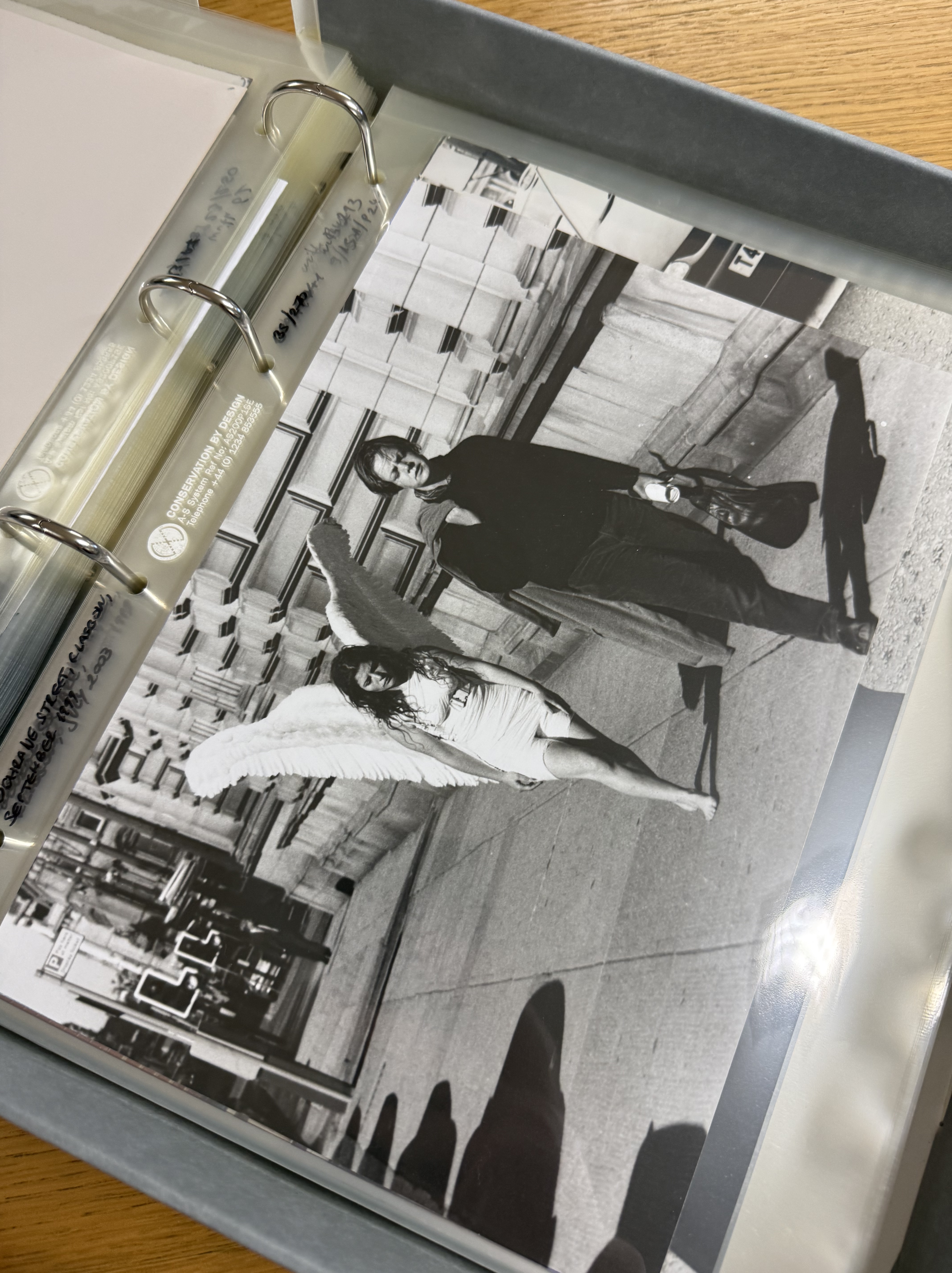
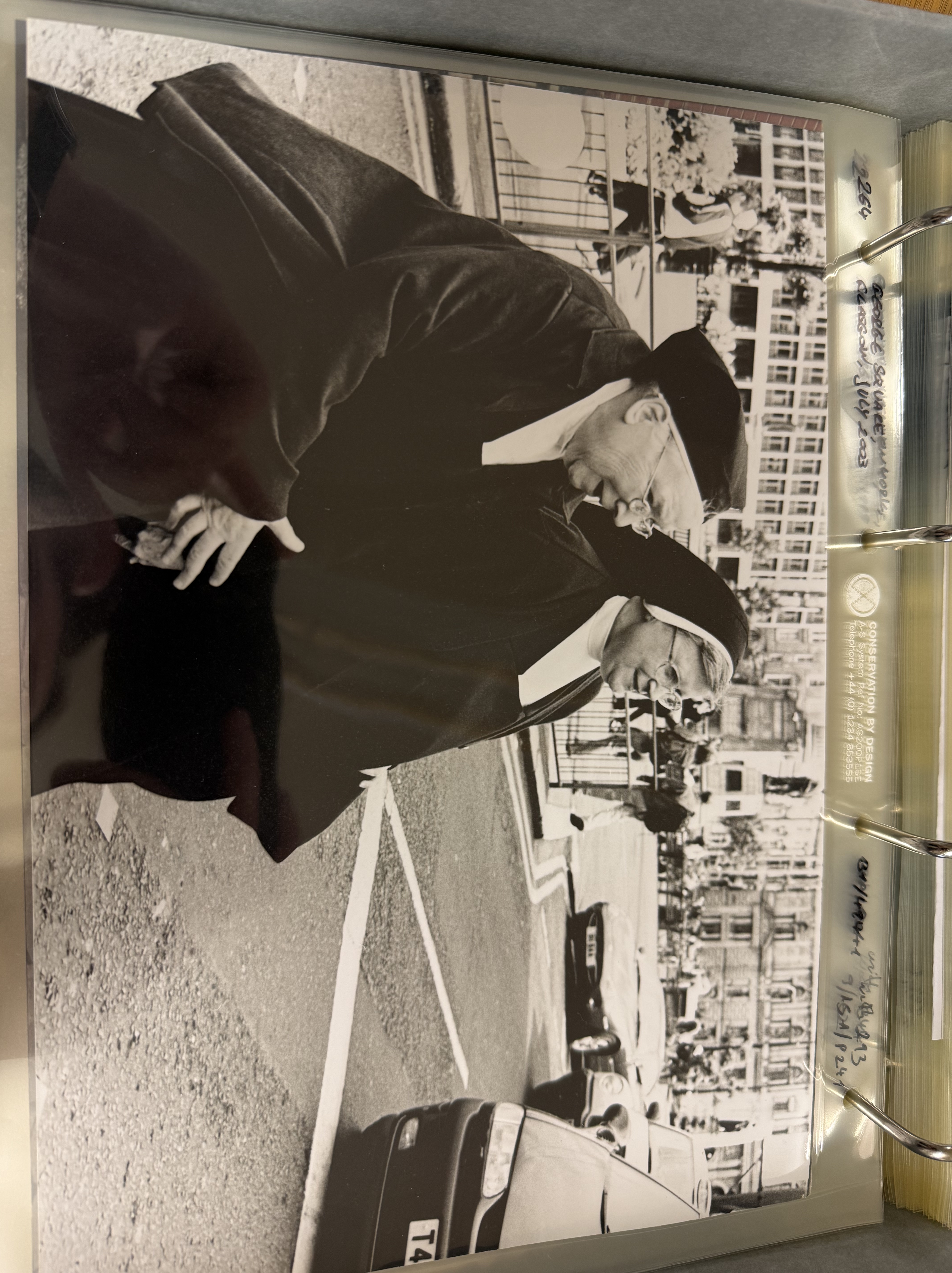
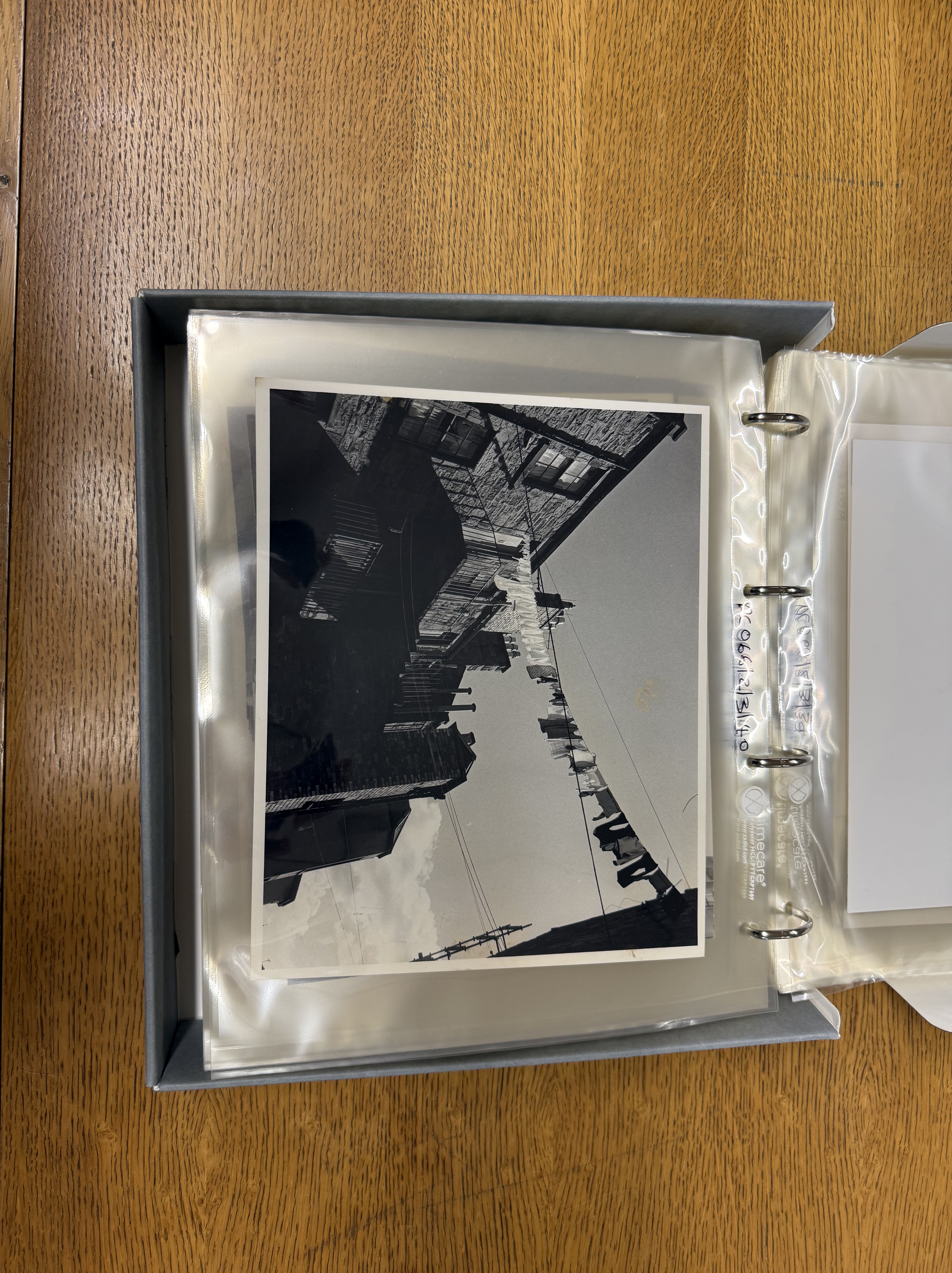
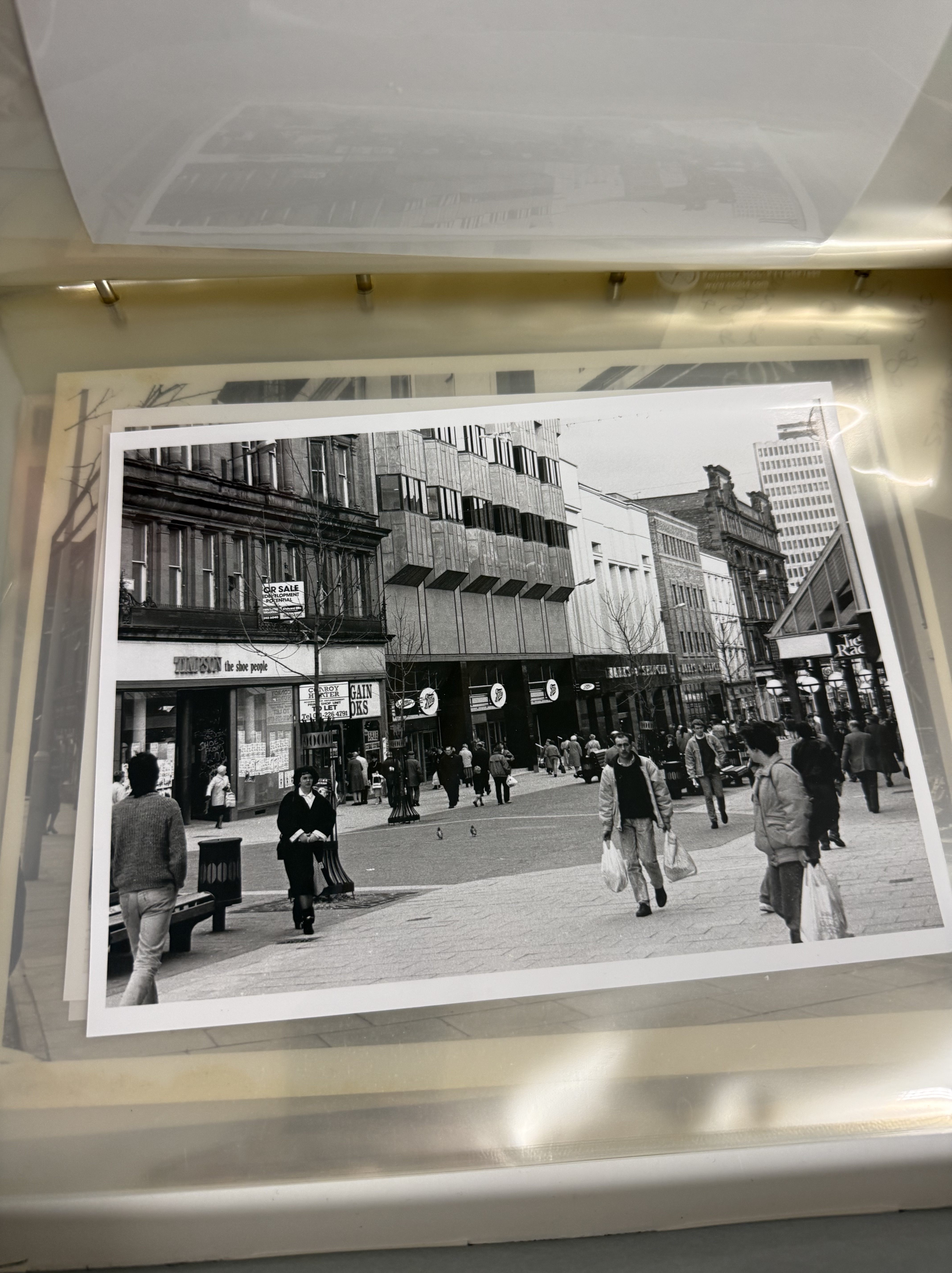
While in the archives, I had a chance to explore Robert Trotter’s work. The archives have the full collection of 300 pictures from his Sing the City collection, spanning Glasgow and New York. I focused mainly on the photography from Glasgow for the piece, and I will be in Glasgow at the Glasgow School of Art. Maybe if I do a version about New York, I can include his New York photography.
George Oliver Slides:
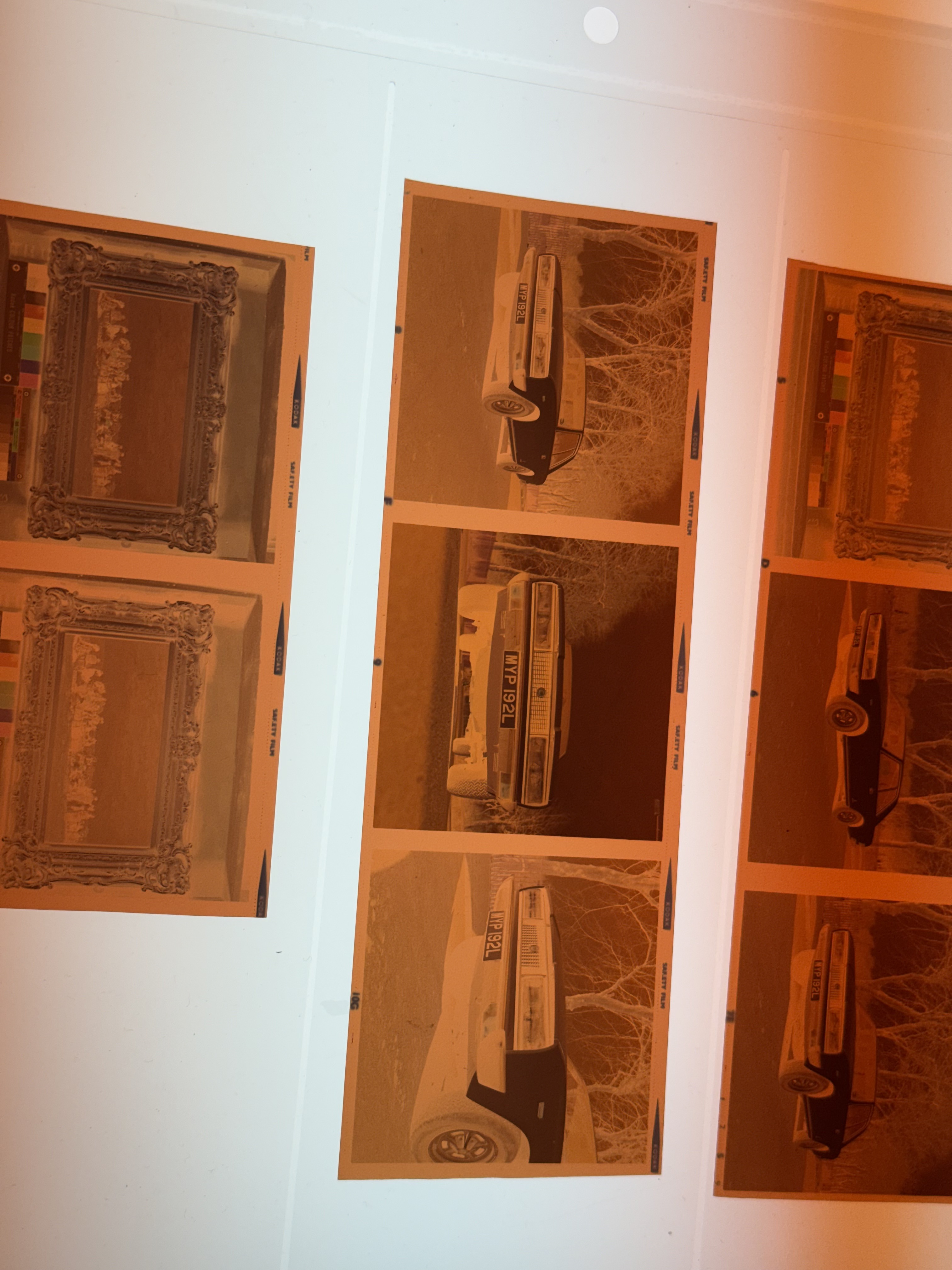
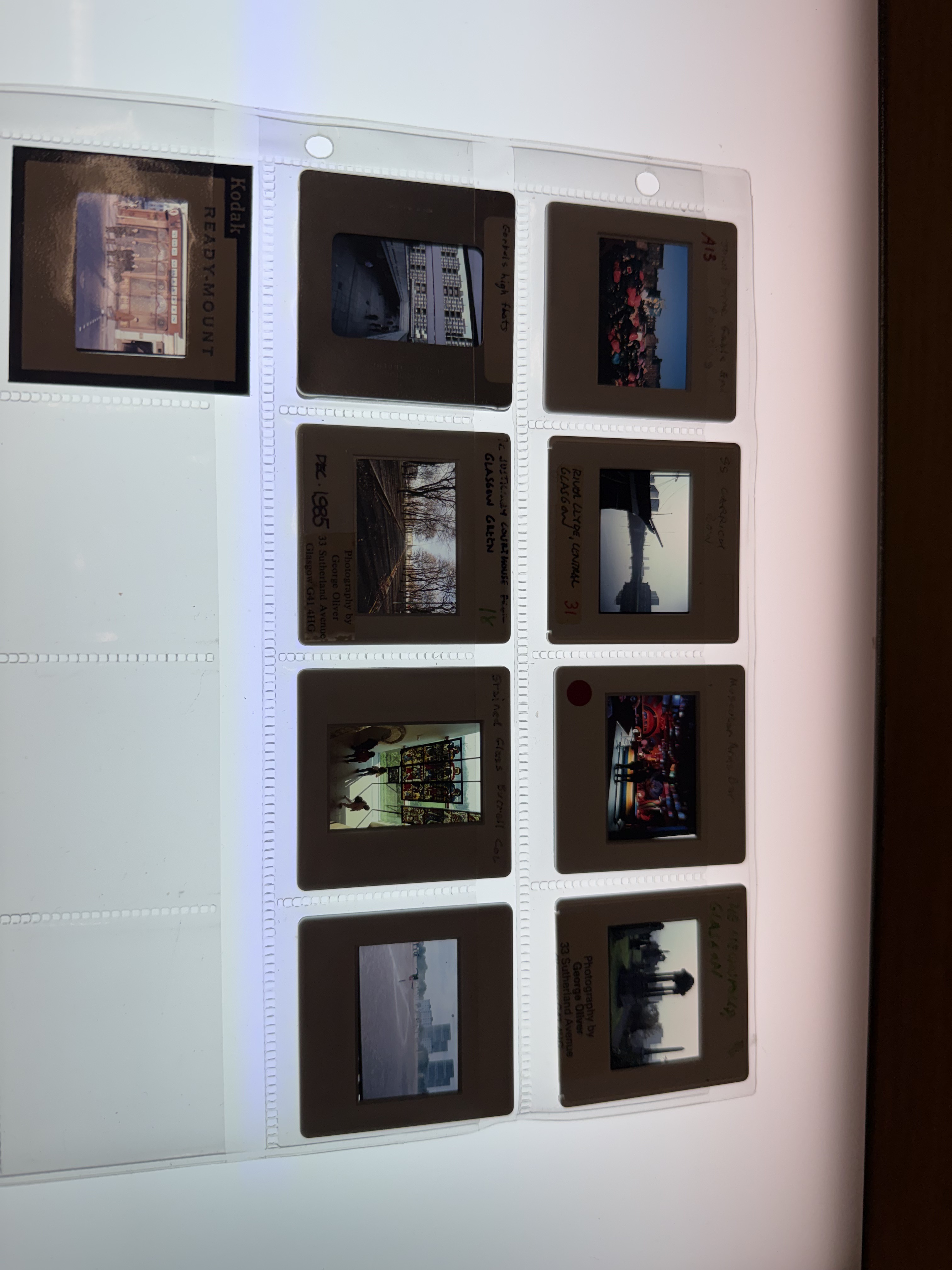
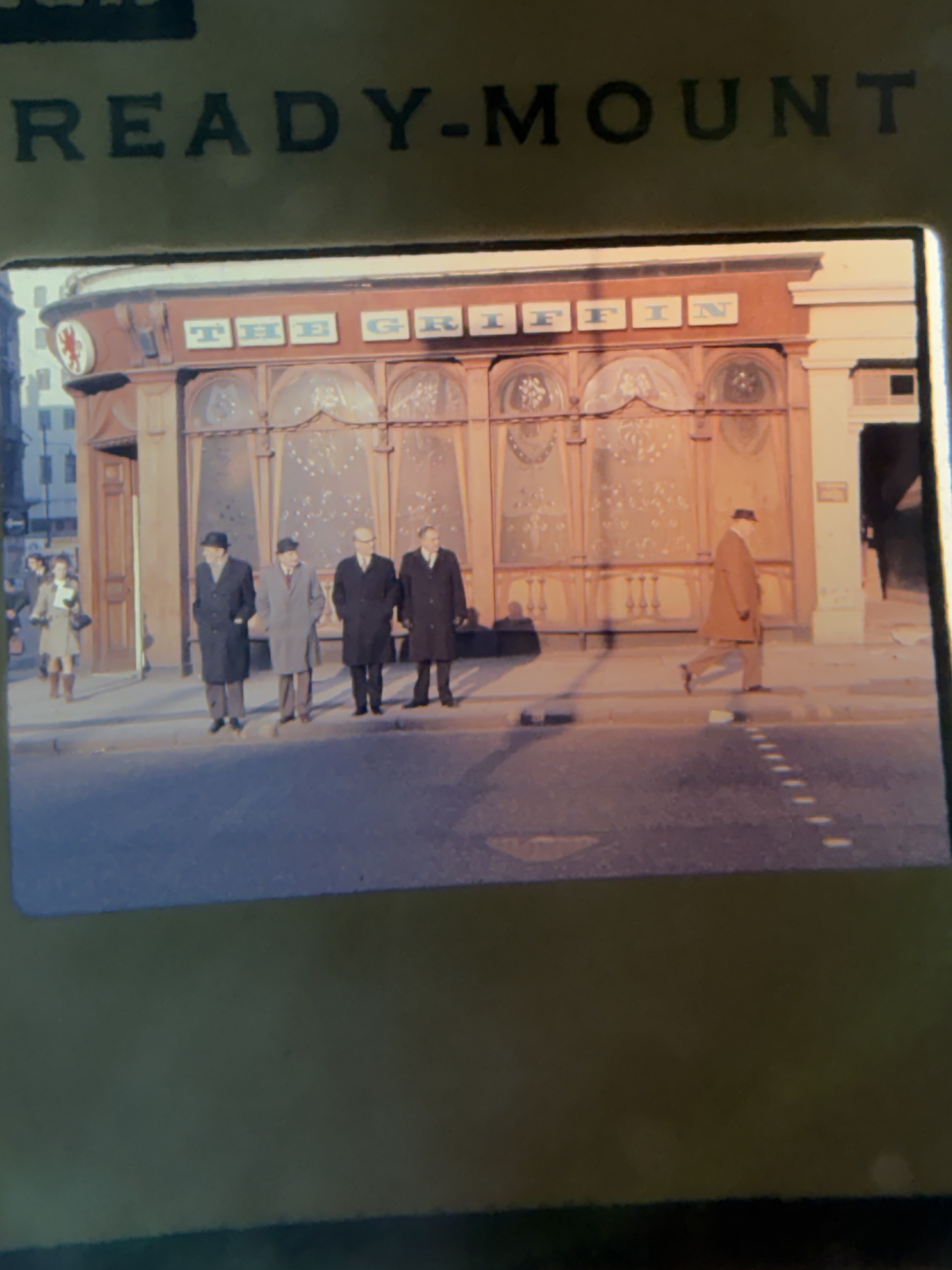
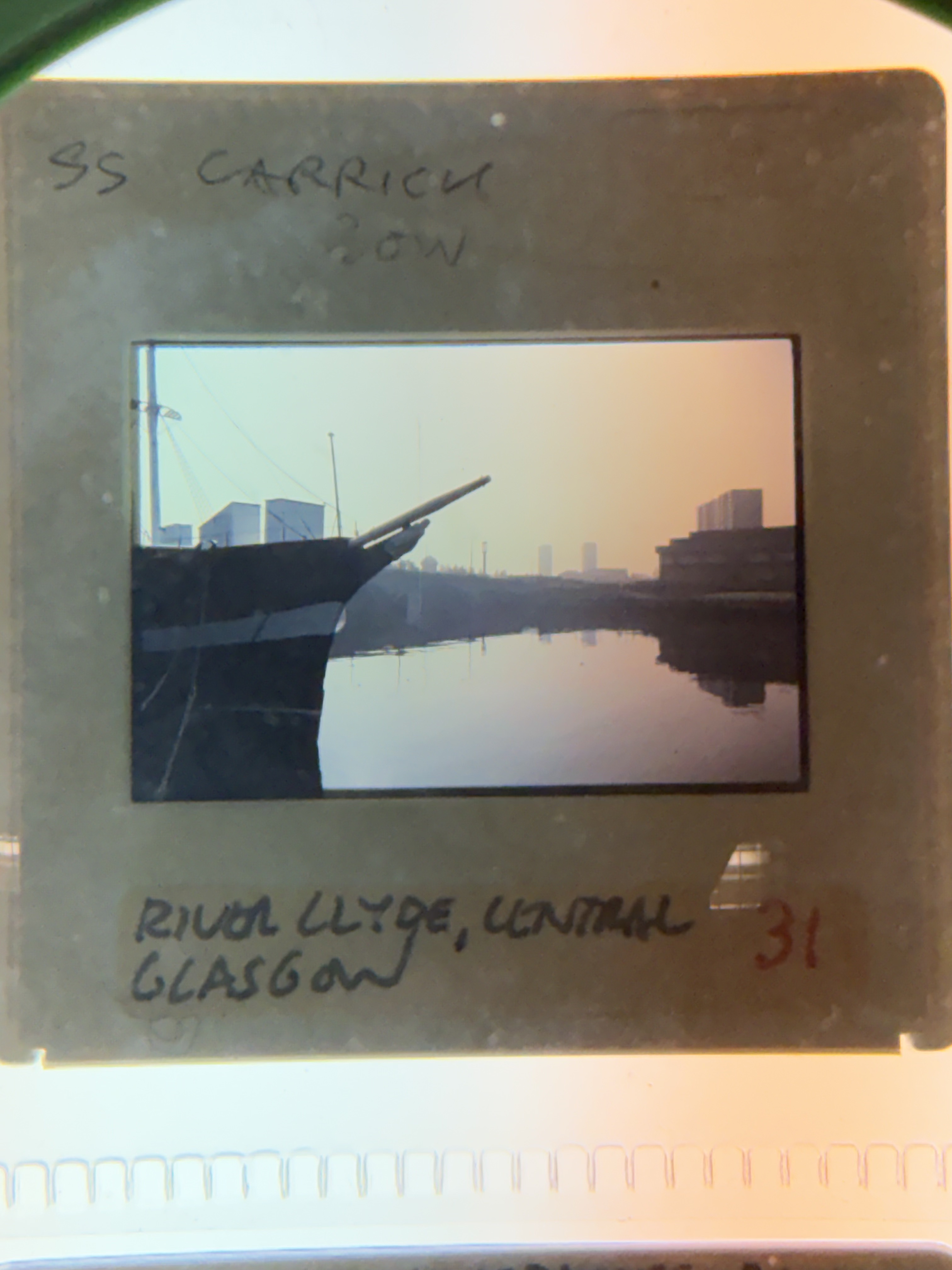
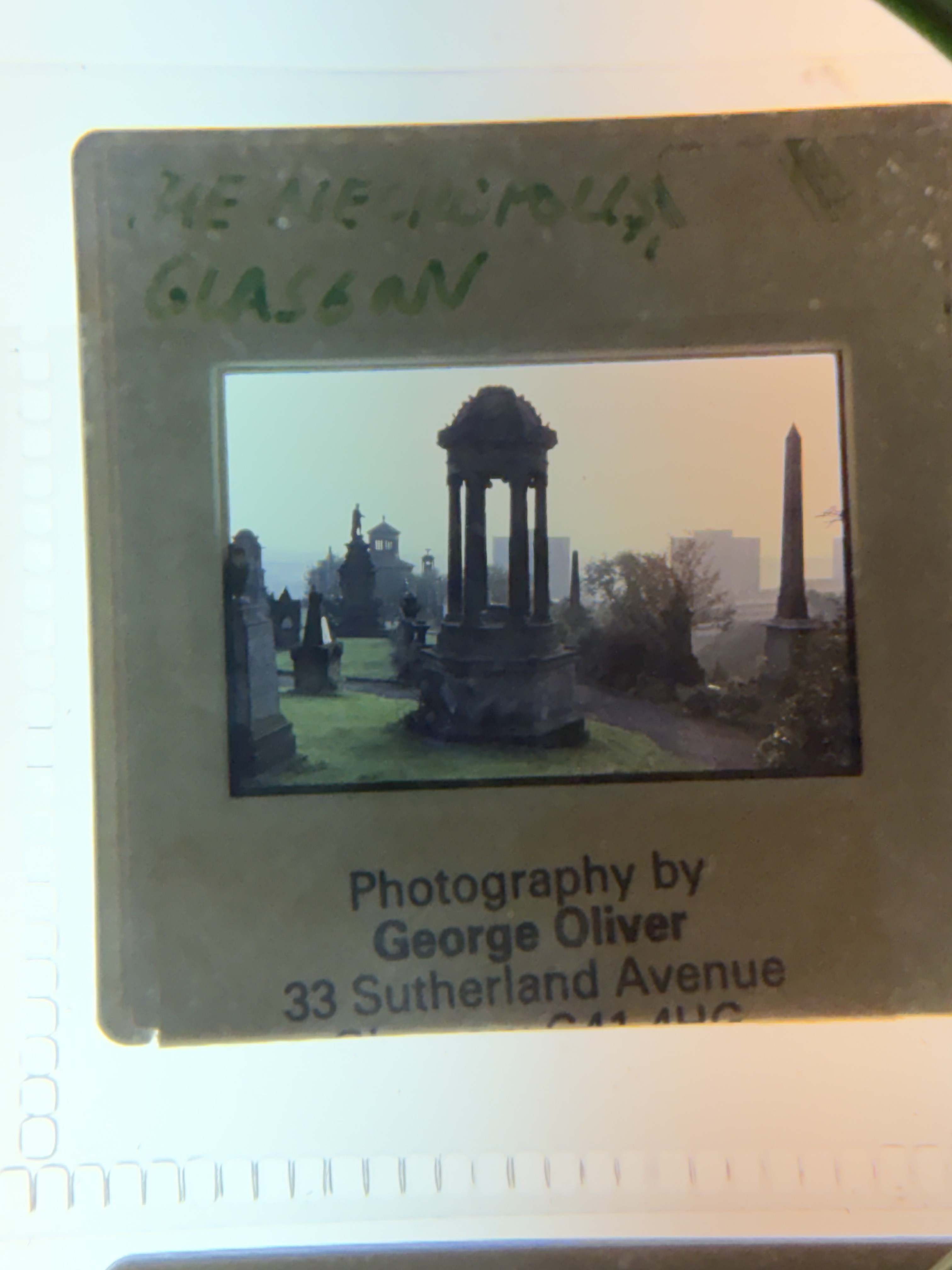
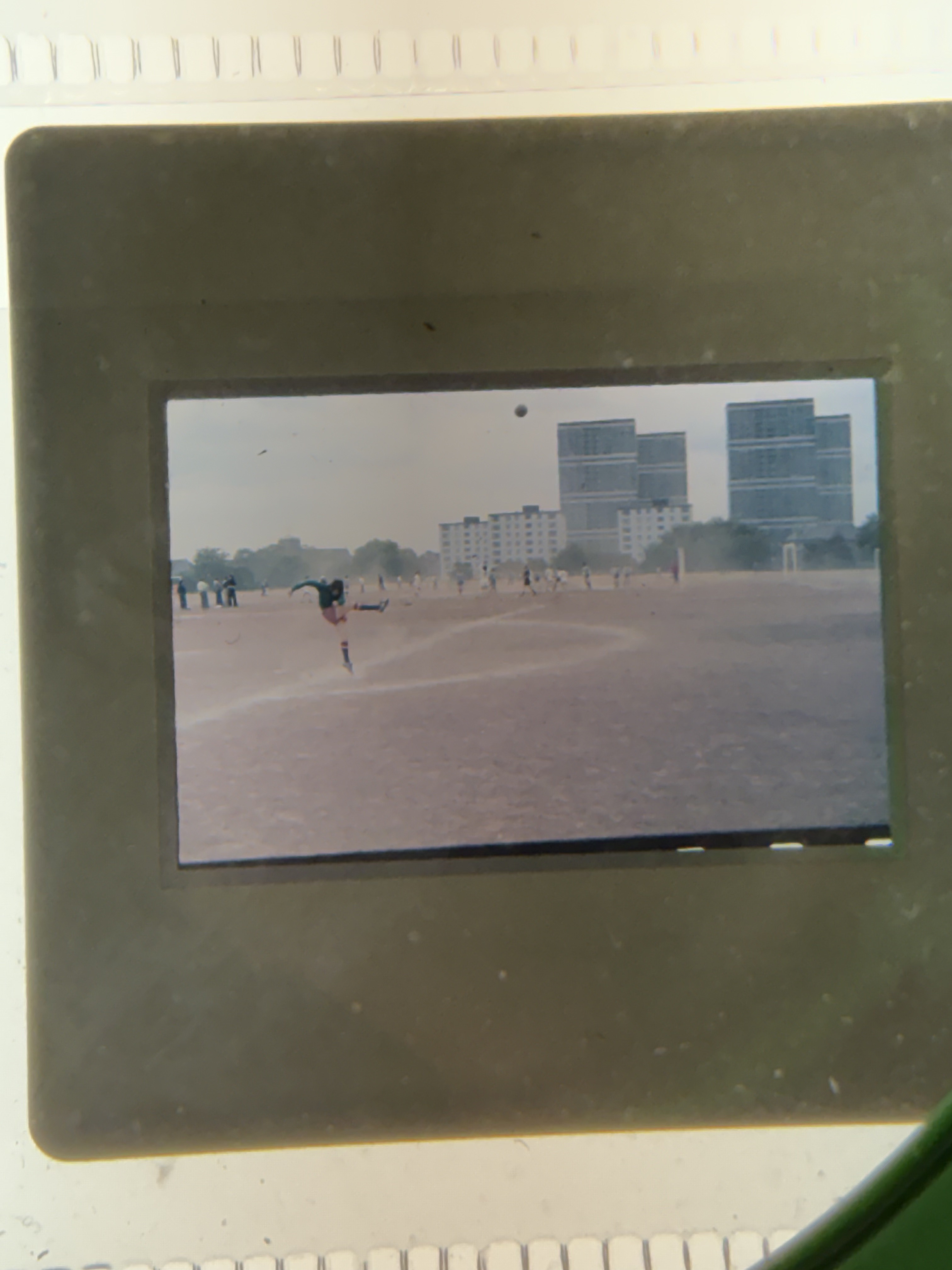
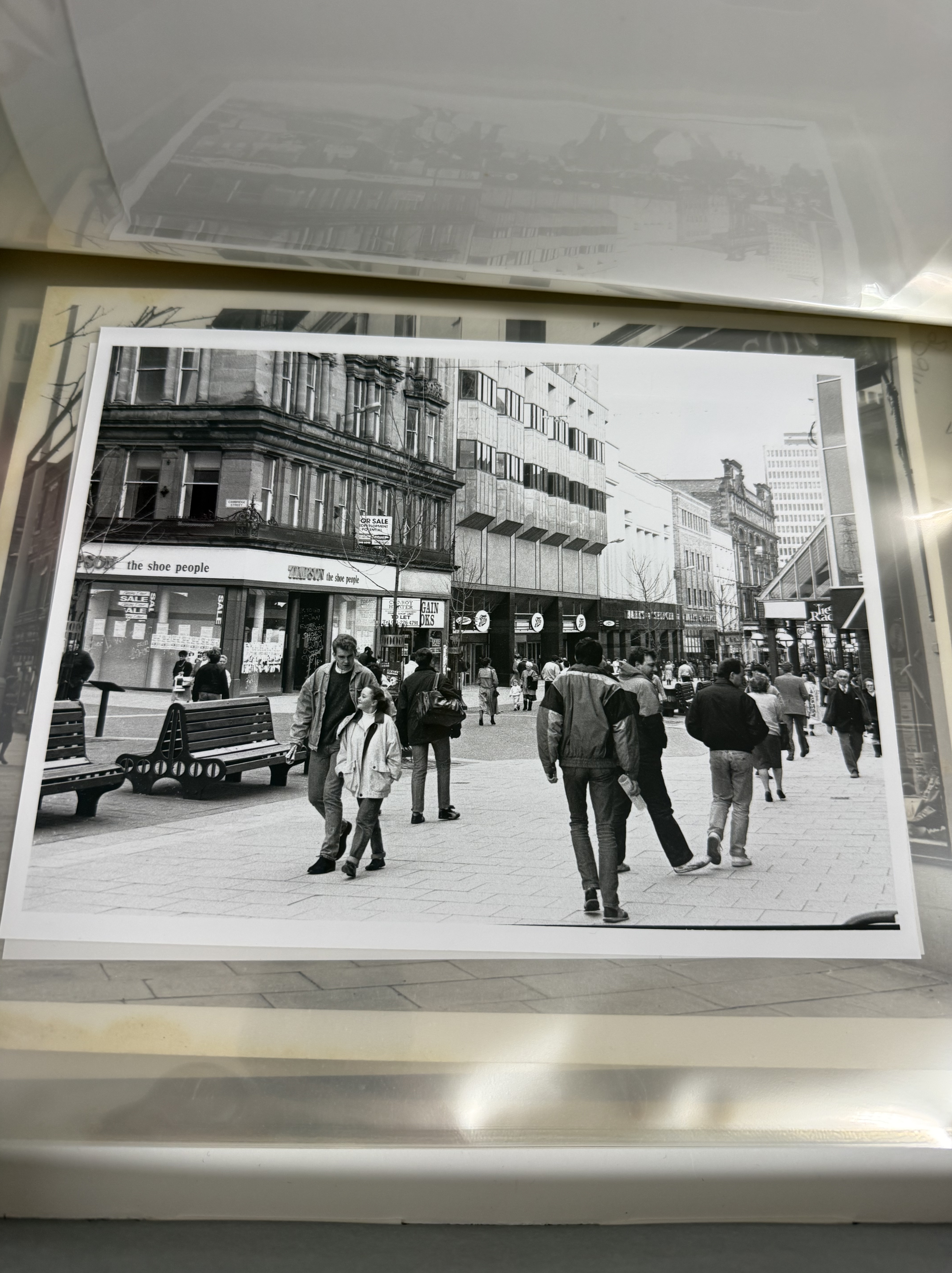
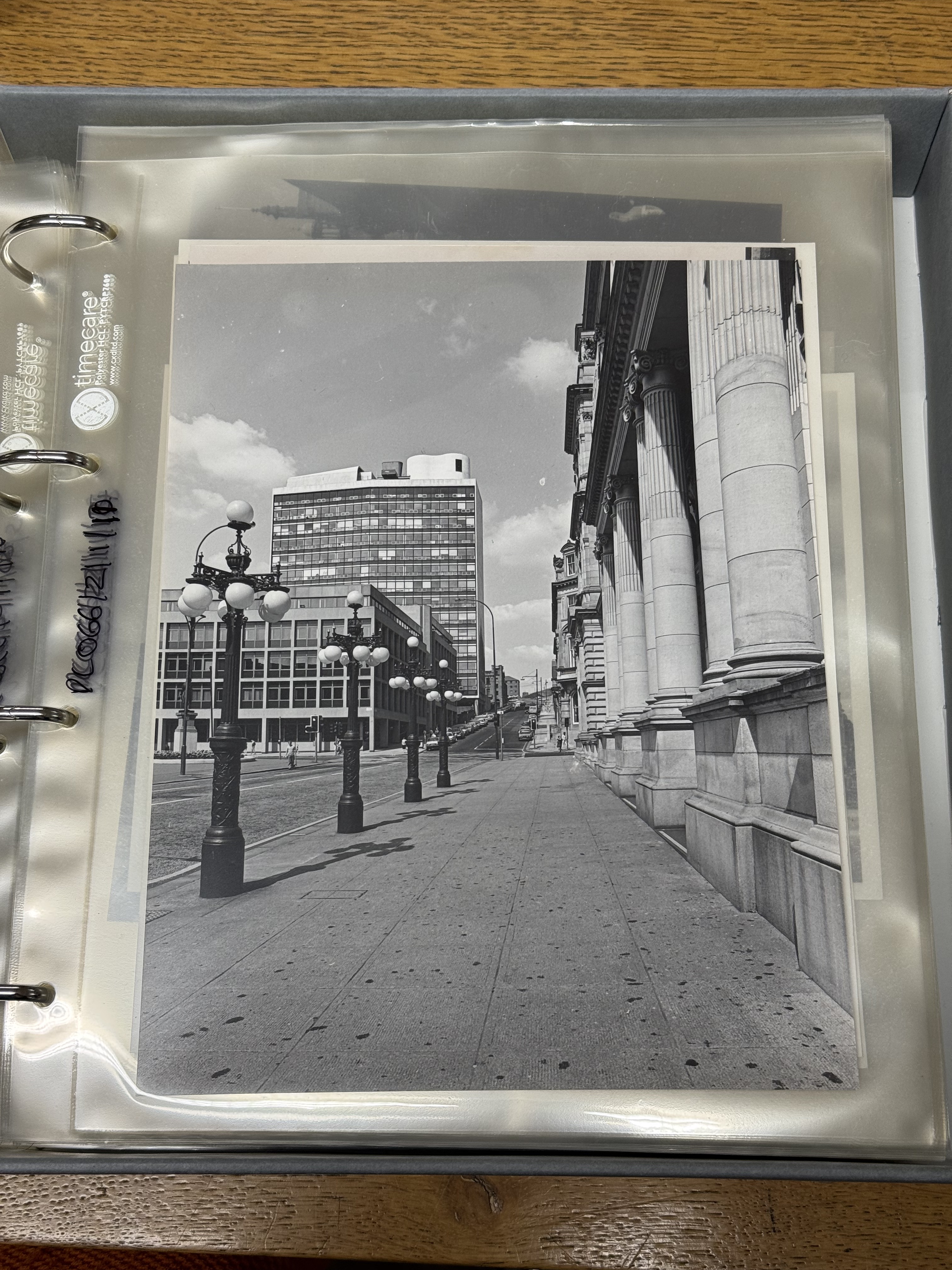
Oliver’s slides were so clean and detailed, and honestly felt like I was stepping back in time, but compared to Trotter’s, I missed that charm of Glasgow.
Shifting Focus:
After diving deep into Robbert Trotter’s work, I fell in love with his street photography, which focuses on the people of Glasgow, and I want to shift the focus of my project to his work and highlight the characters of Glasgow.
Going back to the feedback I received during my formative assessment, I think this shift in project focus is also taking a step towards my strengths as a designer. I will design the piece around Robert Trotter’s Glasgow street photography at its core and use my strengths as a designer to bring Trotter’s work to life, elevating a normal photography exhibition.
Still inspired by the projection display in SEEP and the dynamic spotlight explorations I’ve done before, I want to take this further.
Reflection – 8th May 2026:
Before handing in, I want to look back at the whole project and reflect on each step of the process now with the hindsight that I have at the hand in date:
I can see the real turning point in the project at this stage, with the visit to the Reid basement making the WIP a real event in my mind and lighting a fire to get some solid work done and make definitive decisions.
Also, my visit to the Archives and my first time looking through Robert Trotter’s work really solidified that I wanted to focus on his work and shift the project’s existing decisions and framework around his photography.


Leave a Reply