
ANTHROPOCENE: THE HUMAN EPOCH
THE DOCUMENTARY
An introduction to the Anthropocene. The Anthropocene was a brand new concept to me. Going to the Glasgow Film Theatre (GFT) was an informative experience. It opened my eyes to more effects the human race is having on the planet and how much damage is being done without the majority of the world knowing. However, the film did have some weaknesses that I felt when watching it, such as how it almost vilifies small local communities for how they live and doesn’t consider that the jobs they have might be the only ones available to them. Of course, these jobs are damaging to the environment, but it’s not constructive to highlight a problem without suggesting a solution.
The movie also felt very detached from the human aspect of Anthropecy. The human race causes damage to the earth and the environment, so it only seems logical that the answer will come from humanity.
The earth and the human race can only continue to coexist in a symbiotic relationship. And it might be too big of a task for any one person, but I’d like to take a step in the right direction.
Week 01
Initial Ideas & Rumination
The first week of Co-Lab has been a lot of knowledge and information in one wave. So The main task was taking this giant subject and personalising it, both to me as a human being as well as to my discipline and what my project will mean to my field and those in my domain.
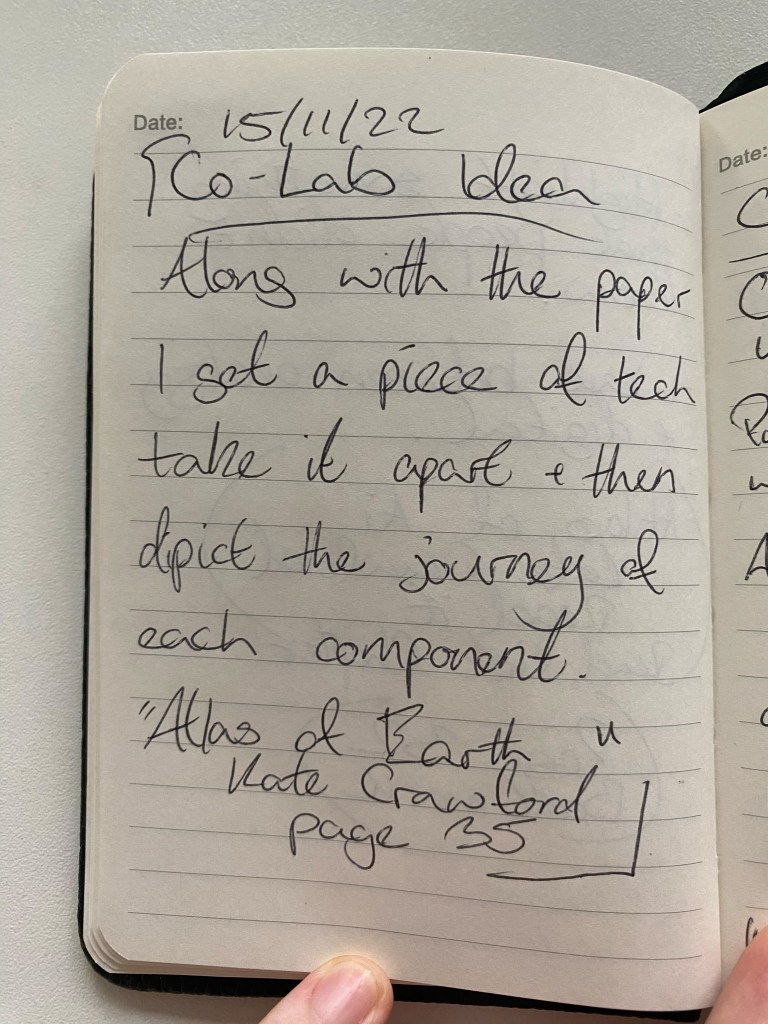
At the point of this note, I was still determining how to explore the relationship between the Anthropocene and my discipline and how I could personalise the tech we use and educate people on the process those materials go through before they get to us.
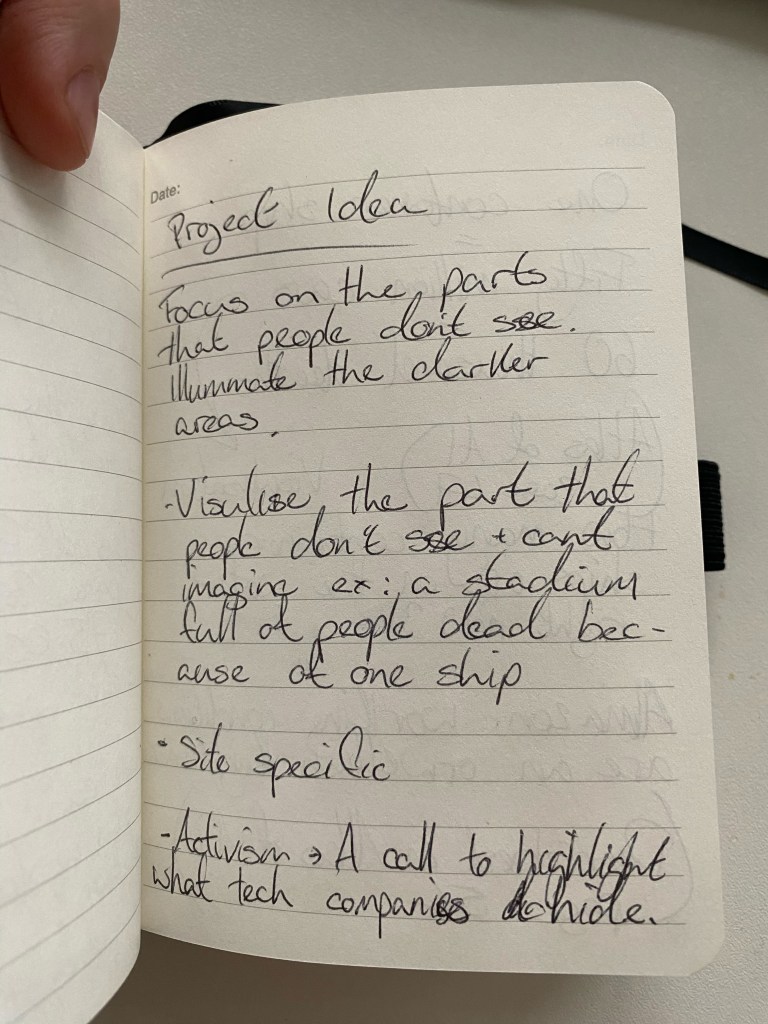
Here again, is another idea of trying to personalise and qualify the effects of the Anthropocene and make it more tangible to people and, in turn, harder to ignore or turn a blind eye to. Again, I will put my hands up and admit that I don’t do enough when it comes to the climate crisis. One of those reasons is because it’s easy for me to cast it out of my mind, it is easy for me to distance myself from it, and that’s something I want to tackle, and if the climate crisis is looking the people of Glasgow in the face, then it’s more challenging to ignore.
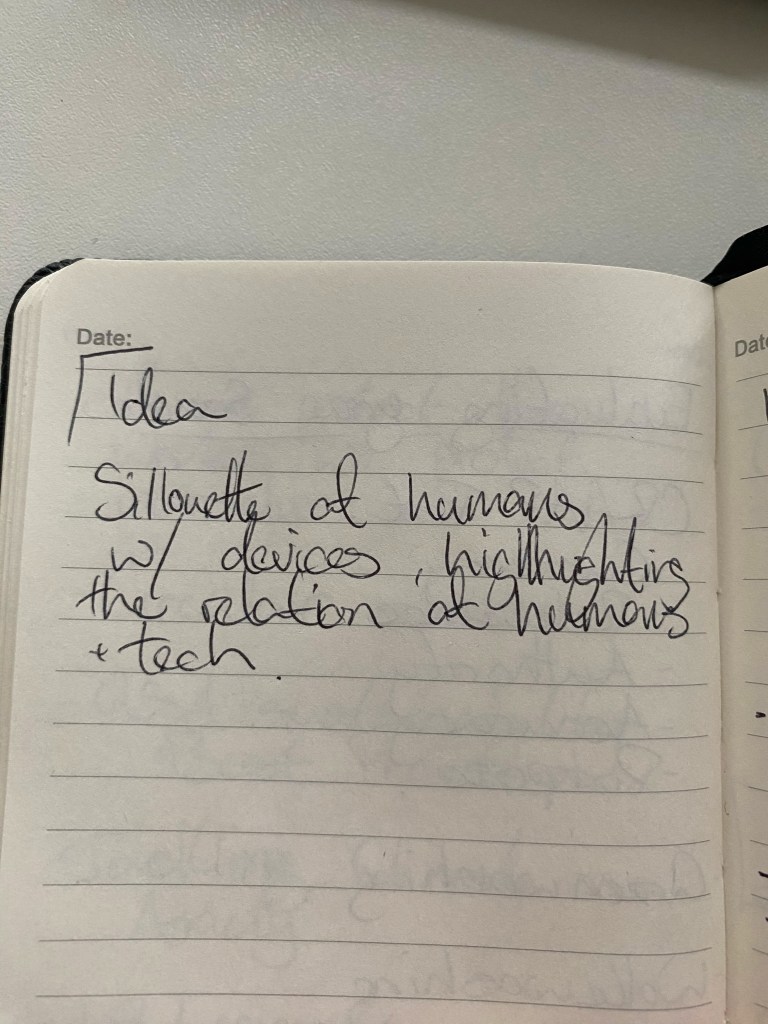
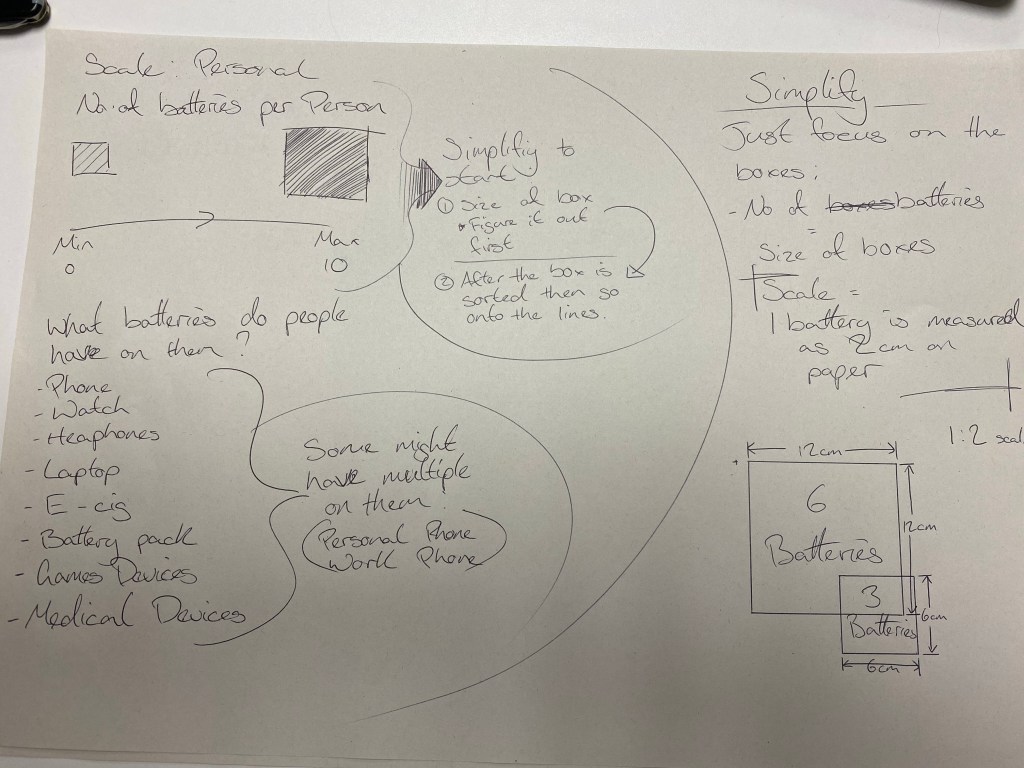
Here noted is one half-baked concept I had to highlight or embody the relationship between the tech we use every day, who we are with this tech and the cost that tech has on the planet. This concept might be realised in a series of street photography images that show how many people have multiple devices at any one time in the heart of Glasgow.
Research
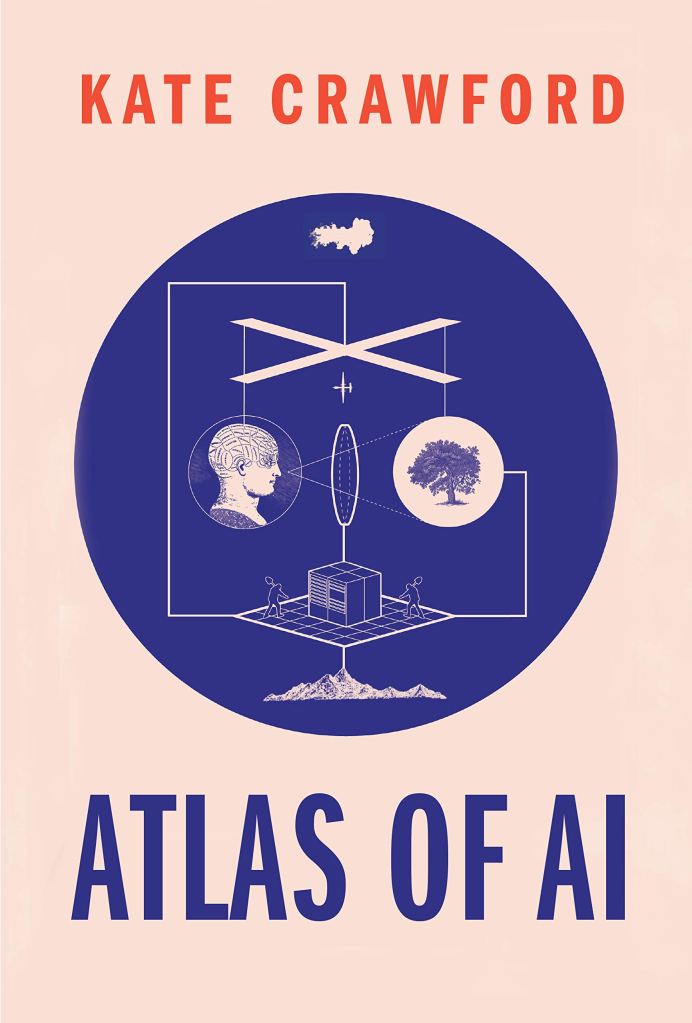
After reading the first chapter of ‘Atlas of AI’ by Kate Crawford, the Anthropocene felt more localised to IxD and how I contribute to its problems and how I can negate those problems.
One idea that came to me when reading was how unfathomable some of the statistics are and how their weight is lost on me because I have no reference and no comparison.
After reading the first chapter of ‘Atlas of AI’ by Kate Crawford, the Anthropocene felt more localised to IxD and how I contribute to its problems and how I can negate those problems.
One idea that came to me when reading was how unfathomable some of the statistics are and how their weight is lost on me because I have no reference and no comparison.


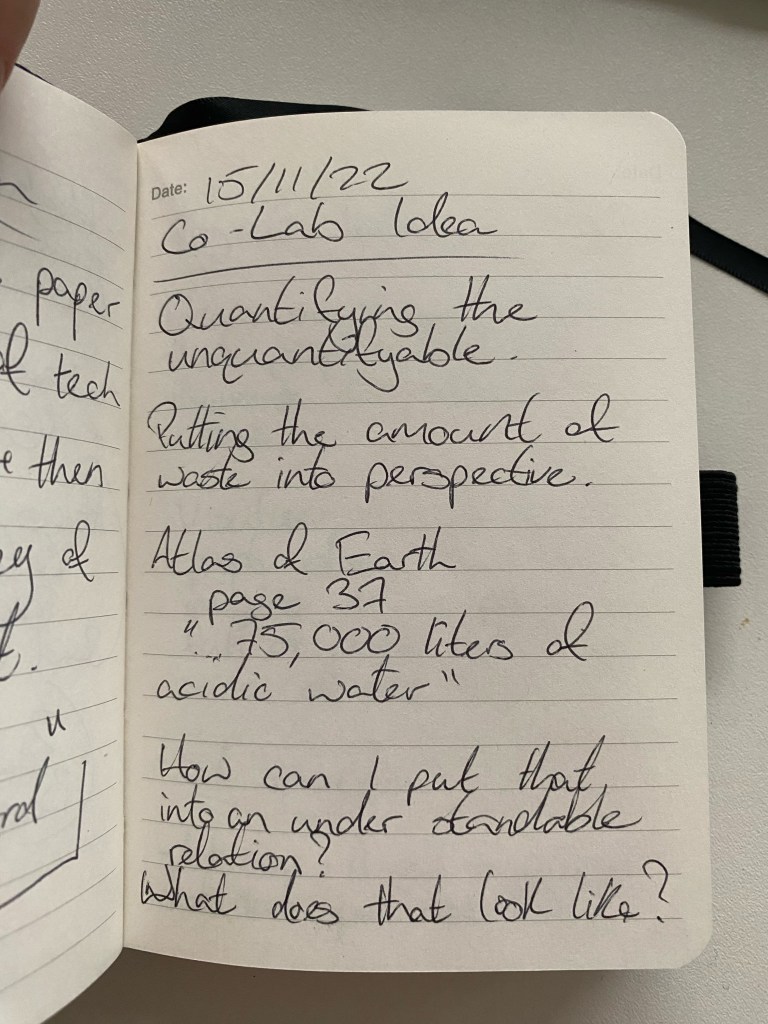
Within my research, one aspect that jumped out at me was Lithium batteries within the context of the Anthropocene. Huge landscapes are being mined and converted to power our devices and technology. The lithium battery is marketed to the public as the green step forward as the alternative to foil fuels. However, the same battery that powers electric cars is not recyclable; they are used and then disposed of like general waste into another technological landfill.
Lithium battery production is initially thousands of feet of caves through the earth to harvest the raw materials. After that, acres of land have been covered to farms of vibrant pools that starkly contrast with the desert landscape sacrificed for it.
I need to research more on Lithium batteries and their consumption on a personal level within my life and those around me.
Week 02
Mark Making Workshop
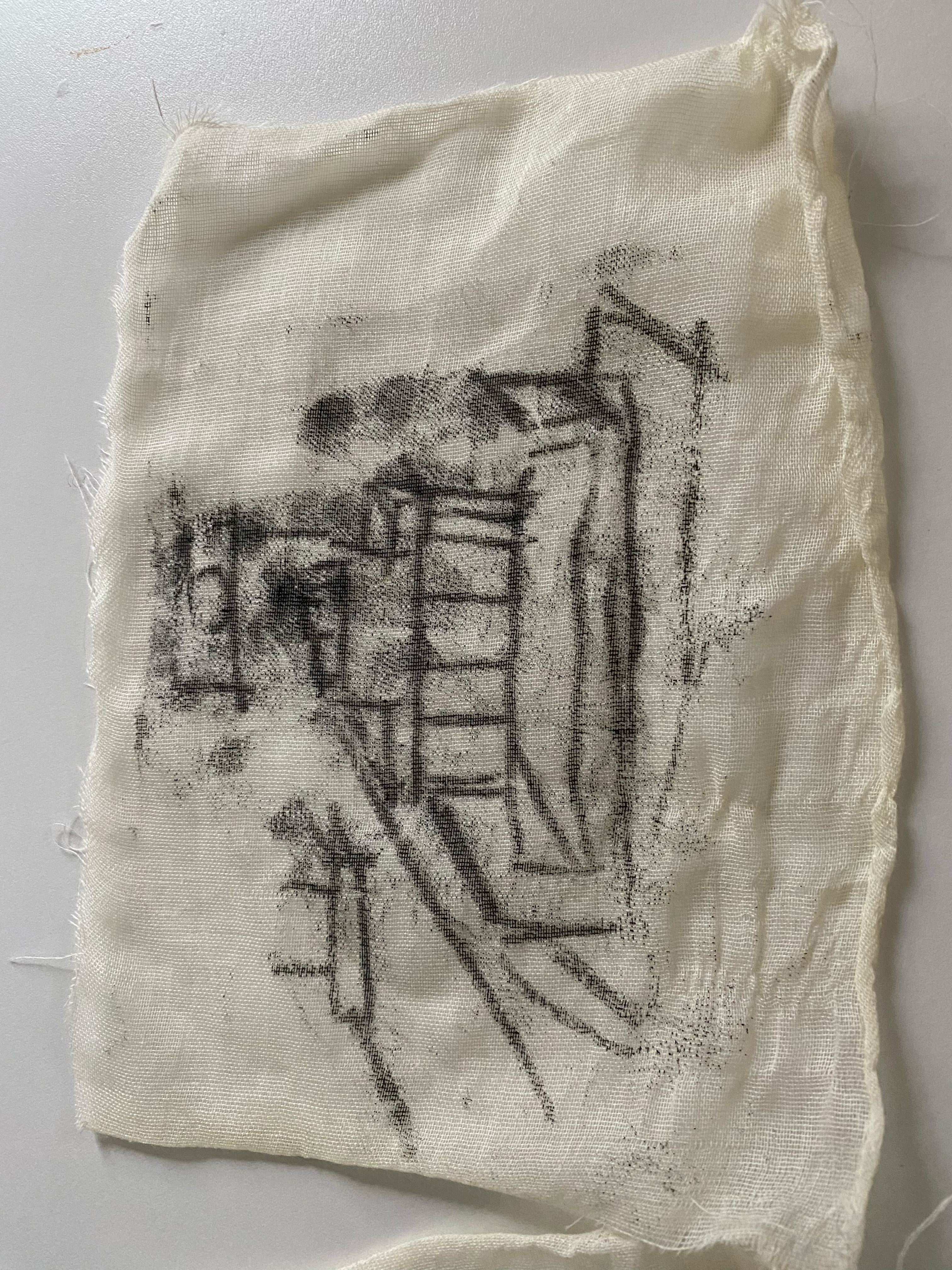
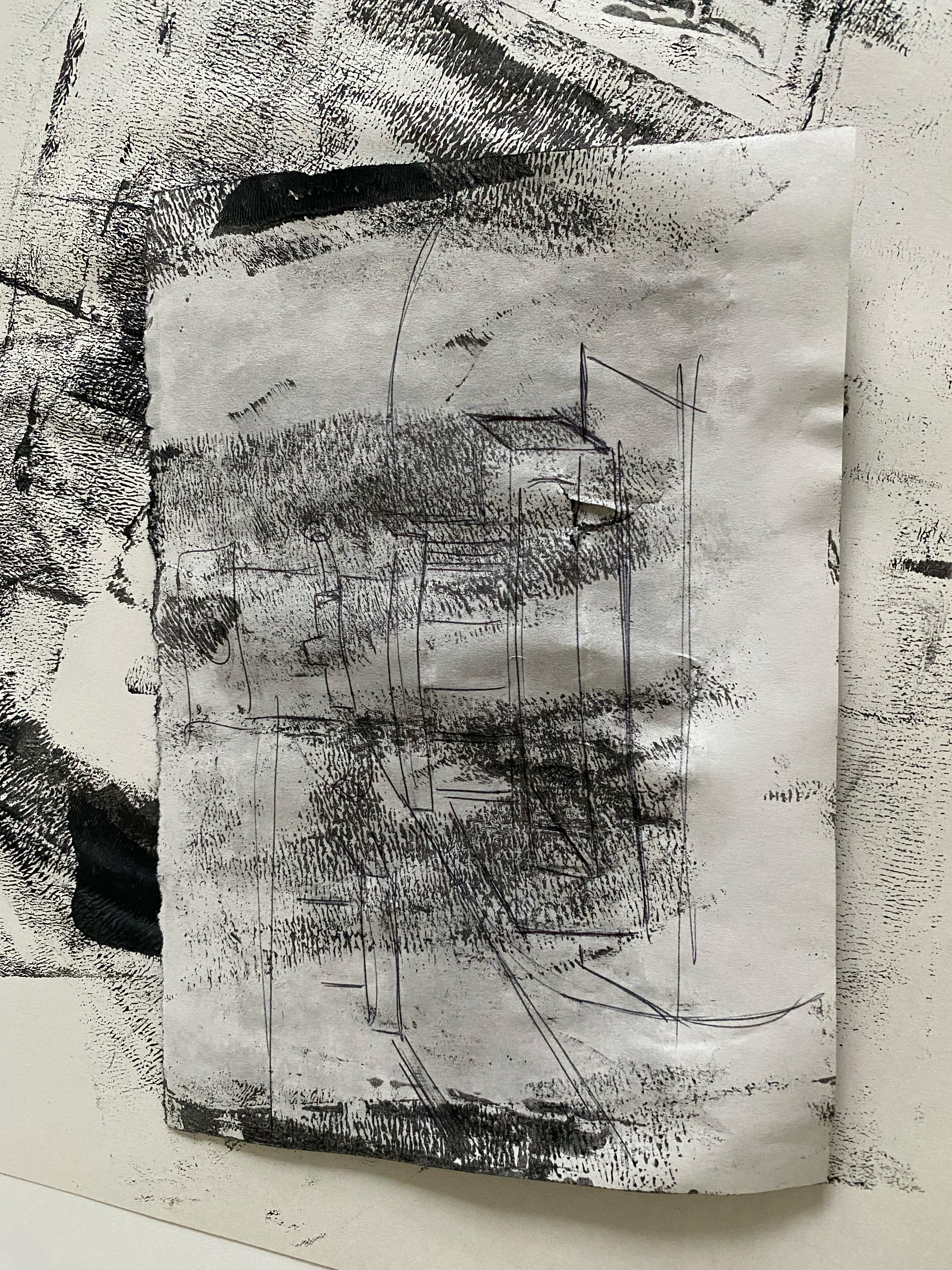
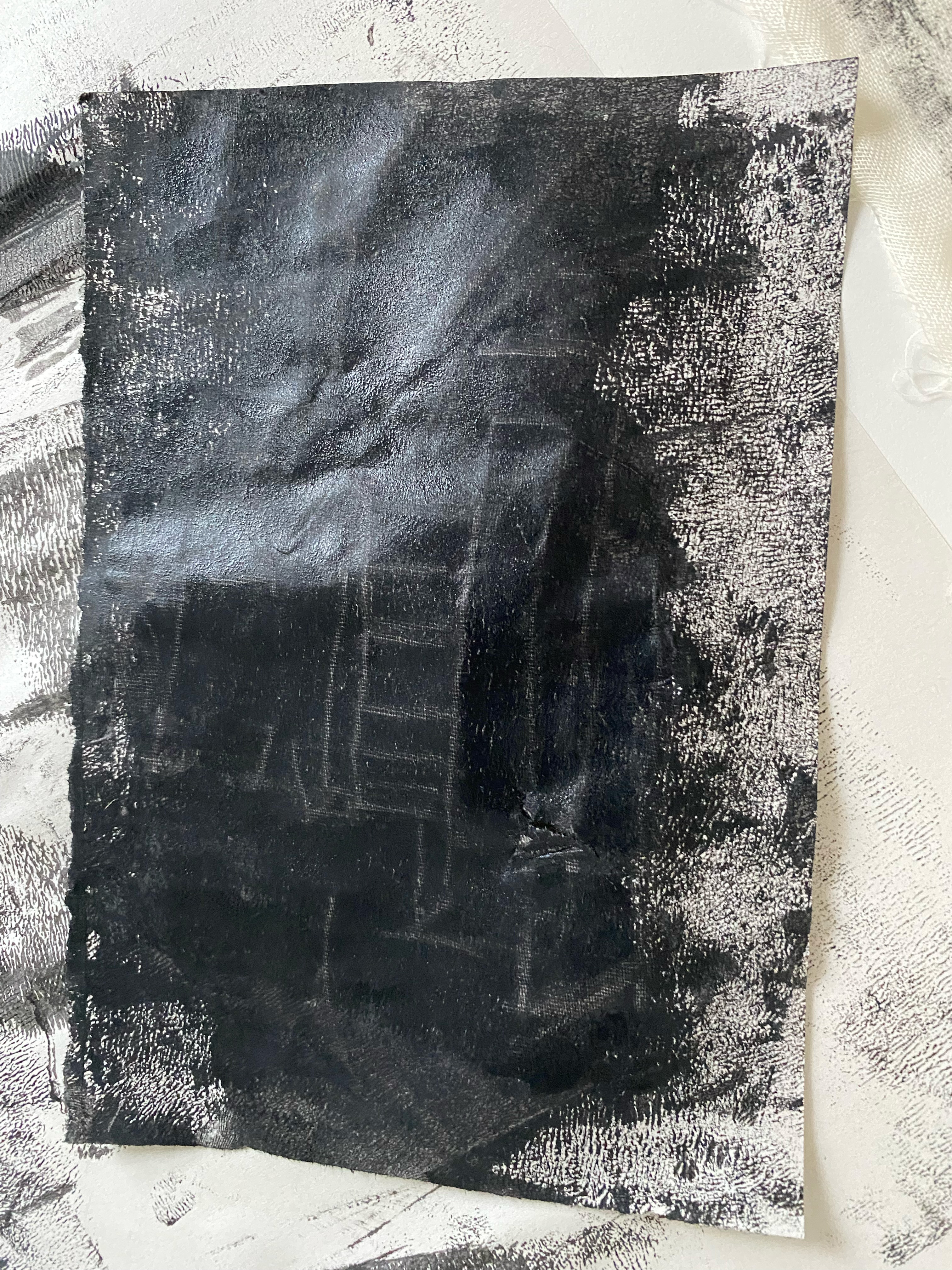

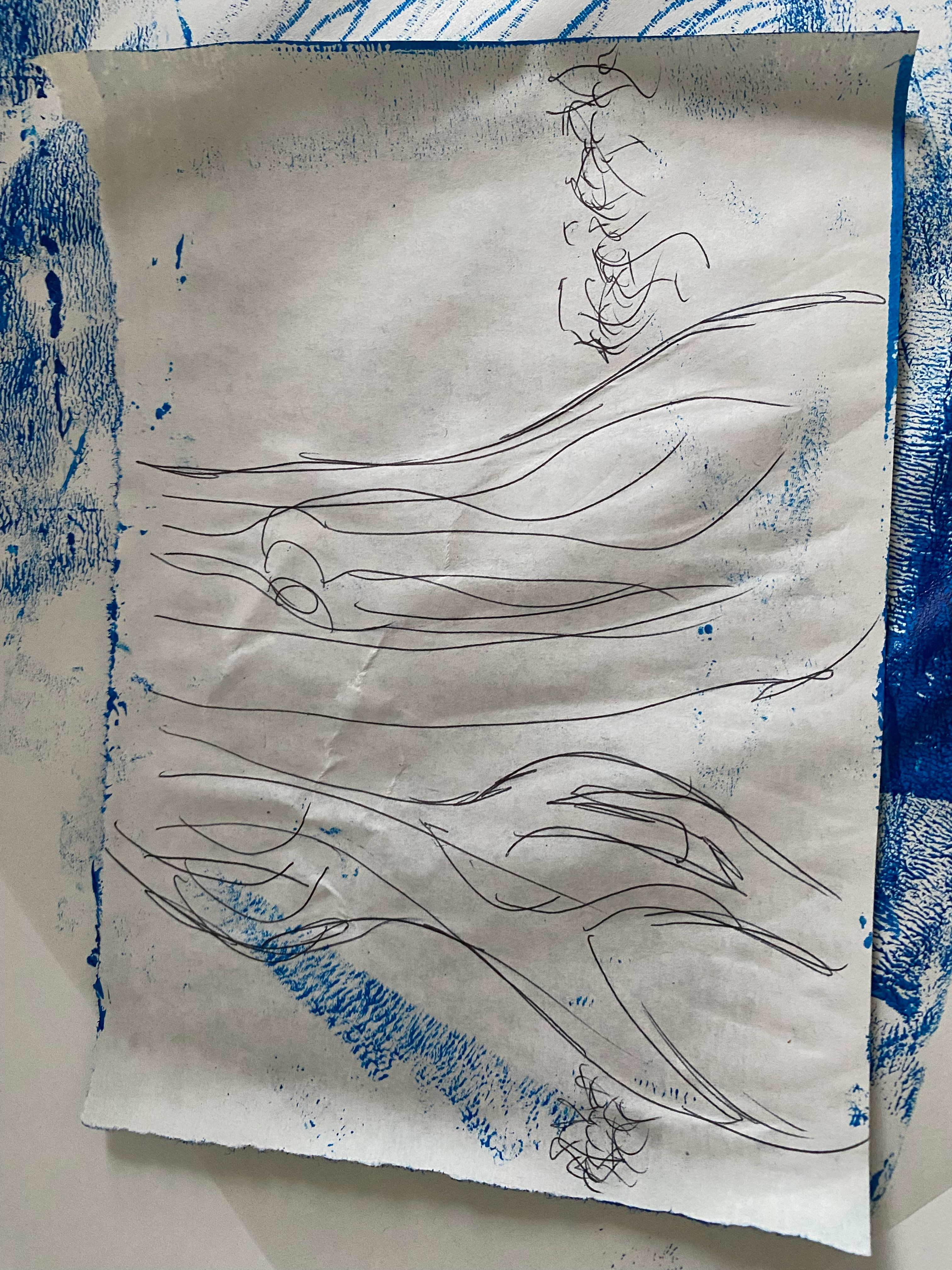
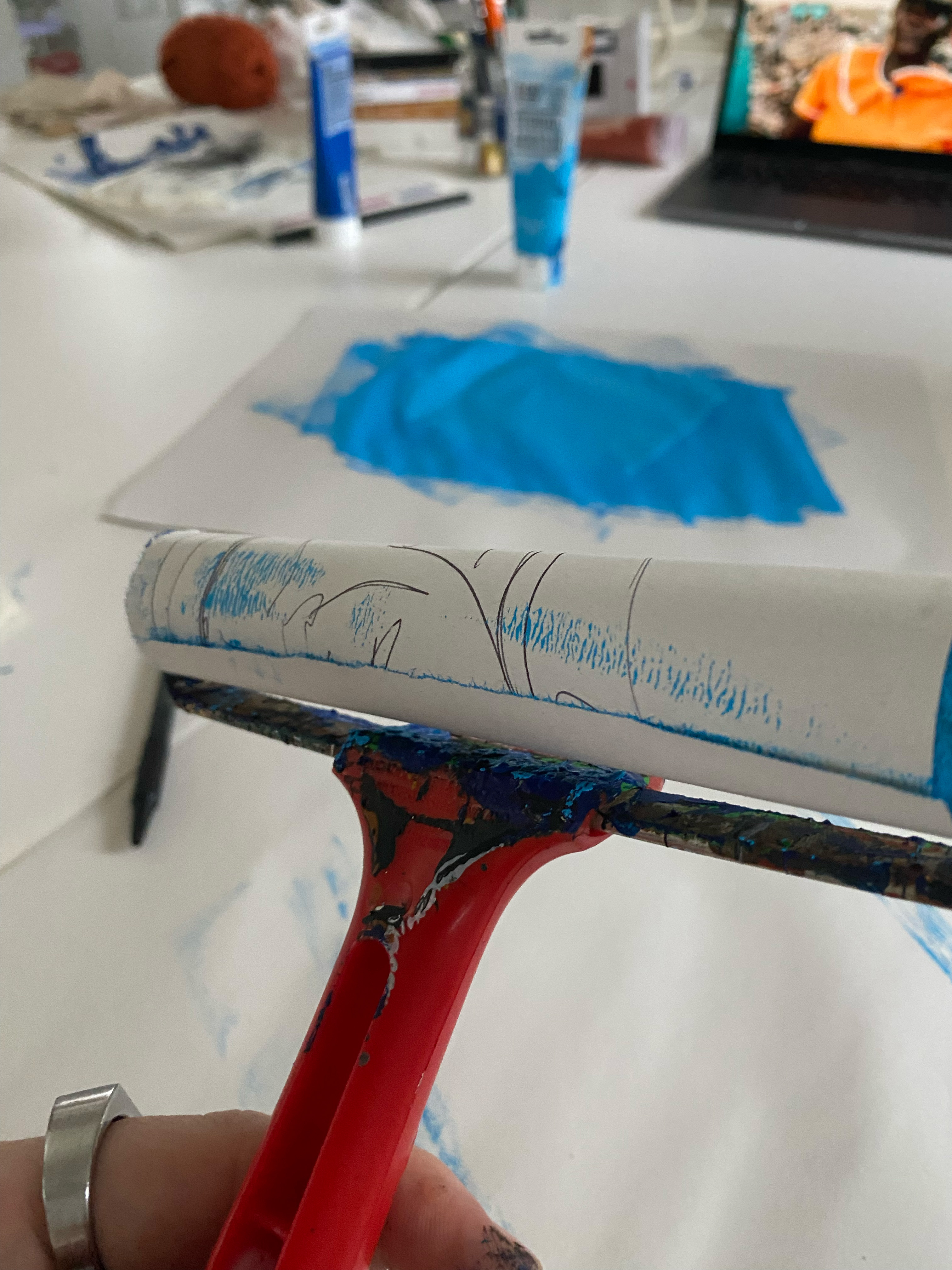

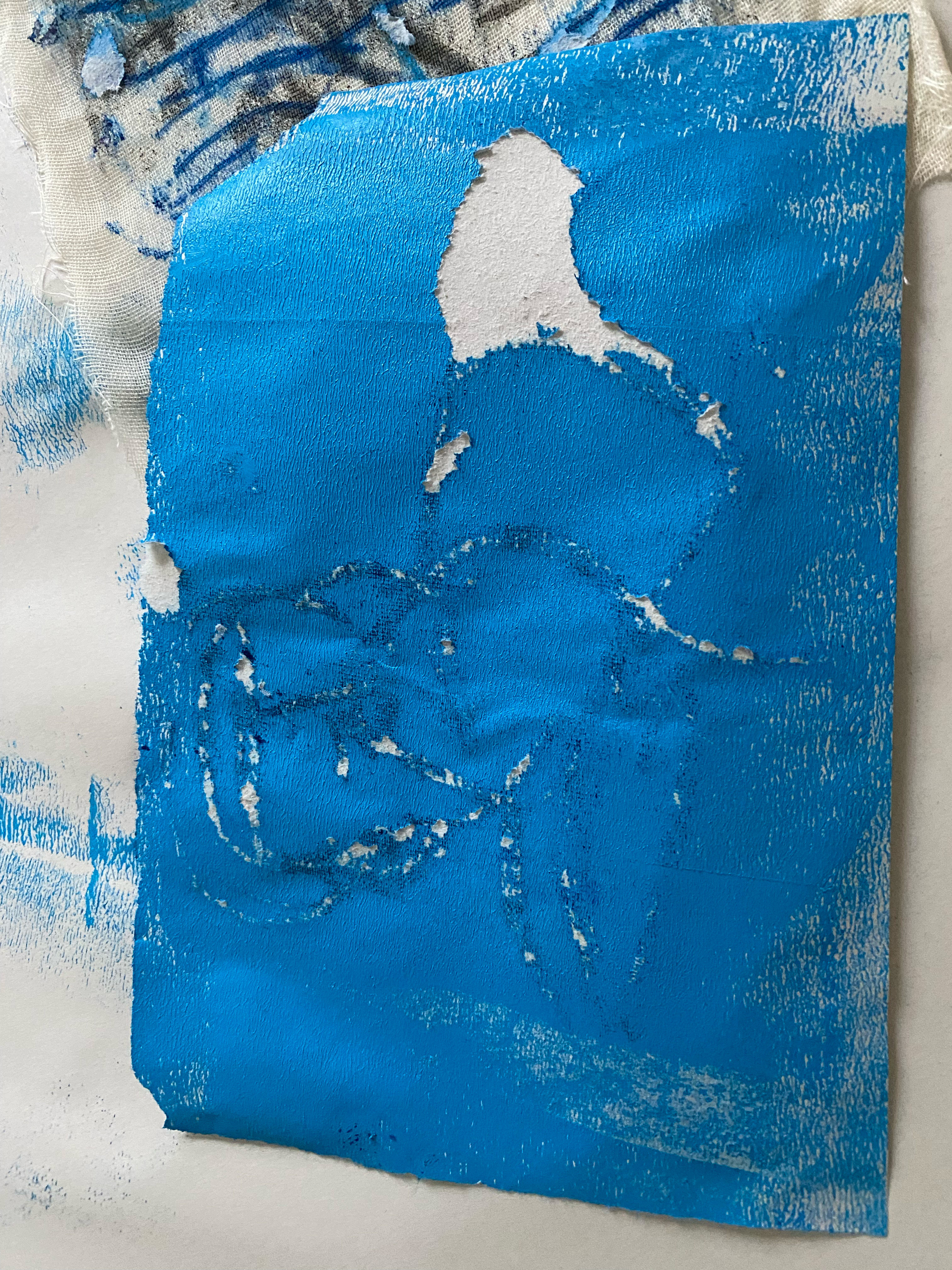
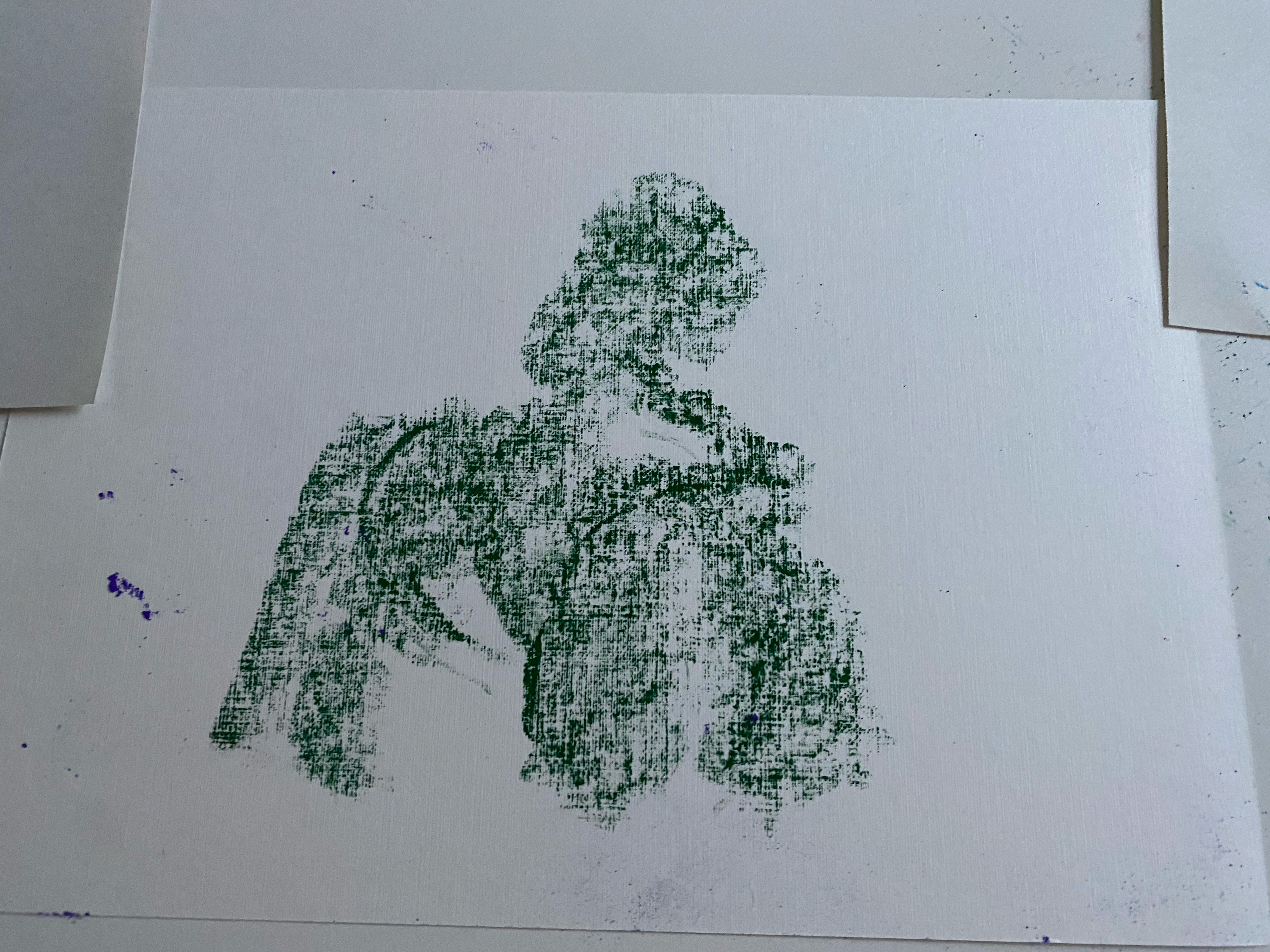
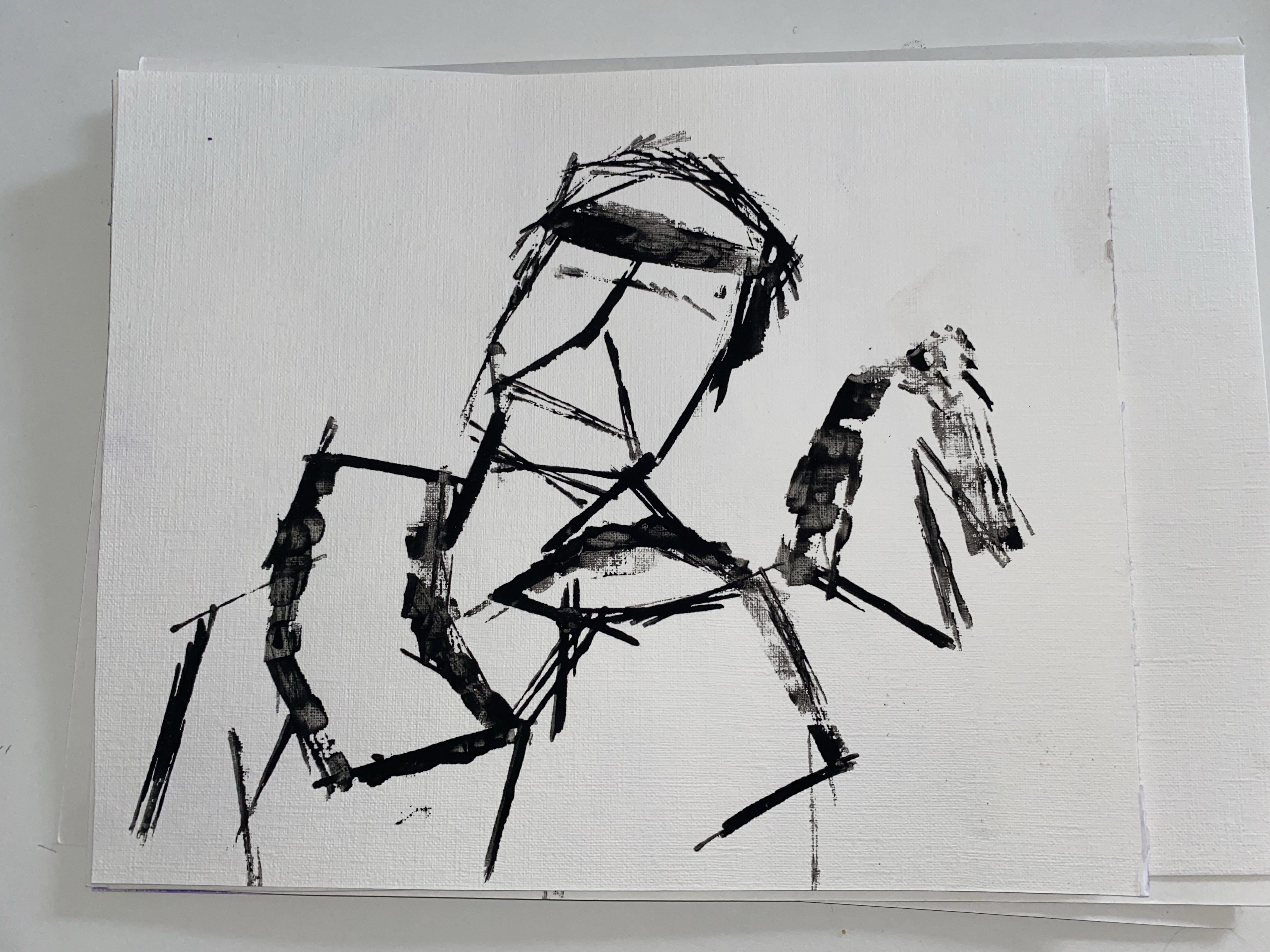
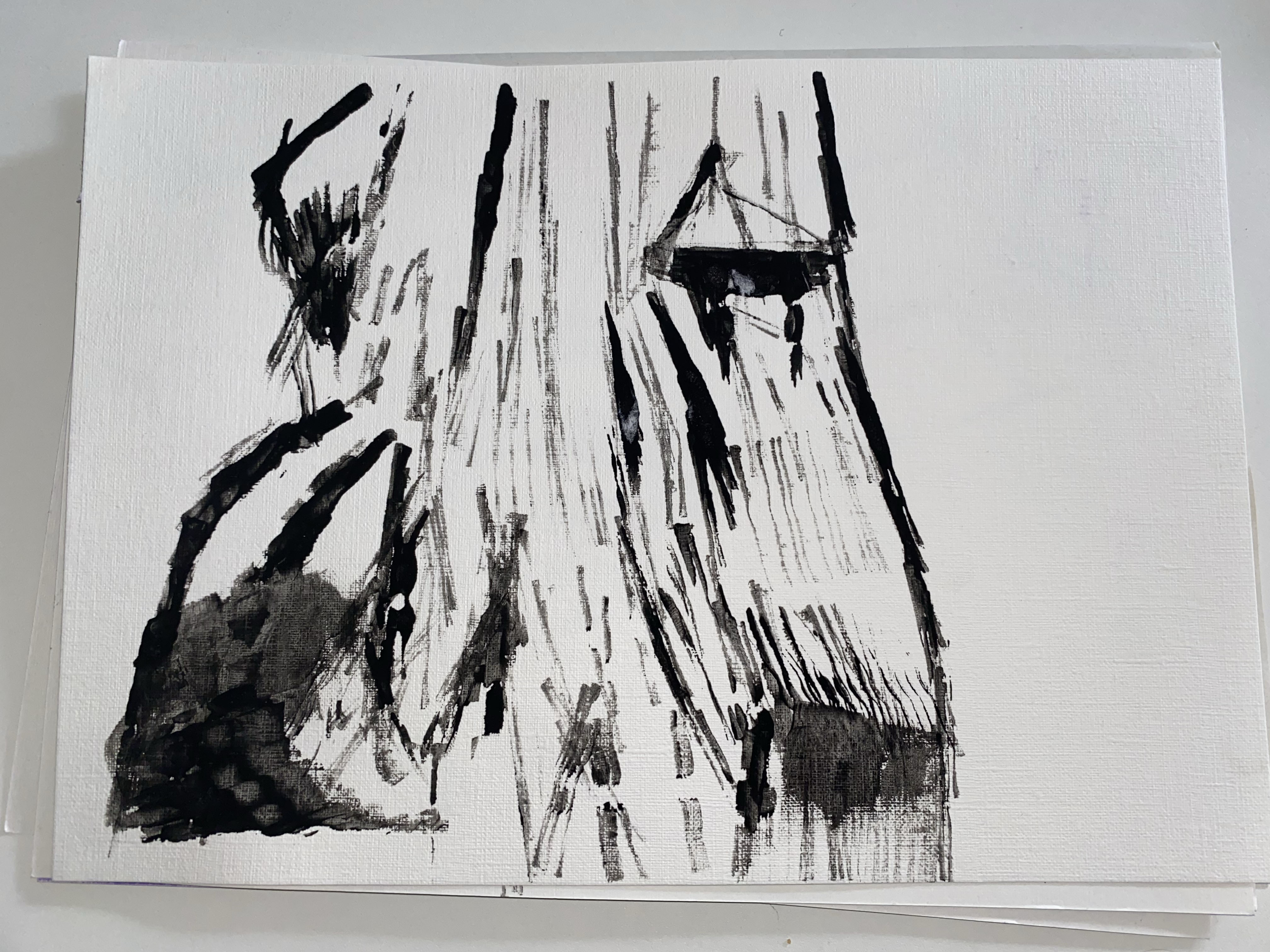
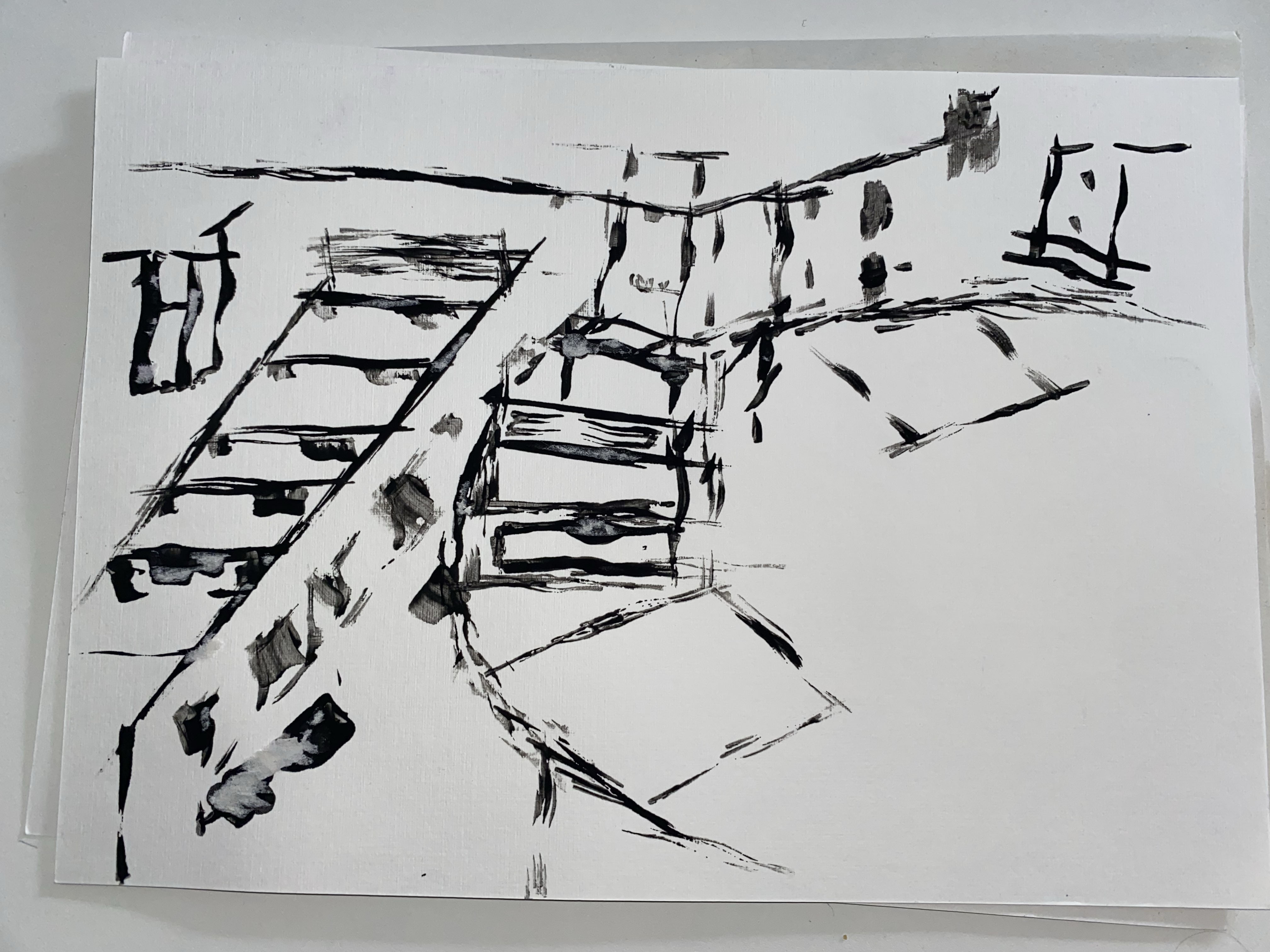
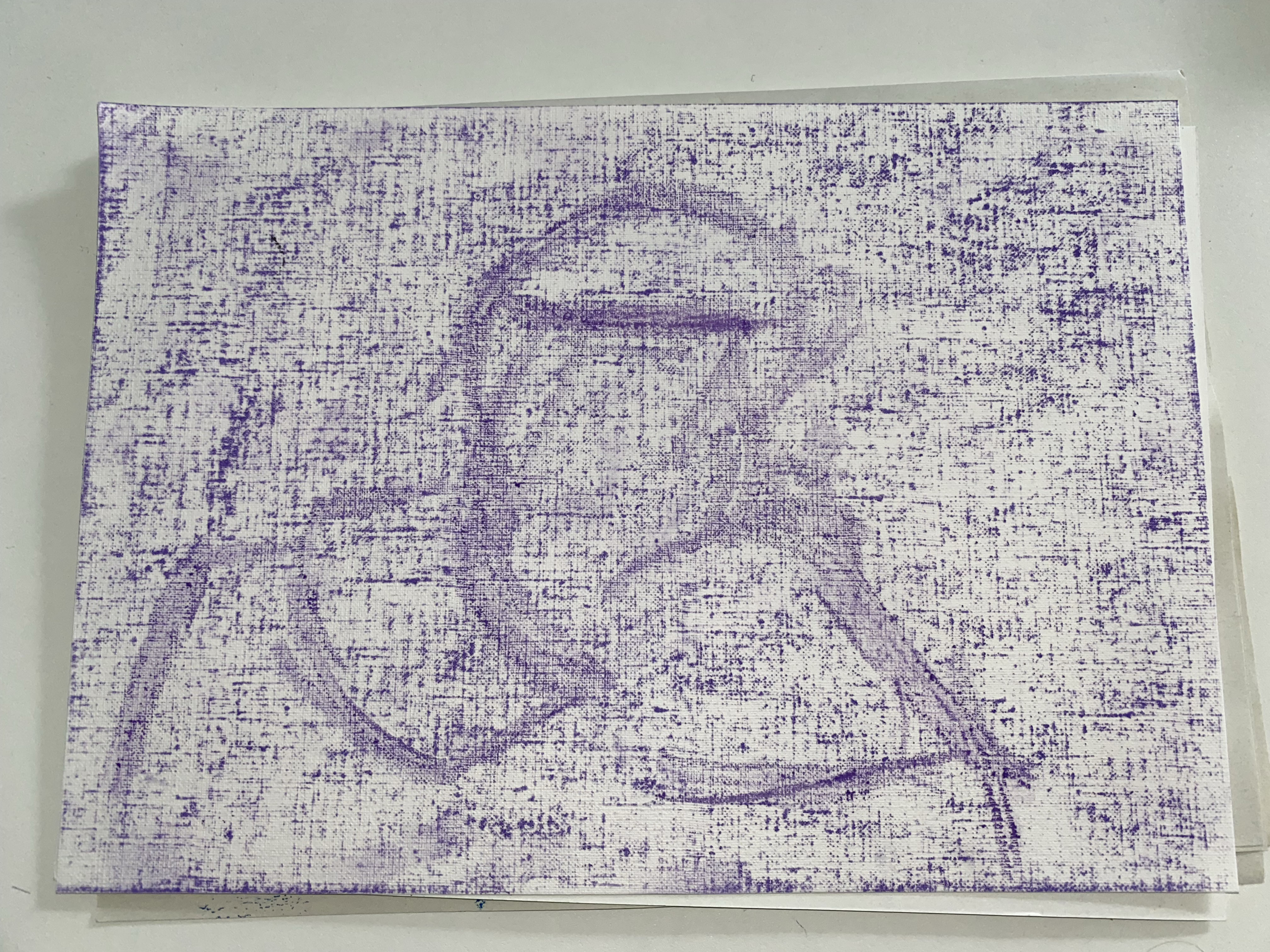
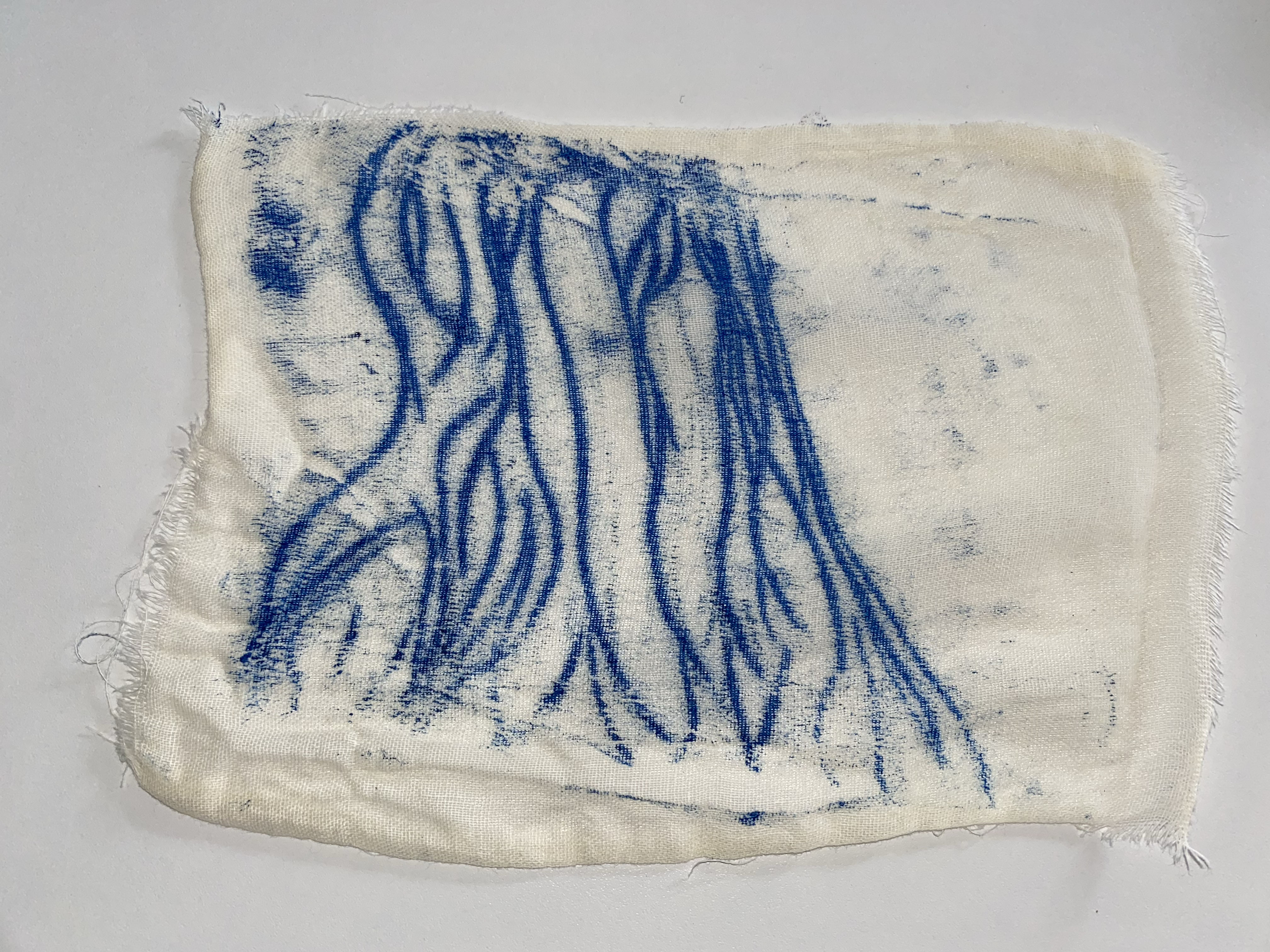
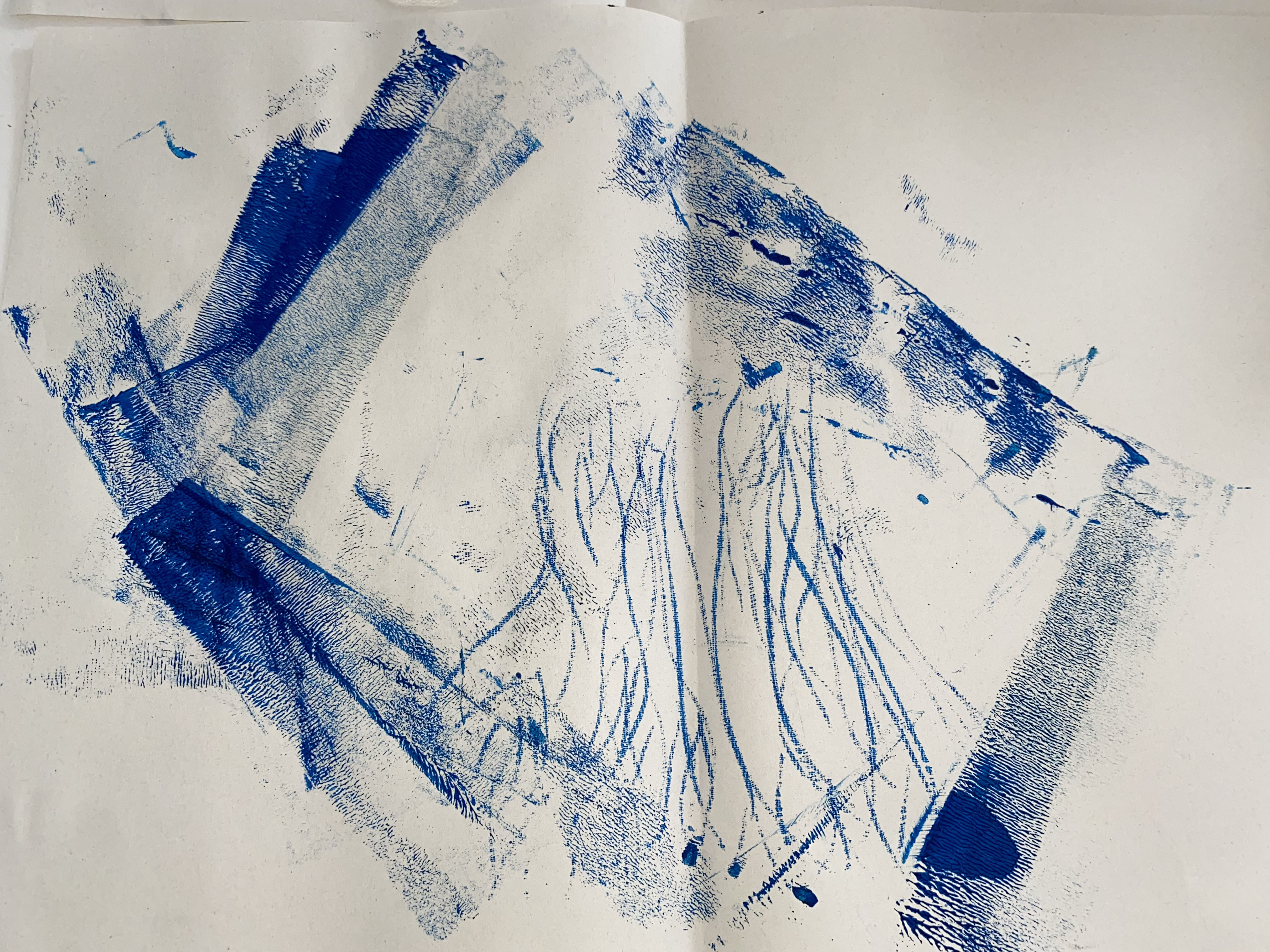
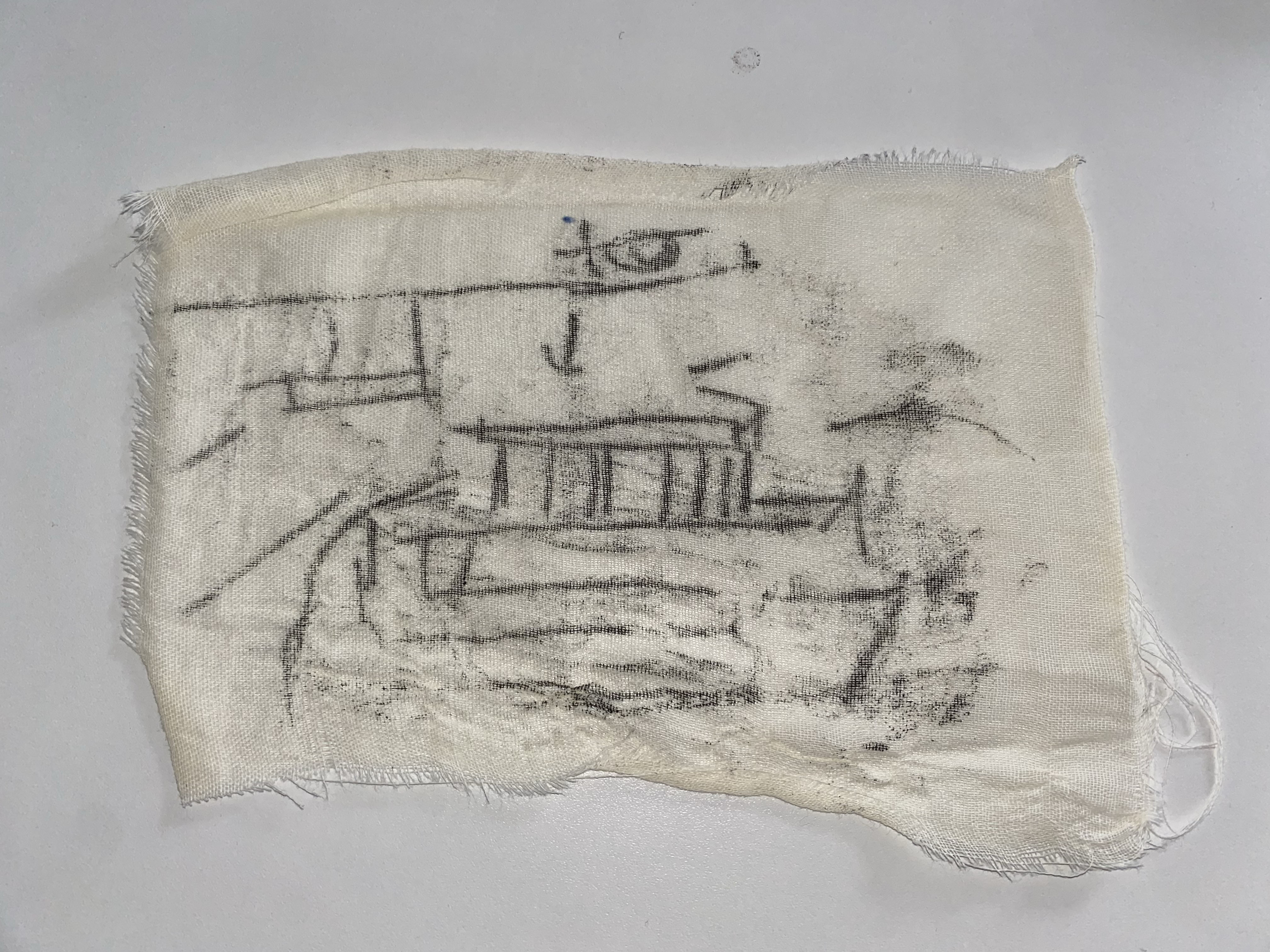
As someone that’s alien to mark-making, I was out of my comfort zone but with guidance, I was exploring mediums that would have, in all honesty, steered clear of.
Axi Draw Mark Making

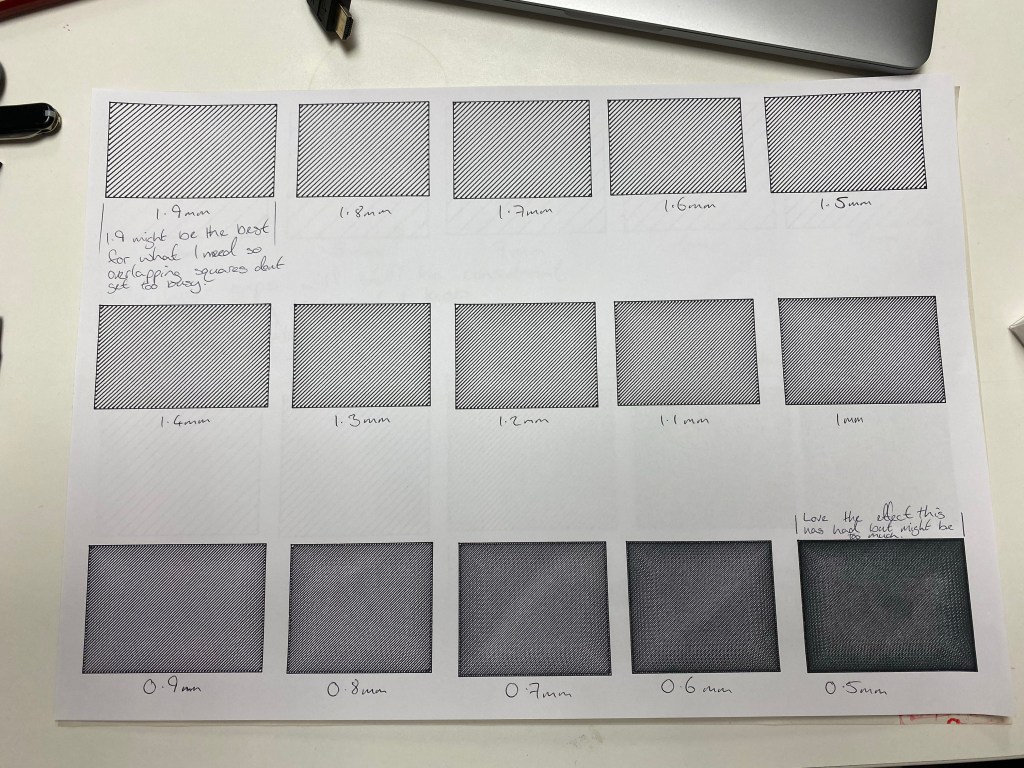
One experiment shown here was mainly for me to get familiar with the Axi Draw and explore one avenue of mark-making; the idea was to isolate the artificial grid structure of the lithium fields that are rechargeable come from.


Inspiration for Axi Draw Mark Making
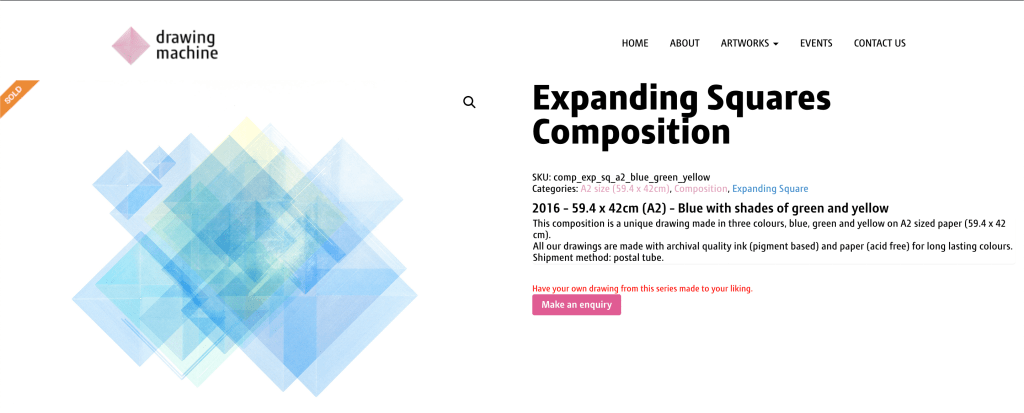

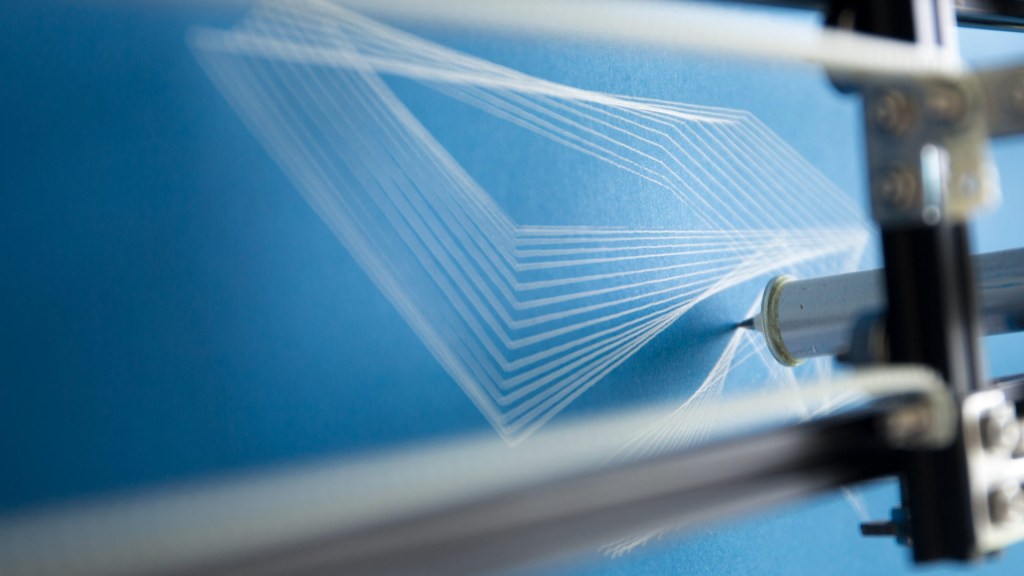
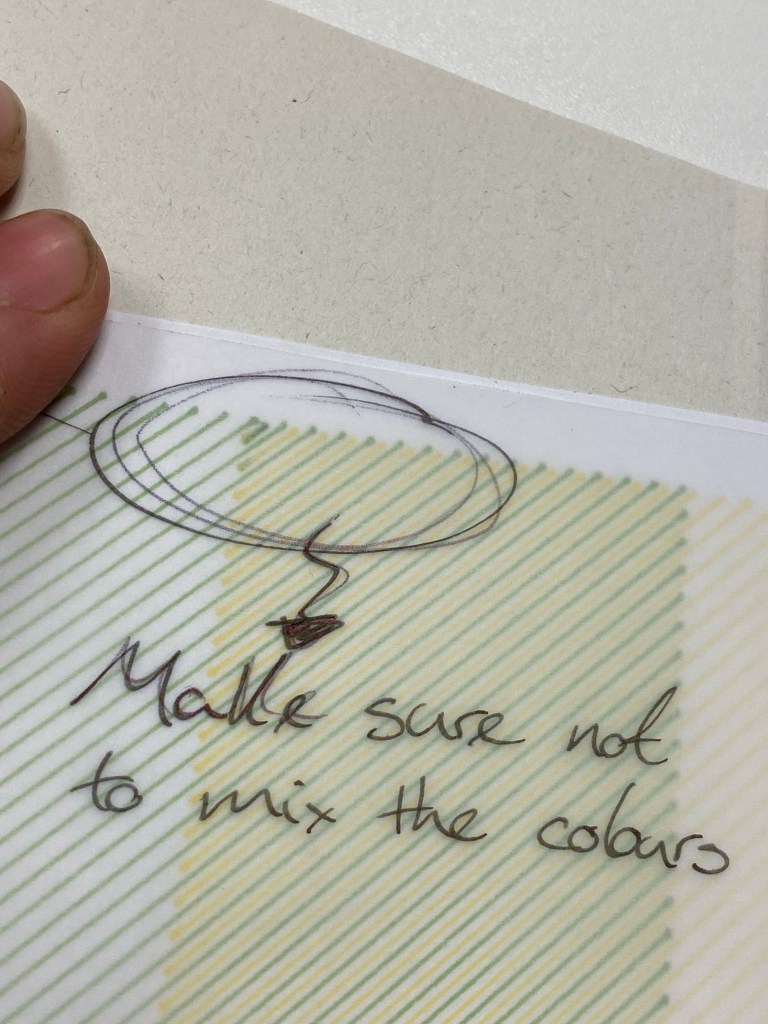
Damien Borowik was an artist that caught my eye with his use of tight squared spirals and his use of colours that don’t meld in a traditional sense but trick the eye into finding new colours within those combinations. I enjoyed the relationship between spirals that work between the lines of one another, so they don’t cross at parts but run within one another.
Lithium Fields on the Axi draw

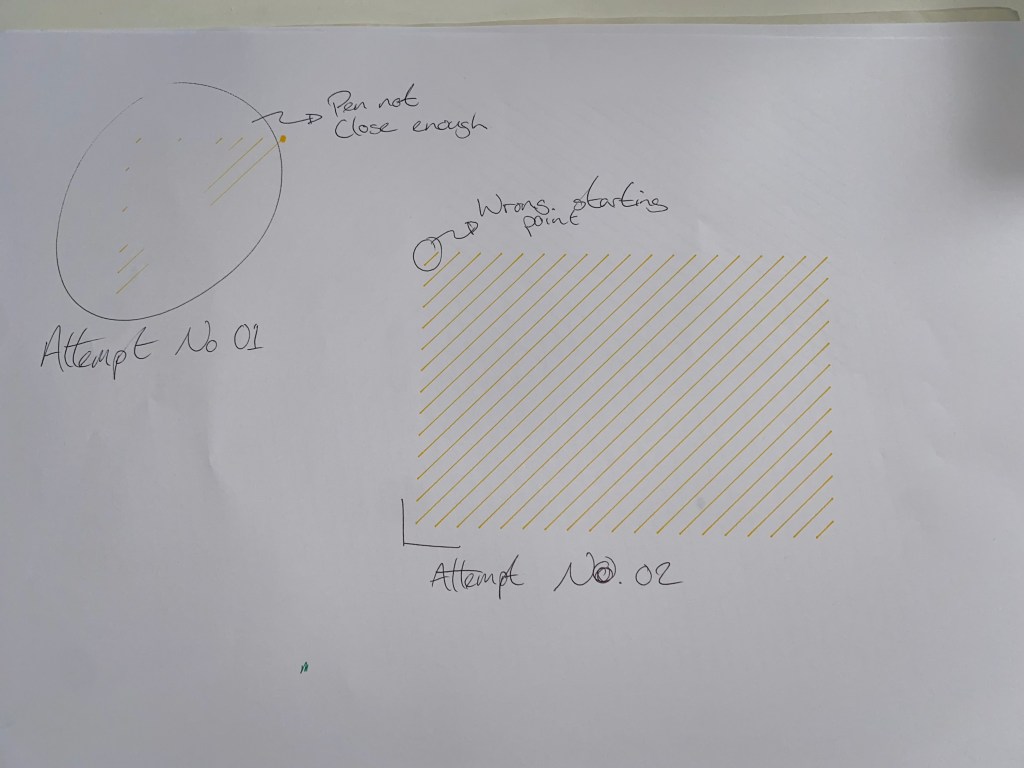
Experiment One of using the colours and shapes on the lithium fields on the Axi Draw.
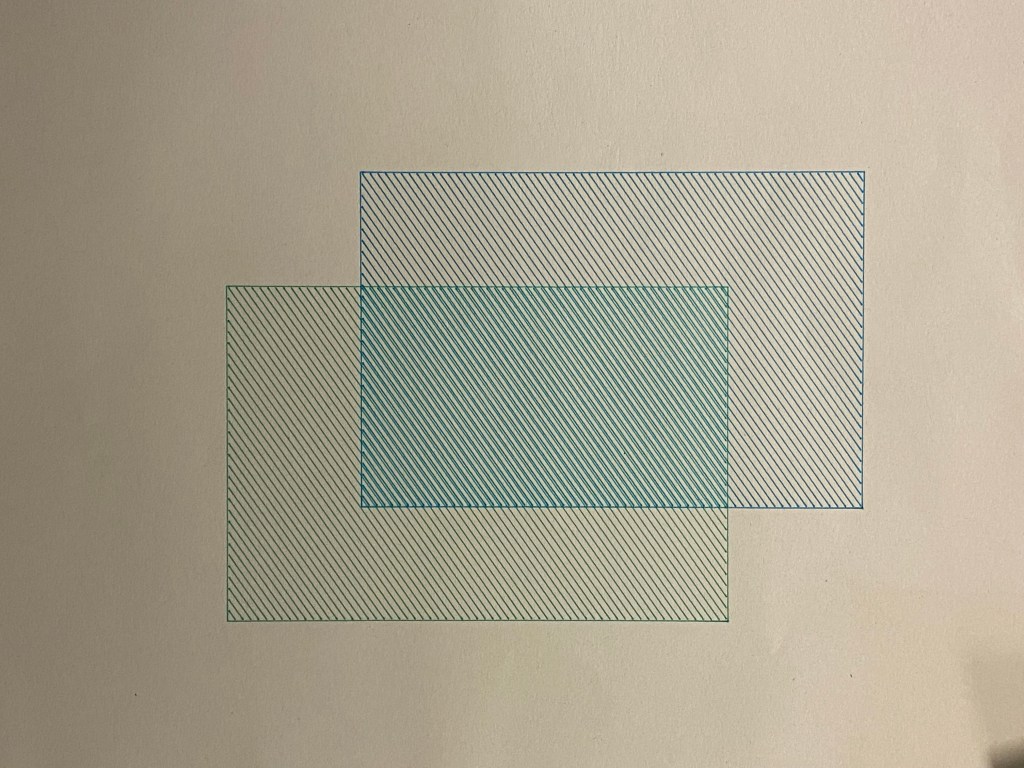
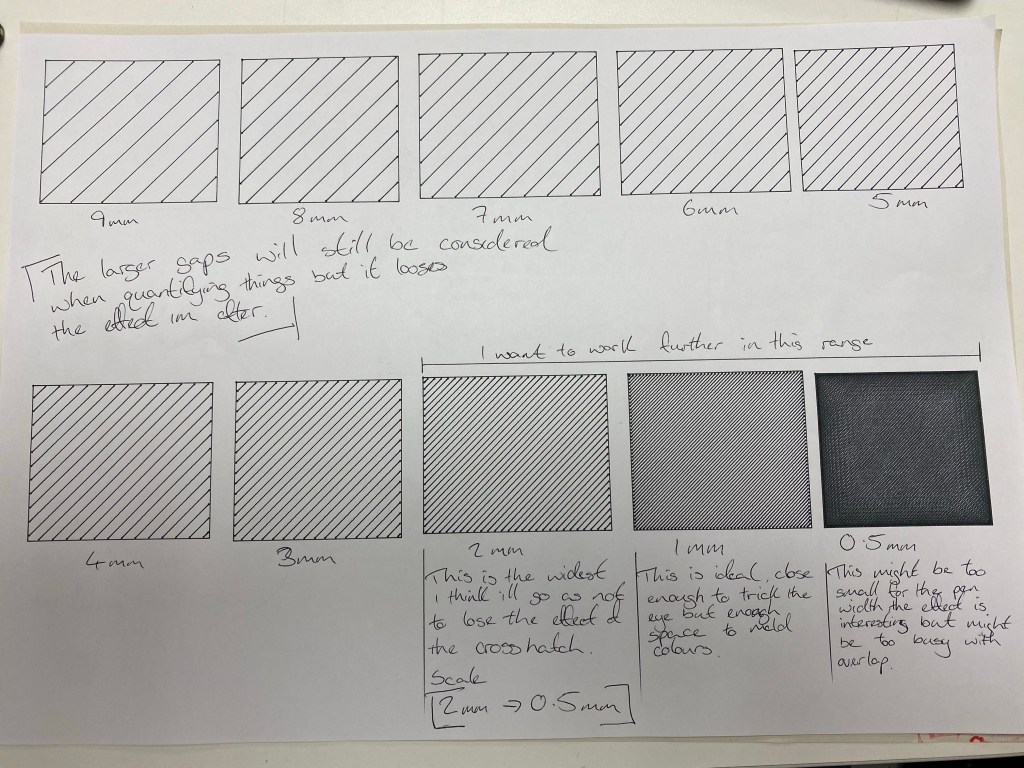
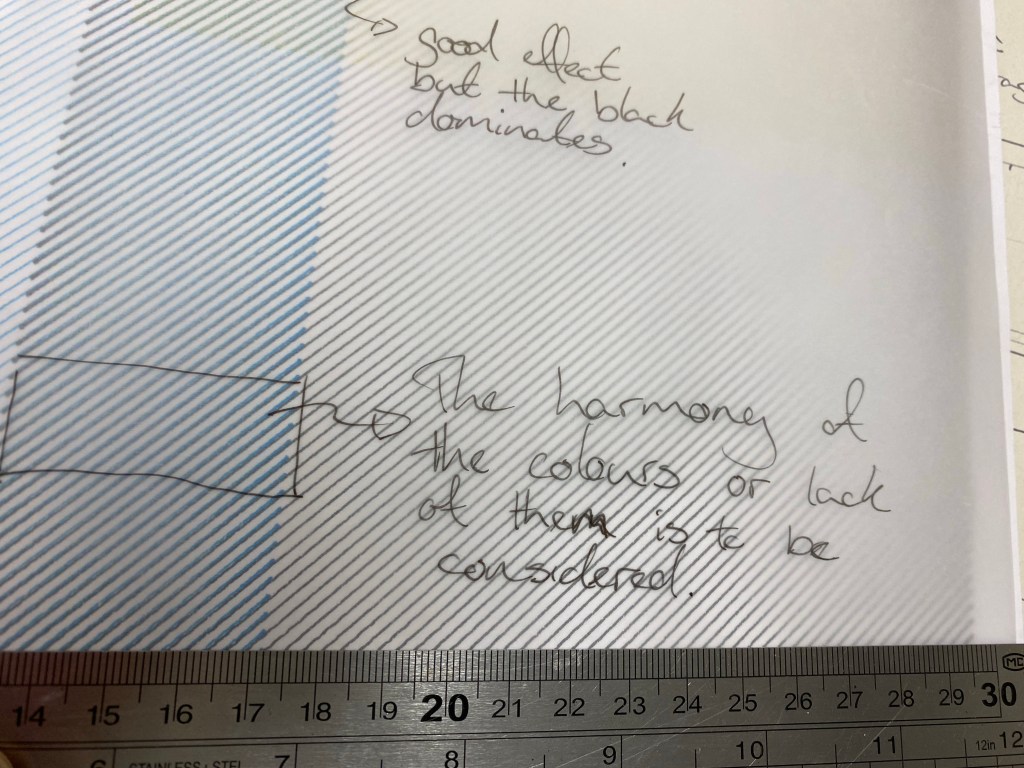
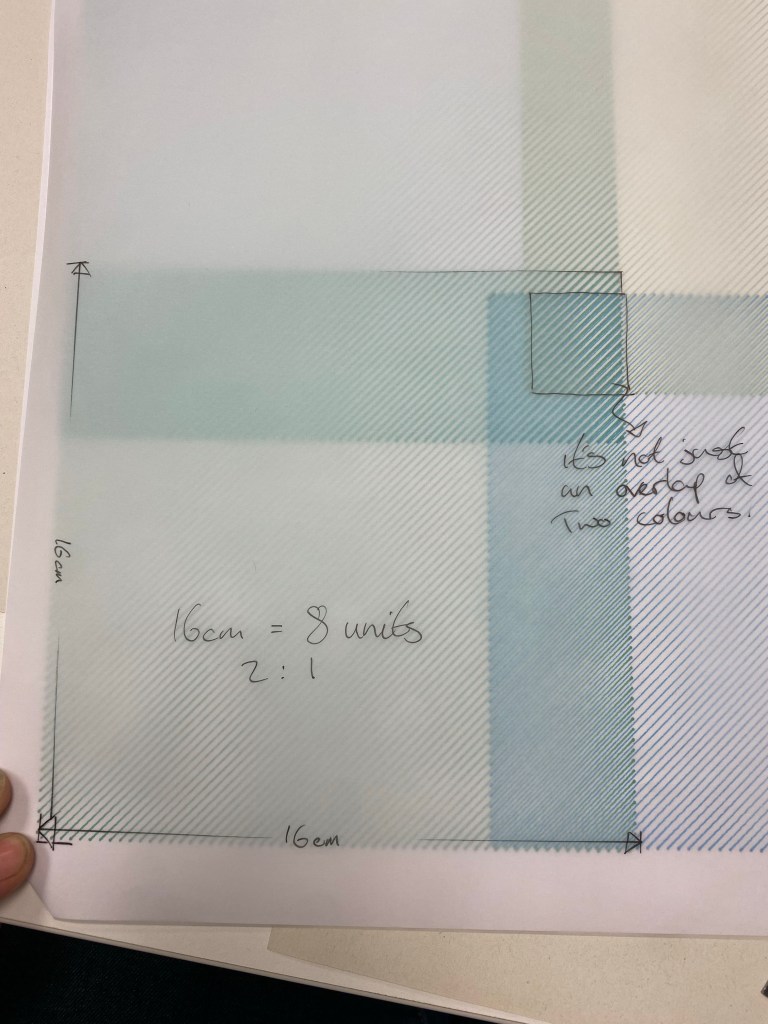
The first experiment didn’t have the right effect when the lines overlapped, so this is the test of more lines that was suggested by Gillian.

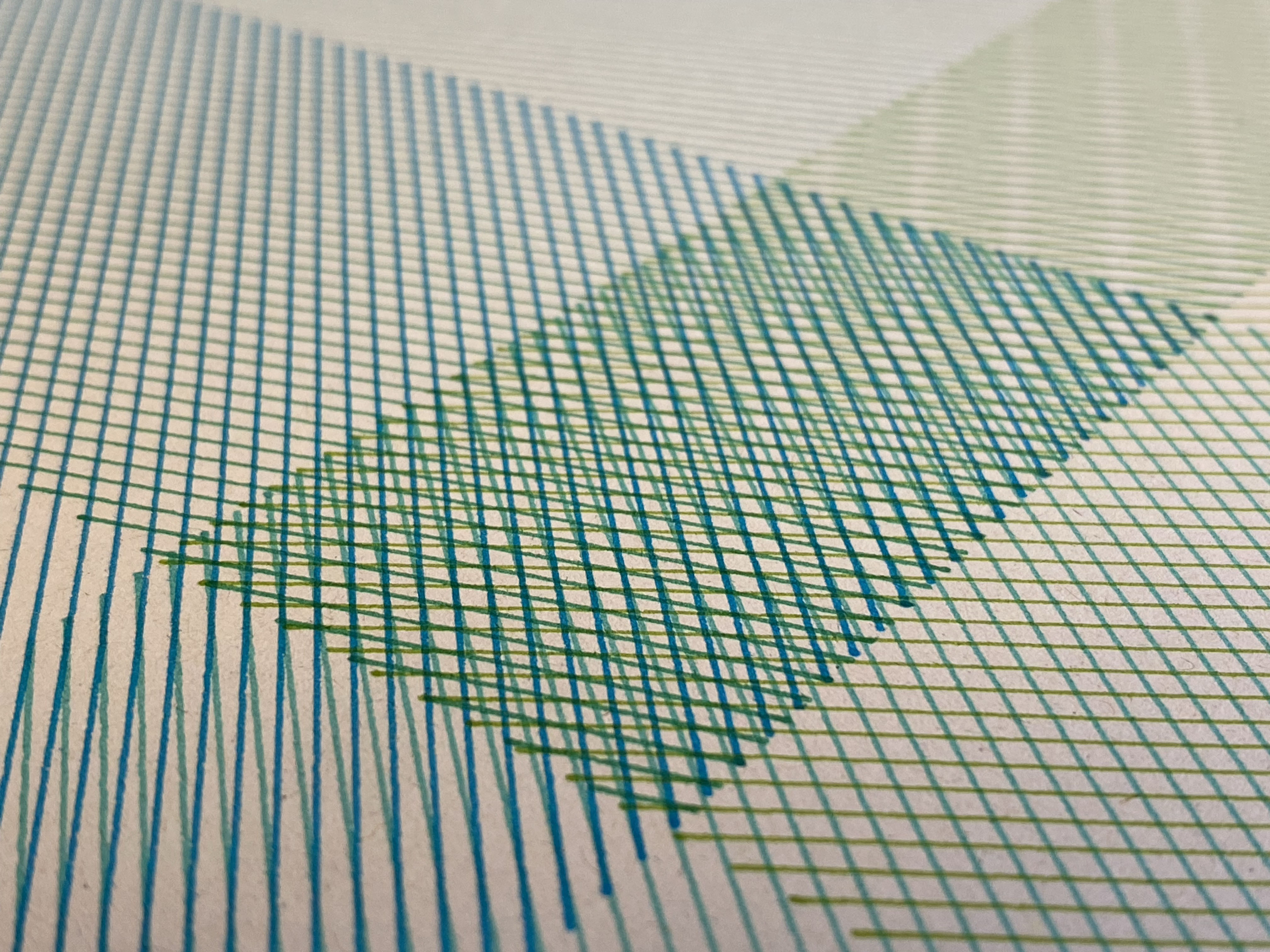
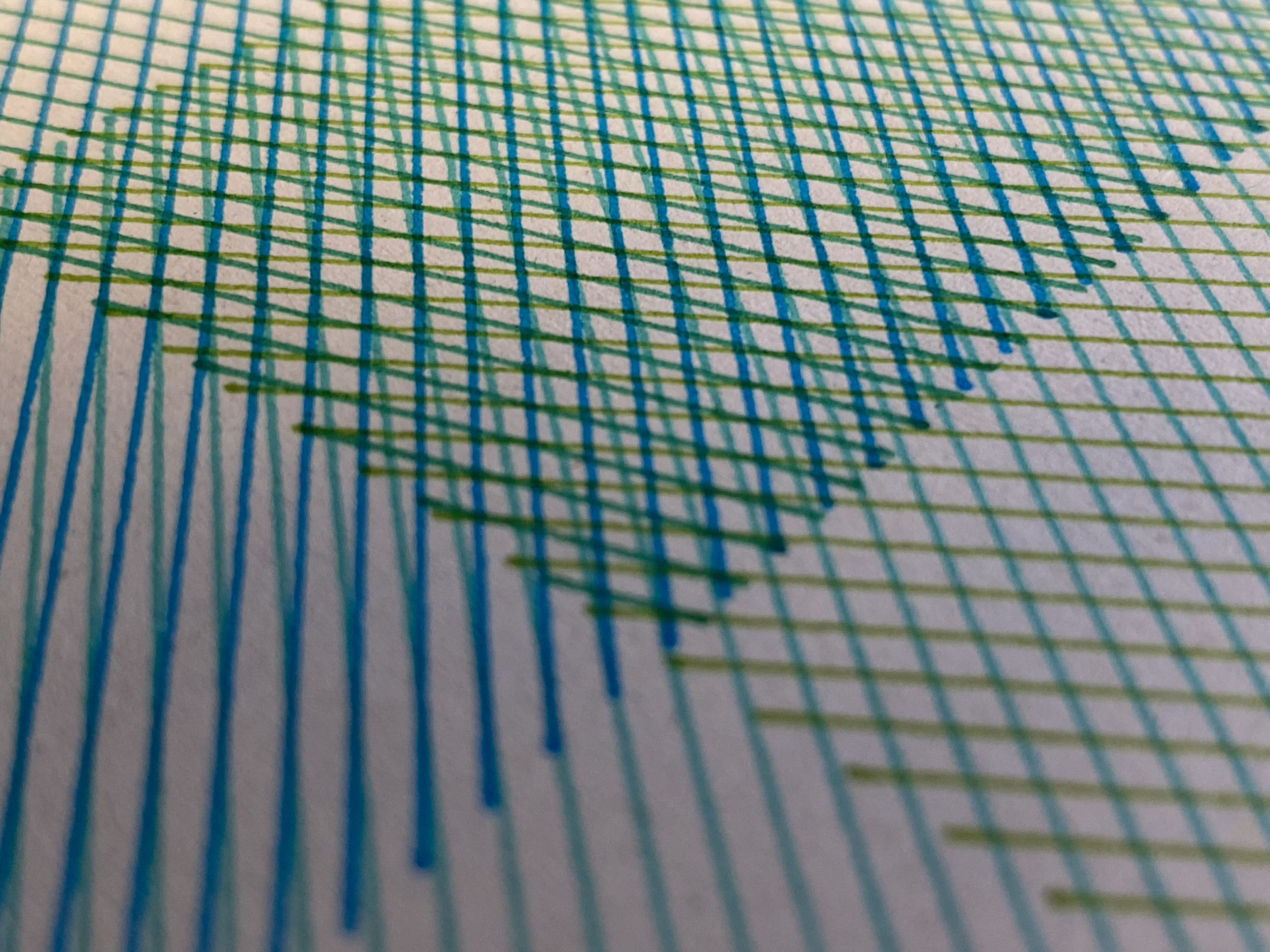
This is the second experiment using the Axi draw. Again, I isolated the core elements from what I have seen within images of lithium fields, the vibrant yet unnatural greens and the artificial grid structure of the landscape and interpreted them in another way.
After Review
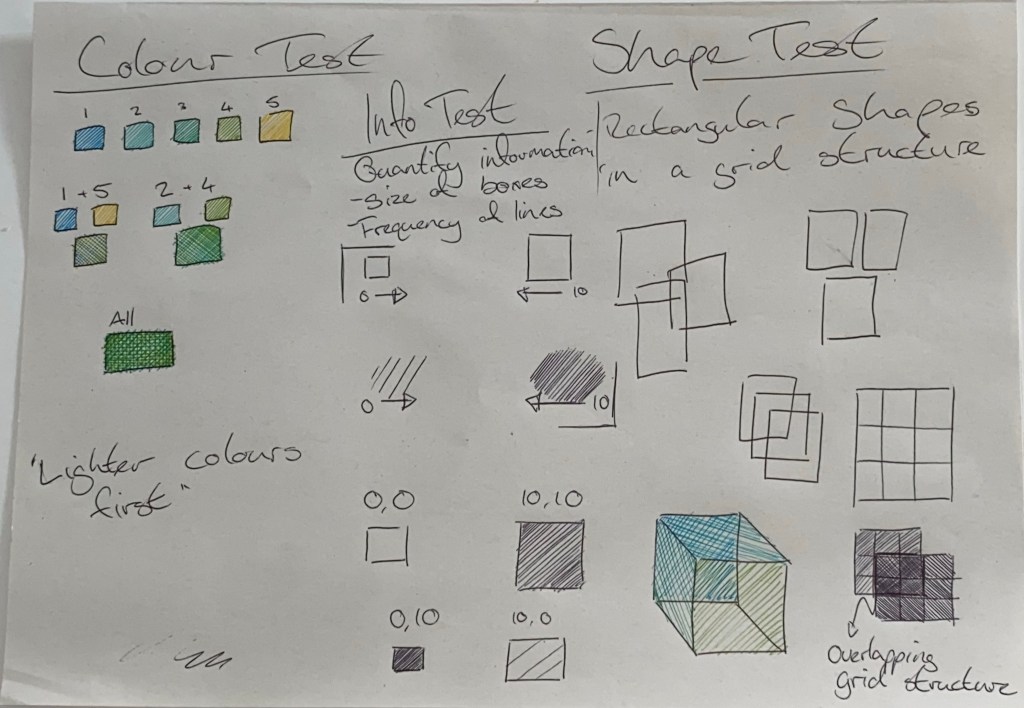
In the review, Cat suggested using the hatched rectangles as the quantifiers. The bigger the square, the more lithium is present. Taking this further, I would like to explore the frequency of the lines being an indicator of quantity. The size of the square indicates one factor, and the frequency of the lines indicates another.
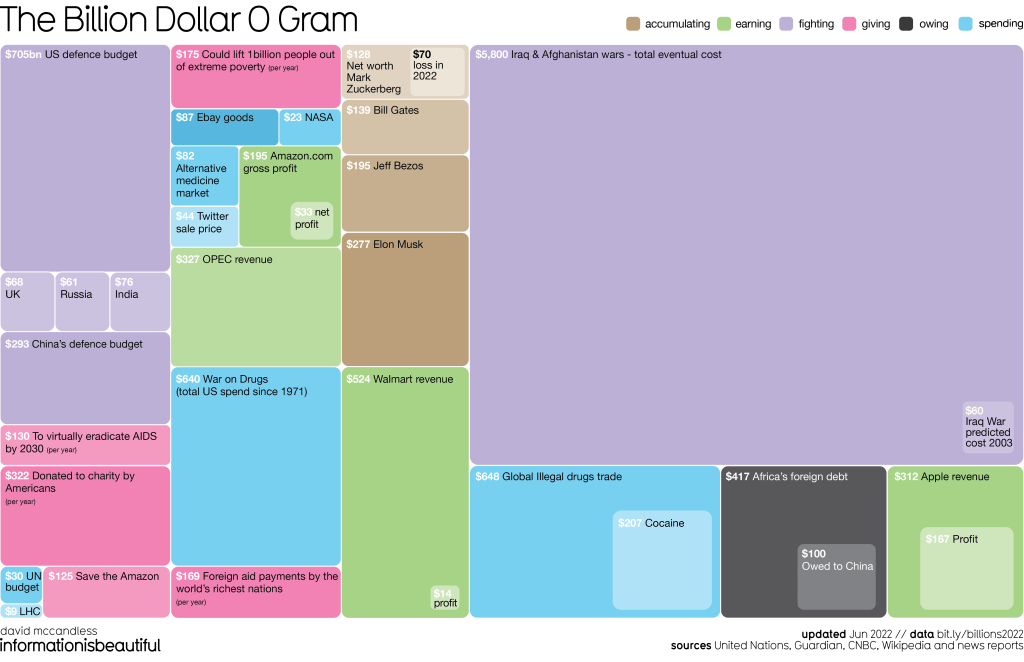
https://www.informationisbeautiful.net/visualizations/the-billion-dollar-gram/
Cards

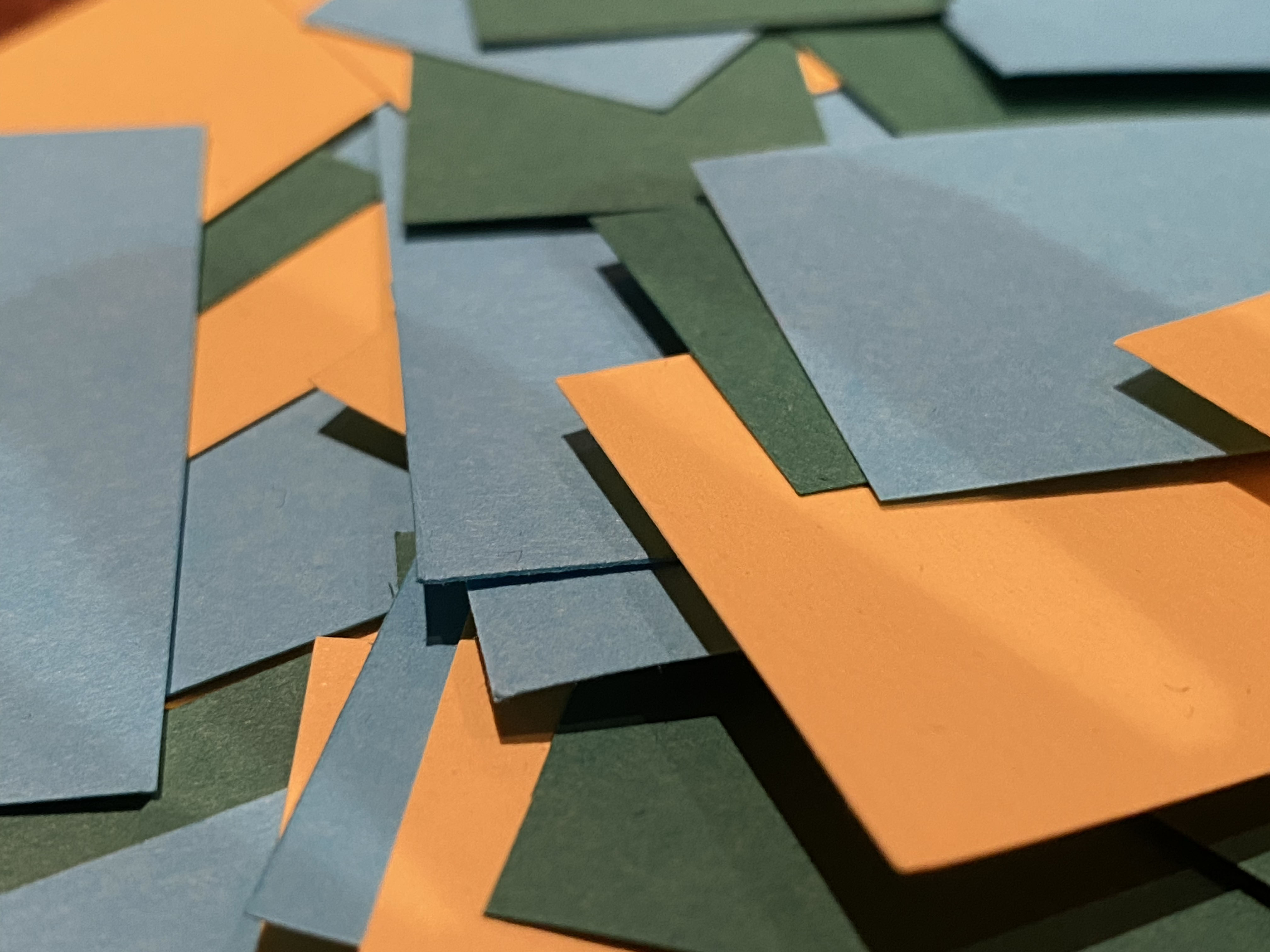

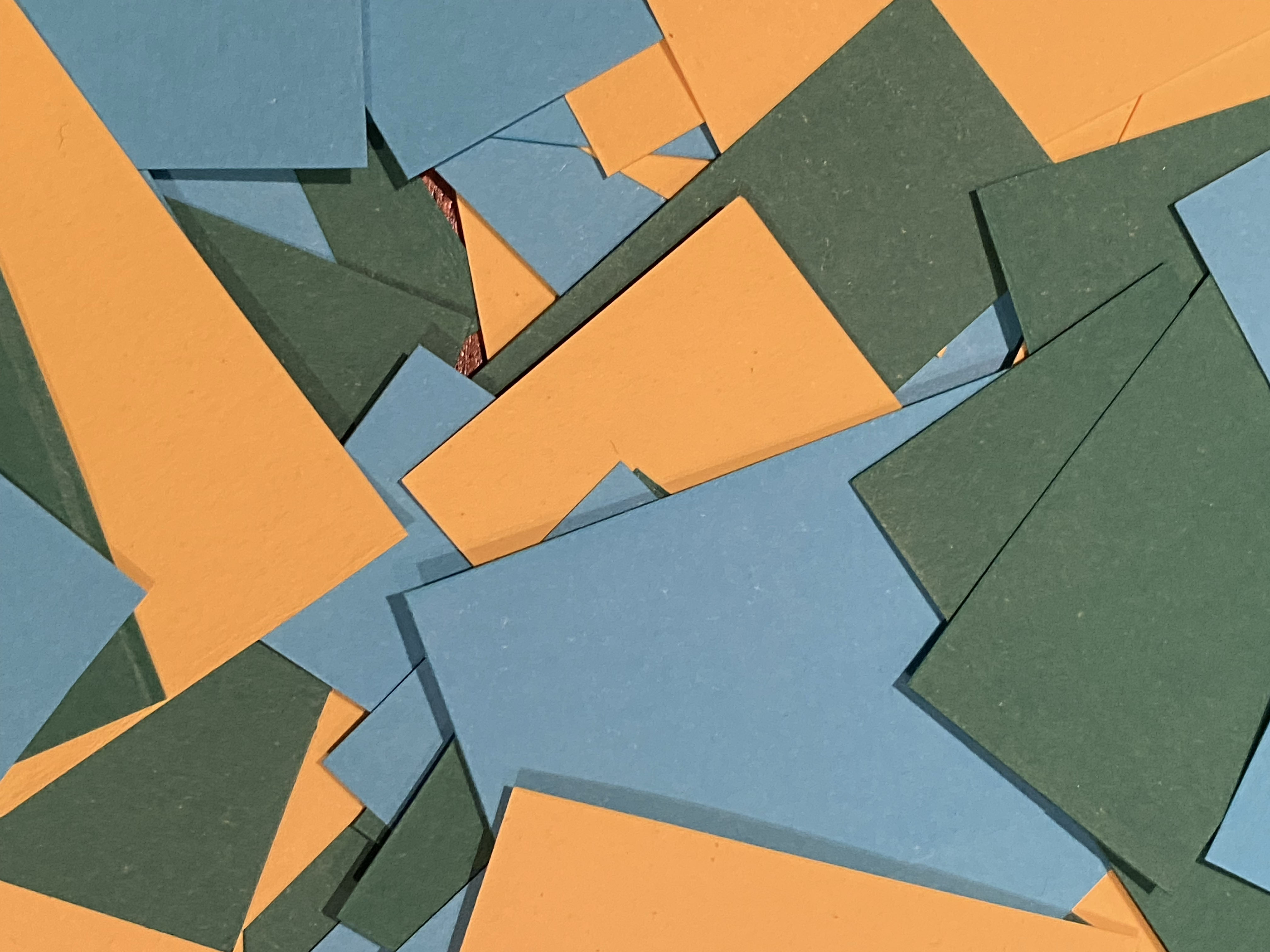

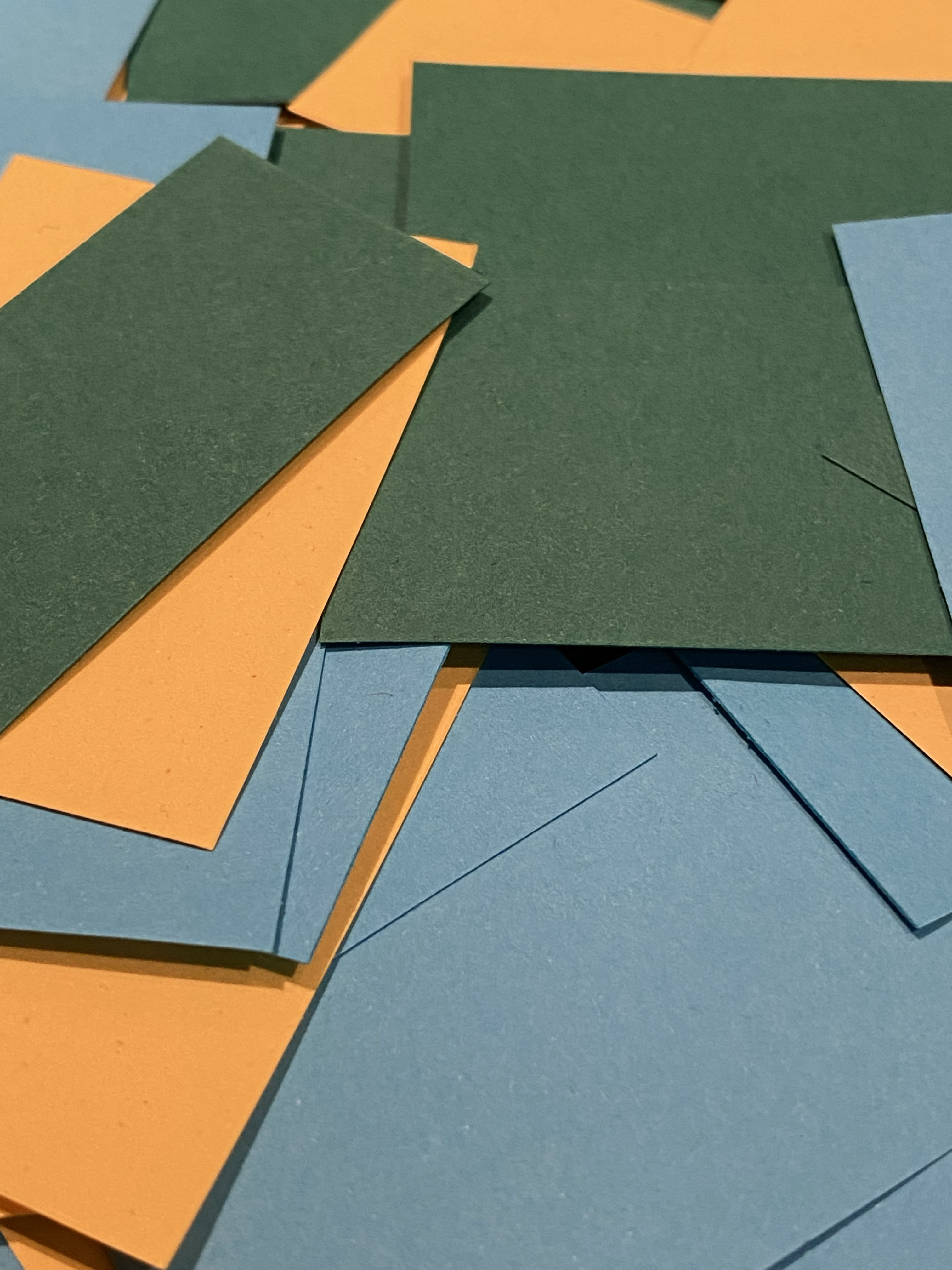
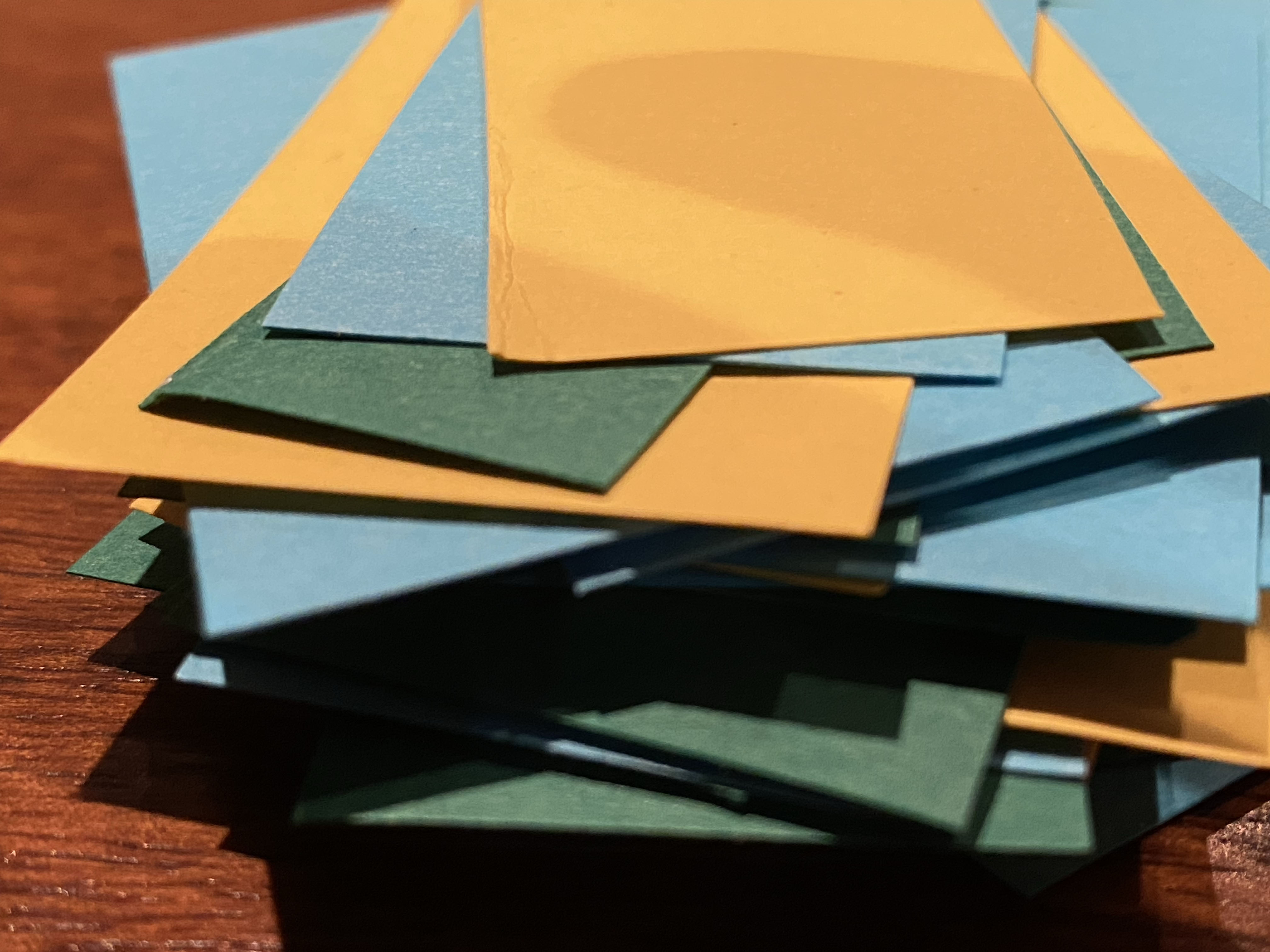
This experiment forced me to step away from the Axi Draw and try something else; I took what I had already identified as the core elements of the lithium fields, the colours and the shape and applied it to something else.

Self-Review
As I review the work I’ve done so far, a throughline I’ve noticed is the Data Visualisation and illuminating aspects of the Anthropocene to the viewer. This now has been focused on the journey of Lithium from manufacturing to the devices we use daily and how the lithium-ion batteries that are marketed as a green alternative end their life in the same tech dump that the “worse” tech ends up in any way.
Note to self: Remember always to bring it back to a personal level. If the final piece is too abstract, that might take away from the message, what you’re trying to say, and what you’re trying to highlight. To show people how much lithium they use and how that is damaging.
Embracing Mess (Kind of)

Exploring the Axi-Draw
Stamps
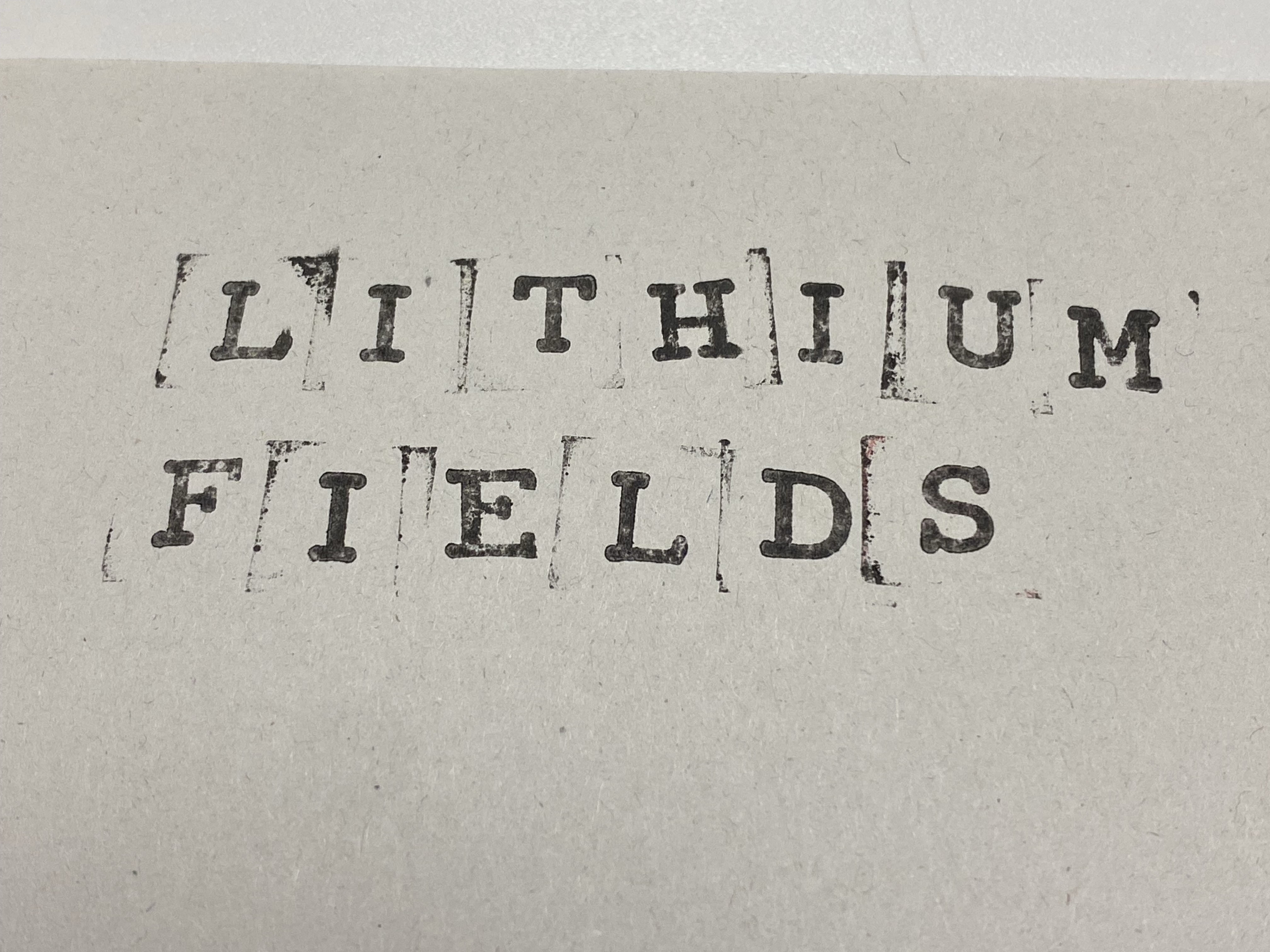
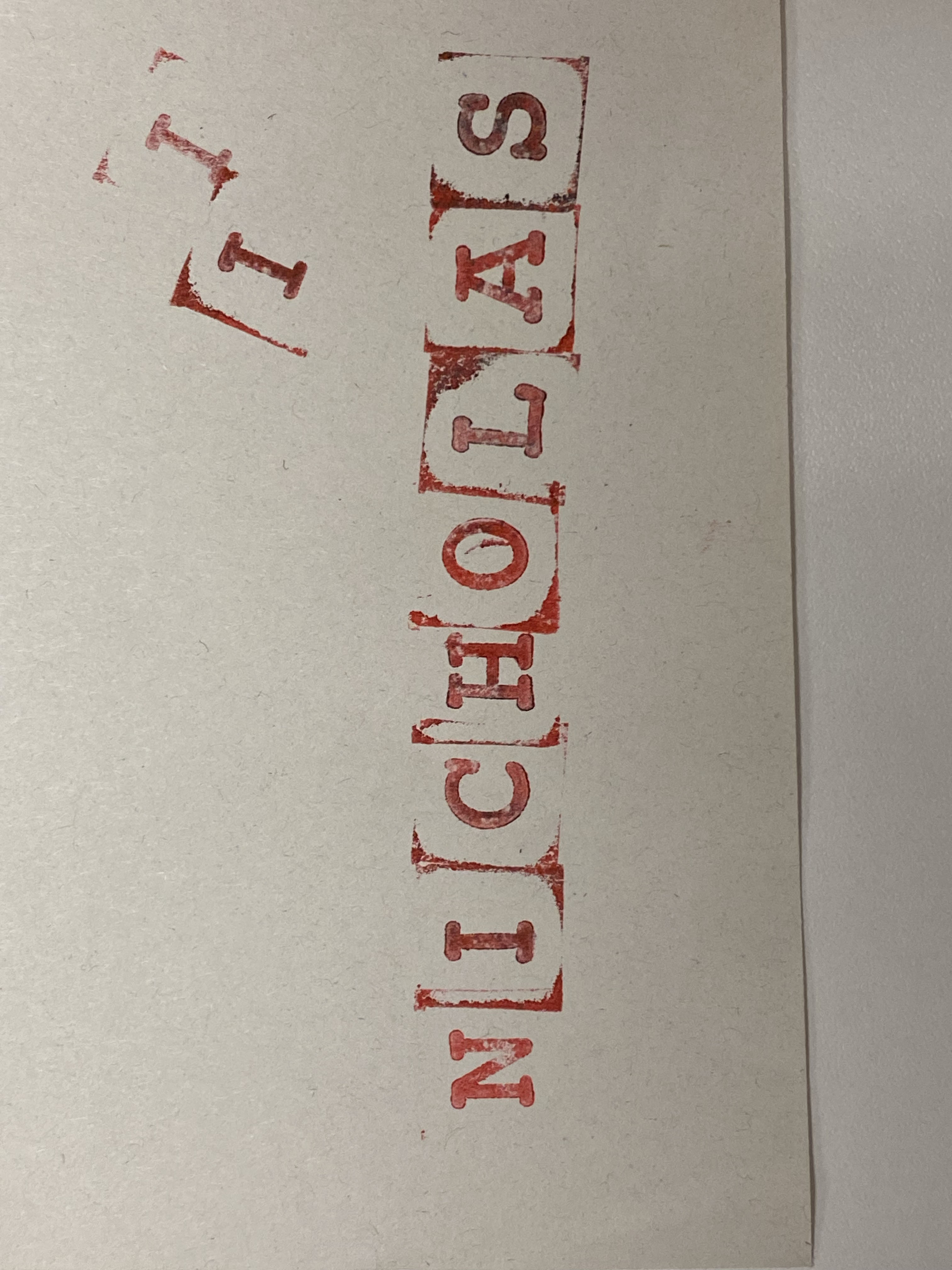
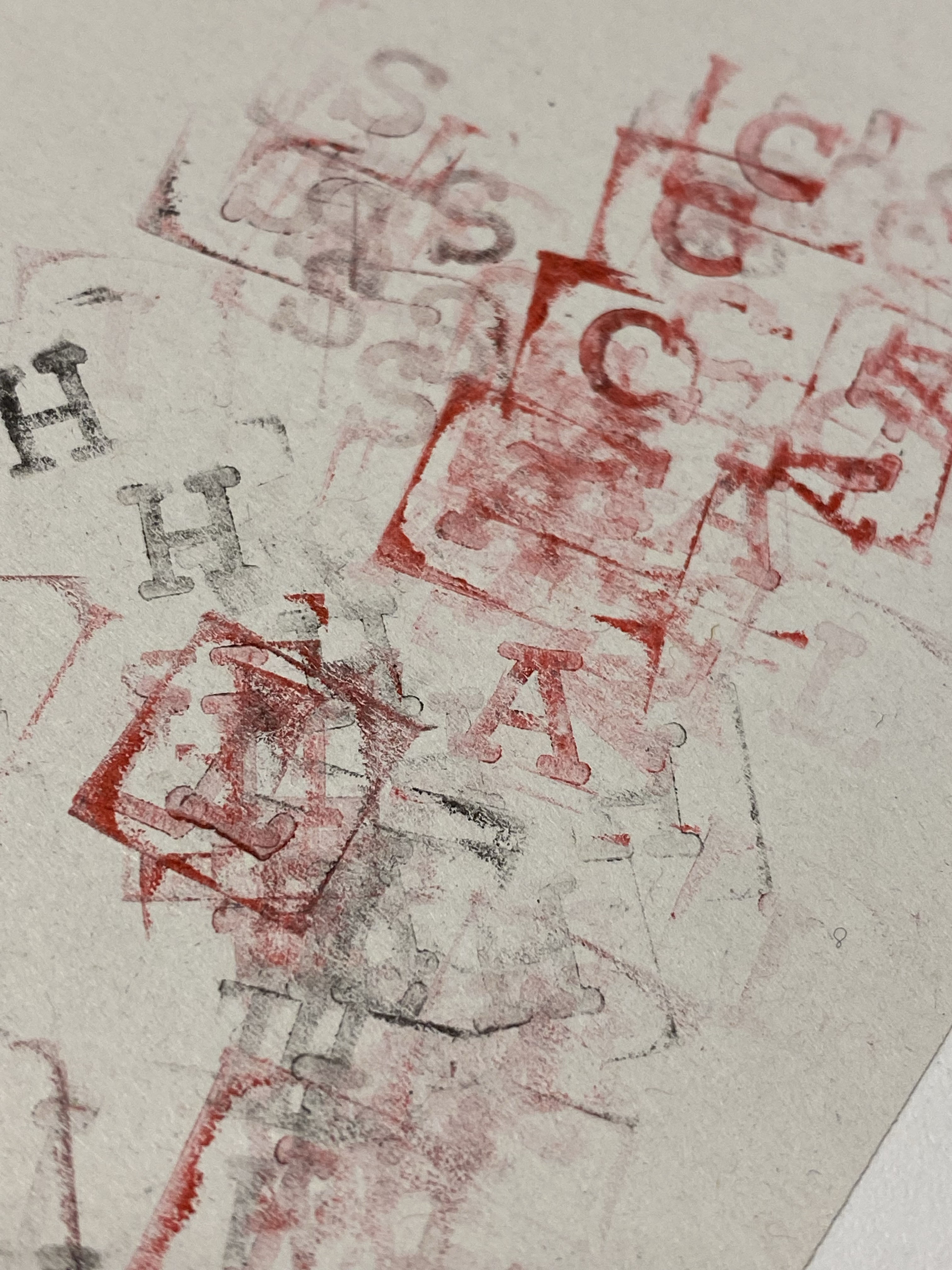
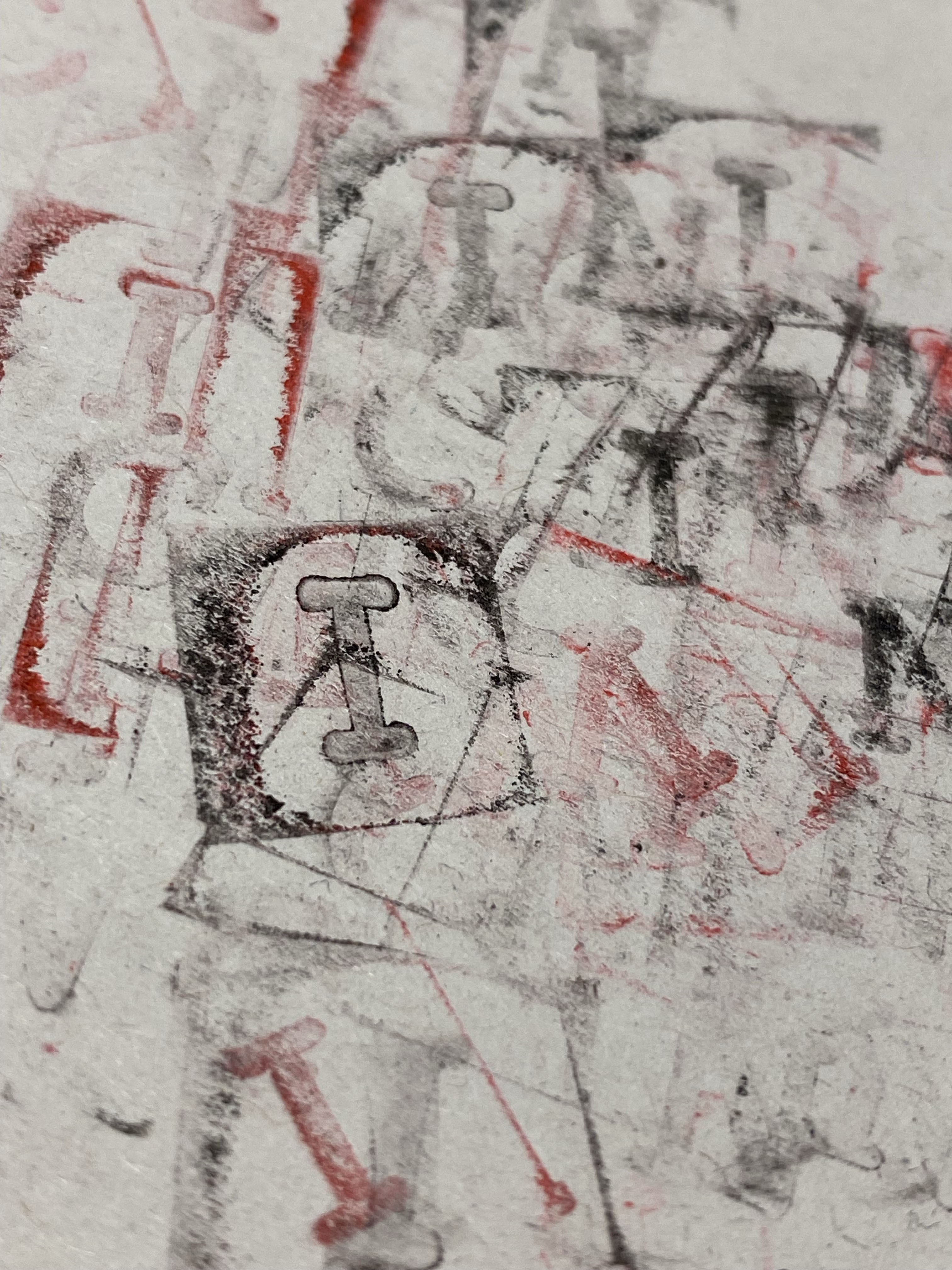
This was just a test after these lettering stamps caught my eye when shopping, the idea being that I continue to open myself up to using different mediums and techniques.
Upclose and Personal

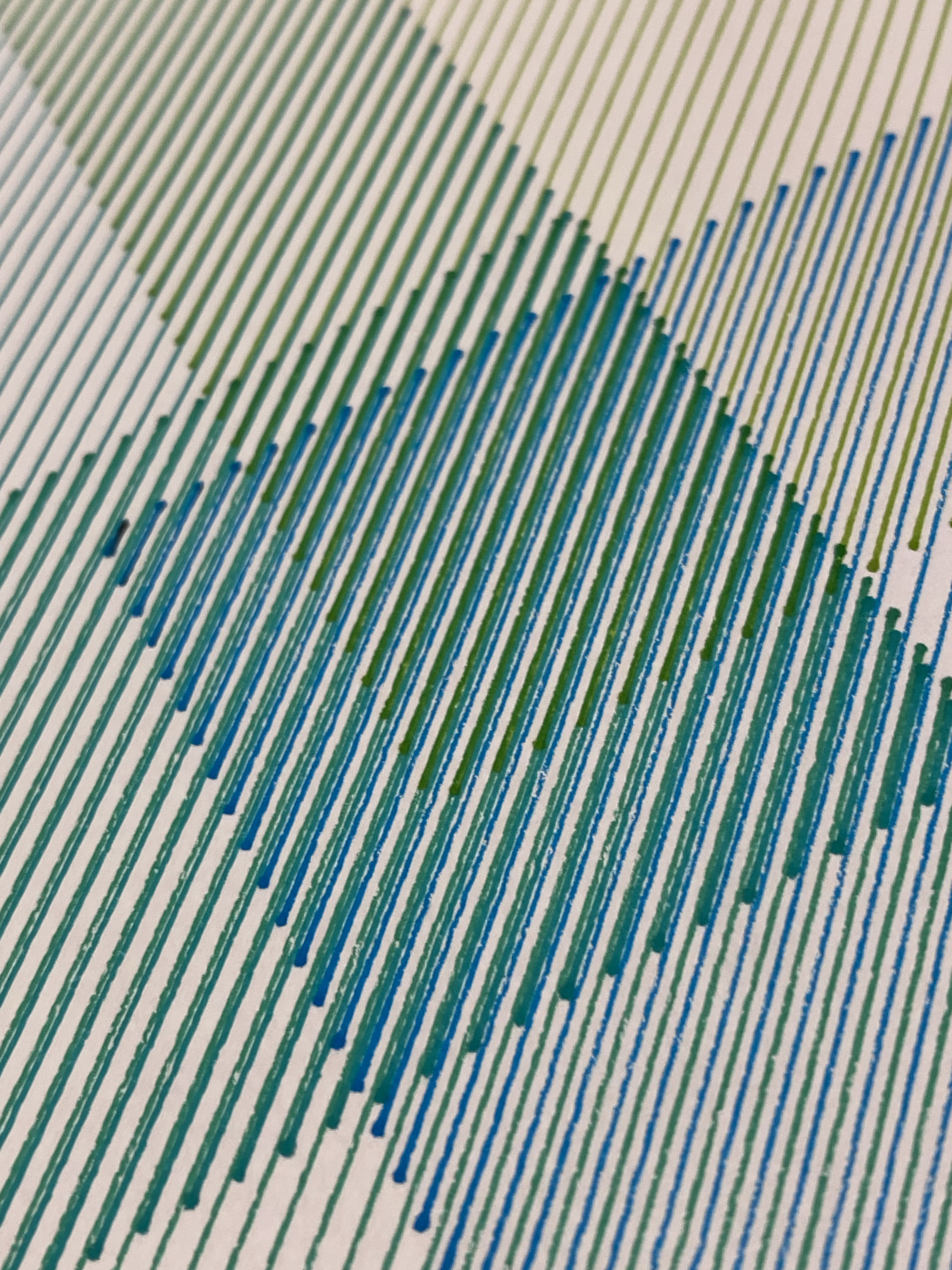
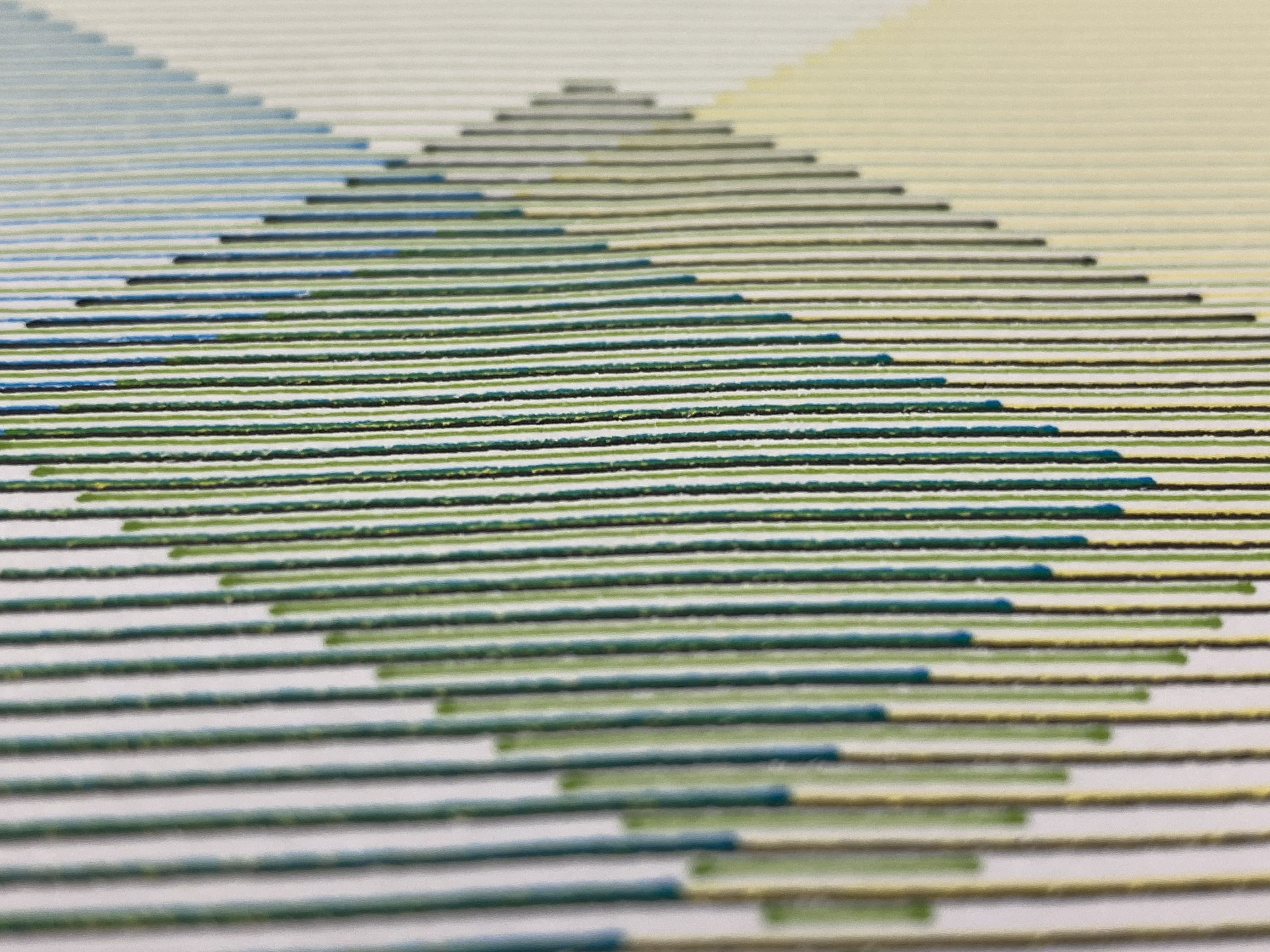
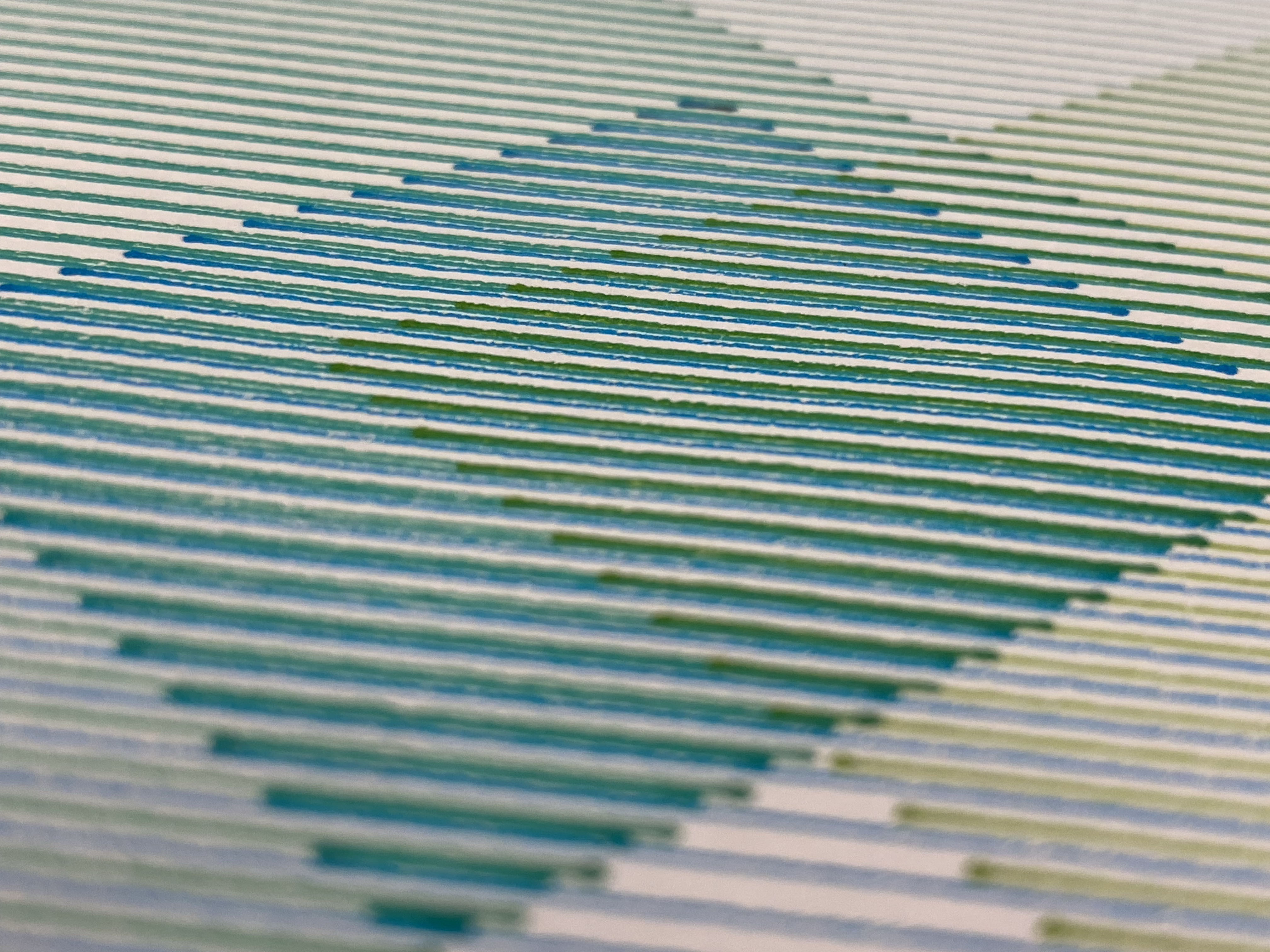
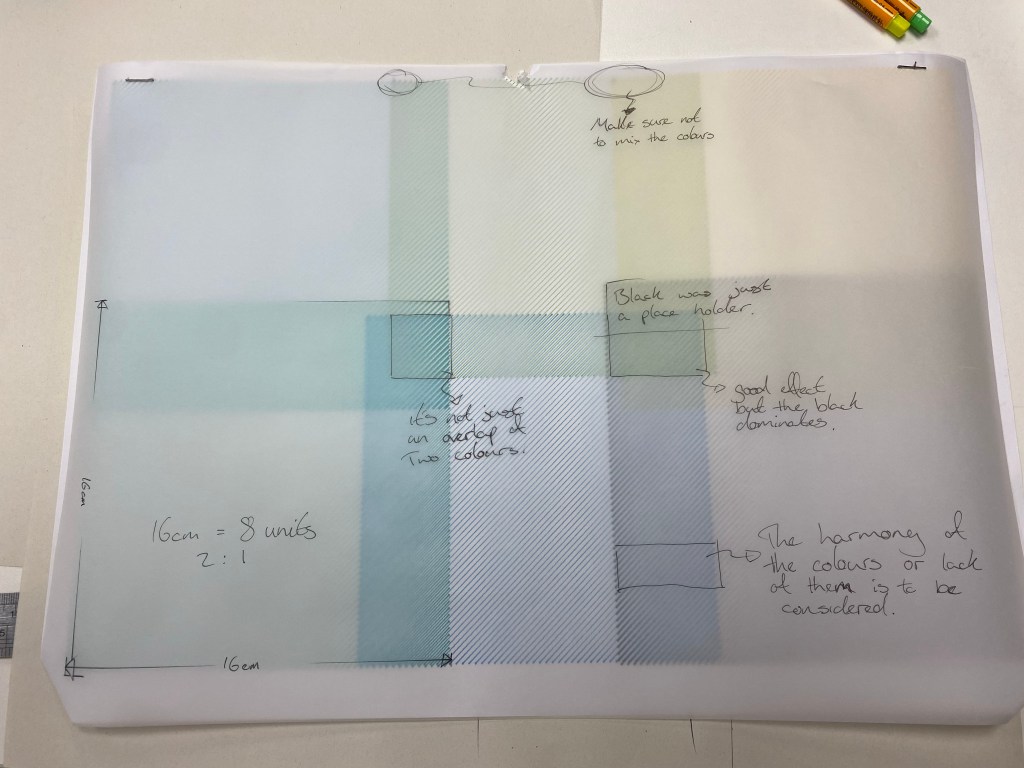


Layout Creation
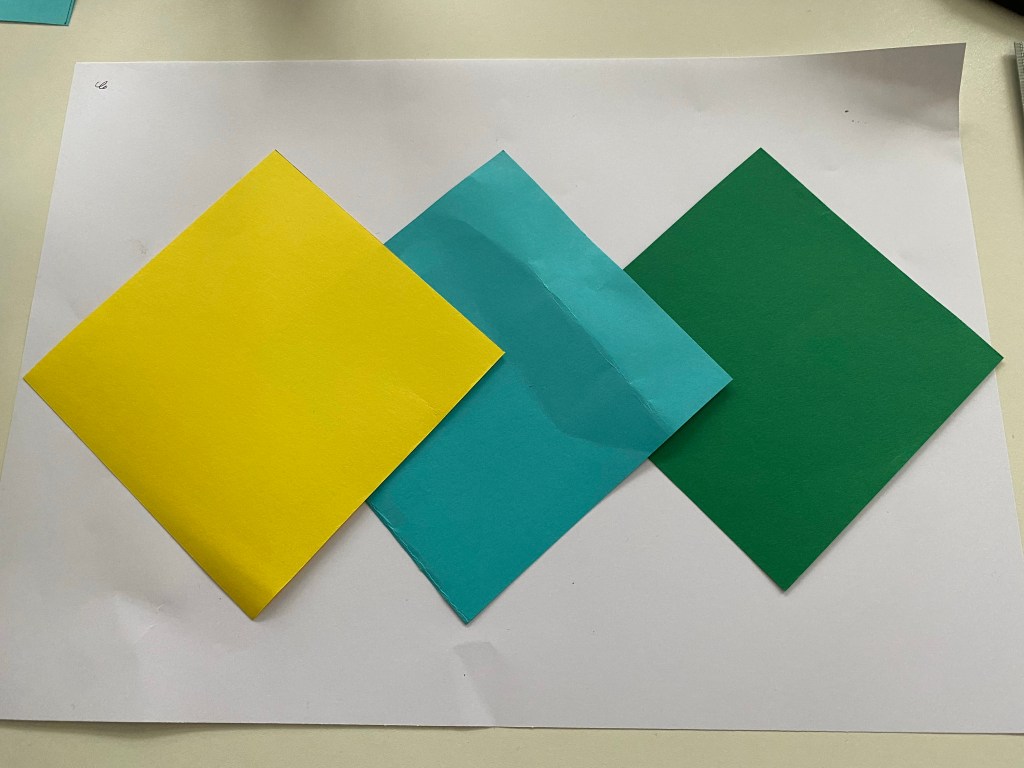
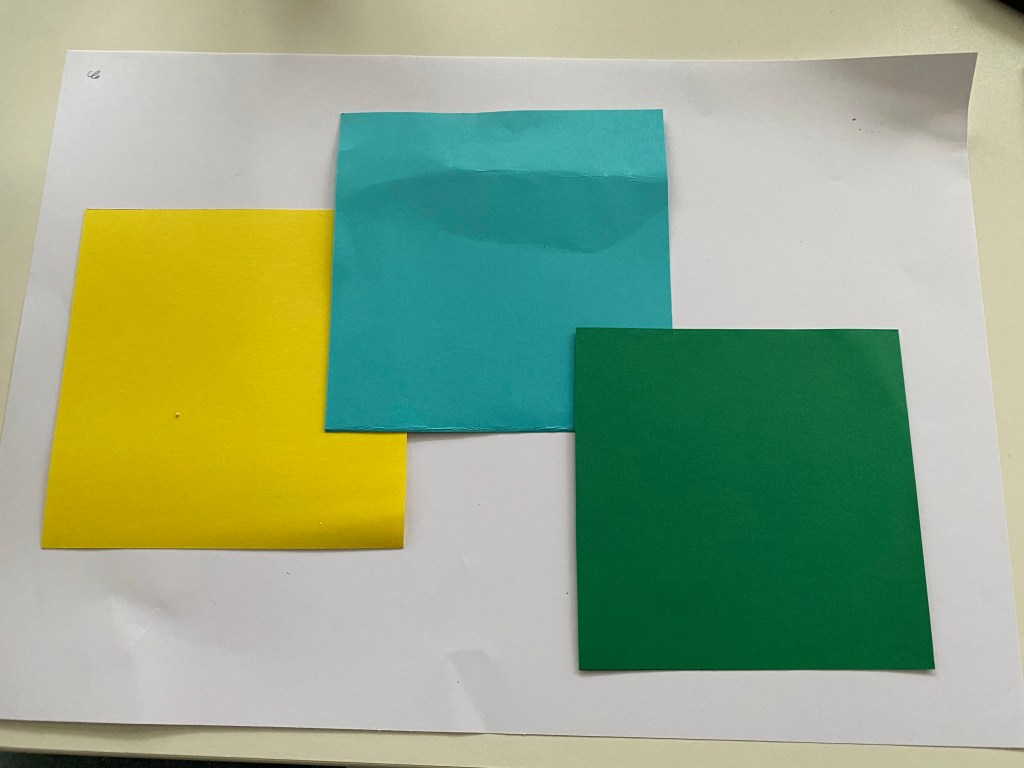
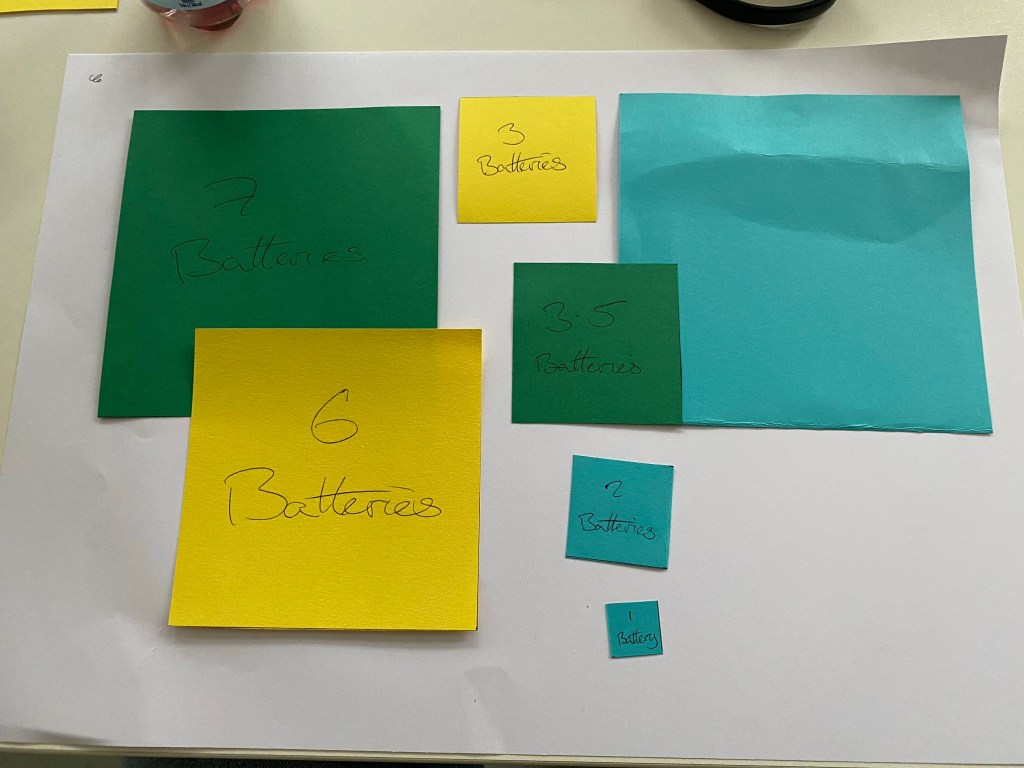
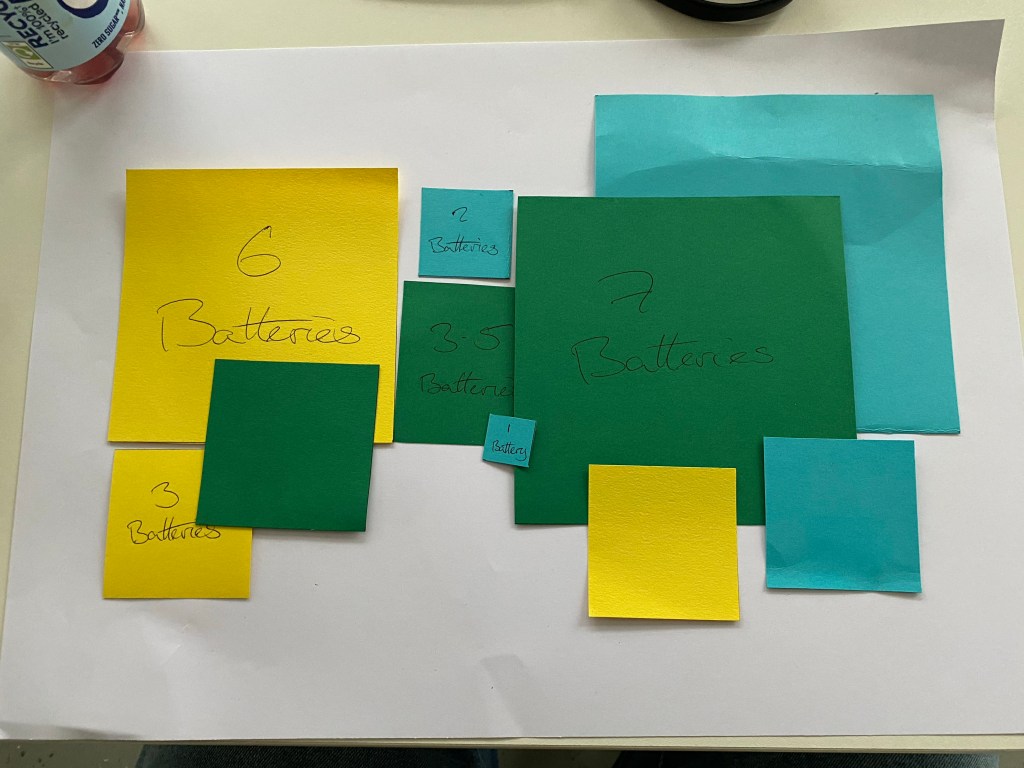
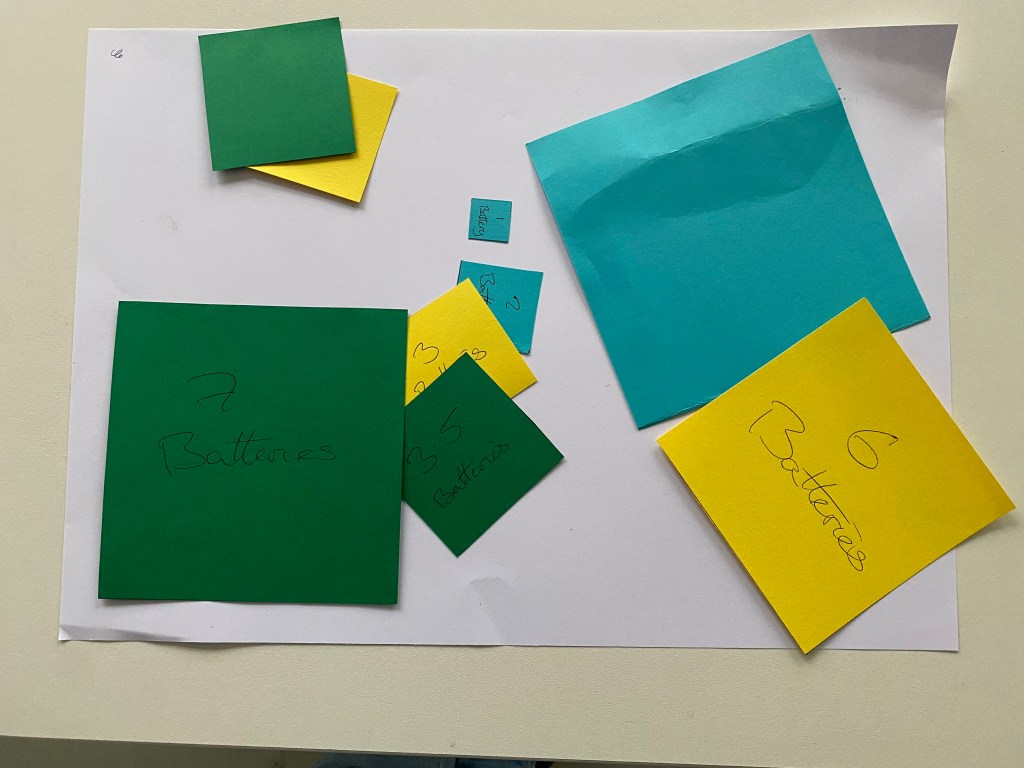

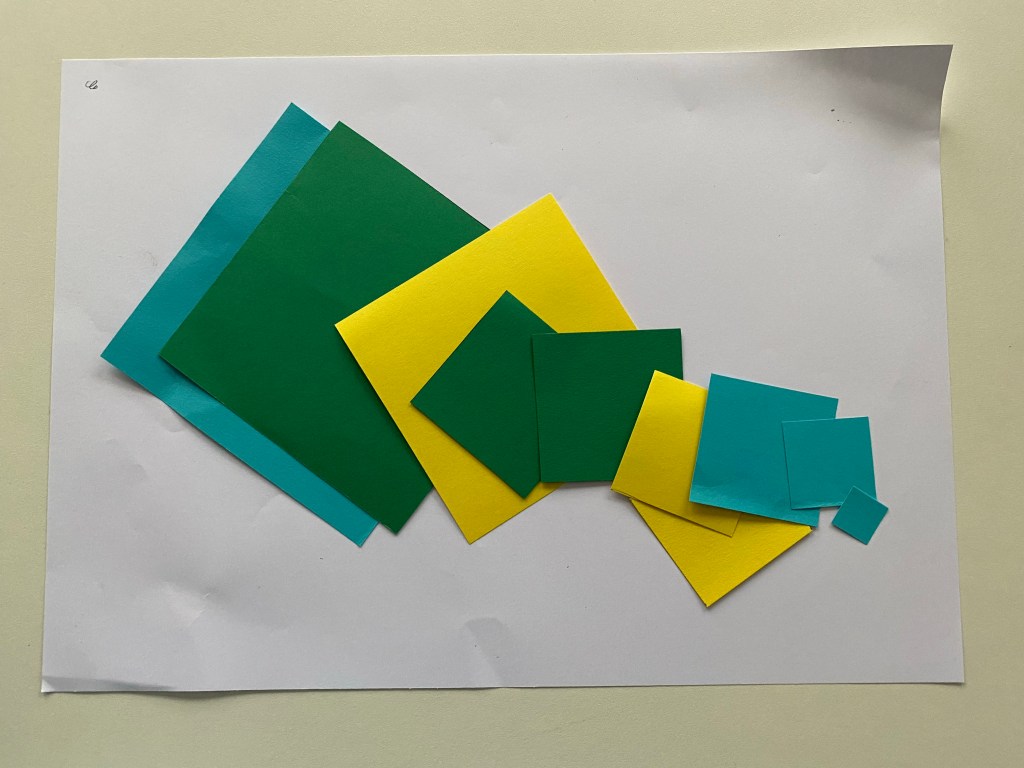

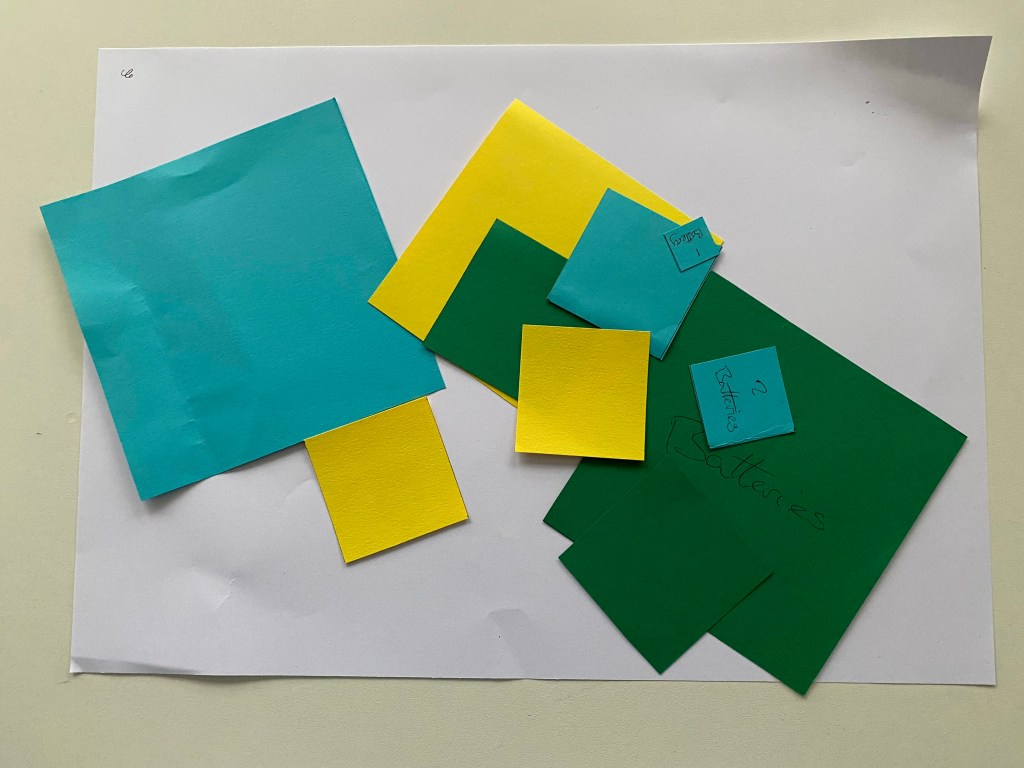
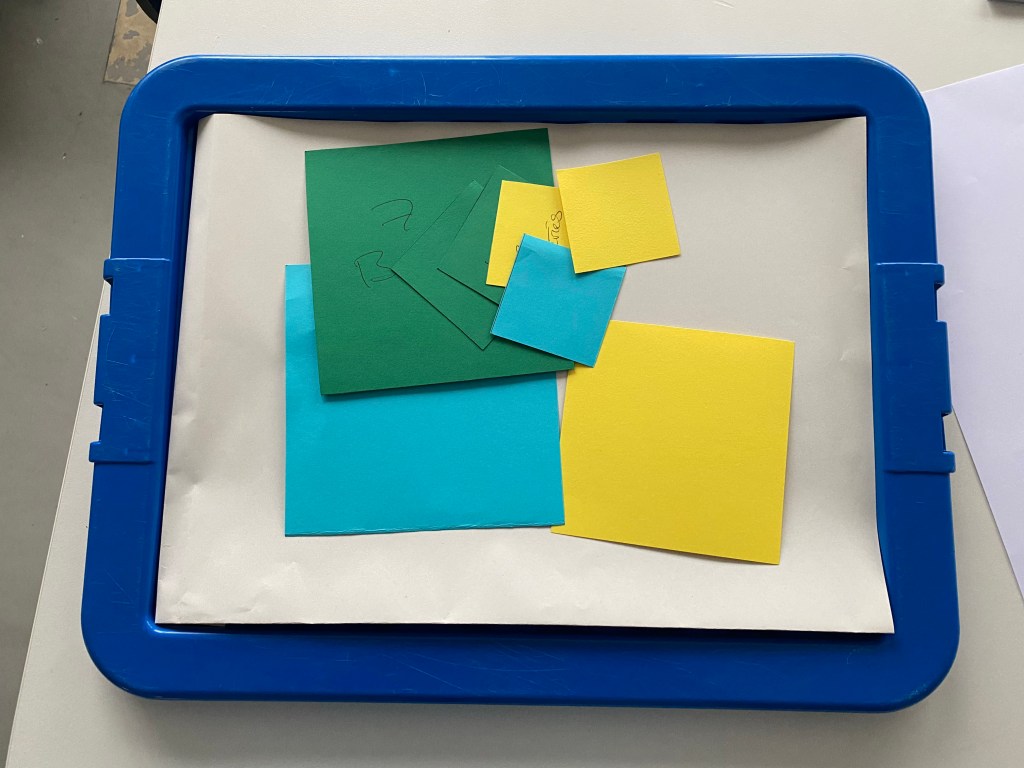
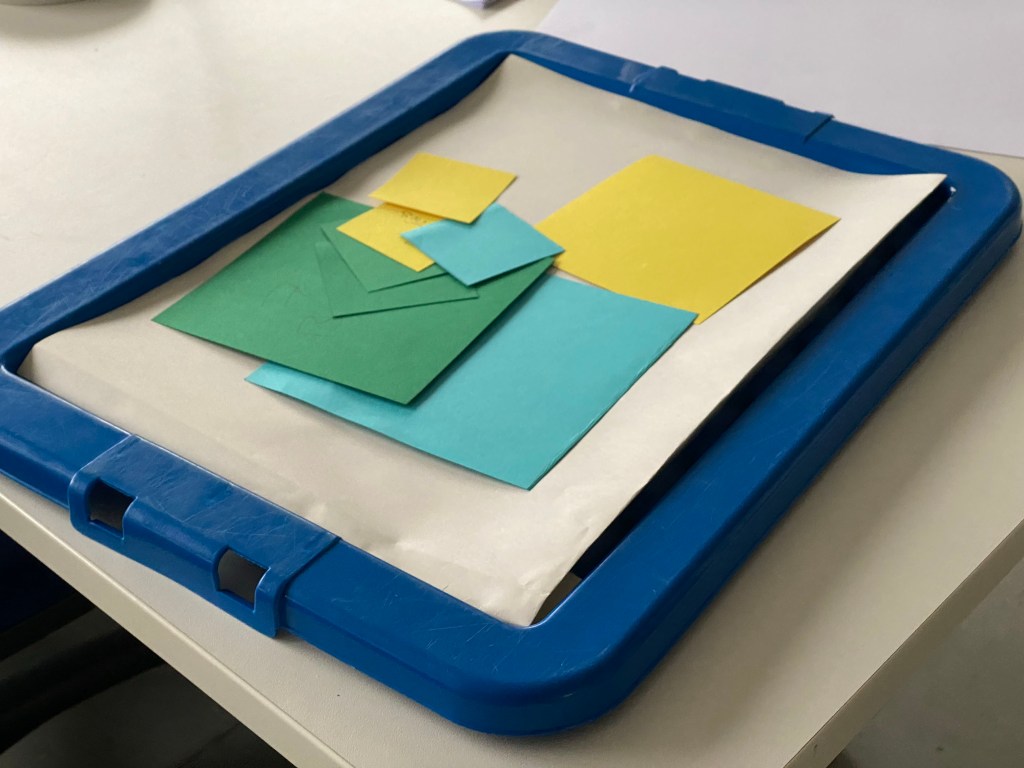
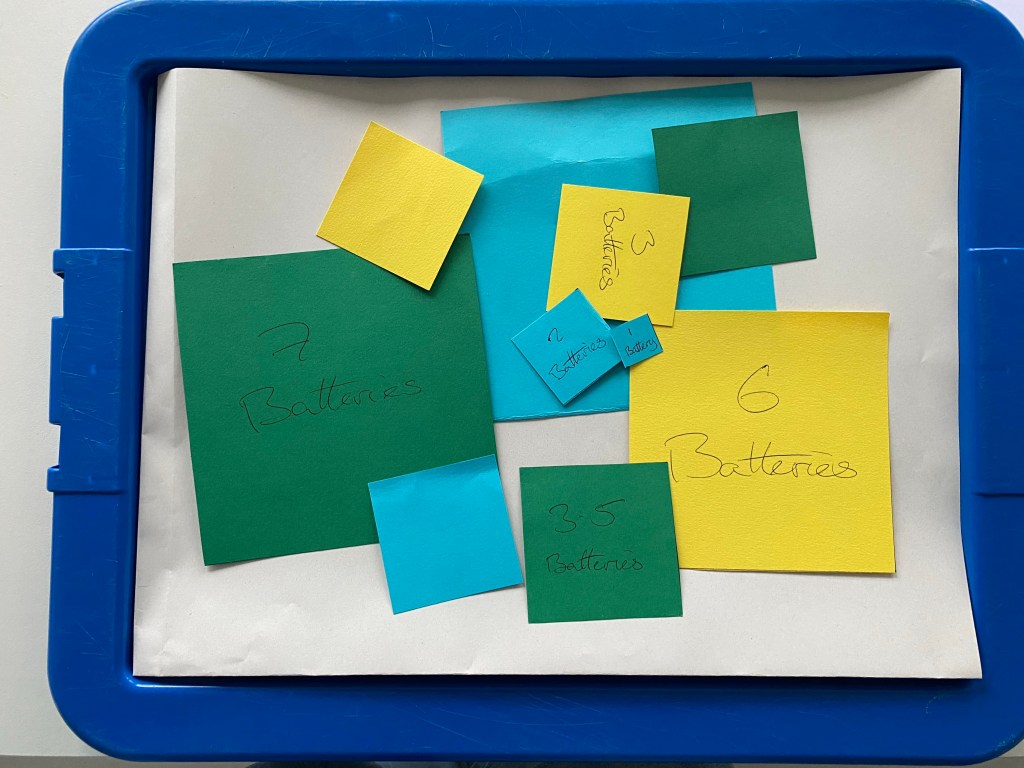
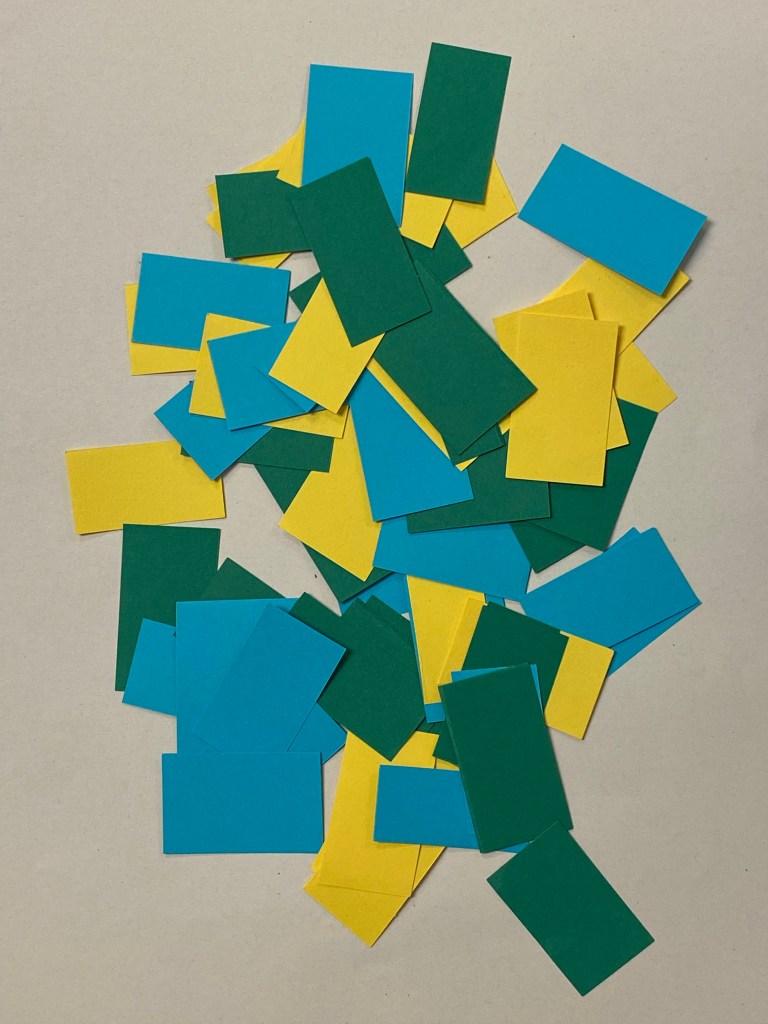
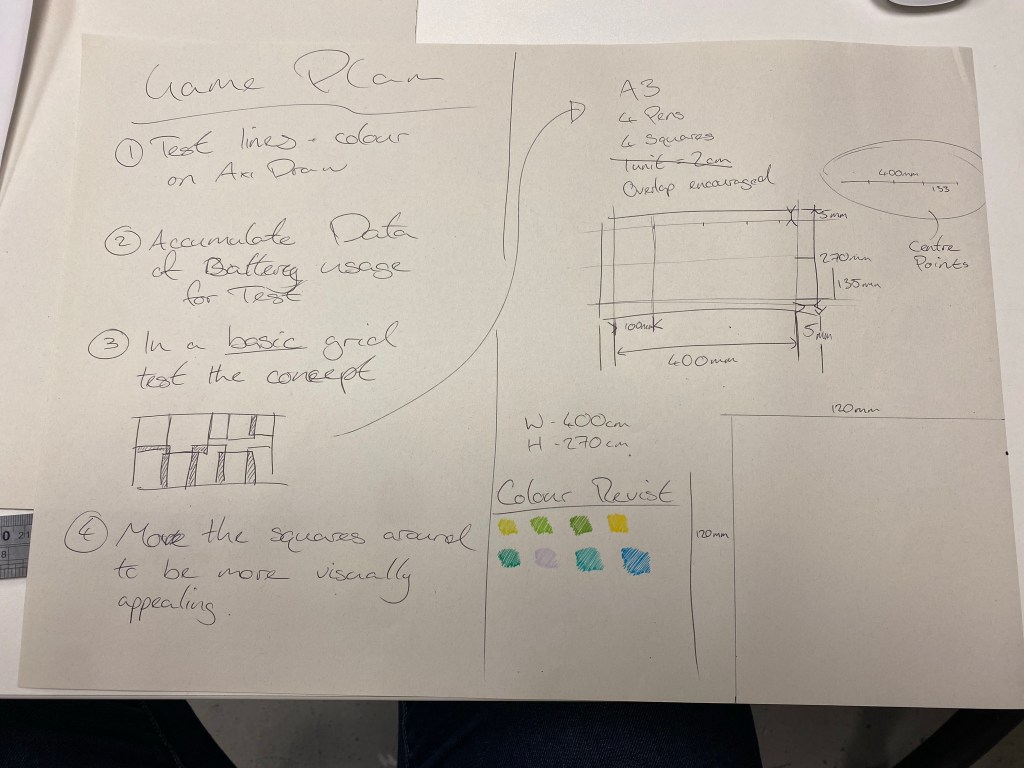
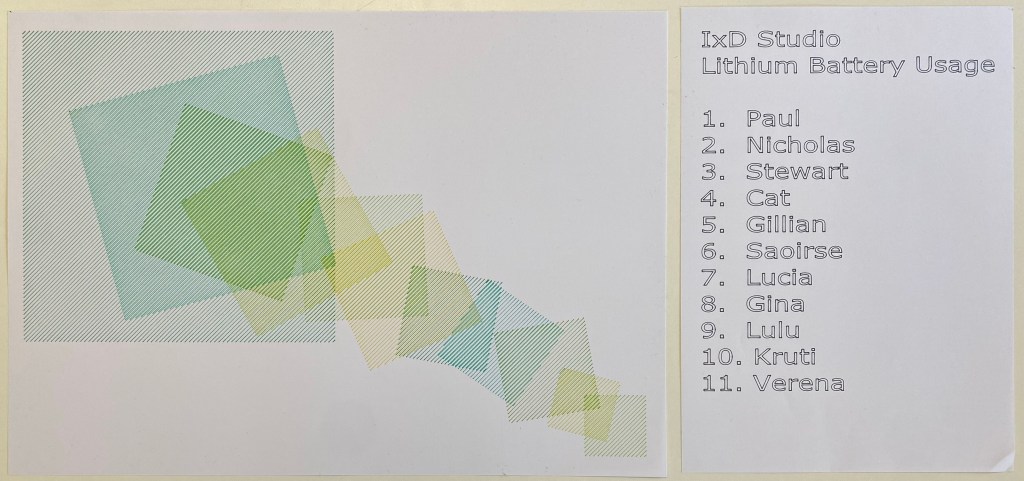
The next stage I wanted to tackle was the layout of the squares. (These sizes and quantities of squares might not be the same as the final outcome, but I wanted to create a general shape for each size of the battery)
I used several methods to make/discover the layout, mainly to remove my OCPD from the process and discover more random and potentially engaging layouts.
- Firstly, standard layouts and organisation.
- Secondly, asking my colleagues to organise it how they would set no parameters on them.
- Thirdly, let the squares from a distance and let them fall where they may (with slight adjusting if they went too far off the paper).
- Finally, I used a container lid to hold the squares within the paper and ‘shoogled’ them around within the frame of the lid so that they all stayed closer together but still had an element that I might not think to replicate usually.
Layout Tests
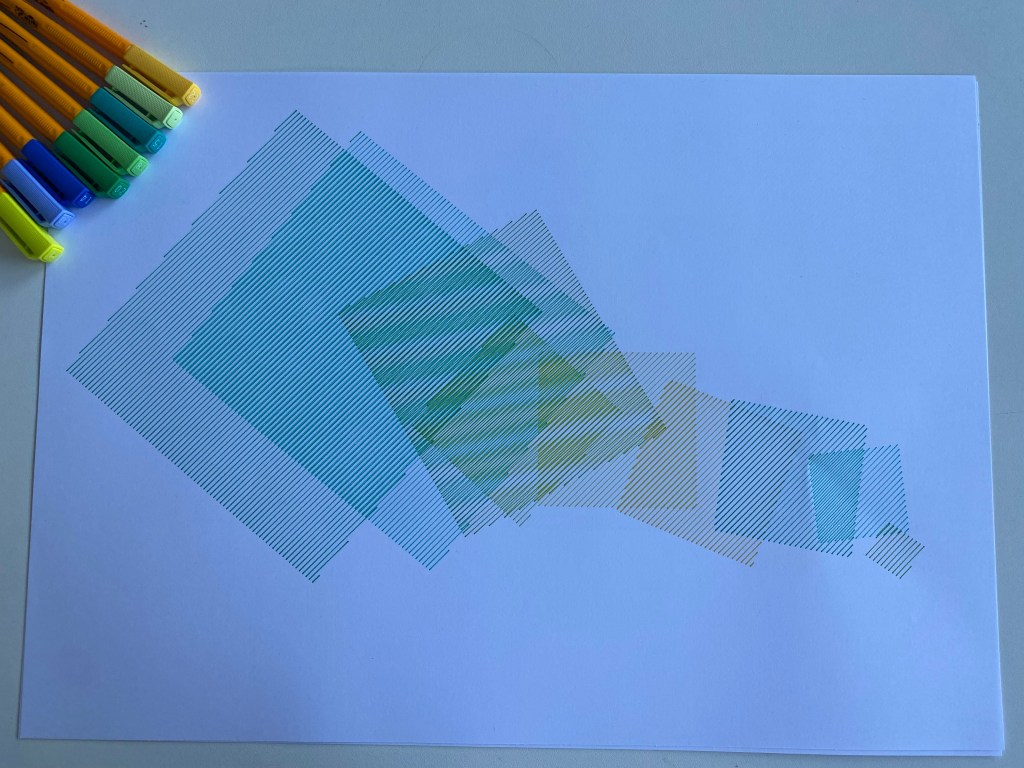
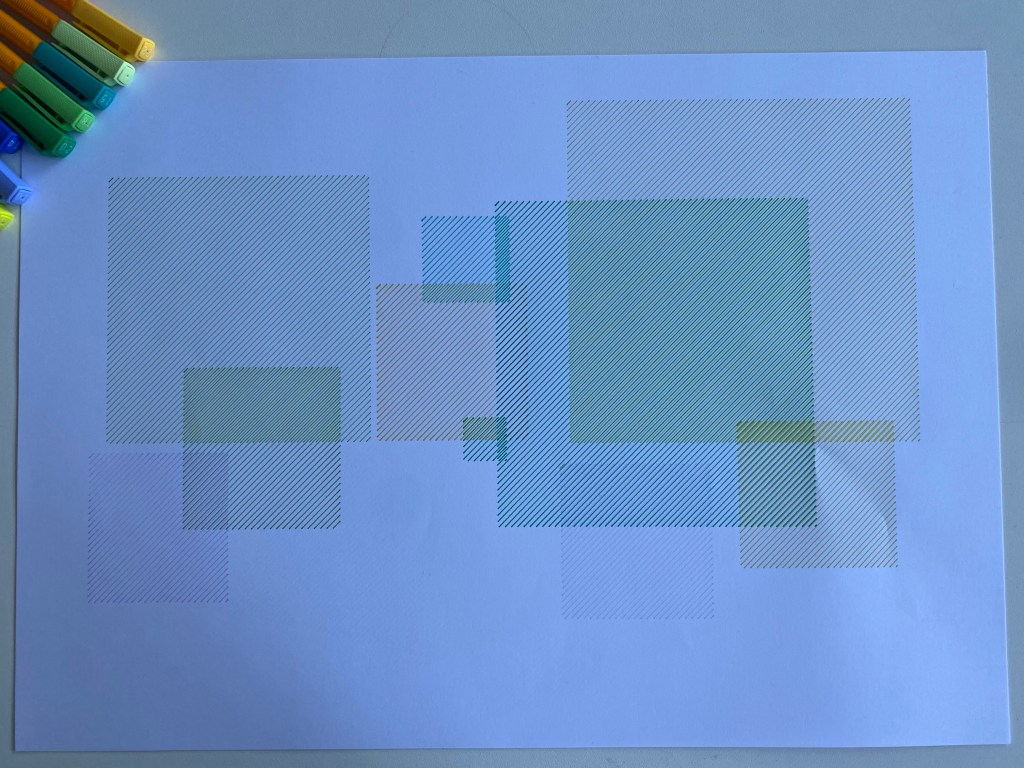
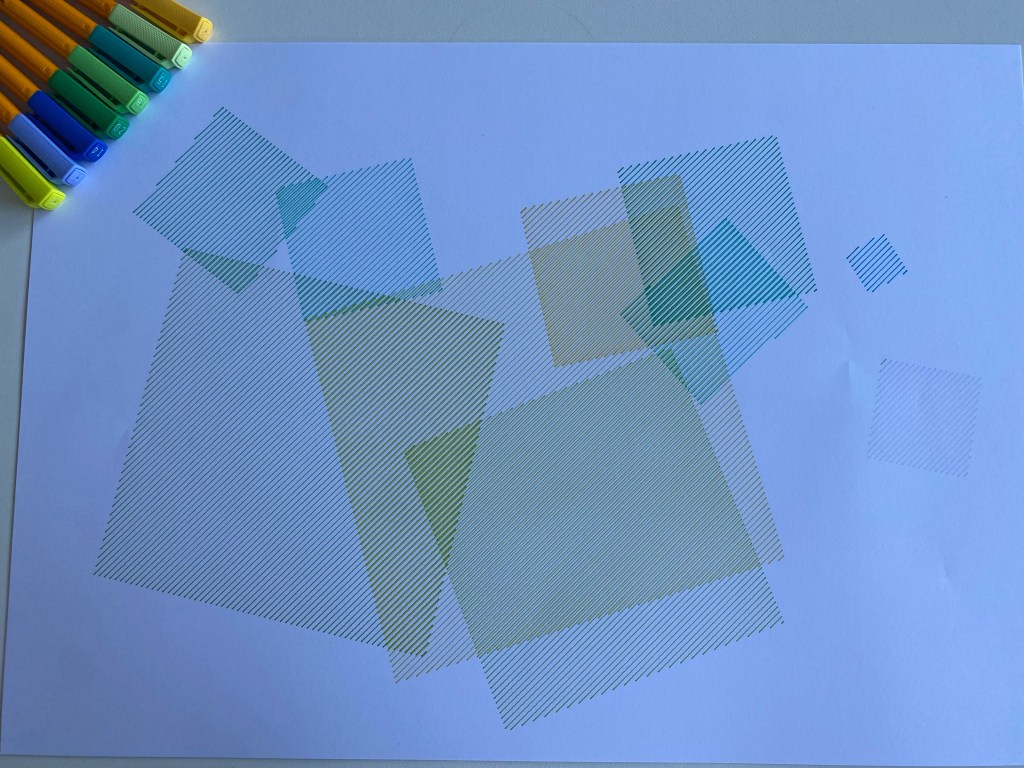
These are the selected layouts taken forwards from the card test to see how they work with the colours selected and on the axi draw.
Collecting Info
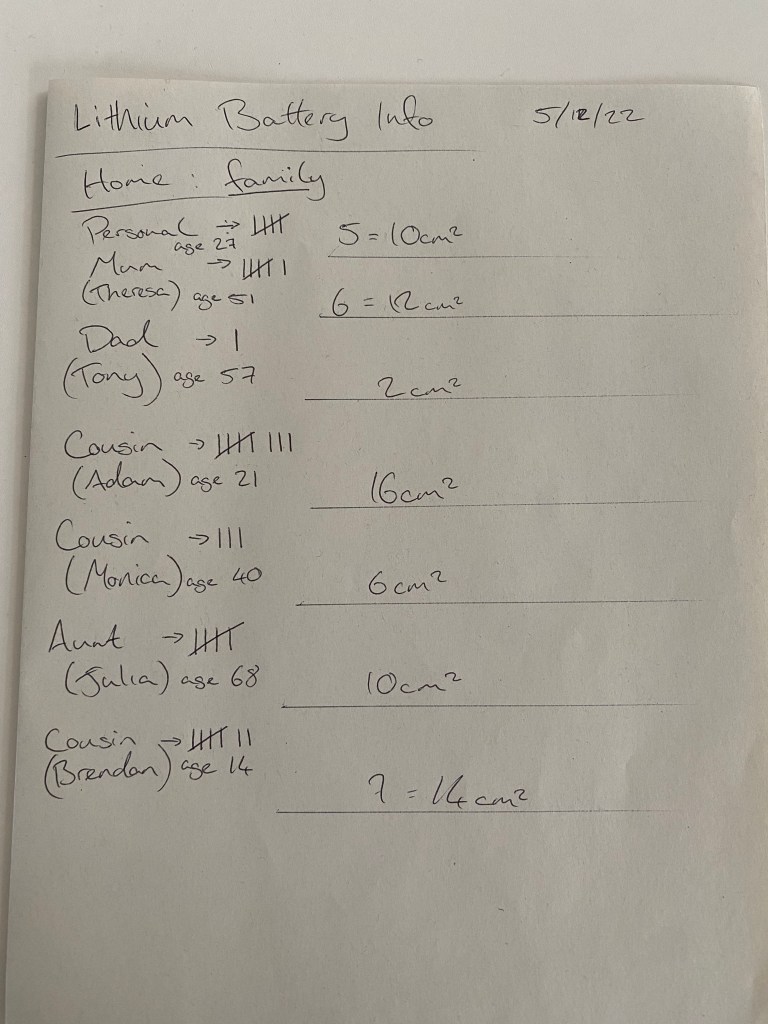
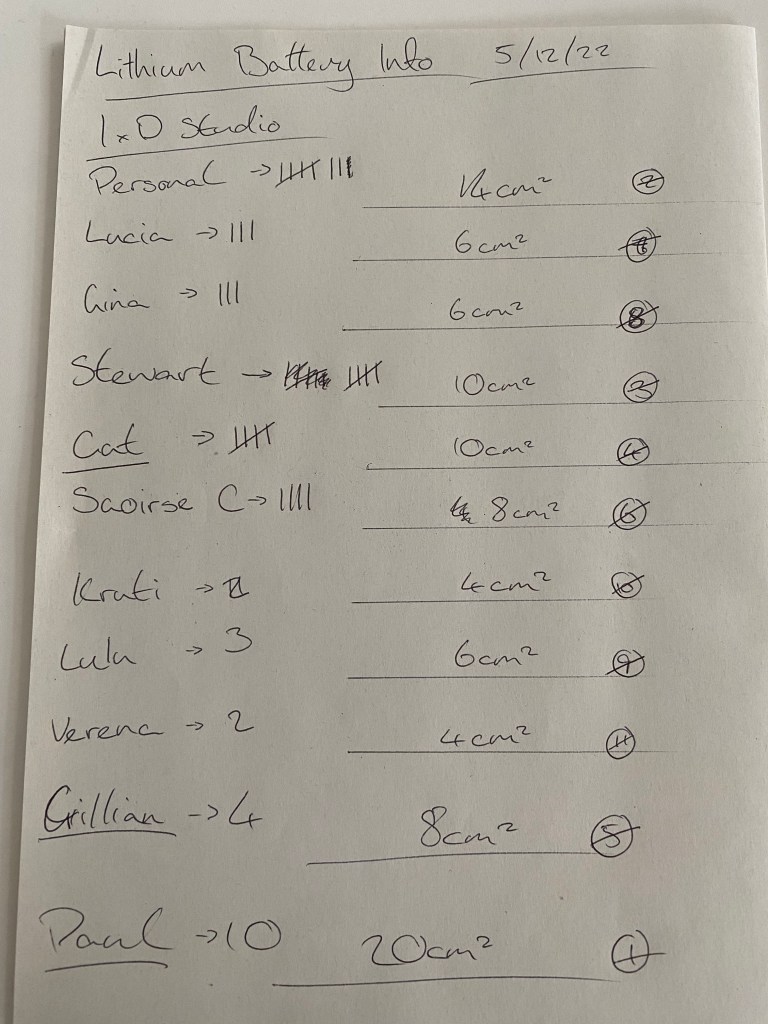
These notes are the drafts of data collection that are then used on the final pieces.
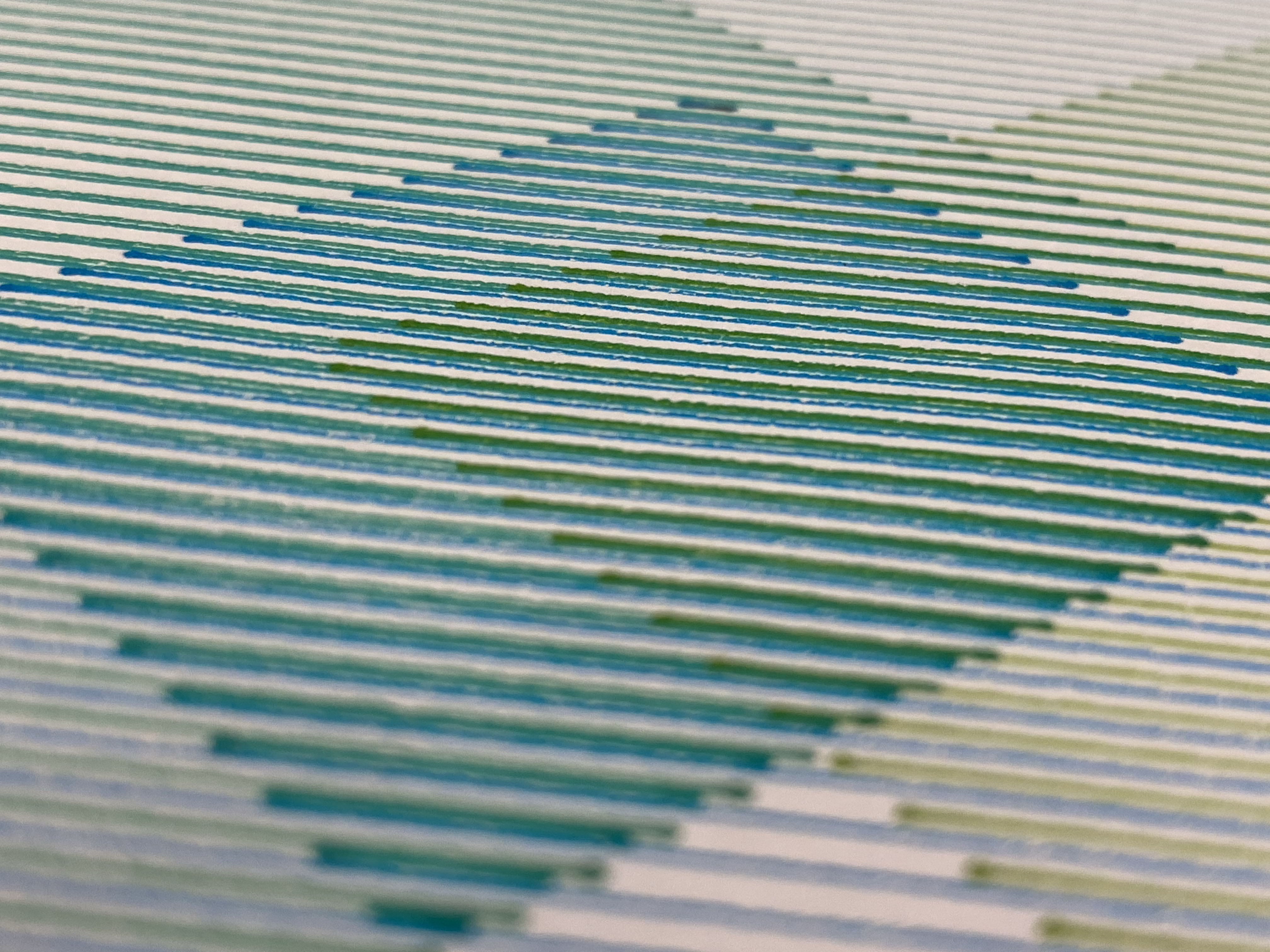
The Lithium Closest to Us
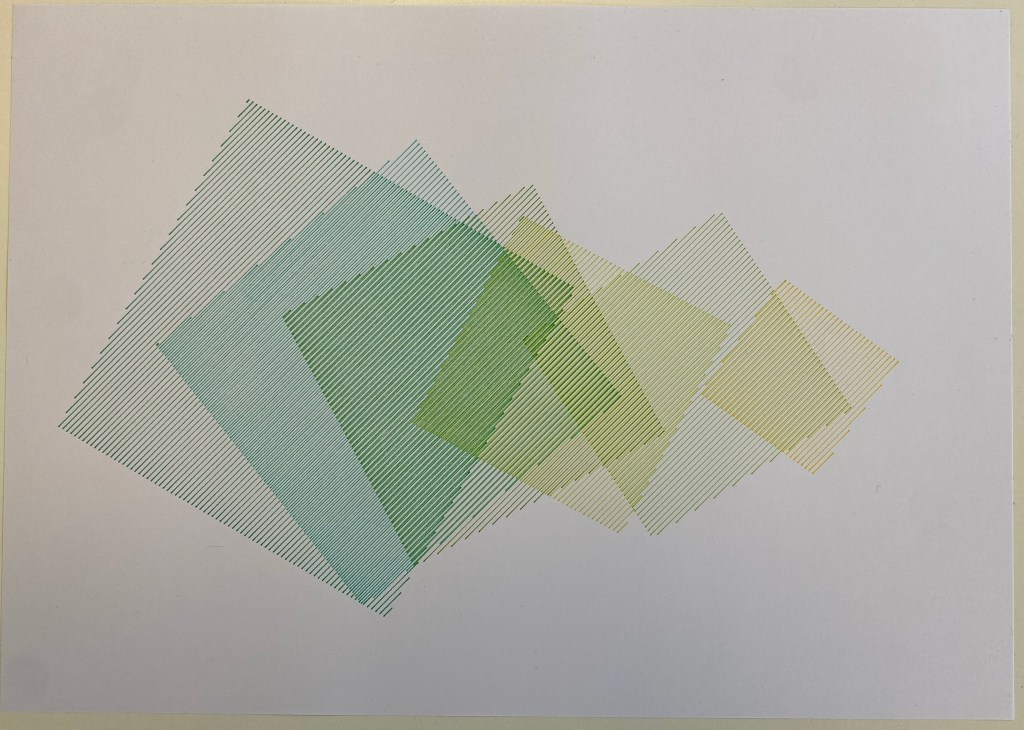

Hows its made
Creation
 Nicholas McLaughlin Blog
Leave a comment