I am a complete stranger to coding and all its faculties but with each lesson, I am slowly and steadily grasping the basics.
Lesson 01
An introduction to coding and its potential. From the outside looking at coding was a foreign language to me, the Matrix from the outside, the screens that Neo would look at in confusion was how I did with lines of code in Processing examples. I had the incorrect perception that it was reserved for the computer scientists and cyber security hackers of the world but not designers and creatives.
Thankfully I was proven wrong throughout the run time of Hello World! Processing. My perception of design was rooted too deeply in understanding that a product would have to be conceptualised, evaluated, finalised and developed traditionally but as I could watch the Hyphae Lamp by nervous system ‘grow’ in front of my eyes the symbiotic relationship between a designer and coding became apparent. Each lamp, like the fungus itself, is completely unique. This could have possibly been done through traditional sculpting methods and a lot of painstaking hours but even then I believe it would lose the aspect of its organic nature and randomness.
As one preconceived notion was blown out of the water another one met its demise shortly thereafter once I heard about Sol Lewitt’s instructions for his artwork and how he essentially sent code to a gallery and received a similar outcome as he might if he used Processing.
The idea of code and data visualisation is not only confined to computers and Processing but can be translated and displayed in a number of creative, expressive and exciting ways.
Lesson 02

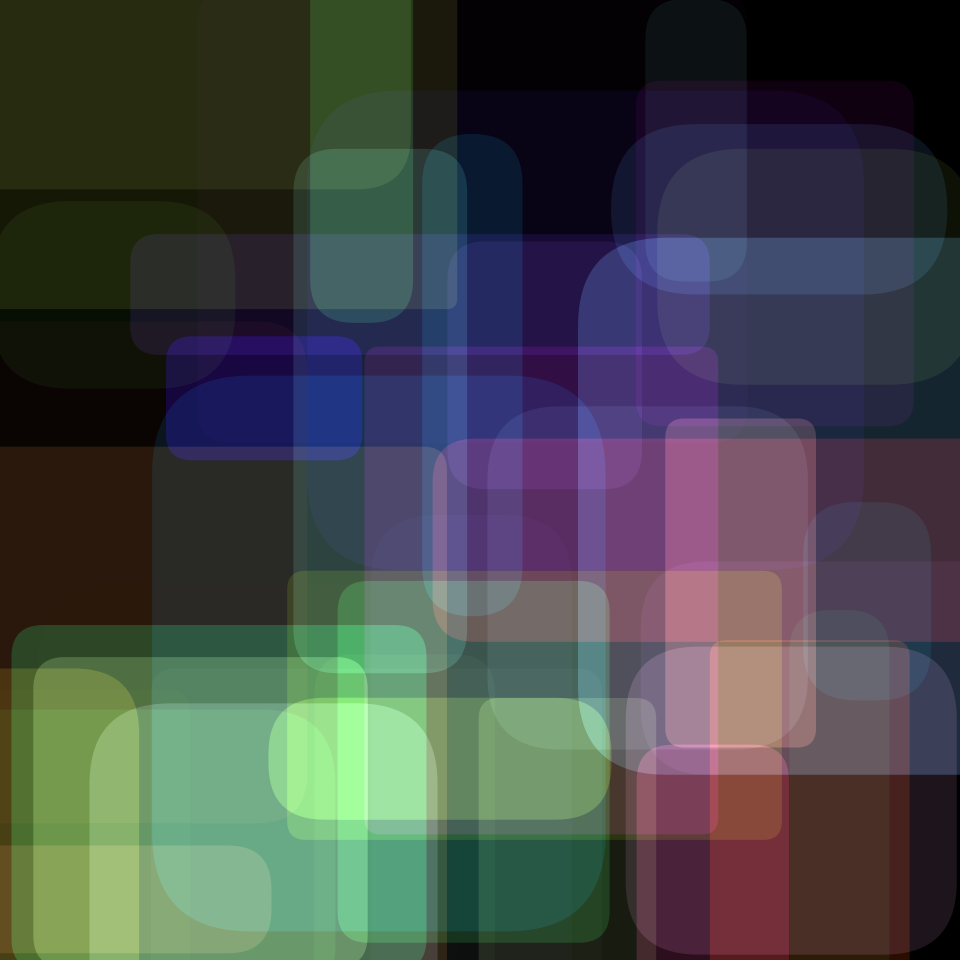

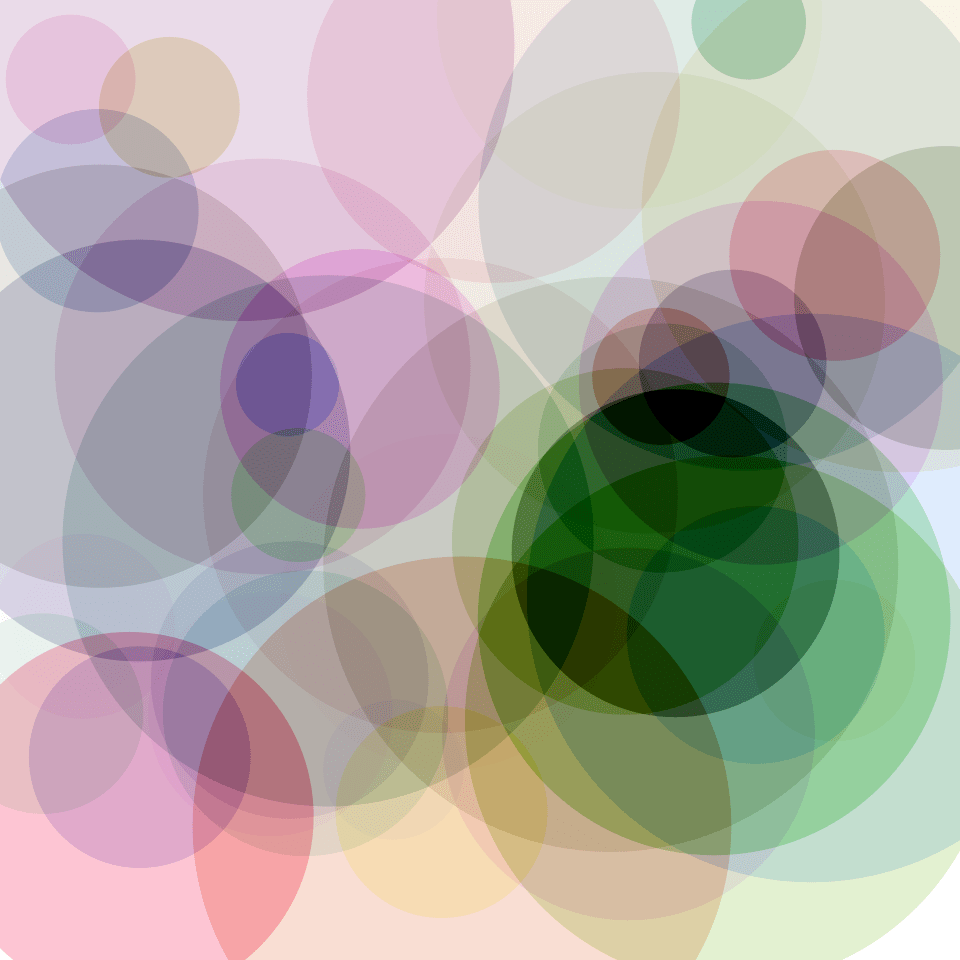
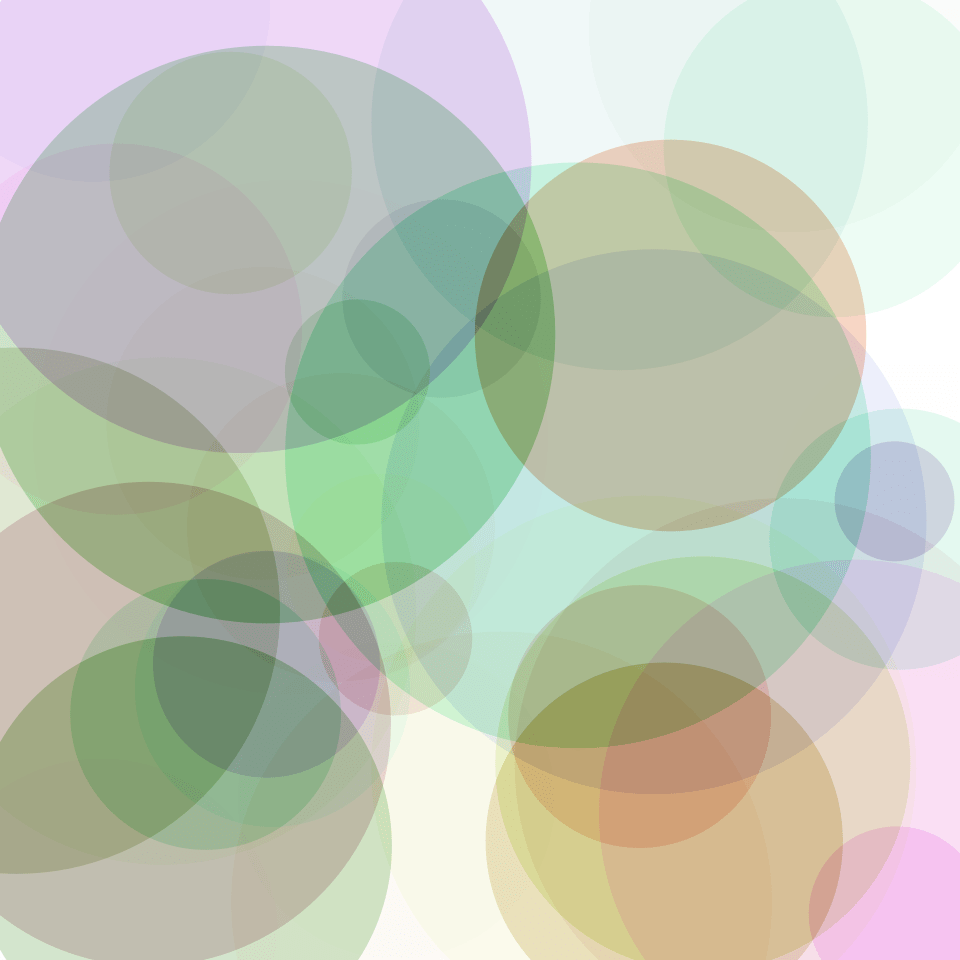

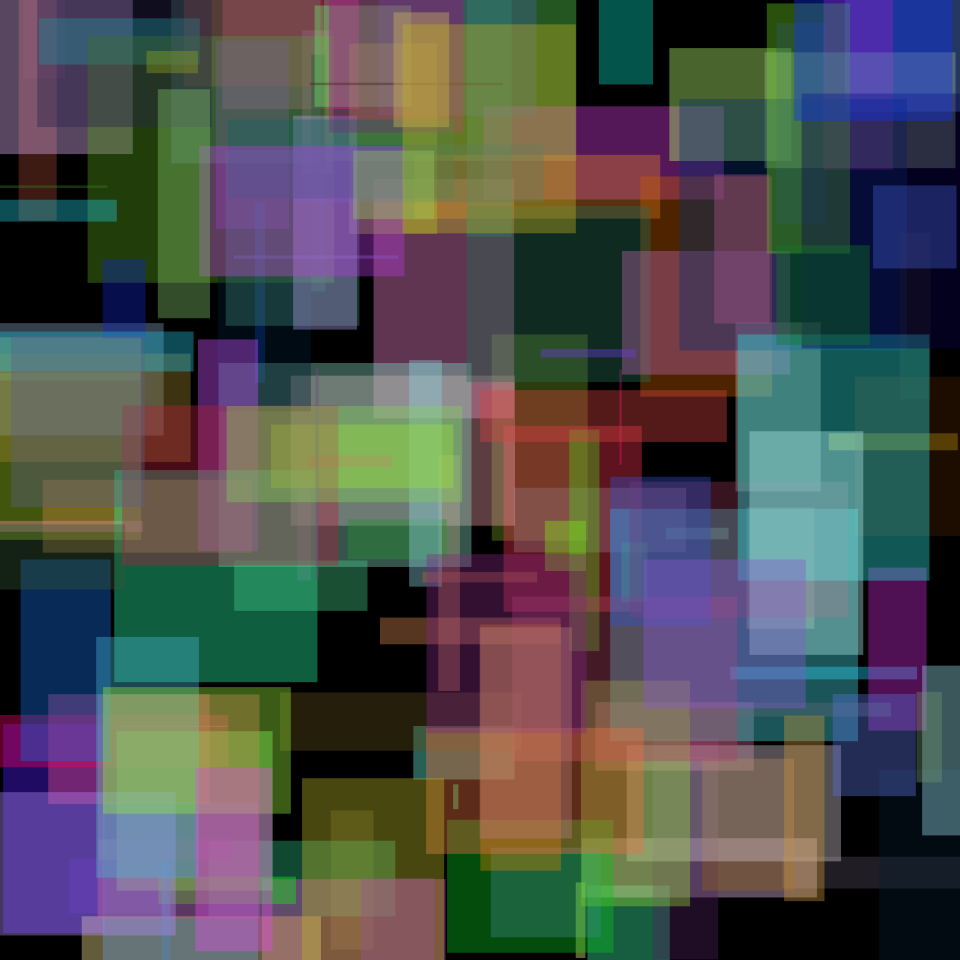
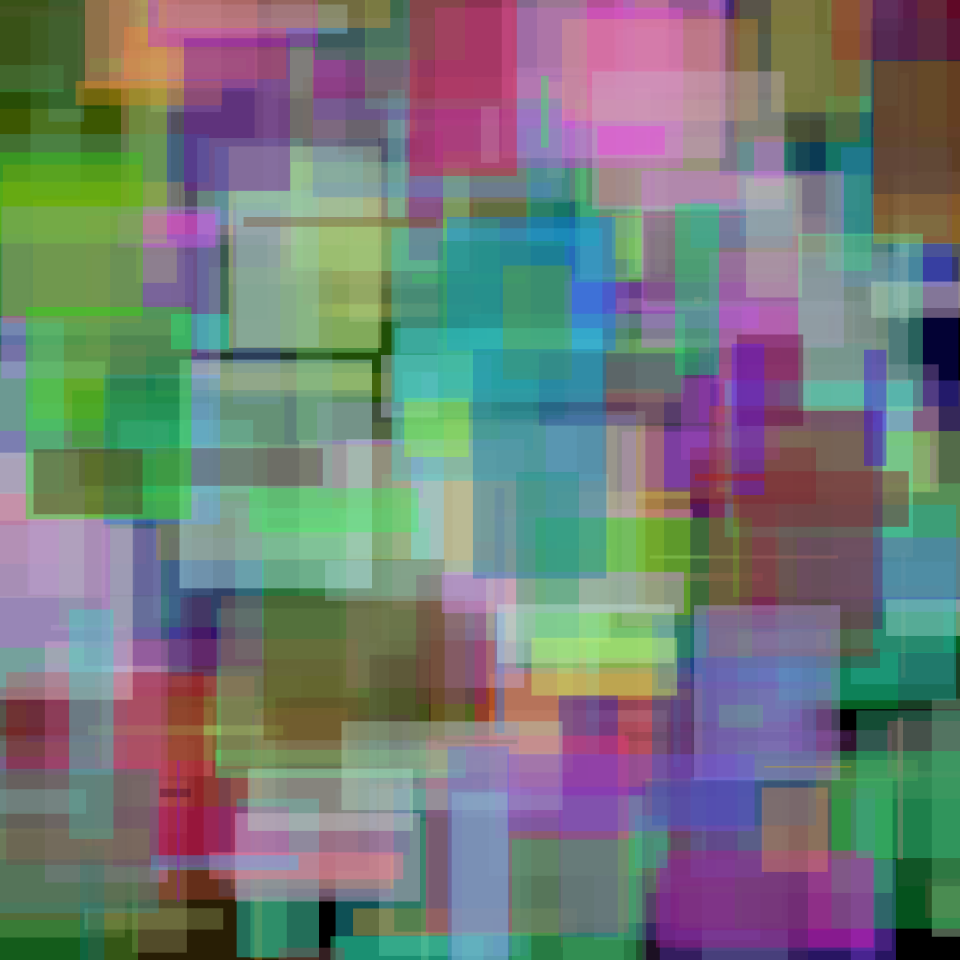

Once I got my hands on Processing it became even easier to understand. I can now do things that would have seemed out of my reach in lesson 01, now it is still the basics and the bare minimum but seeing how a simple command can change the actions and appearance of the outcome has done so much to show how accessible it is.
I found myself drawn to the ability to have completely random aspects within the code and how each time I ran the code it would produce something completely unique.
Lesson 03


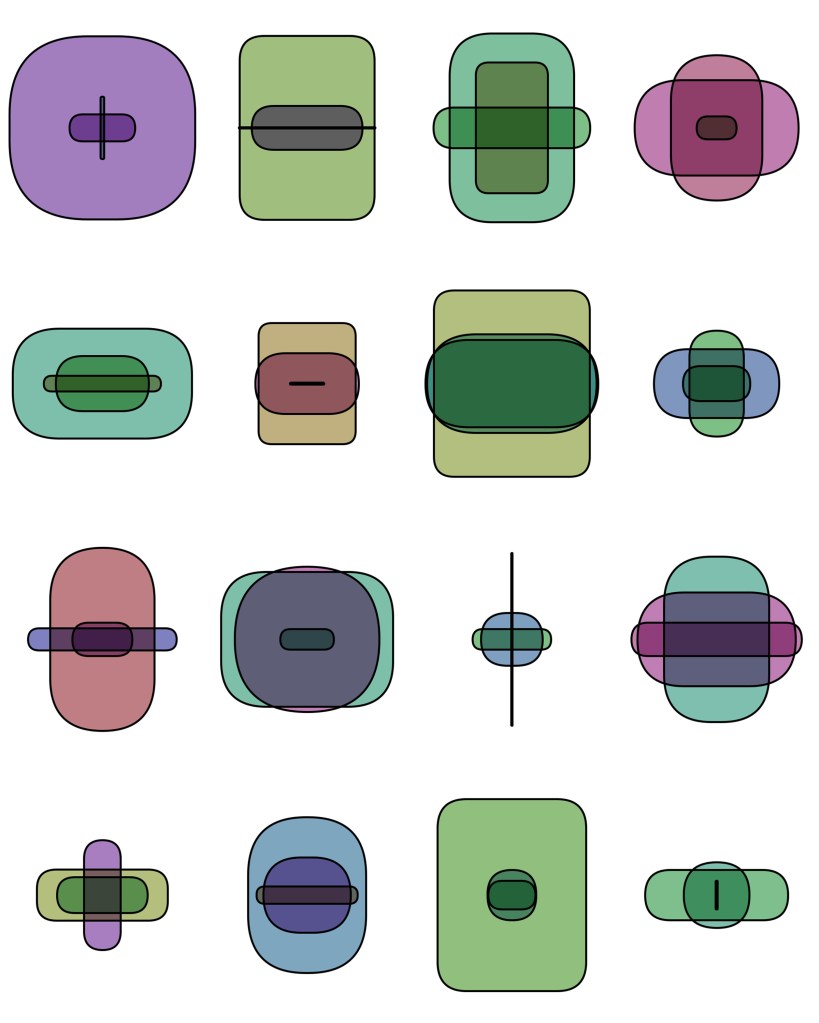

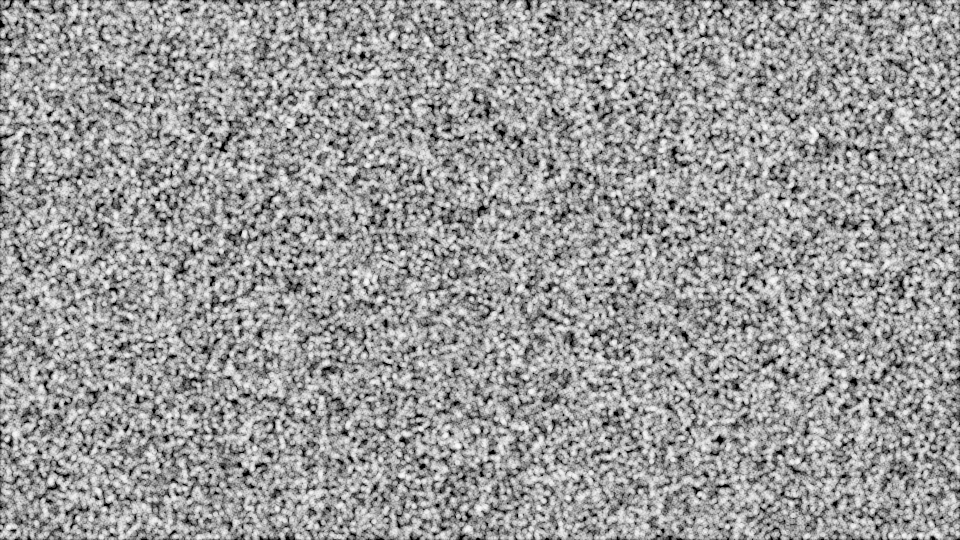
“Clarity of sketch, clarity of mind”. Housekeeping in code will help me wrap my mind around it and the use of substituting integers in place of repeating numbers streamlines the whole process. I think before I was trying to look at processing like a language or paragraph but I can make more sense of it by treating it as algebraic equations. Clarifying the values of ‘nudge’ or ‘wonk’ at the top of the code flips a switch in my mind.
Lesson 04

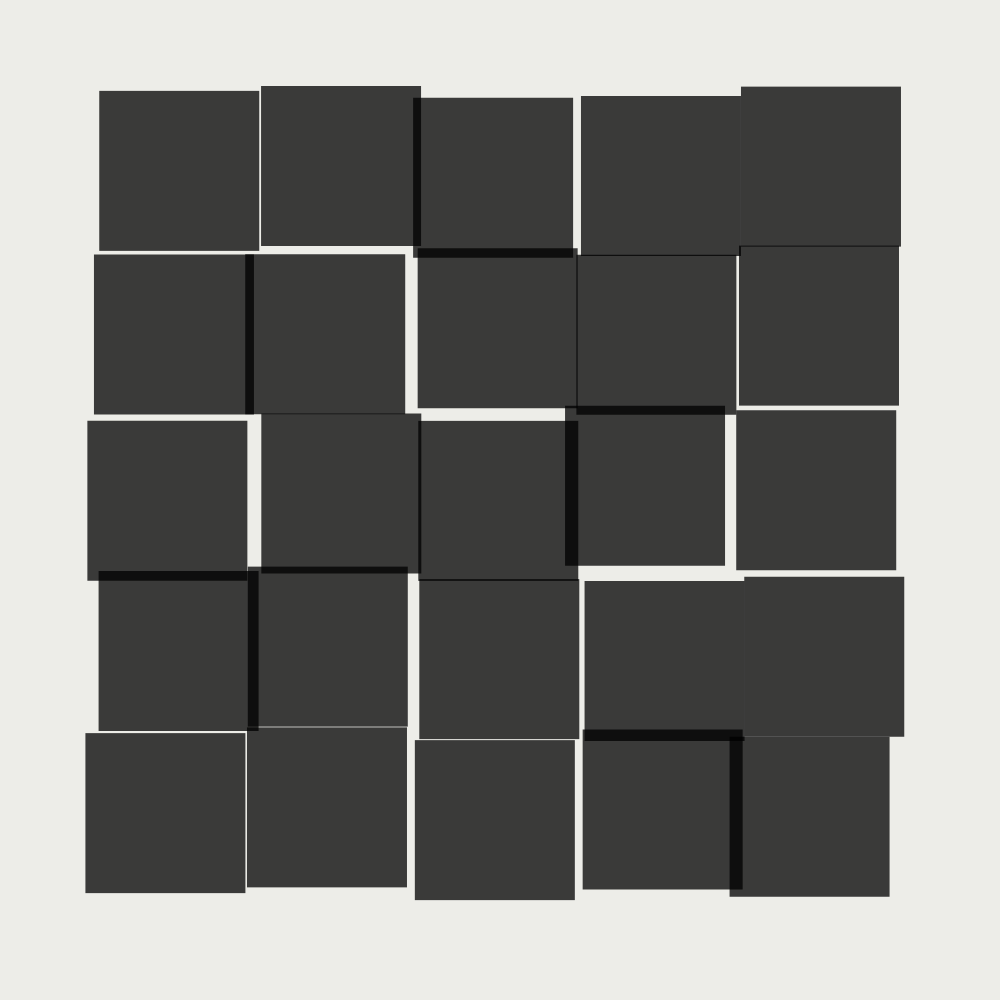


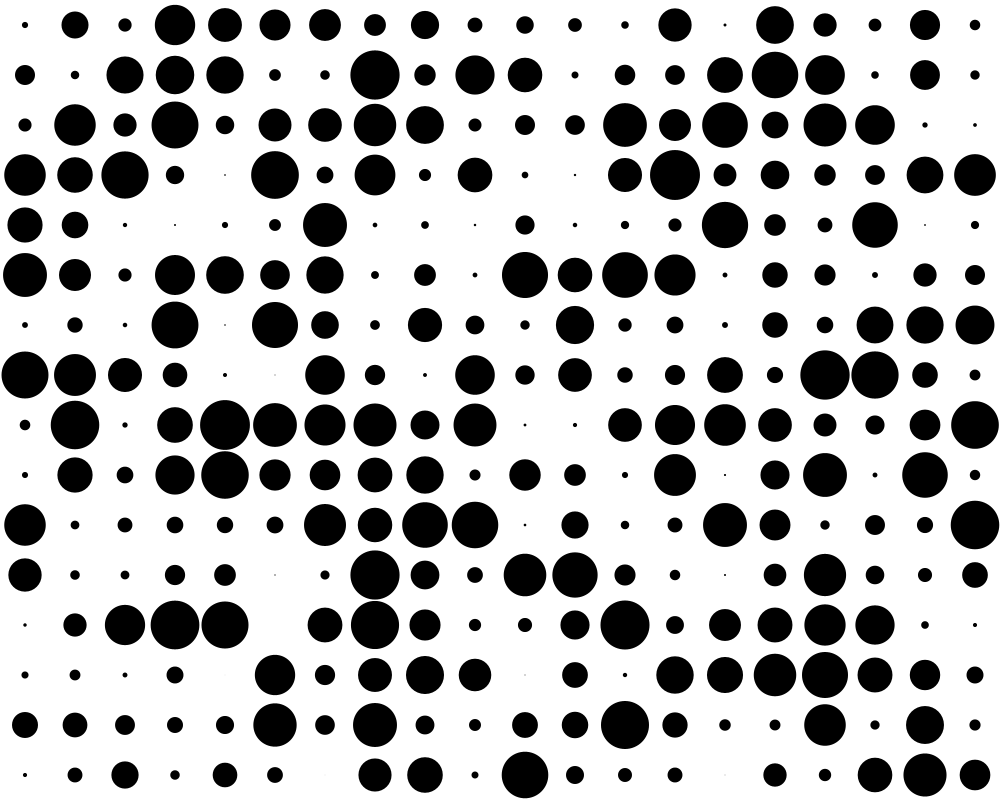
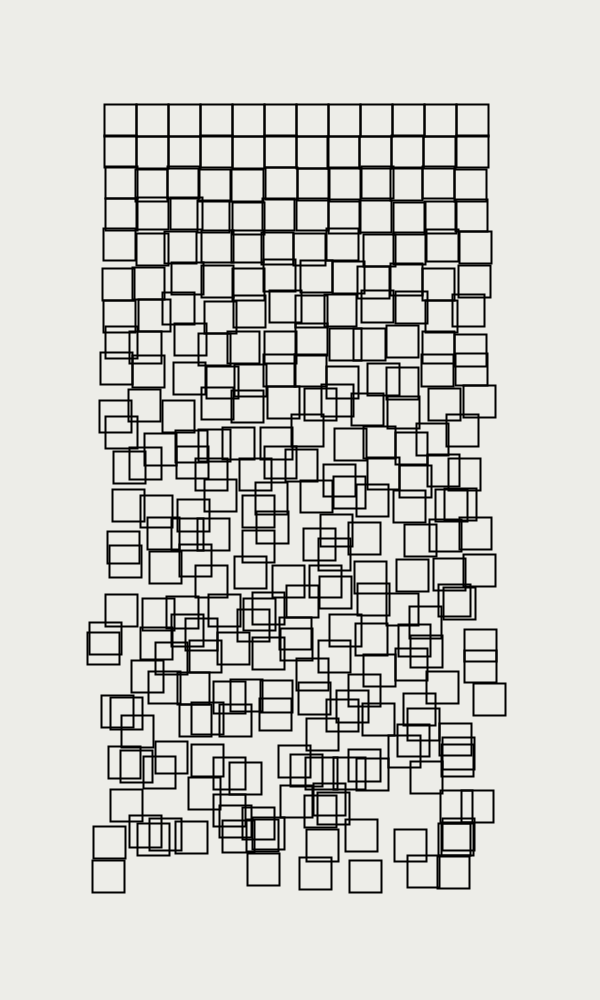
Sometimes I think I understand what I’m looking at and sometimes I don’t. A trick that I need to do is to translate it into basic English. I need to practice writing code more to get more comfortable and fluent with it but I’m sure that will come with time and exposure to it.
for (int y = 0 ; y < rows ; y++);
Translate: The int is y and y is 0, if y is less than the number of rows then add one onto y.
Self Study 01

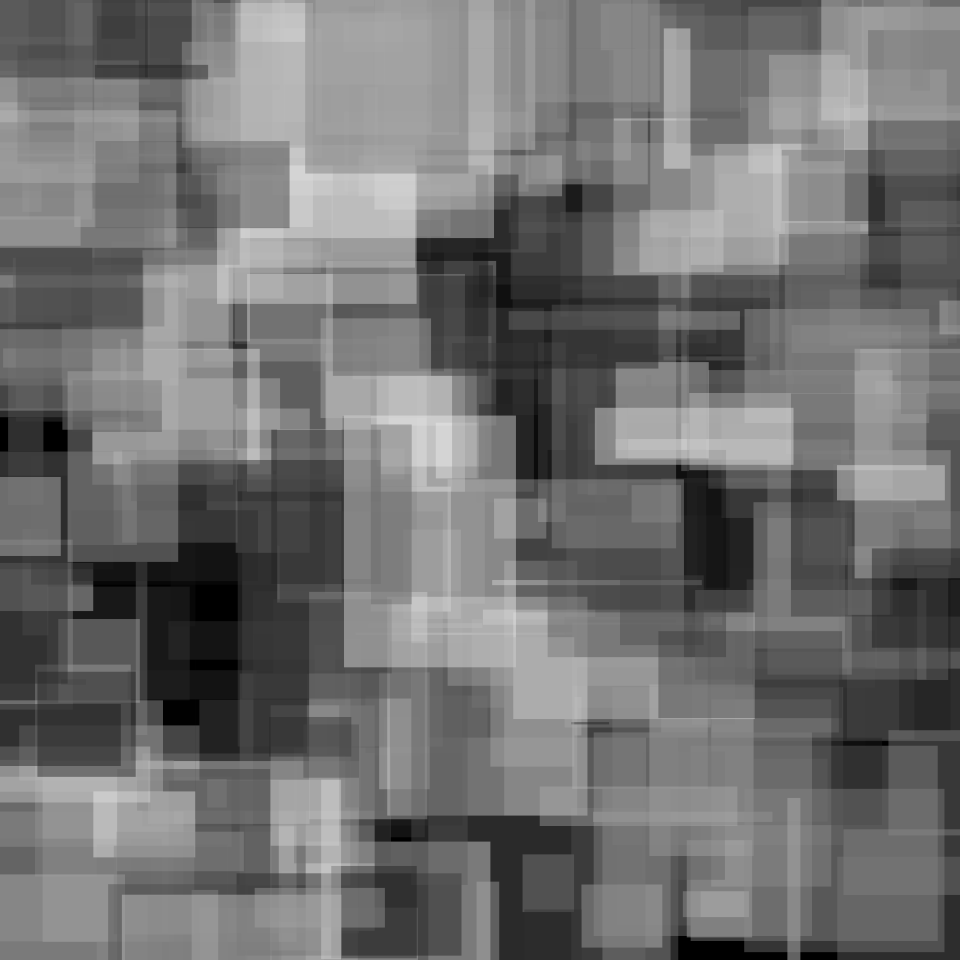

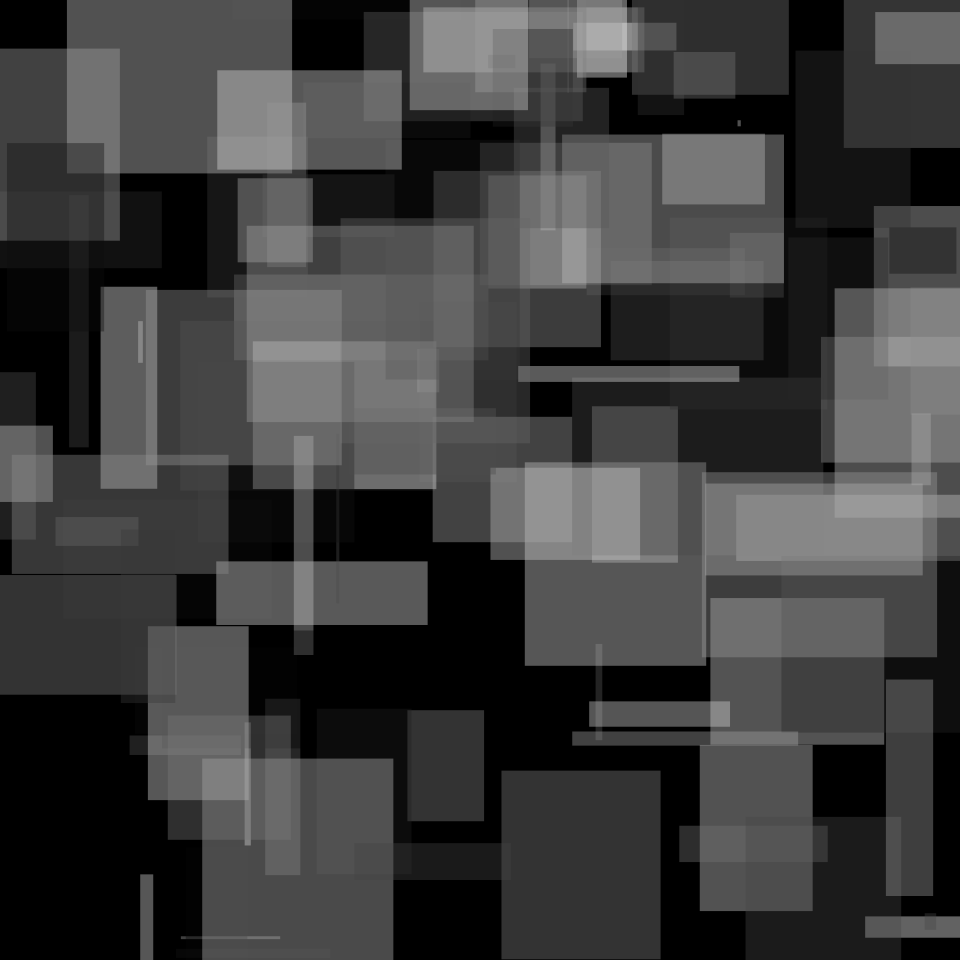

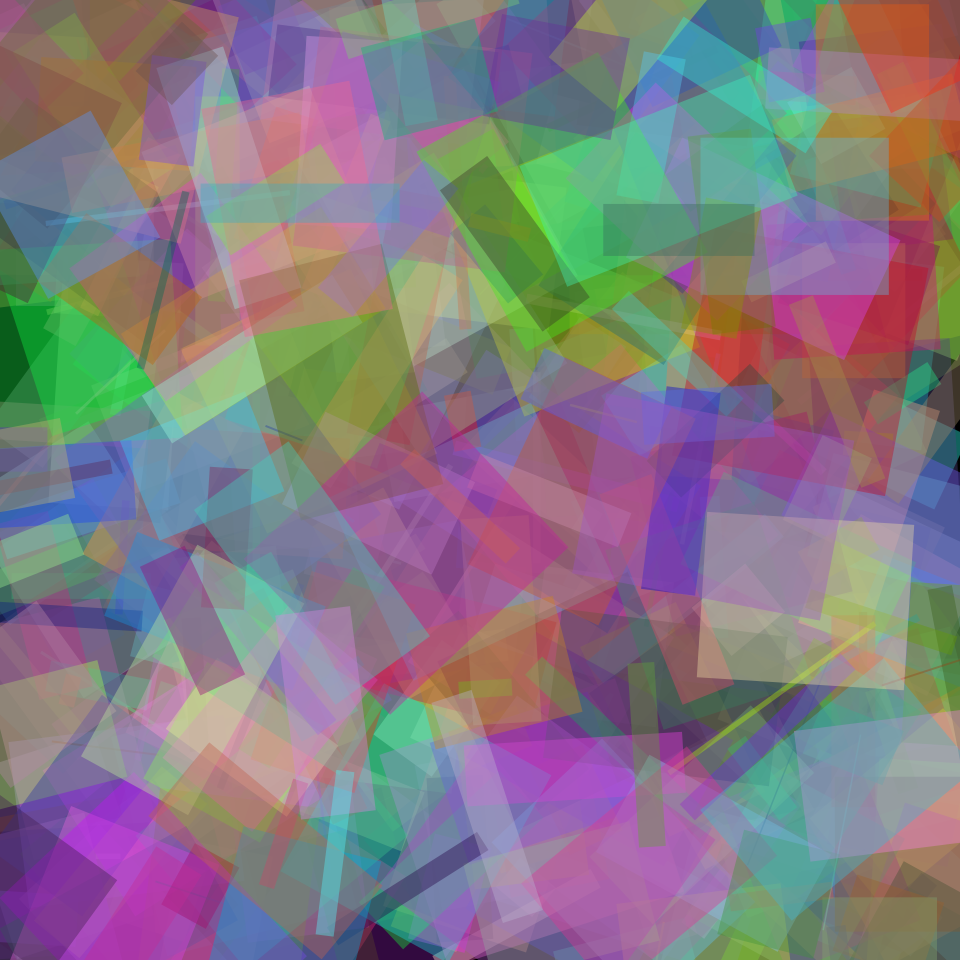

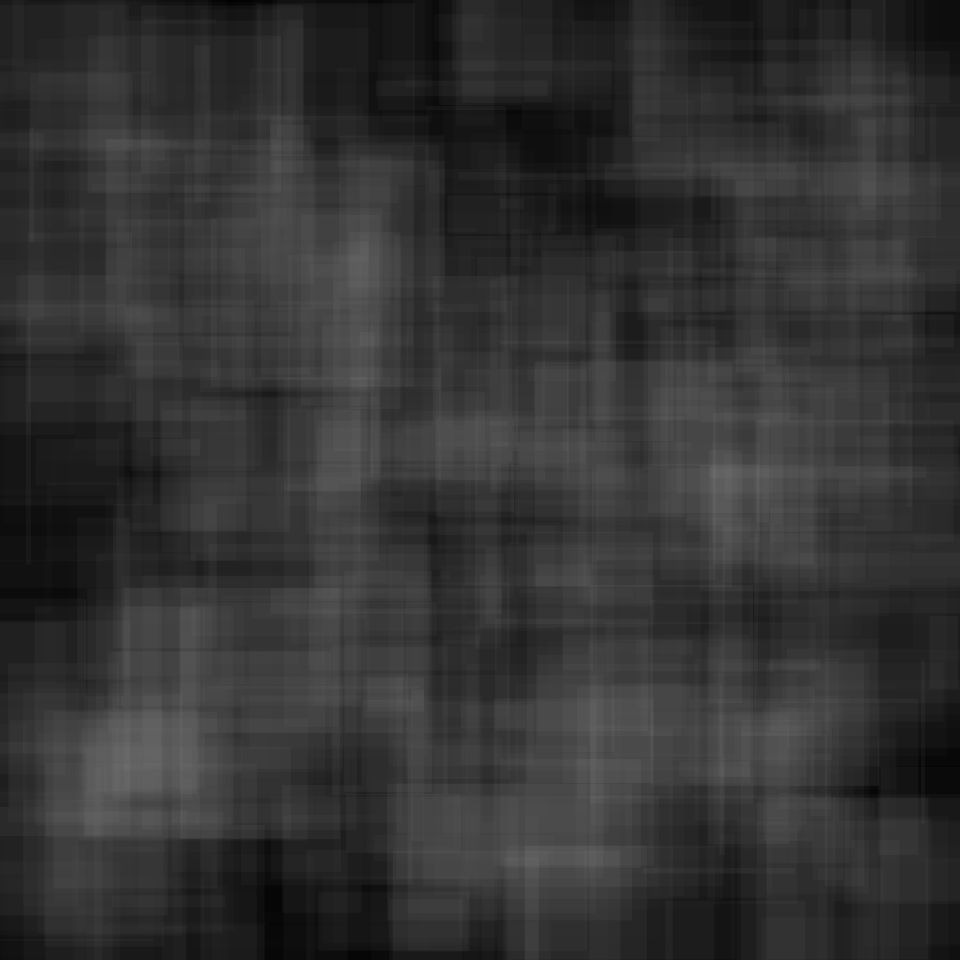
In my own time, I wanted to explore how the images from lesson 02 would change with added variables and filters such as BLUR or ERODE.
One that surprised and caught my attention was the outcome in image05 and image08 that with a certain transparency the random rectangles had the same effect as a sample of linen or a low thread count material.
With help from Ally, she introduced me to rotating the primitives, I’ve not fully grasped it yet but I’ve got the basics and need to look into it more.
Self Study 02
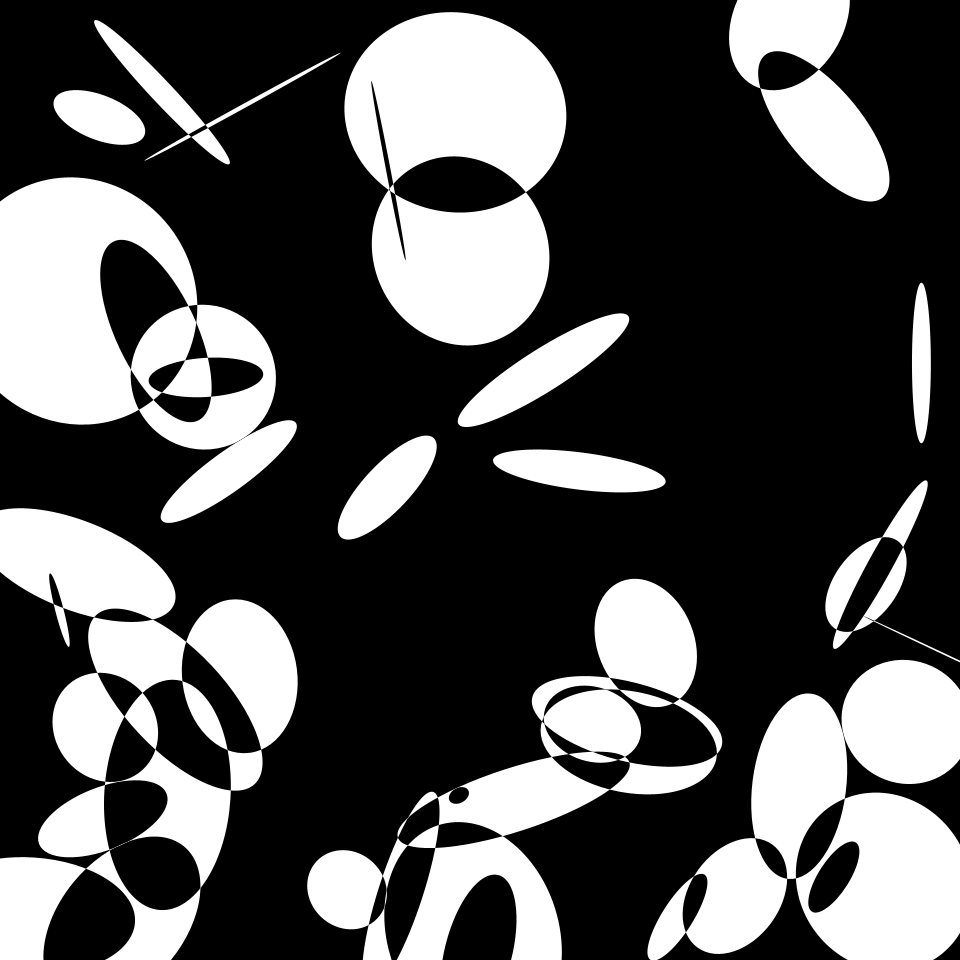
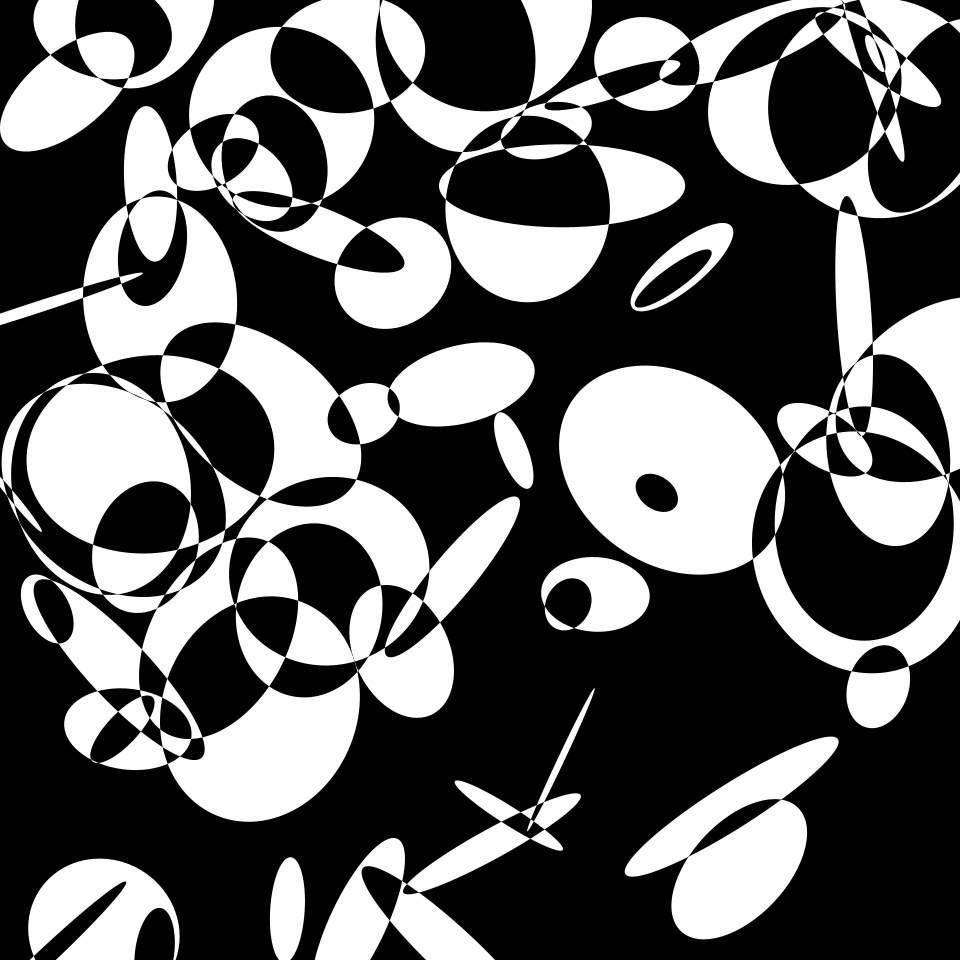


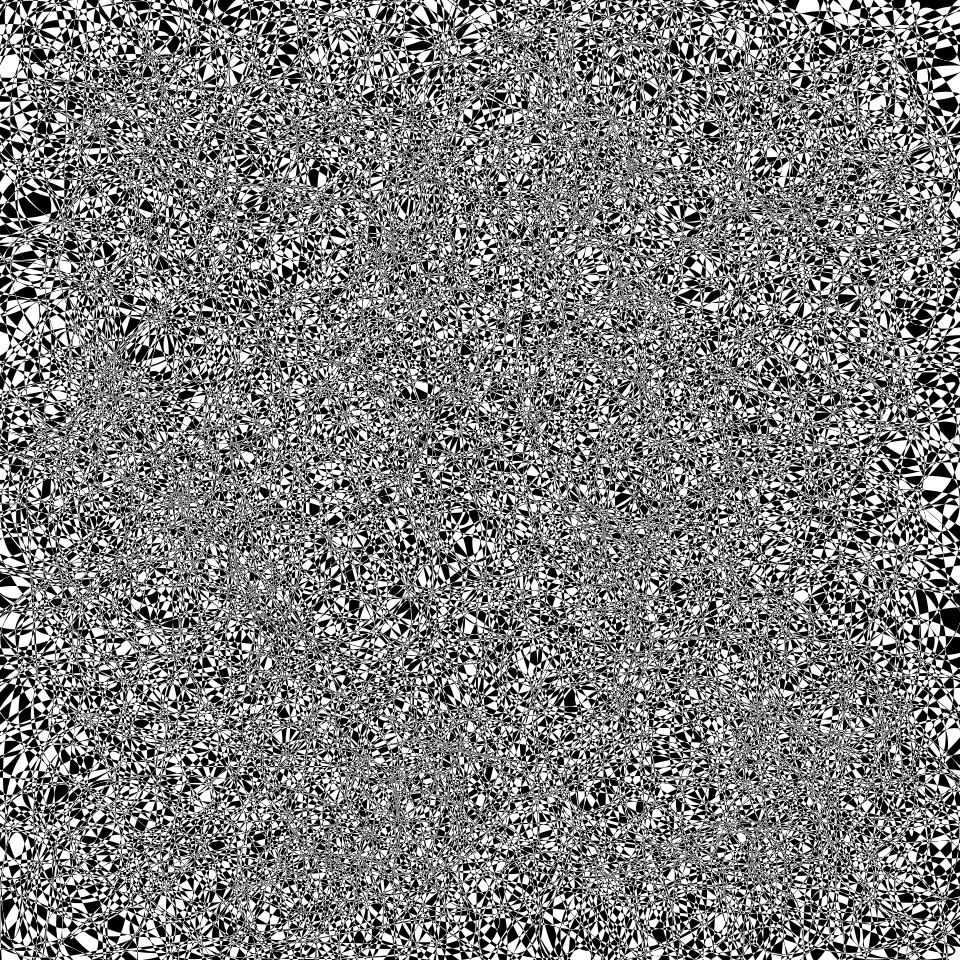
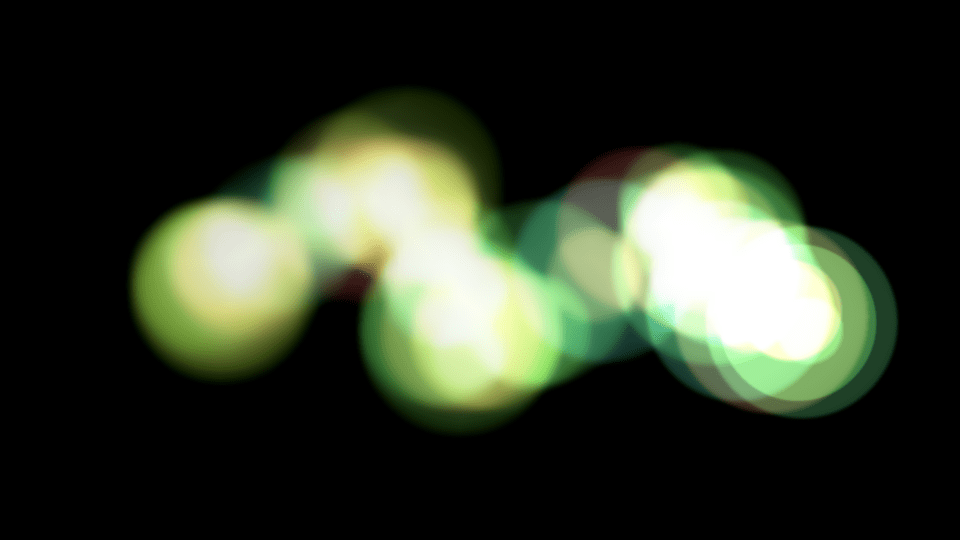
Revisiting the random circles again in my own time but experimenting with different blend modes such as DIFFERENCE, with a monochromatic colour scheme, the rotation aspect from the previous self-study as well as letting it run for different times to see how dramatic the effect got.
Self Study 03
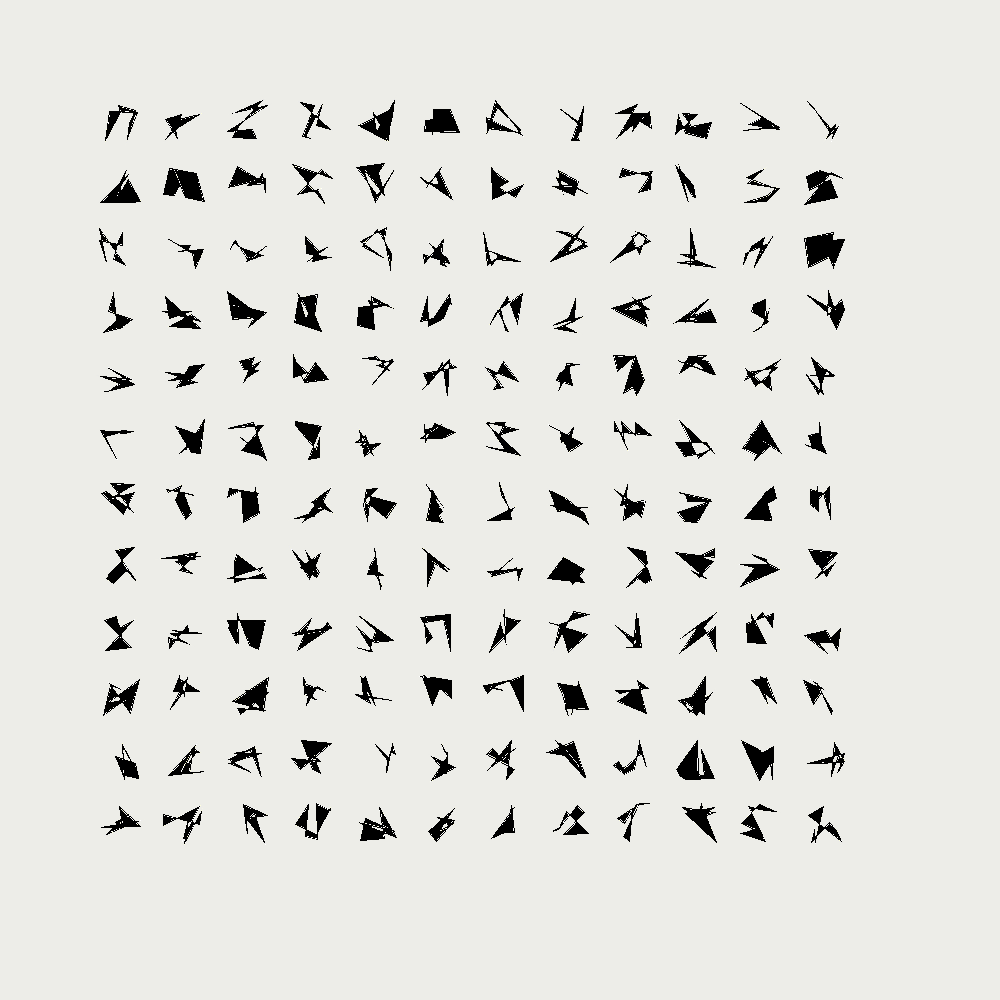
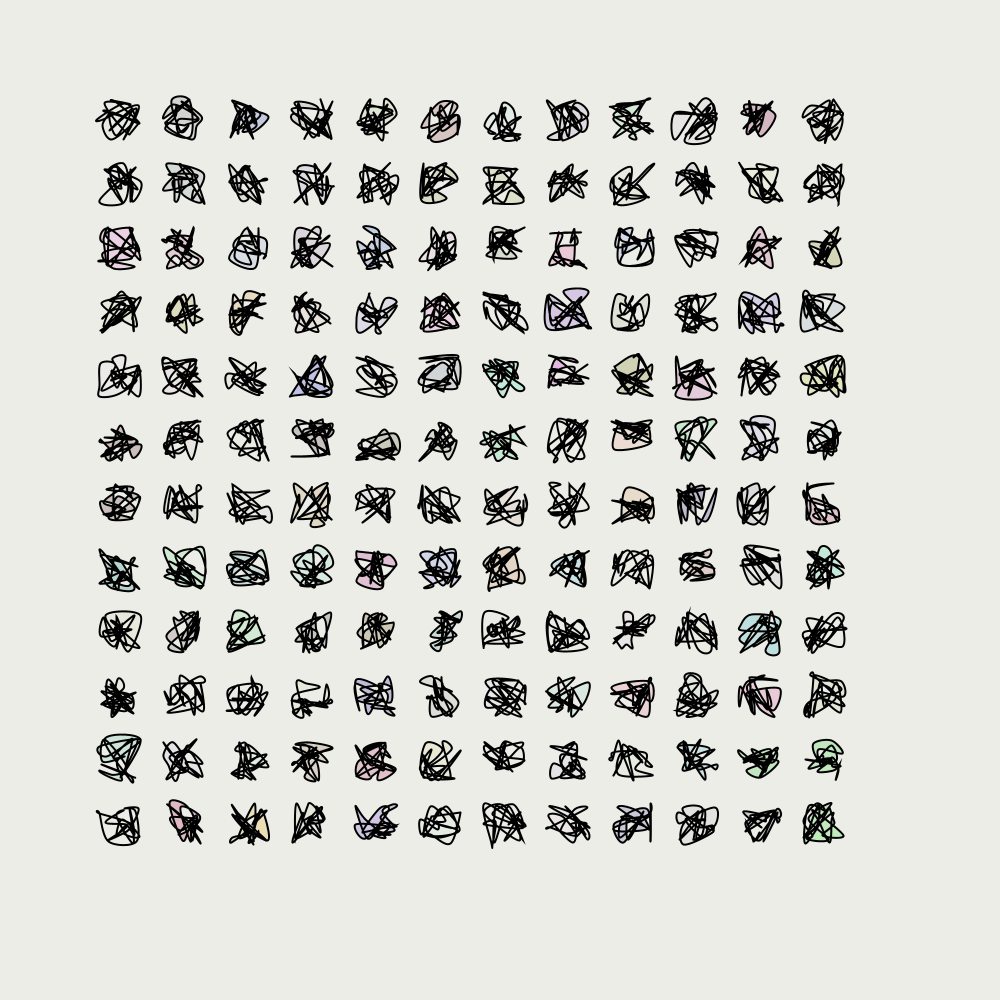
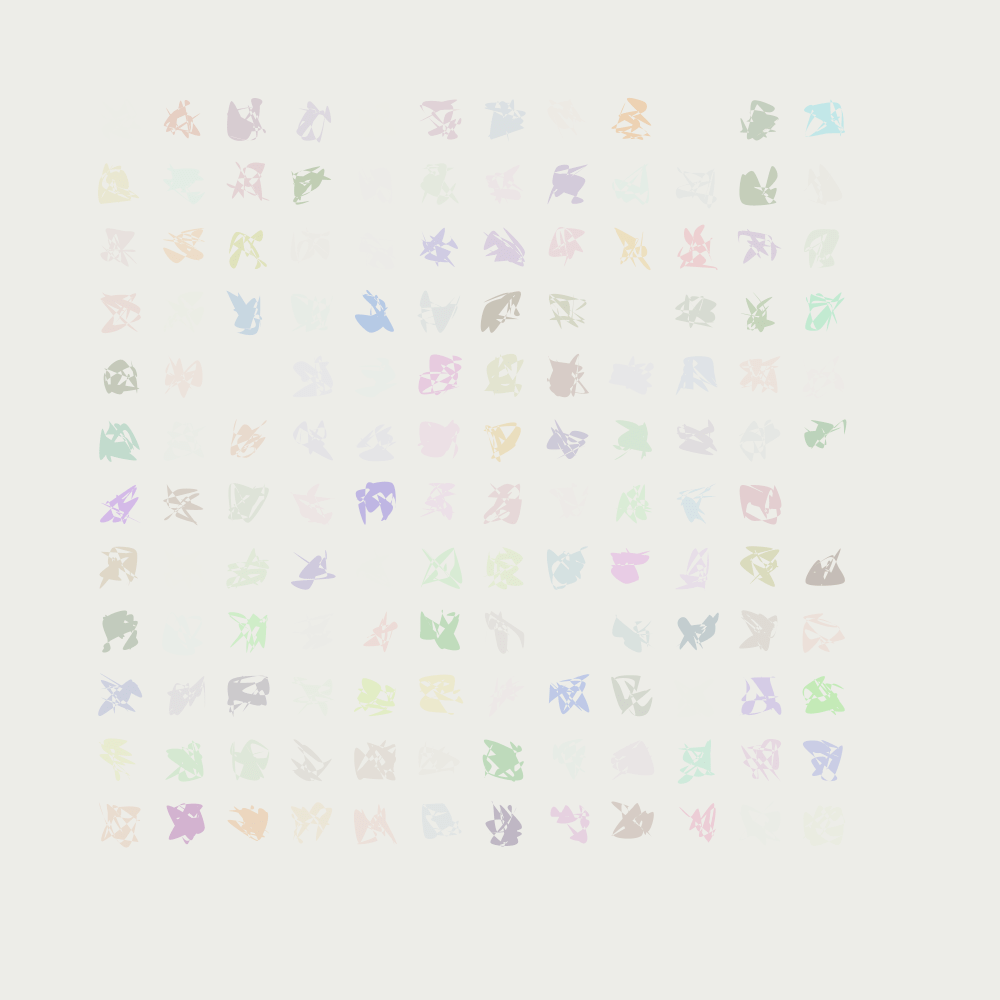
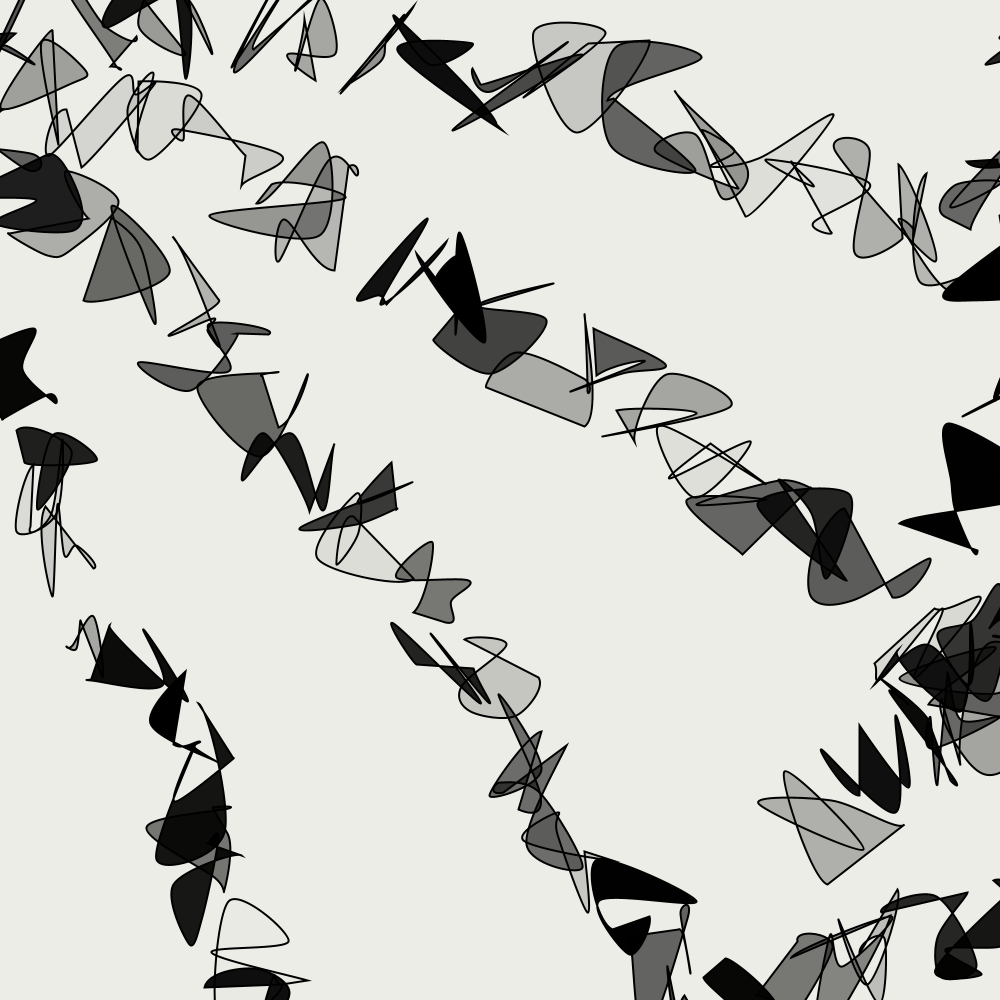
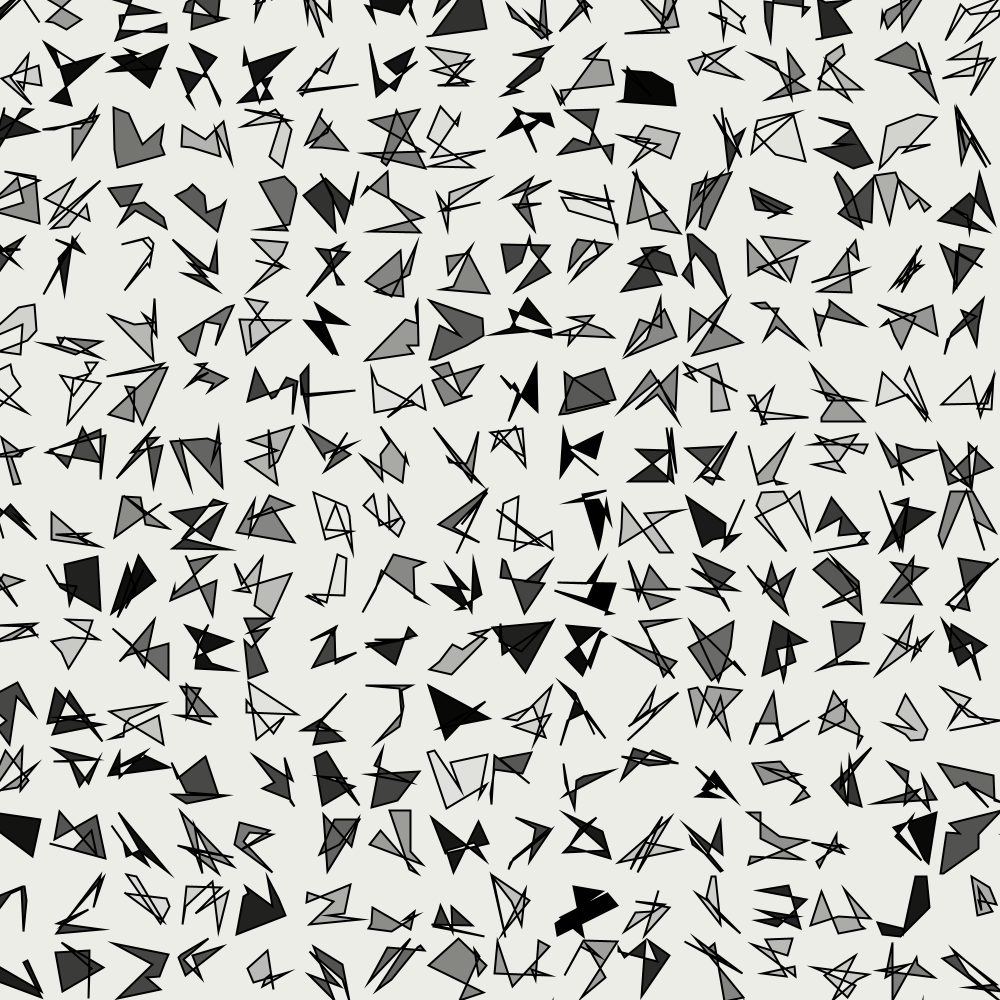
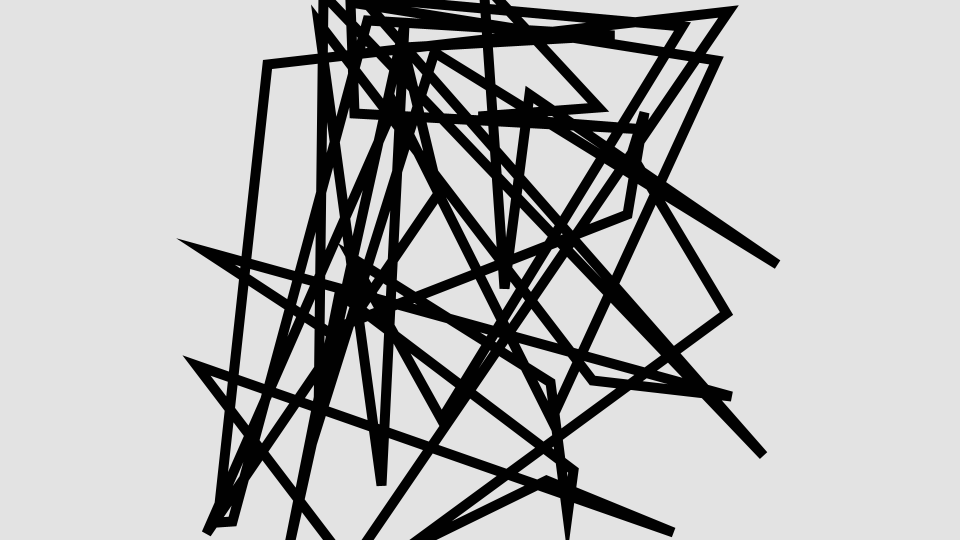
Messing around with the vector grid was where I understood the whole purpose of just messing about with code to see what happens. I’ve been trying to make things too perfect right out the gate.
I’m just mark-making at this point and I’ve been trying to make the equivalent of the Sistine Chapel ceiling, so I took the vector grid and changed things, plugged in numbers, took code from other images and stitched them together (Franken-code) and broke it to see what changed and what didn’t.
Self Study 04
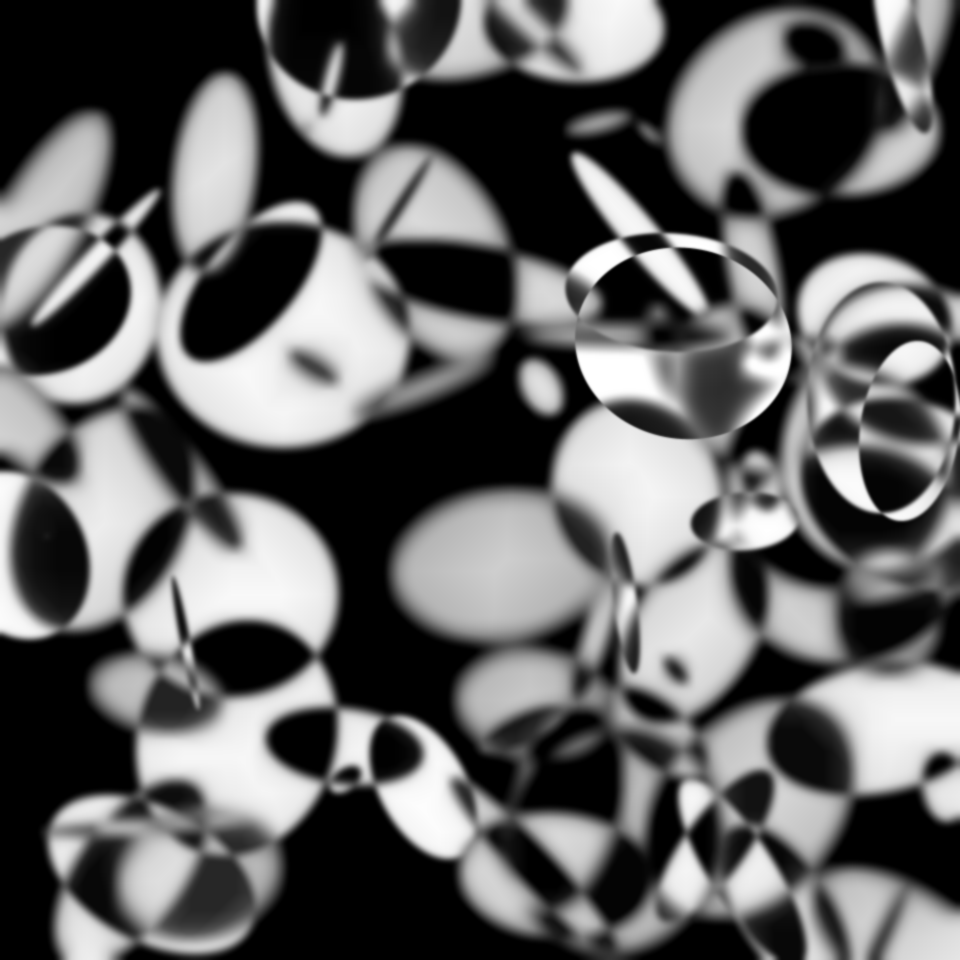
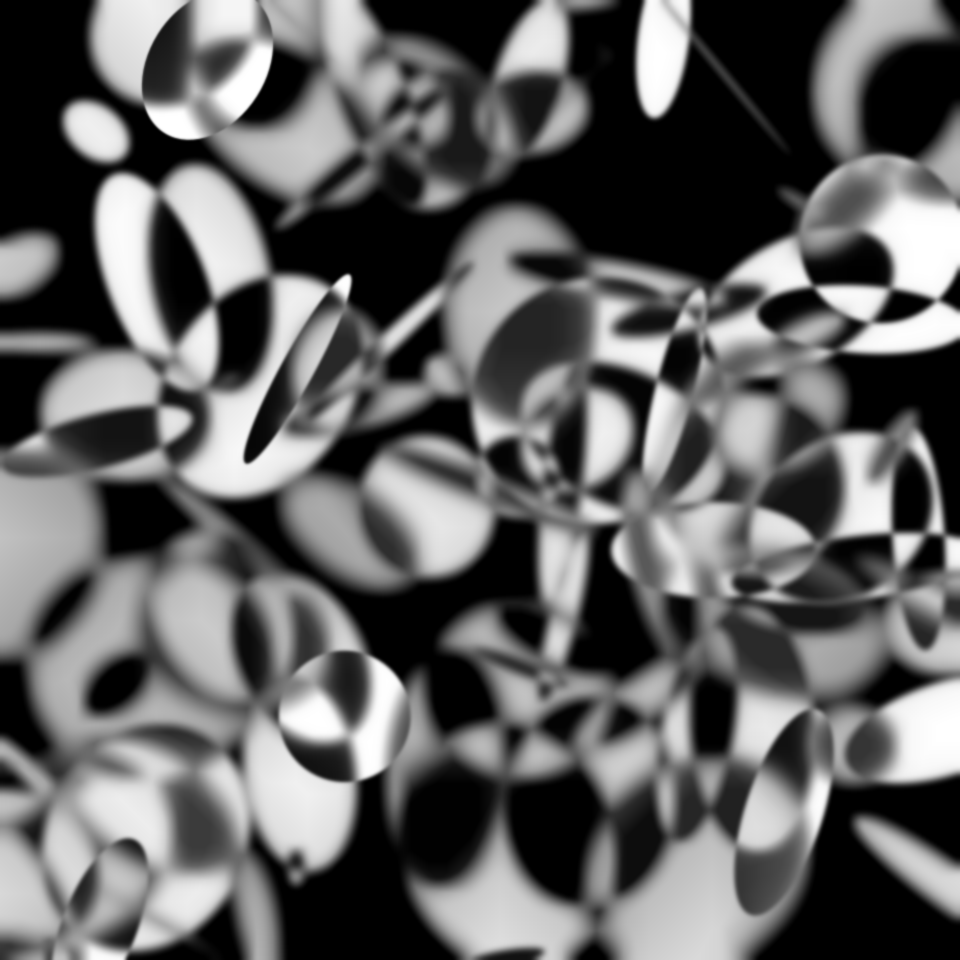
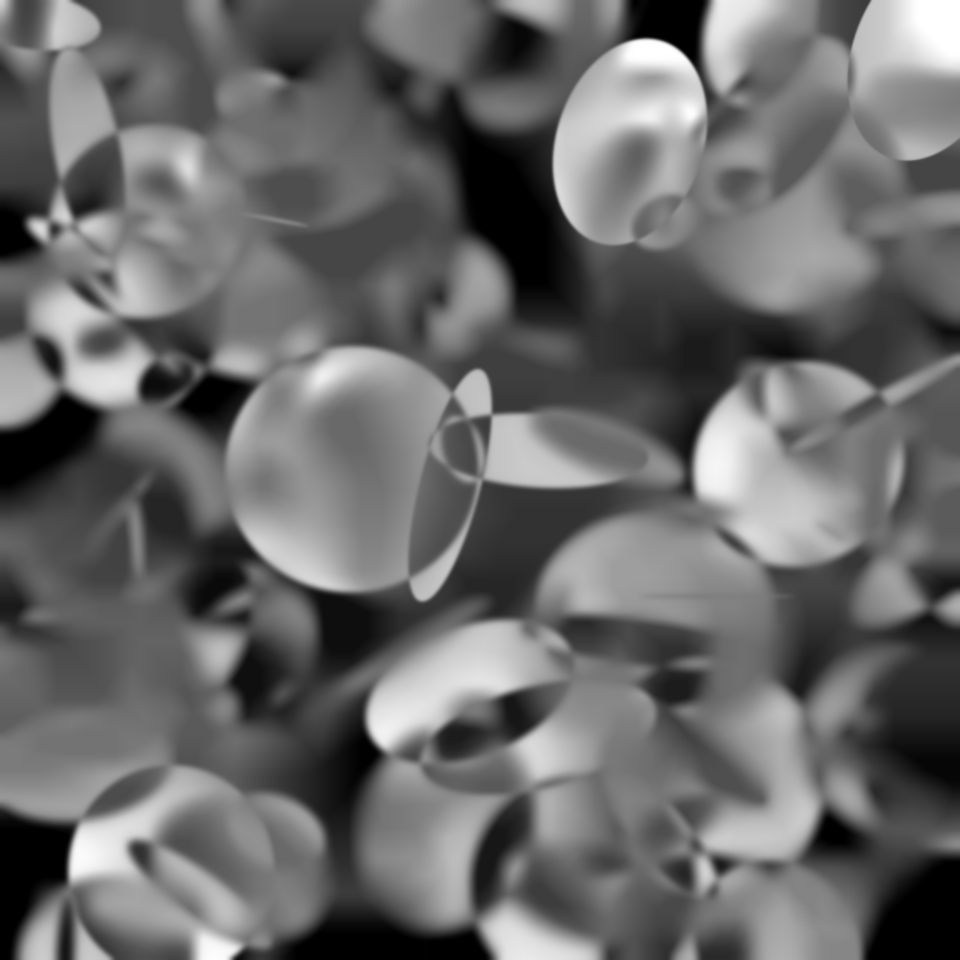
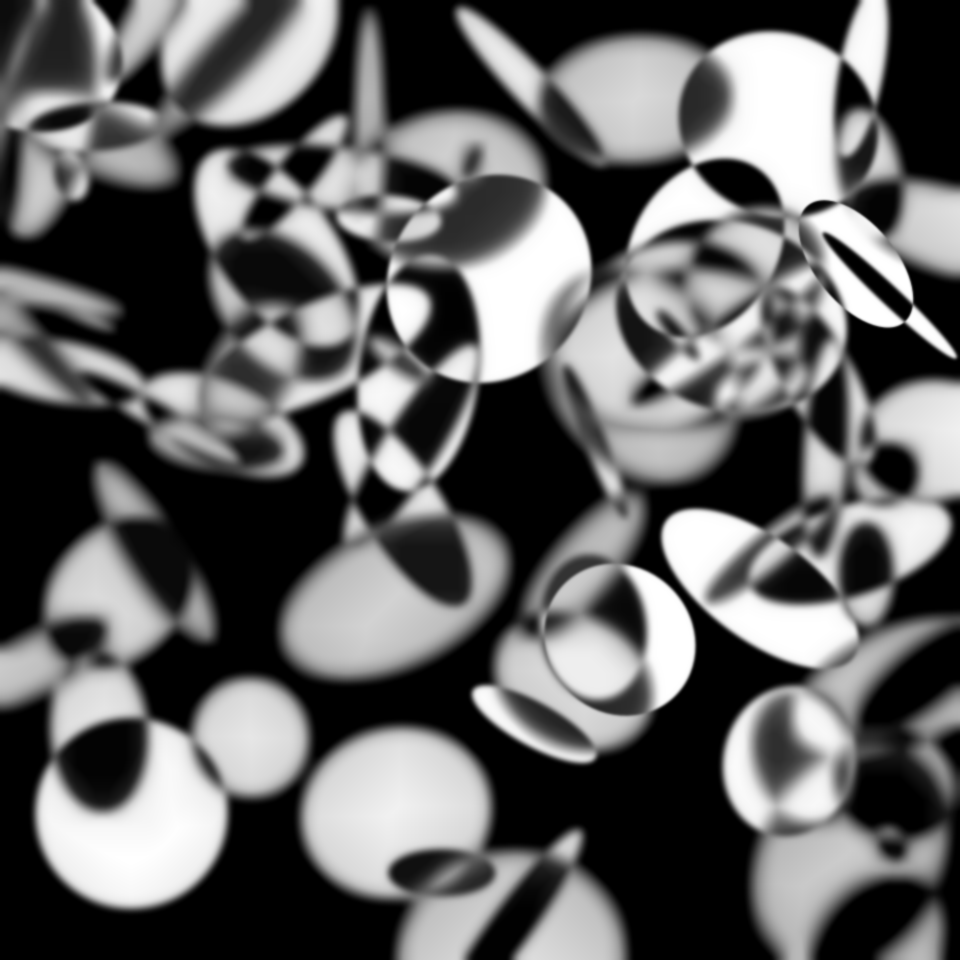
These images are of the exact same code as in Self Study 02 but with blendMode(BLUR) and drawn on a loop, which I think gives it the illusion of depth as if it’s been shot on a camera with a shallow depth of field.
I was getting in my own way before, trying to overcomplicate things. I would look at all these amazing and detailed things people would do on OpenProcessing and my eyes would go fuzzy at the lines and lines of code, but complicated visuals are not always good visuals, art doesn’t have to be incredibly detailed to be good or liked.
The visual outcome of this image is simple but when I try to think of how it might be attempted without processing I start to see how Processing is not a tool to replicate what can be done with other techniques but how it is its own tool. You wouldn’t replicate paint with a pencil so why try and replicate anything else with Processing.
 Nicholas McLaughlin Blog
Leave a comment